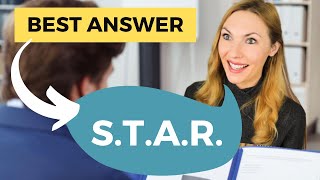
Madeline Mann breaks down how to answer behavioral interview questions with the PAR method: Problem, Action, Result. She compares it to the longer STAR framework and walks through a concrete example where someone retained 65% of at-risk customers.
Chapters
How do I answer behavioral interview questions and tough questions where I have to tell specific stories in my answers? What is an example of a good answer and what is this Star method I've been hearing about and how do I use it to ace the interview? This is self made Millennial. I'm Madeline Mann and today I'm going to answer all of those questions and more, making you the brightest star in the job search galaxy for career and job search TV tips from a human resources and recruiting leader who has helped thousands of people land career defining jobs. Subscribe to this channel and hit the bell for new videos on Thursdays. Today you'll get several wildly effective tools to rock your behavioral interviews. Just check out all of these incredible comments that people have left on my other videos on this topic. People are landing jobs left and right and one person named Corey said I changed his life and the way he interviews forever. I love what I do. I'll give you my Story Toolbox approach and how to utilize the Star method for answering interview questions. And make sure you stay to the end because I am going to tell you the three core types of behavioral interview questions. If you can master these three types of, you will have job interview powers so great that Darth Sidious will start trying to recruit you to the dark side. Do it. Okay, so what are behavioral interview questions or behavior based questions? Well, it's those questions that start with Tell me about a time when or Give me an example of or how did you. The interviewer is essentially trying to move your answers away from philosophical and hypothetical things like how would you define culture to something more tangible that actually happened, like Tell me about a time you did something to improve team dynamics. What is the key to acing a behavioral interview? I'm going to give you two tools that will change your life just like they changed Corey's life. The first, most important thing to remember is to always be telling stories. This is so crucial. As soon as you start to hear the words tell me about a time, you better have stories like a New York City skyscraper. Granted, this sounds tough to come up with a new story for every possible question, but I actually have a formula called the Story Toolbox that will fix you up. My Story Toolbox formula is so incredibly effective as you've seen from all of the success stories. And I have created a free, free digital download where you can start building out your own story toolbox. Thousands of people have downloaded this toolbox and gotten results such as Jennifer, who landed the job after downloading the worksheet. You Go Jennifer. Now you may download it and say, hold up. I need more context. I need more help. And no worries, I've got you. I'll also Link a popular YouTube video that walks you through the Story Toolbox and I will link both of those in in the comments and in the description. My second tool is the STAR Method. The STAR method is a way of answering interview questions in a story format to ensure you are giving the right information. STAR stands for Situation, Task, Action, Results. But I'm going to be real with you folks. Whoever came up with star, I think they just wanted to come up with a cute acronym because taking four steps to tell a story in the interview is ridiculous. It's too many and it's too easy to mess up and ramble. It's like me saying, okay class, today you're going to learn how to write a story. A great story has four parts. A beginning, a middle, more middle, and an end. What? No. Three steps is all you need. So I came up with a modified version of Style R and it's called par. A fraction of the steps for a lot more punch. Let's walk through it. P stands for the problem or challenge. So what is the problem or challenge that was put before you? A is the action, what was the action that you took to resolve it? And R is the result. What were the outcomes of those actions? Let's walk through my top PAR tips to put this formula into action. Write down a list of both accomplishments and challenges you faced. This is absolutely crucial to your success with behavioral interview questions. And this process is, as I said earlier, what I call building your story toolbox. Remember to grab that free Story Toolbox worksheet that you can download and come up with these stories stories and it has a bunch of prompts for you and so I'll link that in the comments and in the description. Next, you'll want to determine how to reference these stories quickly. One way is by having your Story toolbox reminders in your notes or committing them to memory through practice and be ready to pull them out for any behavioral interview question. Let's put this into action. We will go over a top behavioral interview question, show an example answer, and then I'll reveal the three categories of behavioral interview questions. If you can master these three categories, you'll be ready for 90% of the tell me about a time when questions that come your way. Now I have to say, of course the most common interview question is Tell me about yourself which we will not review in this video. But good news, I do have a worksheet to help you scope out an incredible answer to that question. It's free. I will link it in the comments and and in the description but also a hugely common behavioral interview question is some variation of Tell me about a time when you handled a challenging situation. This question is broader than a linebacker shoulder, but it's all good. You have your story toolbox and you're ready to pull a story out. Here's an example of the PAR formula in action. I noticed we were having multiple people call in to cancel our service of On Demand Virtual Therapy due to their companies funding another similar program. Great, you've set the scene. I flagged this to Leadership and recommended we send those customers who want to cancel a template email that they can bring to their employer requesting to be reimbursed for using our program instead. This shows good critical thinking, but so many people often Stop. Stop here. Make sure you don't forget to say the results of your actions. What we found is that customers were enthusiastic to be presented with this alternate solution because they did not want to switch away from our service. In the end, 65% of customers who asked to cancel for that reason were retained. I was recognized at the team meeting that month for my outstanding problem solving and customer retention. Notice how the accomplishment was was quantified, which is great. But also sometimes it's a matter of simply stating that a client was pleased your boss said you did a good job, or that a crisis was averted. Also, something else to note is that this answer I just told you. Yes, it's an example of someone addressing a challenge, but it could also be the answer to a million other questions. Because here's the thing. Most behavioral interview questions fall into three categories and those categories are Challenges and Failures, Interpersonal Dynamics, and Success Stories. Learn these and you will be so much more confident in your interviews. The Story Toolbox download will help you with this. You'll have stories for each of these to really cover your bases and be ready for anything. So what does PAR stand for again? Problem Solve Action Result. Once you've mastered this formula, you'll be nailing interview after interview. If this video helped you prepare for your job interview, be sure to subscribe to this channel, share with a friend and hit that like button so I know to make more videos just like this one. You've got this WI Fi high five.