Be Necessary with war journalist Sebastian Junger | A Bit of Optimism Podcast
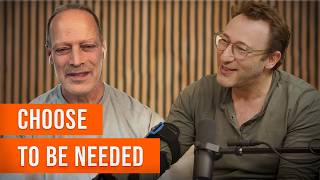
War journalist Sebastian Junger survived a ruptured pancreatic artery with blood pressure at 60/40, saved by emergency catheter coil placement. He connects that brush with death to decades covering conflict in Sarajevo and Afghanistan, arguing modern life has stripped away the communal bonds and shared survival that once gave people honor and purpose.
Questions this video answers
May 22, 2024
58 years old
An undiagnosed aneurysm in a pancreatic artery (a rare, asymptomatic ballooning of the blood vessel that ruptured)
About a pint every 10–15 minutes; he said there are about 10 pints of blood in the human body
Approximately 60 over 40
Chapters
You recently survived an aneurysm.
And I woke up in the ICU the next morning very confused. And the nurse said to me, well, congratulations, Mr. Younger, you almost died. We almost lost you last night. No one can believe you're alive. I was shocked. I was completely horrified and shocked. She said, try this instead of thinking about it like something scary, try thinking about it like something sacred. And then she walked out. And I've been trying to do that ever since. The day I almost died was an utterly ordinary day. I was an extreme, extremely fit and healthy 58 year old man. And yet it almost happened. And if you could live with the kind of presence, the veneration for existence, you really will be truly living a rich life. It doesn't happen by accident. You have to choose to do it.
Sebastian, such a pleasure to meet you.
Oh, likewise. Thanks for having me on.
I've been an admirer of you and your work for many, many years and we've never met before.
Yeah, thank you.
I really appreciate that you recently survived an aneurysm. And the feeling you had and the fears you had and the sense of survival you had was more profound from that than all the other experiences you've had where your life was at risk.
Yeah, I mean, specifically, I had an undiagnosed aneurysm in my abdomen, in my pancreatic artery. And so an aneurysm, for your listeners who may not know, is that it's a ballooning of the blood vessel. Right. It's not high cholesterol, it's not, you know, whatever. It's not a lifestyle issue. It's a structural abnormality.
It's very rare, the kind that I had. And it's asymptomatic and it's hard to diagnose until it ruptures. And when it ruptures, you basically bleed out as if you've been stabbed in the stomach, except you're bleeding out internally into your own abdomen. Once the blood's out of your arteries and into your abdominal cavity cavity, it's of no use whatsoever. And you could die of blood loss and not. And not have a single drop of blood on the floor. Right. If you've been stabbed. The advantage to being stabbed or what, or shot or whatever is that the doctors, when they finally get you at the hospital, they know where to sort of put their finger. Right. They know how to plug the leak because the wound shows them where the leak is. With internal hemorrhage, they have no idea. Your abdomen's a big bowl of spaghetti trying to find a bleed in your abdomen is extremely hard. So what happens? I felt this sort of sudden pain in my abdomen, and it was my. The aneurysm that I didn't know I had. It had ruptured in mid sentence when talking with my wife. Oh my God, what is that? Immediately, I was losing a pint of blood every 10 or 15 minutes. Now there's about 10 pints of blood in the human body. And I lived one hour away from the hospital. You could do the math, right? I was a human hourglass. And by the time I got to the hospital, I was minutes from dead. I was conscious. I was going into end stage hemorrhagic shock. I was convulsing, very confused, and.
The doctors stuck a large gauge needle straight into my neck into my jugular to transfuse me. My blood pressure was 60 over 40, which is like running on fumes at that point. And as they were working on me, this black pit opened up underneath me. And let me just say right now that I'm an atheist. I've been an atheist my entire life. I'm still an atheist. My father is an atheist and a physicist. And there's nothing mystical in me. I woo woo. Just gives me the creeps. Like, I mean, I just have no tendency in that direction, right? A black pit opened up underneath me and I started to get pulled into it and I started to panic. I had no idea I was dying, absolutely none. But I was getting pulled into this black pit and I started to panic. And as I panicked, my dead father appeared above me in this strange sort of energy form. And he. And he basically, he was like, it's okay, you don't have to fight it. You can come with me. I'll take care of you. And I was horrified. I was like, you're dead, I'm alive. I'm not going anywhere with you. Like, it was. The suggestion was grotesque to me, and I said to the doctor, you got to hurry, you're losing me right now. I'm going. And it took them about six hours, but they finally managed to.
Embolize that. They got a catheter from my groin into the ruptured artery, and they block. They embolized it with a coil, stop the bleeding. And they managed to save my life. And I woke up in the ICU the next morning. I had no idea that I'd almost died. And I woke up very confused. And the nurse said to me, well, congratulations, Mr. Younger, you almost died. We almost lost you last night. In fact, no one can Believe you're alive.
And I was shocked. I had no idea that I'd almost died. I mean, I was completely horrified and shocked. And then suddenly I remembered my father, that I'd seen my dead father. And then I remembered the pit. And the woman, the nurse came back, you know, an hour later and said, how are you doing? And I said, you know, not that well, frankly, because what you told me is terrifying. And I can't stop thinking about it. And she said, try this instead of thinking about it like something scary. Try thinking about it like something sacred. And then she walked out. And I've been trying to do that ever since. I was allowed to go to the precipice. I was allowed to look over the edge, and I was allowed to come back. I've been going to front lines my whole life, coming back with information that I thought could be of use to people, of service to people. I went to the ultimate, the final front line, and I was allowed to come back. What did I learn? What did I have for other people that might help them with their fears, help help them live dignified, courageous lives? And so that my. My book, in My Time of Dying, about this process was an attempt to answer, to do what she told me to do, to. To, you know, know, like, think about it as something sacred and also to explain in rational terms what the hell I saw as I was dying.
And. But one of the interesting things about it was that in the weeks and months following, I had classic post post trauma disorder, and I had a massive anxiety problem and real depression, and it was way worse then, you know, the pretty significant trauma that I had from the combat that I experienced, it was way worse than that. And I was. It took me really a couple years to recover from it, so that it was sort of firmly in my rearview mirror and not affecting me on a daily basis.
What did you learn about yourself.
From your aneurysm that you never learned about yourself at all those years in combat?
Well, I learned that all of us, when we wake up in the morning, every single one of us could be dead by dinner time. I didn't really know that. I mean, abstractly I knew that I didn't really know it. And.
I also learned that I'm.
You know, I've fostered the virtues of strength and toughness and courage in my life. Not with enormous success, but I've at least tried to foster those values. And what I realized is that it doesn't take much, and the truth is I'm incredibly fragile and that we're all incredibly fragile. And in that fragility is actually our salvation. When you, when you realize how fragile you are, you realize how precious life is. And you don't, you. Religion is a fine way to understand the value of life. No problem. I don't use religion for that purpose or for any purpose. But when you realize how precious life is, then you really are experiencing life and you're not really experiencing it fully until you've connected to your fragility and for the just incredible beauty and preciousness of life. And it took that and having children for me to finally sort of get myself there.
Do you find that being aware of your own fragility has made it easier for you to be necessary to others?
Well, yes. I mean.
If you're under the illusion that you're not fragile, it allows for.
All kinds of sort of grandiose and macho posturing, which is just a waste of everybody's time. You know what I mean? It's just like I sort of understand it and I understand why young men particularly, and I was a young man once, I understand the allure of that and it actually sometimes is rewarded. And, but eventually, eventually if you don't, if you don't understand how fragile you are, you're missing out on a sort of great opportunity to be kind to yourself, to forgive yourself, to just give yourself freaking break, you know, to like stop and appreciate the moment. And I found this incredible story. So the great Russian writer Dostoevsky, when he was in his 20s, before he was a well known writer, he was a bit of a political agitator. And he was, you know, this is in the 1840s, and he was sort of speaking out against serfdom. He was sort of articulating the, you know, the idea that the, the serfs should be freed. And so he and his buddies would get together and sort of talk this, you know, talk about liberating the serfs. Well, the czar wasn't that keen on such talk. And so they, so the czar's police rounded, rounded Dostoyevsky up and his buddies up and sent them to prison for eight months. And, you know, no one took it particularly seriously. Right? I mean, they were just, it was like a chat group that they had when they talked about these, these ideas. And you know, one morning the, the warden showed up and loaded him and his like six buddies into a carriage and they just assumed they were going to be released after doing their penance of eight months in whatever prison it was. Instead they were driven to a town square and a City square and tied to posts and a firing squad was, was lined up in front of them and they charged their weapons and leveled their weapons. And Dostoyevsky realized in, you know, in a, in two minutes they went from young men who were being released from prison to, oh my God, we're all about to die. So what, we know what people think in those moments because he survived that at the last moment, I mean, literally, after they'd cocked their guns, a rider cantered into the square and said that the czar had. And this was all, you know, this was all theater, of course, right, But a rider cantered into the square and said that the czar had forgiven them. But what Dostoevsky said was that as he stood there waiting for the end, he saw sunlight glinting off the roof and he realized, my God, in a few moments I'm going to be part of the sunshine, I'm going to be part of all things. I'm going to join the world. And if I should somehow survive this, I will turn every moment into an infinity. I will treat every moment like the miracle that it actually is. And through incredible luck, he was actually able to do that. But you know, you don't need to face the czar's firing squad to understand that life is precious. Every moment's precious because none of us know, as I said, if we're going to be alive by the end of the day. The day I almost died was an utterly ordinary day. I was an extremely fit and healthy 58 year old man. I had no reason to think I was, that I was any risk of dying and I wasn't driving anywhere, right, so, and yet it almost happened. And that's true for everybody. And if you could live with the kind of presence, the veneration for existence that Dostoevsky achieved in those moments, you really will be truly living a rich life. And it takes focus and concentration. It doesn't happen by accident. You have to choose to do it.
You seem to like putting yourself into dangerous situations. Where did that come from? Like as a war journalist, how did you find yourself, you know, writing about difficult situations and putting yourself in them?
Well, I just, you know, just to start with the disclaimer, there are thousands of journalists who are really in the trenches month in, month out, year in, year out, much more than I've ever been. So in my population I'm at the very low end of the sort of risk taking journalist. But I'm also kind of high profile as an author, so I get a lot of sort of attention. I Grew up in a, you know, pretty affluent suburb of Boston and, you know, understand that humans are wired to deal with a lot of adversity and a lot of danger. And young males, particularly in every society in the world, are sort of trained to deal with some of the riskier things that society needs done, including in our society, firemen. It's almost all men drilling for oil, almost all men. The. The mortality rate and the accident rate in the workplace is virtually all males. And I had this sense as a young man that I just had never been tested. Like, I just didn't even. I didn't know if I was brave or not, if I would. Would act on behalf of others if it was incurred any risk to me. I didn't know any of these essential things that most young men throughout thousands, hundreds of thousands of years have had to. Had to deal with and have wanted to deal with. And so the first risks that I started taking, other than a bit of traveling that got a little dodgy sometimes, was I was a climber for tree companies. And so I'd be working 70, 80, 100ft in the air on a line with a chainsaw, taking trees down in sections. And it was just inherently risky work. And after getting hurt doing that, I thought, I got to get out of this. I got. Maybe I wanted to be a writer. And I'm going to write a book about dangerous jobs. And one chapter of that book that I imagine became the Perfect Storm, it was. It was a chapter that was going to be on commercial fishing. I was living in the town of Gloucester, Massachusetts, and a local boat was sunk in a huge storm in 1991. But another chapter was going to be on war reporters. And my dad had grown up in Europe. He. He was a refugee from two wars. He was born in 1923. They. They left Germany. His dad was Jewish. They left Germany in. In. In 33, the year of the Reichstag fire. They went to Spain. They left Spain when the fascists came in in 36 with Franco. And they went to Paris. And of course, they left Paris when the Nazis rolled in.
In the spring of. What was the spring of 40. So he came to this country. So war has been sort of an idea in my mind because, for family reasons, my whole childhood. And there was a civil war in Bosnia. Sarajevo was besieged by the Bosnian Serbs. A modern army shooting civilians like fish in a barrel for years. And I just thought, I want to know how that works. I want to know what it's like. I want to be a journalist in that situation. And I want to know about myself, like how will I react in a situation of danger and risk and hardship is things that young people have had to questions they've had to answer for eons. And this was my chance. And so I went off and became a freelance war reporter in Sarajevo in the summer of 1993.
What did you learn about yourself?
I learned that I was completely vulnerable to being addicted to a life of meaning. And the life that I led before that didn't seem very meaningful. I waited tables, I was a climber for food companies, I was writing short stories. None of it really mattered very much to anyone. And suddenly I'm in a situation where even though I'm the bottom of the food chain as a freelance, like radio stringer, I mean, that's plankton on the journalistic food chain. But I was part of this thing, right? We were. There was a cadre of foreign reporters in Sarajevo and in Bosnia telling the world what was happening. It was ethnic cleansing, it was genocide, whatever you want to describe it, it was horrific. And I was part of the system that communicated that to the rest of the world. And that was completely addictive. What I also learned was that I was naturally drawn to situations where people were reliant on each other and putting the group's concerns ahead of their own. Right? And we saw this in the suburbs of Sarajevo. They had these sort of local militias that were defending completely home dug front lines, right? And these are teenagers, you know, fighting in within sight of their apartment blocks. And I just thought, oh, that when I. And as an anthropologist, I realized, oh, of course, that's the human norm, right? What I'm seeing right now in a modern city is the way humans have lived for 200 thousands of years. There's a reason that this is attractive to me and frankly to many people.
So one of the things I understand about military, especially those with combat experience, which is though nobody sort of quote unquote likes combat, they have weird warmth, a weird, weirdly warm feelings towards their experience in combat, predominantly because of the relationships they form and the intense camaraderie, you know, that you put your life in someone else's hands and your life, and you hold the lives of others in your hands and that, that intensity people have warm feelings towards. Now, as a journalist, you're not part of a unit, you know, so did the journalists have that kind of protect and, you know, protect you, protect me thing, or were you very much an island?
Right. Well, you know, the human tendency is to affiliate with the people who are around You. And that happens to men in prison, and that happens to soldiers, and it happens to journalists who are with.
With combat forces in any war. Right. You're dependent on them for mobility, for food, often for your own safety, and you very, very quickly affiliate with them. And so I would say that you. And certainly when I was with American soldiers in the Korengal Valley in eastern Afghanistan, I made a documentary called Restrepo about that year, and I wrote a book.
It's an incredible, incredible film.
Thank you. Thank you.
That was recommended to me by a soldier back when it came out.
Oh, good. Oh, nice. No, I was enormously affiliated with those guys. Right. I mean, that's just. That just happens. It's what humans do. Humans don't survive by themselves in the world. They die almost immediately. You drop a human into the wilderness by himself, by herself, a week later, they're probably dead. But we thrive in groups. We're social primates. And when you put the group's efforts, the group's concerns ahead of your own, you would think that that would feel like a loss. It actually is kind of intoxicating to do that. It means you're making yourself necessary to the group, which means that you're safe. Like you. The group is not going to help you if you don't make yourself necessary, if you're not helpful, if you're not altruistic. And when you have the opportunity to do that, it feels very, very good for some very ancient human reasons. And so that's why people, you know, after the blitz in London, people were enormously nostalgic. I know after Hurricane Katrina and the coast of Mississippi, I have friends from there, they said after. People really missed the terrible days after Katrina because everyone banded together and.
Yeah.
And finally, fighters in the wars that I've been in, in West Africa and in Afghanistan in the 90s, and then with American soldiers, a lot of young men like combat enormously. I mean, love combat. Right. And when I went back to Sarajevo a few years ago, it was, you know, during peacetime. It was night 2015. I was going to a film festival, and I was picked up. You know, I got a taxi out of the airport, and the taxi driver spoke a little English. And, you know, I said, oh, I haven't been here since the war. And, you know, and he punched the dashboard and he said, during the war, I was a special forces soldier. This is a Bosnian soldier, Special forces. And my job was to infiltrate the Serb front lines. And. And. And we were operating behind the enemy lines. Right. We Special forces And he punched the dashboard. He said, now I'm just a. Now I'm just a fucking taxi driver, right? He missed it. So it. Actually, there's a complicated relationship there for people who are in combat, and an enormous number of young men are horrifyingly fond of fighting. Yeah.
What you said is worth. It's worth digging deeper. What you said is making yourself necessary. Which is. Which is. It's not so much the combat. It's that I felt necessary to the group, and the group felt that I was necessary to them. And it's that sense of belonging and that sense of.
Some higher calling that is the thing that I think they miss. Not the fighting per se, and. But this idea of making yourself necessary. And if we look at our society today, right, it seems that our nation, especially America, but I think we could say this about, you know, much of the world, but especially America, over the past 30, 40 years, we've sort of overemphasized.
Rugged individualism and at the expense of, as you put it, making yourself necessary to the group.
Right. We're Special Forces. And. And he punched the dashboard. He said, now I'm just a. Now I'm just a fucking taxi driver. Right? He missed it. So it. Actually, there's a complicated relationship there for people who are in combat, and an enormous number of young men are horrifyingly fought.
You look at this is the sense of loneliness that people have now and people latching onto any kind of cause they can find to give them some sense of purpose. So can you, given. Given your remarkable experience of understanding people who become necessary to the group and feeling that. Feeling yourself, like, I'd love to hear you sort of philosophize about the state of the world now through this lens of are we necessary to each other?
Yeah. So modern society.
Has. Has been able to achieve this incredible triumph, which is it has liberated most people, most of its inhabitants, from the daily needs of survival. This is true for much of the world and certainly almost the entire West West. We get our food from supermarkets. Our security is outsourced to the police, for the police, to the military. When our houses catch fire, the fire department comes to our rescue. And so these things have been outsourced. And we don't. We don't actually depend on the people immediately around us for our survival and for our security and our safety. And that's new, right? That's a new occurrence in human affairs. But for most of human history, the survival group was 30 or 40 or 50 people. These groups were highly mobile. They were quite egalitarian in part because you just can't accumulate that much wealth and transport it. Right. If you're a mobile society, it sort of keeps wealth accumulation to a minimum. The Sioux nation in. In the Dakotas, they had a rule that you could not. You could not inherit. You could not inherit anything that could be made smaller by division. In other words, any material goods that you could make smaller by dividing in two or dividing in four, you could not inherit that. You can only inherit the good name and the honor of your father or your mother or what have you, but not something that could be made smaller by division. And what that does is it creates a really kind of radical equality between people. And leaders are leaders because people are willing to follow them, right? Not because the leaders have some kind of power and authority and extra rights where they can impose their will on others. That doesn't work so well in a small survival group. And so I, in my book Tribe, I looked at a situation in Italy where this terrible earthquake struck In Avezano around 19, I think, 15, something like that. Something like 95% of the population of the local population was killed in under a minute. It was like they've been hit by a nuclear weapon, right? So the people that survived this had to make it for many days until help could get there. And they depended on each other, right? They dug each other out of rubble and salvage food and whatever, whatever they had to do. And one of the men who survived this said the earthquake produced what the law promises, but cannot, in fact, deliver, which is the equality of all men, criminals, non criminals, wealthy, poor, you know, good looking, ugly, you know, whatever. None of those awful distinctions that we make in society mattered in this dire situation and that once it was over, people really missed it. They miss being valued for. For who they. For. For who they can turn themselves into. Right? All right, maybe I was. Maybe I. Maybe I was a criminal. But I'm helping you right now. That's who I really am, right? And that's. That's what society takes away, is the opportunity that individuals have for making themselves in their own sort of best image. So I spent a year off and on with a platoon of American soldiers in pretty intense combat in eastern Afghanistan. And, you know, they were up. They were up on a hilltop for a year, basically. Like, there was no Internet. There was no communication with the outside world. There was no running water. There was no women. It was all men. There was no nothing, right? And for a while, there wasn't even electricity. They didn't even have a Generator. And they were in. They were in contact with the enemy virtually every day. They were sleeping in the dirt. I mean, it was as rough as it gets. Those guys missed it, by the way. Many of those guys missed it when they came home. But so it was interesting in the group, right? It was racially mixed. There were atheists, guys who were religious. There were Democrats, there were Republicans. Statistically, there were probably a couple of guys who were gay. Right. No one cared. Right. Like those divisions did not matter because they all needed each other on that hilltop. And really the way men were judged was by how willing you were to, to ignore risk to yourself to help your brothers. Like, that was the only metric for honor. And everyone had access to honor.
Yeah, even me.
And I wasn't carrying a weapon, but just in my conduct in that group, they were measuring me, like, okay, is he one of us in terms of being willing to risk himself to help others? Yeah, we think so. Yeah, pretty much. I think he is. I can. So then I was accepted. So. So, you know, how do you.
That is the thing that I think they miss. Not the fighting per se and, but this idea of making yourself necessary. And if we look at our society today. Right. It seems that our nation, especially America. But I think we could say this about, you know, much of the world, but especially America, over the past 30, 40 years, we've sort of overemphasized.
Rugged individualism and, and at the expense of, as you put it, making yourself necessary to the group and transfer.
I mean, if a bunch of grunts on a hilltop can do that with each other.
Yeah.
Why can't we pick up that core human value and place it back down in this country? It's a good question.
Oh, but you. This is so good. This is so good, Sebastian, because basically I've always lamented the loss. For a while I've been lamenting the loss of honor, you know, as a currency in our society. You know, you can go back a few hundred years in the times of chivalry. You know, honor was the thing you had and your word was true because you didn't want to lose honor. And we have shame based societies like in the east or in the Middle east, where honor and family honor is a thing and you keep your word and you do things because of honor. We're not a shame based society in the United States. We don't talk about honor. We don't do things for honor. We do things that are dishonorable every day. It's one of the things I love about the Military, which is, you know, somebody will introduce me to somebody and be like, hey, should I talk to this, this person? And they'll be like, yeah, totally honorable guy. You know, it's, it's a currency. So the question is, is what's honor? The question is, what's honor? And I think what I'm learning from you is that honor is the willingness to be necessary.
Yeah, yeah, that's right.
Because you talked about choice before, that honor is the choice to be necessary and that people recognize that you are willing to make the choice to be necessary.
Yeah. I mean, you have moral, you have moral standards that you're willing to make real sacrifices for, even sacrifice your life. One of those moral standards is the primacy of the group over yourself.
Which means you're making yourself necessary. You're subordinating your needs, your desires for the welfare of other people. Those are all forms of honor, and they're very, very important. Sometimes I'm asked by, you know, I get, I do like lecture gigs. And sometimes corporations will have me, companies will have, will bring me in to talk, give a sort of pep talk to the troops, as it were. Right. And the secret they all want to know is like, how do you make people loyal to the company? Right. How do you make the workers loyal to this thing where the benefit, the financial benefits, the vast majority of the financial benefits go to the leaders. Right? Yeah. What's good leadership in that context? And so there's a number of ways. And one of the ways I say, because I've studied, like, underdog groups that have won fights, wars with larger groups. And one of the commonalities is that leadership that is willing to sacrifice itself for the group. Right. They're not hiding behind the group and letting the group take the bullets. They're in the front, like, maybe literally in the front. Self sacrificing leadership. Like, all right, we're not gonna, we're not, you know, we're gonna. A leader, a corporate leader that foregoes their Christmas bonus so they don't have to fire people in a downturn. That's leadership. Right. Everything else is just management and it's not worth talking about. But one of the other things that is common to underdog groups that succeed, that prevail, is that there, there's equal access to honor. And, and that honor is not dependent on rank. So in the US Military, which is wise in many things and remarkably stupid in a few things. But why is it many things? Is that a private, a private who has been awarded the medal of Honor.
Is saluted by generals. Yeah, Right. There's equal access to honor within the military, and generals are not given honor just reflexively. They have to. They have to earn it. And the idea of a general saluting a private, to me means that honor is a sort of democratic thing that all have access to, regardless of rank. And that's a very, very powerful thing in a group.
Do you miss Restrepo? Do you miss combat?
Oh, absolutely. Yeah. I missed it enormously when. When the deployment was finished. And. And I really. And I really struggled to come back to, quote, you know, quote, normal life where I was.
More from Clegg





AI Won't Tell You the Full Truth | Arthur Brooks + Simon Sinek | A Bit of Optimism Podcast



How To Make the Best Decision | Arthur Brooks and Simon Sinek | A Bit of Optimism


