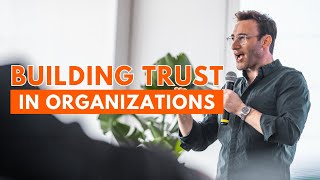
Simon Sinek argues that organizations should hire for cultural contribution, not just fit. A Navy SEALs training director found that high performers with low trust are toxic to teams. Companies obsess over output metrics while ignoring harder-to-measure inputs like trust and creativity.
Chapters
I've been talking for years about cultural fit. But, you know, fit can be sometimes very passive. And I like to think now more about cultural contribution, which is if someone fits our values, if they believe what we believe, we want them to take our values and go and build upon them. We want them to go make things based on our values, help contribute to the culture, make it grow. Now, one of the ways you hold people accountable to values is, you know, recognition and reward. You get the behavior you reward. I did some work with the Navy seals. The director of training for that group drew a graph for me, you know, performance and trust. And what they learned was that the high performer of low trust is a toxic team member. And they would rather have a medium performer, sometimes even a low performer of high trust, than that high trust than the high performer of low trust. And if you think about business, we have a million metrics to measure someone's performance, and we have negligible to no metrics to measure someone's trustworthiness. And the irony is, trust is actually a very easy thing to measure. Go to any team, ask them who the asshole is, and they'll all point to the same person. And by the way, likewise, if you go to any team and you ask them who has your back always, they'll also point to the same person, which is your best natural leader, that may not be your best individual performer. And so it raises the question, are we putting the right people in leadership positions because those people are more likely to engender trust and perpetuate the values? I mean, I think we forget that we're human. And the way we track metrics and the way we measure each other is as if we're machines. Now, output is very important, but input is really important, too, and it's just harder to measure. Like we talked about trustworthiness and cultural contribution and creativity, these are things that are in all of us, but we don't know how to measure them easily, objectively in the short term. It also reminds me of my favorite definition of humility. Bob Gaylor, who is the fifth chief Master Sergeant of the Air Force, said, don't confuse humility with meekness. Humility is being open to the ideas of others. And I've met some pretty remarkable powerful people in leadership positions who absolutely have big egos, but they're still open to the ideas of others. A healthy ego is thinking you're good. An unhealthy ego is thinking that you're better than everyone else.