Business Mastery Secrets
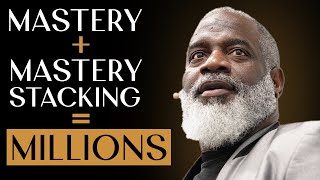
Myron Golden explains how mastery, not just practice, drives business success. He breaks down business into two types, three core functions, and four scaling moves: lead generation, core offers, premium offers, and continuity. Mastery means executing without thinking.
Questions this video answers
March 29, 2023
Seven major championships
19 major championships
14 major championships
Chapters
How long it takes to learn a new skill is more determined by how you learn than it is by how long it takes. So how long does it take to learn something? Well, it depends on your methodology of learning, right? So we talked a couple of weeks ago about the difference, the prerequisites of wisdom, right? So we talked about the fact that knowledge. Anybody remember? Ignorance is the absence of truth. Knowledge is the accumulation of truth, right? And so we're all born ignorant, we're all born knowing nothing. And so that should be so encouraging. Like for every one of you, let's say you want to learn something, you want to learn golf, or you want to learn how to use a computer, or you want to learn how to code, like write computer code. You want to learn how to create apps, or you want to learn how to fly an airplane, or you want to learn kung fu, or you want to learn how to get in shape, you want to learn any. It doesn't matter. You can learn. So the fact that we were all born ignorant, we were born with an empty hard drive for the most part, right? It was programmed, it was formatted so it could learn, but it was empty. There was nothing on it. And then we started to accumulate truth, but we also started to accumulate error, right? So we didn't just accumulate truth, we accumulate truth, we accumulate error, and then we act on the information that we're gathering. So if we're acting on error, if we're acting on information that is erroneous, what ends up happening is we get further and further away from life and closer and closer to death, right? I mean, that's the ultimate extreme, but that's nonetheless the. That's. It is what it is. And the more we act on truth, the closer and closer we get to life and the further and further we get away from death. And so, and that could be. And if you think of death as. Instead of thinking of death as the end, if you think of death as separation, because that's what death is, right? Death is when the spirit and the souls separate from the body, right? So that's what death is, separation.
So, so if you think about it, the death of a business is what it's like separation of you and that business or separation of that business from its profits, right? So, so our desire. I like what Jim Rohn said. Jim Rohn said life is an exercise.
To keep death at a reasonable distance, right?
And so one of the things that I've discovered is I've discovered how you learn is more important to your learning maybe than Anything else? So ignorance is the absence of truth. Knowledge is the accumulation of truth.
Understanding is the assimilation of truth. So, so if I'm, if I'm, if I'm, if I'm accumulating truth, I'm collecting it, right? That's why, by the way, it's so valuable. It's so like, it's so like immeasurably valuable to memorize scripture verses because what you have is, you have these, these truth nuggets laying around in your mind that you can refer to that give you a better understanding of the things you come across in life, right? Does that make sense? And so, so like, and people say, well, I'm not good at memory memorizing until their favorite song comes on, then they remember every word until the theme song of their favorite show comes on, then they remember every word. It's not, it's not that you. Everybody's good at memorizing. In fact, we all remember everything we've ever seen or heard. It's not that you don't have a good memory, it's that you don't have a good system of recall, right? And the reason you don't have a good system of recall is because you haven't worked on it, right? And so when you work on having a good system of recall, you'll get better at recalling things, right? And so, so, but the reason, the reason the transition from ignorance to knowledge should be encouraging. Or like when we look at something we don't know and we decide, I want to learn how to speak a new language, I want to learn how to play a musical instrument. I want to learn how to play golf, I want to learn Kung fu, I want to learn whatever. When we look at that, we should be encouraged. And the reason we should be encouraged is because all we have to do to know that we can learn something is to look into the rearview mirror of our life experience and see that when we were born, we knew nothing. And how many things we've already learned proves to us there's nothing we can't learn, right? Who in here can ride a bike? Anybody can ride a bike, right? But you couldn't ride a bike when you landed. Who in here can tie your shoes? See, that's not a big deal to you now. Why? Because you already got that one down, right? And so there are so many things that we've learned that we take for granted. And we think that because, well, I just learned those things because they were easy. Yeah. Tell, tell, tell your three year old self that tying your Shoe was easy when you were learning how to do it seemed like the hardest thing in the world, right? Tell your 5 year old self or however 4 or 5 year old self that riding a bike was easy, right? It's easy because you know how to do it. So, so, so, and, and then wisdom is the application of truth. Now it's really interesting. In the, in the book of Proverbs, it says In Proverbs, chapter 1, the Proverbs of Solomon, the son of David, king of Israel, to know wisdom and instruction. So he's telling you the purpose, why he wrote the book. To know wisdom and instruction, to perceive the words of understanding, to receive instruction of wisdom. What does that mean? How do you receive instruction of wisdom? So one of the reasons he wrote the book is so that we could like have an intention to receive instruction from wisdom. How do you receive instruction from wisdom? That's a good question, right? Well, if you understand what wisdom is and wisdom is the application of truth. When he talks about receiving instruction from wisdom, he's saying that we, one of the purposes of writing the book of Proverbs was so that we could learn the lessons about a thing that we can only learn from doing the thing.
See, so many people spend all this time gathering knowledge about a thing and they don't want to engage in it until they feel like they have enough knowledge.
But you will learn faster if you gain a little knowledge. Act on that knowledge, and then act on that knowledge again, and then act on that knowledge again, and then act on that knowledge again until that first, that first phase is mastered. I'm telling you, when you get to the place when you understand how to learn by mastery or change the game.
The thing I said the other day, I'm not afraid of a person who knows 10,000 kicks, I'm afraid of the person who knows one kick. But they practice it 10,000 times, right? Mastery. Right. And so, so how do you learn how to play a musical instrument? You learn one concept, you practice that one concept until you master it. What does that mean? Well, mastery is the ability to execute effortlessly without the use of conscious resources. When you can turn knowledge into a reflex, you've mastered it, does that make sense? And so it's really fascinating to me. Like when you've mastered something that other people haven't mastered, people will become in awe of your mastery of that thing. And you will be almost confused at why they're making such a big deal about it. Because it's so easy to you. But it's easy to you because You've mastered it.
A meme that I saw recently and I've quoted a couple of times.
Amateurs practice until they get it right. Professionals practice until they can't get it wrong, right? That's what mastery is when you've got it so etched into every cell of your being that you cannot get it wrong, right? And so one, I was reading a book by Harry Varden, and it's an old book. It's in like, it's in the public domain, right? And so Harry Varden was a seven time major golf champion, winner, like championship winner. He was a seven time major championship winner. So he won seven majors. Like, in golf, majors are like the world. They're not like the World Series. What are they? They're like the playoffs, right? They're like the creme. It's actually like the Super Bowl. But you get four of them a year, right? You get the Masters, you got the players. Now the players. Not you got the Masters, you got the, the pga, you've got the US Open, and then you've got the Open or the British Open, right? Those are the Masters. And if you win one of those, you're automatically in the hall of Fame. If you win any one of those one time, like, and you have like, you're going, you're going to be in the Golf hall of Fame, right? That's how hard it is, right? And it's so interesting because Jack Nicklaus won 19 majors, Tigers won 14 majors, right? And so Tiger was, Tiger's deal was he wanted to like have more major championships than Jack and whoever came after him, I think, I think whoever's behind Tiger, I think they had eight, right? And then so many, like hundreds and hundreds and hundreds and hundreds of professional golfers over the years don't even have one, maybe even thousands don't even have one major championship, right? So, so how do you do that? How did Harry Varden win.
Seven major championships? And he said something about golf. Do we have any golfers in here or is it just me? Okay, so nobody even cares.
Except as a. Except for golf is the hardest sport. So for those of you who think you're athletes and haven't tried golf, congratulations. You haven't tried the hard one yet. Okay, so did you see how I did that? Okay, poke the bear a little bit. But I know you want to be an athlete when you grow up. Good. Take up a golf. Okay, so.
But he said the average amateur golfer. I want you to wrap your mind around what I'm about to say. The average amateur golfer could be a scratch golfer. Scratch meaning play, park off pretty much anywhere. So I've only played shot. I've been playing golf for.
Since I was 32, so I'm 61. So for 29 years, okay, I've been playing golf for 29 years. I've shot par golf on 18 holes one time. One time in 29 years.
Okay? I've shot under par on nine holes probably nine times, right? And so what am I saying? I'm saying it's really like this is not something you're just going to jump out there and do, right? So he said the average amateur golfer could be a scratch golfer in one year if they had enough discipline to master one club at a time. And when you have, when you take. When you take one club and you can master that club and you can hit all the shots that need to be hit with that club, you know what it's going to do. Then you can master. Then you could be a scratch golfer in a year. But he said most golfers want to play golf more than they want to get good.
And so most entrepreneurs want to do business. They want to make money more than they want to be good. Most martial artists want to fight in tournaments and win trophies more than they want to be good. And most people in most arenas, they want to demonstrate the limited prowess. They have more.
Was that painful?
They want to demonstrate the limited prowess. They have more than they want to master each component of the discipline so that they can be one of the greats. That's why it goes back to that whole thing about Price's Law, right? Price's Law. He discovered this principle that 50% of the production of any domain is produced by the square root of that domain. And, and so which sounds like, if you don't. Just sounds like a bunch of words put together, right? Until you begin to examine it. Which means, like the square root of four is two, right? So if you have two tomato plants, then half of those tomato plants will produce, like, two of those tomato plants will produce 50%. That makes. Well, that makes sense because it's half and half, right? But.
Like 9, 3 is the square root of 9, right? So if you have 9 tomato plants, 50% of the tomatoes will be produced by 3 plants.
But if you have 100 tomato plants, 50% of the Tomatoes will be on 10 plants.
If you have a business and you have 4 salespeople, 2 of them will do half the sales, the other 2 will do the other half sales. If you have 9 salespeople, 3 of them will do half the sales. The other 6 will do the other half. If you have a hundred salespeople, ten of them will do half the sales. The other ninety will do the other half.
Right? That's it. Right? And that's. It's across any domain in life. You take whatever the square root of the number of people in the NBA is, the square root of that number will produce half the points in the NBA. It doesn't matter, right? So if you think about that, though, the bigger it gets, the more, the less sense it seems to make, right? If you have, you have. If you have. You have 10,000 salespeople, you have a company, a big old company and 10,000 salespeople.
50% of the production of your business will be done by 100 salespeople. They'll produce half of the revenue.
Which is kind of crazy because when you look at, I think there are 300. I think there are 30 million businesses in the United States, something. I don't. I don't remember the exact number, but the square root of it was some infinitesimal number. Like 50% of the gross national product in the United States of America is produced by like 5300 businesses. It's crazy. So why, why am I telling you all this? Because.
It'S, it's. It proves the thing we're talking about, and that is that mediocrity scales exponentially, but excellence only scales incrementally.
Because most people are willing to do what it takes to be a part of the mediocre many.
But very few people are willing to do what it takes to be a part of the fantastic few.
In all of the mediocre many get to pay to watch all of the fantastic few. And the fantastic few get paid so the mediocre many can watch them do whatever, play the game, right? Whatever. It doesn't matter what it is. And so my objective. Your objective, our objective should be, I am going to be one of the fantastic few. And I know I can, because most people are just unwilling to master. They're unwilling to learn something to the point of mastery. Well, how cool is that? So what that means, though, is if 50% of the production of any domain is produced by the square root of that domain, that means there's way more competition at the bottom than there is at the top.
So if you decide you're going to be one of the fantastic few, you'll have very little competition. It's amazing, isn't it? Awesome? Like, it's like you can be one of the best of the Best. Forget about the rest.
Anyway. You can be one of the best of the best.
But you have to decide you are going to learn by mastery, not by sticking your toe in the water, not by trying. I tried. I'm trying. How you doing? I'm trying as a business going. I'm really trying. What is that?
Success is never the result of trying.
People who succeed are not trying to succeed any more than people who fail are trying to fail.
In both cases, it's automatic. Is the outcome that you get because of the person you become.
So but every day, every moment of every day, I have a choice. What's the choice? I can choose. Am I going to choose mastery today? Am I going to be lackadaisical and just kind of muddle my way through life and blend in with the crowd? Everybody wants to live an outstanding life. Everybody wants to have outstanding results. But very few people are willing to stand out while they do it.
And so we have to ask the question, like, and see, here's what happens when you're willing to. When you're willing to stand out, you're gonna get a lot of flack from the mediocre many. Oh, you just think you're better than us. All you care about is money, right? You're always gonna have haters when you're one of the fantastic few. Because the mediocre many, they want to make you the reason that their life isn't working.
Can I get a witness? And so we want to. What we should do is we should just decide. Like any one of us can decide on any discipline that I'm like, you can decide today. How cool is it? You can decide today I am going to become one of the best business people in the world. And while other people are sleeping, I'm going to be studying. And while other people are thinking about making sales calls, I'm actually going to be making them. Right? And while other people are thinking about writing the book, I'm actually going to be, like, getting my concepts together and writing my book. I'm actually going to be doing the things to sell my book. While other people are talking about wanting to be an influencer, I'm going to be reaching out to influencers and figuring out how I can partner with them. While other people are giving lip service to wanting to be one of the best of the best, I'm going to be doing the things that will ultimately add up to me being one of the best of the best.
And if you will. If you will practice, like, figure out the key components, the critical Components of any discipline. And you will decide, this is going to be my life, regardless of consequences. What will happen for you is you will rise to the top and be one of the goats. It's just how it works. Why? Because most people are unwilling to become so good. They are unignorable.
Like, you will be so good. People like. Like, you'll do the thing that other people have been doing. And people. Wait, what?
So that was the preface. All that was introduction.
For this point.
Decide.
The discipline.
Discern.
What are the steps.
Master those steps one at a time.
Master one component at a time. Once you've mastered one component, how do you know if you've mastered it? When you can execute it effortlessly without the use of conscious resources, you have mastered it. And then take the next one. And it's so crazy. This is one of the reasons, I think, why the Price's Law works and why there's so few people who ever become great at anything. Because, like, when you're learning a new discipline, it hurts and it's painful. It requires this immense amount of bandwidth and focus and concentration. And then you do that, and then practice, and then you repeat it over and over and over again. You think you got it, and then you go back to practice, do it again, and you're like, oh, I thought I had it, but I didn't have it. And then you practice, practice, practice, practice, practice. Oh, I got it. Oh, I thought I had it, but I don't have it. And you practice, practice, practice, practice, practice. And you just keep doing that. And then once you get to the place that's effortless, you just want to bask in that.
But now that I've got this one component down, I got to go to the next one. I got to go do the next thing that I don't know how to do. That makes me feel awkward. That makes me feel uncomfortable. That makes me look like an idiot. And now I've got to start practicing that one.
Two.
Well, you want to be one of the greats, you have to. And so now you take the second component. Like, do you realize that anybody, like, let's talk about business for a second. Anybody under the sound of my voice, if you will, Master. Like, there's one primary purpose for being a business. So these. These are what I call the fundamentals, right? There's one primary purpose for being in business. What is that? Wealth. Producing profits. The reason I have a business is to produce profits that create wealth for my family. That's it. I don't. I didn't I didn't. I didn't. I started. That's the primary purpose. There's other stuff that happens. There are other byproducts of it. But the reason I started a business was to create generational wealth for my family. That's number one. There's one. There's. First fundamental is there's one primary purpose for being in business. Wealth producing profits. Number two, there are two types of businesses. Well, there's two types of business. A business that sells a service and a business that sells a product. You can create wealth in either type of business. But if you want to create wealth faster, with less drag, with less friction, with less gravity, with less opposing forces, start a business that sells a product and not a business that sells a service. Because if you sell a service now, you've anchored your revenue generation to time, and time is a limited resource. So now, because of a decision you made or failed to make, you've anchored your business to a limitation, which means now you can produce a limited. Well, you produce limited wealth. Okay? So you're better off starting a business that sells a product than you are starting a business sells a service. It doesn't matter if it's a book. Like this is. This is Price Pritchard's book, you Squared, right? So this book is 36 pages. He sells it. If you buy one, I think it's like $12.99. If you buy one, you buy them in bulk. They're less. So I bought. The last time I bought this book, I bought 200 of them. Why? Or maybe 500. Why? Because I could get them for $7 a piece, right? And I wanted to give them to my clients. Okay? So this book right here, I wrote this book one time. It still makes me a fortune to this very day. I make.
A few million dollars a year because of this book. And I use it in a very different way. And by the way, I make a few million dollars a year with this book. And I don't even sell them anymore. No. Go figure that one out. Okay. Okay. So. So all I'm saying is, look.
One. One primary purpose for being in business. Wealth producing profits. Number two.
There are two types of businesses. Business sells a service. Business sells a product. If you sell a product. If, like, if I do sell, if I sell books, if I sell, boss moves, it takes me no longer to sell a thousand than it does to sell one. So I literally now have leverage. I can collapse time frames because I have a product. Right? Okay. Number three. There are three functions of business. What are the Three functions of business. Number one function is innovation. That's when I create or develop or invent a product that the marketplace is screaming for. This is big gaping hole in the market. I know a solution, I create that solution. That's called innovation. So three functions of business. Number one is innovation. Number two is marketing. Marketing is the art and science of discovering and developing in other people a desire for more and more of your product, your service or your opportunity. So function number one of business innovation. Function number two, marketing. Function number three, money management. What is that? That's managing your money, the revenue of your business. So the outgo doesn't exceed the income. So the upkeep does not become the downfall. Most businesses are bad at managing money. Most business owners are bad at managing money. Most people who are good at making money are terrible at managing money. Now I'm good at managing money. I'm really, I'm good at making money and managing money, thank God. But what I'm not good at, I'm not good at accounting for money. So that's why I have a financial team. And the financial team does the accounting and the tax strategies and all the other stuff. And so they coach me and tell me what to do. I don't do that. I don't, I don't. I'm really. It's a. For a person who is like me, whatever that is, it's easier for you to make money than it is for you to account for it. It's easier to make a million than it is to account for a million. Okay, so that's the second function. That's the third function. So I got the. Once I have the. So once I have the primary purpose of business down, I have the two types of business. I have the three functions of business. Now I need the four moves, the four moves to scale any business. Like the reason we were able last year to help at least, at least 20, 30, I don't know. Entrepreneurs have million dollar days, like generate a million dollars in revenue in a day is because of the four moves. The reason we are able to help dozens and dozens and dozens of entrepreneurs last year have $100,000 days or 300,000 like six figure days is because of the four moves. What are the four moves? You have to master lead generation.
Right? So lead generation offers, you have to master core product offers, you have to master premium value offers, you have to master continuity offers. You master those four things, you can't lose. You can't lose. It's not like, like if you will master those four fundamentals of business. It's impossible. But that's a lot of things we talk about. One plus two is three plus three is six plus four is 11. That's 11 things to master.
Right? It's like juggling. It's easier to juggle one thing than it is to juggle two.
But if you learn how to juggle one, you can learn how to juggle two. If you can learn how to juggle 2, you can learn how to juggleen 3. Say, Myron, what's your point? Master one thing at a time. If that's the way you decide from now on, you're going to learn anything to master one component at a time. And then you're going to stack mastery on top of mastery on top of mastery on top of mastery on top of mast mastery. You will be able to operate with excellence and you'll never be overwhelmed. Thanks for watching. Thanks for subscribing, thanks for liking, thanks for commenting, thanks for doing all the YouTubey stuff that I forgot to say in the meantime in between time. Peace out, coach. Guys.
More from Clegg





AI Won't Tell You the Full Truth | Arthur Brooks + Simon Sinek | A Bit of Optimism Podcast



How To Make the Best Decision | Arthur Brooks and Simon Sinek | A Bit of Optimism


