Combat Medics on How to Cope With Stress | Simon Sinek
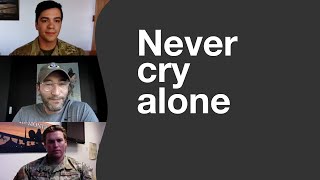
Two Air Force pararescue jumpers share how military training and team trust help them handle extreme stress. They emphasize talking to teammates you trust, focusing one step at a time, debriefing after hard calls, and staying active. Leadership that shows up and genuinely cares makes the difference.
Chapters
Hey guys, thank you for taking the time to sit down with me.
I want to introduce you, reduce Everybody to the two of you. Ben and Matt, you are both PJs, pararescue jumpers with the Air Force. And for those unfamiliar with what PJs do, PJs are, you know, they're basically Rambo paramedics who jump into enemy territory if necessary to rescue downed pilots and help with other things as well, rescue people. But you are combat medics on steroids. Is that a fair assessment?
Yeah, that's a very nice way of putting it, but I'll take it.
Thank you. So let me tell you guys how this all started. A friend of mine, her sister in law is an ER doc in New Jersey. And as we do with our friends and our family, we text them and say, how are you doing? I'm gonna read you her response. This is her exact text back to her, to her sister in law. My days are filled with fear, sadness, despair, helplessness and death. It's unreal. It's like a nightmare. It's shocking. Like you cannot catch your breath because someone else is dying or critically ill. And you have no time to acknowledge and process what's happening around you, or even no time to fully exhale. It's draining emotionally and physically. Even on my day off, I'm stressed out about the next shift and exposing my family to the harm through me. I feel like I'm just holding my breath and I can't exhale. All I do is shallow breathing.
When I heard this, my heart sank and I started to realize that what those on the front line are dealing with and have been dealing with is nothing like they've ever experienced before, both in the amount of death that they're seeing and in the pace of operations. And it occurred to me that it's much more like combat medicine than it is like civilian medicine. And so I figured as a way to try and help those on the front lines who are dealing with this and who have dealt with this. And we know that there are mental health struggles that go along with this kind of pace to reach out to people who are much more familiar with what combat medicine looks like and feels like, with the hope that we can give them something, some coping systems, mechanisms. So I guess that's a good place to start. One of the things I also know that I started to learn about civilian medicine, that asking for help is really a sign of weakness. And most of them believe that you show strength and you just muscle through it. You stay mission Focused, and there seems to be a lack of resources. They've never been taught how to deal with the trauma that many of them are suffering. So I guess my first question is, is it the same in the military? Is it different the military? How are you taught to. How you train to deal with that insane pace of both death and stuff that you might be dealing with around you?
It starts off, I think, for us, starts in the pipeline. So our training is extremely stressful and definitely trains your mind to address things and situations like that. And we know in the civilian world, unfortunately, that's not how it is. You go to college, you go to nursing med school, and kind of get thrown to the wolves at that point. But we're lucky enough to have all this training. But it comes to when you're out of that training and it's real life, finding your group of people, if it's your teammates, if it's fellow doctors and nurses and people going through the same thing, a lot of times, you can find a lot of comfort in them because you can relate to them. That's what I think I use. And Ben may use the same thing, but that's something that is extremely useful for us.
Yeah, go ahead, Ben.
Sorry.
Yeah, it's the level of trust you have in your teammates, like, to the pipeline definitely builds upon that. You're with people who've gone through something for two years before you even go out and start practicing your trade. So that's a little different. But when we do deploy, everyone has their kind of coping mechanisms. And, like, for me, it's being able to talk to my teammates, like, if I see something terrible or I do something that's, like, little psychologically jarring, I won't go call my family. Not because I don't trust them, just because they won't understand really what I'm going through. And I kind of had that when I was going to paramedic school, like, with significant other. They didn't understand that the trauma of, like, death and experiencing it on the regular. And so when you have, like, a team that you really trust, that you're meshed with real tight, it's easy to go talk to anyone. Doesn't have to be the whole team. It can be someone that you trust on the team, someone you get along with. And I think that we always on our team have a very good understanding that it's okay to show weakness and say, hey, man, I'm having a really difficult time right now. Even if it's like a family man, or, like, I'M going through divorce, or if it's in combat, like, hey, man, like, I need to call you, like, little frazzled after this last event. Can we talk about it? And, like, it's okay, because everyone. I think they want to be invincible, but that's not possible. Everyone has fear. Everyone feels things. You're human, after all. And so once you acknowledge that, being able to let down your wall a little bit with somebody and talk about it in a realistic manner is more helpful than just kind of stowing away. Because it's really easy to just go into your room after, like, an operation and just sit there, like, listen to music. Listen. Music makes you depressed sometimes. Sad lyrics all the time, you know, pops up. But, like, that pops up. Easy to isolate. I don't think that's the healthiest way to deal with it, but I dealt with stuff like that, and then I found it's better just to go talk to people, be around a community. For sure.
Can you dispel a myth? You know, I think people in. In the civilian world think that the military. That you compartmentalize your emotions, your mission focus, you do your thing, and. And, like, you don't. Like. The question is, you know, the military knows that you're gonna have to deal with that at some point. And what have you learned? Is it better to wait until you get back home when the emotions flood in and then you seek the help? Or are you supposed to seek the help all the time throughout. Throughout the process?
It depends.
So, yeah, I've done both. And my last deployment to Afghanistan, I think, was better for me, because after everything happened, I would talk to somebody immediately about what happened. I wouldn't say, like, necessarily how I was feeling. I just described the situation at least, so someone else. I could just talk to them about it. And that helped me a lot. And, yeah, I don't think it's healthy to just let it build up. Obviously, during the mission, you're not gonna just start getting emotional, of course, casualty, for example, or something of that nature. You just do the most good you can for the most people, and people will die. You have to understand that as long as you get the preparation mindset, I think is most important. So you go into the situation understanding that you can't save everyone or that people will die. It's just the nature of the beast. And then when you come out of it, give yourself a little breather time, relax. I like to always take notes, like, almost a journal when I'm done with something, just so I can remember it fully. Because your mind will alter what happened, even if it's like a few days after. So I like to have that for me, my personal thing, just, like, how I actually felt after it. And then I will go tell somebody what happened. And then as the days progress and I'm feeling kind of weird about it, I'd always have someone I can call. Usually it's a teammate, not necessarily a psychological counselor, until they're helpful, like, when you get back home, station talk to them. But when we're out, like, deployed, it's definitely just a team member that we talk to.
Matt, what skills are you taught or have you developed? How? Because you're medics, you're combat medics, you're not psychologists and psychiatrists, and yet, as Ben's explaining, you're going to each other and asking for help. What skills have you learned? When somebody says to you, I'm hurting, I'm struggling today. What do you do when somebody does that?
Well, the thing is, I think during deployments, like, every situation is so dynamic that none of them relate. There's definitely aspects that do relate, but for the general thing, it's always different. So I think a huge thing of talking to one another is you just need to be a good listener, let them talk it all out. A lot of times that's all they really need is just to talk it all out. And then I try to minimize what I say to them because they. They know what happened, and they. They're just using me as an outlet, and I'm happy to be that outlet. And again, like, we're no professionals, and we usually just kind of listen and talk and then kind of advise them, like, hey, if you need to go to a professional, like, we can get that for you. But sometimes just talking about it just, again, what Ben said is talking to someone you trust, that's just. That's a huge thing that can relieve a lot of stress. And I think that's something we can relate to with the civilian medicine, because it is in that ER room. We've been in a few of them. It's a team dynamic. Every time they go into a shift, that's a tool they can definitely use.
The thing that hurts me when I hear about it is that the culture has developed in civilian hospitals that asking for help is a sign of weakness.
How do you teach people to. That It. That it. That it takes. Like that is the. That it's the opposite. That strength comes from asking for help. Like, how did you learn that? I mean, you came into the military, it's all the machismo and bravado, you know, to learn that you can cry and ask for help is actually the right thing and the strong thing to do. You know, did you have a. Did either of you have sort of a moment that you sort of like a light bulb went off, you're like, that's not going to work for me.
I think there's been times that something has. An event has happened, and a lot of times I would kind of replay that event and see what I could have done better and what I could have fixed and something that I used was in the military. You can talk to people who have a little more years in the career field, and I'm talking to them and seeing what they. How they coped with it and how they learned and how. How they attack that problem. I definitely took a lot out of that with talking to people who have dealt with it and how they cope with it and using those techniques and skills and applying it to myself. I think grief and dealing with stress like that, it's always changing. It's never the same. And you always got to fix your coping techniques because you're always going to be in a different spot next time I come around that that problem is going to be a different part of my life and different aspects and priorities that I'm going to have to face.
So, again, it's going to be hard to kind of push through that wall. But I think a lot of people are aware of themselves where it's like, you know what? I do need some help. And we just need to get the message out that talking about what happened is not a sign of weakness and ask for help is, yeah, like you said, more of a. Shows more strength than weakness.
In that case, one of the questions I got when I asked doctors and nurses and other frontline medical staff and first responders to please send some questions knowing that I was going to be talking to you. One of the questions, a few of the questions I got all dealt with feeling overwhelmed.
How to deal with how to control the feeling of I can't keep up or I'm drowning. And it's not just necessarily work, it's also financial problems that are now showing up and the horrible stress of am I going to hurt, infect my family? You know, how. How do you deal with the feeling of being overwhelmed? How do you bring that down?
Well, personally, I don't want to pretend to understand everybody's plight because I'm not them. But for me, what's worked for me, I'm not saying it'll work for you, but if it does, awesome. We get taught this too. It's just one step at a time. So whatever your target is, just bring it back a little bit. So if you're thinking about eight things, of course you can get overwhelmed and you can't do all at once. You can't multitask. It's not capable of it. So what we do is we just, hey, what's. If you have to bring it back, what two things can you do? Or what one thing can you accomplish? Then you do that, move to the next. And that's the best way to deal with it. Because if you start trying to just think about everything that's coming down on you. Yeah, you're gonna fry yourself quickly. For us, it's like called the one year target. Or just, you know, go one foot at a time, one foot forward. That's what it takes to get through it. Then you can like look forward further after that if you kind of figured it out.
Great advice. So make the list smaller.
One foot in front of the other. I'm gonna share.
A question here I got from a police officer. My police agency in California lost an officer to COVID 19 last week. What advice do you have to show other officers on the front line that we in management support them and understand the risks they are placing themselves and their families in? This is a great question. How do leaders respond when they're not on the front lines to show that they actually do care about the people who are facing the danger every day?
I think you can just start off. The leadership in that position can definitely. You need to show definitely compassion towards them of, hey, you know what, like a brother in arms has passed away, especially during this pandemic, and just reach out a hand. Definitely don't lose contact with the low, the men who aren't in the ranking spot. But reaching out and showing compassion and offering help I think is going to be a huge goal for them to do, letting people be an outlet. Because again, people are probably going to keep it inside and then that's when mistakes are happened when they really shouldn't be happening.
So is there. Can you. Obviously you've had senior folks come down and check in on you guys.
Is there a way to start that conversation?
Are there things that can be said that make you shy away and feel disingenuous and there are things that actually draw you in or is any effort well received?
Yeah, it can feel patronizing at times. No doubt. Like if someone comes up to you after something's happened and it's leadership and it's kind of like, oh, they're just showing up now. I think you have to start that leadership before this kind of stuff happens. I think it's an organizational thing where if you're an organization that doesn't put people first and they suddenly want to start doing that, your people will find it disingenuous. But if you've always been an organization that has your people's backs, that this is simple. Things like when we have someone who has a newborn, we all get diapers for them just out of our own pockets. It's not necessarily we have to. It's because we want to. Because it's a leadership philosophy like, hey, the people matter. The people are more important than making money for the organization or completing, you know, X, Y and Z. So I think if you. Your organization isn't there, you should start focusing that. And if it is already there, just kind of focus that, kind of that lens like, hey, we're here to help the people because the people matter for our organization. Here's how we're going to do it. You know, providing services for them, you know, make time off they need it, stuff like that.
Here's an interesting question, which is when. How does somebody speak up for themselves? This one says, how do I speak up for myself? Not just during this pandemic, but outside of that as well. How do you. I've been trying to be the leader I wish I had for my co workers, but I'm struggling because of my direct supervisor, hasn't once come to our area to witness for herself what. What we're doing and asking how we're doing. So somebody who maybe leadership isn't there for them, they want to fill that role. Any advice?
I think they would need to, obviously, if they're kind of caught in the middle with a direct supervisor over them, but they're still supervising other people. You have to be the rock for the people underneath you and really be there for them. But if you're a supervisor to other people, you need to make it your due diligence to go to that higher supervisor and be like, hey, we are struggling and including myself and we need your help. Or we need you to do something and act for us because it's going to be tough for them. But you got to remember why you're in that supervisor position. And that's because you have the skills to represent other people to higher leadership. So passing that up is something that can be scary, but it's something that needs to be done. And remembering why you're in that position may help you to that.
I had a couple questions about compartmentalizing emotion. You know, 12 hours on, 12 hours off. You know, how to use the 12 hours off to heal a little bit, but also, you know, people who are suffering extreme stress at work, how to avoid bringing it home. And one of the questions was, I'm learning to compartmentalize so I don't stress out at home. But then the question is when to deal with it. So the question is, how do you deal with the trauma while also protecting your family.
From what you're going through? And I don't mean necessarily transferring the virus, but just the high stress that you're trying not to bring home.
It's important to have your family and significant others understand because compartmentalizing only goes so far. I did that coming back from deployment, and then I had, like, a breakdown on vacation with my family. And like, clearly compartmentalizing didn't work. It only goes so long before it's all going to come out as, you know, like a steaming kettle. So you have.
You have to.
At some point, you don't. To give them everything, right? That's because it's not all or nothing, but maybe try to explain some of it because their significant others, they do care about, or at least I hope they do, and being able to at least just give them snippets that they'll understand. Kind of broken down, not everything. Don't have to be like, I saw like this many dead bodies, but like, hey, I dealt with this today and it's affecting me emotionally. If I'm off a little bit, I'm sorry, but I just want you to understand that I still love you. I think that's the best way to deal with it because I didn't do that. And I had to do that explanation. And it's almost selfish to keep it to yourself and not try to share it.
I love that, that it's. To feel like you don't want to burden your family is actually a selfish disposition. They love you, they care about you. Give them the honor to take care of you. And as you said, for those who understand what you're going through, to report out all the detail because they understand and to do.
A cleaner version for family, but you still get that reporting out. I think I'm finding that very interesting. The need to just not necessarily unload how you feel, but just simply reporting the facts of what I dealt with is part of the coping. It sounds like absolutely.
You know, in Some cases, you know, in some states and many hospitals who have been overwhelmed, the pace is slowing down. But one of the things that I've been made aware of by friends in the military is that sometimes the calm is more dangerous than the storm. And I've heard stories of folks who come back from combat and sometimes months later, the motion, the emotion floods in because they haven't dealt with it and.
Because they've been so mission, mission, mission focused that when it's all quiet and people don't understand because rationally everything's fine, you're home, you're not in combat anymore, you know, where is all this coming from? Are there some thoughts that you can share if the pace is slowing down for some of our frontline medical staff, what they can prepare themselves for if this flood of emotion shows up, what to do when it shows up? Will it show up? Very curious as to your experiences and your thoughts.
I think something that is very similar between our job and the civilians is that like you said, they're so mission focused for months on end and now as it slows down, they start to get relieved and kind of come off that mission focus. And the hardest part, I think for me as well, is coming back to the US and people are around you that have no idea what just happened for your last four to five months while they're just living their normal lives. And you've just gone From a complete 180 of this combat high stress environment to now back to normal life. And people don't know and can't relate. Most people can't relate to what you've just gone through. So in the civilian world, again, it's all ramped up, but now you're kind of coming off and you're going back to your family. And you know, people who weren't in the ers and never got infected, they just are mad that they're stuck in their house. Right? So it will come. I don't think it's definitely inevitable that they will, they will come with these emotions and. But you need to remember that what your mission was of, hey, I chose to treat these people and chose to be in this career field and remember that mission and remember that not everyone can do that job. So when you do get frustrated, if these people are just complaining about being home and you start seeing all these terrible things, remember why you're in that position. Because these guys can't really handle it as much as you can.
That's fantastic. Ben, any thoughts on how they can mentally prepare for the flood of Emotion that is very, very, very likely gonna, gonna hit them at some point when this is when as things slow down.
Yeah, like, like Matt said, it's easy to get angry at people. Like everyone catches themselves. Like, man, these people just don't understand like what we went through. Like they're out here just living their life, getting drunk all the time or you know, whatever. And it's not fair to do that to other people because like we said, you do what you do because you have the ability to do it. Maybe they don't. So you're not better than them. You're just you and just take that. And then when the emotions do hit, I think it's best not to be alone. I like to like find other people I can hang out with if they're going to hit or at least call. It's easier to be around a person, I think. And then they don't resort to like substances like alcohol. It doesn't help us. It's easier just to find like a hobby, like push the energy to something we like to use. Working out. It's, it's easy, it's free. So that's what I just find a hobby.
So this is very interesting that because the trauma is an energy buildup and it's, it's letting the energy out. I guess it's kind of the physical comparison to talking. Right. Which is to somehow vent the steam, I guess.
Yeah. Like I know I got picked up like soldering, not my thing, but like I like working out a lot also. Like you know, working on watches. Some people like working on just whatever, like kind of fine detail. It requires a lot of mental brain power. It's kind of a nice thing that just, it takes your mind off it too.
What about burnout?
You know, there's a huge fear now that a lot of doctors and nurses and other frontline medical staff and first responders because the pace has been so high that they're going to burn out, drop out of the profession altogether. And the fear is that if we have a resurgence, we actually won't have enough people to, to cope, that we're going to actually have a dip in medical staff.
I'm going to guess that it's the same, that there's going to be a repeating pattern here to the answer, which.
Is a good thing.
But how do we prevent burnout? Because these are, you know, we keep calling them essential workers, you know, two sided issue.
I think it comes from both the individual and leadership. So the hospital in general needs to figure out how to treat These people fairly for and compensate them for the time they put in. Then a lot of people, even in our profession, sometimes you go through a lot of stuff in this, ask, ask, ask, but you feel like they never give you your time back. And I think if any gesture of giving time back, whether it's, you know, compensation of wages or just actual time off, which is hard to give sometimes, but you know, allowing that is helpful for people to want to stay in that career field. And for the individual, when you have time to relax, you better, you better take advantage of like, find out how to relax. I know people that just don't know how to relax and I wish I could teach them, but it's just the thing you got to figure out your own, you know, like some people like to have tea before they go to bed, do the whole ritual. If that's what you got to do, that's what you got to do. You know, finding what is able to actually let your body relax. Not just sit there and ruminate or sit there and just like waiting to relax. Because it's something you gotta, it's truly something you gotta work on. Similar meditation.
I guess this is another sort of thing that so many will have to deal with, which is right now.
We call them heroes every day and many of them, we're clapping them to go to work, that's gonna end and they're just gonna go back to being doctors and nurses and frontline medical staff again. You know, the person right now who's cleaning hospital rooms is like the most important person in the world right now. And they're just going to be. Go back to being just the person who cleans the room. You know how there's going to be an identity issue, I imagine. Will you go from being a hero to just being a doctor, nurse or somebody working in a hospital or first responder again, you know, that has to affect somebody.
Yeah, I think it needs to have self reflection of why you joined in the first place and not join the military, but join that occupation. No one predicted that this pandemic was going to come. And I'm going to be a doctor, so when a pandemic hits, I'm going to be able to be the hero. Right. So taking that stress off, once it starts ramping down and taking that relaxation and really, really embracing it and then do a little self reflection of, you know, what you're thankful for and how you will be thankful for those slow days when you go back to the ER and understanding again, like why I became a doctor was not to treat people in the pandemic, but while I will do that, and I am thankful to do that, but I'm also here to just be a doctor on a day to day basis and not be a hero. I'm here to just help people. So just remembering that will pay dividends.
Here's a question that came in. What are aspects of combat medic culture and what skills and practices of frontline medics direct leaders to hold each other up the most? How is their culture of leadership and interpersonal training different from and maybe even better prepared for crisis than the rest of the medical culture? So I guess it's a nice broad question, which is what is it about the combat medicine and your profession and military life that makes you actually better equipped than civilian hospitals and civilian medicine medical culture to deal with these kinds of things?
I think a huge thing is just the mindset alone. Training to prepare for the worst is what we do. And when that worst day comes, then we know what to do. And mentally we know how to attack it and we practice our skills so many times that physically it's this second nature. But that mental battle is where I think we make the most money between the two groups having that attack pattern of, hey, I know this is going to come one day and I know I am capable of addressing these things. I think that's what makes a difference. They have a day to day, same thing in the er. You know, multiple patients and everything goes, well, sometimes it goes bad. But this flip of a switch, now everything is going extremely bad is where it might be biting them in the butt of, hey, we weren't mentally prepared to take on this many patients and see this much death and despair. When I think the military does a really good job of mentally training their soldiers. So when that day comes, we know, we know how to act.
Yeah, the amount of training we get definitely speaks to performing because when you're kind of in that fight or flight mode, you're not able to process and think like you normally would. So it all comes back down to what you were taught and how you react to it. So the amount of training we go through, I mean, think about it, we do over two and a half years of training before we even get to actually touch a real patient. So we, that's where it's unfair almost for us because we have so much preparation and mindset training, like, hey, this is how it's gonna happen. And the training is usually like a lot more difficult than the patient you're gonna get. Like it's Missing every single limb. You're just blood spurting everywhere. Like, it's not quite as bad as you think. And so I think that's where we kind of benefit is. I don't know. At least in my experience, the stuff we've done is. Yeah, it was pretty bad sometimes, but I can handle more.
Yeah. Yeah. Guys, thank you so much. I can't. I'm so grateful.
Any. Any final words of advice that you'd like to. That you'd like to share, especially for some of those who maybe haven't dealt with the trauma yet? Any. Any final thoughts that. That or words of advice you want to impart?
I think.
Just be thankful for being safe and healthy and understand why you're doing this mission for the whole country and the world. And definitely the better days will come, and you got to make sure you're not afraid to reach out for help. It doesn't show a sign of weakness and continue to push forward, because this will all go away, and we will go back to our normal lives, and we'll be all happy people again.
You know, Ben.
Yeah.
I think as long as you have the right mentality that you did the most amount of good with what you could and that it's okay to feel the way you do. If you're not weird or abnormal for feeling sad, feeling, like, almost lost or broken, that everyone goes through it, that's okay. Like, you're allowed to have that feeling that's human, and just be glad you can feel that feeling instead of just not feeling anything, which is much worse, I think. So go embrace those feelings and talk about them, because that's healthy of being human.
That's magical. You know, one of the things I've learned from spending time with folks like you is never cry alone. And if the emotions overwhelm you, then go find someone you know, or. And if you see someone who's in a corner, go put your hand on their back, you know?
Definitely.
Guys, thank you so much. I can't thank you enough. And thank you for the work that you do. I really appreciate it.
Thank you, Simon.
More from Clegg





AI Won't Tell You the Full Truth | Arthur Brooks + Simon Sinek | A Bit of Optimism Podcast



How To Make the Best Decision | Arthur Brooks and Simon Sinek | A Bit of Optimism


