Get a Work from Home Job! BEST Way to Find & Land Remote Jobs | Ft. Jordan Carroll
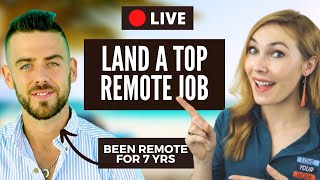
Jordan Carroll, the Remote Job Coach, explains how to land remote work. Most people waste time on job boards when direct outreach to fully-distributed companies like Zapier and GitLab works better. Skip the applications and use informational interviews to vet company culture before you apply.
Questions this video answers
Over seven years.
15 countries.
Chapters
Welcome to Self Made Millennial. I'm Madeline Mann, joined today with Jordan Carroll, the remote job coach. Today we're talking about how to land a remote job. And of course, as in his title, no one does it better than Jordan. Jordan, welcome. And let us know a little bit about you.
Yeah, Madeline, so good to be here. Thank you for having me. Again, my name is Jordan Carroll, AKA the Remote job Coach. And. And I tried to pick a name that would tell you what I did, so that was a pretty good domain pickup on my part. I've been working remotely for over seven years. I've worked remotely at a Fortune 50 company. I've worked remotely for startups. I worked remotely for my own companies. And that gave me a really interesting perspective over time to realize that there's this learning curve for not only learning how to work remotely, but then also learning how to find a remote job. So what I decided to do, I started getting all these questions from friends and people on social media. They were asking me for years, like, how are you working remotely? How are you traveling? And over time, over the past three years, I've traveled to 15 different countries and lived in those countries while I've been working. And the result of those questions was I should probably start a business helping people do this, because there's so many people who aren't sure where to start in a remote job search, let alone a job search. And you know that just as well as I do. Like, there's a lot of.
Misconception, a lot of misinformation about what to do in a job search, and we don't really ever learn it in school. So that's. That's a little bit about me.
And I. I think it's really interesting because this topic, you've been talking about remote work for a long time, but this topic has become so top of mind within the last year. And what do you think? I feel like the misc. There's a lot of misunderstandings about what remote work is or. Or how to pursue remote work. What are some of the misconceptions that have been popping up for you?
Yeah, I mean, one of the biggest ones is that this has been traditional remote work. What. What people have been experiencing the past year and a half, two years. Right. Of this pandemic. I don't even. How long has this thing been going on? It's like, I don't. I don't even know what to say anymore. But whenever this thing started, I think was early 2020.
This has not been traditional remote work. So if you've transitioned into remote work because of the pandemic, you know, you really haven't had the freedom and choice that remote workers have had over time. You know, for instance, I've been someone who's, like I said, traveled to a bunch of different countries while working remotely. And the amount of freedom that I had had over those number of years doing that was much more than what people kind of have now. So I think that's a big misconception. And then when it comes to, you know, working remotely and finding work remote, it's, you know, I see some misconception that it's actually easier to work remotely. It's not necessarily easier. Like, for a lot of people, there's this, like I said, huge learning curve where now I'm dependent on myself to motivate. When I sit down and work now I'm motivated by what? My TV over there, my bed. It's like you could easily go into. And this is what I did when I first started working remotely at my first job, like, it was a buffer for hangovers. I would just sleep longer before my first meetings. I'm not ashamed to admit that, because I think we all make mistakes and then learn. And then over time, I realize, like, oh, wow, this is an opportunity to actually have more time in my day to do the things that I want to do. Another couple misconceptions might be that it's an application game and, you know, you just want to send in all these applications. That's the same with a regular job search. It's not the case. I mean, remote jobs are the most competitive in the world because they have the largest candidate pools. So you really can't rely on just sending applications. You have to get closer in proximity to these decision makers. You have to build relationships. All the same things that you say, Madeline. And then also the sites that you use to find remote work that might be very different than some of the sites you're using now if you're on Indeed. Or Munster. Some of these things, I don't think they're really optimized for finding remote positions. And there are a lot of job boards that are now super optimized for only remote positions. So those things are all misconceptions. The last one I'd say is that you should try to convince a company to change their remote policy in the hiring process.
That's a misconception. I see is like, oh, you should do that, or you can do that. And here's the thing is that if you're starting out with a position that does not meet whatever your remote requirement is for the lifestyle that you want, you're already in trouble. You're already going down this path of investing time and energy in a company where you're going to have to, what, change their entire policy yourself. That. That kind of superhero? Probably not.
Yeah. That's actually a really interesting thing that I wanted to touch on is, okay, you know, I have companies I really want to work for. I see this role that's open. Should I just go for it? Should I just go for that role, have a conversation? Remote work is now. So many people are working from home or working remotely now, so the company might be open to it. And you're saying just don't. Just don't do that. Like, either it says remote or, or. Or move on or. How would you frame that?
Yeah, I mean, I think most jobs nowadays are going to specify the level of. I mean, we, we have come to kind of expect now that it's specified. And so if it's not, then it's. I feel like that means that it's in an office. Right. If it has a location and it doesn't specify that it's remote, it's. It's almost like the default is now becoming remote, which is cool.
Yeah.
But it also begs of you to really read the job listing, really understand the company. So if you're not really sure, I would also look into the company a little bit more. Like do some research on the company and see do they have other positions that are remote? Do they have people that are working remote? Do they have anything on their website that talks about their remote policy? Try to figure that out first. If it's just. I mean, this kind of also comes from this scarcity mindset too. Right. It's like, oh, well, this is the perfect job for me. Like, I have to go for it. And you and I probably both encounter a lot of job seekers who feel that way, because if this perfect opportunity comes up, it's like the end of the world. But I don't know, it's kind of like dating. And I don't know if you've been on any dating apps or anything, but it's just like there is this crazy abundance that. That makes it overwhelming too. So really start with the companies that would give you the lifestyle that you can. That you actually want. That's ideal.
I like that. Yeah. Okay, so I just want to give a quick shout out to our audience.
Alex Flora just landed his first remote job or her first remote job. Congratulations. Shout out to Mary Kay beauty consultant William Lyons. Jonathan Amita Abdallah, Courtney. Hey, Jan. Hey Driss. So thanks for joining us. And I'm seeing some, some questions pop up in the chat and so thanks for putting your questions because I'll be peppering Jordan with some more questions that come from you all as well during this session. So. And we got some people from all over Florida. Fantastic. All right, excellent. So going off of this, so you mentioned that you need to find these companies with these right remote opportunities for you that is going to give you the right lifestyle where how do we start this journey to finding these opportunities?
Yeah, and that's a, that's a fantastic question. It starts with self reflection. It's understanding yourself, understanding what you want. I think a lot of people go out there expecting the world to tell them what they want. Like I'm going to go look at these job boards and that's going to tell me exactly what I want to do. But I think a lot of us already know some of these answers deep down. We just need them to be extracted. So doing some reflection on what skills.
You'Ve built in the past, what kind of experiences you've had in the past and really dissecting what are the roles that you could do remotely and kind of getting a sense of that first, because that first is going to allow you to understand your pivot ability in the marketplace of where do you fit within remote jobs and then you want to also back into the ideal lifestyle. Someone who wants to work from home in rural Arkansas in the middle of the US is going to have a very different job search strategy than someone who wants to go travel in Thailand but is a US citizen. Just the same as if you're someone who is from a different country, you're from.
You know, Pakistan and you're looking for a remote opportunity, you're going to have a very different search strategy than someone who is from the U.S. it's just the way things are right now. I think one of the benefits of remote work and where we're going is that we're going to be having a much more borderless society in the future in the next five, 10 years. I think between technology and government advancement, digital nomad visas, which is something we can talk about if you want, this is going to make life a lot more flexible for a lot of people. So really kind of starting out with your own personal preferences, what it is that you've done in the past and then looking at where are these companies that fit this type of lifestyle. That I want and potentially already higher roles like this. So 95% of remote jobs have a geographical restriction. So you need to know that going in. If you want to work anywhere in the world and travel, then you probably want to start with distributed, fully distributed, remote companies that don't have a central office that hire people all over the world. Right. So it's kind of just knowing these things and then putting the pieces together to say in my strategy, I'm only going for these types of companies and everything else is probably a waste of time. Yeah.
Okay, so I want to repeat back, because that is such a key insight. We have different reasons for wanting to be remote. Maybe it's that you want to be able to drive your kids to school in the morning and back. And you also, you have a spouse who's working in a remote area, like in a, an area far away from metropolitan area. So you want to just be able to stay in one spot and be there for your family or whatnot. So there's other people who want to travel the world and know that they can make time to work at the same time and they want to have different hours or different locations. So. And there's, there's many, there's many other options in between. And so what you're saying is the company that person A would be pursuing is different than the type of company typically person B would be pursuing because there's so many different, like, restrictions about time zones and locations. And every working hr, every time you have a new employee in a new state, let alone another country, that is another human resources load that is now put onto that company. So they're not necessarily going to say, oh, yeah, you can live anywhere, anytime. We have the infrastructure to hold that. So.
Right.
And so that is something that's super important to know. Okay, I love that. And so let's say we get firm. We say, yes, well, I want to pull a Jordan and I want to live around the world. I want to move and I want to work remotely.
What.
How would you then start looking for those opportunities? Are there any specific websites or anything like that that you recommend?
Yeah. So. And that, that's.
A thing. When you decide to do that, I might recommend trying it out for like a month first. Not just like, just figuring out, like, do, do a month in your home country away from your house and go, go to an Airbnb and whatever frequency you wish to travel. If you wish to travel like every week, then go travel every week in your home country first. Like, try that first and see how well you do, because it can be, and I'm speaking from experience, like, it was very difficult the first time that I left. I mean, I, I did it kind of. I had been working remotely from the US For a long time, and it was still a difficult transition to be working in a European time zone and then an African time zone, and then, you know, all these different places. It's just like, it throws off your rhythm. So you have to be very.
Rooted and grounded in your routines and then also have kind of an understanding of what it is that you need from a location, as well as when you get to that location. What is it that I need to set up to feel comfortable? So that, that's the first part. Now, if, if you do decide that you want to go forward with that, even after maybe working remotely from your own home country, in different cities, things like that, awesome. I would start with fully remote distributed organizations. So there's a lot of different ways to find these types of companies. There are filters on different remote job boards. So on FlexJobs, for instance, you can filter by work from anywhere. There's WeWork remotely, which has a hundred percent. It has a tag that you can tag for 100% remote. And, and I might just go in there and then start to find those companies. Not even look for specific job roles just yet. Just find the companies first and get a sense of, hey, do I know what industry I want to go into? Do I know you know what kind of size company I want to work on? Because those are the things that are really going to help you identify, like what type of organization. And then you can get even more specific. And then if you go on LinkedIn, you go on to a company profile like Zapier, for instance, which is 100% remote distributed company. On the right side, it'll say companies like this. It'll have a bunch of different companies. And you can also search online top 25 distributed work from anywhere companies. There's a million lists out there that say, hey, here's the top 100 work from anywhere companies. So those resources are all out there for you, but then it's up to you to continue to filter down, right? To find, okay, well, company size 50, 100, 1000, whatever, industry software as a service or healthcare or whatever. So the more specific and targeted you can be on all those things, the better your search process is going to become.
Yes. Okay, that is so helpful. Hope your folks are writing these down, writing down these links, and really making sure that we are finding these opportunities. I'm seeing a lot of comments. I posted some of them on the screen about how everyone's loving these gems that Jordan's dropping. You know, Jordan, I. We work together, we've teamed up, we do coaching together. So if y' all want to hear about Santa job search, my coaching program, I'll put the link on the screen if y' all want to hear more. Jordan is an absolute, like, all star coach. And we'll also, you know, definitely make sure to follow him on YouTube as well. The remote job coach. Or does it call just Jordan Carroll?
Yeah, Jordan Carroll, the remote job coach.
So it's Jordan Carroll, the remote job coach.
Perfect. So.
One thing that I'm seeing here is a question that someone asked about what if you're asked.
Why, why do you want to be remote? They were asked this in a job interview. And so how would you respond to that?
Yeah. Yeah. So I think.
Here'S the thing is it's not necessarily a trick question if the company brings it up, but it's not anything that you should ever bring up proactively. And what I mean by that is you don't go into the job interview and the most important thing about this job role for you is that it's remote. That should not ever be the mindset that you're in or that should not ever be the reason in which you talk about why you want to work at a company. Because the focus should be on the role, the value that you provide, the experience that you have that's relevant, the types of things that are going to allow the company to trust you. And then you can use just the remote experience that you have as the trust to that you can do it remotely. This is the show don't tell, right? It's like, look at all this experience I have in working remotely. So especially if you have worked remotely before or if you've been working remotely since the pandemic, all those things like this, that counts, right? So that can be the proof. And then we always want to show our metrics whenever we can of different KPIs and things that we've hit during that time while we've been remote. So if someone asks you that directly, what I would do is always have prepared in the back of my head, like when you're doing your company research, do the research on why the company's remote if it's something that they talk about in their particular site or in their job description. Because a lot of companies actually talk about their remote culture and they talk about what they care about. For their employees. And then you can spin that on them and just use their answers. And you could say, you could literally just kind of match what they've said. And you said, you know, well, I'm specifically looking for the right fit of the company right now. Remote work is, is. Is offers me great flexibility. And I saw that in your about. You hit on boom, boom, boom. That aligns exactly with me. And you don't have to do this whole, like, explanation of like, oh, I got to pick up my kids at this time and keep it concise, keep it short, and then try to tie it back to the company in some way. The company says in their values and they're about. That they value flexibility and remote culture and all those things. That's what you bring into the conversation after they ask that question. Not necessarily proactively, though.
Right, right. It's not. I think what so many people forget is that working remotely is like a benefit. It's like, oh, you have a 401k or you work remotely. Oh, you have an office that's close to my home. Oh, you know, all these different things that don't actually have to do necessarily with the work and the mission and the, and, you know, the product. And those are the things that are ideally the drivers of why you want to work there. It's like, I feel like I can get into this job and, and hit the ground running and add a lot of value quickly and learn a lot of people from my. A lot of things from my manager. So I think, like going into this deep story about why you need to work remotely. Exactly. It's not, it's not really necessary. And it shouldn't necessarily be your favorite thing about the company, which so many people. Jordan, I don't know. In this, your experience, so many people have been like, I'm so excited about your company. You all have this work remote. You all work remotely. It's so cool. It's like, okay, yeah. But, you know, we also just like launched this really great product. Like that kind of. We think that's a bigger achievement than not having an office. So, yeah, I think that that's. Do you notice a lot of times people kind of making that mistake?
Yeah. And for those remote first company. So there's, there's. There's different companies. Right. Like, this is becoming the default now. Remote work. So at some point, like, we're really not going to have to explain this question at all. It's just going to be the normal. Yeah, this question is going to go away in my Opinion. So I think they may ask you, like, tell me about your experience working remotely and how, you know, how great you work remotely, blah, blah, blah, things like that. But I think in these circumstances, when you have a remote first company, a remote intentional company, this is. They started the business on the foundation of not having any offices. There are many companies like this that are 10, 20 years old. We can't forget that. Like, there are companies like this, like Automatic, like. Like GitLab as well. Like, these are amazing companies. The focus with them, I mean, the remote stuff is a way of life. It's not this little benefit. It's. It's like the way of life of how they work their company. But they're looking for people that they just want to work with.
Yeah.
They're not like, you know, I don't know. It's. It's funny to me that.
That a recruiter would ask that. And that signals to me that maybe they haven't been remote for that long. That company potentially, or that, you know, the way that they're asking those questions might be trying to weed people out, I guess. I don't know.
Yeah, I would say there is a massive component of trust that happens when you work remotely that a lot of companies are wary of. Such as a lot of managers, especially if they're a little bit more old school, they say, if I don't see you working, I don't trust that work is getting done and seeing is believing. And so they're really scared of hearing answers like, well, you know, why do you want to work remotely? Well, you know, I've been wanting to travel the world my whole life, and now's my chance. It's like, okay, are we, like, just gonna be funding your vacation? Like, you know, let's focus on. On the work here. So I do think that maybe that question stems from a lack of. Of trust of, you know, are you in this for. For meaningful work or are you in it for a chance to finally, you know, go to Puerto Rico?
Right.
I don't know.
Yeah. And so I think for those reasons kind of being rooted in.
Again, your experience having your metrics. This goes back to, like, you should always be tracking your own metrics in what you do. The companies that you've worked for previously are not responsible for tracking your own metrics and for giving you those points of leverage. But when we look at the way that a job search works, the way that leverage works, you need to be responsible for your own destiny. So having the leverage points of working remotely for a certain number of years, improving yourself with KPIs and metrics, you might not even get that question. If you've never worked remotely before, that's when someone might get that question. You're like, okay, well, why do you want to work remotely? You've never worked remotely before. So I can see, you know, in those circumstances, why someone might get asked that. In that case, it might be a trick. But focus on virtual work, right? Focus on. Oftentimes we forget, like, oh, I have actually worked remotely for many years, even though I've worked in an office. Because let's say that you had an office that you went to, but there was another office in a different city and you collaborated with that team.
Virtual work as a form of remote work, Right. You're remote from that other office, so you try to focus on the time. If you've ever emailed someone while you're in the grocery store from your phone. Remote work, like, afterwards, right? So, like, we've done these things, like, virtual work is. Is not completely new to any of the knowledge workers. Right. Like, we've been working on computers for decades and decades. So just have that confidence in some of that experience, too.
Mm. And so, you know, if we kind of flip the script a little bit, they're evaluating us for these remote jobs. Do you. I think some people worry that if they are interviewing remotely, they never go see an office. They never really get to, you know, feel the culture of a company. How do you know that you're actually choosing a good company if every single interaction is over the phone or over video?
Yeah, you don't. And you never know that even if you meet him in person. So that's. That's the part of the uncertainty of life that you just kind of have to be okay with. Now. There are some things that you can do other than that. Talk to people. Talk to people at the organization outside of the people that are interviewing you. This is why informational interviews are so powerful and can really get you to understand the real culture of the company. Talk to people who've left the company. There's a lot of different ways you can search past. So you search in LinkedIn, like, past roles at company XYZ, and you can find people who've left, and then you could talk to them. Why'd you leave? Now, obviously, in these kind of interactions, you want to bring some value or you want to figure out how you can create a tie with that person. You're not just messaging them completely randomly without some sort of potential, you know, micro Interaction first if possible. But like a comment or a like or things like that. But yeah, try to find people who have those, those things.
Those ability to share those things. You can look at also Glassdoor and places like that. The one thing that I would say about those sites is that they're often a little bit biased because people who have the most extreme experiences are usually commenting.
Yes, on that. Exactly. Yeah. I would say for my, for the last, you know, full time role I had, I. I did informational interviews with three different people who had been formally employed with that company.
Yep.
Because those are the people who are going to be the most honest. They have no interest in, in necessarily selling the company. They're not going to get a referral bonus if I join or anything like that. I talked to three different people because I was about to give whatever company I chose next years of my life and I was not about to do that without knowing what it was like to work there. Fortunately, all three calls, of course they gave me nuanced answers, but they were really great, really great conversations and they said exceptional things. So I ended up taking the offer. And so that's exactly. It is. We need to be making sure that when we take a job, it really is like we are, we're really putting, you know, the next few years in someone else's hands. So it's not necessarily about getting a job, it's about getting the job, which is something you and I work together a lot on when we're coaching. And so I just think that that is, that is so spot on.
I want to ask you about your experience because that in this like reverse interview.
How did you get those informational interviews?
So.
You look.
I looked at people in my network who were second degree connections and I asked for, for, I asked to get introduced to those people.
And that's a key.
Yep. And, and yeah. And once you talk to one of them, you then get them to introduce you to other people who've been formally working there. So it's just, it's a chain reaction. Once you get the first intro, it's bing, bing, boom. They of course know all their former co workers. And so then I got to meet several other people all working in different parts of the organization. And so it really, it was. And I was able to do it all within like 48 hours.
That's. Yeah. And here's the beauty of life is that in most circumstances, for opportunities, all it takes is one yes to lead to the opportunity happening. And that's a huge example. I want everybody to write that down. It's like if you have the option to get an introduction to somebody at the company. So always look at that second connection first. Like, who can I go to? And this is where you don't just message someone and say, hey, I noticed you also connected to this person. You take it slower and you take it more intentional. And you actually go to the neutral connection and you ask them if they actually know that person and how well. And this is going to depend on your relationship with that person too. And this is why the networking stuff is so important. Like, if you don't have, if you haven't been building this over time. It's that classic saying, you know, dig a well before you're thirsty. So if you are doing all the job search activities only when you need a job, life is going to be a lot harder for you.
Yep, absolutely. So this has been an incredible half hour. The chat has been popping off really good conversations, very engaged, and I want to make sure people know where to find you, Jordan.
Yeah, Everywhere. Now if you just search the remote job coach dot com. That's probably the easiest way. It's got all my, all my links are in there. You find me on LinkedIn as well. I'm connected with, with Madeline Mann. So yeah, you find me in her. In her friends list if you want to go through all 90,000.
Amazing. Amazing. So, so glad to have you on here, Jordan. I'm gonna. I have to throw it to you. Wi Fi. High five, my man.
This way. I, like, forgot where my camera was. This is my new camera. I love it.
And thanks for coming, everyone and adding your questions in the chat and I'll talk to you.
More from Clegg





AI Won't Tell You the Full Truth | Arthur Brooks + Simon Sinek | A Bit of Optimism Podcast



How To Make the Best Decision | Arthur Brooks and Simon Sinek | A Bit of Optimism


