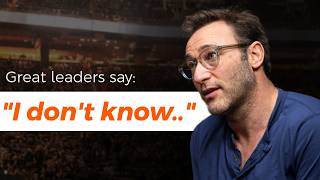
Simon Sinek argues that great leaders deliberately embrace challenges they don't know how to solve, then admit it to their teams. By saying "I don't know" or "I made a mistake," leaders invite collaboration and keep the energy of early-career discovery alive, separating the great ones from the merely good.
Chapters
One of the things that I've done throughout my career is every time things got good, I sabotaged myself and I made it difficult because I love a steep learning curve. And so when I started off in advertising, I started off and, you know, I got promoted and I did well and then sort of things started to plateau, you know, like I was doing well and I quit and tried something else. And I would always throw a wrench in and even the way I write books, I write my book completely differently each time. And I want to try something different and new. So after I wrote Start With Why, I think, I can't remember if I did Leaders Eat Last next, but then I wrote like a book based on a children's book, just to mix it up for me, to challenge me if I could do something different. So I'm a great believer that if somebody is at that point in their life, it doesn't have to necessarily be a career thing, but like challenge yourself to do something different. You don't have to bet the whole house. But try something new that you have to admit to your team, I have no idea how to do this. And that's what scares people. That's what scares people. We're choosing to do this and I have no idea what to do. But if you remember, the thrill of our early careers was that. So I— and it also makes you a good leader to be able to admit that. I'm exaggerating by calling it sabotage because you're not destroying anything. But, but, but Doing it with the group, telling everybody? Yeah. Because that's part of the fun, is relying on other people. And I think a lot of leaders are afraid to say, "I don't know," or, "I'm stuck," or, "I made a mistake." And at the end of the day, what distinguishes the great leaders from the good leaders is their ability to say, "I made a mistake, I don't know, I need help."