How Not To Be Destroyed By AI
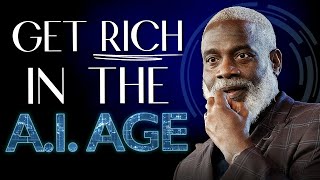
Myron Golden traces how wealth shifted across seven economic eras, from agriculture to AI. He argues the highest returns now come from imagination and communication, not implementation. The key: partner with AI as a tool to amplify those abilities rather than compete with it.
Chapters
For those of you who've been worried about, concerned about maybe even fretting about your job being replaced by AI or a business.
That uses AI taking your customers, if you've been worried about that on this video. Get rich with AI in the in the age of AI Get Rich in the age of AI or how to keep AI from like destroying your business or destroying your life or destroying your future. This video is for you.
I believe that the most, the greatest danger to your financial future is you attempting to make a living in the past. And I would guess that upwards of 80% of people.
Are attempting to make a living in the past. And the reason.
It'S fascinating how we get stuck there, the reason we stay in the place where we're attempting to make a living in the past is because times change so fast that things that used to take centuries, now those changes happen, like around the world in a year, sometimes even in a month. Right? It's just absolutely insane. And the other reason is because our mind is like, is it like an energy hog? Our brain is an energy hog. And so what we'll do is we will use as much of our brain as possible to keep things the same. Because now I don't have to use up a whole lot of energy to figure out how to make them different. And so what we're going to do in this video is I'm going to show you how by utilizing the understanding of where we are and who you are, you can capitalize on the AI era instead of being just absolutely wiped out by it. And so I started this video about, oh, 15 minutes ago, and we had some kind of technical snafu that we've never had. And so clearly this lesson is a lesson that's going to be hyper beneficial to you. So.
When I think about.
Why people struggle, I believe that if you don't understand the history of wealth, you cannot solve the mystery of wealth. And I know I've taught this before, but I'm going to teach it again. Because if you'll just hang in there with me, I promise you, when I bring this all together at the end, you will understand what is the most valuable skill that for you to work on, the two most valuable skills for you to work on in the age of AI that'll keep you from getting left behind. Okay, so the history and mystery of wealth, I'm going to talk about that first. So the history and mystery of wealth works like this. From the beginning of time to the mid-1700s.
The economic infrastructure of the world was based on agriculture or land. So it was the agricultural age. And in the agricultural age, the people who owned the land owned the wealth, because land.
Equaled wealth.
And the people who owned the land owned the wealth. And if you didn't own land, if you were born into a family that didn't own land, you were born poor. And if you were born into a family that owned land, you were born wealthy. And people would use their land for raising crops, people would use their land for raising cattle, right? So, but the people who owned the land didn't work the land. The people who own the land would hire peasants. That's what they were called. I'm not like they would hire peasants, people who didn't own land to come farm the land for them. The peasants would work the fields, they would bring the wealth to the landlord, the lord over the land, and then they would be able to keep enough to stay strong enough to work the land again another year. Right? And so it was a society where wealth was perpetuated amongst the wealthy and poverty was perpetuated among the poor. There was no middle class for the. I mean, for literally thousands of years, the whole idea of a middle class didn't even exist. And so in the agricultural age, like, things changed very slowly. You were probably born in a town, grew up in a town, lived in a town, died in a town, and maybe never even visited another town the whole time you were alive, right? You certainly didn't go visit other countries. Like that wasn't a thing. Like, I'm getting ready to go on vacation, I'm going to go to these different countries. Like, that was not a thing going to different countries. People didn't do that. Like, we take so much for granted today, right? So in the agricultural age, land equal wealth change happened very slowly. And whatever your station was in life when you were born would probably be your station in life when you died. Unless you were born wealthy and then some powerful nation came, conquered your nation and took all your land. And now you went from being rich to being poor because you had the wealth, because. But you didn't have the warfare. And so in the agricultural age, land equal wealth change happened very slowly. And you wouldn't really expect to see a whole lot of changes in your lifetime. So people got used to doing the same thing. So they knew what worked yesterday would work today, and they knew what worked today would work tomorrow. And then in the mid-1700s, from the mid-1700s, you know what? Let me do that in a different color so you guys don't get bored with colors for those of you who can see them. Okay. In the mid-1700s to around.
The 1950s.
We moved from the Agricultural age into the Industrial age. Because during the Industrial age.
People started inventing things to make farming the land easier. They started making machines, which in the Industrial age, machines equal wealth. And the people who own the machines were owned the wealth. Now, here's the interesting thing. The Industrial age made wealth creation by people who were born poor for the first time in world history, a possibility. Somebody could be born poor and invent a machine or work with a machine, or collaborate with somebody who invented a machine. And I could make a change their station in life from poor to rich. And in the Industrial age, people became mega wealthy. People who were born poor, people like Rockefeller, people like Henry Ford, people like.
JP Morgan, people like Dale Carnegie. Born poor, died rich, lived rich, died rich, perpetuated wealth for their family, some of them for generations. So machines equal wealth. Well. Well, the interesting thing about the Industrial age was the people who invented the Industrial age, the people who developed or grew up in the Industrial age, they were always attempting to figure out how they could make more money. And they figured out if they would standardize production and manufacturing, they could make more money. But did you know, I think it was Smith and Wesson. Did you know that this gun manufacturer, I'm pretty sure it was Smith and Wesson, are the ones who created the concept of standardized production? Because what they had was they had like 15 dudes making guns. But all the dudes had their own way of making guns. And so the parts from one gun didn't fit another gun because all these different people had their different ways of making guns. And they said, you know what? This doesn't make sense. Why don't we just have one person create barrels and another person create stocks and another person create triggers? And so the what happened was all of the parts became interchangeable, and then that eventually became the standard for manufacturing. And so in the Industrial age, people created machines to manufacture machines. People created machines to farm the land. People created machines to distribute all the stuff that people were manufacturing. And all the crops people were growing. Like the railroad was big, the automobile industry, the airplane industry, all of these things were created in the Industrial age. But the other thing that the Industrial age moguls created, they didn't just want to standardize manufacturing, they wanted to standardize manufacturing employees who could work in their factories. So they gave big grants to education to train people to become employees in their factories. The educational system, the way it exists today is An Industrial Age idea. Even though the Industrial Age basically came to an end in the mid-1950s. So think about that. The Industrial Age came to an end 75 years ago. But the education was created by people in that era for the way they wanted life to work in that era. And it no longer serves us, and it no longer serves our children. It didn't really serve our children then. It served the people who created it. And one of the things about the Industrial Age that's so prevalent, pervasive and still people believe, and it literally holds so much power over people, is that in the Industrial Age, the Industrial Age was a very permission based society. And what does that mean? That means if you wanted to do something, someone who owned a machine had to believe that you had the ability to do it. And if they didn't believe you had the ability to do it, they wouldn't let you do it. They wouldn't let you use your machines to do it. For instance, let's say you believed you were like articulate enough to write a book. It didn't matter unless a publishing company that owned printing presses believed you were good enough to write a book. And so you had to get permission from a publishing company to be an author. If you could sing or you thought you could sing, you had to go through a record label who had recording equipment who could record your voice and then distribute it to the masses. And if they didn't believe you could sing, it didn't matter if you thought you could sing. It didn't even matter if millions of people thought you could sing, because you had no way of multiplying and duplicating your voice and putting it out there for the masses. Right? And so everything that you wanted to do, someone else controlled it. And so, you know what's the one of the funniest things I ever see? Shows like America's Got Talent, American Idol, all these shows where people are competing for four judges to give them permission to do a thing. That's so fascinating to me when people like Adele, people like Taylor Swift, people like Russell Simmons have already proven you can create your own audience. And you don't need permission from an Industrial Age record label to dub you as a singer. You don't need permission from Hollywood to make you an actor. I mean, look at Tyler Perry. He built a multi, multi billion dollar empire that started with him selling VHS tapes out of the trunk of his car when he was homeless.
Because he was operating from a totally different paradigm than the Industrial Age paradigm. So what happened Next? Well, the 1950s.
To 1978, we went from the industrial age, we went to the distribution age. And in the distribution age, outlets, Outlets equaled wealth. And here's the interesting thing about that. Equal wealth. And when I say outlets equal wealth, this is when.
Department stores, malls, infomercials, multi level marketing, direct sales, all of these industries, for lack of a better word, popped up and we had new millionaires. In fact, like, think about this. John D. Rockefeller was the richest man in the world back in the early 1800s, I mean, early 1900s, Carnegie was another one who eventually became the richest man in the world. But during the.
Distribution age, Sam Walton was the richest man in the world.
Distribution, we sell cheap stuff. Cheap. I mean, good stuff. Cheap. Sorry, right, so distribution, right through Walmart. Like I was a grown man before I ever heard of Walmart. I was a full grown man because it was like really prominent in the South. Like when I met my wife, this is in 1980, 82, 1982, I met my wife and she wasn't my wife. I met this girl and.
Went to Texas to stay with her. I stayed in her youth pastor's house and met her family. And she said, I got to go to Walmart. Well, what's Walmart? I never heard of it. Like, I knew about Kmart, but I never heard of Walmart. Sam Walton was the richest man in the world by far. He was like so rich that when he died, his wife and children became the second, third, fourth, fifth, and sixth wealthiest people in the world when they split up his wealth among them, when Bill Gates became number one. Why? Because Sam Walton created wealth in the era in which he lived. There's like, there's not a lot of wealth advice that I can give you that's going to be better than. If you're serious, not just curious about creating wealth. You must create wealth in the era in which you live. Like, there are very few things that I can tell you that are as important as if you're serious, not just curious about creating wealth. You have to create wealth in the area in which you live and stop attempting to earn a living in the past. Okay, so in the distribution age, outlets equal wealth and people own the outlets, own the wealth. What happened in 1978? Ha, ha ha. 1978 to 1994, we went into the technology age.
It's interesting too how Sam Walton is the person who ushered in the technology age. A lot of people don't realize that, but Sam Walton, what he did was he commissioned, he would go to IBM and recruit computer programmers. And he would recruit them to Walmart so that they could create software that would track his inventory so he could know what he was getting low on before he got low on it. Right. And so in the technology age, what I call tech.
Know.
How.
Equaled wealth. So techno, how equal wealth. And the people who had, who knew how to use technology to make like, who had knew how to use technology to create new ways of leveraging information, those are the people who own the wealth. Then we went from the technology age, 1994, 1994 to 2003, we went into what I call the information age. The Information age. And in the information age, the interesting thing about the information age, this is the first time in world history where you could create wealth without having to own something, because you can't own information. Who owns information? Everybody and nobody. Information is public domain. The sky is blue. Who owns that? Everybody. Nobody. Grass is green. Who owns that? Everybody. Nobody. It's just information. So it wasn't. Wealth was no longer about control. I mean, it was no longer about ownership. It was now about control. And now it's the people who controlled the flow of information. Those are the people who own the wealth.
And so back in this time, I knew people. So I'm going to call people controlled.
Info flow.
Equal wealth. I knew people back during this age who had Google AdSense pages, who would have a website, and all I had on was links. They were making 100,000amonth, 200,000amonth, 300,000amonth, $400,000 a month. Because every time somebody came to one of those pages and clicked on a link, Google would share the revenue with them.
And they were making hundreds of thousands of dollars a month in late 90s, early 2000s because they earned their wealth in the era in which they lived. 2003, the world changed forever. What happened in 2003? 2003. And this lasted until 2008. Oops. To 2008, we went into what I call the techno info edutainment age. What was that? People who knew how to use technology to create information that would educate in an entertaining way. Those are people who own the wealth. And then in the techno info edutainment age, like you would become wealthy if you became an Eduardo Tanner.
Spike Lee.
Russell Simmons, Jeff Foxworthy. You might be a redneck if. Right. A comedian who makes redneck joke cassette tapes and sells them at truck stops during the techno info edutainment age became so wealthy that he was one of the sharks on Shark Tank. What.
What are we talking about? People like, it's mind blowing. Like, Russell Simmons invented a new genre because he knew how to use his computer to produce music.
Techno info edutainment. We talked about him earlier. Tyler Perry. Like, people you like. If one of the things hopefully y' all can see with this is, is number one, that as these economic ages progress, more and more decentralization is happening and more and more democratization is happening. What do I mean, decentralization? Like, there's less ownership by one central institution, organization, or government. And like, the power.
Is being disseminated amongst more and more people as the economic eras progress. But it doesn't matter if the power's being disseminated to you. If you don't know it, if you're unaware of it, you're not gonna access it, you're not gonna use it. Say, Marion, I thought this was gonna be about AI. Yeah, but you don't like it is eventually, but you gotta hang in there. You gotta see why this is important instead of just knowing that it's important. Okay, so what happened in 2008? Well, in 2008.
This thing. Oh, not this thing. That wasn't invented until 2010. In 2007, the iPhone was invented. In 2008, the App Store was invented. And guess what happened when the App Store was invented? We went into.
2008. I didn't know when this was. By the way, before I even get to 2008, let me ask you a question. What do y' all notice about each one of these economic eras? They're getting shorter and shorter. Every economic era is getting shorter and shorter. This is why that's dangerous for the average person. Because people would rather know than learn.
They'd rather feel like, well, I know this instead of being willing to learn this. And so when something changes, if you know something and then it changes, you no longer know it. So learning has to become more valuable to you than knowing. See, in the industrial age, in the school system, knowing you take a test, you pass the test. If you know the answers they told you to know. But if you know the answers now, you don't need to learn anything. And if you don't learn anything, when everything changes, the stuff you know is no longer. So.
How many y' all tracking. And so what we gotta do, we gotta figure out, okay, every economic era is changing. This is why it's dangerous. Because when an economic era becomes shorter, you have less time to prepare, to capitalize on the era you are in. That's why when you see a new economic era emerging, you have to jump in, like, all the way. You have to go all in. You got to jump in the deep end of the pool. You cannot dodio dote about and take your time and wait for like, well, I'm just waiting. I'm just waiting. I'm waiting to wait and getting ready to get ready and preparing to prepare. You can't do that because by the time you decide to get ready to prepare yourself for the new economic era, it's already gone. And now you're stuck again, attempting to earn a living in the past. Y' all see how this thing keeps perpetuating. And it's easier for this to perpetuate than for it not to perpetuate. But in 2008, all the way up to about 2021, we were in what I call the partnership date partnership age. And in the partnership age.
People knew how to create strategic partnerships. Partnerships equaled wealth.
Think about this.
We're talking about people who knew how to create podcasts and interview people. Think about this like, it's so fascinating that some of the most popular podcasts are not podcasts of experts disseminating their expertise. But it's curious, people having conversations with interesting people in front of interested people.
This is mind blowing. Well, at least mind blowing to me. My mind's easily blown, so don't judge me. Okay, so. But this is the first economic era in world history that's lasted for a longer period of time than a previous economic era. Almost. No, like, very few people capitalize on the. On the partnership age. It blows my mind. I made millions and millions and millions of dollars during the partnership age.
Why? Because I realized that maybe I had an offer and you had an audience. I would partner with you and you would share your audience with me, and I would share your offer with my audience, and then I would share revenue with you.
Or maybe you have an offer and I have an audience. Do you see? Well, here's what really is amazing. The people who capitalize the most on the partnership age are multi billion dollar corporations. Like who? Like Apple. Apple said, if you will create apps for our app Store and you'll put those apps in our App Store, we'll pay you 70%. We'll pay you 70% and we'll only keep 30. Amazon said, if you'll write books and put them on our bookshelves, we'll pay you 70% of the price of the book and we'll only keep 30%. Multi billion dollar corporations. This is the first time this ever happened in world history. Now, multibillion Dollar corporations made partnerships with John Q. Public and said, if you will create content and products to put on our shelves, we will pay you most of the revenue from the profits. What?
But most people have never. I want you to think about this. Most people. How many people do you know who created one strategic partnership with any multibillion dollar corporation? Almost none. How many people do you know who've created an app in the App Store? Almost none. How many people do you know who've written like, ebooks to put on Amazon? Almost none. It's. And it's so easy to do. Even Google, Even right now, YouTube, you know what YouTube is? YouTube is me partnering with Google, a multi billion dollar corporation. I said, I'll create content for your platform.
I will get people to stay, pay attention to your platform and stay on your platform longer. And they said, well, great, since you're going to do that, we'll send you money every month to the tune of tens of thousands of dollars. YouTube pays me more money every month for teaching things I would have taught anyway.
On their platform than I've ever. Than I've ever made at a job in a year in my life.
Why? Because I partnered in a strategic partnership with Google. And so now we're in the AI age. Okay?
In the AI age.
You know what equals wealth? Understanding the four levels of value.
Like this equals wealth. Like, if you don't understand, like if you understand and capitalize on the four levels of value in the economic era of the AI age, you have the potential if you'll capitalize on the four levels of value now, the four levels of value has never been more valuable than it is right now. This is the four level. I got chills thinking about this right now. Literally a hair standing up on my arm, and I have goosebumps right now. Because the four levels of value is something that God created in Genesis, chapter one.
That when we utilize it to apply to the economic era we're in now, we have an advantage that we've, like the kind of advantage we've never had the possibility of having in the past. What are the four levels of value? Well, the lowest level of value.
Is implementation.
That's the lowest level of value. The second lowest level of value is unification.
Now, implementation. I'm going to go ahead and write the whole word implementation.
Okay? Implementation is when I use my muscles over time to make money. And I'm going to make somewhere between minimum wage and maybe $80,000 a year if I'm on the implementation level. Unification is where I use my Management skills to make money, right? And on that level, I'm going to make somewhere between 80,000 a year as a manager, maybe at McDonald's or Taco Bell, to $250,000 a year. And I'm doing that if I'm a manager at Lockheed Martin or Boeing or somewhere. Wealth begins to be created above this line.
What is that? Communication.
And on the communication level, we use our mouth to make money. Now, here's the caveat, though. You have to have a mouth, then you have to learn how to use it, and then you have to be willing to use it.
Right? Just having a mouth is not enough. It's only one pre qualification. And so the better you get at communicating, you use your mouth to make money. And what you do is you create messages that move the masses and have conversations that create cash flow. And on this level, you could make anywhere from on the low end, 100 grand a year. High end, it could be like.
Hundreds of millions a year.
Hundreds of millions of dollars a year. Communication. Think about it. When I say communication, I'm talking about speakers, I'm talking about podcasters, I'm talking about talk show hosts, I'm talking about singers, I'm talking about songwriters, I'm talking about playwrights, I'm talking about actors. I'm talking about people who communicate a message to the masses.
That's where wealth has been created, by the way.
That's like a secret sauce, because communication gives you access. Communication is the tool Frederick Douglass used to free himself from slavery and to free others from slavery. Communication is powerful because words are, I believe, the most powerful force in the universe. So powerful, in fact, that God used them both as the tool and the building block to create everything out of nothing.
What's the highest level of value? Imagination.
Now, here's what's interesting about imagination. You can speak without thinking. How many of you always say, ah, man, I wish I had thought before I said that. Anybody? Right? So you can think. I mean, you can speak without thinking, but you can't think without words. So even though imagination is the highest level of value, by the way you use your mind to make money.
Even though imagination is the highest level of value, your mouth is critical to your mind.
Your ability to communicate is absolutely integral and essential in developing your ability to imagine or to think or to create or to contemplate, to come up with something of value for other people. Now.
How does this apply to AI? How do the four levels of value apply to AI?
AI so cyberspace and computers. Okay, let's go Back to this for a second.
One more thing I want you to notice. The agricultural age. The agricultural age and the slow, grueling, hard, laborious work is what created the need for the industrial age. If I can, if I can somehow create a machine, if I can create some kind of leverage so I don't have to work so hard. So the industrial age created the need for the age that replaced it. The industrial age, they started manufacturing so much more product, gdp, gross domestic product, that they can't have it all stacking up in one place. So they had to distribute it. And so they needed the railroad. And so what happens is the industrial age created the need for the distribution age.
So wild. So every economic error we can see is creating the age that replaces it just by being what it is. And so the distribution age, they were distributing so much stuff, but they couldn't keep track of it. So that brought in the technology age. How can you use technology to keep track all the stuff we're making? And then technology gave us access to more information than the information age. And then we use that information to educate, entertain, and then also all of a sudden, now regular people like us can partner with multi billion dollar corporations. Y' all see that? But here's what else. I don't know if you saw this. The computers and the phones and the iPads and the tablets that we hold in our hands because of cyberspace, because of the Internet. This is now the land on which I build my business, on which I, I cultivate my crops, on which I create value. I do it in this thing called cyberspace. Are y' all tracking? So this is the land. The Internet is the land. The device is. The Internet is the land of the new agricultural age. But it's not agricultural, right? It's info. It's like, it's cyberspace age. Like now space is digital, which means now there's unlimited space for an unlimited number of people who are willing to continue to grow limitlessly, right? And so, but the machines that we hold in our hand are now the tools that we use to manufacture the stuff that we manufacture. It's so wild. Like.
Yeah, I've got cameras back there, but those cameras are hooked up to computers. And I don't need the cameras. I could just use my phone. In fact, for the longest time, all the YouTube videos I created just use my phone. And so the devices that we hold in our hand are now the machines of the new industrial era, because we're manufacturing ideas, representations of ideas, and then hosting them on the Internet where Millions of people can find them. Is what I'm saying making some sense. And then. So cyberspace and computers are the. And AI are the new arena of cultivating and manufacturing and distributing and tracking information. And so now this device that I hold in my hand is the machine, but it's also the distribution outlet because I sell stuff on the Internet. I sell stuff to people in countries I've never been to. When every day. Every day I sell stuff to people in countries I've never been to and to in countries I'll never visit. Why? Because now distribution is digital, manufacturing is digital, and then I use the technology. Well, I learned how to use some technology. I can use some technology. Like I know how to use my iPad. I'm not a computer programmer, I'm not a video editor, but I don't have to be. Why? Because I can go on the Internet and I can find somebody who can do that for me. And so I keep like, if I want to learn something that I don't know, where do I go? I go to the same Internet.
And I have access to it on my phone, even in remote places in the world. This is like, there's never been a time in human history where there's been so much opportunity for so many people, for so few of them to be capitalizing on it.
And I can become an edutainer. I'm kind of, I am kind of edutaining. Okay, so. Right. And I can partner. And so, so, so cyberspace is.
Cyberspace. And computers connected to cyberspace and AI are the new arena of cultivating, manufacturing, distributing and, and tracking value.
And then AI is the new era of educating.
Myself, self education.
Influencing, social influencing, socially influencing and persuading, selling and persuading, influencing and persuading. And then implementing, like skillfully delivering. AI is the new era of all of those things. So.
There are a lot of people are saying, yeah, but if AI creates something, it's not real. Well, it kind of depends on. It might not be real. Like there are a lot of fake Myron golden channels out there. I have two. I have three channels. I have Myron Golden, I have Myron Bible study with Myron Golden. I admire in golden shorts, if you see something else that has my name on it, my picture, and a voice with a moving background, it's not me, it's AI. Please report it. Those people are attempting to make you think they're me so that they can eventually scam you out of something. Because if they're willing to pretend to be me, they'll Also pretend to offer you value that I'd never offer and get you to send them money for things that I have no idea what it is. So, like, if you see them, report them. Let's all work together in getting all these fake channels taken down so they'll realize that. That it is a waste of their time to do it. Okay, yard tracking now.
So the highest two levels of value are communication and imagination.
So the way we keep from being destroyed by AI and the way we get rich in the AI era are the same. We have to elevate our ability to imagine more creatively and more vividly, to think more creatively and more vividly. And we have to level up our ability to communicate more clearly. So the more clearly, vividly and creatively I can think, and the more clearly I can communicate.
To AI.
Then the better I'm going to become at being able to deliver value to people who are not me. Because AI can help me research something in 15 minutes that used to take me 15 hours. So I'm not using AI to replace me. I'm using AI to leverage the process of learning. I'm using AI to leverage THE process of figuring out.
What is the best way to reach the best people for this value I've created. So if I think about it like this, now, instead of me just partnering with Google, Apple, Amazon, whoever these major corporations are, instead of me just partnering with podcast people who have podcasts and people who have shows and people who have Instagram channels, and I mean Instagram profiles and YouTube channels, now I'm figuring, how can I partner with AI so AI can help me do all the things I do more quickly, more efficiently and more effectively. And the way that I do that is by becoming more clear with my communication. The difference, if you think about what's the difference between a person in art school and Picasso, their imagination and their ability to use the tool.
Right? That's the difference. Picasso had an imagination that gave him the ability to use the tool in a way a student in art school can't use.
AI is not Picasso. AI is the tool.
What's the difference between Steve Jobs and a seventh grader learning computer programming?
The creative imagination and the ability to use the tool. The tool that you've got to develop. This is so wild and crazy to me. The tool that you've got to develop in order for you not to get left behind by AI are the same tools that give you the ability to earn the most money. You have to be able to think more clearly. You have to be able to communicate more clearly. But now you have to figure out how to think more clearly about how to utilize AI to become the best version of yourself, and then how to communicate with AI in such a way so that when you're asking it a question, it's not.
Like hallucinating things.
That don't make sense because you weren't clear.
Your ability to effectively use words and your ability to effectively see the end from the beginning.
Is going to directly impact your ability to utilize AI. And here's the warning. Here's the warning. Either you will figure out how to use AI and here's what's cool. You see if I catch any one of y' all talking about, yeah, but I don't know how to use AI, I'm coming to get your family and I'm taking them to safety.
Here's why. Because AI will teach you how to use AI. Any question you have about how to use AI, the best person to ask that question to is not really a person. Is AI the AI that you're using and then ask a different AI and then get them competing with each other to teach for the purpose of learning.
And for the purpose of leveraging. And if you will do that, you will not get left behind by AI. Whatever your job is, let's say you work a job. Let's say whatever your job is.
If you work a job. I would be. If I were a forklift driver, I'd be asking, AI, how can I get to the place? I'm a forklift driver. This is what my company does. This is what. What would be the best things for me to do to get a promotion at my job and either make more money as a forklift driver or what's the next logical step for me to go into, like, have conversations with AI like that? If you're an author, like, I would never have AI outline a book for me. I can't outline a good a book as I can. Why? Because AI doesn't have the experiences to pull from that I have. But AI can help me say the thing that I'm attempting to say more clearly if I'll utilize it that way. See, we. We approach AI like we approach everything else. Good enough is good enough. So as soon as I get well, I'm done. So I'm done. What if you just keep iterating and reiterating and reiterating and refining and reiterating and refining to the point where you get something so crystal clear that in the minds of the people that you're serving, it becomes so incontrovertibly good that you as a brand become irresistible. And that's how you keep from being replaced by AI. I hope this video helps you in like, real, practical ways. Focus on the highest 2 level of value. Focus on partnering with AI to become a better version of yourself so you can serve more people at the highest level. Thanks for watching and we'll look forward to seeing you in the next video. Bye for now.
More from Clegg





AI Won't Tell You the Full Truth | Arthur Brooks + Simon Sinek | A Bit of Optimism Podcast



How To Make the Best Decision | Arthur Brooks and Simon Sinek | A Bit of Optimism


