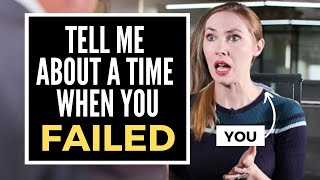
Madeline Mann shows how to answer the failure question in job interviews. Pick a real mistake that shows you learned from it, then use the PAR method: Problem, Action, Result. Practice until you can tell it in under two minutes.
Chapters
Can you tell me about a time when you failed or made a mistake? Oh gosh. I want to answer this question, but I also don't want to make myself look bad. What do I do? Don't worry, I got you. This is self Made Millennial. I'm Madeline Mann and in this video you will learn the best answer to this question that will leave a fantastic impression on the interviewer to the point where you'll be hoping they ask this question to get job search and career tips from a human resources leader who is skilled, steeped in the hiring process every day, who has been featured on Forbes, Bloomberg, Business Insider, and more. Subscribe to this channel and hit the bell to get new videos on Thursdays. As someone who has seen interviewers ask this question, tell me about a time when you failed or made a mistake. There is a very specific reason for asking this question. We know you're not perfect. No one is. And that is totally fine. The question under this question is how do you problem solve when things get sticky? How do you learn from those situations? That's what they're looking for, problem solvers. Someone who takes accountability of their own actions, isn't blaming others and takes every mistake or failure as a learning experience and then grows from it. They don't let it define them or break their spirit and it leads to better results in the future. So now while we are trying to pick your answer, look for a story in your past where it truly was a mistake or failure. We don't want to dodge the question, but most important part is how did you react to the failure? What did you learn and how did you rectify it? A story with a story, strong lesson is the one you should choose. In my coaching program, one of my clients has a story where he said that he had misinterpreted his coworker's actions and he had an attitude towards her which then interfered with his work and he had to be moved to a different department. He later realized he was being immature and after he told me the story I thought this isn't the best story. To answer this question, the lesson wasn't very strong and it showed some red flags about his attitude. Which attitude is seen as more of an enduring trait versus skills which can be easily trained and strengthened. So that's an example of a weaker story. I had another student in my program tell a story of how she had built out this process on how to get articles approved before publishing them. She had been doing it for years and it was highly efficient and effective and one day they had a leadership change and there were several new people on the team. Something happened, there was chaos and the wrong file was sent by her team and it got posted and she was so embarrassed. And then she walked through how she rectified the situation, how she ensured it didn't happen again, and it really showed how much she cared about her work and how she values a strong process. So she not only crafted these killer answers, but she ended up landing an executive role within 30 days of joining my job search program. Way up top for you girl. So after we choose which problem solving learning experience you are going to describe, let's talk about how to frame your answer. I'm going to give you the framework and then afterwards I do recommend that you hop over to my video on on how to answer behavioral interview questions. That video has led to so many dang success stories. You can just read the comments of that video to see a bunch of them. It will really prepare you for any Tell me about a time when question that comes your way. I will link that video in the comments and in the description. Side note, you must practice these Tell me about a time when question questions and have your answer to the question Tell me about yourself locked in. Tell me about yourself is the most common interview question and it makes a huge impact on their impression of you. So I have a full worksheet of how to scope out your own answer that has helped so many people crystallize their answer and deliver it confidently without rambling. You know what I'm talking about. So easy to ramble on that question. I'll link that free download in the comments and in the description. So the framework to use when you answer the question Tell me about a time when you failed. Is P A R par? This is similar to the Star method, if you've heard of that. But I prefer par because it's three steps baby, instead of four. Come on. I'm working with thousands of different job seekers and I've found that this format is more effective because concise is key in the interview. P stands for problem. So what was the problem or challenge before you? A is action. What action did you take to resolve it? And R is result. What were the outcomes of those actions? So first with a problem or challenge, set the scene. What task were you working on? What was the importance of it? And then what went wrong and what was the impact of that event? A bad answer only includes this first part. Okay, you say I messed up. Here is the impact of my mess up. That's it. That is not going to get you the job. Yes, you are answering the question, but but we aren't hearing how you're a problem solver or how you learned anything from that situation. Then move into the action. So what did you do in response to your failure? Who did you get in communication with? What did you do to risk manage it in the moment? What was your reaction? An okay answer will stop after pa and this is where most job seekers stop. They're so focused on explaining the facts of what happened that they forget to to round it out with the results. Which brings us to a pirate's favorite part of an interview answer the R. So for R the results, what was the lesson you took away? What were the outcomes of you trying to fix your mistake? How did this impact future projects where you did things differently and possibly had a lot of success? This is the part where you really start tick the landing. So never leave it out. So be honest with your answer and include a strong par narrative that illustrates growth and problem solving. Make sure that you watch that behavioral interview video as a follow up to this one and download that Tell Me About Yourself worksheet like this video and subscribe to this channel. You've got this wi fi high five.