How to Avoid Bad Leadership - The 3 Toxic Leader Personas You Need to Avoid
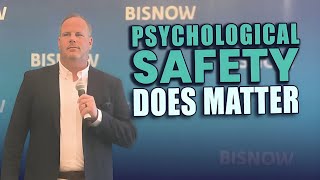
Clegg identifies three toxic leader types: the authoritarian commander, the seagull manager who swoops in to criticize, and the Michael Scott archetype. Nokia's collapse and the Challenger disaster show what happens when leaders kill psychological safety. Stay interviews with employees are a concrete way to fix it.
Chapters
There was a lot going on in the world of work that we're in today with leadership development and employees. We are going to talk about moving from toxicity to trust. And you guys are going to have a couple of things that actually you can carry away from this today that you can implement in your organizations immediately. We're going to talk a lot about psychological safety. But what we did was we created these leader Personas so that you can help identify what a bad leader looks like. The first one is commander authoritarian. Okay? Now this guy is very command and control. Doesn't lead by relationship. He is a delegate task, not delegate autonomy. And if you don't know the difference, it's important to know the difference because you might be that bad boss. It's someone that doesn't lead with relationships. It's a don't do as I do, do as I say mentality. So not a great boss. Anybody know this guy? Michael Scott, Right. Sitcom, the Office. A little bit inappropriate or a lot of it inappropriate. He's also someone that points the blame at others but yet takes all the credit, right? So if you're in the office and you're telling a joke or you crack a joke and you say, oh, just kidding, you're probably a Michael Scott. If you say in the office. That's what she said. You're probably a Michael Scott. Okay? So don't be a Michael Scott. Has anybody heard of Seagull manager? So for those of you that have a Seagull manager, it's my favorite because it is an individual that flies in shits all over everybody and then flies away. And it's my favorite because I get to say shit at conferences like this. So it's really cool. But the thing that's important to understand that like we can make light of these Personas, but they're in every one of our companies. We have people just like this that are leading the people we want to retain, that are leading the people that we want to engage. Does anybody recognize that picture? Did anyone have one of those? Yeah, half the room, right? So it's the Nokia 3310 and the Nokia 3310. It owned the cell phone market. It was the cell phone market. And even In November of 2007, Forbes put them on the COVID of the magazine and said the cell phone King. And they were dubbed the cell Phone King because they had just achieve the one billionth customer, and that's with a B billion. So when you think about that in the article, it talked about no one's Going to stop the cell phone king. Nokia is going to own the world. What they didn't talk about was what happened a few months prior to that. In June of 2007, the iPhone was launched. And the reason that I tell you this particular story is that Nokia had an opportunity, middle management. They saw the threat of Apple. They knew it was a real threat, but senior leadership didn't want to touch it. Senior leadership didn't want to hear about it. In fact, when you go and do. I did a Harvard case study course last semester, and Nokia was actually in it. And the reason was a hostile work environment. There was no psychological safety in the organization. So they went from being the cell phone king to being an organization that no longer owned the market. And in fact, 15 years later is no longer in the market. And that's because of a lack of psychological safety. So it's important to understand the importance of trust, right? So let's fast forward a little bit to 2023. Everybody's seen a lot of the Gallup studies, okay? I get these reports every week from Gallup and they're fantastic. If you don't subscribe to it, please do. It's a lot of great data and information, but essentially what this is saying, I'll summarize, is that 8 out of 10 employees are rowing against what you guys are looking for. Leaders. Think about it. We've all heard the term quiet quitting, right? That's six out of 10 of your employees today. So if you've got 10 employees here today with you, six of them are quiet quitting. Six of them are probably in the back outside on the phone now, talking to a buddy. 2 of 10 are actively sabotaging your strategic plans. So when you look at all the things that matter, it's trust that is the foundation of everything. Yes, it's a soft skill. I wish we would change the name of Soft Skills to so people would actually enjoy and learn what soft skills and the importance of them are. So In January of 1986, I was sitting in seventh grade science class. Mrs. Hostetler and the kids this particular day were bouncing off the walls. We were pretty fired up. I can even remember Mrs. Hostetler with the little cart she had just checked out of the library with the tv, strapped on it and pushing it into the classroom. We were going to watch TV this day. And even she, who's normally pretty quiet and a little stoic, was bouncing off the walls that day. You see, Mrs. Hostetler was a finalist in the Teacher in Space program, which was ultimately won by Christa McAuliffe. So you were going to watch the space shuttle Challenger launch that January afternoon. And as you guys know, 73 seconds into that flight, the Challenger exploded, killing all seven astronauts. And you may go, Clay. We're sitting here talking about leadership development. Why are we talking about the space shuttle? Because the reason that that happened was a lack of psychological safety. Once again, the investigations ruled that NASA was a hostile work environment. There was a contracting organization, Morton Thiokol, that worked with NASA to support the rocket boosters. And one of the engineers said, hey, these little rubber gaskets that we now know are called O rings, that under extremely cold temperatures they could malfunction. And this January morning in 1986, guess what? It was in the 30s as a high, which. And if any of you have ever been in Florida, that's pretty cold down there, right? So 12 hours prior to the launch, this engineer had mentioned to his boss, we got to say something. His boss said, no, keep your mouth shut, don't say a word. Because NASA at the time was under extreme pressure to get these birds up in the air. They were having a lot of mechanical malfunctions, and there was a lot of geopolitical things going on in the world in the mid-80s. And so the engineer at that 12 hour check in, the final check through or walkthrough, sat silently. So if you think psychological safety isn't important, think about that. NASA's making life or death decisions. And the fear was so strong of that engineer losing his job that he didn't speak up, which ultimately led to the demise of seven astronauts. So psychological safety does matter. Most of us work in organizations that we're not making life or death decisions every day. So if psychological safety is that much of a motivator, even a negative motivator, which is fear in life and death situations, imagine how easy it would be just to let things slide in non life or death situations. It's critical. So because of this, we created a framework called Leadership Square. And Leadership Square is simply that it is a roadmap to engagement and a roadmap to build trust and psychological safety. You will have a great culture if you follow this. It's really simple. This is something you all can do today. And what Leadership Square is, essentially there's two pathways. There's culture and connection. And those two pathways collectively will lead to those positive results. Because when you look at this, this creates the standards for your organization. How many of us have core values? I would say all of us. How many of you can name all of your core values. Usually I get one or two hands and I think I got three today. How many of your teams can name all of your core values? Right. So if these are your standards, what are we doing? How are we leading? So these are the questions that I get all the time when I talk about culture. And I'll get some of these today. Like, how do we measure culture? Which culture's job? First and foremost, let's define culture. Culture is a set of values, beliefs and expectations. Those are your standards. Those things drive your behaviors which ultimately lead you to the desired result. If you don't have those standards laid out, you're in a world of trouble. How many of us have hired for skills but fired for behaviors? That usually gets everybody's head nodding, Right? We've all done it. We need to start looking at both sides of this equation. And it's simple because culture is just measured by what you tolerate. If you tolerate disrespectful behavior, you're going to have a disrespectful culture. It's really simple. And for the record, culture's job is not to make your employees feel good. Culture's job is not to make you feel good. Culture is not ping pong tables and nap pods. And all those things are great. I'd love a nap pod. But that's not culture. Those are perks. Culture is part of the roadmap to get you to your desired result. The second part is connection. And there are four very simple steps to developing deep relationships. The fourth, which is stay interviews. Is anyone familiar with stay interviews? Okay, handful. If you hear nothing else that I say today, please pay attention to this part. Stay interviews are critical. Stay interviews, in my opinion, are the most important of the four steps to develop deep relationships. They're critical and we can tell you how to do it because it's really simple, it's really quick, it's really easy. There's only five questions. It takes you about 15 or 20 minutes to do a stay interview. Now you can determine how long they go, but for the most part they're 15 or 20 minutes and they're wonderful. I've learned more in stay interviews than any other meeting combined because they're that critical. A few years ago, you know, I'm working with one of our associates and new employee was a single mom, someone that we took from the retail industry and gave an opportunity because she was just like, please just give me a chance. I want a chance to be better. I want to help my son so we did and she did. She's awesome. So going through the process of doing stay interviews, which, by the way, do them twice a year, that's plenty. I used to do them in May and December. Now I'm starting to spread them out because of this story. So I'm on like my 4th, maybe even 5th stay interview on this particular day several years ago. And I knew the individual coming in was a top producer, high performer, someone we just moved into a new role. So we knew she was happy, she was making more money she's ever made, she was paying bills, she was getting out of debt. All the things that you work through as a young professional, we all were there, right? You know, I'm kind of going through the motions. Go through the first three questions, and I'm buzzing through and pretty mechanical at this point, which isn't. Not really proud to say, but that's legit. I was tired. So I get to the fourth question, and the fourth question is, as you can read, when was the last time you thought about leaving and what prompted it? And so I'm expecting just to continue on like I did the first three questions. And she flipped my world upside down and said, I'm actively considering leaving now. I wish I had a picture of what my face looked like. Top producer, high performer, making more money she's ever made in her life. What is going on? So I'm like, help me understand. That's like my out of everything. Help me understand. That's my question. That's my go to. And I really meant it. Help me understand. Are you not happy? And she was clearly getting emotional. She's like, no, Clay, I'm so happy. I'm so appreciative. All the things that we've done because we spend a lot of time on professional development. It's very important to us. And I said, well, what is it? Got a new job? Somebody can recruit you. What's going on? What's happening? Help me understand. And she said, well, I'm a little embarrassed, I don't know how to say this. And I said, just say it. Maybe it's something we can help fix. And so she proceeds to tell me that in this role, by the way, she was responsible for being client facing. And she said, clegg, I just am not at a point in my life yet where I can afford the clothes to be client facing. And so I thought that it would just be easier just to leave and quit and go back to my old job. I was a bit relieved when I heard the reason I'm not gonna lie. But I said, what if we can fix this? Can we help you with this? She was like, maybe, I guess. What if we just give you $1,500 for a stitch fix subscription so you can go shopping online and get the clothes that you want? And that's what we did. And she's still with our organization today and in a new market that we'll be building at some point. So when you think about the minimal cost of an organization spending $1,500 to save an employee a key producer, and then you think about the years that she's been with us and the years that she'll continue to be with us if we keep her happy and engaged, the hundreds of thousands and millions of dollars in revenue just because I asked one question, because I'm convinced had I not had a stay interview, she would have been gone. So if you hear nothing else that I say today, please, please start practicing stay interviews. They will change your professional life.
More from Clegg





AI Won't Tell You the Full Truth | Arthur Brooks + Simon Sinek | A Bit of Optimism Podcast



How To Make the Best Decision | Arthur Brooks and Simon Sinek | A Bit of Optimism


