How to Do a Stealth Job Search
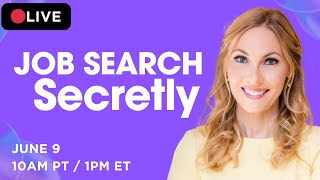
Career strategist Madeleine Mann teaches how to job search secretly while employed. Update LinkedIn quarterly, use the recruiter-only "Open to Work" feature, and apply the "Glory Formula" to rewrite your resume. She covers networking by noticing former colleagues at target companies, interview frameworks like STAR stories, and a follow-up cadence to handle ghosting.
Chapters
Welcome, we are live. I'm Madeleine Mann. Go ahead and say hi in the chat, say where you are joining us from. So today we're talking about how to have a stealth job search. This is something that's been coming up a lot that I've been hearing, especially from a lot of folks who are doing some of these more high-income, more senior-level job searches of how do I job search covertly? How do I make sure that my boss doesn't get upset? Or what do I do to not appear desperate online? And really, as with all of these office hour sessions that I'm doing with you live, I want this session to be guided by your questions. So any hesitations you're having, let's dive into them. Keep putting your questions in the chat because I go through them and we get really deep. And Welcome back if you have been to these sessions before, because it is an absolute blast. And hello, David. Oh my gosh, it's absolutely my pleasure to be here. Thanks so much. I'm seeing Flower of Scotland. Hello from Florida. Barry is from Oregon. Hello. So one thing I hear a lot from folks is, okay, is my boss going to notice that I'm job searching or whatnot. And this will prevent a lot of people from updating their LinkedIn profiles, which actually freaks me out a little bit. We should definitely be updating our LinkedIn profiles. Because I would say when I look at my clients, and what they do to land so many interviews is a lot of them will land more than 50% of of their job interviews from companies finding them, especially the ones who have more experience in their field. And so it's really important that your LinkedIn profile is up to date. Now, you might think, oh my gosh, I joined this company 3 years ago, and I haven't made a single update since then. If that is you, I want you to say, let's change that. Okay, Let's make sure that this is the last time in your career you can say that, that you're updating more regularly. I think a quarterly, or at least at the very least a biannual schedule for updating LinkedIn profile should be the norm. But if you are really on the ball, I would say even posting on LinkedIn once a month is a really great practice to get into. Because then if you do want to post something, if you do want to get a bit more active, it's completely indiscernible. No one can tell if you are job searching or not. Oh my gosh, we have someone here from the UK, someone from Calgary. Good to see you guys. Welcome, welcome. Come on in. And so I, you know, I would say that that's a huge thing is making sure you're updated, pointing your profile towards the next step that you're going to take. And the question that often comes up is open to work. What should I do with that? I think putting open to work on for just recruiters is a great move. Okay. You can put the types of job titles you're targeting, the cities you're interested in, and recruiters do take that seriously. They do filter by people who, who put open to work, and it doesn't have to be public banner on your face. In order for it to be highly effective. Anyone who's doing high-volume sourcing or enough sourcing for it to matter, they have a professional recruiter seat on LinkedIn. And so it— you— they will have access to see that, and that is perfect. Okay, see more people come in. Good to see you. Hello. Hello, Saudi Arabia, Denver. Hello. Oh, hello from Toronto. It is so great to see how widespread we are. Hello, Texas, Boca Raton. Good to see you. Good to see you, Ashley. Okay, so one of the things is, when we talk about networking, I hear a lot of people say, hey, I know I'm supposed to network, but I've been at the same company for 15+ years. The people who are in my network work at this company, and I want to leave. How do I do that? And I want to say, in general, I— after working with thousands of clients, I've realized you actually don't really have to have a huge network. It helps. It helps, right? It definitely helps to have the ins at companies. It certainly does. But you don't need it. What's more important is, or what is just as important, is noticing people. So not knowing people, but noticing people. So taking the opportunity to meet people in your industry, in your target companies, noticing them, interacting with them either at events, virtual or not virtual, in different professional groups, in, when they're posting on LinkedIn, all those types of things. Right? Oh my gosh, we have people from Houston, Florida, New Jersey, Africa, South Africa, Santa Fe, New Mexico. Amazing. Wow, we have folks from all over. So I would say— and also, what's really good is there might be some people who have left your company, who are now at your target companies. So it's great to filter on LinkedIn when you're searching for networks. You can actually do— when you're searching for people, you click the search bar, leave it empty, and then you search for people who previous companies worked at or the companies you've worked at. And then their current company they're working at is one of your target companies, or you put a bunch of your target companies, right? Put those all there. And then you see who has worked at previous companies that you've worked at. And now works at target companies that you want to work for. And you don't even have to have worked at the same company at the same time. Even just having that in, uh, as something in common is highly effective. Um, and another question I get a lot is, do I need to post on LinkedIn to be successful in the job search? Because people see all the time my clients with these huge success stories where I say, oh yeah, this person got 4 job offers, this person got 7 job offers. A lot of them, they didn't apply to the opportunities came in. Oh, are these people big LinkedIn influencers that are posting every day? Say 90% of my clients don't post on LinkedIn at all. That being said, the ones who do tend to see some really good results if they're doing it properly, which in my coaching program I do have like a specific formula of how to do it. But the bottom line is, if it's not your thing, if creating content is not your thing, it takes so much time and energy if it is not something that naturally is easy for you or, or kind of plays to your strengths that I say don't do it. I say don't do it. Like put your efforts elsewhere because it's absolutely not essential. So, you know, it, but if it is something that you are quite good at, there are certain strategies that, uh, such as the 4 Viral Triggers and those types of things that I teach that will really catapult your visibility and can be really great, especially if you're going for these more senior level roles of like, oh wow, this person really knows their industry, this person really knows their profession, this person really has thoughtful ideas. So that is really huge. Okay. Go ahead. And as I'm talking through this, what comes up for you in your job search? What are some of the fears you have? Are there any fears around what are my current or past coworkers going to think? What is the best way to make sure I'm putting myself forward without maybe turning off my current employer? Right. What are some of the fears and thoughts you have, or even some interesting situations you've run into that you're thinking, how do I handle this? Now, we talk a lot about LinkedIn. I will say that's the number one place that my clients do get sourced. But there's also really incredible niche job boards that you should be a part of. Now, which one should you be a part of? I don't know you exactly. I don't know you individually. You're not one of my clients. But I, I, depending on who you are, there are different niche job boards pertaining to your profession, pertaining to your industry. And so finding those and getting a profile on those. And companies will then pay those niche job boards a good amount of money to then have access to a database of people like you and others. Why is this so effective? Because as you've seen on giant job boards like LinkedIn, is you'll see hundreds of applications, thousands. On the other side of hiring— oh, hold on, my microphone is really far away. On the other side, for hiring, it is very noisy. Okay, there's so many people who are applying who didn't read the job description, who are a terrible fit for the job. And so there is something so great about going to a niche job board where you know that the people who are there have a specific skill set and/or are from a specific industry and/or are targeting certain types of companies maybe certain company sizes, maybe certain industries, that kind of thing. And so already by going to that job board, the companies are filtering. You know, they're, they're, they're being able to filter just by the intentionality. Because if you're someone who has very poor targeting in your job search, you're likely not going to the niche job boards because you're thinking, what's my niche? I don't have a niche. So the companies actually want to filter you out if you are someone who doesn't have that focus and they want to focus on the people who actually do know what they want. That is extremely alluring to them. So Ashley says, my problem is how do I update my resume to change careers to something completely different? I'm looking to leave the insurance world. Yes. So this is something that I work constantly with my clients on. We use the Glory Formula and how it works is— so there's a few things you need to look at, Ashley. And I have a tool in my program that is essentially a skill gap analysis. Is it like, what is the delta between where you are now in your career, what skills you have and all that, and what you want to do next? Now, if it's simply— and I say simply is maybe oversimplification— but if it's exclusively, I want to do the exact same job but in a different industry, that's a big leap still. That, I mean, moving industries, there's so much knowledge that when you go to a different industry, but, but if your baseline skills are strong, I've had so many clients overcome it, um, the whole like not having exact industry experience. But really what's super important is, um, to, to really emphasize, uh, you know, with the Glory Formula, the one of the reasons why it performs so well for career changers is because you build your resume backwards from the role you want next. Okay. So many of us, especially for career changers, if you build your resume based on your best accomplishments, it's going to only be good for getting a job that matches what you're going for next. I mean, sorry, what, what you've done in the past. But if you build it back from your next opportunity, suddenly your resume shrinks and it's extremely focused. And I'll go ahead. Let me see if I can maybe type it in the chat. I'll, I'll link you the Resume Revamp Masterclass that kind of talks a bit more about the Glory Formula and all of that. So let me see, let me type it in here. Hopefully it works. com/hmm. I think that should be good. Let's see. Hopefully that works. StandoutResume. Okay, cool. So I linked it there so you can check that out. But it's super important, such as I had a client the other day. She was like, okay, I'm going to record this intro video to this company because they requested a video as part of their application. She records it and she goes, oh man, I got rejected. And I said, wait, hold on, let me see the video and let me see the job description. So the company was an AI technology company, right? So is everything else, right? But she, you know how she started off her video? She says, I'm a project manager in the banking industry and I've worked at top banks. Immediately turned off, right? And so I coached her through, here, here's how you rephrase it. Here's how you do it. Here's how you focus on the right things that the company is actually looking for. Even though that's true, you are from the banking industry, you're focusing too much on it. And that is your purpose is like, especially through the Glory Formula and all of that, is to curate that information. Um, how should I respond to getting hit on by an interviewer, says David. Um, I, I think sometimes— I don't know exactly what is the context, but if they're asking you an inappropriate question sometimes, you— or they say an inappropriate statement, sometimes it's kind of the innocent of like, well, what do you mean by that? What do you mean by that? Like, what do you, what do you mean? And sometimes when someone says something that's kind of inappropriate and you have to— and then they have have to explain why they said something, it kind of is almost like a self-check of, oh wait, that was incredibly weird, right? What if my profile isn't— can't be verified? Is it going to affect my job search? I have not verified my profile. I'm kind of doing it as an experiment, but I have basically refused everywhere. It's like, verify, you'll get more attention if you verify. I think you're fine. I wouldn't worry about it. Um, cool. Ashley says thank you. Oh, I'm so glad to help. Yeah, I, I think the whole verification on LinkedIn, I think it's a good step because really anyone can say that they work anywhere on the platform. But I, I do— I, I just haven't, I haven't verified it. Um, and I have no plans on verifying my platform my profile as of now, um, until there's some sort of shift. But the problem is, like, once you verify it, you— I don't know that you can unverify it. So I'm just always— I'm just cautious about giving more and more information to any platform, um, and I've just been kind of waiting to see, like, what is— because I understand the external feature of, like, oh, okay, like, let's verify that people actually work where they work. But also I'm just wondering if there's some sort of underlying way of Oh, now we're going to market you certain things. I don't know. I'm just, I'm just always, I kind of like to hang back and see how things are adopted before I end up kind of signing on to something where I am giving more information to a platform. Okay, so what else? What else is coming to mind when it comes to doing a job search where you might feel, you might feel weird about the perceptions of others? Or what are some of your biggest challenges, especially when you're going for these, you know, high-income roles, these senior-level roles where there's so many fewer of them? They're, they're higher stakes. The, the margin of error of when they're going to say, oh, I don't know, I just don't know if this person can be a leader at our company is a lot smaller than maybe earlier in your career when they thought, okay, you have the competencies, you have the skills, okay, then we can, we can take you as a job. But no, now the salary is higher, the stakes are higher, you're impacting more of the company and, and the strategy, and the stakes get really high. Okay. So we have the question here that how do you respond to an interview question asking, tell me about your family? That is extremely unusual. Um, so I would say, you know, I, I would say, uh, you know, I have such a wonderful family. Maybe I would even say where they're from. Maybe be like, my friend, my— I grew up in Los Angeles, that's where my family's from. Um, you know, maybe, where's your family? Like, I'd probably keep it light-hearted. Um, because it is— it's because what we don't want to get to is to the part where— because notice where I didn't say, oh, I have X number of children, or I'm married. I kind of kept it to, oh, well, my family is from Los Angeles, but originally they're from Norway and Poland, right? Right. Like, so maybe I'd start talking about my genealogy to maybe like get it off of, oh, oh, you have two very young children. Oh, could you work here? Oh, you know, you have a husband. Oh, maybe we don't need to give you as much money because you're a two-income household, right? Whatever it is. So that's, that's probably how I would try to get around it. Though I'm curious to know why they would ask that, like if there's any sort of context around anything, uh, that would be important. Um, okay, so, uh, Jout says, I applied to program application under review. A manager asked for an app number, but I don't have it. I haven't been contacted and unsure whether to wait or act. Okay, so that's, that's great that you're talking to a manager. I love that. I love that there's an interaction that goes along with your application. That is huge. So good on you. And maybe you could contact the company, possibly a recruiting resource or a generic like hello or careers@ email and say, hi, I have, I have like X manager asking for my application number. Could you help me find the best way to locate that? Thank you so much. Looking forward to hearing back. Something really nice and pleasant. So I would, I would see, I would just see if you can maybe find it. Cool. Yay! Price Joy says, uh, get the book she wrote. Yes, the book does have some things that aren't covered in her webinars. Or get it from the library, mine has it. Yes, exactly. Reverse the Search is in libraries, it's in, uh, Barnes Noble all across the United States. It's available in also, um, Spanish and Taiwanese. Um, so, so much, uh, so much accessibility here. Um, so I don't know her at all. Book is good. Yes. Uh, so definitely, yeah, uh, you can just— an easy way to find it, just go to www.reversethesearch.com. I got the amazing URL of the book title. Um, and yes, I would say that's the thing is like that, that the book gives you like a System, right? Something very, very easy to follow. I might post it soon, but I had someone, uh, I guess maybe email me. I think that's maybe how I got it, or maybe there was a comment on YouTube, but they said, I have ADHD and your book saved me in the job search because, because the steps are so clear and so easy to follow. And so like, you actually make— it actually makes a big difference in your job search, and you actually do land more interviews and you do land more job offers. So that was really cool to hear that folks with ADHD are saying, yes, this is actually— this is actually helpful for myself. Okay, cool. Yes, I think I already saw this question. Reaching out directly to the hiring manager before applying, is it a good strategy? I wouldn't say before applying. If the person is a hiring manager, that means that is their job to hire this role. So you don't— you want to apply and then reach out because, because, you know, if it's maybe someone else in the business where their job is not to hire and you might more just want to build a relationship and maybe get referred in, sure, contact them before. But if it's hiring manager, what the reach out is so that they will go in that very moment and read your application. That's the whole point of doing that. And so if your application isn't there, then they're going to say, oh, thanks for reaching out. Like, I couldn't find you. And then you might miss that opportunity, um, where they would have like looked at you. But now you're like, okay, now apply. And then maybe now they've, they've task switched, right? So now they might have seen. So that's the whole point of doing that. But yes, it is, it is a good strategy if you do it, if you apply and then talk to them. Um, my parents are from Chicago. They've really been excited for me and with regard to this career. Nice. Yeah, that's a good answer. So, uh, hello, Lady Sarah's Archive. Thank you for always coming to these lives and such nice comments you leave. You are a wonderful joy to have at these sessions. So you said, how do you target your role when there are multiple common titles for it? So this is super common. A lot of, a lot of roles have just a ridiculous number of titles, right? Learning coordinator, training and development coordinator, facilitation assistant, you know, talent development associate manager, right? Whatever. Okay. They can all be the same thing. So just you have to get educated on it, right? You have— you should have a list of essentially all the keywords, all the different types of titles, and be, be actively searching, right? Be actively searching for, for those types of roles and kind of those different combinations. Fortunately, LinkedIn did create an AI search bar where they'll take more of the— like, like if there's certain components of your role, you can then search for that of I'm looking for roles that have like project management and in this industry and this as skills, right? And then they'll find those roles and sometimes you'll uncover job titles that have really low application volume because they're weird as heck. So using some of those searches can be really helpful as well. Should I work with a recruiter, asks Greg, that does not have a retained search or an executive relationship for the role? Oh, sorry, or exclusive relationship for the role? Sure. I wouldn't— I— so you're right. I mean, it'd be better if it was a retained search. It'd be better if um, you know, there was a tighter relationship there. But if they are hustling, if they, you know, obviously they— the way that they make money is you getting hired, or not necessarily you, but someone, someone getting hired, and it could be you. So I think it's totally worth it to maintain that relationship. Now, uh, if it's— if you're not seeing any kind of, uh, any sort of, uh anything coming from it, then maybe it's not worth a ton of your time. But sure, yeah, I, I wouldn't— I would, I would explore it for sure. Yes, it says, I'm still using the book. I got my own copy. Worth every penny. Oh my gosh, you guys are the best. Oh my gosh. And this— it's a great book. Oh my gosh, it's so good to, to hear that. Oh, that was me, ADHD. Oh, that was you? Yes. Okay, I, I screenshotted that comment. I believe I also commented on the comment being like, oh my gosh, thank you for saying that. Um, so y'all, I'm not making this stuff up. This is definitely— people are saying these things. Thank you, Lady Sarah's Archive, uh, for, for, for bringing that up. Um, and I know you like got Reverse the Search from the library and then you were like, no, I'm gonna buy my own copy because I need to write all over it. So love to hear it. Um, yes, yes, David says, yeah, I got my own book. So I could write notes in it. Writing notes in a library book? Exactly. I would never write notes in a library book either. Um, I do, and, and that's a good point. I think I completely support anyone going to the library, getting the book. Please do so. Um, though, you guys, it is true. I've heard it from a lot of people. This is kind of the type of book where you're going to be writing all over it. You're going to be putting sticky notes. You're going to want to be referencing it all the time. It's like, it's not, it's not necessarily like a beach read where you're kind of like, you read it and you're like, that was nice, all right, I'm gonna set it down. It's kind of like a Okay, read a chapter. All right, let me do it. Okay, let me hold on, this is the important thing. Okay, let me, let me reference it 3 months from now, that kind of stuff. So yes, uh, that's definitely a good point. Um, and I'll put, I'll put in the chat www.reversethesearch.com in case y'all want to check out the book. Okay, so, uh, let's get back to some of these questions. I have a first round panel with an L&D team on Thursday. Huge congratulations, Christina. That's awesome. I'm so nervous and lacking the motivation to prep for fear of spending so much time prepping and getting rejected. Any advice to combat this? Yes. So one thing that I've gotten feedback from my clients is that they say, Madeline, Now that I follow your version of preparing for interviews, I actually prepare less. It takes less time because they're preparing the right things. And that's the thing, is, is it is possible to overprepare for interviews, do too much, burn yourself out, not get good sleep. Such as I see people writing scripts of their interview answers, put— putting it all up on the screen, reading off of these scripts. I, it's, it's really, we're like over, over researching the company in ways that are not helpful. But yet I have my clients research companies in ways where it comes up instantly in conversation and they go, ooh, like that's a really good nugget and that's a really interesting observation. And so coming at the, the interview more as someone who is preparing for a meeting, like you're a consultant rather than someone who is studying for a test. And that is what I've found is so much better. You get such better engagement in the interview and all of that. So that, that, that would be my advice to you. Shannon says, what— wouldn't you say that any company that's asking inappropriate questions during interview is providing you with important feedback for you as a candidate to consider in your picture of the company? I.e., do I really want to work for this company? Shannon, um, yes, yes, it is a data point. Here's the thing, let's talk about this for a second. I firmly believe that interviews are just such a small snapshot of you and such a small snapshot of the other person. They are making these quick judgments based on you in 30 minutes, right? That seems incredibly unfair. And so I actually have the same thing for the other people. I have in my career trained hundreds, maybe thousands of employees at this point on how to interview candidates. And I'll tell you right now, so many of them are terrible at it. They make horrible mistakes asking these horrific questions, asking really personal questions. And I know these people, they're good people. They are not malicious people. Some of them are though, which is why I think your point is very well taken. It is a data point. It is something to file away. It is something to ask your coach saying, hey, they said this. Because there are certain things where if you told me they said that, I'd be like, okay, huge red flag. I call it volcano answers. So when they say something or they kind of give you a response to something that is like is, sounds slightly negative but is actually mostly positive, they're on their best behavior. So that's a volcano answer. So there's a lot bubbling under the surface that they're not saying. So if something seems slightly negative, there's often something like, for example, if I, if I was like, oh, well, how do you like working for your manager? And they go, yeah, I mean, he's, he's good. Okay, that, that hesitation Even though they said he's good, that is a volcano answer, right? So stuff like that, you should be reading into it. When is the— when declining a job offer, is it wise to always reveal the reason? So here's the thing, you do not owe a company a reason for why you're declining the offer, though it is good to provide one. Why is it good to provide one? Because it helps to further build the relationship. I've had so many of my clients end up wanting to still work at companies that maybe they declined in the past, or the companies had declined them in the past, right? So these are still— if you got that far in interview process, there's probably something good happening. And ideally, you want to preserve that relationship as well as that person you're talking to, they're going to go work somewhere else. And you don't want to lose out on opportunities where they go to somewhere else. They, they could actually maybe even refer you into that new company later down the road. Y'all, everyone, everything's connected. So let's, let's value that. Is it wise to always give a reason? So you don't have to, but I do think it is, it is good to help build a relationship. But you don't always want to give the first-degree reason. Okay, this is like a whole theory of framework I built, right? So There's degrees of reason. The number one degree was maybe the— they— their culture just seemed kind of off, right? They asked weird questions. Some Glassdoor reviews didn't seem right. You don't want to say that, right? You don't want to insult them or anything like that. Don't want them to get defensive. What's the secondary reason? The other offer I got is closer to my son's school. I'll be— it's just like the commute just makes perfect sense. Like, y'all are in the opposite direction. It was so close. I loved you guys. I'm gonna go with the other place, right? That's your second-degree reason. The first degree was like truly the culture, but I would probably only share the second degree. All right, um, yes, also, yeah, if you guys are looking for, uh, for coaching, here, let me, let me put in the chat: mamaleonman.com/coaching. Um, I believe we have some spots open to chat with the coaches to see to see if, if, if they can talk to you. And we, we do free consults and all that. So I went ahead and put that in the chat. Hi, Madeline. I applied to a position at NVIDIA and my first interview was a video call with the hiring manager last Tuesday. Huge congratulations. Is it normal to wait a week for a response? Yes, the— that is That is very normal. Um, what is, what is the typical timeline? All of that, it really varies. Um, but yeah, you probably, you probably follow up, um, in the next day or two, just seeing how, you know, what's the status and all that. Um, you can use on, even if you go to madelamann.com, I have like a page full of free resources. Just download all of them if you like. Um, and I have follow-up email templates that you can use for this that like people say, oh, I heard back within 10 minutes because I sent this. Okay, so I've seen applications that say yes, select yes to consent to AI recruitment, or no, it won't disadvantage you. If you have keywords in your experience, which should you select? I personally think, like I've always said to my clients, because I know how recruiters think. I know how companies think. And the AI then emulates those actions. Like, if there's any sort of resume scanning or something like that, my clients' resumes are getting through unless they have massive skill gaps, which is like, at a certain point, you just have to fill the skill gaps. So I think that any sort of resume sorting software is actually helpful to the people who are more intentional when it comes to applying. Now, if you're not very intentional, or— and I'm sure we could all come up with maybe like a, uh, an example where, oh, like something, it got sorted incorrectly or something like that, um, which, uh, I'm sure happens. But I would say that especially if you are really good about making sure that your expertise is matching what they're targeting. I think, I think that's totally fine. So let's see. Oh my gosh, you guys keep saying such nice things about Reverse the Search. I'm from Paraguay. The book is great. Oh my gosh, you guys are so nice. Cool, cool, cool. All right, yes, yes, lots of writing all over the books, pencil marks, highlighting, page markers. Uh, that's amazing, y'all. I, uh, this is so dorky, but I was in New York City the other week and I carried several copies of Reverse the Search in my bag just in case any of y'all recognized me on the street so I could pull it out and sign it for you, but y'all, I'm not that famous. No one noticed me, but I do get noticed sometimes. I got noticed at the beach the other day and at the mall— it's not the mall, the museum— but it's not like an every single day occurrence that people recognize me. But if y'all are out there and you see me, hopefully I'll have a book for you signed Um, let's see. Um, uh, let's see. Oh, we are writing our star stories because a lot of us go blank or have issues piecing together our stories. Yes. So, um, you don't want— what I'm saying is, okay, so here's the thing is I do think that you shouldn't have full notes for your star stories. Um, I mean What I do recommend is titles. So, you know, the kind of the title of the story that reminds you of like, okay, if you're asking me, tell me about a time you worked with a difficult employee, I'll see down here, you know, Melissa, like on the tech team, right? I'll see that and be like, oh yeah, that's the story about Melissa and the tough time we had with her on the tech team, right? Boom. And then you start saying it. But it does, it does kind of break your ability to connect with the interviewer. And it seems almost like you're just kind of reading your answer if it goes much more beyond that. If you really, really are struggling to remember things, which again, it's like this is your life experience, like why is it so hard to remember it? But if that, if it is because I had a lot of issues with nerves for like 10 years with interviewing, so I get it, then putting bullet points is okay. I just would never follow a script. That is kind of like the kiss of death. Um, so what to do when after several round of interviews they ghost you? So I say never self, uh, never, never self-reject. Okay, so, um, you know, I just follow up a few times, several times, 3, 4 times, you know, um, never, never sounding desperate, never sounding like you're complaining more curiosity, more like, you know, re— you know, uh, affirming that you're really interested. Um, that's actually worked. I once was ghosted for over 2 weeks after a final round interview, and then boop, offer popped up. Okay, I just never take it personally, you know. I mean, sure, your mind starts to wander and you think, well, maybe they don't want me because it's been this long of time. That's normal. And it might be true that maybe they don't want you, but in that case, the company was just busy and they were doing other things. And so, you know, just be following up. And like I said, use the, the follow-up emails I linked on my website. Let me see what— where on the website so I can link you guys directly. So let's see, free resources. Okay, here we go. I'll link it in the chat. madelamann.com/free-resources. You can get like the follow-up email templates templates, all that stuff. I'll go ahead and put that in the chat. All right. So, um, let's see. Is it okay to apply to two postings at the same company if you're qualified? Should I communicate to them my interest in both? Says Paul. Okay, I get this question a lot.. And it depends on one thing: how similar are these two postings? If they are kind of different, like let's say you have both skills in product management and digital marketing and you apply for the product management role and you also apply for the digital marketing role, that is a problem. That's a problem. You're going to seem scattered. They're going to think you're good at multiple things and great at nothing. So don't do that. That. But if it's project management lead and project management manager number 2, right? Okay, those are very similar things. Or like project management, a mobile app and project management web app, right? It's like, okay, that's fine. Like, you know, that, that those are, you can see how someone with would be able to do both. So that, that's totally fine. All right. Cool, cool. Lots of love in the chat. Let's see. So, Tam, Tam role completed recruiter screen. Oh, I'm guessing that's talent acquisition management role, maybe. So VP interviews plus a case study. Presentation. Final round was last Monday, no feedback yet. Should I follow up? Last Monday. Okay, last Monday. So it was a little over a week ago. Yeah, sure. I think that's good. Yeah, follow up. It's been about a week. Oh, great to read the book and then listen to the audio while mowing the lawn. You guys are so nice to me. Thank you so much for all the kind words about the book. And Jeffrey, good to see you back here on this live. Yes, I did record the audiobook for Reverse the Search as my voice. I did consider hiring, or, you know, they— well, they— the publisher technically hired me to do it, but I did almost pass on the opportunity because I— it just kind of— I was like, oh my gosh, I'm gonna sit in a booth for days, a dark booth. And that's what happened. I sat in a dark booth It was my— even you guys can hear I'm actually sick right now, but like, this is what my kind of my throat sounded like after reading the book. But it was really cool. It was a really cool experience. I'm glad I did it. And the fact that y'all are hearing me and you can hear it is, is my voice through and through. Writing this book was, without risk of sounding flippant, was easy. It was easy. It flew out of me. It was— it was my— it's my manifesto. It kind of just like came out. Um, I wrote it all, uh, in less than 6 months. Um, and then obviously I worked with my editor at Penguin Random House to further refine it, but it just like— I didn't— I never had a writer's, uh, block or anything like that. It just kind of flew out of me. It felt— it's— it— a lot of it sounds Sounds like how I would talk because it just— it was like I would just literally like turn on voice, like the voice annotation, and I would just talk the book and it just came out and it's been really great. All right, so— oh, also, if y'all have read the book, please, you wonderful people, if you could write reviews both on Amazon and/or on Goodreads, that is the currency of the book world. Please, please, please, please, it means so much to me if you would do that. Thank you. Even if you got it from the library or whatnot, still, still write a review. Um, your, your voice matters. Okay, so after the interview, usually, um, Teams and Zoom, I'm told the next interview step and then I never hear from the company again. I follow up with the initial HR screener and still nothing. Any thoughts? Yeah, I mean, First of all, like, there's two, two things that you want to think about, right? Is first of all, I would say like just focusing a bit on improving your interview strategy, right? I think all of us on this call right now, one of the highest value skills you can build is being amazing at interviewing. Because when you're amazing at interviewing, you basically get you get any job offer from any company you interview with. Because you have to remember, if you are given an interview, that means you've met base qualifications. No matter what they say from there of like, oh, well, we've determined that your skills aren't enough, this and that, they're actually— that's bull. In the end, if you were given the opportunity to interview, that means you have a shot at the offer. If you are persuasive enough, you can get the offer. They've already determined you have met minimum qualifications. So I would say first, just I always like to take responsibility and look inwards. How could I improve? Right. And I would say I'll link the Unshakeable Interviews Masterclass to help you with, with that. Some, some strategies to make sure that you are unshakeable, right, in these interviews. I'll link that in the chat. But the second thing is following up, right? I wouldn't just follow up once, I'd follow up several times. And the third thing is maybe something happened, right? Maybe there's something that happened that you aren't able to influence, that they closed the role, that they lost funding, that someone resigned, that someone pivoted internally. Like, there's all these things that are happening that at the same time, there's only so much we can handle. But just know that, like, if you've already interviewed with that company, they see value in you. You already built the relationship. Don't let it stop there. All right. So we, we have this question here. I had a great interview 2 weeks ago. Y'all, way to go. I'm so happy for you. Hiring manager seems interested. She asked me about relocation. I said I'm planning to relocate. I sent 2 emails but no answer. I love the agency role. Any suggestions? Um, so I know this is, this is a very, uh, interesting and unfortunate trend we're seeing in this chat is that a lot of you guys are getting interviews and getting ghosted. Um, which maybe I should do an entire session on this. Um, but it, it's super disappointing, right? Um, and so exactly, I would— I don't know, or I don't know what the relocation aspect has to do with it here, but I would say that, um, I, you know, I, I wouldn't self-reject. Like, if you truly are really interested in this agency, um, you know, I might even just follow up and be like, hey, it's Molly, you know, I'm still really interested. I also— I've been talking to a few other companies, but like You all are my top choice. If you have any updates, let me know. And because if a company is our top choice, we should tell them. A lot of y'all are not telling companies that they're your top choice. Tell them. That means something. Of course, if they're like Disney or Google, that's everyone's top choice. Not everyone's. I'm not going to project on you, but I mean, everyone they talk to, right? It's not something special. But if it's If it's, if it's not like this giant name where people are like worshiping it, they're like, oh wow, we're your top choice. That's really great to hear. So this is okay. So Madeline, I've noticed that probably due to AI, the behavioral questions have become asking a hypothetical situation instead of a tell me about a time when you were. How would you recommend preparing for that kind of question? Okay, so the strategy I teach my clients is the 4 A's of situational and hypothetical questions. Okay, so I have a framework for everything, and then this is, this is, uh, this is one of them. So it is so important that you first, uh, the first A is ask questions. Okay, so many of us, we just start diving in and diving into the question, right? But you should be asking questions first. And then the second A is assumptions. So even if they say something like, well, Madeleine, just answer the question. Like, that's all the context I'm going to give you. Well, I would make assumptions. Well, I'd say, well, I'm going to assume that you've known this colleague for 3 years and this client you're working with is this type of client, right? So you make assumptions, right? So there's, there's, uh, I'm not gonna go through the whole 4 A's and all that, but exactly, like you, uh, but those I think are the ones that people miss the most is the slowing down and really understanding the situation before diving in. That's what they're, that's what they are, uh, trying to measure. Um, I echo, the book is great as a guide I use to refresh my memory on what I should and shouldn't do. Okay, so this is a good point. Um, it's, it's— I think so many of us intellectually understand everything I talk about in these sessions, everything I talk about in Reverse the Search. Intellectually, you understand all of it. But to put it into practice and to also then be reminded of it is a whole other thing as well. And so, yes, it is important to rewatch videos, to come back to coaching, to reread chapters. Um, I remember when I was job searching, I would actually review my own content, which is crazy, right? But when you are a job seeker, you are emotional and you're so close to your own situation that you start to overthink things and spiral. It's why you're probably quite good at giving your friends professional advice, job search advice. But when it comes to yourself, it feels opaque. It feels— you feel unsure. And so, yes, I think that's a great idea. Oh, Catherine, welcome. So, yeah, I'm here. I'm here most Tuesdays. I might be taking a break because it's summer now and I won't have my nice camera with me, but Yes. Oh, thank you so much. Thank you so much for equipping us even though you aren't feeling well. Hope you feel better. Thank you. Yes, you should have heard me this morning. Oh my gosh, my throat was just— I could barely, I could barely talk. I am so bad at interviewing. Do you have any tips for this? Says Ashley. Okay, I was horrific. At interviews and literally any sort of assessment for the good part of 10 years. I remember I did orchestra in school and I always found it humiliating because I would have to go into a room and there would be a camera and there would only be a camera. There would be no one else in the room. And then I would have to like sight read and do like a test. And just the feeling of being recorded and being tested at the same time made my, like, bow shake. And I was always sat as the last chair violin, because then they actually order you— you sit in order of how well you did on the test. And I would always sit last. That's just one preview of, like, the many ways I just would continually fail when I felt that I was being evaluated. Um, and that the same bled over into all my interviews and all that. So how do you overcome it? So there's 3 things you need to do. Um, first thing is you need to start repositioning the way you think about interviews. Okay, so for me, I always thought about it as, why would I put myself through that? Why would I put myself through the torture of being judged? Like, I'm just not going to do it. I'm gonna avoid it. It's too scary. My new framing— and this is probably not the one you're going to choose, Ashley, you're going to choose your own, which would be nice if you guys can put in the chat how you're— what y'all's reframing for the interview. Mine was, if I, if I get the job, if I do, if I do this interview and I get the job, that's wonderful. If I do this interview and I don't get the job, I'm literally in the exact same place I am right now, and I'm safe where I am right now. Safe, of course, like, obviously when there's money and like, it's very stressful, I get it, and that's another pressure. But, but, but like, like, I would literally avoid these things because I was like, afraid to, to put myself out there. But I'm like, it's the same. Another thing I'd say to myself is, they want me to get this job. They want to stop interviewing. So stuff like that, right? So whatever is that, that mantra, okay? So you need to reposition the way you're looking at it because they're not— they're not there to judge you. They're there to hopefully select you so they can move on with their lives because they have more work than they have people. They're on their team right now, okay? Second thing is You need to prepare. Okay, so, uh, we, we talked about this a little earlier on the call with all my clients. When they log that they have a new interview, there's a checklist they get. Part of that checklist is a document that helps you prepare for the interview, and then it basically has everything you need to where there's not that many surprises in the interview. You feel really good, you feel really confident. So you have to learn interviewing as a skill. But then the third piece that— and this is the piece that pretty much I think so many of you on this call will, will skip— is you need to do exposure therapy, which is essentially where you put yourself in the situation of a very stressful situation where you're interviewing. So that could be as simple as interviewing, like even just doing like a mock interview or just interviewing yourself out loud. In a quiet coffee shop where other people can hear your answers and you're like, this is mortifying, right? Even that, because you need to practice your body pumping cortisol into your brain and then you overcoming it. Because the more time you practice that, then once you get into the interview, it's not so bad. Like, what if I— I never did this. What if I did a bunch of sight reading with my violin in front of video cameras before I actually went and did the sight reading, right? I probably still wouldn't have done the best, but maybe I would have moved up a few chairs. I never did that. It always— like, the only time I was ever sight reading in front of video camera was when I was being evaluated. That's the issue, guys. That's the issue. All right. Okay, so I'm seeing some ideas. It's just an appointment or a meeting, not an interview. I love that reframing. My reframe. 'Wow, I have a lot of great qualities,' right? 'They would be so lucky to hire me.' I love that. Exactly. Uh, that is so good. Um, all right, let's see. Um, yes. Oh my gosh, so much ghosting. Oh my goodness. Yes. I think it would be helpful to do a ghost streaming session. Happened a few times in my job search process. I've been ghosted a few times also. Yeah. Amazing. Yeah, it's— it really is so prevalent. So thank you so much for tuning in to these calls. Like I said, I mentioned a lot of resources today. If you want to grab any of those, I will link it again as well as if you are someone who is looking for job search coaching, Um, you know, you can chat with one of our coaches to see if it's the right match for you. And, um, I'll also link that, um, www.madamaman.com/coaching. Um, as always, um, and then also, uh, if you guys are looking to get Reverse the Search, uh, you can go to www.reversesearch.com as well. Thank you so much for all of the kind words. Uh, please, please, please write reviews of the book as well. And, uh, this has been an absolute pleasure. I always love coming on here with you guys, uh, and sharing in all of the positivity. You guys are the best. Thank you so much. I'm gonna send you away with a Wi-Fi high five. Thank you so much. Oh, have a good one. All right. Oh my gosh, and Larry's here. No one knows your experience better than you. Nice. Woo! Very cool. Talk to you later. Bye.
More from Clegg





AI Won't Tell You the Full Truth | Arthur Brooks + Simon Sinek | A Bit of Optimism Podcast



How To Make the Best Decision | Arthur Brooks and Simon Sinek | A Bit of Optimism


