How to Make, Manage, and Multiply Wealth
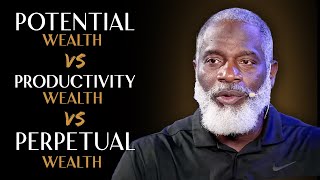
Myron Golden covers financial education and wealth-building strategies, including how to create, manage, and grow assets. He explains practical principles for wealth creation and asset management while traveling.
Chapters
Hello. My friend Myron golden here and I wanted to make a quick intro video for this next video that you're about to watch. Because for the last year, every Wednesday morning at 10 o' clock, I've either gone live or released a Bible study video. This is not going to be a Bible study video. Not because I don't do Bible studies anymore. Not because I don't want to do Bible studies anymore, but because I am traveling right now and I'm in Pennsylvania getting my house ready for Airbnb and I don't have a Bible study video recorded. I thought we had one. We did not have one. So we have some other videos. I'm going to release a financial education video instead. It's going to be remarkable and it's going to help you tremendously in your life. But it's not a Bible study video today. But I'll be back in the saddle next Wednesday. Looking forward to sharing the principles from Word of God with you on next Wednesday morning at 10am so in the meantime, in between time, enjoy this video. And again, my apologies, it's not a Bible study video, but I believe it's going to help you a lot. So I look forward to seeing you next Wednesday on the Bible study. Bye for now. Have you ever wondered why for some people it seems making money seems effortless, creating wealth seems effortless? I've got a magazine from Fortune that talks about speed to wealth and how long does it take these billionaires to make $1,000? And like Oprah's like 31 seconds, right? And she makes $1,000. And I really think that understanding that speed to wealth is one of the most important principles we need to understand when it comes to getting wealth. And I believe that one of the reasons most people don't create wealth, and maybe you desire to create wealth and haven't created wealth in the past, is because you have anchored your wealth generation to a limited resource called time. And the faster you separate your revenue generation from time, the more money you can make in a shorter period of time. And that's what determines whether or not you're wealthy. If a person makes a million dollars, are they rich? The answer is it depends. What does it depend on? How long did it take them to make it? So If I make $25,000 a year and I work for 40 years, 40 years times 25,000, that's a million dollars. But am I rich? I'm not rich. Why? Well, because it took me too long to make it. If I make that same million dollars in A year. I'm rich. How rich am I? I'm 40 times richer than the person who makes a million dollars over 40 years. Now, it's not because I made more money. It's because I made the same amount of money in less time. So wealth by its very nature is measured in speed. Okay? Now I did a video called wealth is not money. So when I say wealth, like wealth is. Money is just like proof of wealth. It's a certificate of your wealth. It's not the wealth. Money is not wealthy. Wealth is the value you create for somebody other than you. That's your wealth. The more you have the ability to create value for someone other than yourself, the wealthier you become. When you find people who have big problems and they also have deep pockets and you solve their problems, they will happily hand over some of their money to you. I know they will. I do it all the time. When I find somebody who can solve a problem for me, I happily pay them a lot of money to solve that problem for me. And so do you. So we have to solve more problems for more people faster and we will become more wealthy. Okay? That's the overarching, like broad stroke, big picture version of wealth. Now let's talk about some things. Let's talk about wealth as people understand it. Let's relate that wealth. Now, we've already created the value, we've already collected the money. Now let's talk about the accumulation and the allocation of wealth or assets. Right? What is an asset? An asset is something valuable that you've created that somebody will happily exchange money for. Right? It's something that's worth something to someone other than you. It's worth something to you, but it's worth something to someone other than you as well. Right? Now you have to understand, every time a transaction takes place, if I say, if I say to somebody, I think I have some money in my pocket here. If I say to somebody, if you give me $100, I'll give you $100. Who wants that deal? Nobody wants that deal. Right? Why? It's a waste of time. Why would somebody want. They're the same people. Don't say, I paid the money because it was worth the money. No, you only pay money for things if you think the thing you're paying for is worth more than the money.
Are you tracking, like, if the thing that you're paying for is not worth more than the money, then you are not going to pay for it. So we have to, like, if I say you give me 100, I give you 100. Give me 100. We do that all day. Neither one of us has any benefit from that whatsoever because we're exchanging something that's worth something for something that's worth the same amount. We only can create wealth and become wealthy as we exchange money for something that we value for more than we value the money. Are y' all tracking? Okay, so when people think of wealth, when most people think of wealth, they literally think of accumulation of wealth. They think of acquired assets. So remember we talked about income follows assets, right? So when most people think about wealthy, becoming wealthy, they think about accumulating a lot of money, accumulation of assets. So if I accumulate a lot of money, I'm wealthy? Well.
Maybe potentially, ostensibly you're wealthy, but maybe not, right? So acquired assets create net worth. So if I've got a bunch of houses, so I know a lot of people, they are wealthy on paper. They just can't get any paper for the paper they're wealthy on. How many of y' all are picking up what I'm putting down? So there are people who own a lot of assets, but they can't liquidate those assets quickly enough to pay their bills, right? So they've accumulated asset. So. And one of the things that they programmed us to believe. So what I want to do is I want to work my whole life. I want to work 40. The 40, 40, 40 plan, right? I want to work 40 hours a week for 40 years of my life so I can retire and try to live off of 40% what I made when I was working. It doesn't work, right? And so most people spend two day longing for someday.
But wouldn't it be better to like, figure out a way that you can put more experiences in your life today? Because someday may not ever show up for you. Like, today may be your last day. Today may be my last day. Well, if today's my last day, I don't want to be doing, I don't want to be thinking about doing all those things I desire to do tomorrow, next week, next month, next year, 10 years from now, 20 years from now when I retire, I want to live my life. Now, people say, what do you do for a living? Can I ask you a better question than that? What do you do while you're living? The quality of a person's life is not measured by the number of years of experience they have doing a thing, but the quality of one's life is measured by the number of experiences we put in our years.
Technology gives us the ability to put more Things more experiences in our years. Money gives us the ability to put more experiences in our years. Health in our body gives us the ability to put more experiences in our years. Great relationships give us the ability to put more experiences in our years. So don't make the mistake of thinking that I'm going to step on people and I'm not going to have experiences. I'm just going to hustle and grind to accumulate a bunch of stuff so I can have this big net worth. Net worth is important. It is important, but it's not the only important thing. And when it comes to wealth creation, it's not even the most important thing. Okay. It's just one of the important things. Are y' all tracking? If you're tracking, let me hear Sam tracking. Okay, cool. So when you understand that acquired assets create net worth and net worth is potential wealth, it is only wealth to the degree that I can liquidate it because I can only use it. I only have the ability to spend my net worth. So if I have own an apartment building, and that apartment building is worth $7 million and I only owe $3 million on it, then my net worth is $4 million. But let's say the bank will only loan me 50% of that, then my cash flow from that can be $2 million. I borrow $2 million of my equity and and let my tenants pay it off. Okay, that's cool. I like that idea. That's a really good idea. Are y' all tracking? Okay. Okay. So acquired assets create net worth and net worth is potential wealth. So let me give you three different types of acquired assets that people think if they have a whole bunch of this, that's going to make them wealthy.
If it does not make your experiences of life richer, then it doesn't matter how much money you have, in my opinion. I'm glad I don't have to choose between accumulated wealth and experiences of life. I can have both. Right. I don't have to pick one or the other, but a lot of times people pick one and they sacrifice everything else on the altar of the one they picked. Are y' all tracking? So here are three different types of assets that create net worth. Currency. Right? So I can have money. Well, a lot of people have money, like a lot of money. Hundreds of thousands, some even millions of dollars. But they're still cash flow poor because they have all of their money tied up in tax deferred retirement plans.
Retirement is not, in my opinion, for me, I'll say it that way, for me, retirement is not a Good idea. Because most, a lot of people, soon after they retire, they expire. And I have no desire to expire. So I have no desire to retire. I only have a desire to aspire higher. Okay. And be a poet and know it. Okay, I'm done. So currency. If you got all your money tied up in a. It's amazing. People have all their money tied up in a retirement account, and they're living paycheck to paycheck. They got all their money tied up in a retirement account, and they pass on opportunities to invest in things that can give them cash flow because they're afraid of the tax penalty, which is less than the amount opportunity cost of not investing in the asset, like so. Well, I'll tell you what my strategy is in a minute, how I actually do my thing so that I don't have money stress. Well, Myron, if I had your money, I wouldn't have money stress either. No, no. If you had my lack of money stress, you'd have the money I had. Don't get it twisted. The lack of money stress came before the money. The money did not create the lack of money stress. The lack of money stress created the money. And there are people who have lots of money, and there are people who have more money than me, and they still have money stress. Why? Because that's one of the things they allow themselves to stress out over. I don't allow myself to stress out over money. It's just money. Okay, I hope you are tracking so currency. That's one currency. Cash and crypto. Right. They don't want to cash in their crypto because what if I cash it in and then it goes up? Then I lost that opportunity. So that as an acquired asset, it doesn't really help me, except it lets me know that, well, I've got something somewhere in case something happens. Right? Okay, so currency. Real estate is another one. Okay. Stocks are another one. But none of those things are liquid unless you figure out a way. Now, if you own real estate and you own the property free and clear, and somebody's paying you rent and it gives you cash flow, you have the net worth, and you have the cash flow from that asset. But better than that, to me, is like, a lot of people want to become debt free. I believe the reason you want to be debt free is because there's a level of financial illiteracy that you're experiencing that you don't understand how money works. Because I don't. Like, eventually, I will be debt free, I'm sure, But I have no intention, like being debt free is not an objective. It'll just be the natural outcome of the wealth that I create as I create it. But debt can be extremely profitable. I know that's not what Dave Ramsey says, and I love Dave Ramsey, God bless him. But.
Debt free is still zero. And I have no desire to get to zero. And when I get ready to buy something that I can pay cash for, I almost never pay cash for it. I almost always finance it, even though I can afford to write a check for it. Why would I do that? Because if I pay cash for it, one, it gives me a tax write off. Why does it give me a tax write off? Because I get a tax write off on the interest. That's one. Another reason I'd rather borrow the money is because the bank will loan me their money cheaper than I can use my own money. So if the bank is going to loan me money at 4% and I use my money, it costs me 18%. If I use my money just so I can be debt free, it cost me 14% net loss because I used my money instead of the bank's money. This is why rich people borrow money. Another reason is if I go and buy a piece of property, if I go buy an apartment building, I go buy a house, I go buy an investment property and I buy that and I pay cash for it, I don't get the depreciation and the cost segregation and the tax stuff that I get from paying for that property. With something with borrowed money, I borrow the money and then.
I usually let the asset pay off itself. Right? But if the asset doesn't pay off itself, I would rather me pay the payment on the asset than lose the benefits of the borrowed money. So watch this. If I buy a house and I get a deal on it, and the house is worth $500,000, but I get it for $300,000, I should be able to borrow up to 80% of that $200,000, which is $160,000, and I can spend that $160,000 any way I want to. And I have zero tax consequence on the borrowed money.
Okay.
This is not even about that, but I'm just saying we have to learn to think differently. We have to figure out how rich people think about money. If I've got $100,000, let's say I've got $500,000 sitting in the bank, I would be better off going and buying a whole life insurance policy, paid up life insurance policy, a $500,000 policy for $500,000. They're going to pay me interest on the $500,000, which the bank is not going to do. Right. Plus if I die, my family's going to get the $500,000 tax free. But if I die and the money's in the bank, the government's going to get half of it.
Are you all tracking? But after that money's been in there for a year, I can go borrow that. First of all, when I buy the $500,000 life insurance policy, I don't have to pay tax on that $500,000. Then I can borrow the cash value out of that 500,000. Let's say I want to go borrow $200,000 out of it to live off of next year. Right. I don't have to pay tax on that $200,000 that I borrowed from my life insurance policy that I paid cash for, that.
I didn't pay tax on the $500,000 I paid. So now I had $500,000 in tax free wealth, $200,000 in tax free revenue.
And you're trying to get out of debt.
Are you tracking like we have to? It's bigger than just the money that comes in and the money that goes out. Okay, so there's acquired assets. Acquired assets create net worth. Net worth is potential wealth. Then there's active assets. Active assets create cash flow. That's productivity, wealth. So potential wealth is net worth. Productivity wealth is.
Active assets. What's an active asset? So this book right here, this is an active asset. I wrote this book one time every month. Every month. This book pays me money. How much money? I don't know, 18 to $30,000.
I wrote the book one time. The book pays me 18. This one pays me 8 to 12,000.
Right. Those are.
It's not even the books that pay me. It's the funnels that sell the books that pay me. Right. So active assets are funnels, like a marketing funnel. We do a challenge once a month. So the make more offers challenge. Right. That funnel has brought in since May 24th. That funnel has brought in so far $96,000 just in ticket sales and upgrades. That's a funnel. What is that? That's active cash flow. That's money that I get to use. Right. My funnels in the last four weeks, my funnels have brought in just in credit card payments in the last four weeks, $102,000. If you get $102,000 in four weeks, if you have a fat hog and a big garden and you quit smoking, you can live off of that. Right? Okay.
Like.
Sorry, I don't even eat pork or smoke. Okay. I'm just saying, like, you're gonna be okay.
That's an active asset that creates productivity wealth. It's productivity. Like, we maintain the funnels. Okay? So that's one rental income, that's another one. You have property that you own that somebody else pays you to live in. That's productivity wealth. That asset is making money for you. Okay. And then holding notes. Holding notes. What's that? Did you know that as an entrepreneur, you can also be a bank?
Say, what's that look like? Oh, it only looks awesome.
How awesome does it look?
This awesome.
You can sell somebody something for $30,000 and just have them pay you $2,500 a month.
And if they pay $2,500 a month for 12 months, if my math serves me correctly, and I'm 99.999% sure that if anything else fails me, my math is serving me correctly, that's $30,000 a year. If you get 10 people to pay you $2,500 a month, that's $25,000 a month. Because you are the bank. Why did you do that? Because they didn't have the money. They didn't have the $30,000, but they had the $2,500 a month. You charge them automatically on ACH. So we have. We have different. We have different funding programs that I've created Myron golden bank, where we've got about probably 120 people who paid me $28,500 down, and they pay me $510 a week on automatic. ACH comes out of their checking account every week, and that makes me over $30,000 a week because I'm the bank holding a note.
Are y' all tracking? We've got another.
Eight people who paid $150,000 down, and they pay $20,000 a month. Eight times $20,000 a month is 160,000amonth. You add that to the 120,000amonth, that's 280,000amonth holding paper. I'm the bank.
Are you. Is what I'm saying making sense? So what I'm saying is this. I'm not teaching you theory. I don't know any theories. Just do stuff. And when it works, I'll come back and report to you, like in real time. Okay, so you've got.
Active cash flow is funnels rental income and holding notes. I like all of those. Those are all great. Active. Now active assets Create cash flow. Cash flow is productivity, wealth, understanding the nature. I'm sorry. Acquired assets create net worth. That's potential wealth. And then accelerated asset creation creates wealth growth. This is how you grow your wealth by accelerating your creation of assets. What does that look like? For me, it looks like info products. Every time I write a book and build a book funnel, by the way, those are just some. Like, we have swag. Like, we have, we have make more Offers challenge hats, and we have make more Offers challenge shirts. And we've got Boss Move hats and Boss Move shirts, and we've got, like, we've got. All of those are also like hard assets that we sell that we buy for one price. We sell for a different price. We make the money in the middle. Right. When I talk about funnels, you don't even have to have a funnel to make money from funnels. You can make money from other people's funnels. What does that mean? You become an affiliate for other people's funnels. I paid out last, in the last two months, over $70,000 in affiliate commissions to my affiliates, to people who made sales for me. So they're like on my team and I only have to pay them when they make me money. Are y' all tracking? Okay, cool. So accelerated asset creation wealth is wealth growth or the perpetuation of wealth. One is info products. What are info products? Books, courses, master classes, paid webinars, masterminds, coaching programs. All of that stuff is info products, Right? Certifications. Did you know that you can create a certification? One of my top clients.
This lady does over $50 million a year.
With a membership site, like a membership funnel. Basically, people join her membership. It's $300 a month. And then if you want to get certified in her methodology, she charges 18. Well, she used to charge 18,000. She charged 21,000. $21,000. Certification. And she doesn't even make people renew their certification. She made people renew their certification. She'd be making $100 million a year. You can create your own certification. On what? On whatever your thing is you're an expert on. Think about how crazy this is. It's mind blowing. You build a certification as a business in the box. Okay, good. Yard tracking. Okay, good. So info products, that's one, that's one like asset that you want to keep creating info products. We keep creating info products. And I like creating info products that, that once I create them, they're done. And all I have to do is let folks know I created and then they go and they buy it. Right. I make that asset that I make that info product findable. Okay, cool. So two hard products. What is a hard product? A hard product is a car. Like some of my students, they'll buy Lamborghinis and they'll buy Rolls Royces and they'll buy Ferraris and. And then they'll put them on Turo and they'll rent them by the day for like, hundreds or thousands of dollars a day. So that's a hard asset. They get to own a Lamborghini and a Rolls Royce and a Ferrari that somebody else pays for.
Right. Okay, so cool. So that's a hard product. Hard products are physical products, like hats, like shirts. There are people who make millions of dollars in the hat and T shirt business. Right. Y' all have heard of the show, the film series, the Chosen? Well, back in 2021, this is what got me excited about YouTube. Darrell Eves, the guy who came up with the concept for the Chosen, he said in, like, a couple of years, they did $29 million worth of swag, like shirts and hats.
You did what?
Do y' all know how much 29 million is? That's 29 times a million. Okay, so hard products.
And I already talked about holding notes so you can create more and more products that you finance for people.
It's so funny. Like, it's a lot of people, but what if they don't pay you? What if they don't finish paying for it? Well, do you know their, like Wells Fargo, everybody who borrows money from them doesn't finish paying them. But do they have more money than they had? Yes. And yours is different because Wells Fargo has to borrow money from their depositors to loan money.
To the people who borrow to their borrowers. Well, guess what? When you create a product, you don't have to borrow anything from anybody. And if you're selling an info product and you're funding it yourself and holding the note, if they only make three payments.
And they lose their access, they don't have, like, you still got the money. You got something. Now, I would prefer to sell things to people that I know they'll be able to pay for. Right. I don't want to just get people's money and they get nothing. I want to get people's money and then they get something and they get more than they paid me for. Right. But these are ways that you can create wealth. So here are some of the questions that you should ask as you're evaluating what assets you should be creating or could be creating that will make Your life better. Here's some questions that you want to answer. Okay. Number one, you evaluate the function of the cash flow. What do I have to do to create the asset? So in order for me to create this thing that somebody else values, what do I have to do? Okay. Is me having to do that going to make me happy or sad? Okay. If it's going to make me happy, then it's worth doing. It's gonna make me happy. It's gonna make me money. It's worth doing. It's gonna make me sad. It's gonna make me money. For me, it's not worth doing. Okay, so here's what I'm gonna. Here's the Myron golden quote I'm gonna give you on this one. All good money ain't good. Just because somebody will pay you a lot of money to do something doesn't mean you should do it. I don't want to do anything I don't want to do, and I don't want to do it for money. Like you paying me to do something I don't want to do doesn't make me want to do it. Right.
I'll give you an example. Or if you make me do something I don't really like doing, gonna make you pay me a lot. Like, a lot a lot. Like, if you want to buy an hour of coaching from me, since I don't and you want it one on one, it's $40,000. Myron, can I pick your brain? You can. I'm gonna send you the wire instructions. It's $40,000 per picking session. Right. And so.
I know to you that sounds crazy, but if I talk to a business owner who has a real business for an hour, they'll make way more than $40,000 from the stuff I tell them, and I know that. And if they don't believe that, they're not going to pay me. And now I don't have to do it and everybody's happy.
You are tracking. Okay, cool. I would rather coach people in a group so everybody benefits. Okay, so.
Evaluate the function first. What do I have to do? Evaluate the frequency. How often do I get paid from this asset once I create it? Now, most people, they are their only asset. So here's how they get paid. They go to work, go to work, go to work, go to work, go to work, get paid. Go to work, go to work, go to work, go to work, go to work, get paid. Go to work, go to work, go to work, go to work, go to work, get paid. Here's what I like to do. I like to go to work, get paid, get paid, get paid, get paid, get paid, get paid, get paid, get paid, get paid, get paid, get paid, get paid, get paid, get paid, get paid, get paid, get paid, get paid, get paid, get paid, get paid that's how I like to do it. Almost sounded like a song, didn't it? That's kind of how it feels. Kind of feels like a song. You might want to start singing that one. Okay, so I want to. But what's the frequency? I write the book. That's why I like books. I can write a book one time and get paid on it for the rest of my natural life. I wrote this book in 2006. I've sold over 160,000 copies. It's made me millions and millions and millions and millions of dollars. I did the work once. I wrote this book in three days. This one took a year and a half, but it was a year and a half worth of work. But get paid, get paid, get paid, get paid, get paid, get paid, get paid, get paid, get paid. Okay, y'. All. Y'. All.
Okay. All right. Y' all get it. I'm done being corny, maybe. Okay, so evaluate the frequency. Evaluate the figures. How does this asset pay me? How? Like how? I mean, how much does this asset pay me? This book pays me $30. I sell this book for $30. It's a paperback. It's a paperback book. Who sells paperback books for $30? Myron Golden. Why? Because that's how much I decided I want. I could have sold it for 100 if I wanted to. This is two $40,000 coaching sessions. This is two hours of coaching in a book. And you don't have to pay $80,000 for it. You. You get it for 30 plus 9.99 shipping and handling. Go to bossmoosbook.com okay. Just kidding. Okay, so. But that's really weird. You can't buy this book on Amazon. Why don't I sell it on Amazon? Because if I sold it on Amazon, they control the price. And if I sell this book on Amazon and I tell them it's $30, they're only going to pay me 10%.
No, 30%. 30%. They're going to pay me $9. I sell it in my own funnel. I get $30 plus $9.99 shipping and handling. They're going to ship it for free. They're going to charge $30 for it. They're only going to pay me 30%.
Now, some people may wonder like this book. I do sell this one on Amazon just because it's old. And I only sell it as an e book on Amazon. Okay. Oh, I'm running out of time. I only sell it as an e book on Amazon. Right. So I sell it for $9.99. Why? They pay me 70%. So 70% of $10 is $7. If I sold it for $20, they'd pay me 30%. I'd only make $6. That's how they control their pricing and make sure they keep prices low for buyers. I'm not really concerned about keeping prices low for buyers. I'm more concerned about getting paid for what my stuff is worth. So I don't sell my books generally on Amazon for that reason. Okay, so how much does the asset pay me? Well, trash can, the cashmere cost me about $2.50 to print. Boss moves cost me about $3 to print. And I sell it for 30. So I make 1000% return on my money every time I sell a Boss Moves book.
No wonder you're rich. Exactly. Okay, so evaluate the forms. What is the currency that the asset pays me in? Does the asset pay me in cash? Does it pay me in crypto? Does it pay me in stock? Like, when we sell some of our software companies, if we sell to a big company, they might pay us some in cash and some in stock. That sounds good, doesn't it, Andrew? Okay, so that might be that. Okay, then evaluate the future flow. How long will this revenue come in after I stop going out to get it? Well, if it's a book, a long time. Like, I could automate my challenge and it would just bring in money every month. But I like doing the work, so. Okay, and then evaluate the framework. What are the steps in the process to produce and promote the asset? Because when I figure out what the framework is, the steps in the process to create and promote the asset, once I figure out those steps, I can turn that into a course that I sell to other people and teach other people how to become me. So that is how you make, manage, and multiply your wealth. I hope that helps. Stay blessed by the best. I'm out.
More from Clegg





AI Won't Tell You the Full Truth | Arthur Brooks + Simon Sinek | A Bit of Optimism Podcast



How To Make the Best Decision | Arthur Brooks and Simon Sinek | A Bit of Optimism


