How to Prepare for a Panel Interview - 5 Ways to ACE a Panel Job Interview!
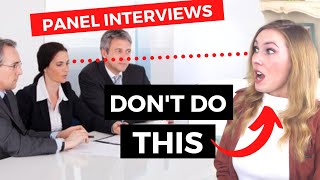
Madeline Mann walks through five ways to handle a panel interview: greet each panelist, prepare for predictable questions, ask for names, ask for clarification when needed, and use behavioral stories. The biggest mistake is failing to make equal eye contact with all of them.
Chapters
Hey everyone, this is self made Millennial. I'm Madeline Mann. Today we are talking about how to impress the interviewer during a panel interview, how to prepare and what to expect. You are exceptional and I want to make sure you're adding value to the world in a way that lights you up. So make sure to subscribe to this channel and hit the bell to get a new career advice video every Thursday. There are so many dynamics at play in a panel interview. This video will give you a straight, strong overview and then stay to the end because I reveal the number one mistake I see people make in these interviews and it is so simple to fix once you're made aware of it. First, let's begin with what are the typical panel interview formats? A panel interview can flow a lot of different ways. At the core it is where you have more than one person interviewing you at a time and it can be where they're asking you many of the technical typical interview questions. It can be where the majority of their questions are behavioral skill based questions. They may give you a case study scenario or even a presentation where you need to show your competency or your plans for the role. In this video we will focus more on the question and answer side of a panel interview since that is a component of many of these interview styles. But I will come out with a video very soon on the key things to know about doing presentations in the interview. So I will link that link everywhere when it comes out. Second, why did they choose a panel interview format? Panel formats can be more efficient. The hiring loop can receive all the information about you at the same time. It also adds additional challenge to your communication style to see how you can present yourself in a meeting setting. And finally, sometimes they do this to put you in a high stress situation where where rapid fire questions are coming at you. Especially if your job is one where you are going to have to think on your feet in a high pressure situation such as if you're an educator or a medical professional. For instance. Here are five tips of what to expect to make sure you rock your panel interview and then I'm going to tell you the number one mistake I see people making and finish off with the key steps and special resources for after the interview that can really save you if you didn't do so well in the interview or or if the interviewers are maybe a little on the fence about you. First, walk into the room and shake each person's hand and have a resume printed for each of them. I'm always tempted to walk in do A quick wave and sit down, but reaching over to them, making physical contact that makes you look much more confident even if you're not. Then also shake their hands on the way out too. And don't leave anyone out, even if one person is an intern or a secretary there who is simply there for support. Second, what will they ask? Well, most panel interviews, if they are purely question and answer format without a presentation, they will expect you to give an overview of yourself by asking something like Tell us about yourself. This needs to be buttoned up, concise and confident because this will really set the tone. I have a free worksheet to help you sketch this out with your own answer and so I will link that in the description. Two more questions that they are highly likely to ask include why do you want to work for us? And why should we hire you? You cannot falter on these two. You should have these answers repeating in your head like the lyrics to Call Me maybe. I already have full videos of each of these questions where I break it down step by step, give you examples, so I will link those both in the description. And finally, the other predictable question is do you have any questions for us? And a heads up if they ever ask you this, your answer should always be absolutely. Which brings us to number three. Third, ask for the names of the interviewers on the panel ahead of time. You should have their names and titles written down in the notebook in front of you during the interview. Or if they say their names in the moment, make sure to jot those down and then make an effort to address the panelists and by their names to connect with them on an individual level. One of the best ways to impress each member is to craft questions specific to the person. Zeroing in on different individuals at different parts of the interview will help them to feel special, feel seen, and will gradually help you to win over each person one by one. So so a general question you could ask which wouldn't be targeted at any one person and everyone would go down the line and say their answer, which is still a fine approach. An example would be from your perspective, what is the number one thing you want this role to focus on in the first six months to best add value to your area of expertise? Or an example of a more specific question aimed at someone is Francesca, I saw that you are one of the longest tenured people in the room and have seen the company go through a lot of changes. What challenges have you seen this role face historically? And do you see those continuing into the future as you are researching these people notice the number of years they've been at the organization, if they have worked in multiple departments or domains, if they come from a different industry and likely had to learn a new industry, possibly just like you are going to have to. All of these pieces of research will be done on LinkedIn ahead of time and will make you seem so friggin smart. Fourth, ask for clarification. If they ask a question that is super broad or you just don't completely understand, ask for clarification. Interviewers actually like it when candidates seek clarity, such as when you say perform an activation, what do you mean by that? Or another example is okay, you'd like to hear an example of an escalating conflict. Are you interested in one with a client or with a team member? This helps you to ensure that you are answering in the right way and not rambling on and simply waiting for some sort of head nod or a visual cue that you're in any way on the right path. Fifth, Behavioral Interview Questions it is likely that they will ask you back behavioral interview questions such as tell me about a time you had to deal with a late shipment. These are questions where they are trying to understand how you handle different situations. I have a video that goes so deep in on this topic and is one of my most highly praised videos, so I will link it in the description, but let me give you a preview here. You'll want to follow prompts to get a bunch of stories from from your work history on paper. I'll link a free download of some really helpful prompts and once you have all of these stories down, look up behavioral interview questions online and practice reading a question and then matching it with one of your stories that you wrote down. There is certainly an art to it to get stories to fit multiple questions. You have to be a little bit creative with how you introduce a story story and you'll generally emphasize different points based on the questions. But you will be amazed at how you're able to answer nearly every behavioral interview question with what I call building out this story toolbox. You've got to watch that whole video, but this approach will seriously set you free. So here's the biggest mistake I see people make in the panel interview that is not making equal eye contact with each person on the panel. You are going to be overwhelmed with stimuli, okay? And you're going to be doing your best answer and you will likely have the tendency to focus all of your energy towards the person asking you the question or towards the person who is the decision maker. Big mistake have you ever stood in a group at a party and someone is chatting, telling a story and they don't even acknowledge you? Or you're out shopping and a sales clerk directs every question to the person you're with and none of them to you? It feels weird and it feels lousy. You want every person on the panel to feel cherished. So start your answer by looking at the person who asked it, but shift your gaze to the others during the rest of your answer. Now, even if you don't do your best in the panel interview, there are a few things you can do to seal the deal. First, within 24 hours, send every panelist a thank you email if you have any questions about how to go about doing that. I have a video that will give you all the details and so I will link that in the description. I'll also give you a free digital download of email templates for you to use to follow up after a job interview. This is crucial to stay top of mind for the company and to show your passion and interest the right way. I I will link that in the comments and in the description. Like this video and subscribe to this channel. Thanks so much everyone. Wi Fi High five.
More from Clegg





AI Won't Tell You the Full Truth | Arthur Brooks + Simon Sinek | A Bit of Optimism Podcast



How To Make the Best Decision | Arthur Brooks and Simon Sinek | A Bit of Optimism


