How To Profit from Your Problem
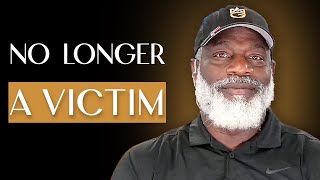
A YouTube motivational talk by Myron Golden arguing that people must stop seeing themselves as victims and instead treat hardships as opportunities. Golden distinguishes 'contributing factors' (external events) from 'determining factors' (internal attitudes), uses personal history (polio, segregation) and biblical examples (Joseph, Jacob) to illustrate how struggles prepare and can be turned into fruitfulness and destiny.
Questions this video answers
May 14, 1961, in Tampa, Florida.
Chapters
Hey there. It's time for you to start winning. It's time for you to stop being a victim. And when I say stop being a victim, what does that mean? Well, I think people have some erroneous beliefs about life and the things that happen to them. A lot of people would like to use the things that have happened to them in their lives as an excuse or a, quote, reason why their life isn't working. But I submit to you, that's almost never the case, especially if you're an adult. That's not the case. And so we've got to do is we've got to stop being a victim. We got to stop seeing ourselves as a victim. We got to stop allowing other people to superimpose on us the idea that we are somehow a victim of our circumstances, because we're not a victim of our circumstances. And you can do anything. You can do anything you decide to do. You can become anything you desire to become, but only if you'll stop being a victim. Now, what do I mean? So. So all of us have things happen to us and in our lives that we would not choose. All of us have things happen to us in our lives that are painful and difficult, and sometimes we might even call them, quote, bad, right? But the reality is, if something in our lives is not working, it's not not working because of that.
Because some people say, well, I'm a woman in a man's world, and that's why I can't get ahead. I would say to that person, stop being a victim. Somebody might say, I'm a black man in a white man's world. I would say to that. And that's why I can't get ahead. Stop being a victim. You can only be a victim if you allow yourself to see yourself as a victim. That doesn't mean people don't do bad things to other people. That doesn't mean people don't take advantage of other people. That doesn't mean people don't rob other people and people don't mug other people. It doesn't mean that. But the only way you can be a victim of your circumstances is if you allow yourself to be a victim of your circumstances. So I'm going to explain a concept that I believe to the core of my being to be absolute truth. There are two types of factors that happen in our lives. Two types that have something to do with how our life turns out. And those two types of factors are contributing factors and determining factors. And contributing factors are not determining factors. And determining factors are not just contributing factors. Now, what do I mean? So what I mean by that is the world that we live in is not perfect. In this life, you shall have tribulation. That's what Jesus said, right? In this life, you shall have tribulation. But be of good cheer. I have overcome the world. So just because you're going to have tribulation or difficult times in life doesn't mean you have to be a victim of those difficult times. I was born right here in Tampa, Florida, May 14, 1961. I got a birthday coming up next month in case any of you all on YouTube want to get me something nice. But May 14, 1961, I was born right here in this town in Tampa, Florida. I was born in a segregated hospital that was a post Civil War hospital. And the reason I was born in that hospital is because hospitals in the south, in the democratic South. I'm saying that for a reason. And I'll get back to that reason in a minute. But hospitals in the democratic south were segregated. And black people couldn't be born in just the Tampa General Hospital. Couldn't happen. And so because the conditions that hospital were so poor, I contracted polio before I was a year old. Now you gotta understand, this was in America in a time when it was against the law. It was against the law for black folks to move from the south to the north. Unless you already had a job up north. Now how are you gonna get a job up north if you're not allowed to go up north, right? By the way, this is not me poo pooing America like I love America. I've been other places, I would rather live here than any other place I've ever been. Except maybe Israel. I really love Israel. Okay, but. But I'd rather here live here. Why? Because even though America is not perfect by any stretch of the imagination, and America is not all of its slogans by any stretch of the imagination, America at least was a great enough country and is a great enough country that where they had something as atrocious as chattel slavery and something as atrocious as discrimination. And when I say discrimination, I'm not talking about the modern day definition of the word where if you don't believe in something and you believe something's wrong, that's discrimination. That's not what I'm talking about. I'm talking about people were just discriminated because of the color of their skin. Like because of that, because of segregation, because of Jim Crow law. Even with all of that evil, America at least had Enough foundational principles that all of those things could be overcome. Right? And so.
Those things that happen to my parents, those things that happen to me, even though, like, because I was born in that segregated hospital, contracted polio, because six or seven years after the polio vaccine was discovered, like, I'm not a victim. The fact that I walk with a brace on my leg does not make me a victim of racism. The only thing that can make me a victim of racism is my mind. Because there are people. There are people who had it a whole lot worse. There are black people in the United States of America that had a whole lot worse than any of us who are alive today. And they still made their lives work and made our lives better because they refused to be a victim. Right? You can't help anybody. You can't help anybody if you're a victim. Like, you're just going around looking for somebody else to fix your problem. And I got news for you, baby. They can't do it. Right? Right. You got to stop waiting for somebody to come by and fix your problems. What if they don't show up? As Jim Rohn would say, right? And so what we've got to do is we got to just decide that I am not going to let the contributing factors in my life deceive me into thinking that they are determining factors. So how can I tell the difference between a contributing factor and a determining factor? If, in fact those two types of factors are the types of factors that exist, then it would behoove us. It would behoove us to figure out, how do I know whether a factor is determining or contributing. Have women been, like, discriminated against because they're women? Yes. Have black people been discriminated against because they're black? Yes. Have Hispanic people been discriminated against because they're Hispanic? Have Asians been discriminated? Yes, but those are not determining factors. Frederick Douglass was born a slave. Born a slave, lived and died a free man. And look, he taught himself to read in a time when it was against the law for a slave to learn how to read. How and why did he do that? Because he decided, even though I was born into slavery, even though my master was, my master sold my mother to a different plantation when I was around six years old because he didn't know exactly how old he was because he didn't have a birth certificate. Even though that happened, I'm not gonna be a victim. Even though I learned a skill and bought my freedom and had it stolen from me and had to earn enough Money to buy my freedom. Again, I am not a victim. And he was so much not a victim that he was a major contributing factor to the abolition of slavery. So. So. So stop trying. Like, I'm not saying you're trying to get people to feel sorry for you, but if you are, stop trying to get people to feel sorry for you, okay? Because nobody really has time. They're too busy doing their own thing. Stop trying to get people to feel sorry for you. Stop buying into the lie that your life is not working because somebody else is keeping you down. Because if in here, you recognize who you are based on whose you are, that it doesn't matter who's doing what around you, you are bigger than all the obstacles that you will face. Now, that was all. Preface, introduction, whatever you want to call it. Foundational. I want to read the statements of two people. They both had the exact same circumstances. One of them secondhand, the other one firsthand. They both experienced the exact same circumstances. One saw himself a victim of those circumstances, the other saw himself as a victor over those circumstances. And see, today you get to decide, yeah, okay, like, I was born into a poor family, but that don't mean I'm gonna die in a poor family. Right? Right. I was raised in a family of drug dealers. Okay? But I'm not going to be a drug dealer. Right. I was born into a family of alcoholism, but I'm not going to live and die as an alcoholic. I'm not going to do it. All right? Right. So I'm not, like, I am not going to be a victim of the system. I'm going to be a victor over the system. And I'm going to do that because I realize I have a choice.
So I'm going to tell you how to tell the difference between the determining factors and the contributing factors. I'm going to read these. The. Read what these two people said about the same situation.
Contributing factors are all outside of you. That's how you know they're contributing. Now, I might have said that way too fast.
Contributing factors are all outside of you. And the enemy has a concerted effort right now to make people believe that contributing factors are determining factors. Because if we believe that, then what we're gonna do is we're gonna trust the most lying words that have ever come out of anybo mouth, and that is, I'm with the government. I'm here to help you.
Because the government can't fix social problems. They've already proved, in fact, the government makes social problems worse. They amplify Magnify and multiply social problems. So every politician who's ever said they're gonna. They're. I'm gonna end income inequality, you are a liar. And the truth don't come nowhere near you.
Okay? So determining factors, on the other hand, are inside us. So what are some contributing factors? You got sick, you got injured, you may have lost a limb. You may have. You may be paralyzed. You may be sight impaired, like visually impaired. You may be hearing impaired. Right? Those are contributing factors that, for those of us who don't have that same factor in our lives, might feel determining, but it's not. It's not determining. It's contributing. There's. Regardless of what situation you find yourself in, you can find someone somewhere in life right now or in history in the past who had the same situation but overcame it because of what was inside of them.
And so some of us are going to have to learn how to stop looking on the surface for somebody else to fix our problems and dig down deep inside of us and find the characteristics that make the most difference. Can I get a witness up in here? So here's the story. There was a father. And this father had.
11 children.
I had a lot of children. My mom had 11 brothers and sisters. I have six brothers. So I can relate to a big family. Here's what I know about big families. Siblings don't always get along. Can I get a witness right now? My brothers and I, we happen to always get along right now. Like, we always get along, me and my brothers, we get along. Why do we get along? Because my mom and dad did not allow us to argue and fight and call each other names. It was against the rules.
My dad said you might pass the first licks, but. First lick? But I'm gonna pass the next one. You did not want my dad passing you a lick. His hands were harder than his table. He was not playing, okay? And so this father had. He had 10 children. The youngest child had the nerve to have a dream. And he dreamed that all of his older siblings were gonna bow down to him. And his mother and father were, too. And, like, it's bad enough that he had this dream, but then he got the whole family together, and he said, I have a dream this afternoon, okay? And he told them his dream. And here's what the scripture says. His brothers hated him for his words and for his dream.
He was his father's favorite son. I'm not even going to go into that. Parents don't have favorites. Don't play favorites. Make all your children Your favorite, right? Like, you are doing such damage to your children, to their sibling dynamic. If you have favorites, I'm telling you, it's a bad situation. Anyway, so this. This youngest boy, he was his father's favorite son, and he told his family about his dream. His brother's hating for his dream. He said, hey. And he was a little bit of a tattletale.
So it's easy. So, like, I can relate to this so much because I'm the second oldest. I'm not the oldest, but I'm the second oldest, right? And I did not always do the right thing. I know that's hard for y' all to believe, but I did not always do the right thing. And.
I remembered, like, doing things. And my little brothers would tell me, man, and then when my parents left, I'd do something else to give them something else to tell them, Right? Okay. And so. And so. So the scripture says his brothers hate him for his words and for his dream. So his father sent him to check on his brothers, and they saw him coming. They said, oh, here comes this dreamer. Watch this. They said, let's kill him. Now, I have never had the thought in my life to kill one of my brothers. I don't think any of my brothers have ever had the thought to kill me. But if they had, I don't know that I would have blamed them in the early days, okay? So. But I never had a thought to kill one of my brothers. And they said, let's kill him. And then one of the brothers said, no, we can't kill him. No, let's don't kill him. Let's throw him in this ditch. Just let him die, right? And so they left. And he said. And then they came to his. Wait a minute. If we leave him in that ditch, we can't make any money off of him. But while they were gone, some Midianites came and took him out of the pit and then sold him as a slave into Egypt. So now they took his coat of many colors that his father gave him to prove that he was the favorite. They tore it up in pieces. They put, like, animal blood on it and said, we don't know if this is your favorite son's coat or not, but I don't know. We found that maybe an animal killed him. They were lying, right? They didn't want to say, well, we threw him in a pit and we came back and he was gone, right? That would not have bode well with dad, right? So he's gone. His father thinks he's dead.
He gets sold into slavery. He's Potiphar's slave. He works in Potiphar's house. He gets lied on by Potiphar's wife. She tried to seduce him. He didn't fall for it. He didn't allow himself to be seduced by her. She lied and said he tried to rape her. And then he got sent to prison for a crime he didn't commit. Hey, if you want to be a victim of something, having being, being thrown in a pit by your brothers, sold as a slave, and then going to prison for a crime you didn't commit, I don't know if there's ever a good time to be a victim. That would be a pretty good time to start.
Right? But God blessed him, brought him out of that. He became the prime minister of Egypt. And then his father.
Jacob, or Israel.
Joseph had a plan to save the whole world from starvation, including his father and his brothers. They got reunited and he introduced Pharaoh to his father. And it says In Genesis, chapter 47, verse 7, it says, and Joseph brought in Jacob his father and set him before Pharaoh. And Jacob blessed Pharaoh. And Pharaoh said unto Jacob, how old art thou? And Jacob said unto Pharaoh, the days of the years of my pilgrimage are 130 years. He's 130 years old. Okay. To give you a perspective of 130, I'll be 62 next month. He's like 68 years older than I am right now. Like, if I'm gonna live to be 130, I haven't even lived half of my life yet, right? How many all know it's a good life? 130 is good. 130. Pretty good. Okay, cool. He said.
He said the days of the years of my pilgrimage are a hundred and thirty years. And then he said this. Few and evil have the days of the years of my life been, and I have not attained unto the days of the years of the life of my fathers in the days of their pilgrimage. He said, few and evil have been the days of my life. What? First of all, few. Let's start with that few. You. 130.
Which shows us, by the way, anybody, regardless.
Of circumstances, good or bad, can see themselves as a victim.
He had lost one child, but later found out that child wasn't dead. I don't know. That might. To me, that seems like a win, right? You thought he was dead for over a decade, and now you found out he's actually alive and you're saying few and evil. Okay, you lost one child, but you still had 11. And then after that, you had another son after he. After. After that son. Like he had another son. Well, that's interesting. So now you got 12 sons. You thought one was dead, but you find out they're all alive. And here's your testimony. Few and evil have been the days of the years of my life.
Isn't that what we do? We discount all of the blessings and we count all the burdens. And what we should be doing is discounting the burdens.
And counting the blessings. That's what we should be doing. That's what we could be doing, but that's not what we're doing because we buy into the lie that somehow in this life, life should be perfect.
Why am I confused? I don't know. Maybe just because I'm easily confused. But the reality is. The reality is few and evil. By the way, I am not minimizing the fact that he's been through something. He's been through something. But we've all been through something. And I haven't been what you've been through what you've been through, and you haven't been through what I've been through. Here's what we can all acknowledge. We've all been through something. And if we say, like Jacob said, few and evil have been the days of the years of my life. We have not. We have. We have failed to count our blessings. I woke up this morning.
That's a blessing.
There are people who went to bed last night who did not wake up this morning. That's. It's a. I. I woke up. Watch this. Y' all ain't gonna believe this. This is amazing. This is like almost. This is a miracle. Y' all ready? I opened my eyes and they could see.
That doesn't seem like that big of a deal. Here's what happens. We take that for granted. Because every time we open our eyes, they see. But guess what? I know how to make myself look. I don't know how to make myself see. It's a blessing. I can hear. I know how to make myself listen. But I don't know how to make myself hear. Do you understand? By the time you got downstairs to your kitchen, or if you have a one story house, by the time you got in your kitchen, you have opened so many gifts. How can you do anything for the rest of the day but walk around with a cheesy grin plastered on your face? Thank God blessed.
How many are picking up what I'm putting down. And so he said, few and evil have been the days of the years of my life. Dude, you got 12 children. They're all alive. Y' all could have starved to death. Y' all could have starved to death and never found. Joseph, all your family's alive. You live to be 130 years old. You found out your son that you thought was dead is alive. You're surrounded by your family. You're blessed with prosperity. And you. The only testimony you have is few and evil. Have the days of the years of my life been. Hey, here's what we better stop doing. We better stop counting our burdens and start counting our blessings.
I guarantee you, if they were gone tomorrow, you'd notice they were gone. Even if the fact that they were there today, you didn't notice that they were there. If they were gone tomorrow, you'd notice they were gone. Well, now, the other person who experienced the same thing as Joseph, Joseph is actually the one who was thrown in the pit by his brothers. Joseph is the one who was actually sold into slavery. Joseph is the one who was actually lied on and went to prison for a crime he didn't commit. By the way, prisons back then were not. They didn't have, like, running water and, like, central air and central heat. Televisions. No, no, this is a cave. This is a. This is a dungeon.
And then.
God gave.
Joseph a circumstance where he could be discovered. God put a contributing factor in Joseph's life where he could be discovered. The butler and the baker got thrown into the same prison and they had a dream. They woke up, they told Joseph their dream. They said, well, here's what your dream means.
Pharaoh's gonna cut your head off. I mean, he's gonna. I mean, you're gonna be hanged. You're gonna be hanged. And then the birds of the air are gonna come feed on your carcass. But you, you're gonna be restored to your same position. But just when you're restored, please don't forget me. Oh, I could never forget you, Joseph. You told me I was gonna be restored, right? And guess what? The butler got back in his office and said, joseph who?
Right? So all of those things happened to Joseph. And here's what it says. Unto Joseph were born two sons before the years of the famine came, which Asenath, the daughter of Potiphar, the priest of Omar, bare unto him. So did y' all notice that Joseph ended up marrying Potiphar's daughter? The guy who he was a slave of, he ended up marrying his daughter anyway. I thought that was pretty funny.
Joseph called the name of his firstborn Manasseh for he said, God hath made me forget all my toil and all of my father's house. He's saying God made me forget.
All of the hard work I had to do when I was working in Potiphar's house. He made me forget the hard work, the travail, the hard labor that I had to do while I was working in the prison. He made me forget my father's house. The brothers who hated me so much that they wanted to kill me, but they threw me into a pit. You made me forget. God has blessed me with a short memory on the difficult times of my life. What?
What? That. Now that's how to live right there. Yeah.
All these coaches, consultants, counselors, therapists that want people to just go back and relive the pain in their past. For what?
Let it go.
But that's not all. Then he had another son. It says verse 52. And the name of his second, called He, Ephraim. For God hath caused me to be fruitful in the land of my affliction. Is there any greater blessing than that? God has caused me to be fruitful? I'm fruitful. Fruitful. What's fruitful? Fruitful is productive. Okay, so here's the significance of fruit. The very first thing God ever said to a human being in Genesis chapter one was this. Be fruitful and multiply. Replenish the earth, subdue it and have dominion. Do you understand the word fruit? Like, what does it mean to be fruitful? The word a fruit is a living organism whose seed is in itself. When God tells a person to be fruitful, he's saying, you make sure you make show up on the outside what God put on the inside of you. Do you understand that? God put an aspect and aspect of his creativity as a seed inside of all of us. And we're supposed to use that aspect of his creativity to produce on the outside based on what he put on the inside of us, how many are tracking. And then. And then when we do that, he said, be fruitful and multiply. The word multiply means increase. When I exercise the creativity that God put inside of me, it's gonna cause me to increase. And then he says, and replenish. What's replenish mean? Replenish means to fill up the earth and subdue it. What's subdue mean? It means to trample down. Why is he telling me? If he's telling me to build it up, why is he telling me to trample it down? Because disruption always follows intention.
And when you decide to do something good, the first thing that shows up is something hard.
Right? Like people say, oh, I started this thing, and all of a sudden all this bad stuff started happening. So I figured I must be going in the wrong direction. That is not a sign you're going in the wrong. It's a sign you're going in the right direction. How many are picking up what I'm putting down? Wave at me, my people. And so, like, even if you start, like, if you're out of shape, you decide, I'm gonna start exercising.
I hope you last passed the first three days, right? Because when you start exercising, you don't feel better first. You feel worse first. You don't feel stronger first. You feel weaker first.
So. So he said, the reason he said subdue or trample or stomp or step on. The difficulty is this because disruption always follows intention. So when disruption raises its rears its ugly head to follow your intention, step on it. Step on everything that tries to stop you. He's caused me to be fruitful in the land of my affliction. Do you understand? When God causes you to be fruitful in the land of your affliction, you have a totally different kind of fruitfulness than you could have had had you not had the affliction. What does that mean? That means everything that happens to you happens for you, even if it doesn't feel like it. That's what it means.
Everything that happens to you happens for you. It's part of the preparation for the assignment for which you were created.
And here's our problem. Our eyes are facing outward so we can see everybody else, and we can see what they're doing, and we can see how good their life is, and we can see how blessed they are. And you know what happens? We can't see inside. Like, I can't see the value in me unless I look at it through the lens of God's word. When I look at the value in me through the lens of God's word, then I know what it is. But if I try to see it with my natural eyes, I can't see it because the stuff I have doesn't look that valuable. Other people can do stuff I can't do. I got six brothers. They can all run. I can't run. So I learned how to fight. So don't try to chase me.
I'm just saying, okay? And so what happens? What happens is we have to learn how to count our blessings and even recognize that our burdens are a blessing. If Joseph had not been in Egypt when Pharaoh had his dream, who would have interpreted it? If Joseph had not interpreted it, who would have given them a plan to save the world from starvation? Do you understand that every difficulty you've ever had in your life was a setup for your destiny? Because there is no strength without struggle. There is no advancement without adversity. And there is no destiny without difficulty. Stop being a victim. Start celebrating the things that you've been tolerating. Can I get a witness? Start being grateful for the things that you've been bitter for.
And recognize that just like God did this for Joseph, he can do it for you. The difference between Jacob and Joseph is not what happened to them. They both were talking about the very same circumstance. One just said, few and evil have been the days of the years of my life. The other one said, God hath made me to forget all my toil, and he's made me fruitful in the land of my affliction. Stop being a victim. If you want to understand how to do what I'm talking about, I have a video on my YouTube channel right now that you're going to want to go watch. It's my TEDx talk on how to overcome procrastination. It'll teach you in the moment how to do what I just shared with you to do. Stay blessed by the best. And I'll see you all in the next video. Peace out, Cub Scouts.
More from Clegg





AI Won't Tell You the Full Truth | Arthur Brooks + Simon Sinek | A Bit of Optimism Podcast



How To Make the Best Decision | Arthur Brooks and Simon Sinek | A Bit of Optimism


