How to Thrive as an Introvert at Work - Ft. Lorraine K. Lee
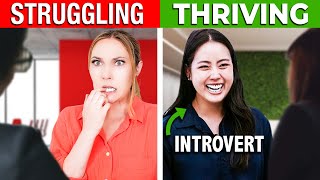
Lorraine K. Lee, author of Unforgettable Presence, talks with Madeline Mann about how introverts can build professional presence without faking extroversion. She introduces RAVE (Relationships, Appearances, Visibility, Expertise) for career growth and the T method for stronger virtual meetings. The focus: leverage your actual strengths like deep listening and preparation instead of performing someone else's style.
Questions this video answers
March 13, 2025
April 22 (announced in the interview)
LinkedIn and Prezi
2023
600 pre-orders
Chapters
Hello and welcome to Self Made Millennial. I'm Madeline Mann. Today I'm here with Lorraine K. Lee, the best selling author of Unforgettable Presence. And we're here to talk about how to thrive as an introvert at work. Hello, Lorraine. So good to see you. Hi Madeline.
Thank you so much for having me. So excited to be here with you today.
Yes. And go ahead and say hi in the chat for those of you watching live with us. And Lorraine, give us a bit of your background of how you came to write this book and who you are.
Sure. So I spent the first decade of my career leading editorial teams at different tech companies. So I was a founding editor at LinkedIn, which I know is one of our favorite platforms. I was a founding editor at Prezi and then I started my company in 2023 after I got impacted by the tech layoffs. And so now I am a corporate speaker. I teach with LinkedIn learning and at Stanford. And as you said, Madeline, I have my book Unforgettable Presence coming out on April 22, which is very exciting. And the book pulls on my experiences over that decade of feeling overlooked, unseen at times, even though I knew I had all of this potential. So the book helps high potential leaders, ambitious professionals, go from overlooked to unforgettable at work by being intentional about their professional presence. I love that.
And you know, you are a self proclaimed introvert. I am a self proclaimed extrovert. And we experience different challenges in the workplace. What would you say when you think of an extrovert and some of the things that you bang your head against the wall about when it comes to working in a business? What are those things?
I think the two things that I have seen extroverts do perhaps more naturally than an introvert is one, speaking up in meetings, that's much harder introvert to do. And then the second thing is, and you can tell me if this is correct or not, I feel like extroverts perhaps are a little bit more natural at talking about their work, self promoting. Not in like a braggy way, but just making it known what they do.
Yes. I mean, extroverts. We want to chat.
Okay.
We, we want to talk. We, we do one of. I've actually heard that extroverts are worse at sales positions than introverts because they talk too much.
Talking. Yeah, because you're.
Because introverts tend to be listening more and asking more questions. And if you know anything about sales, that's actually much a much better approach. And so yes, you know, we're we're happy to be happy. And introverts is like, oh my gosh. And going off of that. I've had several comments on some of my videos saying, you know, when I talk about how to succeed in the workplace or how to ace a job interview, I'll get comments that say, wow, this really is an extrovert's world, isn't it?
Isn't it?
And do you think that's a true statement? Is it an extrovert's world?
I do think that there are times when extroverts get rewarded, right? Like being more vocal. You're naturally people are going to know what you're doing and then you're going to get recognized and perhaps you get that promotion, for example. However, I do think that introverts are very well suited to get those promotions and to make their work known, but it's just about knowing how to tap into your introvert strengths. So, for example, I do keynote speaking, right? I mentioned earlier to me, like, at first glance, I'm like, oh, public speaking, that should be for an extrovert. But as an introvert, we are really wonderful at preparation and being thoughtful and understanding our audience. And so that's actually a very powerful thing. And I found out later that a lot of introverts are public speakers. So it's about tapping into our strengths. Similarly to, for example, promoting our work. We don't have to necessarily be the loudest vocally and always be talking, talking, talking about our work. We are really strong writers. So instead of perhaps verbally talking about our work, let's find a way to write out our accomplishments very concisely, very clearly and make sure that it's being disseminated in the right channels that, like a slack teams. A slack channel or a teams channel or an email, whatever it may be, use that superpower to help spread the word about what you're doing.
I love that. And that's exactly it, is that there is. There are so many strengths with introverts. And one of the things that I've found in job interviews in workplaces everywhere is the workplace runs on vice vibes. Like, if you get promoted, there's a vibe. If someone respects you, if someone thinks that you should get promoted, there's. It's a vibe like, and it's, it's so annoying to say because you could be the hardest worker staying up till 3am every night doing the hardest work. But if your vibes are off, if the energy's off, if they don't see you in a Certain light, you don't, you don't make it to the top or you don't make it to that next level or whatever is that thing that you're chasing. So if you are someone who maybe is a heads down worker, you are, you are doing great, but yet you feel like maybe you're not coming across the right way. What are some ways that we can change that perception?
Yeah, you're so right. I mean, I was also a very like, heads down worker. And like, perhaps that's my comfort zone to just be like, doing the work and executing. And I think it's important to remember that hard work, doing good work is really the foundation. I interviewed Dan Pink in my book and he says, you know your, your brand and like what you want to be known for, 80% is based on good, solid work. It's that 20% that is the difficult part. Right. We need to make sure that people are seeing our work because if they don't see our work, did it even happen? And so we have to lift our heads up. And I think a really important piece of that. And I talk about influence a lot in my book and I talk about this framework I came up with called the RAVE model. Relationships, appearances, visibility and expertise. And to answer your question, Madeline, I feel like the relationships piece is so key. And I was someone when I entered the workplace, I was like, oh, I, you know, like work, personal life that's separate. Like, I didn't think like work colleagues could be friends, but really, like, the workplace runs on relationships and work gets done through strong relationships and you become more productive and you build trust and you build connections and also just makes work more fun. And so I would say focusing on your relationships, making sure that you get to know your co workers as people is really key. And so one thing that I talk about a lot in my training sessions that's very easy to implement is turning off our autopilot small talk. And so what that means is when we are in the office or when we're meeting with someone virtually, our conversations usually go something like, how are you? I'm good. How are you? I'm good, thanks. And then the conversation, that it ends there, right, it falls flat. And what we want to do is we want to break out of that autopilot and we want to ask more interesting questions and we want to give more interesting responses. And then we can implement a concept called conversational threading. So for instance, I see Madeline at the office and she comes up to me and she says, how was your weekend? Instead of saying my weekend was good. I might say, oh, my weekend was a lot of fun. I saw this movie, I went on a run and I celebrated my niece's birthday. And now what that gives Madeline is an opportunity to pull on one of those threads and then the conversation continues. And that is how we build relationships and build trust and grow our influence within an organization and make sure that people know who we are. We're not just the person who's like at our desk working all the time, but we're the person who, we have a relationship with each other.
I have have seen that in my small talk when, when I started to realize small talk is volunteering information. Essentially you just start volunteering information. I will say the most mundane things or just the most random things just to give them something more than it. I'm good. I might say, oh my gosh, I got three brain freezes this morning for my smoothie. You know, and whatever. Maybe, maybe they didn't say, oh, you like smoothies? Oh, have you tried to place down the block?
Yeah.
Oh, I've never gotten a brain freeze. Isn't that so weird? Whatever it is. Now, I don't know that that's, that's as intelligent as some of your approaches, but I think one of the keys there is to not put so put so much pressure on yourself to say something especially witty or, or insightful. And I found that I'll even do that with higher level executives when I treat them, you know, I guess not in an unprofessional way, but I treat them like a human, where I would still say that same statement to a higher executive.
Yeah.
How, how was your morning, man? It was great. Super productive. But I got three brain freezes. They start to, they start to soften a bit. What do you think is the line there? Do you, do you have a certain line as far as the way would you treat people who are your same level differently in small talk than someone higher up?
I, I like your approach. I think with higher ups it's natural. You know, you want to be professional at all times. But there is that barrier where sometimes people feel like, oh, I have to be more formal, I have to be a little bit more. Yeah, just kind of like I'm only going to talk about work stuff, but people ultimately connect with people. And I think people can tell when you're authentic. And, and like you said, it doesn't have to be, you know, the groundbreaking thing, but just like a little, little piece of information about yourself. It can just help warm up the room. And it almost gives the other person permission to be like, oh, this person is sharing something about themselves. Okay, now I guess that's the opening for me to share something about myself as well. So obviously you want to keep it professional, but I think anytime you can find those moments of human connection, I think, yeah, grab onto those. And, and with executives, sometimes you only are meeting with them. You know, you have like a few minutes to meet with them or you're not meeting with them too often. So really take advantage of those moments to show your personality and to try to connect in that way.
And I see a comment from Faith who says, thanks for the lied, but I'm wondering how to cultivate this in a fully remote corporate job. So I. And correct me if I'm wrong, it feels like everything you've said so far completely translates to remote. And I was actually even thinking remote because I, I hop on calls where there are top executives or other people on the call and I have to create small talk while people are coming into the call and, or when we're starting the meeting and all of that. Do. Does any of this change when you're in a remote environment?
You 100% got it, right? I think it's even more impactful in a remote environment because in person it's more natural. Right? You're like, it's easier to come up with conversation. You're seeing them. Remote is where everyone is at home. They're in their comfort zone, they're relaxed, they're extra on autopilot because, you know, they're in back to back meetings, they're tired, there's video fatigue. So these tips are like, even more important and even more valuable in a remote environment.
Energy too. I mean, even me as an extrovert, there's something that happens when it's a video where my energy is just lower. It just, it's like my energy, if I saw someone in an office, I am buddy, buddy. I'm like, you know, laughing with them. But if I'm on a video call, it's not that I'm not as friendly, but it's just, it feels different. So I always say that the camera adds 10 pounds, but it subtracts two cups of coffee. So there's an element of we need to bring some additional energy there. And I know you talk a lot about that, about how do you show up on camera with this, like, unforgettable presence.
Exactly. So I have another acronym, I love acronyms, something called the T method. So that stands for tech, energy and aesthetics. And there's a lot of fancy things we can do virtually. Right. We see the podcasters with like the mood lighting and all this and that. But I like to just simplify it. Tech, energy, aesthetics is really what you need to think about when you get on a call. And that energy piece, like you said, Madeline, is so easy, important, because the camera, it does or the video, it mutes energy. Right? We have this screen that we need to break through. So energy is not just, okay, I'm awake and I'm alert for the call, but you can see me and Madeline, like, we're using a lot of our hand gestures. We are like expressive with our face and we're probably, you know, we're a little bit, maybe more energetic, adding more emphasis than we might in person because you have this barrier of the screen that you need to break through. So I always like to say, like, be a little bit over the top with your energy, and then the person on the other side is probably like the perfect amount of energy for them.
Yeah, I, I definitely feel that. And you know, when it comes to then building these relationships, showing up on camera in a remote workplace or even in person, a lot of us are doing hybrid these days. One thing that I hear and see a lot from people is it almost feels like there's this ceiling or this, this impenetrable, impenetrable barrier between.
Working your way up to becoming a manager and finally managing people and then breaking through to get to that next level. And I have seen this repeatedly in my career. My background is human resources, so I was the one who was working with the executives to determine who was going to get promoted and to make it from manager to leveling up director, vp, C level. It's this big leap. And even from director to VP is very challenging. What are some of your advice, especially for these introverts who are not interested in politicking? Right. Like, or just don't, aren't naturally that politicking type of. I'm going to, you know, kiss babies, shake hands, get that BP title. What do we do to actually make the leap without being inauthentic to ourselves?
Yeah, that's a great question. And that's a lot about what I talk about in the book. It's really, you know, my experience as a middle mid level, ic, mid level manager. And that jump is one of the hardest jumps I think you can make in corporate to be viewed as more of that senior leader. And I think a lot of it comes down to it takes a completely different set of Skills than what got you to that point. And it's very strange because we go through our schooling years and we have this very linear, clear path about what we're supposed to do. You study hard, you get to the next level, you do this, you get to the next level. And once you hit that mid level, it just, it's just, it's a lot more soft skills, a lot more nuanced skills, less on the execution and more on the strategy and leadership and ability to get buy in and collaborate and lead teams and all these things that we're not necessarily taught. And so I think first there's like a mindset shift, right, that needs to happen. Like, okay, I need to start thinking differently about my career. And that's, you know, my own experience too. Like once I joined Prezi, I was like, okay, what I was doing before wasn't working. What do I need to do differently? But mindset is a huge piece of that. And I think for the introverts too, like, I think that's also mindset. Like it. Politics are a natural part of any corporate environment. But again, like we talked about relationships before. A lot of it is relationships. It's preparation, it's going into your promotion conversation. No be asking for the promotion like during the review cycle. That's too late. At that point it needs to be, oh, I need to ask about this six months in advance. I need to find out who's going to be in the room deciding the promotions. I need to build my case, I need to build my relationships with them. And, and I think it's really more about like strategy and being thoughtful and intentional versus hopefully it doesn't feel like inauthentic or like you're having to play politics. It's just really being prepared and knowing how, how things work at your organization.
One thing that's so interesting that I'm getting from this is even just starting the conversation. So we can't be on defense. Okay, now, now the promotions cycle is happening. Now I'm going to talk about what I do. Yeah, no, if you can just be the person who starts the conversation of like, if I report to you, Lorraine.
Yeah.
Hey Lorraine. I want to be on a track to be a VP in the next one to four years.
Yeah.
What is that real? First of all, do you think that's realistic? Do you see me in that? And if I need to get there, what are the steps I need to take? And now what's so funny is that you as my manager, you have so many other things going on in your life and you don't actually, you might not actually know that that is my ambition. We assume that our manager just of course I want more money. Of course I want to get promoted. No, that's not the case. So now you and I are the same team. We're working on this together. And yes, it feels so much better than, well, I'm just going to be the most popular person in the office and everyone's going to love me and all of that versus let's just be proactive at having this conversation in my own one on one area. Because introverts are amazing.
That is where they truly thrive and shine. Similar to what we're talking about earlier. They ask much better questions often than extroverts. So extroverts, we can ask good questions too. But yeah, I mean I think is that seems to be a really good mode for introverts.
Yeah, I love that you brought that up. I shared this story in my book about I had this co worker and she had been at the company for a while, like well liked, did great work. And I always, I was like, oh, how come she hasn't gotten promoted yet? And then one day she comes into the office and she's promoted. I'm like super happy and excited for her and I go up to her and I'm like, you know what happened? Like, you know, I know you've been waiting for this for a while. And she told me and she's like, I just had to tell my boss that I wanted to get promoted. Like he didn't realize that I wanted that. And like you said, man, like my mind was blown. I was like, what? Like, you know, when you're an ambitious person, you're like, just assume they know. But even with the best manager, like you have to be so explicit. You have to make it clear. And don't just tell them once because like you said, Madeline, like everyone's distracted. They have a lot going on. Repeat it, make sure people know, make sure that they are along with you on the ride, on the journey. But yeah, I just, I just remember like that story and I was just mind blown that like you just, they had to ask for it. It wasn't assumed like duh, of course I want to get promoted.
Yes, yes, exactly. Or another one where when I was working in hr, one of the employees told me that her, she was so upset that her boss had not nominated her for this growing leaders program at the company. And I said, does he know that you want to be in the program? And she Said no. Well, I guess I didn't tell him, but I'm a growing leader. I should be nominated. She told him. He went to bat for her. He got her in that program. He made it happen. We think people think of us so much more than they do. They don't.
Yeah.
And you know, we can, we can complain all day and look higher up and say they, they suck, but you know what? We'll probably get promoted. And you realize every single one of your direct reports are complete individuals and they want different things. And not everyone wants to get promoted all the way. Sometimes I am a really good individual contributor. Sure, maybe, you know, when my skills get even better, I should probably deserve a compensation increase. But I don't want to necessarily hit the Peter principle where I just keep getting promoted into oblivion to where I no longer am good at my job or like my job. So I love this of. We need to be clear about what we want now, Lorraine, I don't know if this is something you talk about, but I. When I help a lot of job seekers, knowing what you want is actually a hard part. We actually are often looking to our manager to tell us what we want or to look out for us when the hard work is actually getting a clear perspective of what you want next. How does that play into the part of having this unforgettable, unforgettable presence and working your way up in these organizations?
Yeah, that's, that's certainly a difficult part. And sometimes, like you were saying, like, if we're like that middle place, it's like there's different paths you can take. So what makes the most sense? So I do talk about mentors and sponsors in the book and how important they are now, you know, for the audience. There's mentors are, I think, going to be the people who, who help coach you, who help ask you the questions, who share their experiences. Those people can be really helpful in helping you figure out what makes the most sense for you. Now, once you figure out what makes the most sense for you and where you want to go, make sure to also not neglect finding sponsors. And sponsors are going to be those people who really advocate for you, who open doors for you when you're not in the room. Right. Who say positive things about you when you're not there. And I think we need both at different points in our career. Right. But I think a lot of us, especially women and perhaps even the introverts, right, who like to do a lot of thinking and preparation. Like we are all over mentored under sponsored and so as you're thinking about how can I move up in my career, how can I get to my goals faster? Make sure that you are balancing both and finding the right person, depending on what your goals are at that time.
You know what, Lorraine? The tough thing is we keep coming back to relationships.
That's the thing.
Yeah, it always comes back to it. Right. And that's the thing that we especially, you know, it was, it was. Faith brought it up earlier about being remote of. It is a little bit harder to build these relationships if you are remote. Like, let's call it what it is. You're not stumbling across these people in the kitchen during lunch, all that kind of stuff. And so, you know, even if you're an introvert, you making the concerted effort to build these relationships with mentors, build these relationships with sponsors, it is something that people often think it just happens, like you just kind of stumble across these people, which sometimes it does. Sometimes it's just, it's a stumble situation. But I would say, I mean, and I wonder in your career, how, how intentional have you been about relationships? Or do you feel like it's more passive?
It's so, I feel like intentionality is like a word I repeat a lot in my book. It's so intentional. You know, even when I'm not looking for a job, I am building my network. And LinkedIn has been super powerful for that, for expanding my network. And then even within a company, right. Like you can do informational interviews or you can meet other colleagues who have nothing to do with what you're doing and build those relationships because they might be working on something that might impact you or you can connect the dots. Like anytime you can connect the dots and be that person at work that's very powerful. And so intentionality is really key. And like you said earlier, Madeline, like the one on ones as introverts are excellent at that. And so to find that, that time to connect with folks and to share more about yourself, more about what you do, learn about other people, that builds up over time. Right. So it's not going to be an immediate thing where like, okay, I have a one on one meeting and now like my career is just going to skyrocket, but you want to just build that up over time. It's a muscle that you have to practice as well. A muscle that you have to use.
Yeah, absolutely. And we've touched a bit on meetings and you know, I. But you and I both adore LinkedIn. We are constantly posting on there. We're also Engaging. And people like to talk crap on meetings. Right. Meetings are pointless. They're so dumb. And we all like to get our.
Pitchforks and say, yes, sure, sure, yeah.
And.
But are they, do you think they're actually pointless? And in, in what cases are they not?
I think meetings are one of the most powerful ways that you can make an unforgettable presence, make a really strong impression and really stand out as a leader. And that's because, like you said, madam, most meetings are not good. So if you can be the person who leads a really good meeting who knows how to. And again, as an introvert, you're going to be more aware of everyone in the audience and be very inclusive and make sure everyone has their say and can contribute. That is a very powerful thing and I think one of the most high visibility places because it's not just one on one. You have a lot of people in the room with you, some in person, some remote, wherever the format is. Meetings are very powerful if done well. And if you can be that person where people walk away and they're like, oh, Madeline added a meeting to my calendar. I know this is going to be productive and not a waste of my time. That's amazing. That's such a good reputation to have in an organization. Yes.
And so what are some ways that we can be that person in an organization who stands out as, wow, that person knows how to run a meeting. And my respect, my admiration, my relationship with them is now increased because of it. Yeah.
So there's a lot of different things you can do, but I'll share two today. The first is again, like introverts, very good at preparation. And so not just throwing an agenda like, oh, these are the five things I want to talk about. But okay, here are the five things we're going to spend three minutes on the first thing, five minutes on the second thing. For the third thing, make sure you have this downloaded and this person's going to speak and I need input from this person. And just being very prescriptive and precise in terms of what is going to be discussed and what you need from everyone. Right. If you go through your agenda and you realize, oh, this is just perhaps a status update, I can just send this out in an email like that preparation is going to save you right. From whether you even need the meeting. But if you do need the meeting, having that agenda, thinking through who actually needs to be there, what you need from everyone, people are going to be very appreciative of that. The second thing, rules of engagement and Defining those at the start. So a lot of us, again, like you said, hybrid or remote, to be very explicit, because we want to make sure that people feel like they know how to participate and know that they're going to be included. So if I have above four virtual participants, for example, in a meeting, I'm going to say at the start and in the agenda, if you want to say something or to chime in, please raise your virtual hand or type something in the chat. I'm not going to have people unmuting, muting, jumping in, some people raising their hands. It's just chaos all around. The introverts are going to feel overwhelmed, like, not knowing, like, how do I get in here? So to have those rules of engagement. And again, it's like that structure so people know what to expect is going to be really great for making sure that all voices are included.
That is such a good point because it is awkward if you're the one who's in control of the meeting. And it feels a little unclear, like, should we just unmute now? Or who's going to talk next? Or if it's better to just say, lorraine, you're up next. And you say, oh, no, like, I'm not ready to talk yet. Okay, well, I'm on to the next person versus me being like, who's going to talk now?
We just unmute. You know, just, just be directive and that you're right. That feels so much better. And it's, it's so much more comfortable to everyone in this situation. They go, oh, thank goodness. When I'm in a meeting with that, Lorraine's leading. I don't have to have this anxiety because she gives me the prompts. She's leading the way. She created an agenda. So I too, because I know for some people, if you have anxiety speaking up in meetings, if someone gives you the agenda ahead of time, you can mentally prepare and come with your ideas. Because unfortunately, if we are in a meeting that turns into a brainstorming session, you know whose ideas we hear from? The people who think the fastest and talk the most. Yep. And do we really want all. Only the, the ideas that come first? No, we want the ideas that are also processed deeply and all that kind of stuff. And the people who don't feel comfortable speaking up as often, that is you. We're missing out on such a vast number of, of, you know, intellectual capital there. Yeah. And so you are not only elevating yourself, which, this is the way it is in all workplaces. You realize that when you help to elevate others. It also raises your boat when you help to make other people look good and feel good. They associate that with you.
Yeah, yeah, exactly. Yeah. There's nothing worse for. It's an introvert's worst nightmare to figure out when to unmute and jump in. So yes, all meeting leaders out there, please create some structure.
Yeah, exactly. So, so I was just stunned when I started looking into your book and you get expert insights. I mean, first of all, a book written by you already has incredible insights and then you tapped literally all the top people in this field. We have Kim Scott, Vanessa Van Edwards, Daniel Pink. What can we expect from this book when it comes to all these amazing insights? And y', all, I mean, put, put some love in the chat if you, if you know those folks. I mean, they are incredible. I've read basically everything Daniel Pink's ever written. Kim Scott, I am her radical candor fan girl Edwards. I never skip an interview of hers. So walk me through like, what was it like interviewing these folks and what we find in the book.
Yeah, so I am, I feel so fortunate. I was able to interview nearly three dozen experts, experts across a number of fields. So we have like best selling authors, we have C suite leaders, we have content creators, a comedian, a poet. So a wide spectrum of people who, whose jobs depend on having a strong and unforgettable presence. It was amazing interviewing all of them. I, I too was fangirling for many of the interviews. But you know, to our point that we talked about earlier, a lot of it was built on relationships. So some people I was able to get introduced to, some it was cold outreach, adding some credibility about myself and seeing who else was part of the book. There are over 140 of their insights in the book in addition to mine. As much as I love to share and help others, you know, I want to make sure that you're also hearing from other people as well because there's a lot of wonderful advice out there. And so, yeah, I'm just so excited for the world to see all the advice from both me and those experts.
It's incredible. It's absolutely incredible. And it's the biggest just vote of confidence in all of your expertise to have all those amazing minds together in one book.
Yeah.
And one thing I wanted to just dive into because we had a really great question in the chat. And you know, on, on this channel we talk a ton about the job search. And the topic today is about having this unforgettable, unforgettable presence. And one of the Ways to really shine in the workplace is to actually always have the ability to leave your job if it's not the right situation anymore. I am a firm believer that you should work your, you know, work for years in a role and really make an impression and build a reputation. And that can carry you on really far. But it's also great to have that optionality of being strong and. And going on to the next job. So when you think about all these things that you've talked about and then meeting someone new in an interview setting, how does this then translate? Because Michelle brings up a really good point of there's this often this power dynamic in an interview, which I try to eradicate when people watch my channel of no, please do not treat your interviewer like they are on a pedestal and you're. You're just glad that they are taking the call. No.
Right.
You also bring something amazing to the table conversation. But how do we bring the right energy to that call? Because it is a little bit different because a coworker, you know them, or at least there's some sort of, like, kind of equal footing there, at least psychologically. What would be your suggestion if you're going into a job interview and you want to have that unforgettable presence on that video call?
Yeah. Thank you for the question, Michelle. So we talked about the T method before to stand out on video. So tech energy and aesthetics. And aesthetics. One of the things you want to think about is your background. And I think that's a very underutilized piece of our virtual presence now. I think, Michelle, like you, if you look behind my background now, you can see there's a few things behind me. And a lot of people will comment on this. A lot of people will comment on this. And I purposely added these personal touches behind me, but so that people can get to know me, they can point things out. And we talked about getting rid of that autopilot conversation earlier. Having something in your background gives people something to latch onto to create conversation. Vice versa, if you see your interviewer has something in their background, that's a really great way to connect and sort of like break the ice and get to know each other on a more personal level. Besides, again, like, the how are you? I'm good. How are you? So focusing on the aesthetics of your virtual background, I think, or the space in your virtual setup is going to be one of the best ways that.
You can sort of show a little.
Bit more personality right from the start. I've also seen, like, really creative wallpaper that like someone like painted themselves. I've seen like fun Lego sets that they built. I've seen you know, beautiful pieces of art. So adding some sort of conversation starter behind you is really wonderful. And then the second thing I would say in terms of the energy piece is eye contact on video. A lot of people still do not do that. When we are in person, we shake hands. The skin to skin contact releases something called oxytocin, also known as a social bonding hormone. We also have eye contact in person which releases oxytocin. Now virtually, of course, we don't have the skin to skin contact. So the eye contact is going to be really critical to help us connect with the other person. And so making sure that you have the right framing so that you are looking straight on at the person on the other side of the camera is going to make it feel a little bit more like an in person conversation and it's going to help release that oxytocin to allow for you to connect earlier on versus let's say you have like a second monitor and you're looking here the whole time or even you have your zoom window open and it's like kind of off to the side and you're talking here. It's not quite the same as me looking directly at you. So those are two. Well, the eye contact takes a little bit of practice but fairly easy changes to make to add that connection and that personality at the start.
Lorraine, it is wild how much I, I contact. To me personally, I don't really care that much. I'm usually, even if someone's on video, like I'll usually be like taking notes in that interview so I'll really be looking at them. But I went around talking to hiring managers and leaders and executives. The amount of time I just simply asked them for a job interview tip. So many of them said a red flag is no eye contact, I need eye contact. And I was like what?
Why?
This is the top thing. Like the eyes being in a certain direction. Yeah, I know that's actually a big challenge for some people. It can feel quite uncomfortable. So, so you know, we, we have to acknowledge that. But it's just, it's, it's it's just a point that we cannot cruise by because I've heard it so much from people and they associate it with like lying or, or yes, disconnection or, or just all these, it's all subconscious too. Like they just, they just get a vibe. We talked about vibes earlier in the call. Part of that is just they Just, and it's so annoying. Right. But this is the thing. If you're interviewing with humans, they are going to have these snap judgments and we can complain all day. We, we can say these people are the worst. But guess what? If you think they're the worst, you land the job. And when you interview, you be better. You change the status quo. And guess what? Most people don't change the status quo. They just continue to judge people and use their gut and you know, focus on, on eye contact. Yeah, that's the, that's the matter.
That's so interesting. Yeah. That you're hearing that from, from them. Yeah.
Yeah. So, so, so common. So I think that's such a good point. Well, this has been an amazing chat. Why don't you give us a little bit of information on how can we find you and how can we find your book Unforgettable Presence?
How do I keep Unforgettable Presence?
Yeah. So if you want to pre order the book comes out April 22, but I am trying to hit my ambitious goal of 600 pre orders before that date. So you can find the book at Unforgettable Presence. And if you pre order you get many, many pre order bonuses. And so you just upload your pre order receipt to that page and there are some live webinars coming up. For those of you who are asking about your video presence, I have a video tools and checklists that can help with eye contact and some of the other things we talked about today. I have some LinkedIn hook handbooks and LinkedIn guides and just so much good stuff. So encourage you all to upload your pre order receipt to Unforgettable Presence book.
Amazing.
All right, we'll also put that link in the description as well so that you can grab it there. Lorraine, I have to send you away with a classic WI fi high five.
And thanks everyone for tuning for.
More from Clegg





AI Won't Tell You the Full Truth | Arthur Brooks + Simon Sinek | A Bit of Optimism Podcast



How To Make the Best Decision | Arthur Brooks and Simon Sinek | A Bit of Optimism


