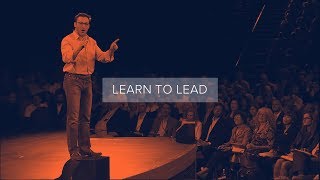
A short talk by Simon Sinek emphasizing that leadership is a practicable, learnable skill that requires regular practice and personal sacrifice. He stresses the distinction between being "in charge" and being "responsible for those in your charge," illustrating leadership duties (give credit when things go right; take responsibility when they go wrong) and practical behaviors (mentoring, staying late, encouraging retries).
Chapters
One of the great things that is lacking in most of our companies is that they are not teaching us how to lead. And leadership is a skill like any other. It is a practicable, learnable skill. And it is something that you work on. It's like a muscle. If you practice it all the days, you will get good at it and you will become a strong leader. If you stop practicing, you will become a weak leader. Like parenting. Everyone has the capacity to be a parent. Doesn't mean everybody wants to be a parent and doesn't mean everybody should be a parent. Leadership is the same. We all have the capacity to be a leader. Doesn't mean everybody should be a leader, and it doesn't mean everybody wants to be a leader. And the reason is because it comes at great personal sacrifice. Remember, you're not in charge. You're responsible for those in your charge. That means things like when everything goes right, you have to give away all the credit. And when everything goes wrong, you have to take all the responsibility. That sucks, right? It's things like staying late to show somebody what to do. It's things like when something does actually break. When something goes wrong, instead of yelling and screaming and taking over, you say, try again. When the overwhelming pressures are not on them, the overwhelming pressures are on us. At the end of the day, great leaders are not responsible for the job. They're responsible for the people who are responsible for the job.