Make Your Annual Income In A Weekend
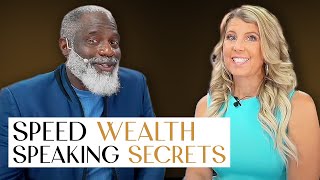
Amanda Moxley left therapy to build a coaching business, then scaled it through live events. She spent $70,000 on her first Park City workshop with 80 people and made $150,000 in three days. Her clients have enrolled $400,000 to $750,000 from single events.
Questions this video answers
January 2005.
$800 for six months.
Approximately $150,000.
$40,000.
$30,000.
Chapters
Hey there, YouTube. Myron golden here. I am here with my friend, one of my students, and a brilliant entrepreneur who teaches people how to create wealth in a weekend, Amanda Moxley. Amanda, how are you?
So good. Thanks for having me. I'm so excited to be here.
Well, I'm glad to have you here. So, Amanda, you discovered this concept of how to have create wealth on weekend by actually creating wealth on a weekend. We're going to get to that a little bit later. Okay, but like, where did you start? What did, like, did you go to college to learn how to like, do wealth in a weekend? Right. So give us a little. Yeah, that might. I don't think they have that. I don't think they have that as a. I don't think they have that as a major. So, like, what'd you do before you were doing the whole wealth in the weekend thing?
Okay. So I remember at a young age knowing that I did not want to live a traditional, normal life, that I saw people in my community living, but I still went to school.
What about that was unappealing to you?
It just felt so boring and not fulfilling and not satisfying because I think secretly those people that I was seeing were not living their purpose and their calling.
Okay.
So I decided. But I went ahead and I got my master's and I have. So I have a master's in social work and I was working.
What's your undergraduate degree?
Communications and French, actually.
Communications and.
Okay, so there you go. That's all the French you're going to get out of me.
Okay, that.
Okay.
Yeah.
Other than we and us. No.
Yeah, that works.
So go ahead.
So I went ahead and I was highly educated, but I also had this free spirit. So I love to travel the world and I love to do fun things. I'm also. I was a competitive skier and a competitive mountain biker and I loved adventure.
So competitive adventure. Cool.
Yes, competitive and adventure, which is perfect for entrepreneurship.
100%.
Yeah. And then I decided I was working actually at 30 years old, working with my mom. She has a PhD in social work and ran a clinic and I was working with court ordered substance abuse clients. And it was not for me. And meanwhile, I was also studying to be a coach. And I was the worst employee. So the entire time I was supposed to be working, I was like googling, marketing. And this is early in 2005.
That's so funny. It's interesting to me how people with an entrepreneurial spirit who are competitive and adventuresome are oftentimes psychologically unemployable. And vocationally dysfunctional because I resemble everyone 100%. Yes.
So one day, my mom is out of town, I'm working. I'm, like, on this track. I was gonna take over her therapy practice, and I was set. I was just gonna do that.
Was it a successful practice?
Yes. She had multiple locations, and her business partner, who was my supervisor, said, hey, Amanda, you don't have to do this if you don't want to. And I was like, really? I don't have to do it? And so I quit while she was out.
Okay, before I ask you how shocked your mom was when she got back in town. Yeah. Because obviously, if that was your plan, that was probably her plan too, to take over for you to take her practice. Before I ask you that, what about, like. What about, like, doing the therapy was so. Felt so much like bondage to you. What about it felt so wrong that you were like, oh, I hate this. You were, like, about to be set for life in your own business that's already successful.
One thing, an office.
Being in office, working with people. Like, no freedom. You have to do what they say. You gotta show up, you gotta do the things, and you have to show up. And honestly, you can't really be yourself. And I feel like, no offense, a lot of therapists. This sounds really bad, but are they really living in integrity? Are they really walking their talk and are they really embodying what they're helping people with? And I wanted that freedom to.
Because you felt like therapists that you had seen were not doing that.
Yeah. Their marriages weren't great. They were smoking, drinking alcohol, watching TV all day, and not healthy. No offense to therapist.
Right. For the therapist who. It's not all therapists, but it's apparently some. Yeah. And so if you can help other people, how come you can't help yourself is kind of what you were thinking.
Right. And it just. I'm. I love personal development, personal growth, expansion. And to me, there was just this entire adventure of entrepreneurship and personal growth and evolution of growth over a lifetime that was so satisfying to me.
Cool. So you decided to quit while your mom was out of town. She comes back, you're gone. How'd that go?
You know what? My mom, bless her heart, she said, I realized I wanted this more for you than you wanted it for yourself. And she blessed me and released me.
Oh, that's awesome.
Yeah, that's awesome. That's really cool.
Yeah.
Felt really loved.
Good, good. Well, I think that's. I think that's pretty much all good. Parents, though, they want the best for their children. And sometimes they think they know what that is, and so they wake up and realize that we don't because we're not them.
Yeah, right.
So that's really fascinating. Okay, so you, you said you were studying coaching. You were, Is that what you said?
Yes. So I was actually studying at the Institute for Integrative Nutrition. I got a degree in holistic health coaching.
Okay.
And so I had. I started my business in 2005, January 2005. And I went around town to speak at local venues and I got my first 10 clients within six months.
Wow.
Yes. And then I just naturally was attracting clients, working with clients, and I loved coaching people, helping them transform.
And so you're doing coaching and you got 10 clients in six months. So I gotta ask, because it was a business, how much were those clients paying you?
Well, that was the sad part because I didn't really care that much about numbers. So I charged them $800 for six months. Yes. But I had got great testimonials and it helped build the foundation of my business.
Sure. So you made basically $8,000 in six months?
Basically.
Okay, cool.
I also was a fitness instructor as well, so I had that income, which was not a lot, but.
Okay.
Yeah, but this is before kids, so my life was perfect then. No offense.
Well, let's. Let's hope. Yeah, let's hope your kids understand the spirit of which you said that when they see this video. Exactly. Okay, so. So where did the whole wealth in the weekend thing come from? What's that about?
Okay. So from 2005 until 2011 or 12, I shifted into becoming a business coach because a lot of health coaches were coming to me and saying, how are you? I had built a six figure business as a health coach by then. Oh, cool. Yes. And I had programs called how to be Fit, Fab and Fierce and release up to 50 pounds in five months.
That's a really good title.
Thank you. And I had all this success, but I was passionate about marketing and money mindset. So I shifted to becoming.
You started caring about those numbers.
I did. I was like, momma's gotta make some money. Yeah. So I had my first kid and then everything got real. And then I went. I had dreams and visions and. Yes. And so then one of my friends invited me to go and speak on her stage. And at the time we were living in Hawaii for the summer and she.
Said, oh, you were successful? You were living in Hawaii for the summer?
Yes.
She was summering in Hawaii.
I was summering in Hawaii. Yes. It was such a great adventure and it was one of my biggest dreams. And so I had my 3 year old and then my baby was literally 2 months old. And I have the best memories of my son. He would, no offense, but he would not put on a diaper and he was living his best life at the beach. Yeah, he was loving life. So I'll never forget that, that memory. Okay.
I'm sure he would like for you to forget. I'm sorry you're putting your kids on blast today. I'm just saying.
Oh, okay.
Okay.
All right. So your friend comes, invites you to come speak. She says, I'm doing this event in la. I want you to come and speak on stage. So I'm like, it's a little inconvenient, I have a two month old, I gotta take the red eye. I don't really want to, but I knew I had to. So my husband was like, go ahead, this is your break, go and do it. And up until then.
Was she paying you for this?
No, but it was exposure to. I think she had about 180 people at her event and she invited me, I took the red eye. I have my 2 month old baby and we roll into this event and I got to introduce her on stage and then I got to have a co led session with her on wealth consciousness. And during that time, I remember just sitting there and just like crying. I was so vulnerable. I was just like, I just want you guys to love yourselves and believe in yourself and you are worthy and you can do this. And I'm like crying. I think it was the hormones or something, but from the pregnancy.
But it may have just been like you're seeing a glimpse of your purpose and you're seeing that your purpose could be beneficial to other people. I mean, I don't know that, but that could have been what it was. And you were just having this awareness that maybe you'd never had before.
Yeah, it was a really amazing experience. And out of that, just by naturally being myself. And I didn't make any offers at the time because it was her event. However, three people became my clients and by then I started charging 10,000. So that was exciting and it was so effortless and easy because before that I was hustling on the doing. Back then we would do teleseminars.
I remember the teleseminanar and people wanted.
To show up on my teleseminar. It'd be me on my cell phone and then my landline tucked underneath the pillow in the guest bedroom. Because you had to have two people to record it.
Wow.
Yeah. But I just kept doing the work and doing the work. And then while I'm on stage and we're looking over this in Marina Del Rey out at the, I guess the marina with all the yachts and boats, I'm like, oh, I'm on stage. I am doing this. The view is way better on stage than it is sitting in the audience. So I said, I, I'm gonna do an event on my own next year. So that's what I did.
Wow. So just a couple of things I want you guys to get this. She said that I did teleseminars with my cell phone and the landline on under the bed because you had to have two people on in order to record it. And so that's what I'm talking about when I talk about the gravitropic nature of the work that we do. The work that you do when nobody sees it. The, the conference call that you have when nobody's on it but you and you do it anyway just so you can get the practice and get the recording. Like people think we live in such an instant era. We got microwaves and we got instant coffee and we got drive thru restaurants and drive thru dry cleaners and drive through banking. People want drive thru microwave success. It just doesn't work like that.
Right? It doesn't take 45 seconds. No, it takes a little longer. Yeah, yeah, yeah.
And so you said you, you decide you're gonna have your first event next year. Okay. So did you have that event the following year?
I did. So I live in Salt Lake City, Utah and I have the little kids. So I didn't want to go into a big city like California or Florida. I decided to have an event in Park City. And this was.
How close is Park City to Salt Lake City?
20 minutes.
Okay, cool.
So I decided to have this event and I didn't know what I was doing, so I went and I, I invested in a very high end event planning team from New York City for 40,000. It was legit. $40,000. I didn't know. I'm just like, okay, 40,000. My coach was 30,000 because. And the funny thing about coach.
What do you mean?
So I had hired a coach and this is a funny story.
Hired a coach to work for you?
To coach your friends? No, to help me coach you how to do events. So I at that time was making good money so I could, I could fund these things at that time. And so I hired the coach. But the funny thing about the Coach is years before. I had a sales conversation with her, and she told me her program was $3,000. And I was like, oh, I cannot afford that. That is too much money. But she had such a lasting impression of kindness and generosity with me that I remembered her years later because I'd been following her, and I saw she did events. So she came back into my mind. So I hired her to help me for 30,000. So I was going into this thing. I had never been on stage. I had never had professional hair, professional makeup. The lashes.
I've never had the professional makeup.
You know what I'm talking about. Ladies, like, they put on the lashes, and I was like, are you kidding? I can't even see. They were like awnings over my face. Anyway, I was so uncomfortable. I was like in this dress, and I had the clicker, and I had never worked the clicker on the stage. It was very uncomfortable, and. But I pulled it off, and it was successful. I had 80 people come from all over the world.
Oh, cool.
Even from Australia, from, I think Jamaica. Had someone come from Jamaica.
To Park City, Utah.
To Park City, Utah.
Let's go.
New York. All over Florida, every way, Everywhere around the U.S. so.
It was super much for the event.
Do you remember?
I think it was 297.
Okay. $297?
Yeah.
You had 80 people show up.
I did. And yes.
So that's like, what, $24,000 somewhere in there. Okay.
Yes. So I went in, and then I made an offer, and my offer was 18,000. Or I was scared, so I did 8,000. But it worked out in the end. I made $150,000 in those three days.
Wow. That's where the term wealth on weekend comes from. Yes. Okay. I figured it out now. Okay. Wow. 150,000. Well, can I tell you a story?
Yes.
So I know that doing weekend events can make you a lot of money.
Yeah, Right.
I know that for a fact.
Yeah, you do.
I've done it for decades, but my. So that was your very first event? It was my very first event. I did a big old ginormous whopping 350 in sales.
Oh, my gosh.
Right. So I'm like, your first event, you did 150,000. In fact. In fact, I was probably doing events for at least three years before I had my first $150,000 weekend. Wow, that's crazy.
Yeah.
Your first one out of the gate, you came out swinging like that.
I did. And I remember walking after I made the offer and I made it. I Remember walking down the hall like, yeah, yeah. He was like, y.
Went all. I literally felt like I was. But yeah, it was fun. It was fun for a minute. Yeah.
Cool. Cool. So.
It'S really interesting how most people don't like sales and don't like selling.
Yeah.
Right. And I really, I would say it like this if I were going to say it more accurately. From my perspective, most people think. Think they don't like sales and think they don't like selling because the only sales experiences they remember are the bad ones.
Right.
And I'm talking about, I'm talking about whether it be they're buying something, they remember the bad experiences or they're selling something they bad experiences. Right. And so when you're buying, you remember all the bad sales experiences because how yucky it feels. Right. And the person who's attempting to get you to buy this thing is not good at it. And so it feels yucky to you and it feels yucky to them. You're like, I would never want to do that to somebody. Yeah. But when you're really good at sales and people buy from you, they do it because they feel like it's their idea.
Right?
Right. But the reality is anything we've ever bought, we bought because somebody sold it to us. Nobody was born wanting an iPhone or a MacBook Pro or Cadillac or Mercedes. Nobody was born wanting any of those things. The only reason we want those things is because somebody sold it to us. Whether they sold us on the idea of wanting it for ourselves or sold us the thing just sold us the thing. We were like, they sold us.
Right?
Right. So if you could. But I think if most people could sell without it feeling yucky, without feeling like they're begging, without feeling that they have to twist somebody's arm, I think they would love it. What do you think about that?
100%.
Okay.
Sales is love, sales is service. And it's, it's literally helping people. So, yeah, I think once you reframe your mindset around sales and understand it's good and it's, it's helping good. Yeah.
Yeah. Well, that's, that's how I perceive it. And, and I am one of the highest priced business coaches in the world.
Yes.
And, and I don't, I don't, I don't apologize for it. It's just, it's for who it's for. It's not who it's not for.
Right.
But most people don't realize. So let me ask you this question. Okay. You are a successful.
No. What were you, when you worked at your mom's practice, what were you again?
Therapist.
Therapist. Okay, so you're a therapist. You went to school to be a therapist. How much does it cost to get an undergraduate degree and then a master's degree in social work? Undergraduate degree in communication. Master's degree in social work.
Probably about 80,000.
$80,000. Were you making more or you. Or more? Yeah. Today it would be a lot more because of inflation and other factors.
150.
Yeah. So let me ask you this. Were you making 80,000 a year?
No.
When you started out as a therapist?
I was making $17 an hour.
As a therapist?
Yes.
You're making $17 an hour. See, this is the part people don't think about. Here's the part people don't think about. They don't. They, they. They don't think about how much it costs because it didn't just cost you the 80,000 to get your degree. It cost you 80,000 and six years of your life.
Yeah.
To figure out that you were on the wrong train, on the wrong plane, your ladder was leaning up against the wrong building. And then you figured it out. You start doing this other thing and you come out of the gate and it's like 150 grand in a weekend. It's crazy.
It is crazy. It's the best. I highly recommend it.
You do? I wouldn't imagine. I wouldn't have imagined that. No. Just kidding. So it's. It's fascinating because, like, I know it's true now, but I couldn't have imagined it before. Like, I didn't know how to imagine it until I met somebody who was already doing it. And so my first business coach, my first, like, sales coach, like, selling from the stage, was Jerry Clark. And he showed me what to do. The first event I did, I spoke to, like, 35 people. I made $350. The very next event I did, after I had a coach, fascinatingly enough, after I had a coach, there were 135 people there. And I did 50, $900 in sales, which to me back then was still a lot of money. Right. Because I was in a weekend. Now, the next, like, literally the next event I did, I made $6,600. The next event I did, I did $8,800.
Oh, my gosh.
And then it just kept growing from there.
Yeah.
And that's the thing.
It grows and grows and builds.
It does. It does. And the more you do it, the more it grows because it increases your authority, it increases your impact, it increases Your influence. And all of a sudden, you turn around, you're like, this is because of speaking. What you teach people how to do because of speaking. This is what happened to me in the last week because of speaking and YouTube, because. But that's what I do on YouTube. What I do. I speak.
Right.
I do the same thing I do on stage, except I do it in front of a camera.
Right.
So here's what. Here's what. Here's what's happened to me in the last week. I was at.
I was at Eddie V's. And I'm leaving, and somebody says to me, myron Golden. Oh, my goodness. I watch you on YouTube. Right. Okay. So then the next day, I'm taking one of my clients to the airport, and there's a guy who comes up to my car. He's Myron Golden. I watch you on YouTube. He said, I was all the way over there on the other side of the thing, and I looked out and I saw that car. I said, I know that car. That's Myron Golden's car. So I ran down the. I ran down the stairs and I ran across the street just so I could say hi to you. Right. Okay. Then I'm like, this. This is, like turning into a thing.
You're a YouTube celebrity, basically.
Yeah, I guess that. But. But it's really interesting how it. I don't feel like a celebrity. I just feel like a regular person who. A whole bunch of people found out who I am. Then.
Where were we yesterday? Yesterday morning, we were at First Watch. Yesterday morning, we were at First Watch, and this couple comes over to me and says, I just want you to know we watch your YouTube channel all the time, and. And so the reach is crazy.
And then this morning. Yeah, I went to LabCorp before I came here to do some blood work, but the computers were down. And the guy says. The guy who's one of the phlebotomists, he comes out, he says, I finally get to meet you.
Oh, my gosh.
Like, this is insane. It's amazing the amount of reach that you get when you learn how to have stage presence.
Right, right.
You get on stage, and it's really interesting because you probably are aware of this. The average person is more afraid of public speaking than they are of dying, which is fascinating.
That's sad.
Yeah. That's scary. That is like, I can think of a whole lot of stuff that I'm way more scared of than talking to a bunch of people.
Right.
Anyway. But I. But I understand why, because we remember in Our lives, some traumatic experience that we had. Speaking in public or speaking up, and then somebody saying something who had more influence than we did, and then everybody laughed at us. Right. We all remember something like that. That in our childhood. My traumatic speaking experience.
Oh, no.
I was probably four or five and. Sorry.
I didn't mean to laugh. Sorry.
It's okay. So every. Every year, my brothers and I, we had to memorize an Easter speech to say in church.
Okay.
And I can remember one, and sometimes I did well because I knew what I knew. I had the speech down, you know, might be, depending on how many I might have, 4, 5, 6, 7. I was really little. I was in elementary school.
Or smaller, and I got up to say my speech. I remember standing there looking at all those people, and I couldn't think of anything except, why are all these people looking at me?
Right.
And I just broke down and started crying. Oh, so. So, like, I remember people look at me and think, oh, he's always been a natural public speaker.
When four, he wasn't. When he was four, he wasn't.
Wow.
I love your favorite.
I love how you put that. I love how you put that.
One of my favorite things that you say is. And I told my son this. You say, I was a really great student up until the third grade.
Yeah. I was great in school. Grade school, all the way through the third grade. It was so funny. And it went downhill from there, though.
I remember being in communications class and doing a speech in college and being terrified because all the boys on the football team were looking at me, and I was so afraid. I get you.
Yeah.
Yeah. You got to have that fear. But then you have to just focus on loving the people. And it's not about us. It's about helping other people 100%.
The last person you should be thinking about when you're on stage is yourself.
Right. So, yes.
Give me a couple of your wealth in a weekend. Client success stories. Tell me what you've helped other people do. I get what you do.
Oh, my clients are doing exceptionally well.
They kill them again.
Yeah, killing again. 100. So one of my clients, she came to me and she said, oh, Amanda, I see you doing these events. She actually came out to Utah and she then built her first event. She had 140 people from around the world come to her event.
How many people?
140 from, I think, 12 different countries. And she enrolled 400,000 from her first event.
Did $400,000 in sales?
Yes.
Her first event.
Yes.
That's what you mean when you Say wealth on a weekend.
That's what I mean. So she got a pool after that, she got a swimming pool and other. A bunch of other wonderful things. And she also then repeated it last the next year and then made multiple millions and repeated it and repeated it and repeated it. Okay. And then another client who recently I worked with, she was a health coach. No, she is a. She was a Covid nurse. And after Covid, she said, I want to start my own business. Because what's happening is she wants to help people be healthy. So she is an IV specialist.
Like iv. Vitamin.
Vitamins.
Vitamin iv. Yeah. My wife and I get those all the time. We call them needle dates.
Yeah. It's a good business, clearly. Let me tell you, her results. It's a really good business. So she had an event with 500 people, and she enrolled $750,000. She's helping nurses get out of the nursing world and go into the vitamin IV business. Yes. I'm all.
I would have never thought of that.
Isn't that smart as a business?
That's great. That's a great idea.
I know. So she is crushing it now. From what I. From what I know, she's just got a new house and is taking her girl. She's a single parent taking her girls to Hawaii for an amazing vacation. I mean, that changes your life. 750 in a weekend. Actually, hers was two days.
Okay, it was two days, but still a weekend.
Yeah. I mean, she had travel dates.
It's really interesting. So for me, as I think about what you're talking about, it reminds me of Robert Kiyosaki's cash flow game.
Oh, I love that game. Yes.
Okay, so you played it.
Oh, yeah. Get out of that rat race.
Exactly. So in. For those of you who haven't seen it, it's got two tracks. It's got a little track in the middle. It's called the rat race. Right. And you keep going around in circles and getting paid. You get paycheck, and then you go around in circles and you. You land on opportunity. Pick an opportunity card. If you can afford the opportunity, you buy the opportunity. If you can't, you have to pass. Or if it's a bad opportunity, you have to be able. So the game teaches you how to recognize good and bad opportunities, but it also teaches you, like, the waste of time that just going around in circles and getting paid is one of the things that I believe is one of the reasons it's hard for people to succeed as an entrepreneur is because they're so addicted To a paycheck. They're only willing to work for money. You have to learn how to work to build something, whether it makes you money or not. If you're going to be an entrepreneur. Right. And so initially anyway. And so what happens is you have to accumulate enough, enough income producing assets while you're in the rat race, right. To.
Surpass your monthly expenses. And when you do that in the game, then you get on the fast track. On the fast track. It doesn't have paydays anymore. It has cash flow days. And cash flow days are amazing because when you get out of the rat race, let's say your monthly expenses are $4,000. Get out of the rat race, you got $6,000 in like, in positive cash flow. Well, when you get on the fast track, the game gives you like 100 times that $6,000. So you get $600,000 as soon as you get out of the rat race. Then every time you pass cash flow day, and I think there are three cash flow days spots on the board, every time you pass it, you get another $600,000. But you're also buying businesses on the outside. And so to me, what you're talking about reminds me of the cash flow day on Robert Kiyosaki's board game.
That's a cash flow day.
That's a cash flow day. Like you have a $150,000 a day, a $400,000 day, 700. It sounds insane. Actually. It doesn't. Like, I get it, this doesn't even sound possible, let alone normal. But it has become the normal of a lot of people who stand on stage and do events and make offers and change people's lives, man. Is that right?
It is. And it's about assembling your people into the audience and then selling one to many versus one to one. So you're not wasting.
So you're collapsing time frames.
Exactly. Collapsing the time, collapsing everything, basically.
Wow.
Yeah, I recommend it.
Yeah. Yeah, I. I do. Like, I did wealth in a weekend for a very long time. I would do. I would do the usual stuff I did all week. And then I used to do one live event a month. So you're talking about, like people doing a live event and then they go, make sense? Well, me, when I find something that works that well, I rinse and repeat, rinse and repeat, rinse and repeat, rinse and repeat. So I found all these different markets, these different pockets around the United States and even in Europe. And I would go there, and I would go at least once or Twice a year and go do a live event there. And I would market to the people that were on my list. People would show up, I'd sell them things. And now we've got so many of my students over the last couple of decades who have become millionaires. Right. And so you've got students that have become like, like gone from the pit of poverty to the pinnacle of prosperity with your week. Wealth and a weekend philosophy. So let me ask you this. How can people find out more about you and how they can learn from you how to create wealth on a weekend?
Okay, so lots of places. I'm all over social media.
Okay. And how do they find you on Instagram?
What's your Amanda J. Amanda J. Moxley. M O X L E Y.
Okay, so and what about on.
And then YouTube? Amanda Moxley1.
Amanda Moxley1 on YouTube and then Facebook.
Amanda Moxley.
Amanda Moxley.
Okay, and then.
Yeah, and then, so where do they go if they want to find out like more about your wealth on a weekend? Where do they go for that?
Oh, they got to join my challenge.
Okay, and so, so where do. Where they find.
Okay, so the challenge is ww.wealth in a weekend workshop. Wealth in a weekend workshop dot com.
Wealth in a weekend workshop dot Com.
Wealth in a weekend workshop.
Sounds like it'd be a song. Wealth in a weekend workshop.com wealth in a weekend.
Okay, well, than a weekend workshop.com.
Commercial wealthinaweekendworkshop.com.
Yes.
And then they're going to come spend how much time with you?
So we have. I have a five day challenge and come to it because I'm going to teach you how to build wealth in a weekend in this workshop.
Cool.
Yeah.
And how much is it?
297.
$297.
297. Or that's for the VIP, which obviously your VIP. That's where you're going to get laser coaching with me. And I get to help you laser in on your business and support you in building your wealth in a weekend for just 297. I mean, that's like the best deal of the century.
Yeah. So wealth on a weekend it is. Yeah. And for people who don't believe in themselves enough to do vip, do you have another option?
I do. I have a $97 ticket as well. General admission.
Okay, cool. Well, like, if I didn't already know how to do this, I would come and learn how to do walk on a weekend.
Maybe I'll have you on sometime.
Okay, cool. I'd love to do that.
Okay.
Because I know a thing or two or two when it comes to wealth on a weekend.
I'll definitely. I'll see if I can get you on my schedule.
There you go. There you go. So, guys, Amanda Moxley, teaching people how to create wealth in a weekend. The question you've got to ask for yourself is, is it my turn? And I hope when you ask yourself that question, the answer you give yourself is absolutely. Amanda, any last things you want to say before we say bye to this wonderful YouTube audience?
Yeah, thanks for watching. I'm excited that I get to be here. And just remember, the other thing is speak and grow rich. So I'm also going to be teaching you how to speak because that's a very important part of this. Speaking to grow rich and wealth in a weekend workshop.
Good stuff.
Thank you.
It's interesting that you said speak and grow rich. One of the principles that I teach is the four levels of value.
Right.
Four levels of value. The lowest level of value is implementation. Use your muscles to make money. This is where most poor people and lower middle class people live.
Yep.
Right. Then you have unification, which is the second level of value, which is basically management. Right. This is where your middle class people live. Wealth doesn't start to get created until you get to the third level of value, which is communication. And the highest level is imagination. If you operate the majority of your time in your wealth creation journey in the imagination and communication levels of value, you will make way more money and work way less time. That's what I've discovered. So it's interesting that you should say speak and grow rich because that's exactly kind of how it works.
It is. And it's so fun because you get to show up and serve and shine and help other people because people are. They need us right now as leaders.
Because the world is changing so fast that by the time you tool up, tool up with a college degree, the world has changed so much. The stuff you learned in your senior year is no longer relevant. Right. So you have to stay on the cutting edge and the leading edge of technology and marketplaces and markets, etc, etc, so. Wow. Really good stuff, Amanda. Really good. So thank you for joining us. Thank you for joining us. I think you really help some people today.
Thank you. I'm so glad I got to be here.
All right, guys, make sure you go follow Amanda on all of her channels. Make sure you like, comment, subscribe, hit the notification bell or smash it. That's what they say. All those YouTubers say, smash that notification bell. So smash it. And then any other YouTubey thing that I forgot to ask you to do, make sure you do that, too. And in the meantime, in between time, peace out, Cub Scouts.
More from Clegg





AI Won't Tell You the Full Truth | Arthur Brooks + Simon Sinek | A Bit of Optimism Podcast



How To Make the Best Decision | Arthur Brooks and Simon Sinek | A Bit of Optimism


