Nice Guys Finish Last? The Founder of KIND Snacks Disagrees | A Bit of Optimism Podcast
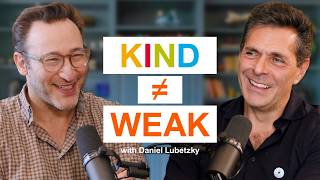
Daniel Lubetzky, founder of KIND Snacks, talks with Simon Sinek about building a business on kindness and why naïveté can be an advantage. His father survived the Holocaust, which shaped Lubetzky's work using commerce to bridge divides in the Middle East and beyond.
Chapters
Where did, like, the drive for peace come from? And, and what are you doing to make that naive vision real?
It started, uh, and I mean that as a compliment, right? You're right.
But, you know, no, no, I mean, no, I do, which is the ones who succeed are the ones who are naive enough to believe that it's possible.
I know, I was teasing you.
We often think of being naive as a weakness. Something we want to avoid. But what if naivete was actually a superpower? Naivete describes the willingness to believe that things can be better, even when the world around us suggests otherwise. I firmly believe that naivete is essential for anyone who wants to build something meaningful in the world. My guest today is Daniel Lubetzky, and he proves this. Many people know him as the founder of Kind, the maker of Kind Bars, but what really drives Daniel isn't just building a successful company, It's his belief that we can leave the world better than we found it. And he's just naive enough to believe it will happen, which I love. Daniel has since stepped away from Kind and is now working on his next naive project, the Builders Movement, an effort to channel curiosity and compassion into solutions that can reduce polarization in our media, our societies, and indeed in the world. The conversation you're about to hear was actually recorded in December, before the recent developments in the Middle East. And because this episode touches on peacebuilding and polarization, I wanted to share that context before you listen. I also reached back out to Daniel and asked what's been on his mind since we recorded, and he shared this message. In this conversation, he said, you'll hear about my life's mission to pursue peace in the Middle East and build bridges across the world, including through business cooperation and civic activism. I hope what you draw from this conversation, he continues, are tools to navigate differences between people and even differences within us, to learn to wrestle with complex issues that have no easy answers. This is A Bit of Optimism. I just met you for the first time 5 minutes ago, and I have to say, from the minute you walk in, you exude warmth. You know, when you meet the founder of a company, you— in my world, the ideal brand is a reflection of the founder.
Do you know any world where it's not that case? Oh, that the person's personality does not create the culture?
It always starts that way, but success is the biggest obstacle.
Yeah.
And then whether it's through outside influence or poor management or any number of factors or just taking your eye off the ball or being distracted by different goals and objectives, you know, very often it starts to dilute. And so when you meet somebody who has literally started a company called Kind, right, and you and I have never met, all I know is you started a company called Kind and you walk in and you're like— and you're just like, yep, you know, it's a very nice experience when it happens. And you just happen to exude warmth, which is—
we should just acknowledge, if you don't mind me sharing, that I came into a very warm place and you have a lot of fun gadgets and things that maybe connect very quickly with your warmth. And there's a candle that you walk in, it smells really good, and there's little tiny Meyer lemons, and there's a lot of fun things around.
I can tell you from experience that lots of people come in here and this setting is always the same, and they have— but their response is, it's all over the place. So I'm gonna receive your gratitude and, and push it back on you, that it's really, it's really you. The bar category is a freaking mess. There are— it's a— there are so many players. I don't know how anybody differentiates themselves. I have friends who are trying to get into it, and it's so hard. Was it luck of timing, or is it something that you did that you've become— Kind Bars are one of the gold standards of the category, you know. You were one of the better known brands in the whole category. And people, people refer to other grain bars as KIND bars even when they're not.
That's a dangerous situation, but I get it. But when we were designing what became KIND, we never thought of ourselves as a bar. We thought ourselves as solving for a problem to help people snack healthfully. And even Today we try to think of Kind as Kind, not as a Kind Bar. But the deeper answer to your question is I didn't know how hard that space was, and I was lucky that I didn't think about it. And the more that I look back at life, a lot of the things that I've accomplished I'm lucky that I wasn't fazed because I didn't know what the hell I was getting into. Rabbi Brand Lurie once told me, Daniel, you know what I love about you is that you're so naive. And I got furious that he called me naive. And I'm like, why are you calling me naive? I'm just determined and I'm not naive. So I mean it as a compliment that you don't know what you don't know, and that's why you try these things out. Took me decades to take that compliment. But it's very true that a lot of entrepreneurs would not pursue the paths that they pursue if they would know how hard it is.
I think naivete is a very undervalued asset.
Yeah.
And I, I fit that category also. I firmly believe that one of my greatest values is that I am naive. I was an idiot with an idea with no following, you know, no commercial success of any particular note, you know, no book, no nothing, but had this wild belief that I could profoundly change the way that business worked. And that's all I had was the naive belief that I could. And if I'd stopped to think about it for a minute, I wouldn't have done half the things I did.
But I I struggle with, you know, every word in addition to the word itself has a connotation, right? Like that's why, for example, I say that we don't have employees or what I used to run Kine. I sold it recently, but I say that we didn't have employees and we don't have employees in any other organizations. I don't mean that we don't literally hire people that work with us. The word employee has the connotation of a master-servant relationship.
It's a hierarchy.
A hierarchy that's a negative hierarchy. And for me, I want to have team members where all of us are equal and working together, not just Not just because it sounds good, but because it helps empower people to challenge you.
The language has power.
And to debate with you and to create the structure where—
Words matter.
Everybody can have an opinion. And so naive for me, I was having a conversation with Martin Barzawski, who's a very dear friend of mine, who started like 12 companies. He's one of the very few people that I know that have created many multi-billion-dollar companies from scratch in different industries. Very rare to do. And by the way, the fact that almost nobody has done it reminds me how much luck plays into it. We all think we're so special. Yeah. Luck plays so much into our success.
Yeah.
But he was saying, when we were talking, he's in his 60s and he's starting his next company. And I won't say what it is out of respect to him because it's still in stealth mode. But why does he do it? Because he's trying to solve a puzzle. And so part of what entrepreneurs do is identify a problem, identify a solution, and then try to will it into existence. And I don't think it's got that much to do with the dimension of naivete. It's true that there's a lot that we don't know, and had we known it, maybe we wouldn't pursue it. But I think it's a greater truth that we just have the will to try to turn an idea into a reality, and it's our personality that likes to solve puzzles, that doesn't get dissuaded by hearing no. Maybe almost like you're like turned on, but like, oh really? Now I'm going to really prove it. So I think it's a little more complex than just— it's true that not knowing how hard it would be helps you push through. But I think there's more to it than that.
And I think you're touching upon it, which is that an entrepreneur is a problem solver. Right. And I think people sometimes confuse it that an entrepreneur is a small business owner or a business owner. You know, a small business owner is a small business owner. An entrepreneur solves problems, to your point. And you can find entrepreneurs in very, very large companies where they're mid-ranking people, but they're the ones who are pushing against the status quo, trying to solve problems, to your point, looking at things slightly differently instead of just following the prescription. What I think's really interesting is like some universities, they teach entrepreneurship. And I've always found that curious, which is, is entrepreneurship a skill that you can teach, or is it a mental defect that you choose to do something with the overwhelming chance of failure, but you think that's kind of fun?
Beautiful question that I've asked myself for so many years.
For me, it's, it's my, it's, it's very much ingrained in my personality and how I approach the world, which is— and I still think naivete is a compliment, you know. If somebody says you're naive, I'm like, thank you, you know. I don't know, and I kind of like that because that means I get to start clean, you know.
But going to your question about what makes an entrepreneur, can you teach entrepreneurship? I ask this question all the time because I'm trying to search for myself. Did it come because I learned it from my father, from osmosis, from seeing him operate, because he really was a consummate entrepreneur. And it sounds like you're that too. I always ask where the genesis of that came from. I don't know if it's nurture or nature. I tend to think, if I have to come up with a theory, that along our— the way when we're having formative influences, somebody's encouraged to think creatively and that there's a reward for it. Having asked this question thousands of times of others, there seems to be something that happens in people's lives in their early lives where them thinking outside the box is rewarded. And they're like, let me do more of it and let me do more of it. And it might be very little steps. And so how can we teach young kids to take risks, to think outside the box, and to be rewarded for taking those risks. By the way, in the United States, if you look at it as a big picture, as a culture, one of the reasons why the United States has far more entrepreneurs than the rest of the world is that we have a culture where it's okay to fall, dust it off, and stand up. In some cultures, in most cultures, if you fail, it is shameful and shame on you. And you're going to bring shame not just to you, but to your family. And so people are like, okay, I'm not going to try. And it's so liberating to be okay with trying, because guess what? If you don't try, if you're, if you're not falling, yeah, it means you're not trying.
It's one of my favorite things about America, which is people put their failed businesses on their resume. Like, they literally have on their resume, oh, I started a business here. And, you know, they're interviewing for a job, they're like, oh yeah, I don't do that because it'd be too long. But then they'd be like, oh yeah, I started a business, we had it for about 2 and a half years and it didn't work out. People like, okay, cool, cool. Like, it's so not—
and when I look at people, I love people that show that because it also shows— first of all, failures teach you more than successes do, because when you succeed, you're not 100% certain what I did. But when you fail, you have to— if you are self-reflective, you're gonna absorb the lessons. And so you stretch yourself more, and it shows that you're comfortable with that opportunity.
I, I love to tell the story. My— it's You really— and you talk about like it's, it's, it's in you from your upbringing, from your childhood. That's where it comes from, the rewards of taking risks and things like that. So one of my favorite things about America, and this is historical and it helps you understand how this country is so good at entrepreneurship and has so many entrepreneurs, which is we celebrate our independence on July 4th, 1776. Incorrect. That is when we signed the Declaration of Independence. The Revolutionary War continued for another 7 years. We didn't win our independence until September 3rd, 1783.
But we said we got it, right?
And then George Washington didn't become president, the Constitution wasn't ratified for another 7 years, like 1789 or 1791. I can't remember the dates, but the point is, is like there's a full-on, like, you know, nearly decade, like 15 years between when we signed and celebrate our independence until we actually had it, had a Constitution, had a president.
I had never heard that.
Yeah, so our Independence Day, when we were recognized as an independent nation is actually September 3rd, 1783. But we celebrate the day we thought about it, not the day we had it. And that—
we willed it into existence.
That tells you everything about America.
And it's entrepreneurial spirit.
It's that entrepreneurial— it's that entrepreneurial spirit with the dream is ground zero, not the accomplishment.
I love that.
I love that too. One of the reasons I think other nations don't have the same quantity of entrepreneurs is all these things, which is we're dreamers, we love people who try even if it doesn't work out, like we think that's great. So then the question it raises is like, is America as a nation, and I mean this for the past 250 years, is America naive? Does it have— does the nation embody the characteristics of the entrepreneur, the risk-taking, the dreaming, the grit, but is there a naïveté? To the nation?
And can it lose it?
And can it lose it? And, and I would argue it does have the naïveté, like the naïveté that this one nation can help bring sort of, you know, democracy and capitalism to around the world. And we stood up to the Soviet Union's view of how the world should work and say, no, no, we think there's a better way, and we think everybody should have this because it's pretty awesome. Now, whether it's misguided or true or not, you know, and how they went about it, these are all different questions.
I grew up in Mexico, so I lived in Mexico from '68 to '70. To '84, 16 years. And the narrative that a lot of Latin American people had around those times was of the United States as an oppressive regime that was taking advantage of— When I came to the United States, I discovered a country that I love so much. And, you know, we are at risk of losing some of what makes us very special. We need to not take it for granted. But still, rule of law better than in most places, democracy better than in most places, kindness, civility, respect, free markets, freedom of expression, all of them under threat, but better than in most places. And it's a gift that I don't take for granted. And I do think to your point about naivete, when I arrived in the United States and most of my experience in the United States has been people that do the right thing even when people are not watching, for the right reasons. Like, which country in the history of humanity went and reconstructed all of Europe after World War II? Liberated Europe. My father was liberated by American soldiers. So you had countless people who sacrificed their life to liberate another continent, and then after they sacrificed so much, they invested in the Marshall Plan in rebuilding Europe. And by the way, it paid off amazing for the United States, right? It helped take us to a different level. But I do believe that it was done for the right reasons, to prevent that cycle.
Yeah, it was, it was, it was done so to prevent them from rebuilding, becoming our enemies again. Yeah, we spent our money to make them our friends.
Yeah.
So you, you're no longer— you sold Kind?
I sold last December.
So I— are you worried that Who bought it?
Mars.
This has nothing to do with Mars. This is a philosophical question, but you controlled Kind to be in your image, to maintain your values. Are you worried that it will break? Because I have so many founder friends who've sold their businesses, whether they went public or they sold their companies or Private equity took it over, and within a few years, the ingredients were replaced with cheaper, shittier ingredients. The culture was eviscerated, and some of them— so the companies cease to exist. I know one right now, the company just shut down. Yeah, because they get eviscerated and destroyed by these all the time. Um, there's nothing you can do about it.
I mean, there's some things I do about it still today to try to help them, but, um But for example, you saw I came home and I came to your place and I brought you KIND bars. I don't own a stake in the company, but I love KIND so much that I still give them out. And I negotiated in my contract that I would continue having an allotment. That was important to me. Yeah, I care a lot about KIND. I'm slightly less worried about the product integrity because I think Mars is a sophisticated company that understands that if they do that, they'll destroy the product. But it's very difficult with the best—
And this has nothing to do with Mars.
Yeah, any company. It's actually the broader, more interesting question is the same thing that brings entrepreneurs to bring something into existence that didn't exist, where to your point, how did you dare have the chutzpah to try to create a Kind bar in a space where there are already so many other bars? By the way, most of the other bars are no longer in existence. The ones that were leading the way when I launched Kind, you might remember the names, but they're For example, Balance Bar, Power Bar.
They don't exist anymore.
They're minuscule. I haven't seen them in years.
I mean, I remember Power Bar. They were kind of one of the OGs.
Yeah, they're— I haven't seen one in a long time. Every entrepreneur has that compunction to do things and will something into existence. And then they also— I don't know any entrepreneur that does not think they can defy the laws of gravity. So when we do that partnership, we think we're going to be the one that's going to suspend all of those laws and that we are gonna be able to preserve everything. And the reality is that an entrepreneurial culture in a gigantic conglomerate, it's not easy. It's not easy. I think that it's not a question about the partners. The people that I work there are very, very high integrity. It is very difficult to preserve that entrepreneurial spirit. I like to invest in founder-led companies because I notice that when the founder's no longer around, slowly but surely, you were asking at the very beginning about the founders personality, values, and culture imbuing, yeah, the culture of the company. It's fascinating to me to notice— I've met a lot of founders and they look at their company's cultures, and it's incredibly interesting how much that person's personality is in the culture.
But this is part of the problem with business in the modern day, right? Which is these founders build these beautiful brands where there's very important rules of integrity and ingredients and all of these things, and these larger companies that buy these brands, they don't really care about the ingredients. They're buying the brand. I mean, we could list off the names of Aveda, Burt's Bees. I mean, Aveda was this little Minneapolis company that built this wonderful brand. It was bought by a big company, and they've changed all the ingredients. And everybody thinks because it's Aveda, they bought the brand, they didn't buy the ingredients.
But they—
you even ask yourself, you know, why would you buy these products thinking that they're magical? Because they were magical. And they're not magical anymore.
And you ask yourself, why would a big company pay so much money if they're not going to preserve it? It's like this because I noticed that upfront from other observations, we're talking about PowerBar and Balance Bar. So Balance Bar have a value proposition that they were about a balance between protein, carbohydrates and fiber. So I think something like that. It had like a formula. It had the 3 circles, whatever. And then it got acquired either by Kraft or Mondelez and they gave it to a junior manager and the junior manager needs to put their stamp and they find out that around that time organic is big. So they create something called Balance Organic. Now Balance, the original bar, is a very functional bar. It looks like astronaut food and it's very functional. And all of a sudden Balance Organic, nobody believes it. What is a brand? A brand is a promise, and a great brand is a promise well kept. And all of a sudden you're doing the exact opposite because you have Balance Organic as opposed to the Balance Original, and they have nothing in common. And then they launch, they see KIND coming up with ingredients you can see in products. They come up with one called, I think it was called Balance Bare, and B-A-R-E. And then they come up with the other one because there's the keto diet and then there's the functional diet and there's this. And they You have like 8 different versions of Balance Bars and the consumer stops understanding what the brand stands for. That business went from like $250 million to $50 million to my bet is that it's zero now or close to zero. I haven't seen a Balance Bar in a long time. And they trade, every junior manager does the same sins. Every junior manager, they don't teach you, this is the essence that you need to respect.
They teach you, hey, line extension.
Line extension and make a difference and be relevant so you can get promoted. And these guys get promoted by short-term results, and so whatever mess they're creating in the long term by destroying the brand, nobody notices it because by the time it happens, it's too late.
But we kind of got to this point in American business that I find a bit depressing, which is that, that companies aren't built to last, they're built to be sold, right?
And, and well, not all, not all companies.
I mean, your company How many, how many years did Kine— because I would say that it was longer than most before they want to have their—
Yeah, but I wasn't, I wasn't being defensive about mine, but I'll answer mine, but then, then we should expand it. The interesting thing about my company is it— I started in 1993 what was then called Pieceworks, and my investors came into Pieceworks, but they didn't like the Pieceworks aspect, so they spun it off. But that same— my employee identification numbers was 133766029 because I used to write all the checks. I used to file all the tax forms, I used to do all the accounting. So I still remember my employer identification number from 1993. And I was doing the accounting, the bookkeeping, the collections, the deliveries, everything, every job I was doing at the beginning. And there were 2 of us, then 4 of us, then 2 of us, then 4 of us, then 2 of us, then 4 of us, then 8, and then before you know it, hundreds. When I launched Kind, I did not, I personally, I promise you, I did not think, if only I could build something to sell it. It never crossed my mind. And that's why Kind succeeded. 'Cause Kind was just—
Agreed.
Trying to fulfill that vision of something amazing. But just to your question, there are gigantic companies like the Amazons of the world. They do lose their way for other reasons. Yeah. But they're not trying to sell. I think the stock market has a bit of that problem when you're trying to— I think one of the bigger questions is why do you always need to wanna grow, grow, grow? Because when you are growing, growing, growing and you need to demonstrate that measurable growth, I don't have a better solution, But eventually you're going to value optimization and things that start destroying the brand in the, in the long term.
This is the real root of the question, right? And I think you're articulating it better than I did, which is it's not so much about the sale. It's about you're building it to sell or you're building it to go public or you're building it to extract or you're building money, extract in the short term, you know, and all the great businesses were built for the joy of building it, for the thrill of the build. And if you decide to sell it or, you know, go public way, way down the road, that's a different conversation. But the number of businesses that literally, whether it's their own desire or the pressures they have from their investors, that there has to be this liquidity event. And that's the other thing that annoys me about the IPO, which is the whole reason of an IPO was it was one of the mechanisms available to an entrepreneur to raise money should they need it. You can take a loan from the bank, you can raise money from friends and family, or you can sell some of the equity of your company to the public market so that you can raise money to reinvest. But that's not what it is now. An IPO is a way to cash in, pay yourself, and pay your investors, and it has nothing to do with the cash infusion to reinvest back in the business. That has nothing to do with it. And that is one of the downfalls, I think, of, of the modern American business, which is all of the companies, even the good ones, are built— so many of them, too many of them are built simply for the short term.
And to make matters worse, a lot of the value that's being, quote-unquote, value that's being created is just financial engineering, right? There's a lot of companies buying over other companies, squeezing everything they can, then leaving them near dead and then going on to the next one. Like a lot of private equity companies, what they do is— this is like the model that's been used over the last 10, 20 years is they identify pool maintenance companies that are such a disruptor. The more fragmented, the more they see the opportunity. So they start buying all of the pool companies. Or there was an article in the New York Times about the roofing companies, and they identify, oh, there's tens of thousands of small business entrepreneurs. They're not finding synergies. Let's start acquiring all of them, roll them up, and then make them more synergistic, which means fire all the people, just hire a smaller group of people. Use centralized branding, but they're not thinking about creating value.
No.
By the way, if you acquired all of them and you introduced best practices and elevated the game, fine. But they don't want— they just want to turn it around. And so they, they buy them at 3x profits, they sell them at 6x profits, then the next guy buys them at 6x profits, sells them at 9x profits, and then they go public at 12x profits. But along the way, you're killing entire companies because you squeeze so much value out of them and then you no longer trust them because they're just worrying about the money.
So you built the— you said you wanted to make a food product that was a healthy snack, right? There was a reason to build a company, right? And your business was the delivering of a healthy snack. That was the business. The companies that we're talking about, the, the private equity companies, their business is making money.
Exactly.
Like their only product is to make money, not to make anything that has value to anyone in the world. And if I hear another finance person tell me that the value they provide is they provide employment to an economy and help drive an economy, then why do you promote layoffs?
So no, no, they're—
they're completely full of shit.
That is one of the imperfections of capitalism, because free markets are very efficient. And you— the interesting thing for me, because I think Communism, socialism, you, you see their imperfections and they're greater than capitalism. Yeah, but capitalism, even conscious capitalism, has a lot of problems. That the free market wins, and the free market will always— efficiency will always win.
I think this version of capitalism, this is not the capitalism that exists today, is not the capitalism that made America great. This is not Adam Smith capitalism, right? Where the customer is the center of the value. And you know what Adam Smith said, which is the candlemaker, the breadmaker makes the best bread to compete with the other breadmakers, and the butcher makes the best meat to compete with the other butchers, and the cheesemaker makes— and you get the best sandwich. Yeah, right. And that's not what has happened because of Milton Friedman and Jack Welch, which is they've completely changed the capitalism that we have and popularized short-termism the metrics of incentivizing.
Milton Friedman popularized short-termism.
Milton Friedman was an economist.
I know Milton Friedman, but I didn't know about his short-termism.
So Milton Friedman— so it's this common— it's this combination of theories where Milton Friedman— this is what he wrote: the purpose of business—
purpose—
the purpose of business is to maximize profits within the bounds of the rules, which means make as much money as you can without breaking the law.
And your point is—
and that's a very low bar—
that you're destroying value because—
correct—
the purpose of business should be to to create value in the long term. That means respect the brand, respect the consumer, respect the stakeholder. That's how KIND became an extraordinary success. By the way, KIND created more value on a multiples basis than any company I know of. Like, from my early investors, like, we almost didn't need capital. We grew, grew, grew, grew because we were thinking with the right way. We created like 3,000x returns for our early investors.
But just think about that, right? The current— the business model, and you see it all the time, make as much money as you can within the bounds of the rules. So you see these companies do horribly unethical things because ethics is a higher standard than the law.
But I think you're—
and they get dragged in front of Congress and they all say the same thing, we broke no laws.
But to take it away from just the moral compass, to take it into the business compass, your point is right, because by playing that game in the long term, you're destroying value.
Yes.
By playing that game people don't trust your brand, they don't trust your business, and they don't trust the system.
And I think this is where we have to take a hard look at capitalism. And I'm not talking about throwing the baby out with the bathwater, but you see the rise of populism on the left and the right. Yeah, whether it's Bernie Sanders or Mandani or Trump, it doesn't matter if you're on the left or right of the political spectrum. You see the rise of populism that is mistrustful of the institutionalized powers that be, right, and the status quo. And rightfully so, because we have traded what Goldman Sachs used to call long-term greed, which was totally fine, with short-term greed. It's not so Pollyanna and idealist that there's no such thing as greed. The reason communism fails is because humans are greedy, right? But to believe in long-term greed, which is how can we build a company that will outlast us for the good of the long term, you actually make really good decisions.
Yeah.
And we, for some reason, seem to be okay with the short-term extraction at the expense of the customer, the employee, the environment, the, you know, our health. There's a very large food company who shall remain nameless. I went to this conference and they had the chief environmental officer of this company give a presentation on how much water they were saving and how much electricity they were saving. And it was a beautiful presentation about what they're doing. And because I'm a cynical bastard, I went up to the chief environmental officer at the end of the talk, and I went up to them and I said, hey, love that you're saving water, love that you're saving electricity, love that you care about the environment. Question for you. If I'm really cynical, I could say you're only doing it because it saves money. You know, less water, electricity saves money. But I'll give you the benefit of the doubt. You're doing it for good reasons. But here's my question for you. I love that you care so much about the environment, but how come you put chemicals that kill people in your food? You have a chief environmental officer at your food company. How come you don't have a chief health officer? Just curious. And the whole— then the logic of what these companies say unravels.
I think, um, I want to strengthen what you say and then ask you a question. When we took the fateful decision to bring a strategic partner, which is speak for saying sell a piece of kind, which is the beginning of the process where we ended up where we ended up. But when we were evaluating it, one of the companies that presented to us literally said to us, we love that our products don't kill you. They don't make you sick. That was their standard because they were not helpful products. But their standard was like, at least our products don't kill you.
At least our products don't kill you.
I swear to you, we were at a meeting.
Was their definition of success.
When we debriefed that, That meeting was one of the many moments when I told my team, what are we doing? But anyway, that's a, that's a different conversation. But I have solutions about how to handle the problems of populism in the civic space. I've thought about it in the private sector and I have not come up with them. Do you have solutions? Like the point that you point out about short-termism and short-term value extraction, other than teaching people to be smarter and to build for the longer term, do you have any structural or any other?
I think it's a generational answer, right? Like, it was the '80s and '90s where they were experimenting with short-termism, you know, incentivizing executives with equity, not performance of the company, layoffs on an annualized basis to balance the books. I mean, we— these— this is all '80s and '90s. Prior to that, there's no such thing as mass layoffs in the United States, right? Unless it was for existential reasons. Like, we're going out of business, you know. It was popularized in the '80s and '90s, and then that style of management was taught and continues to be taught in business schools, and that's what got you promoted. And so that's why it became the standard, because a generation was taught to run a business that way. I think now, with the rise of populism and the cynicism that young people have, that there is a generational shift where I think young people are okay making slightly less money to do the right thing. And I think that they like companies who are willing to make less money this quarter because we're going to make the right decision for, you know, the next 5 years.
Challenge you for a second.
Yeah, please.
I, I, we agree 100% on the fact that if you build a brand for the long term and do the right thing for the long term, that's how you create enduring value. And what you're doing for short term, you're actually destroying value. We agree on that. On the thing about the layoffs, I ask myself this question all the time because I notice it happening. I get proposals for me to invest in these roll-ups, and I struggle because, to your point, there's no value being created or added. And my answer is, well, why don't we do— to the extent that we consolidate, let's make it in a positive way. We'll create a brand that people can trust and help empower the small business entrepreneurs for them to become stronger and be part of the family and create the culture to that. I struggle with that, but Broadly speaking, unlike you, I don't oppose layoffs because I notice what happens when industries are not efficient and that doesn't happen. Then your lunch will be eaten by others. In other words, what's happening in Europe, Europe resists the layoffs and it's slowly but surely gonna die because it, in that, that's what I struggle with a competitive market system. That at some point somebody else is going to be— and the Chinese most likely will be— more ruthlessly efficient. And how are you going to compete?
My friend Bob Chapman would say that an overreliance on layoffs is proof of a poor business model.
100%, right?
And so it's not that I'm against layoffs, because sometimes companies are stupid and overhire. I mean, we saw it during COVID the number of businesses that, because you know, and they, they thought this would survive and last forever. And so they overhired, the numbers corrected, and there's no way you can sustain the business, right?
Your point is you shouldn't have layoffs as your business model.
You shouldn't have layoffs as your business model. And to embrace layoffs on an annualized basis, you know, and my standard line is, you know, we missed our arbitrary projections, so in order to make the numbers work, you get to lose your job. Our arbitrary projections were profitable, not as profitable as we promised.
Well, you're going to have a lot of not fun in the coming years.
And the people ignore the ripples. Great. You got a little— one of the companies, a big tech company, made the announcement that we're going to lay off 10,000 people, going to do 1,000 people every month. How much productivity do you think there was that year? The stupidity of even that strategy. And we incentivize HR leaders. An HR leader is supposed to be the voice of the people at the, at the, at the, at the desk of the C-level executives, the voice and the champion of the people. Nope. We incentivize too many HR leaders. They get their bonus for, for doing the layoffs efficiently. Yeah. And we eviscerated even the concept of what the value of human resources— sure.
And the—
and yeah, no, I'm getting very heated.
I agree with what you said in the business world because it reminds me of why, like, something that I observed, um, in the market world that bothered me and that I think we did differently, that that is connected to your same philosophy is in most of corporate America, there is no trust in the system and they fire you, which means you're given 2 weeks notice, but you're shown a box that you put the stuff in your box and you're shown the door because you're not trusted to be there. And I observed there was a very, very big problem in that model at Kind because everybody that took the struggle to bring into our team and taught them our culture and they taught us and we worked and built together, maybe in my entire existence there were 3 examples out of thousands of people that I hired there where it actually merited showing them the door because—
Time to graduate.
They engaged in illicit behavior, or they were— they really crossed the line, that really engaged in stuff that was completely inappropriate. But it's 3 people out of thousands. Yeah, of course. In the vast majority of situations, the reality is that most times when things don't work out is because you fail to communicate with your team member, and that because you fail to create a bond of trust so that people can communicate with one another. I don't know if you found this to be true, but Almost always, if you share feedback early on, the person can course correct and fix it. So the essence for a higher order work environment is to create trust, because if you create trust, you can create open communications. If you create open communications, you have much less likelihood that things don't work out. That means, for example, that instead of firing people, showing the door, we had a system at Kind where If you were planning to leave or if we were planning to let you go, first you were required to have a conversation and let the other person know transparently. Think what that takes. It takes enormous amount of trust. If I'm planning to leave, I need to trust you that you're not going to do something bad with that information. I'm telling you I'm leaving in 1 year because I want to go study for graduate school, or I'm going to get married and move somewhere else, or I want to retire. You don't want the company as a consequence to cut you off early, which most big companies, when we try to introduce this methodology to them, they do the wrong thing with that information. They're like, oh, they're leaving, they're no longer valuable to me, and they're not going to be loyal to me, and they're going to sell my secrets. Let's fire them within 2 weeks so then the next person won't share that with them.
Sure.
So instead you create a relationship trust, and you do it both ways. It was very weird. At Kind, every single team member was an owner. Everybody that was there more than 6 months was given stock options. If you were the janitor or the president of the company, everybody was an owner. And with that ownership came the responsibility that if you chose that you were going to leave, not only were you needing to give us notice, you needed to replace yourself. You needed to find— we trust you enough that if you want to leave, you need to find your replacement. It's very hard to achieve that, but when you trust the person because you hired them in the first place, they are doing the right job and it elevates the culture so that everybody's in there for one another. And most times it worked. Almost always it worked. Not always, but almost always. The person had that responsibility to pass the baton, to train their replacement. And think about how much more synergies you get if you achieve that higher order of functioning instead of you fired and everybody doesn't trust each other. You're hiring your replacement, you're overlapping. And then if you decide that you're going to leave, you can ask for a letter of reference. You can ask for a very warm testimonial and endorsement. And so that was, that was what we aspired for. My direct reports, guess what was their notice they needed to give me? What? 2 years. 2 years notice. Like John Leahy, the president of my company, like for the senior people that reported to me, It was 2 years, and in exchange they had undying loyalty from me. Yeah, like, and if I ever wasn't happy, that meant also I can't fire people. I have to talk to them, talk through them, work it out, try to work it out, and do everything possible to make it work. And if not, create a transparent process so that they can start looking for an opportunity while they're still finding their replacement.
Let me change tacks here. You're fascinated by peace. I mean, the original brand name of the company PeaceWorks, and you are committed to Arab-Israeli peace as well in the Middle East.
We're working really heavily on it right now.
Where, you know, where did that come from? Where did, like, where did the desire to— the drive for peace come from? And, and what are you doing to make that naive vision real?
It started, uh, and I mean that as a compliment, right? You're right.
But, you know, no, no, I mean, I know, I do. Which is the ones who succeed are the ones who are naive enough to believe that it's possible.
I know I was teasing you. I appreciate it very much. When I was 9 years old, my father started talking to me about what he went through in the Holocaust. He was a concentration camp survivor and he shared horrible things that I think impacted me more than I realized. Only in the last few years I've processed how much those conversations I was like, 9?
Young.
Yeah. My mom said, Roman, why are you telling him this stuff? He's 9 years old. And he said, you know, he needs to hear this. I was 9 years old when I needed to live through it. He just needs to hear through it. And so he was 9 years old when the war started and 12 when he was sent to a concentration camp, 15 and a half when he was liberated by American soldiers. And what's interesting about him is that in spite of the horrors of what he went through, he weighed 70 pounds and was 6 feet tall when he was liberated. Wow. And like, there's a YouTube interview of him, Roman Lubetzky. You can look it up on YouTube and it's, it's very, very interesting. But what's fascinating about him is that in spite of all of what he went through, he just saw the kindness in others and he lived his life with kindness, and that we named the company Kind after him. He passed away the year that we launched Kind, which was a very interesting, difficult year for us, for me. Ever since I was a kid, having experienced that in Mexico, I promised myself that I would do what I can to prevent what happened to my dad from happening to other human beings. And I thought that my singular mission back then was to make peace in the Middle East. I thought that's how I was going to contribute, that the way I was going to build bridges was by bringing Israelis, Palestinians, Jordanians, Egyptians, and Turks together. And when I was in college, I stumbled upon the field of the business of peacemaking, of how you can use commerce to bring people to trade with one another. And when they trade with one another, it shatters stereotypes because they're interacting as fellow human beings. They're breaking bread together and then they have common interests and their common interests, they have cementing relationships because they have vested interest in growing together. And so I decided after law school to start Peaceworks, a company that had Israelis, Palestinians, Jordanians, Egyptians, and Turks trading with one another, run by a confused Mexican Jew getting all of these guys together, running a brand called Moshe Pupik and Ali Mishmoumkine's World Famous Gourmet Foods. I still don't know why it didn't work out. I made all the mistakes in the world, but I was so enamored with the concept that I launched a venture in Sri Lanka between Sinhalese and Tamils, in Indonesia between Muslim, Christian, and Buddhist women. In South Africa, in Chiapas, Mexico. And the concept was always to use market forces and Americans as— I'm a very romantic American— to use American optimism, to use your words, to bring people together and help them discover each other's humanity. And that's been a big part of— and I still today, after this horrible, painful war, we're now working really hard at Peaceworks 2.0, trying to find a way to help the people in Gaza and the people in the envelope on the Israeli side improve their lives and start building back.
Working together.
Right now, the step is just give them a sustenance and a better future and help them take baby steps. I think working together today is too much of an ask, but as an aspiration, I want to align incentives. So that Palestinians, Israelis, other Arabs, internationals, everybody can work towards the same goal.
Well, what I love is you're taking everything that you've learned and you know about building a remarkable brand and a remarkable company like Kind, um, and you're applying that to these— to the social good. And it's all the same thing. And so, you know, I think anybody who doesn't bet on you is naive. Because, um, there is empirical data here to show that you actually know what you're talking about. And if anybody can succeed in, in actually producing a lasting peace in these conflicts that seem intractable, I, I, I think you're the one. So this is pretty cool.
Thank you. It's the reality is that we have no other option. To figure it out. There's a lot at stake. And so I appreciate you saying that. But even more important, we need to give agency to everybody listening for them to understand they have to be the ones leading the way. You have the, you have the most popular TED Talk out there. I have one that's nothing like that. But I did experience something interesting when I gave mine and I talked about how everybody in this room, when I talked to the community, understands this problem of growing division and rigidity, but they see it on the other side. They don't see it happening to them on their side. Of course. And that's, I think, the opportunity that we all have to understand that this is a threat against all of us and all of us need to join.
Well, we need to get over this, this ridiculous notion that I'm right and they're wrong, because everybody thinks they're on the side of right.
Yeah. And that was part of the—
and both sides think the other side is wrong. And so until one can accept that, that I am part of the problem and they are part of the solution. You know, you— the reason for, for the, the peace movement is you can't make peace with your friends, you can only make peace with your enemies. And so to accept that we are part of the problem and they are part of the solution is the only way to arrive at peace, because you can't get to peace with one side.
I, I notice sometimes that somebody that I respect a lot does something wrong And a tool that helps me enormously that I, that I realize that it's a super good tool. Every time I find that, I ask, how am I also doing that problem? Like, for example, I was with a person that I admire enormously and I asked for time with him to consult on an issue and he started talking nonstop and I couldn't get a word in edgewise. And I have very important things to share that could have calibrated his feedback to make it even stronger. But it was a little senior to me, and so I just listened. But I started reflecting, oh my God, I'm that person 99% of the time because I'm with team members of mine, and I need to— if I only spoke 10% less, the quality of my feedback would be infinitely greater. Every time I notice that somebody else did something suboptimal, I'm like, oh my God, I must have the same problem. And I try to detect it and find it, and it's hard. It's hard to find. It's so easy to observe in somebody else when they're doing it wrong. It takes harder work for you to find it in yourself, but that's how we grow.
It's good advice for peace talks. It's good advice for relationships. It's good advice for corporate culture. And I'll go back to what I said before, which is even in a relationship, you know, if you want your relationship to work or you want your corporate culture to work and you want your work relationship to work, you know, I am a part of the problem and they're part of the solution. You know, that's your mantra versus I'm right and they're wrong. Or I know and they don't, and they need to listen and I need to talk. If you just flip all of those— I love what you said, I could do better at that, which is talk 10% less, listen 10% more.
No, you're a very good listener.
Oh, you're very kind. You've never worked with me. Um, I talk a lot. I think out loud. That's part of my challenge. And so for me to process, I need to say things. And very often in a meeting scenario it comes across as me doing all the talking, which it's not. It's me thinking. And so I have to learn that it's okay to process out loud, but I can process out loud at the end of the meeting, not at the beginning.
Or create the permission structure, because I have the same issue, but I haven't processed that as well as you have. Create a permission structure for people to understand that just because you do that doesn't mean—
yeah, like I say, I say very frequently, I'm thinking out loud here because I don't want people to think that I'm giving instructions or making conclusions. Kindness isn't just one of your values, it's the foundation of everything you've built. Was there a moment when someone's kindness towards you made a profound impact?
All the time. But I mean, I feel bad to come up with a really silly example right now, but just yesterday, before, for some reason I had— I was having a, a kind of like not a great moment or day. I was in a How do you say, in a rut? Yeah. And one of my team members, Taylor, just said something really kind to me, and he just elevated me and made me soar. And my reflection, again, to the point, that's like when I noticed, like, like, oh my God, I don't do enough of that because I'm always running, running, running, running, and I don't take the time to thank team members and to elevate them. And if it had such an impact on me, and I'm the boss, if I could do that for my team, how much more effective would we all be? And so I think the part that every one of us has in our lives to make this a better world is insane. Like, and oftentimes we forget that you may be walking on the street and just look at that person's eyes and give them love and smile. And at a minimum, you've given them something positive. But sometimes that person has really dark thoughts about what they're going to do with their life or somebody else's lives. Sometimes you being kind to that person could save that person's life or somebody else's life. You never know how powerful those tiny, tiny little interventions, interventions of kindness, how big they can play. Much bigger than you realize. All of us have so much going on.
You often say that business can be a force for building bridges. What responsibilities do you think entrepreneurs have in a divided world?
The way I think about it is everybody— I don't want to be preachy. Everybody has to find what gives them meaning. For me, in this world, I find it imperative to build bridges because I don't want to inherit to my children something worse than what I found. I feel like our generation— and I think I'm a little older than you, but directly we're in the same age. I'm 57. But it's insane how good I've had it. And in the last 10, 20 years, I feel like things are moving in the wrong direction. And I owe it to my children and every entrepreneur owes it to future generations to leave the world better than you found it. So I just think it gives you so much more meaning, so much more agency, much more purpose. I'm not doing it to be preachy, like it is more fun to be solving these problems and to try to help make this a better world. And so that's what drives me.
I think one of the things that you have an advantage of is you have a father who told you his story. And I don't mean because it's a traumatic story that he went through, but there's data that shows that when we understand something about our ancestry or even where our grandparents came from, that we don't see ourselves as beginning now. We see ourselves as continuing something that somebody began before us. The data shows that people who have a sense of where they come from make better long-term decisions. But, you know, when people say, "Oh, I'm doing it for my children," no, that never happens. No politician or nobody's doing it for their children. They're doing it for themselves. But when there's someone who came before them and sacrificed for them to get to this point, they don't want to let down the person who came before them, and they want to uphold that, that that, that honor. And so, you know, that your father sat you down at 9 and said, I need you to know where you come from and what I did before you— you feel this responsibility to your own history. You cannot let your father's legacy go in vain. And I think to teach people where they come from and to uphold that legacy, I think, is vital for us to make better long-term decisions.
I love that. It's very true. And it helps not just for that, it also helps for young people to reach good decisions about their health and about their well-being, to understand that they have something to give and a responsibility to give it, and that they need to be mindful about how they— the decisions they reach.
Daniel, thank you so much. A Bit of Optimism is a production of The Optimism Company, lovingly produced by our team Lindsay Garbenius, Phoebe Bradford, and Devin Johnson. Subscribe wherever you enjoy listening to podcasts and if you want even more cool stuff, visit simonsinek.com. Thanks for listening. Take care of yourself. Take care of each other.
More from Clegg





AI Won't Tell You the Full Truth | Arthur Brooks + Simon Sinek | A Bit of Optimism Podcast



How To Make the Best Decision | Arthur Brooks and Simon Sinek | A Bit of Optimism


