Secrets From Apple's Three Trillion Dollar Playbook
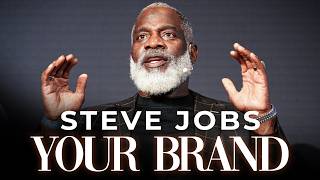
Myron Golden breaks down how Apple hit three trillion dollars: obsess over acquiring customers, design products that wow people into loyalty, and use events and product cycles to sell repeatedly. Apple went from a garage startup to trillion dollars in forty-two years.
Questions this video answers
(1) Acquiring customers; (2) Aw-ing customers (design/experience); (3) Assembling customers (live/virtual events and product cycles).
About 40 years from founding to reach $1T, then roughly two years to reach $2T, and two more years to reach $3T (as stated by the speaker).
Chapters
Something happened that made Apple legendary. Apple did something that no other company in the history of the world will ever have the opportunity to do. There's a giant. Yeah.
Here we go.
You see, I got where I am. Cause I want Michelle Hand help me to stand to be an independent man.
On the shoulders of a giant. On the shoulders of a giant. Hey there, YouTube. Myron golden here again. And I am gonna share with one of the most mind blowing principles that I've discovered from a company called Apple. You've probably heard of them. They invented this thing that you may not have heard of called the iPhone and this other thing you may not have heard of called the iPad. And I think they've got a couple of computers out there like MacBooks or MacBook Pros or something like that. Anyway.
Interestingly enough, that company started in a garage. When they started their company, their company was no bigger than your company. It was no more famous than your company. But something happened that made Apple legendary. Apple did something that no other company in the history of the world will ever have the opportunity to do. And the thing that they did that no other company will ever have the opportunity to do is they were the first company in the history of the world on the United States stock market to hit a trillion dollars in market cap. They became worth a trillion dollars. Right? And when you think about that, that's kind of mind blowing because Apple was not the oldest company in the world. They started, I think, in 1978 in a garage. So they're not the oldest company, but they were the first company to get to a trillion dollar valuation. Now they got to a trillion dollar valuation, and then within two years they got to a $2 trillion valuation. And then within two more years, they hit the $3 trillion valuation. So what I want to talk to you today about is this. Three pages out of Apple's $3 trillion playbook that you can use to grow your business. How cool is that? Three pages out of Apple's $3 trillion playbook that you can use to grow your business to the moon and beyond. So before we get started, let's first establish what I mean when I say a trillion. So.
A million.
Right? Is.
A thousand.
Thousand.
That equals a million. This is a million. A billion.
Is a thousand.
Thousand.
Million. Wait, my brain's hurting. I can't even write it, see? So a million. A billion is a thousand million. A trillion.
Is a thousand.
My brain's hurting. A thousand billion.
That's a trillion dollars. So you say, myron, how do I make that look Like a trillion. So that's a billion. This is a million. This is a thousand. Okay, so you take a thousand times that. Here's what, here's the number you get, you get a dollar sign plus.
Plus one.
Three zeros, then three more zeros, then three more zerOS, then three more zerOS. And then you take this one and you multiply it times three. That's the valuation that Apple hit. This times three is the valuation Apple hit from the time they hit. And by the way, here's what's really amazing. It took them whatever 20, 28 to 2018, 40 years. Is that 40 years. 1998-1978-8898-2008. Two 40 years. Took them 40 years to get from ground zero to a trillion. And then two years to get from a trillion to two trillion. And then two more years to get from two trillion to three trillion. Like, I don't know if that makes you all dizzy. Like, what did they do? Now here's what we all have to agree that whatever they did, they did something differently than every other company that's ever existed has done. Like, we have to agree with that. Like, nobody can say no. They just did the same old stuff everybody else was doing. Which by the way, is, is a good reason for you to operate from a first place of first principles instead of operating from analogy. What does that mean? Don't just look at what you, the people you think are your competitors and copy what they're doing instead. Sit down and reverse engineer what it actually takes to make something work. And I'm sure that makes sense to you. So what are the three pages at Apple's $3 trillion playbook that if you apply them to your business, they will work for you. Page number one out of Apple's $3 trillion playbook is Apple knows what business they're in. And if I were to ask you what business Apple's in, what would you say? Some people say, well, they're in the phone business. Some people say, well, they're in the computer business. Some people say, no, they're not. They're in the music business. Some people say no, they're in the movie business. Some people say, no, they're in the watch business. Some people know they're in the tablet business. Well, I don't believe Apple's in any of those businesses. Apple is in the business of acquiring.
Customers. Apple is in the business of acquiring customers. And when you will get, if you will make that your primary focus for your business and understand that your business is not like selling widgets or manufacturing widgets, your business is acquiring customers because it doesn't matter. You can manufacture widgets. If nobody buys them, you don't have a business, right? It doesn't matter if you're out knocking on doors selling widgets, if nobody buys them, you don't have a business. So you are in the business of acquiring customers. And it's amazing that most business owners miss that point. So like, everything that you do on the front end of your business when you get started should be about, okay, how, how can I acquire a customer? And see, some of you are limiting your business because you're saying, I want to acquire a customer for this product or I want to acquire a customer for this product. What you should be desiring to do, you should be desiring to just acquire a customer. So Apple is in the, they're in the two bit. They became the first trillion dollar company, first two trillion dollar company, first $3 trillion company because they're in the business of acquiring customers. What secret sauce do they use to acquire customers? The first thing they use, they used intuition.
And when I say intuition, they basically felt out the marketplace. They felt around for holes in the marketplace. When they found the hole in the marketplace, they said, hmm, I wonder how we can fill that. And what they. Here's, here's what's really interesting about the intuition of Apple. The thing that they looked at where their initial intuition was. They saw all these computer manufacturing companies, they saw Big Blue as it were back in the day, right? IBM. And what they were doing is they were trying to turn people into computers, right? They were trying to make people more like computers. That's what IBM did. They said, well, this is our 8088 and our 8086 and our 256, blah blah, blah. And they always named it all this technical stuff that had something to do with the computer. So the person had to learn how to think like a computer before they could use a computer. What did Apple do? Apple said, I don't like that idea. Why don't we make the computer more like a person? So even if they don't have a manual, when they open their computer, they can figure it out what their intuition was to make their computers more intuitive, easy to use, more user friendly, yes. Tech, less technobabble. Even, even like when they created the, the ipod, they didn't call it, they didn't call it an MP3 player just because it played MP3 music files. They didn't call it an AIF music player. They called it an ipod. And they described it because nobody kn. An iPod was. They gave you a simple definition that you could remember that would make you feel something. What was the definition of an ipod when it came out? A thousand songs in your pocket. More on that later. So they used their intuition, right? That's. So that's one thing they use, the next thing they used. They used innovation. Apple said, we're going to make computers do something that computer people don't realize that normal people want computers to do. You know what we're gonna do? We're going to make them beautiful. What? Who cares if a computer's beautiful? Like carpenters don't say, I want a beautiful hammer.
I just want a beautiful hammer and a lovely saw. Nobody says that, right? So when people think of tools, they think of utilitarian, functional devices. Nobody says, well, Apple says, no, what we're gonna do is we are gonna innovate our computers. And we're not just gonna have text. We're not just gonna have text on a computer. Because Steve Jobs took a calligraphy class.
And in his calligraphy free class, he learned how to write fonts with his hand. He said, what if we put fonts in a computer? I mean, who would think that that would make that big of a difference? Well, apparently it did. So Apple used their intuition to make computers more intuitive. They used innovation to.
Add things to computers that would make them more fun to use. And then they gave everybody an invitation to use their product to try it. You try it, you might not like it. I don't know. See, y' all remember when Apple stores came out, what did Apple do? They set up a store where they weren't trying to sell you stuff. They set up a store, come in and play with our computers. People come in and play with the computers, play with the computers, and they'd walk out. I gotta have one of these, right? So these, this is what Apple did to acquire customers. They use their intuition. Like, one of the reasons, if you're struggling in your business, one of the reasons you're struggling in your business is because you're not. You have no. You don't have a high sense of empathy, so you can't feel what other people are feeling. So you're talking to them about your stuff, and you think they care because you care, but they don't care. They don't care about you and they don't care about your stuff. Don't feel bad. They don't care about me and my stuff either. They care about them and their stuff. So you got to figure out how you can make your stuff be the solution to the needs they have in their life, to the things they're looking for. Okay, so that's page one out of Apple's three trillion dollar playbook. Like make your primary focus in your business acquiring customers. And maybe you want to acquire that customer who buys a book. Maybe you want to acquire a customer who buys a software. Maybe you want to acquire a customer that buys a coaching package. I don't know. But you want to. Don't worry about which product they buy first. Just get them to buy something first. Okay, so that's the first page out of Apple's three trillion dollar playbook. What's page two? Apple page number two is in the business of awing.
Their customers. What does that mean? That means when they get a customer, they make the customer say, wow. Guess what the customer does next? They say it backwards. They say, wow. Okay. Then they turn it upside down. They say, mom, wow. No, I'm just kidding. Okay, so my point is Apple is in the business of all their customers. Like, using an Apple product is an experience. How can you take what you do, your secret, like whatever your solution is, how can you take your solution and turn it from just a solution to an experience? How can you make people feel a vibe when they use your solution? Because if you do, if you can wow people. And Apple was amazing because they wowed people when it came to. And we already kind of talked about this, but they wowed people when it came to the form of their products.
You remember the old imacs with the bubble imacs. And you could see all the stuff inside. Like they know there are geeks out there. They made them like pretty little yellow cases and pink and all this. And you could see inside, but you could see the components. Even though you didn't know what the components do, just being able to see it made you feel cooler. See, Apple was very good. Oh, I don't know what I just did there, but Apple was very good. I must have bumped into it. So Apple was very good at.
Adding form, aweing customers with form.
It's so interesting.
Sage event planning they do, they put on all of Tony Robbins events, they put on Russell Brunson's events. They happen to be friends of mine. They came in and did a training for one of our coaching programs. And Barry was talking about how if you're going to spend money in an event, like you're going to spend a lot of extra money in an event, don't spend it on something the customers can't feel. Right. You're going to put a lot of intention on something and a lot of attention on something. Put it on something the customers can feel. Make sure that they. You're taking whatever this money and this time and this effort, this energy you're putting into this thing, make sure you're putting it in to something that when the customer experiences, they feel the love that you have for the product and the love they have for them. And that's why you created that product, because you add wow factor to the form. But they didn't just add wow factor to the form. They also added wow factor, wow factor to the function of their products. Like they made their products easy to use. Yeah, they're beautiful. But if they're beautiful and nobody can use them, who cares? But if they work really great and they're not beautiful, like people care, but they don't care as much. Right. And so I've often said that Apple awes their customers so well with their form and their function that they don't really. Apple doesn't really have customers. You know what Apple has? Apple awes their customers so much that they turn them into fan fans in the attic. What does that mean? They're fanatical. Apple fans are fanatical. Somebody says, oh, you have an Android, why don't you have a real phone? Right? That's the kind of stuff Apple people say, oh, you're using a PC, I'm sorry. Right. That's the kind of like Apple heads are just, they're so loyal to Apple. And it's not like Apple's fan and Apple computers cost more. Generally speaking, they cost more. And the iPhones generally cost more. But Apple said, we're not building, we're not building a Walmart brand. We're building an even Marcus brand. We're going to build a premium brand for these people. And so Apple is in the business of awing their customers. Like, every time your customers experience something that you put out into the marketplace, they need to say wow. Then they need to say it backwards. They need to say wow. Then they need to.
I don't know if I can do that or not. Yeah, I can. I think I can. No, I can't. Okay. Anyway, they need to turn upside down and say, mom, wow. Okay, so get to the place in your life and in your business where you understand your primary function in business is to acquire customers. Your second function in business is to all those customers.
And then the third function is to get your whiteboard to work okay, so, but that's not, that's not happening. Let's don't, we're not going to go there right now.
Okay, so, and then the third function is to page number three out of Apple's three trillion dollar playbook. Page number three out of Apple's three,000,000,000,000, is they assemble.
Their customers for virtual and in fact, I'm going to move this over. They assemble their customers for virtual and live events. What's that called? The Apple Developer Conference. Every year they get all their fanatical customers together, thousands of the fanatical customers, they come and they tell them all the new stuff they're coming. And then when they tell them all the new stuff they're coming out with, guess what they do? All those customers go buy it. So what happens is at the Apple, when they assemble their customers, what they do is they introduce their new products to their old customers and they get paid again. And they introduce their old products.
To their new customers and they get paid again. And they just keep on doing the same cycle over and over and over again. And they create this income generation machine that before you know it, in 40 years it's worth a trillion doll. And now by the time it gets to a trillion dollars, it's snowballing so fast that by the time it gets to 42 years, it's $2 trillion. By the time it gets to 44 years, it's $3 trillion. They assemble their customers for virtual and live events, they introduce their new products to their old customers, old products to their new customers, and they keep on doing that. So what do we learn from this wealth generation machine that Apple has created? What we learn is don't just sell something, sell something that sells something, but don't just sell something that sells something. Sell something that sells something that sells something that sells something, that sells something, that sells something that sells something. And make sure at every one of those turns you're solving new problems. Now a lot of people say, well, Myron, I don't understand why I got to keep on selling stuff to people. Can I just sell them something once? You have to understand the nature of creation and innovation. Every time you create a new solution for your customers, that solution creates 10 new problems. I remember when I got my iPhone, I got my iPhone and guess what? Now I need related products. I need an iPhone case, right? I need an iPhone case so that when I drop my iPhone because I'm going to drop my iPhone because it's made out of glass, right? And when I drop my iPhone, it doesn't break. And then I need a screen protector like one of those thin screens and I need a popsocket. So I need related products, I need information products, I need service. When I break my screen, I need to be able to take it somewhere where I can get it fixed. Now I need media and I can use my iPhone to create media or I can create media about the iPhone. Some of the fastest growing TikTok channels are TikTok channels that show people like secrets, things they can do on their iPhone they didn't know they could do. Myron, what's your point? My point is solutions create new problems. So you have to be in the business of not just solving the first problem your client has, but the problems those problems create. And then so if every problem creates, if every solution creates 10 new problems, I'm going to create one solution. Now I've got 10 new problems, I'm going To create 10 new solutions for those. Now I have 100 new problems. I'm going to create 1,000 new solutions for those. Now I'm going to have 10,000 new problems. And that is the thing that's going to perpetuate your business from now even until the end of time. But you've got to get started in the game. Acquiring customers, aweing those customers and assembling those customers for virtual and live events. If you like this video, like it, share it, comment if it made sense to you, help a friend, Help. Help a friend of yours who has a business. They don't understand this game and I think they will thank you for it. If not right away, eventually for sure. In the meantime, in between time, I'll see you on the next video. Bye for now.
More from Clegg





AI Won't Tell You the Full Truth | Arthur Brooks + Simon Sinek | A Bit of Optimism Podcast



How To Make the Best Decision | Arthur Brooks and Simon Sinek | A Bit of Optimism


