Sometimes You’ve Got To Hurt Them To Help Them
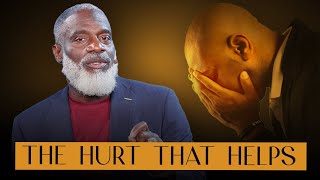
An experience coach argues that real help sometimes means painful honesty and firm boundaries. He shares examples from coaching, parenting, and marriage where kindness required saying hard things privately, and standing alone for what you believe.
Chapters
Has anyone ever hurt your feelings? Have you ever hurt anyone else's feelings? Sometimes people's feelings get hurt. Sometimes people's feelings get hurt because people are just. Sometimes they're just mean. But sometimes some people will hurt your feelings because they are seeking to help you. And today I want to talk to you about help that hurts, or sometimes you got to hurt them to help them. And one of the things I've said many times when I'm talking to clients, because sometimes I have conversations with coaching clients, and they will be going off in a direction that I can see clearly is a disaster. Right? And you don't want to say, well, you're headed off in a direction that's going to end up in disaster, Right? So how do you tell somebody that the path that you're on is not the path that you desire to be on if you knew where that path led? I think that's an important question. I think it's an important question for parents. I think it's an important question for people who are married, for husbands and wives. I think it's an important question for co workers. I think it's an important question for friends. How do I, if I see somebody about to do something that's going to mess up their life, how can I have a conversation with them about it without it, like, being too painful for them or too painful for me? Well, the answer is sometimes you can't. Sometimes it's going to be painful for you and painful for them. If you're one of those people who gets pleasure out of other people's pain, this message is not for you, Right? But if you're somebody who seeks to help people and you really want to be a blessing to other people, then sometimes you got to hurt them to help them. There's a scripture that says, faithful are the wounds of a friend, but the kisses of an enemy are deceitful. And we've all experienced this physically. Maybe if you had a toothache and you go to the dentist and then he gives you a shot in your gum, he sticks a needle in your gums, right? And then they drill out whatever cavity you have, or if you have a wisdom tooth, you have to have it removed. Sometimes they'll go in and cut your teeth out of your head. Like, that's painful, but they do it. They hurt you to help you. But it's not only true physically, it can also be true emotionally. And if you are a coach, if you are a parent, if you are a spouse, sometimes you have to have hard conversations with People that don't feel good and they don't feel good to you and they don't feel good to them, but they are absolutely essential either to maintain your relationship or to protect them from some danger or a bridge that's out down the road. And so one of the things that.
Is hurt that helps is to be brutally honest. Especially when it's hard, like brutally, like painfully. Just say, you know what, I know this is going to kind of hurt and it's not my intention, right? So let me teach you this about being direct and difficult. If somebody doesn't like you because of your position, that is their problem, not yours. See, one of the problems we have in the world today is we have too many people attempting to adjust their position on things to accommodate other people.
Who have not.
Earned the right to be accommodated, right? And so like we use all this ambiguous.
Modern day, new day language for stuff that is not helpful and we adjust our position. But if somebody doesn't like you because of their position, because of your position, their problem, they don't like you because of your disposition. That's your problem. Because you can have a very, very solid and hard, hard line. I'm not moving from this point position and have a very velvet glove disposition so that you can let people know that I get that this hurts, but hurting you is not my intention, right? That's dispositional. And dispositional. I am commanded to be kind, but I'm not commanded to be nice. And see, nice people will lie to you to keep from hurting your feelings. They will tell you a nice lie. But honest people with a good disposition hopefully will tell you the truth even when it hurts. So every now and then I'll be doing a coaching call and somebody asks me a question and they'll say, well, this is what I'm doing. If I'm going to say something that is going to be difficult for them to hear because I can tell if it's going to be difficult for them to hear before I say it, right? I know I'm a person, I know what stuff feels like when people say it. So if I know it's going to be difficult, I'll ask them, is it okay if I coach you even if they're in a coaching program? Because just because they're in a coaching program doesn't mean they want to be coached. Trust me. Right? And so I'll say, is it okay if I coach you? And they say yes. I'll say, I wouldn't say it that way. Here's why that title is not clear. It's clever, but it's not clear. And I'll just break down why what they just said is a terrible idea. So from my perspective, as a person who's had experience in making lots and lots of money in business, that idea that you had, I know that it feels right to you, but I promise you, you will be on that road for a very long time before you experience any success, if you ever experience any success on that road at all. So my recommendation would be to go this way. Now, that's painful, but that doesn't feel good to hear, especially not to hear in front of a group, because most of my coaching is group coaching. Right. So now I'm telling them that your idea is terrible in front of their friends. And nobody wants to feel in front of their peers. Nobody wants to feel bad in front of their peers. That's why you have to file the edges off. When you're giving people correction as much as possible, as much as humanly possible, you gotta correct your children, Correct them in private. Do not correct your children in front of people. This is a hard lesson for me to learn because I used to think, well, if they act up in public, I'll show them in public, right? No, that's not the point. Like, if you're going to correct your children, do it in public. If you have to have a hard conversation with your spouse, with your wife, with your husband, do it in private. Never put anybody on blast unnecessarily. Okay, so unnecessarily. But if. If. If somebody under your authority, whatever that looks like, is acting in a way or behaving in a way that's unacceptable, you have to deal with that. And they're doing it in front of their constituents, their peers, their siblings, whatever. You have to deal with that there and then. But if you're gonna. You're gonna. Like, if you're gonna. If you're gonna chasten your children, as the Bible calls it, if you're gonna punish them, spank them, I know a lot of people think that's wrong. You'll have to take that up with God. That's not my department.
But when you do do it in private, even when God, when Christ was crucified and God.
And he became sin, God turned the world dark, so nobody saw it. So even God chastens his children chasing his son in the dark. Don't do it in prop. Don't do it in public. Okay? So. But then tell the truth. Even when it hurts. Sometimes you have to say, and one of the best ways to do this is make yourself vulnerable. Okay. The reason I'm having this conversation, like, if you're talking to a spouse, right. Be brutally honest, right? The reason I'm having this conversation is because this thing that you did brought me pain.
And I can be mad about it, or I can come have this conversation with you about it. I'd rather have the conversation so you can know what happened because it's hurtful, it's painful. I don't like being in pain. And so I get it. If you don't want to hear this right now. I have to tell you. Because at least if I don't tell you, then I'm going to be carrying it around. But if I do tell you, you can do something about it or not do something about it, but at least I told you, right? And so, like, sometimes my son and my daughter, they'll come have a conversation with me. Okay? Dad, I need to talk to you. Okay. And I always know when I'm in trouble. Right? Okay, well, this, this, this, this, and this. Oh, you know what? You're right. I never thought of that before. Thank you for bringing that to my attention. Let's don't be. Let's. Let's make sure that we don't make sure that we can receive correction, because. Correction. Because the correction is correct. And if it's done in a spirit of humility, let's be able to receive that even if it's from somebody who's, quote, our subordinate. Are y' all tracking? Okay, so that's number one. Number, be brutally honest. Even when it hurts, but even when it's hard. When it's hard for you and hard for them, do it anyway. The sooner you do it, the sooner you give the situation an opportunity to get better, it's not necessarily going to make it better. Sometimes it'll make. Sometimes it'll get worse because the person doesn't want to change. But at least you did your part. If you don't do your part now, you don't even know. Right? Okay. Number two.
Stand for right. Even when you have to stand alone, this is hurt. That helps. Sometimes when you're standing for right, people's feelings are going to get hurt. Oh, well, that's like, I'm not. It's not my intent to hurt anybody's feelings. Like, I'm going to be doing a. I'm going to be teaching a.
Class today for a new coaching program we just started with David Mitchell called Family Business Fast Track. And one of the first things I'm going to do is I'm going to define what is a family, right? Not going to define what a family is to be hurtful. But God's ideal model for a family is a husband and a wife and children, right? And so, and I know there are people who say, well, men and men can get married. Not according to God, they can't. And women and women can't get married. Not according to God, they can't. I mean, if you all want to believe that, do your thing, it's your business. But I don't believe that. Like, it's like saying my little finger has little fingers. No.
Nope, that ain't it, right? A wife can't have a wife and a husband can't have a husband. It's not biblical. Let's don't be confused about it. God intended for children to have a mother and a father. Not two mothers, not two fathers. And I know there are a lot of people who don't like that. I get it. It is what it is, though. It is what it is. And I'm not attempting to be hurtful, I'm not attempting to be mean. I'm just telling the truth as I find it. I'm standing where I'm standing. I'm not moving from here, right? You know, it's like I was playing golf yesterday. I was playing golf yesterday. I gotta wind this up because I had two minutes, but I was playing golf yesterday and. Or last Thursday. Well, I was playing golf last Thursday and the guy I was playing with, Travis Sowell Sr. He got a hole in one from the tips, which means a 209 yard shot. And he hit it and it landed on the green and. And then it went in the hole. Like, it went in the hole. It did go in the hole, bro. Went in the hole. The ball disappeared. Usually when it disappears and it was by the hole, the only place for it to go is in the hole. It's in the hole. Nah, man, I don't believe. Whatever, bro. Anyway, so. But one of the things that they do, they have this, they have this bro code in golf, right? If you get a hold of one, you have to buy everybody drinks, right? That's a bro code. Like you have to buy everybody drinks. Whoever wants one, whoever's in the bar at the time, when you go in there, you have to buy everybody drinks. And so somebody was saying, oh, man. But he had a big beer tab, right? I said, I don't care. If I get a hold of one of a bunch of people around, I'LL buy you some drinks. It'll be some soda and some tea and some Gatorade. But I'm not buying alcohol for anybody ever, Right? That's not happening. And I don't know, like, I do my business events, right? A lot of business people, when they have business events, they serve alcohol. They have mixers and serve out. I ain't serving alcohol to nobody. Say, Myron, why won't you serve alcohol to anybody? Because I don't need the woe on my life. And the scripture says, woe unto him that giveth his neighbor to drink. I ain't doing it. And I've already seen the devastation that can cause and all the pain that it can cause and all the havoc that happens after the alcohol takes control. So anyway, you got to be willing to stand and be you even when everybody else is being everybody else, even when you have to stand by yourself, make sure you stand. So I hope this helps you help people even when you have to hurt them. Have a great day.
More from Clegg





AI Won't Tell You the Full Truth | Arthur Brooks + Simon Sinek | A Bit of Optimism Podcast



How To Make the Best Decision | Arthur Brooks and Simon Sinek | A Bit of Optimism


