Stop Telling Us Everything Happens for a Reason | Anti-Victim Tom Nash
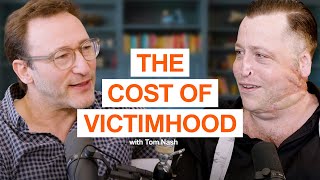
Tom Nash, a double amputee who survived meningococcal disease, rejects the idea that everything happens for a reason. He argues that framing trauma as predestined robs people of agency and instead offers frameworks like the Artist, Author, and Alchemist to help people create their own meaning from pain.
Chapters
Are you going to treat adversity like the conversation stopper, or is it a puzzle to be solved? Right.
Your case is extreme, and it's different than this adversity that most people struggle in a day. But I like extreme cases because the lessons are easier to discern.
For me, losing 4 limbs sounds like a bit of a shit sandwich to almost anyone who reads that story. But when I sit here and tell you it's the best thing that ever happened to me, and even you identify it as a gift, all of a sudden it becomes a really good story.
Most of us have experienced some sort of adversity in our lives, and whether it's from well-intentioned friends or our own attempts to deal with our struggle, we often try to downplay how bad it is. Things could be worse, we tell ourselves. You still have your health. But what if there was another way, a better way to deal with stress? That's why I was excited to have Tom Nash on the show. At 19, he caught a bacterial infection, which has a 2% chance of survival. But that's not the story. Because of the infection, he had to have both his legs and both his arms amputated. And how did he deal with it? He decided it was the best thing that ever happened to him. He went on to become one of Australia's most popular DJs and a highly acclaimed speaker. He's also the host of his own show, Last Meal with Tom Nash, where he serves his guests the meal they would want to have if the world was about to end. Tom is one of the best guests I've ever had on the show. He's smart, he's really funny, charming, and insanely inspiring. And he will leave you with the greatest lesson you can ever learn: when we have agency, we can more than get through anything, we can come through anything Even better. If you like this episode, please remember to subscribe. This is A Bit of Optimism. Tom, thanks so much for coming in. I learned about you from a team member of ours who sent me your TED Talk.
Oh, right.
You're a pirate.
That's getting a bit long in the tooth now. I can't believe—
Still out there.
It's still out there.
Just so people know what we're talking about, children stop you. Yes, children stare.
Yeah, children do a lot of things.
Children do a lot of things. Well, let's, let's, let's go back. People stare.
Yeah, sure, people stay. Yeah, people say, yeah, so I've lost both arms and both legs. They don't really notice the leg thing because usually I'm wearing long pants like I am now, and I'm pretty good at walking with prosthetic legs, so they don't really detect that. But the obvious thing is I have these two hooks.
Oh my God, you've got hooks! Yeah.
Yeah, you wouldn't believe how much that's a genuine response I get as well, like people pretending that they don't notice, which is even more awkward. But yeah, yeah, kids, kids are the ones that will sort of like— there's no fourth wall there, they'll just go straight for you and ask you whether you're a pirate or not, or a robot or something like that. And I just have to tell them that, yeah, of course I am. Of course, of course. I love being in America because I get— when people from America ask me what happened to me, I can tell them shark attack and I totally get away with it because they think everything in Australia is trying to kill you. Um, and you know, and that's true.
Most people die in Australia from shark attacks. Of course, that's a known fact.
That's exactly right. Yeah, yeah. With kids, I mean, I always play into the idea of it with them being a pirate or a, or a robot or whatever it is, and I think it just makes them feel a bit more comfortable. And I like it when kids are more comfortable asking questions to people with disabilities because You know, I think it just destigmatises everything.
Yeah.
You know, if you will.
So, so you, you lost your arms and legs when, uh, when you were 19? Yes, it was. Yes. So I mean, you lived, I mean, into adulthood able-bodied?
That's right. Yeah, I was, I was an able-bodied person until the age of 19. I was studying at university. I was used to be a guitarist actually as well, uh, so music was a great passion of mine. And it was one day at college, I went in and I felt a general malaise come over me as I was sitting having coffee with a friend waiting to go to a lecture. And I thought to myself, I might just go home because I was feeling like I was getting a flu. And so I took myself home and put myself to bed and I had probably what felt like the worst flu I'd ever had in my life. If you've had a really bad flu, And you can imagine an order of magnitude more than that. That's kind of what I felt. So the night was really awful. And then the next morning I woke up, texted my stepsister, and I said, you have to take me to hospital. Actually, I think I said, you have to take me to a doctor, not hospital, because as a 19-year-old man, you always downplay the whole— She picked me up, took one look at me, and said, I'm taking you straight to hospital. She took me to a local hospital. I remember they had to transfer me. Because they, they looked at me immediately and they said, oh, you know, you've got purple rash all over your face and all over your body, and everything's swollen up. Something wrong with you. They knew what it was. I didn't at the time. So they transferred me from a local hospital to one of the major hospitals in Sydney. And I say this is because it was like one of my last memories. I was in the back of an ambulance. I don't know if you've ever been in the back of an ambulance, and they have the paramedic that's that's with you just to make sure you don't die or whatever it is. And I remember this guy like it was yesterday. He was very serious and he was very stern, and I made it my mission to make him laugh because I knew that I just needed to break this guy. I don't know what was going on. And so I was making a couple of jokes and nothing was happening. And then at one point I remember saying to him, how long till we get to the hospital? And he said, uh, about 10 minutes. And I said, 10 minutes is what people say when they have no fucking idea how long it's going to take to get somewhere. 'Cause nothing takes 10 minutes, does it? It takes 7, it takes 8, takes 9, never takes 10, maybe takes 15 or 20. And this made him laugh and had a bit of a chuckle, and we laughed together. And then I thought, okay, I won this guy over. At that point, I completely lose my memory. Well, what happened was I got admitted to the hospital and they put me into a coma for a couple of weeks. And then when I woke up, I realized that— well, I've been told that I contracted meningococcal disease. Disease, which is kind of like a bacterial meningitis.
Just, just a fluke? Just, uh, yeah, exactly.
It's, it's contracted kind of like people contract COVID or something else through sharing drinks or someone coughing on you or something like that, but it's very rare. So I just got extremely unlucky or whatever. I was to be in hospital for another 18 months. I came really close to death. I think I had like a 2% survival. Wow. Uh, opportunity. And I managed to get through that with a the help of the doctors and nurses and, and some trial drugs and things. But during that time, I, I had amputations. So after I'd come out of the coma, I had both my legs amputated. And a couple of weeks after that, a doctor came into my room. I remember this like it was yesterday as well. This is one of those other sort of poignant moments. This doctor, his name, his name was Peter Mates. He was one of several doctors that I had. And for some reason, this guy had a really acute understanding of my dark sense of humor in a way that few people have understood since. And I remember he came into my room once, and I'd had my legs amputated, arms had gangrene on them and stuff like that. And I was really wanting to keep the arms because, as I mentioned before, I was a guitarist. And, you know, it wasn't just the lack of independence, but like the idea that I couldn't play music part of your identity. So he came in and I, I realized the situation was really different because he wasn't flanked by the usual registrars and lackeys that he normally was, being quite a high-up doctor. And he sat down next to my hospital bed and he said, so we've got to talk about the arms. And I said, okay. And he said, uh, as I see it, you have two options. And I said, okay, what are they? He said, we can amputate your arms. That's the first option. And, uh, it's pretty rare for people to live with two prosthetic arms, but he said it does happen, but you'll have to live with prosthetics. And I said, I don't really like the sound of that, what's the other option? And he said, uh, we can leave them. And I said, okay, what's the catch? And he said, uh, oh, you'll die. I see we share the same humor here. Um, so after I'd had a bit of a chuckle at that, I realized that, um, apart from like tapping into the dark sense of humor, yeah, he was giving me a choice.
Yeah.
For the first time in this whole process.
Yeah.
Because up until then, everything had been happening to me, right? And I had no sense of agency, right, in the whole process. And at that point, I mean, obviously I was going to say amputate the arms, right?
Yeah.
And that's the decision I made, obviously, if I'm sitting here in front of you having this conversation. What it did was it completely changed my mindset at that point, because now I've made the decision to lose my arms, and it imbued me with that sense of agency.
So you're not a victim of the amputation?
It's interesting you use that word. I, I very much regard myself as an anti-victim.
Yeah.
Uh, what I do in most of my life is, is try to, I think, rail against the concept of victimhood, generally speaking.
There's a subtle but important detail here, which is the doctor gave you a choice. I mean, yeah, that's right, that you had the agency which makes you not the victim. Yeah, because this is something I chose.
Yeah.
I wonder if you woke up one morning and then the arms were gone, if, if that mentality would be the same or it would have taken more work to get there.
That's a really interesting question that no one's asked me before, and I'm not surprised that you're someone that picked up on that. But yeah, absolutely. Like, the, the idea that you actually make the decision imbues you with a deeper sense of—
even, even if it's, even if it's a fake decision.
Yeah.
You know, I mean, it's like it's a choice-ish.
Yeah.
But you get to say, got it, let's do it.
And I think what that points to mostly is that almost everything in our life is the story we tell ourselves and everything is a reframe, or it can be. And so you can choose to look at things that have happened historically as something that you had input in and some or something that you didn't. Yeah. And I think people's ability to make that distinction is what decides whether they have the agency moving forward and what they can do with what—
This is so interesting because when I sat down with you, I thought, okay, this is going to be a conversation about the importance of sense of humor, right? I thought this was going to be a conversation about when life gives you lemons, you know, make a joke, right? Because I believe life is made of balance, right? And this is, this is everything. For everything we get, there's a cost. Of course, everything we lose, there's a gain or a lesson. Everything. Right. In other words, it's always balance. And I always, I always ask myself, okay, what's the balance? Right. So when times are hard, I'm like, all right, what am I getting out of this? And when something goes good, I'm like, careful, this is coming at a cost.
Yeah. What's— what am I going to get this year?
Always.
Yeah.
And so again, every aspect of life. So for example, if you have a corporate job, you know, your lows are not that low, but your highs are not that high. You live an entrepreneurial life, your highs are insanely high, but your lows are insanely low. Like, it's always balanced. And so what I thought we were going to be talking about was that the sense of humor was tapping into the balance, because otherwise, if you have imbalance, that's where you end up depressed, lost, victim. And so to find what the gain, what the balance is, is like, okay, something bad has happened, your identity has changed, your life has changed, new struggles, all of that. Okay, my sense of humor got darker, you know. And, and it helps you just sort of live in balance. Yeah, right. I thought that's what we were going to be talking about.
We can if you want.
What is showing up here, I actually think, is more interesting, which is agency and how one reclaims agency. Now, this doctor gave you a gift, which is he didn't save your life, he let you save your life. And I guess the question— I mean, we don't know if that didn't happen, if you just woke up with no arms, you know, what would have happened. But are there other circumstances as you've had to change, you had to relearn to walk, you have to relearn to function, you have to relearn to get dressed? I mean, everything was brand new for you. How did agency show up? When did you feel like a victim?
I don't believe I ever felt like a victim. I, I think there was probably a time where—
I mean, there was no depression that came at all?
Oh yeah, there was depression. I don't believe it came in the form of feeling like I was a victim. I think, I think you do some— get these glimmers of kind of, you know, why did this happen to me? It's not necessarily, I think, a victim mindset, but you're kind of trying to make sense of how you've been selected for this particular brand of misfortune.
At the same time, it's the opposite of a lottery.
It's— yeah, that's right.
You've got a 1 in 10 million chance of being a millionaire, or—
yeah, yeah, look at me. I think it very quickly shifted from why me to, you know, what next effectively. But I think there was an intermediary step there of kind of why not, right? And why not being really important when you think to yourself, statistically it's going to happen to somebody, why not me? Of course. Um, and that's an important realization because it's the first time that you realize that a lot of these things that happen are just completely random and the universe doesn't give a shit about you. and you need to start developing a skin that can handle that effectively. I think what you said about balance made me think about something completely different, which was that even though you were kind of trying to diagnose this— maybe humor is this kind of antidote to the deficit in other areas— I think rather than humor being the antidote, for me I've found what I call antifragility. This is a topic that you would know Well, was developed by Nassim Taleb, usually with respects to complex systems. He's a, you know, market analyst or options trader, whatever it is. But I think it applies just as much in psychology than anything else because the human mind is a, is a complex system. And so what I've identified in my own life along the way is like, what advantages have come through having a disability for me? You mentioned my TED Talk actually before, which is The Perks of Being a Pirate. We talked about the idea of being a pirate, but the salience underneath that is the perks of— what are the advantages of having a disability? I mean, when I look back on my life now and what I've become, I'm a better problem solver. I'm a more— people say resilient person, but I'm a more antifragile person. I believe that there are so many advantages that I've had having a disability, just completely in my mindset and the way that I approach life, that, that's the balance. Humor isn't the balance. The balance is how can I flip the script on this and make it something that's positive? And that's effectively the lens through which I view life these days, is, you know, how can I develop habits that are antifragile, effectively, emotionally as well? Yeah, absolutely.
Because physically, clearly, you have to solve problems, you have to figure out how to you know, work in the world.
That's right. Yeah.
But are you more antifragile and better at solving emotional problems, relationships, you know, conflict at work?
Yeah. You know, I think so. When I talk to a lot of people, and particularly in business, about antifragility, it's important to know that, like, I don't think it's a binary thing that you're, you're either antifragile or you're not. And I think people get very caught up being like, am I optimizing my response, you know, for positive upside optionality all the time. I don't think you need to be all the time, but once you develop like the habit of doing it and you get better at it, even if 2 out of 5 situations you can flip into a positive, there will be a net benefit over time.
When something happens to us and, and we're all susceptible to it, like, oh, why me? Is there something you say, a mantra, that helps you change the mindset? I mean, you kind of alluded to it, which is not what did I lose, but what do I gain? I mean, is that the— is that the thing? Like, is there a mechanism that helps you get the right mindset?
Yeah, there is. I actually developed a system that I use day to day. Um, I have like 3 characters that I can play in various different situations, and I call them the Artist, the Author, and the Alchemist. And they're for very different applications. And if you think about these things as actual characters, I like to think of them as people. So the artist is somebody who paints perspective, right? I mean, artists always work with perspective. If you think about it like a photographer who can zoom in or zoom out of a particular situation, so that kind of oscillates between like a narrow and a broad framing of something. I think that being able to change your perspective on any situation at any given time is a skill that you can develop. You know, an example of this would be if you're drowning in the minutiae of your life and work or something like that, it's useful to zoom out and appreciate that you live in a really good country, or you have a spouse that's supportive, or you have a great family or friends network, or your life is on the right track. Maybe if those things are actually all catching fire it's better off to oscillate that framing again and zoom in and appreciate a moment like spending time with your dog on the couch or having a cup of coffee with your spouse or something like that. Anyone has the choice to be able to make that decision at any point in their life. You can run through an exercise whereby, you know, today is another day you didn't get an email telling you you have bowel cancer, right? It sounds fucking ridiculous on the offset, right? But, but 'But today is that day for you and I both.' And if you put yourself in the mental headspace where that is a possibility, it does actually lighten the problems you're going through now.
You know what I like about it is it works because it's specific. Whereas, you know, usually when something bad happens in somebody's life, you usually get the pablum of like, 'You have your health,' which is this kind of generic, kind of like— it's the same kind of idea, you know, but it's such a generic thought. It's too hard to say, yeah, sure. It's too hard to appreciate something so broad and general, right? Yeah. Whereas when you say, you know, you don't have bowel cancer today, you know, it's kind of like, yeah, it's a good point, you know? It's like, yeah, it's the specificity of the— this is why I like your concept of the photographer. It's the specificity of it.
Yeah.
Not like, hey, life is good, but rather just take a step back, look what you've got.
That's right. Are you zooming in or zooming out?
Are you zooming out? And it's the specificity that I really appreciate.
And then another one would be the author.
Yeah.
This was one that I do with myself for the last 10 or 15 years, and I never really had a name for it until I put a name on it. But I would imagine myself as my own 80-year-old autobiographer of my own book, right? And it would help me make decisions on what I was doing in life, right? So whenever I had a decision to make and it was really tough and I had to consider all a bunch of different variables, I would project myself into the future when I was 80 years old, and I would think, if this was a story that I was writing and I was the protagonist, what decision would I want the main character to make? Like, what kind of story would I be proud to write, to tell? Like autobiographies are very much the stories of heroism and making right decisions.
Especially when you write your own book.
When you write your own book, right? Exactly. And so you don't want to make the wrong decision, but you're also giving yourself this benefit of objectivity, right? Of being outside of yourself, of being the third person in a sense. You know that axiom is kind of like, it's always easy to give advice to a friend but never take your own advice. This is just you putting on that hat and giving yourself advice.
It's sitting on the outside.
Yeah. The Artist is great for, you know, if you're sort of drowning in the minutiae. The, the Author is great if you have a decision to make but you want to respond in the best way. And then I guess the last one would be The Alchemist, which is what I live my life by. And The Alchemist is somebody who turns horrible situations into gold, right? So how do you find what is the hidden benefit from some horrible challenge that's happened to you? You know, are you going to treat adversity like the conversation stopper, or is it a puzzle to be solved?
Right.
What are the great things that you can get out of what's happened to you? So from— for me, losing 4 limbs sounds like a bit of a shit sandwich to almost anyone who reads that story. But when I sit here and tell you it's the best thing that ever happened to me, and even you identify it as a gift, all of a sudden it becomes a really good story. And that's what The Alchemist does.
Here's where my head goes.
Okay.
Your case is extreme, and it's different than this adversity that most people struggle in a day. But that's why I was excited to talk to you. I like extreme cases because the lessons are easier to discern because it's extreme. Yeah. And then you take those lessons from the extreme and you apply them to less extreme circumstances. But yes, where the lessons are harder to find, right? And so when you talk about The Alchemist and when you say this is the best thing that happened to me. When somebody gets dumped, fired, a small business is not— is barreling down, it seems too simplistic to simply say, change your mindset, this is the best thing that ever happened to you. You know, like, when there's so much emotion— I mean, I have to believe this is something you developed, not something you had out of the gate, right? It wasn't the week after amputation, you're like, this is the best thing that happened to me. That is not how it worked.
No.
So I guess that's where I'm getting at. What is the process that we have to go through of mourning loss, you know, going through the fear, going through the anxiety? Because you got to go through it. There's no avoiding that. Otherwise it's just suppression and you're kidding yourself. Allowing yourself the grace to cry and be depressed and be like, this is normal. You know, I just lost something, I'm going to be depressed.
Absolutely.
Like, how long was the gap when you went through fuck my life to, you know what, no, this is the best thing that ever happened to me? And what was the process?
I'll tell you my gap, but I don't want that to sound prescriptive to people because I don't think it's going to be the same for everyone in every situation.
But I just want people to appreciate that it's not just some foe spiritual affirmation that you're going through some shit and you just turn your life around, change your mindset, you know, this is the best thing that ever happened to you. Yeah, all of a sudden you have this amazing outlook on life. That's, that's, that's not how this works.
I went into hospital about middle of the year. I, I was terribly depressed in the beginning, and I noticed that that had a high correlation to physical pain. And I know that emotional pain can kind of induce physical pain and all that sort of stuff, but pain, pain, pain, sure, yeah. Um, but my emotional pain and therefore depression, I think, was very closely correlated with physical pain because I noticed it getting better as the pain started to subside. Notwithstanding, I experienced the kind of pain that I didn't know existed, and for prolonged periods of time, things that you would think 'Oh, that's an 11,' might be 110 or something like that. Crazy amounts of pain. And so that, that was largely unavoidable, but I think it sort of skews the results in my head. There were these markers along the way. Having that agency, that sense of agency of losing my arms, was one marker. Another marker was, you know, walking for myself unassisted, which would have been about 8 or 9 months after I first went into hospital. Actually, story about the first time I walked, like, unassisted was a bit interesting because I had these two prosthetic legs put on me. And in the beginning I had a person holding me under one arm and a person holding me under another. And then there were a person on each leg moving my leg forward. So I started with like 5 people when I first started to learn to walk again with prosthetics. And as I would get better and better, I would lose people. So I lost the people on each leg because I could move the leg by myself. And then I just sort of needed balance, so I lost one person to my left and I just had this person to my right holding me for balance. The longest period was when I just had him. It was just a wardsman and he would hold me under my arm, and every day we would go for little bits of walks around the grounds of the hospital. I remember I couldn't work out what it was that I couldn't walk on my own, and I thought to myself, I'm like, it's balance. I don't have the, the balance, right? And I had this fear of him letting me go because I didn't— he was giving me the balance. And it was just this one day that I'm walking along with him, and I remember we're walking and I'm starting to pick up a little bit of speed, more speed than, than I had previously. And I said to him, okay, let me go. I don't think he was supposed to let me go. Like, it was probably— had— he might have got in trouble for that by the hospital administrators if he'd done it. But he, he could see in my eye that I was ready, and he let me go. And as soon as he let me go, I just started picking up more and more speed. And what I got was momentum. And the momentum was actually what gave me the balance that I needed. So what was happening is he was holding— like a bicycle, it's like a bicycle, right? So he's holding my arm and I'm thinking he's giving me balance, but he was actually holding me back. And I didn't realize that, right? And so I realized at that point that the momentum, which was— that was what was giving me balance. And that's what propelling me for. And it was only fear that was stopping me from, from having him let go. So that was another milestone along the way, right? And so when I say that, you know, it wasn't like waking up to the next day and being like, oh, I'm fine now and everything's positive. No, it's iterative. And you have little moments like this over the course of like a year or so. And you know what, that, that hasn't stopped happening. I still have moments like that that just make life better and better. Just don't have the ones that make life worse. That's my only recommendation.
This is such a good insight, which is we go to friends in times of struggle and hardship for help, of course, and it is much easier for us to get through struggle and hardship when somebody is by our side, metaphorically holding us up.
Yeah.
Giving us balance, making us feel like, you know what, I can walk, thank you for being by my side. But there is a point where the friend's love and the friend's intention of holding us up is actually holding us back. And there's a point at which we have to say to ourselves, I love you, but I have to leave you now. This, this support is holding me back.
Yeah, it's a dependency. You know what I, I learned about support networks during my period in hospital is— and I had a great support network, like not just people who are paid like doctors and nurses, but family and friends and things like that. And everybody kind of thinks that the support network is good because of what people do for you. I actually found out that for me at least, and I think this is for everyone, support networks are useful because you feel like you owe these people something once they commit to you, right? It creates a debt of honor effectively. So you want to get better yourself because they've invested in you and they believe in you. I think that's happening for everyone who has support, whether they see it or not.
You don't want to let them down. Yeah, they sacrifice for you.
That's right.
They gave to you and you want to make sure that their sacrifice was worth it.
That's it. I think that's, that's the best aspect of support networks.
I mean, this is, this is what it means to be human, right? Which is— and I— and this is when all these discussions about AI and all of these things, the problem with technologists is they always leave the people out. And they forget that people are still people and we're going to be people all the time.
Yeah.
And the technology is great and it supports us, like they always forget the people part. And so much of people and humanity and humanness, we don't fully understand, or we unders— only understand in, in sort of silos, you know, various social disciplines— psychology and sociology and, you know, psychiatry and all the rest. And but there's so much we don't understand and get. And it's this idea of pride and not wanting to let people down and that the value of a friend is not just that they were there. You know, it's like when a, when a kid graduates high school or university and they're walking across the stage to receive their diploma, and there's this sense of pride, but the parents and the friends and the family sitting in the audience also have this incredible sense of pride. It's this shared feeling, yeah, that we have with each other. It's called relationship.
It's called love. It's reciprocity.
It's reciprocity. And like, we forget that emotions aren't, aren't just in us. When we are close with someone, we share in those emotions. We share in their pain, we share in their pride. And in, in this case, there's— I don't know even what— I don't even know if there's a word for it, you know. There isn't a word like not wanting to let them down, you know. It's some sort of version of gratitude.
Yeah, yeah. I, I think of it the best I could.
We don't have a word for it.
Isn't that kind of amazing? I guess.
But even again, we have these phrases, but we don't have a word for that shared experience.
I bet the Russians do. They've got the Germans.
The Germans have a word. The Germans have weird words for everything.
Yeah, yeah, that's good.
Yeah. Um, does it bother you when people stare at you? No, because I, I hear from other people who are disabled in some way that it causes great discomfort to be— to feel like an object.
It's funny, isn't it? So many people, uh, spend vast amount of energy and resources and money to be objectified on Instagram. And some of us just have it and then we don't want it.
It's a gift.
What's the— no, I don't give a shit. It's fun. Yeah, I think people are just generally curious. I mean, I do my best to try and make people feel comfortable off the bat, and that could be just making a joke about my hooks or making them feel comfortable in another way. Uh, my aim is to, once I get to know somebody, is to make them forget that I have hooks.
I love this idea of how you— and I guess we have to thank that doctor because, I mean, we don't know what, what the future would have been. But this idea of taking agency and making choices, like, I'm going to choose this, that the mindset starts with choice. I really like that.
It always does.
Yeah, you're helping put a lot of things into place for me. Where there's certain things that what I now know is agency, which I wouldn't have just defined as that prior to this conversation. There's agency. I'm not left with this life. I chose this life. Yeah, this is not the metric I have to accept. This is the metric I chose. I really like this framing a lot. I think there's a lot to be— I think there's a lot there in your artist Author and Alchemist. And then the alchemy is always just to your— I mean, literally in the definition, the magical part. I—
well, actually, it's interesting you say that because— and I've been following your work for quite a while now.
Thank you.
You know, I remember when I first heard about, you know, what is your why or whatever, and I think I stumbled on mine by accident. I don't know when, a while ago, because, you know, you think you have it and then you're kind of wrong or whatever. And, uh, there was a, there was a guy who came, who approached me and said, um, he said, I was, you know, really great to meet you. We've been chatting for a while. He said something along the lines of, uh, you know, I, I never would have been able to go through what you did and remain so positive on the other side of it. And I remember feeling so deeply upset by that. Just, I'd never wanted that to be what people took away from me.
Yeah.
And so it wasn't as much that he revealed something— he revealed what I didn't want. What I wanted was for people to understand that they never really know what they're capable of until they're truly tested, right? Like, that's what I want to communicate. That's what I want people to get from me. And so at that point, that was when I realized, at least vocationally, that everything that I did, I wanted to make it so that people didn't look at me thinking, oh, I never could be that positive after having something like that. I want them to think the exact opposite, that like nestled deep inside me, there is the power to overcome crazy bad shit and it just hasn't been tested yet.
I want to agree with you.
Okay, cool. I, I want you to not, because it would be way more interesting for the conversation.
I want to, I want to. Yeah, but I don't think I do.
Okay, cool. Tell me why.
My great aunt survived the Holocaust, and you know, this is Viktor Frankl stuff. You know Viktor Frankl, who also went through Auschwitz?
Yeah.
And he came out of it and he couldn't understand why all these people who were suffering the same horrors, that some people had the will to live and some people didn't, right? And that was how he wrote Man's Search for Meaning at the end of it, that it was a— that there are certain people who can accept and recognize that we cannot change the circumstances around us. All that we have control over, agency, is our attitude, is our response.
Yeah.
And my great aunt who came through it, I, I remember talking to her about it And, you know, we, we talk about post-traumatic stress, but we rarely talk about post-traumatic growth. And I read this recently, and I can't remember— I'm going to muck it up, so people are going to get angry at me— but that post-traumatic stress is only a recent thing that we started talking about, and it used to— we used to talk about post-traumatic growth more.
Yeah, right.
How you grow from trauma, not just struggle from it. And both are true. She went through the concentration camp with her husband And she said, um, you came through it stronger or broken. I came out stronger, he came out broken. This is why we made a great team, because we are there for each other. Yeah, you know, I need him and he needs me. Yeah, it's true, you don't know what you've got until you're tested, but I'm not sure everybody's got it.
Oh, that's what you disagree with? Yeah. Oh yeah, I mean, I don't know whether everyone's got it.
I don't think everybody has, um Yeah, I—
well, there's no way for me to know that. It's not that I think everyone has, but I think everybody— I think everyone has the ability to surprise themselves. It doesn't necessarily mean that everyone could have gone through what I did.
I, I don't think they could have.
I mean, maybe not, um, but I still think everybody underestimates what they're capable of, generally speaking.
That I agree with, and we see that in national tragedy. But I think our ability to— and, and this is the, the next line of question I have for you, which is I think our ability to withstand the extreme stresses of life go up when we have a support network. Of course. You didn't do this alone.
Of course not.
And that's really important here. It's not like, you know, Tom with this inner strength of a, of a, you know, an ancient Greek god.
No, you know, no. I, I quite often talk about what— one of the things I detest the most is that the self-made myth, right? You know what I mean? Like the idea that you, you were the author and and the contributor, every— the only contributor to your own success. I mean, like, what you are talking with right now in conversation is a person that probably had 11% to do with who I am right now. Yeah, I'm a product of doctors and nurses and families and friends and support networks and getting sick in a country that had medical support, and they pay for my prosthetics, and just— I'm literally a mélange of all of these things.
The only thing—
reason I think that's important to identify is because if you want that to be replicable in your own life, you need to have an honest conversation about how you're not the center of it, effectively. Because some of the best people know how to rely on their support networks and use them as resources.
And when we go through adversity together, we're more likely to come through it healthily in— as individuals.
Yeah.
And it's definitely in America, we've over-indexed on rugged individualism, but you see it all over the internets. As well, especially on social media, where, you know, everybody has to be the hero of their own life. You know, even when they're expressing gratitude, it's always like them by themselves, you know, welling up in a car.
Yeah, you know, I hate that shit. But look, that is fragile. That's not antifragile. Think about it, right? If you are the self-made person, if everything that you did relies only on you, that's one choke point. Yeah, you know, yeah, that's not antifragile. But if you're somebody who's resourceful, you mentioned before about somebody who loses their job or whatever it is, right? Um, this is a obviously huge challenge in someone's life, but I don't know, let's say for example you worked— where are we, California? Let's say you work in tech, right? You earn a couple hundred thousand dollars a year, you've been working for like 4 or 5 years or something like that, but you know, you work for Nvidia, but you've got plenty of friends that you know, work for Microsoft or Apple or, you know, all these things. You're going to all the conferences, you're building this support network, all of this sort of stuff. And then one day you lose your job. Now imagine that person, and then imagine like a recent Columbia grad or some whatever, right, that doesn't know anybody, that's also going for the same jobs. Who's going to get it? The person who has the strong support network. And you know what, they're probably going to get a better job than they had before because they hadn't even thought to reassess their career path. So number one, the network is antifragile. Number two, getting fired might not be the worst thing that ever happened to you.
This is also touching on— if you're at the top, just don't believe your own hype, because that's when you start believing people have to rely on you. That's when you start breaking the networks because you become an asshole.
Yes.
You know, and, and I think to have the humility that this could end at any time— it is amazing to me how many people I bump into and opportunities that are showing up. I'll give you a perfect example. I went to a conference, uh, just last weekend, and I bumped into a guy who, um, I last saw him 16 years ago, right? Now, we remembered who each other— you know, we remembered each other. We've had, I would say, exchanged maybe 2 texts over the course of 16 years.
Wow, right?
Or maybe I don't even think text— emails. I don't even think we had each other's phone numbers, right? Yeah, right. I saw him 16 years later. We were happy to see each other, and we decided we're going to do something together.
Oh great.
Now, you know, if you don't treat somebody nicely 16 years ago, yeah, that has repercussions, of course. And it is amazing to me, and I would never have imagined this as I was coming up through my career. It goes back to your photographer— everything seems so myopic and everything seems so close. And the number of relationships that show up again— and by the way, the other way around, which is people come to me like, have you ever worked with X? I'm like, Actually, I have worked with them. You know, he treated me like a complete chump when I was starting out my career. I'm thinking of somebody very specifically.
It sounds like it.
Who, as I was— as my career was just getting going, um, this guy treated me like an asshole for no reason. I don't mind if people don't want to work with me. I don't mind if people don't like me, but you don't have to go out of your way to demean me. Just say no.
Yeah, right.
And he went out of his way to insult me. And he was a very successful, powerful guy in his industry, right? And I was just getting started, and he was an asshole. Flash forward, my career is going pretty good.
Yeah.
And all of a sudden, his office calls, not him, because they want to work with me. And I said, not only is the answer no, never call me again.
Right?
I don't care what the money is. Yeah. Don't ever call me again.
Right?
Flash forward, I found out that his company worked with me through an agent. So I didn't— in other words, it was hidden.
Really?
So I didn't know.
Oh, and so I called a non-consensual business arrangement.
So I called the agency and said, whenever you get a request from that company, yeah, I don't care how much money, the answer will always be no. There's no word for it, but whatever the opposite of loyalty is—
there's a lot of situations we're finding that there are no words for, right?
Right.
Is it just we have limited vocabularies?
Well, I mean, the The Germans probably have words for it.
Get this podcast translated into German, please. Thank you.
Because all of— well, it'll be much shorter. Because they'll have all the words for the things that we have to have a whole podcast about. Oh yeah, they're just talking about X. Yeah, yeah, yeah.
There should be an inverse to loyalty, shouldn't there?
And again, I have no problem with people telling me no. I hold no grudges. I'm not even a grudge holder as a person. Like when I have fights with people, like I can let things go pretty quickly. I'm not a grudge holder. It was just— I was astonished how somebody starting out, that somebody would go out of their way to push down and suppress. Yeah, for no reason, right? To insult, and now expect that just because money's on the table that I'm gonna like be like, woohoo, can't wait to work, you know?
Yeah.
I think that this is the reason you treat people nicely all the time. Now that doesn't mean we— I'm an asshole sometimes. I'm angry, I'm tired, I'm short-tempered. Like, we're all imperfect. But to really make the effort to be nice to people. Yeah, because you just don't know. How did we get on this topic?
Yeah, I don't remember. Oh, um, but there was one thing that I wanted to bring up with you, which is kind of like not entirely parenthetical but kind of adjacent. You have this quote that I really love, and now I can't really work out how it's said, but I'm sure you'll be able to correct me. It's something like— it's about leadership It's not about being in charge of people, but taking care of the people.
It's not— leadership is not about being in charge. Leadership is about taking care of those in your charge.
That's it, right? I always loved that. And it made me think of this story that I wanted to tell you about a chef called— we're talking about food before we started rolling, and, and in particular, Paris. Do you know a guy called Joël Robuchon? Yeah, yeah. So the first time I ever went to his restaurant, this would have been like 20 years ago, I met him because he was sort of walking around the restaurant. He was a really sweet old guy. He came around, he just talked to all of the customers and everything. I remember saying to him, he was like, oh, what, you know, how's your night going? And I said, oh, can you give me a recommendation on what to eat? And he said, what do you like? And I said, I like to be surprised. And he said steak and mashed potato. And I was like, okay, that's not very surprising. But it was a very surprising steak and mashed potato. I've never had anything like it in my life. So he was right. But what I noticed is that he was pottering around the kitchen while the— you know, they've got 20 chefs or whatever doing—
I never ate there, but sure, right?
Yeah. And he's sort of pottering around and like looking, you know. And the next time I went back there, I sat up at the bar because that's kind of the experience. And I had one of the chefs in front of me. I was talking to him And I said, oh, is Robuchon in tonight? He's like, no, no. And he's— he got really excited. He's like, but he was in a week ago. And he's like, you know, we really love him here. He's like a grandfather to us. And I was like, that's a weird thing for a sous chef to say, or whatever it is. But I was— and I was chatting to him a little bit about it, and I was like, you know, what is it you love about Robuchon? And he said, oh, you know, he's just— he's just like having a grandfather around. He doesn't get in your way or anything, but he'll come up and you know, if you're doing something wrong, like, he doesn't yell at you. He'll take the knife off you and he'll, like, teach you a bit of a technique. He'll show you how he does it, and then he'll hand the knife back to you. I remember thinking, that's a very unique style of leadership, right? And it was kind of like leading from the side— sidelines, but not getting angry about people. Anyway, the third time I was meant to go there, I'd made a reservation. It was like a Monday night. This is many years later now, it's 2018 I think it was. And I remember getting a text from a friend, he said, what are you doing tonight? I said, actually going down to L'Atelier. And he said, oh, didn't you hear Robuchon died today? And I was just like, oh my stomach dropped and I was just like, fuck, like should I cancel my reservation? I'm like, no, no, that's ridiculous, like go down there or whatever. So I went down there that night and all of the staff were wearing black armbands. Like, they love this guy so much. And I remember sitting at the bar again and I was talking to them and one of them said to me, he's taught me everything that I know and all I want to do now is become the best version of myself that I could ever be. Wow. Robuchon is— I mean, for anyone listening to this who doesn't know who he is, arguably the best chef of all time. I think he's got like over 30 Michelin stars and he's widely regarded as like a kingmaker in the culinary industry. You know, Gordon Ramsay and many, many others who have come up or were influenced by him, Éric Ripert, stuff like that. That was his thing. He would harbour people and teach them to be the best that they could be. And, you know, at the ripe age that he was, I forget if he was in his 80s or 90s or something like that, he didn't become this like culinary despot at any point. Like he was just loved by literally everybody who came close to him. And it was this leading from the sidelines where he would show someone how to do something and then hand the knife back. And when I was thinking about it, just reminded me so much about some of the leadership stuff that you talk about and taking care of people. And at the end of the day, they end up loving you and wanting to give you their best.
And it goes right back to everything you said, which is you want to make them proud.
That's right.
Yeah, they saw something.
There's a debt of honor. There's also agency as well.
Agency and patience and all of these things. It's really a beautiful thing. It's such a— again, the— you're rubbing off on me with your dark sense of humor. Um, I was going to say, you know, the extremity of your experience.
Um, yeah, I've got to hand it to you. Yeah, thanks.
Yeah, but the experience is so extreme that the The lessons are just so enjoyable to highlight. You know, I love your framework. I love this idea of agency. I love this idea of debts of honor, you know, which is just another way of saying, I'm just so grateful, I don't want to let you down. I want to prove to you that, that believing in me was the right choice.
Yes. You know.
Yeah. And all of these things, I think when you do them, you recognize that we can't do any of these things alone. All of these things are interpersonal, all of them. Right? Even, even with your lens, it's like your lens goes in and your lens goes out. What you end up seeing is more people. Of course, you know. And to recognize that in every adversity there is something wonderful to be gained from it. And if you can't prove it, fuck, man, nobody can.
There's a lot of responsibility now that you've said that.
I threw a—
this is the debt of honor.
I threw a fuck in there because I know as an Australian you wouldn't have understood me without it.
Yeah, that I, I could accuse you of cultural appropriation. Fair point.
You're magic. Um, I have a couple questions to ask you. You host The Last Meal with Tom Nash.
Oh yeah.
Where you ask your guests, if you— if the world ended tomorrow and you could have one last meal, what would it be? And then you cook it for them. Um, what have you found a person's last meal choice reveals about them?
Obviously it's different for everybody, but when I ask a person to choose a meal for their last meal, I'm usually trying to get them to trigger something about themselves. It could be like a moment in time that they remember fondly, or it could be something about, you know, it could be their childhood or something that their mother made them or something like that. And a lot of people in the beginning will just— the knee-jerk reaction is that something that they really like eating. And I usually push back on that, and I'm like, just stop thinking in that way. Like, let's pick something that means something to you. And this is where it gets interesting, because what they'll choose is usually correlated with the time in their life where they felt they had more freedom.
Oh, interesting. Say more.
Well, give an example. Tim Urban, he picked pad thai, and it was because it, it reminded him of a time that he was traveling a lot. It's not that he doesn't travel now, but he would like to travel more than he did. But when he was traveling, when he was 19 years old, you know, he was traveling around Asia for the first time and the pad thai just reminded him of that period. Masi Alinejad, the Iranian journalist, chose kormeh sabzi, which is a Persian dish, beef stew that she hadn't had since when she was back in Iran. Now it would be foolish to think that she was free when she was there, but she was certainly connected to her family when she was. And I think that's something that she longs for. And so another question that I ask people actually in some of these interviews is, if you could repeat a year of your life, you don't get to change anything, but you just go back and press play on it again, what would that be? And invariably people choose a time of their life where they felt they were the most free. Now that changes for some people. For some people it's like, well, last year, I find that people with a high sense of agency pick more recent times, and then some people, they remember their college years or something like that as feeling more liberated and tend to anchor towards that.
I'm so interested how they chose a meal when they— to reclaim something, you know, that the meal reminded them of something that they either lost or a part of their personality that they like, you know. To highlight.
Um, what, what would—
did you— I mean, obviously you've thought about this. What would yours be?
It changes all the time. My current choice of last meal is, uh, an English roast. Oh, cooked by specifically by my aunt, who is British, lives in England, and it has to be in winter.
Okay, very specific.
Yeah, my aunt lives in England and my dad's British, although they both sort of were born and raised in Bahrain, but she lives there now. And I used to go over, my grandparents when they were alive, I used to visit them when I was young. And obviously I would go in when it was Australian holidays, and Australian holidays for summer, it's hot over there, but then it's freezing in England. So I'd go over quite often when it was really cold and I would have this really warm English roast dinner with the turkey and the roast vegetables, and it's freezing outside but it's warm inside and the fireplace is on.
So it's a nostalgia thing.
It's a nostalgia thing, but I would always— I would have my grandparents there. My—
it's so funny because immediately when I asked the question, of course, I've, you know, I thought about my own meal, and mine was immediately nostalgia as well. My paternal grandmother was an amazing cook and came from Czechoslovakia, and a lot of Eastern European food. And so I sort of grew up on that. And grandparents, because we traveled so much as kids, grandparents were people we saw, you know, once or twice a year.
Yeah.
And my maternal grandmother, there's a few things that she made, that she made for me as a kid that I loved. And so I would put all of those that I would get, like these meals went with one set of grandparents. Yeah. This meal, and I would put it all in one dish. I can tell you exactly what it is. Which is red-hot schnitzel. Yeah, Wiener Schnitzel. But the way my grandmother made it was once the schnitzel was cooked, she put a layer of ketchup and a layer of cheese and put it in the grill, and it all sort of like—
so it's kind of like a Parmigiana.
Uh, yeah, but with, with ketchup. With ketchup and cheese on top of the schnitzel. But I just love schnitzel in general.
What kind of cheese was it? Just a cheddar or something?
Don't remember, don't remember. But, but just plain schnitzel I love. Then Spätzle.
Yeah. That's a dumpling.
That's a dumpling, a little dumpling thing, which is great. Uh, creamed spinach, very Eastern European, right? So that would be from one. And then from the other side, the, the thing that just— I, I love, love Yorkshire pudding. Oh yeah, I've tried making it. I've tried Jamie Oliver's trick with the oil. I can't get my, my Yorkshire puddings to pop and be fluffy. Mine are not. And, and, and my grandmother would serve them any which way. So you would have them savory with, you know, with a roast or whatever, with gravy, but she would also put like yogurt and berries on top and make a dessert. So like Yorkshire pudding was very much in there.
I made them once for a dinner party. We did a degustation thing at my house called A Great Taste of Britain, which was supposed to be all British dishes. And so we did Yorkshire pudding, but you weren't being ironic? No, I was, of course I was. But I paired it with, uh, chicken tikka masala, which is British, which is a British invention, right? Yeah, but curry—
so is butter chicken.
Yeah, yeah, curry with Yorkshire pudding works perfectly as well.
Got to remember that one.
Yeah, yeah. I met this, this guy, uh, couple, couple months ago. We were in Austin, Texas. He— okay, so we went to have lunch with these two ladies that we became friends with from last year. I think they're in their 60s or something, and we went to have lunch with them, and one of them texted me and she said, uh, do you mind if I bring my dad? He's 93 years old. I said, yeah, fuck, I love old people. They've always got the best stories, and like, let's sit down.
And they don't care what you think.
Yeah, that's true. Going to meet them at this steakhouse in Austin, and I remember I was— as I'm walking in, there's like the handicap spot, and I noticed there's a car in the handicap spot, and it says— it's the license plate has like the injured in battle. I didn't know they did that. And the front license plate said Korean War. And I was like, wow. For starters, like that was 1953 from memory, right? So you'd have to be pretty old to, you know, be in the Korean War. So we walk in there and we sit down with him and I meet Bob. Bob's the 93-year-old and he's got a walking stick. And I'm just like, okay, I sit right down with Bob. I'm like locked in with Bob. I'm like, Bob, tell me everything. You look like the most interesting guy. I've ever met in my life. And we had a great time with them. And Bob's telling me about how he was in the Korean War and he got injured in the Korean War. And, you know, his plane got shot from underneath and he hurt his leg. And then there was a convoy that took him down and he was in like a M*A*S*H-style army tent hospital for like 3 weeks. And then they sent him back up because they didn't have that many pilots, you know what I mean? And I was— I'm thinking about the maths as well, and I'm like, hang on a second, you you would have been the right age for Vietnam as well, right? And he's like, yeah, I did 3 tours Vietnam over 2 years. I'm like, I am sitting with this decorated war killer. Incredible stories, right? So we're chatting and he's talking about how he was even a pilot at home and he had a Cessna 3, whatever it was, and him and his wife used to fly around the world. And just fascinating guy, great stories. And we're leaving the restaurant and he was saying goodbye, and he's like, oh, we should still have my plane and take you guys up. And I was like, I don't know if I'll be getting— no offense, I don't want to appreciate the sentiment. Yeah, um, we're getting back in the car, and I noticed that Bob doesn't get into the, the car that I noticed in the handicapped spot. And I was like, wait, what are the odds that there are two Vietnam War vets? Yeah, in this— because there were like 15 people in this restaurant. This is not like a highly populated thing, right?
Yeah.
But I'm like, okay, we're leaving, it doesn't matter. Whether he gets in the car, he goes We get in the car and I turn to Lauren and she's like, did you have a great lunch? I was like, that was amazing. Yeah, I really loved like talking to Bob. And she said, you want to hear something really funny? And I said, yeah. She goes, he was never in the Korean War. And I'm like, what do you mean? Like, he is getting on a bit and he believes—
oh no—
that he was in the Korean and the Vietnam War and he has all these stories.
Oh no.
He's my new favorite person. I don't give a shit that he's not— that he has— I want to be his best friend, right? Like, because it didn't really bother me. Like, she found out halfway through the lunch, and, you know, daughter said, oh, should we save Tom? Because, you know, he's talking to Dad about the Korean War that didn't happen.
Yeah.
And she's like, no, just let him, he's having fun, you know. And, uh, and I was. That was the thing. Like, I was having fun talking to this guy. It made me realize how overrated reality was. I'm like, I just had a great time chatting to you. Doesn't matter that—
It doesn't ruin it at all for you?
No, it didn't at all. There was no malice in it, right? No, no, no, I'm not angry at him. Yeah, yeah, yeah.
But it does raise the question, like, what is the difference between an inspiring fiction story and an inspiring nonfiction story?
Yes, it does.
Because there is a difference.
There is, but what is it?
One is like, wow, great film.
That's right.
And the other one's like, holy cow.
Yeah.
Holy— and that makes you sort of go through the, like, could I have done that? Like, I have a friend whose dad was in— he was in Chosin in the Korean War, which was not— did not go well.
Yeah.
And, uh, and he was also at Iwo Jima in the Second World War. Wow. So he did this— he did the Second World War first, obviously, and then he did Korea. That's the chronology. Yeah, Iwo Jima, and he was in Chosin. Like, he shouldn't have survived either of those. Like, the death rates at both of those battles was astronomical.
And he wouldn't still be alive now though.
I can't remember if he is. He's in his 90s and he was a Marine, or he is a Marine, and like celebrates the Marine Corps birthday every year and he cuts the cake with his sword. Like, you know, seriously?
Yeah, yeah, that's amazing.
He's an amazing guy, Eugene. He shouldn't have survived one and then he shouldn't have survived the other.
Yeah.
And to have survived both is— he's like a miracle human, you know.
I wonder whether people like that think they're— or see that— because I even sometimes think I'm living on borrowed time.
I think it's healthy to think that. Yeah, you know, I mean, this is— this— look, how many fridge magnets do we have? It's like, live every day like it's your last.
Not in my house.
Dance like no one's watching.
I get rid of that shit.
No, you don't have any posters of little kittens hanging in there?
I'm allergic to shit like that.
It's either for people— and now I'm going to offend her, you know, an entire population here. Here it goes. Uh, it's those posters, those magnets, those affirmations are either, uh, they were either given to you as a gift.
Of course. Yeah, that's right.
Or, or, or, well, well-intended. Or, or let's be nice about that one. Or, or they're for people who— I think you talk about antifragile where there's They need the constant reminder, "Hang in there, life's okay, live every day like it's your last," and they're all good sentiments, don't get me wrong. I don't reject the sentiments, and I don't mind one or two of those things around you, but to have an excess of them around you speaks to, I think, a refusal to take life on. I'm thinking of a real story. So, a person I know calls me up. How are you? She goes, it's been a very difficult week, but the universe is trying to teach me a lesson. And I went, how you feeling? She goes, I'm having a hard time, but I know this is what the universe wants for me. And I'm starting to get impatient, you know. And I was like, no, no, I'm asking you, how are you feeling? She goes, you know, I'm hanging in there, but you know, I know this is meant for some higher purpose. And I'm getting angry now. Right?
Yeah.
I'm like, stop with all the faux spiritual nonsense. How are you? Tell me how you're feeling. And she goes, I'm not good. And she started to cry. And that is what I mean, which is sometimes those affirmations are a way for us to avoid feeling the feelings we're supposed to feel. Those affirmations are a way for us to push away the people who want to pull us close, to say, cry and I will cry with you. But none of this false— it's meant for some higher purpose. Yes, that'll come, that'll come. I mean, your story proves it, that will come. But right now, be in pain, be angry, be sad, be frustrated, be those things, give yourself some grace and feel the feels. Because if you never feel the feels, they will show up at a time not of your choosing.
That's right. And I mean, I think the thing that always annoys me about people saying that things happen for a reason is that that robs you of any ability to imbue meaning on things on yourself.
And what a perfect way to summarize what you and I have just talked about, which is just as sometimes we can't make sense of why things happen to us not everything is for some predestined reason why they happen to us, because then it robs us of the agency that we get to choose why things are happening to us. We get to choose what we get to do with those things, and we get to choose the lessons that are meant to be learned.
Perfect. I mean, exactly as I expected. You said what I thought, but way better. I'm like, can you be a bit more Simon Sinek about that? You're like, yeah, watch this.
Well, thanks for the setup.
Thanks for having me.
Tom, what a joy.
It's been awesome.
What an absolute joy. As always, thank you for watching. If you liked this episode, please subscribe to A Bit of Optimism for more interesting guests and even more interesting conversations. New episodes drop every Tuesday. But if you'd like more optimism right now, click here to watch another episode. Until next time, take care of yourself. Take care of each other.
More from Clegg





AI Won't Tell You the Full Truth | Arthur Brooks + Simon Sinek | A Bit of Optimism Podcast



How To Make the Best Decision | Arthur Brooks and Simon Sinek | A Bit of Optimism


