The Faster You Learn The More You Earn
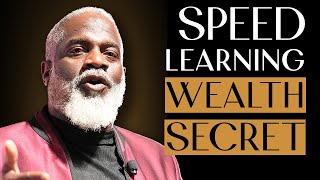
Myron Golden explains strategies to learn faster and retain knowledge longer. He emphasizes mindset (believing "there's nothing I can't learn"), criticizes standard schooling methods, and teaches practical techniques: name-memory methods, component-by-component learning with "mastery stacking," and a spaced-repetition system for memorizing Bible verses (using 3x5 cards and staged repetition). He also advocates intellectual humility—studying opposing views to strengthen understanding.
Chapters
Hey there, YouTube. Myron golden here. And today I'm going to talk to you about how to learn faster and retain it longer. One of the things I think people don't realize, I think if you're going to approach learning, the first thing you have to do, if you want to learn faster and retain it longer, one of the things you have to do is you have to realize first and foremost you have to start out from the perspective there's nothing I can't learn. Like if you don't start there, you've already fumbled on the five yard line. So if you want to learn a new language, if you want to learn how to play an instrument, if you want to learn three new languages and four new instruments, you have to start from the perspective I realize there is nothing that is bigger than me. There's nothing I'll face that's bigger than me. Why? I have a brain. It doesn't have a brain. Y' all have already heard the story about me and my dad working in the car. I'm not going to go there. But a guitar can't stop me from learning how to play it. A piano can't stop me from learning how to play it. And a language can't stop me from learning how to speak it. Right? So. And things people say I want to learn the Bible, but I don't have a good memory. It's not that you don't have a good memory, it's that you don't have a good system for recall. And so start with from the perspective that there's nothing I can't learn. Like I don't care. It doesn't matter if your teachers labeled you learning disabled. Thomas Edison's teacher sent him home in the second or first or second grade and said, your son has an addled mind, he cannot learn. Please do not send him back to school. Thomas Edison, right? And I know that the miseducational, misdirectional system, AKA government indoctrination camps, child prisons, schools, whatever you want to call them, I believe that a lot of times they will label the student, say the student has a learning disability, but really the system has a teaching disability. And while I'm, while I'm on the subject of learning, let me just go ahead and help some of you parents, help your children. Do not assist.
The school system in making your child feel stupid because they didn't do their job properly. Too many teachers. There are some great teachers out there, let me say that first and foremost. But there are far too many teachers who Attempt to use their students to validate their degree and their intellect.
And there are college professors who think they're great college professors because nobody can pass their test. Well, that's pretty idiotic. Okay, Anyway, I don't have any opinions about anything. If I did, I'd never voice them publicly. Okay? So just because your child can't learn the way the teacher teaches, don't let the teacher put that off on the child. Make the teacher do their job. So anyway, and by the way, while I'm on that subject, since we're talking about learning anyway, I remember when my children were in high school and they used to come home, they'd have like six hours of homework. What is this? And so the teacher, like, one day the principal called. Mr. Golden, your son didn't get his homework done last night again. So let me help you understand something, buddy. First and foremost, let's start here. It ain't homework, it's schoolwork. Y' all didn't finish teaching them at school. And I'm paying y', all, they ain't going to your school for free. I'm paying y' all do your job. And if you don't want me to send my son to school with a backpack full of dishes, he didn't get washed last night, stop sending all this junk to my house. And yes, I told them that.
Because I got tired of teachers trying to make. Make my children feel less than because they were not good teachers.
Because a good teacher is going to be obsessed with the child's learning, not obsessing over the child recognizing that they're intelligent. Anyway, that was a caveat. It was an aside. I turned down the wrong street.
Okay? But you can learn. And see, the reason I went into that whole rant is because there are adults right now who feel like they can't learn because of some label some ridiculous teacher put on them when they were a child. But all you have to do, I'm going to prove to you there's nothing you can't learn. When you were born, when you landed on this planet, you couldn't walk, you couldn't talk, you couldn't read, you couldn't write, you couldn't use a computer, you couldn't drive a car, you couldn't tell time. You didn't know your left from your right, up from down, mom from dad, you didn't know anything. So all you have to do to know and prove to yourself there's nothing you can't learn is look in the rear view mirror of your experience of Life, look at all the things you've learned, and you will know there's nothing you can't learn. So, like, you're 60 and you want to learn how to play the piano. Learn how to play piano. And I'm going to give you some things that you can do that will really help you learn faster and retain it longer. So first, foremost, first start from the perspective that you can learn, and then start with the understanding that you're not. You don't have a problem learning. You just have a problem with the system that you're using to retain the information that you've gained. So let's start with something simple. How many of you have heard somebody say, I'm just not good at remembering names. I'm just not good, or they say, I'm not good with names. Okay, well, the reason you're not good with names is because you don't have a system for being good with names. That's the only reason. Like, think about it. When you meet somebody new, the reason you have a hard time remembering their name is because when they're telling you their name, you're thinking about something else. Like, people ask me all the time, Martin, how do you remember so many people's names? How do you remember people's names? From first and foremost, how do you remember names? Okay, let's start with that. Let's start with how to remember names. Okay.
So how I remember names is the first thing I do when I meet somebody and they tell me their name, number one, I listen. Now, that sounds so simple, right? But what most people do when they meet somebody new, they are not intentional at all. And what happens? The other person tells you their name, and you're thinking about already, the next thing you want to say to them.
Am I telling the truth? Right. Okay, so the first thing you do, you want to remember somebody's name. I'm gonna teach you how to remember, like, how to learn other stuff, too. But, like, the first thing you want to do if you want to remember somebody's name is when they tell you their name, you listen. Second thing you want to do.
Repeat their name.
Right? Just repeat it. So if I meet Tom, I say, hey, my name is Myron. He says, my name's Tom. Hey, Tom, nice to meet you. Okay, the third thing I'm going to do is I'm going to ask them a question about their name.
I might ask them how to spell it. So how do you spell that? Now? I'm not going to ask him how to spell Tom.
I mean, If I do. But you could, because it could be like, if I'm signing books, I always ask people how to spell their name. I don't care if their name's Bob, because they might say, well, I'm from another country. My name is Bob. B, A, A, B. Right? I ain't doing that. I ain't. Right. Then I write. Then I write B, O, B in the book. And now I gotta give you another book. Okay? No. Okay. So, so, so, so. So ask them how to spell it. Here's another question. You could ask people about their name. So what does your name mean?
How many all. Ask people what their name means when you meet them. Like, I. I almost always ask people, what does your name mean? How do you spell it? You can ask, how do you spell it? What does your name mean? And then my favorite one. So are you named after somebody?
Because if they tell you who they're named after, they're gonna say, well, I was named after my aunt on my mom's side because my aunt on my mom's side saved like. Or like, if I'm dealing with Tom. I was named after my uncle on my dad's side because my. Because my dad. My uncle on my dad's side saved my dad's life when he was little. So. So I'm going to say Tom, who's named after his uncle on his dad's side because his dad. His dad, he wouldn't even be here if his uncle wouldn't have saved his dad's life. Now I've got that story in my mind. So every time I see Tom, I'm going to think about his uncle saving his dad's life, and then he's named after him. You see what? All I did was, it's easier to remember a story than it is to remember a word. I don't know why that is, but it is, right? So it's easy to remember a word. Okay? Now then, the fourth thing I do is.
I associate.
Their name with somebody.
That I already know. Like Shaquan, for instance. Okay? So Shaquan and I had a long conversation about his name last week, didn't we? He's like, oh, that's what he was doing, right? I said, so, Shaquan, how do you spell that? Did I ask you that? I asked him, how do you spell that? I said, so, what's your last name? He said, jones. I said, shut up. I mean, not. I didn't tell him shut up. But I said, that's amazing. I said, one of my brothers, Rob's, friends who's also a friend of mine. I played golf with him sometime. His name is Laquan Jones. Like his name Shaquan Jones. And our friend's name is Laquan Jones, right? And I said, but. I said, but we call Laquan. We call him Boogie. And so I call him Boogie Jones. He said, that's crazy. They used to call me Boogie.
Like, it's impossible for me to forget his name because we had this whole conversation. So now I asked him how to spell his name. I may have asked you if you're named after somebody. I don't think I did. I did ask you if you're named after somebody, but you said you weren't named after somebody. It was a combination or something.
And you didn't like. Yeah, your middle sin. Yeah. So we had this whole long. We had this whole long conversation about his name. And now I remember. Okay, so now I can't forget Shaquan's name. And I almost said to him this morning when he came in, what's up, Boogie? But I didn't say it. I thought it, though. I thought. I did think it. I'm just. I'm just. I'm being honest, right? Okay, so like, if you. How many of you. If you take one or two of these things every time you meet somebody.
Right, you're not going to be a person who says anymore, I'm not good with names. Here's what I found out. If you get better at remembering people's names, you will make more money.
You know why? Because when you remember somebody's name, they think, hopefully because it's true, that they matter to you.
How many are tracking? See, everybody. Everybody wants to be big so they can be a big shot. But if you can. If you can be big and be a little shot, you'll be way bigger.
How many on tracking, right? Like, don't have a need to be bigger than. Better than smarter than whatever, than more than anybody you ever meet. Let them celebrate the godlikeness in them.
Okay? So that's how you remember names. Now let's go on to something else. Something that's not as easy as names. How do I learn any topic? So.
I just thought of something. Karina, can you go grab my guitar out of my office?
Because I'm going to show you something amazing, not my guitar playing, okay? So don't get your hopes up. Okay?
So. So when you're learning. So how do. How do I learn a new concept? That new concept could be.
Could be.
Of learning it. Okay? So can you hand me that guitar? So you're excited about the benefits of learning now? When I was a little kid, when I was a little kid, our favorite group was the Jackson 5, right? This is, this is long before Michael Jackson became an individual and Jermaine became an individual. There was the Jackson 5. It was Jackie, Jermaine, Tito, Randy and Michael. Okay? The Jackson five. These five brothers from Gary, Indiana. Like, I've got six brothers, right? And so we wanted to be like the Jackson five. I'm Tito.
Right? I'm Tito. I love the guitar. This is the first time I ever saw one. I love the guitar. And then I'd go to school and, you know, we learned, we learned how to go. We learned how to do this.
Right? What is that? That's like the beginning of there is Superstitious, right? Okay. So. So I learned how to do stuff like that. But I had guitars from the time I was probably in the fourth grade all the way up to adult. Couldn't play a song, but I could do it. I could go.
Or I could do the beginning. I could do beginnings or endings or little riffs from songs. But I never learned how to play chords because in.
Every time I saw somebody play chords, I'm like, how can people move their fingers that fast? It doesn't make any sense. Like, and, and I'm right handed. And so now I got this hand, this hand has to do some stuff. So if I'm gonna play, so if I'm gonna play a song, if I'm gonna play a song, I gotta do chords. Now I gotta do chords. And I'm like, but, but you can't move your fingers. Like.
You can't do that. And then I took a guitar lesson. Guess what I did? Now this is so powerful. I was so excited about learning how to play the guitar. I'm going to tell you why too. So my wife started watching country music videos back in the 90s and I started listening to these words. I'm like, these words are stories. I love these stories in these songs. And so.
And so I would watch some of the videos with her. I say, that's so cool. I went out and bought me a guitar, got me a guitar teacher. I'm gonna learn how to play a song, right? And so how do you learn how. So first you have to be excited about it, right? So I was excited about the benefits of learning because if I learned this now I can play this song, right? And so, and so.
I learned how to play. Learn how to play a song. Sorry.
Right. Okay, so now that wasn't the point. Here's the point. How did I learn how to do that? I learned one chord at a time.
So that's the first thing. After you decide, like you want to learn something, you get real excited about learning it. After you get real excited about learning it, the next thing you want to do is you want to learn.
One component at a time. Learn one component at a time about whatever it is language. You want to learn a new language, Learn one word at a time.
Learn how to read the word, learn how to spell the word, learn how to say the word, or learn one sentence at a time. I remember my very first Hebrew sentence. Genesis 1:1 B'reisheet Bara Elohim et hashemyim va' et aheret. Why? Because it was important to me. I got excited about it. So learn one component at a time. The second thing you want to do, master.
That component.
How many of you can remember one thing? Right? We can remember one thing, Right? How many y' all can remember one thing? Okay. Right. So you master one thing.
And after you master one thing.
Learn another thing.
Do you understand? This is how we all learn how to talk. This is how we learn how to walk. This is how we learn how to ride a bike. Right? I don't know about you, but when I learned how to ride a bike, I learned with training wheels. Do they still have training wheels? Okay, so like, I thought there was maybe an app or something. Now I didn't. Right? So learn another.
Component. Right? Learn another component. Okay, then what I do, this is where it starts to get juicy. So now I'm going to master.
The second component. I'm gonna master the second component and then master the second component. And then this is where. This is where stuff starts to get easy. So what is mastery, by the way? So when I say master the second component, here's what I mean. Mean you do it so many times that you can't get it wrong.
Now you have the ability to execute this thing that felt impossible to you. You have the ability to execute it without the use of conscious resources.
You say that's going to take a long time. Well, you're going to be here anyway.
Exactly. Right? So master the second component and then stack.
Your masteries.
I'm going to tell you something.
Inch by inch. It's a sense yard by yard. It's very hard. When I learned how to play guitar, I learned one chord. Instead of changing chords.
I would just bounce my lip finger.
I would just bounce my finger on that same chord.
Now, when I learned a new chord, it was easy for me to bounce back to that other chord.
Does that make, is what I'm saying, making sense? And so what happens. What happens is people, like, they try to do all of it at once, become overwhelmed and say it's too hard. Well, it's not too hard. The way you're doing it is too hard. The thing itself is never too hard. So that's. That's how we learn, like, new concept. I won't say that's how we learn. That's how I learn new concepts. Does that make sense? So you learn one component at a time. Learn one component at a time. Master that component. Learn another component, Master that component. Stack masteries.
So it's called mastery stacking. If you don't. If you're not doing mastery stacking, like, if you're not learning the thing, you're just learning about the thing. This is why people feel like they can't learn. Because the miseducational, misdirectional system teaches us about a lot of stuff.
And it teaches. One of the things that teaches us, unfortunately, is none of the stuff we're learning about is that important. Because as soon as the bell rings, we stop learning about that and going to learn about something else. It's literally programming us to be confused.
It's not an accident. Okay? So what we want to do, what happens is we learn a little bit about something and then we learn a little bit about the next thing, and we learn a little bit about the next thing. We learn a little. So we have a lot of lacks of clarity instead of mastery. We have a lack of clarity on this and a lack of clarity on this, a lack of clarity on this and a lack of clarity on this. And so we stack lacks of clarity on top of each other.
And now we're using all of our conscious resources for each one of those components. And we feel mentally and physically drained attempting to learn a new thing because of the way we're learning it.
Does that make sense? And so all we have to do, literally, like.
Fast is. I mean, slow is the new fast.
Think about it.
Does that make sense? And so all we have to do literally, like.
Times, the fastest path to learning is slow.
Because time's gonna go by anyway. And when we understand that and wrap our minds around that, then and only then can we learn. We learn anything. Now let's talk about Bible verses. Because some people wonder, like Myron, hey, memorize Bible verses. So I'm going to teach you the system that my brothers and I use when we were teenagers to memorize hundreds and hundreds and hundreds and hundreds and hundreds. And I'm not exaggerating. Like, there was a point where I was memorizing seven verses a day.
Right? I know it sounds crazy, but it's not. It's not hard. But watch this. If you memorize one verse a day for a year, at the end of a year, you have memorized 365 verses. If you do that for 10 years, that's 3650 verses. 20 years, it's over 7230. 7230. That's a lot of verses of scripture in your mind. What does the scripture tell us about the scripture? We should hide the word of God in our heart, right? That we don't sin against him. Okay, so cool. So what we did, we would take three by five cards.
We would write the reference at the top.
Reference at the top. Let's just say Genesis 1:1.
And then in the beginning, God created the heavens and the earth. Boom. That's Genesis 1:1, right? So that's the front of the card. I'm gonna make this a little smaller. Then on the back of the card, we'd write just Genesis 1. I changed the color accidentally. Genesis 1 1. Okay, so I would read this, move this up one. I changed the color accidentally. Genesis 1 1. Okay? So I would read this, move this up.
Seven times.
A day out loud for.
Seven days.
I would do that the first week. So this is week seven times.
A day one. So if I'm going to do a verse a day, I have seven cards. I read all seven of them out loud seven times a day for a week, right? What do I do next? Well, the next week I take these verses. They go to week, These go to week two, right? So week two.
I read these out loud three times a day. So week two, three times.
Then week two, three, I do it two times. And then week four, I read them one time out loud for.
Seven days.
I would do that the first week. So this is week nine. After that, I don't have to look at them anymore. They're in. They're etched, right? So but week two, I start some new verses. So now I put another verse there. Week two, Genesis 1:1. In the beginning was the Word. The Word was God. The Word was with God. And same was like. So. So I do another card. Seven cards for week two.
Do you realize the greatest benefit of this is not the fact that you just know a bunch of Verses you can spout off. You know what the greatest part about it is? The way we understand scripture is by comparing spiritual things. One, so if I'm going to do a verse a day, I have seven cards, I read all seven of them out loud seven times a day for a week, right? What do I do next? Well, the next week I take these verses. They go to week, these go to week two, right? So week two.
Spiritual things, comparing verse to verse, verse to verse, verse to verse. When you have a whole bunch of scripture in your head, you'll be reading something in Ezekiel and it will remind you of something in Daniel and that will remind you of something in Revelation. And so the one of the reasons people have a hard time understanding the Bible, because they don't have enough of it internalized to have an internal cross reference when they're. I read these out loud three times a day. So week two, three times.
Then week three, I do it two times and then week four, I read them one reading and studying. So like that's how you can learn any subject. When I decided I wanted to learn Hebrew, this is what I was going to tell you and I'm going to. So when I decided I wanted to learn Hebrew, I stumbled across this video on YouTube and it was by Rabbi Mordecai Kraft and he's on after that. I don't have to look at them anymore. They're in, they're etched, right? So but week two, the Orthodox Jewish rabbi and he did a video called Hebrew Language. The DNA of I start some new verses. So now I put another verse on there. Week two, Genesis one, one. In the beginning was the word, the word was God, creation. I watched that video and I thought to myself, I have been saved for 30 something years.
How did I go to Bible college? And I never heard any of this stuff in my life. I feel like I don't even know the Bible. I felt like I was in kindergarten. I'm like, what? So the next day I watched it again and I was like, what? I gotta learn Hebrew. The word was with God. And same was like, so. So I do another card. Seven cards for week two.
Do you realize the greatest benefit of this is not the fact that you just know like so, so and then I just started going, finding all the YouTube bunch of verses you can spout off. You know what the greatest part about it is? The way we understand scripture is by comparing spiritual things videos I could find and learn as much as I could on YouTube and, and then I bought a biblical Hebrew course and A modern Hebrew course from Hebrew University in Israel and started studying online like I Spiritual things Comparing verse to verse, verse to verse, verse to verse. When you have a whole bunch of scripture in your head, you'll be read, you can learn. What am I saying? I'm saying you can learn anything. And by the way, the faster you learn and the longer you retain it, the more, the stronger your mind becomes. Thinking something in Ezekiel and it will remind you of something in Daniel and that will remind you of something. And reading and learning is good exercise for the mind. The last thing I'm going to say about elation and so the one of the reasons people have a hard time, this whole subject is.
Like we need to exercise minds. And one of the best ways we can exercise our mind, especially while we're learning, is by not being afraid to look at the opposite side of things we believe.
I like listening to people I disagree with understanding the Bible because they don't have enough of it internalized to have an internal cross reference when they're reading and studying. So like that's how you can learn any subject. Because if they're wrong, I want to know why. I mean, if they're wrong, I want to know why I'm right and they're wrong. And if they're right, I want to know so I can change. So many people are so in love with their views that they can't learn because the biggest hindrance to learning is thinking that you already know. I decided I wanted to learn Hebrew. This is what I was going to tell you and I'm going to. So when I decided I want to learn Hebrew, I thank you for watching, thank you for sharing, thank you for subscribing, thank you for coming, commenting, thank you for doing all the YouTubey stuff YouTubey people do. And in the meantime, in between time, we'll see you on the next video. Bye for now. Stumbled across this video on YouTube and it was by Rabbi Mordecai Kraft and he's a.
More from Clegg





AI Won't Tell You the Full Truth | Arthur Brooks + Simon Sinek | A Bit of Optimism Podcast



How To Make the Best Decision | Arthur Brooks and Simon Sinek | A Bit of Optimism


