The Powerful Formula to Answer the Most Common Interview Questions (Story Toolbox)
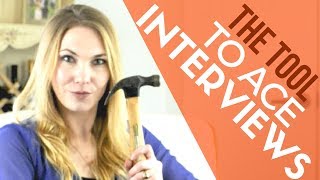
Madeline Mann shows how to answer interview questions with prepared stories instead of generic answers. Stories stick 22 times better than facts, and one good anecdote can show multiple strengths. Build a toolbox of at least four stories: two about solving problems, one about working with people, one about failing and learning.
Chapters
Hey, everyone. This is Self made Millennial. I'm Madeline Mann. Today, I'm going to tell you the best way to answer questions in interviews. I am going to show you examples of before and after using this technique and the steps you can take to apply it to your interviews today. Seriously, if you were to only take one of my interview tips, then it would be this one. And the secret is this. This isn't any old toolbox. This is a story toolbox. And I'm gonna teach you about how to put together your own metaphorical story toolbox so that you can nail your interviews. If you only get one thing from this video, it's this. People get jobs from telling epic stories. Let me hammer this into your head. People get jobs from telling epic stories. What most people do when they're less experienced interviewees is that when they're asked a question like, what's your greatest strength? Or what's your leadership style? They begin to describe themselves. They say that they're a hard worker, a team player, that they're highly skilled. They toss this emotional word salad of what it would feel like to work together, but none of it gets down to, but what did you actually do? According to American psychologist Jerome Bruner, stories are up to 22 times more memorable than facts alone. What that tells me is that if you are not telling stories as often as humanly possible in your interviews, you risk becoming utterly forgotten. I mean, just think about it. When you were in high school and you had history teachers, did you like the one that made you memorize all the presidents in order? Or did you like the one that told you all the war stories and told you about how one president got stuck in the bathtub? Now, I don't exactly remember what number President Taft was, but to this day, I remember the bathtub story. So the actual advice here is to go into your interviews with, with this toolbox of stories that you're prepared to tell. And these stories you'll find can fit into a lot of different questions that they ask. Trust me. Let me first share with you a few examples so that you can see the power of the story toolbox. So I pulled a list of the top 20 most common interview questions from TheBalance.com, i'll link that article in the description. And looking at these questions, some of them ask for you to tell a story, but most of them don't. And, and what I want you to do is to tell stories for as many of them as possible. So number five is what major challenges and problems did you face? How did you handle them? So they're indirectly asking for a story, but not explicitly. And most people would not tell a story in this case. Here's how most people respond. You know, a big challenge that I would often face is clients constantly changing what they wanted in the project. And when I would notice that was happening, I would pause the project, have a meeting with them, walk them through the timeline and the deliverables, and ensure that there was alignment. Once I ensured that we would progress. Okay, nice snore. It's not a story. Instead, pick a story from your toolbox that exemplifies that challenge, such as, here it is. Toughest client. I would say the toughest client that was the biggest challenge for me was this person who kept changing priorities. And so I started looking at the relationship and I noticed that they didn't really like communicating over email. They weren't great at it. So I started setting up phone calls three times a week and our communication dramatically improved. Then I also realized that they didn't exactly know what they wanted until they saw something. And so what I started doing is I started sending email updates every day, which is very unusual. But then they were able to react to it, and we were able to make quick iterative changes so that we didn't produce something, put a ton of work, and then in the end, they realized it wasn't what they wanted. The client appreciated this so much. They recognized I was going above and beyond and they said that I was the best communicator they had ever worked with. And now, just on their referrals alone, I have become the top performer in my entire team. Do you see what happened there? This person was able to convey that they're a problem solver, that they're emotionally intelligent, a great communicator, and a top performer in that single story. We got vague traces of that in the previous answer. Number six on the list is, what is your greatest strength? Now you can say an adjective here like, my greatest strength is creative problem solving. Great. Now back it up with a story. Dig into your toolbox to find a time. You saved the day. Alright, let's do birthday save. I was a waiter at a Japanese restaurant and a family came in and the father pulled me aside and said, hey, could you bring out a slice of cake for my daughter? It's her birthday. Now, we do not do birthdays. We don't have any cake or anything. But I decided to get creative and I went into the kitchen and asked them to help put together kind of like A sushi birthday cake slice while I ran across the street to go buy some candles. We ended up bringing it to their table. They were thrilled. They were so impressed. They ended up leaving a huge tip and a wonderful review on Yelp. My manager was so happy with me. Now the interviewer is going to be so much more likely to remember you. They're going to be like, oh, yeah, the sushi cake girl. I liked her. Next on the list is. What is your greatest weakness? Duh. With this one, I would say be authentic. Tell a story where you goofed, you messed up, and you somehow learned from it and fixed the mistake. Number eight, how do you handle stress and pressure? Tell a story of a high stress situation. Guys, come on. Number 10, what was the biggest accomplishment in this position? All right. They are asking you to shine their lobbing you a softball to hit out of the park. And you must take this opportunity seriously. And most people squander it away. The mistake people make is that they will state the accomplishment, but not make it into an epic tale. Here's the example of what not to do. My biggest accomplishment would have to be the product launch. We were working so hard for eight months, and there's so many iterations, and then when it launched, it hit number one in the app store, and it was just such a huge moment for me. Yeah. So that was not a story. That was just stating several facts in a row. Tell us a tale. Take two. My greatest accomplishment in that role would have to be the product launch. I mean, if we flashback. Eight months ago, I had one conference room just completely covered in documentation. I was doing in depth market research. And what I realized is that we needed to take a new direction. And. And when I proposed it to the team, I got a ton of pushback. So in my off time, I tinkered and I made a prototype to make it real for them and. Da, da, da. You see where I'm going with this? You know, make it into a store. Make us feel the struggle that you put in. And you're describing exactly what you did. Because when you say something broad like a product launch or something, we're not sure which pieces you contributed and which pieces other people. Okay, so now it's your turn to make your own story toolbox. I'll show you exactly how. This is not a drill. Ideally, you're writing these stories down as they happen. Right. In a journal or in a Word document. But that's okay. We can still do it in hindsight as well, including your toolbox. At least two stories where you are the problem solving hero. Remember my story earlier that I told about someone at a Japanese restaurant making a little birthday cake? Now that is not them making millions of dollars for a company. But. But even small acts like that can be very impressive in an interview setting. So be creative. Next, include at least one story about interpersonal relationships such as communication on a team, working with a tough coworker or boss, and so on. And finally, make sure your toolbox has at least one story where you messed up, where you then fix the problem and learn from it. So you walk into an interview, your brain's all jumbled up, they ask you a question and you have all these stories up there. It can be a little tough. And so what I do is, is I walk into interviews with what I call my Banff Binder, which is a literal physical binder of lots of different accomplishments. I've had a lot of different work situations and I tell stories around the pages in the binder and it helps me to queue up my stories and make sure that I'm hitting all the right notes. I made an entire video on how to craft a BAMF binder and I have gotten buckets of emails of people saying that this video really helped them stand out in their interview. So I so I'm going to link that video in this description and so make sure to check that out. So make sure you have your story toolbox ready to rumble for your next interview. It'll help you measure up to the competition and if you don't do this, you might be screwed. But I trust that you will because you are level headed. If you like this video, found it helpful, then hit a like on it. Subscribe to this channel. Share the video. You guys are the best. It really means a lot when you do those things. See you next time. It.
More from Clegg





AI Won't Tell You the Full Truth | Arthur Brooks + Simon Sinek | A Bit of Optimism Podcast



How To Make the Best Decision | Arthur Brooks and Simon Sinek | A Bit of Optimism


