The War On The Young with professor Scott Galloway | A Bit of Optimism Podcast
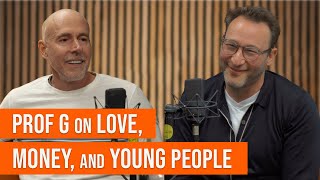
Scott Galloway argues economic policy has systematically favored older generations and the wealthy, leaving young people with unaffordable housing, crushing student debt, and fewer opportunities. He and Simon Sinek discuss fixes: progressive taxation, a $25 minimum wage, housing-permit reform, and expanding public universities and vocational training.
Questions this video answers
About 17%.
About 8% (average).
About 40% (he says it is 'about to go over 50%').
$30 billion.
About $140 billion per year (he describes it as a $140 billion annual cost).
Chapters
To be rich in America is to be loved, full stop. It's a violent, rapacious place. If you don't have money, it's a loving, generous place. If you do have money, once you hit your number, there's no reason to be a hoarder, because this is what makes you happy. Spend it. I spent so much fucking money, and it's amazing. And then you know what I do? I give it away. And so what I would say to anyone else who has a lot of money, why do you need to be a billionaire? It's not going to get you anything. Here's what you do. You do amazing things with friends and family. You take care of your parents. You fly your friends to Aspen to hang out with you. And then anything above that, you give it away. And there's so many amazing causes and people and overpay. The people who work with you throw money around like you're a fucking gangster in the 50s, diagnosed with ass cancer. Just live it up. And you know what? You're gonna love life. Don't do it because you're noble. Don't do it because you're praying to some God or whatever it is. I can tell you firsthand, you, it feels amazing.
Thanks for joining and congratulations on the TED Talk, the new book. Lots of busy. When you got invited to do the TED Talk, did they ask you to do a particular subject or.
Did you say to them, this is what I want to talk about?
No, I had lunch with Chris Anderson, who I've known for 20, 30 years in London, and he said, we're thinking about having you at TED as if I, you know, been crowned. He didn't commit to giving me a speaking site. He said, we're thinking about it. And I said, well, first off, thanks. That's exciting. And he said, what's your vision for a talk? He said, if you were to do a talk, what would it be? He didn't even offer me the slot yet. And I said, I think that the thing that people aren't talking enough about is I believe that almost every economic policy is nothing but a thinly veiled transfer of wealth from the entrance to the incumbents, and more loosely, from young to old. And he said, okay, so how would you brand it? I'm like, well, I've been thinking about this. I think there's a war on the young. He said, that's the talk, and we want to have you. And I wasn't sold myself because Vancouver from London is a real haul and I'm trying to be more Someone said, I love the saying, be generous with everything except your time. I'm pretty cheap with my time now. And anyway, so I did it. And then I thought, this is something I feel passionate about. So I rallied the team and I get a lot of nice feedback around. Wow, it's so much data.
Greatness is in the agency of others. I probably spent eight hours on that talk, but I bet there was 800 hours that went into it. And so my team immediately started pulling together Data and it's 110 slides.
It was chilling, I would say is a good word. How stark your conclusions were, your insights were. I think it really does point to a brokenness of capitalism where. And you know better than I do about this stuff. But my understanding is that the original concept of the stock market was that the average working person could share in the wealth of a nation.
Yeah.
And what's happened in the past 30, 40 years is that the middle class is leaving the stock market and it's become the playground, literally, of the top 1% or maybe slightly bigger. At least. At least it's that small percentage that are benefiting most at the expense. And then we see. And you know, I rail against this kind of stuff, you know, where. Where companies announce mass layoffs because they missed their projections. They're profitable, just not as profitable as they promised the Street. And so you get to lose your job. And this all benefits the stock market. You know, when companies announce layoffs, the price of their equity goes up. Announced R and D, your equity goes down. To call it the war in the young.
I think speaks to this.
Very.
Large and growing populist movement that we're seeing both in the United States and around the world.
Yeah. So one of my benefits, the stock market.
When companies announce layoffs, the price of their equity goes up. Announce R and D, your equity goes down. To call it the war in the young.
I think speaks to this.
Intellectual role models is Peter Drucker, the economist. And he said that the purpose of an economy is to create a middle class. And I think the greatest innovation in.
History, the large and growing populist movement that we're seeing both in the United States and around the world.
Yeah. So one of my is not the iPhone or the semiconductor or the printing press. I think it's the middle class, this idea that the largest segment of your population gets to register the prosperity of an economy and they fight your wars, they pay the majority of your taxes, they're responsible for the majority of the framework for real future innovations. And they create sort of a neoliberal society that decides, you know, we'd like to share some of our privilege and start affording rights to other people. I think that's the greatest innovation in history. But it's not. What the incumbents, and sometimes the right, the far right will tell you is that it's a natural occurring organism. It's not capitalism that's unfettered, results in a small group of very talented people who aggregate incredible capital and then have access to cheaper capital and can kind of run away with the game show. And then they weaponize government. I mean, this is what Central America is. A group of talented people figure out a way to license Unilever or ab inbed brands. They get more capital, they support the next president, they get regulatory capture, and they end up with so much of the economy that the bottom 99% says the easiest way for us to double our wealth is to kill these people and start over again. And then another group of people emerges as the 1%. If capitalism doesn't have a pay it forward reinvestment in the middle class, it does collapse on itself. It's also a bit of a zeitgeist thing. And that is. I've been watching a lot of the D Day. I'm obsessed with World War II, the D Day memorials. And I was wondering myself, like if I were called. I like to think if I were called I would have gone. But I also believe that if I'm really honest with myself, if my sons were called, I think I would use my influence and wealth to get them out of it. And I think Americans have over the last 50 years slowly but surely. And I don't know what, I don't know what are the underlying dynamics, but I think we've become inherently a little bit more focused on me. And we see so many people. This is kind of your ballywick. When you have a candidate for president who's just so nakedly self serving and people find that admirable. When you have tech billionaires that seem pretty focused on getting from 1 billion to 100 billion, even if it involves depressing teenage girls and they win and we love them, then it creates this incentive system in the US where people decide it really is about me. It's no longer about reinvesting in the middle class. And as a result you have incumbents. 25 wealthiest people in America pay an average tax rate of 8%. And we have a series of elected officials who are in a system where they need to get money to be reelected. The people with money are the incumbents. And what do you know, it really is about me. It's no longer about reinvesting in the, in the middle class. And as a result you have incumbents. 25 wealthiest people in America pay an average tax rate of 8%. And we have a series of elected officials who are in a system where they need to get money to be reelected. The people with money are the incumbents. And what do you know, old people keep voting in older people who keep voting themselves more money. And now we're at 40% of all government spending is on people over the age of 65. It's about old people keep voting in older people who keep voting themselves more money. And now we're at 40% of all government spending is on people over the age of 65. It's about to go over 50%, meaning we're not going to be able to make the forward leaning investments in technology and education that quite frankly pay off and bring more people into the middle class and then go over 50%, meaning we're not going to be able to make the forward leaning investments in technology and education that quite frankly pay off and bring more people in the middle class.
And then the older people who tend to be the executives, they're the ones in charge just by virtue of time and age. Then they complain about the lack of loyalty from the young employees, failing to recognize that they're the ones the older people who tend to be the executives, they're the ones in charge just by virtue of time and age. Then they complain about the lack of loyalty from the young employees, failing to recognize that they're the ones that set the rules. They demand loyalty, they demand you kiss the ring, but they offer nothing in return. And then they're surprised at this young generation that is doubling down on the rule and set the rules. They demand loyalty, they demand you kiss the ring, but they offer nothing in return. And then they're surprised at this young generation that is doubling down on the rules that the older generation set, which is me before we, you know, I think you're 100% right, which is especially United States over indexed on rugged individualism. You know, the Marlboro man works too well. And we heroized CEOs, CEOs became heroes rather than the teams. And I think when we talk about, you know, would you go to war or would you allow your kids to go to war? The times that we live in are the context that the older generation set, which is me before we, you know, I think you're 100% right. Which is especially United States over indexed on rugged individualism. You know, the Marlborough man worst. And you're saying I would, you know, I would use my wealth and influence to get them out of it. But if it was 1941, I'm not so sure that would be true. You know, at least in the United States, you know, there were more suicides from young men who didn't get called than ones who did.
That's interesting.
And we heroized CEOs, CEOs became heroes rather than the teams. And I think when we talk about, you know, would you go to war or would you allow your kids to go to war? The times that we live in are the context. And you're saying I would, you know, I would use my wealth and influence to get them out of it. But if it was 1941, I'm not so sure that would be true. Which is an astonishing thing. And if you think about the collective desire to help, right. So people who could went to war in some way, shape or form, they put on a uniform to support in some way, shape or form. Those who didn't fight bought war bonds to support the effort. And those who couldn't afford war bonds planted war gardens. At least in the United States, you know, there were more suicides from young men who didn't. They just did something, even if it was symbolic to demonstrate that we are one get called than ones who did.
That's interesting. I think one of the. So the capitalism collapsing on itself is a bit of a far left narrative. Let me give some nod to the far right. I think that the fact that America.
Which is an astonishing thing and if you think about the collective desire to help, right. So people who could went to war in some way, shape or form, they put on a uniform to support in some way, shape or form.
Americans haven't been attacked on our homeland other than 9, 11. We're energy independent, we're food independent, friendly Canada of the north, harmless Mexico to the south. I don't think a lot of people in America realize there's a large swath of people globally who the moment they feel like they can take with force our Netflix and our Nespresso away from us, we'll do it in a second.
And those who didn't fight bought war bonds to support the effort. And those who couldn't afford war bonds planted war gardens. They just did something. Even if it was symbolic to demonstrate that we are one.
I think one of the. So the capitalism collapsing on us and that I don't think they really Understand or nod to the amount of sacrifice that was made by previous generations to and also very brave young men and women who are in the uniform right now and some of our people who work in government and our security apparatus. I don't think Americans have the same level of fidelity or appreciation for just how hard it is, how much energy, how much money it takes off as a bit of a far left narrative. Let me give some nod to the far right. I think that the fact that America sacrifice it takes to get to the levels of freedom and prosperity that America enjoys. I feel like America has become entitled my generation on down because every time we've been asked to sacrifice while we've been alive, it's been for a failed war. Iraq was stupid going into Southeast Asia supporting the French colonization or recolonization after World War Americans haven't been attacked on our homeland other than 9, 11. We're energy independent, we're food independent, friendly. Canada to the north, harmless Mexico to the south. I don't know too ended up being a disaster. So I think people just take for granted that oh, we're special. All of this prosperity doesn't require sacrifice and it requires a ruthless devotion to uber capitalism and doing what you can to get to a certain point. Now to your point. I think a lot of people in America realize there's a large swath of people globally who the moment they feel like they can take with force our Netflix and our Nespresso away from us, we'll do it in a second. And the CEO's believing that young people are entitled. It's just such bullshit. When you look at the level of compensation of CEOs relative to young people, it's gone from 30 to 3. And that I don't think they really understand or nod to the amount of sacrifice that was made.300. Oh wait, let me get this, David Zaslav. You cut the stock in half, you're firing people like crazy, but you walk away with a quarter of a billion dollars and oh, you're going to make sure that you give enough money to senators like Kyrsten Sinema. You give her $2 million and she makes sure as the swing vote that the tax credit for carried interest or private equity funds maintain a $12 billion tax cut. The most disappointed by previous generations. Also very brave young men and women who are in the uniform right now and some of our people who work in government and our security apparatus. I don't think Americans have the same level of fidelity or appreciation for just how hard it is, how much energy how much money it takes. The funny thing about our government right now, it's not that they're whores, they've been whores for a long time. It's what incredibly cheap whores they are. And the greatest return on investment in our economy is for an organization, a special interest group, a lobbying group for the rich or for corporations to go spread a little bit of money around and find out oh, that we need to protect the much sacrifice it takes to get to the levels of freedom and prosperity that America enjoys. I feel like America has become entitled my generation on down the shoe market in case there's a war and we need boots or we need this tax cut for people in the real estate industry. And it does feel a little bit like it's collapsing on itself that if we don't as citizens and elect people who are a little bit more long term thinking. Because every time we've been asked to sacrifice while we've been alive, it's been for a failed war. Iraq was stupid. Going into Southeast Asia supporting the French colonization or recolonization after World War and recognized there's just no fucking reason why people who make their money selling stocks too ended up being a disaster. So I think people just take for granted that oh, we're special. All of this prosperity doesn't require sacrifice and it requires a ruthless devotion to uber capitalism and doing what you can to get to a certain point. Now, to your point should have a lower tax rate than people sweeping up the floor at the New York Stock Exchange. When did capital become the capital that capital makes become more noble than the capital that sweat makes? Shouldn't it be flipped? Even Ronald Reagan said this is bullshit and he had one tax rate. So effectively every big tax thing that goes through every big expenditure, name it, is really about the CEOs believing that young people are entitled. It's just such bullshit. When you look at the level of compensation of CEOs relative to young people, it's gone from 30 to 300. Oh wait, let me get this, David Zaslav. You cut the stock in half. You're firing a transfer of wealth. $30 billion child tax credit. Who does that benefit? Not only the children, but young mothers.
Right?
That gets stripped out of the infrastructure bill. We can't do it. It's too expensive. $30 billion. We need to be responsible. But the $140 billion cost of living adjustment in Social Security. Each year another 140 billion flies right through. No discussion of means testing. You and I should never have Social Security. People like Crazy. But you walk away with a quarter of a billion dollars and oh, you're going to make sure that you give enough money to senators like Kyrsten Sinema. You give her $2 million and she makes sure as the swing vote that the tax credit for carried interest or private equity funds maintain a $12 billion tax cut. The most disappointing. No way. Let's call it senior security. It's not Social Security and it's called a tax. It's not a pension fund. All this bullshit. Well, I paid into it. It's a tax. It's meant to be redistributed to people who need it. Capital gains tax deduction. Mortgage tax deduction. Who owns homes? People our age. Who rents? The younger people. Here it is everything. Funny thing about our government right now. It's not that they're whores, they've been whores for a long time. It's what incredibly cheap whores they are. And the greatest return on investment in our economy is for an organization. A special interest we do is how do we buttress the wealth of incumbents and old people and make it more expensive for young people. Their housing's gone up 4x right. Education's gone up 2x on an inflation adjusted basis. Their income's gone down. So they make less money. Everything they need to get ahead or start saving or form a family's gotten more expensive. And yet they look left and right and up and they see people making tons of money into this group, a lobbying group for the rich or for corporations to go spread a little bit of money around and find out, oh, that we need to protect the shoe market in case there's a war and we need boots or we need this tax cut for people put on 10 times a day on their phone. People are vomiting their wealth a lot of times in the real estate industry and it does feel a little bit like it's collapsing on itself. That if we don't as citizens and as faux wealth and what do you know, they feel shitty. What a shocker.
So how do we fix it? Short of revolution. Short of revolution.
Because I mean you and I, you know better than most that the way.
Elect people who are a little bit more long term thinking and recognize there's just no fucking reason why people who make their money selling stocks.
Revolutions happen.
Yeah.
Is when the delta between the haves and the have nots gets too wide.
100% should have a lower tax rate than people sweeping up the floor at.
The New York short of revolution. And some may argue that's already Begun.
How do we fix it?
Look, the good news about income inequality is when it gets to a certain level, it always self corrects. The bad news is the means of self correction are usually war, famine or revolution. I would argue that a lot of the stock exchange. When did capital become the capital that capital makes become more noble than the capital that sweatt makes? Shouldn't it be social uprising in the US is more what I call a series of mini revolutions. I'd be flipped. Even Ronald Reagan said this is bullshit and he had one tax rate. I don't think what's going on on campuses in the United States is about the Middle East. I think it's about America.
It's anti establishment.
So effectively every big tax thing that goes through, every big expenditure, to name it, is really about this level of income inequality. And dissatisfaction is incendiary poured on every small fire. It turns a into a nuclear mushroom cloud. There's just rage everywhere. Now what do we do? I think the good news is we don't even need to come up with creative solutions. We just need a transfer of wealth. $30 billion child tax credit. Who does that benefit? Not only the children, but young mothers. Right? That gets stripped out of the infrastructure bill. We can't do it. It's too expensive. $30 billion to go back to the future. We need a much more progressive tax rate. And I'm not talking about the super owners. If you make a lot of money in current income and you live in a blue state, you're probably paying 50, 52%. The super earners are actually paying too much. But once you make the jump to lightspeed and you say get lucky like me and you sell a company for nine figures and you can take all of that money and put into income dollars. We need to be responsible. But the $140 billion cost of living adjustment in Social Security. Each year another 140 million flies right through. No discussion of means testing. You and I should never have Social Security. No way. Let's call it senior security. Earning assets that appreciate in value. You become a super owner and your tax rate plummets. And I'm very transparent about my wealth. I think that this gestalt or this vibe that you're not supposed to talk about money is nothing but a thinly veiled attempt to keep poor people poor. Because rich people talk about money all the time. The guy who runs the company, and it's almost always the guy knows what everybody. It's not Social Security and it's called a tax. It's not A pension fund, all this bullshit. Well, I paid into it. It's a tax. It's meant to be redistributed to people who need it. Capital gains tax deduction, mortgage tax deduction. Money makes so asymmetry of information benefits the incumbent. So what we have is a series of policies that again don't make any sense for young people. So more progressive tax structure on the super owners. Eliminate who owns homes, people our age, who rents, the younger people. Here it is everything. Capital gains deduction, everybody pays one rate. Have an alternative minimum tax for corporations. What we do is how do we buttress the wealth of incumbents and old people and make it more expensive for young people. Their housing's gone up 4x, right? Education's gone up 2x. And very wealthy people. Right now corporations are paying the lowest tax rate they've paid since 1939. It used to be 2 1/2% of GDP, now it's 1%. There are five companies, Nike, FedEx, a bunch of them that paid. Amazon, that paid no taxes. The tax code has gone from 400 pages to 4,000. Right. And all of it is a bunch of loopholes meant to give money back on an inflation adjusted basis. Their income's gone down, so they make less money. Everything they need to get ahead or start saving or form a family's gotten more expensive. And yet they look left and right and up and they see people making tons of money. And 210 times a day on their phone. People are vomiting their wealth a lot of times to big organizations. Apple's the most profitable company in history. They incorporate in Ireland such that they can increase their taxes or increase their pre tax revenue in a low tax domain and decrease their revenue in a high tax domain. That is nothing but sheer tax avoidance. We need alternative minimum tax on the super wealthy, incorporations and UFO wealth and what do you know, they feel shitty. What a shocker. You could actually lower taxes across the super earners and youth.
So how do we fix it short of revolution.
So redo our tax policy to be more quote unquote, just equitable. Restore a progressive tax rate. Two more opportunities for young people. Specifically broader freshman class College is still the best on ramp into the middle or upper income classes. Harvard has grown its endowment short of revolution.
Because I mean you and I, you know better than most that the way revolutions happen is when the delta between the haves and the have nots gets too wide. 100% short of revolution. And some may argue that's already begun.
Yeah, 40 fold, 4,000% but it's increased its freshman class size 4%. It lets in about the same number of people that a good Starbucks does. If you aren't growing your freshman class size faster than population growth, you should lose your tax free status because you're now a hedge fund offering classes. You're not public servants. And in addition, instead of bailing out 1/3 of kids who got to go to college with student loan bailouts on the backs of the.
How do we fix it?
Look, the good news. The good news about income inequality is when it gets to a certain level, it always self corrects. The bad news is the means of self correction are usually war, famine or revolution. I would argue that a lot of the social uprising in the US is more what I call a series of mini revolutions. I have two thirds that didn't. We should take some of that money and give it to our great public universities in exchange for three things. One, they increased their freshman class size 6%. With adept use of technology, they could easily do. There's no one there at night, there's no one there during the summers. I work at one of these places. We could easily expand our freshman class size too. Reduce cost 2% a year. We could do that with scale and more students and technology. A third of my faculty, and there's some. I don't think what's going on on campuses in the United States is about the Middle East. I think it's about America.
It's anti establishment.
The best in the world should be put on an ice float. They're not only not adding any value because they're not adding any value. This level of income inequality and dissatisfact is incendiary. Poured on every small fire. It turns a dumpster fire into a nuclear mushroom cloud. They get angry and disruptive and get in the way of progress. That is nothing but student debt layered on young people. Ethics, leadership, sustainability. It's all bullshit and self aggrandizement from a group of people who decided they're no longer centers of excellence. There's just rage everywhere. Now what do we do? I think the good news is we don't even need to come up with creative solutions. We just need to go back to the future. We need a much more progressive tax. They're social engineers. I mean just think about how fucking arrogant that is. We're not elected by anyone. But we've decided we should train a new generation of youth around what they should care about and what social policy should be. Here's an idea. Give them the skills they can go make a bunch of money and take care of their families and then pay taxes to a group of people who are elected who then decide our social priorities. And I'm not talking about the super earners. If you make a lot of money on current income and you live and then finally 20% of all degrees should be vocational certifications. Traditional 4 years degree, 2 year in specialty nurse in a blue state, you're probably paying 50, 52%. The super earners are actually paying too much. But once you make the jump to lightspeed and you say get lucky like me and you sell a company for nine figures and you can take all of that money and put into income earning assets that appreciate in value, you become a soup. One year in construction of nuclear power plants, 18 month vocational program and the installation of energy efficient H vac. There are a ton of main street economy jobs that pay six figures plus that we're not training kids for here in the UK. 11% of LinkedIn profiles say apprentice. It's 3% in the US more freshman seats, lower cost per owner and your tax rate plummets. And I'm very transparent about my wealth for college. And we need federal laws that say if you get in the way of housing permits, you're liable if you're found that these. I think that this gestalt or this vibe you're not supposed to talk about money is nothing but a thinly veiled attempt to keep poor people poor. Because this obstruction wasn't ethical. We need a million and a half more housing permits per year because this is what is happening. Once you and I own a home, we start showing up to the local review board and we get very concerned about traffic and we find ways to make sure that no housing permits are ever issued such that people who work with you. People talk about money all the time. The guy who runs the company, and it's almost always the guy, knows what everybody makes. So asymmetry of information benefits the incumbent and a afford a goddamn home. Pre Covid 2019 homes are 290,000. They're 420,000 a day. And with the acceleration in interest rates because we keep spending money on their goddamn credit card mortgages have gone from $1,100 to $2,300. It used to be two. So what we have is a series of policies that again don't make any sense for young. 2/3 of Americans could afford a home. Now it's 1/3. So they can't afford a home. They're getting taxed like fucking crazy. So more progressive tax structure on the super owners. Eliminate capital gains deduction. Everybody pays one rate. Have an alternative minimum tax for corporations. And everyone above them is making a shit ton of money. I'm in the club with champagne and cocaine and the closest the next generation gets to the club is they can throw me their credit card so I can run it up. That is literally what is happening. We're going to have cheap debt long enough we're going to be able to pay our debt. While I am very wealthy people right now, corporations are paying the lowest tax rate they've paid since 1939. Still alive. But who's really going to get fucked is the kids who are going to. It used to be 2 1/2% of GDP, now it's 1%. There are five companies. Nike, FedEx, a bunch of them that paid. Amazon that paid no taxes. There's the tax code has gone from 400 pages to 4000 have to pay it back. Where I keep parting on their debt.
Okay, so that was a lot. The thing that I find.
Nobody can listen to this podcast at any faster than actual speed or slower.
It's just too fast.
Right. And all of it is a bunch of loopholes meant to give money back. It was the wrong morning to do meth to big organizations. Apple's the most profitable company in history. They incorporate in Ireland such that they can increase.
Do you remember airplanes like oh I picked the wrong week to quit drinking.
That's right. To quit Easter taxes. Or increase their pre tax revenue in a low tax domain and quit sniffing glue.
Okay, so let's back up a second here. I subscribe hook line sinker.
Right.
I mean but who will volunteer decrease.
Their revenue in a high tax domain. That is nothing but sheer tax avoidance. We need alternative minimum tax on the super wealth and corporations and you could actually lower taxes across the super earners.
And youth voluntarily make those changes. You just made the case that the habs the status quo defend the status quo because they benefit from the status quo. Obviously. And so there's no incentive at all in business or in politics to change the tax code and make the changes that you're talking about.
So redo our tax policy to be more just equitable. Restore a progressive tax rate. Two more opportunities for young people, specifically broader freshman class college is still there's.
No incentive in a university system. University presidents aren't hired to make great universities. They're hired to raise money. And so there's no incentive whatsoever to make the changes that are common sense and will work. That you're advocating so short of revolution, how do we make those changes?
Well, I don't think it's that bad. So I'll use myself at best on ramp into the middle or upper income classes. Harvard has grown its endowment 40 fold, 4,000%. But it's increased its freshman class size 4%. It lets in about the same example, because what you're talking about, people aren't going to disarm unilaterally. I've been very open. I started my last speech on saying I've been open about my finances. My average tax rate the last 10 years has been 17% because some of the brightest people I work with help me minimize my tax rate. Probably the brightest woman in my universe is a woman who works at a big number of people that a good Starbucks does. If you aren't growing your freshman class size faster than population growth, you should lose your tax free status because you're now a hedge fund offering classes. You're not public servants, law firm. And every year she looks at my taxes and she figures out all kinds of legal ways for me to reduce it. In addition, instead of bailing out 1/3 of kids who got to go to college with student loan bailouts on the backs of the two thirds that didn't, we should take some of that money and give it to our great public universities in exchange for three things. One, they reduce my tax rate. And I have the ability to do that now that I'm a super owner. I've gone from super owner to. They increased their freshman class size 6%. With adept use of technology, they could easily do. There's no one there at night, there's no one there during the summers. I work at one Super Owner. What we need is a group of people, and we've done this in the past that say we're going to elect people. No one's going to disarm unilaterally. You're going to try and pay the minimum amount of tax. All right, One of these places we could easily expand our freshman class size too. Reduce costs 2% a year. That's your job. It's like being a prisoner of war. Your job is to escape, right? So do that with scale and more students and technology. A third of my faculty, and there's some of them, I'm not suggesting anyone's going to say, well, I'm just going to write a bigger check to the government this year. That's not going to happen. But what we have done, and a lot of people still do, is I will vote for people. I'll vote for Senators Klobuchar and Senators Bennett and I'll try and get Biden. The best in the world should be put on an ice float. They're not only not adding any value because they're not adding any value. They get angry and disruptive and get in the way of progress. That is nothing but student debt layered on young people reelected because I think that those people do think somewhat long term and will try, will try to impose some of the things we're talking about.
Hold on, let me interrupt here.
Sure.
Okay.
You don't buy it? No. Okay, go on.
So when you have wealth, ethics, leadership.
Sustainability, it's all bullshit and self aggrandizement from a group of people who decided they're no longer centers of excellence, they're social engineers. I mean just think about how fucking arrogant that is. We're not elected by anyone. But we've decided we should train a new generation of youth around.
You get to say things like I'll vote for the guy that will make.
The long term what they should care about and what social policy should be. Here's an idea. Give them the skills, they can go make a bunch of money and take.
Care of their decisions. When you are on the receiving end of everything you've talked about, long term ain't a thing. Solving the problem, finding a job, reducing my tax rate, managing inflation, affording milk, getting my kid into school.
Not having to have two jobs to make a.
Single job, wage families and then pay taxes to a group of people who are elected who then decide our social priorities. And then finally 20% of all degrees should be vocational certifications, non traditional 4 years degree 2 year and specialty nurse.
Immediate relief is the thing I vote for. And the promises that some politicians can make about the immediate relief that they will offer is unbelievably appealing, whether it's true or not.
One year in construction of nuclear power plants, 18 month vocational program and the installation of energy efficient H Vac. They're a ton of Main street economy jobs.
And you said it yourself, that's the voting population. The wealthy try to they use their money to get what they want, but the voting population the majority of gets to actually vote.
Right, but I do think so. First off to your point, the, the culprits are the elected officials, but the culpable are voters that pay six figures plus that we're not training kids for here. If young people want a greater transfer, want to restore opportunity to young people, they need to start voting instead of 40% of them in the UK, 11% of LinkedIn profile say Apprentice. It's 3% in the US more freshman seats, lower cost for college. And we need a federal laws that say if you get in the way of housing permits, you're liable if you're found that these voting like seniors they need to be 60%. In addition, I think there's an interesting idea that you should be able to vote for your kids. We spend less money per capita on children than any developed nation. And I think one quick fix for that would be to give people who are the this obstruction wasn't ethical. We need a million and a half more housing permits per year because this is what has happened Guardians of kids more votes. So you're a single mom with three kids. You get four votes. I realize that's unlikely to happen, but that would immediately overnight reship. Once you and I own a home, we start showing up to the local review board and we get very concerned about traffic and we find ways to make our priorities. So I do think there are things absolutely we can do and I do think people do vote sure that no housing permits are ever issued such that people who work with you can't vote for people who they believe are. Look, I hate to use the word term, but it's not afford a goddamn home. Pre Covid 2019 homes were $290,000 leadership. It's someone saying no one should have to go bankrupt after they find out their wife has lung cancer. So Obamacare expensive. They're $420,000 a day and with the acceleration in interest rates because we all pay 2% or 2.8% a year in taxes that we'd rather not pay if you're healthy. But Americans are saying, look, if a leader comes along and convinces me this is a reinvestment in the middle class and a reinvestment in America. We keep spending money on their goddamn credit card. Mortgages have gone from $1,100 to $2,300. It used to be two. I will vote for that person if they can articulate with passion and leadership I think that that opportunity is still there. Two thirds of Americans could afford a home. Now it's one third. So they can't afford a home. They're getting taxed like fucking crazy.
You're touching right on something that.
That'S.
The thing that I'm sort of lamenting.
These days and everyone above them is making a shit ton of money. I'm in the club with champagne and cocaine and the closest, the next gen.
And it Is the leadership. It is that leadership.
Conversation generation gets to the club is they can throw me their credit card so I can run it up. That is literally what is happening.
It seems that there's been a total loss of idealism.
I agree.
And you go back to Ronald Reagan or John F. Kennedy, so I don't care where your politics are. They literally use the terms peace on earth, world peace in their inaugurations as a driving motivation, which is an incredibly appealing thing to bring people together and be willing to bear any burden and pay any price.
We're gonna have cheap debt long enough. We're gonna be able to pay our debt while I'm still alive. But who's really gonna get fucked is the kids who are gonna.
For the greater good. And talking about world peace now literally in this artificial context sounds completely cheesy.
Have to pay it back. Where I keep parting on their debt.
Okay, so that was a lot. No, it's to say the world. I'm doing it for world peace. And I don't see it in politics. I don't even see it in business. The total loss of idealism. And I think idealism is the thing. The thing that I find nobody can look because idealism exists on a level above everything we're talking about.
Yep.
It is the thing that we can actually see the forest for the trees and say, well, I am willing to give up some because I believe in that. And some could be money. It could be. Listen to this podcast at any faster than actual speed or slower.
I. Sweet fast.
It's just too fast.
It was the wrong morning to do math and effort.
It could be some sort of sacrifice. And so I wonder if this is solvable with good leadership. Now I'm also not so full.
Do you remember airplanes? Like, oh, I picked the wrong week to quit drinking.
That's right. To quit glue. Yeah. To quit sniffing glue.
Okay. So hardy to think. Oh, well, you just make leaders. You know, I actually think that.
The single worst thing that happened to the United States was the. The bankruptcy of the Soviet Union. Because it's very easy. The problem with vision and idealism is. Let's back up a second here. I subscribe.
Yeah.
Hook, line, sinker.
Right.
I mean, but who will volunteer? It's ethereal, you know, it's literally in someone's imagination. They give a rousing speech and like, ooh, that sounds amazing.
And the great thing about a common enemy is they're tangible and we can see it.
That's right.
And inherently make those changes. You just made the case that the haves the status quo, defend the status quo because they benefit from the status quo. It's easy to know what we stand for when I can literally see what I'm against. What's the thing that is preventing me from getting this thing. And it's. And I think there's this, there's a very important nuance here which is the enemy isn't the thing. Having an enemy is easy and we've seen it throughout every dictatorship. They find an enemy and they that that's how they come to power. What they're missing is the idealism. The enemy is quo obviously. So there's no incentive at all in business or in politics to change the tax code and make the changes that you're talking about isn't the enemy so much. It is as the thing getting in the way of us getting to the thing that we want which is really important. That there's something on the other side of that side of that. There's no incentive in a university system. University presidents aren't hired to make great universities, they're hired to raise money. And so there's no incentive whatsoever to make the changes that are. And I blame every president by the way. This is not a Republican Democrat thing. The decline of idealism from every president who has served since the, since the fall of the Soviet Union has slowly chipped away at American idealism and that is gone.
A lot there. So like.
And by the way, we know the numbers, which is we know that beliefs are common sense and will work that you're advocating.
Yep.
So short of revolution, how do we make those changes?
Well, I don't think it's that bad. So I'll use myself and trust in.
Politicians is at an all time low. We know that belief and trust in. There's no social leaders either. Where are the Martin Luther King juniors? Like they're not there. Right. The ones that are bringing an example.
Because what you're talking about people aren't going to disarm unilaterally. I've been very open. I started my last speech on saying I've been open about my finances. My average tax rate the last 10.
Years has been people together rather than breaking us apart. They're not there. But trust in corporations weirdly is quite high right now. And so I'm just going to go where the market takes me. And if that's where the trust is, then I'm looking to the corporate leaders to start to demonstrate the restoration of idealism and if they can start to make the changes that you and I are advocating at a national level with.
17% because some of the brightest people I work with help me minimize my tax rate. Probably the brightest woman in my universe is a woman who works at a big.
By the way it's not going to happen like that. Doesn't it? But if. If they can start making it at a corporate level. Small mid sized companies, small companies, even large companies start making the kinds of.
Social changes that you law firm and every year she looks at my taxes and she figures out all kinds of legal ways for me to reduce my tax rate. And I have the ability to do that now that I'm a super owner. I've gone from super owner and I.
Are talking about there. It'll filter out and eventually roll over to politics.
The part where you lost me is that we keep a super owner. What we need is a group of people and we've done hoping that the better angels of CEOs are going to show up and that if we paint ipods red that corporations and capitalism will save us. And in the past it said we're going to elect people. No one's going to disarm unilaterally. You're going to try and pay the minimum amount of tax. I find that this entire notion of corporate social responsibility is just such unfettered bullshit.
I don't think that's not what I'm talking about.
But let me. Let me give me. That's your job. It's like being a prisoner of war. Your job is to escape. Right. So I'm not suggesting anyone's going to say well I'm just going to write a bigger check to the government this year. That's not going to happen. But what we have done and a lot of people some running and that is we keep hoping that Sheryl Sandberg actually does care about our children and that Sam Altman and his hushed tones and concerns about AI cares about anything but making money. Corporations are so great at making money and we need that so we can generate tax revenue and create economic security for people. They're so good at making money. They shouldn't be trusted. Still do is I will vote for people. I'll vote for Senators Klobuchar and Senators Bennett and I'll try and get Biden reelected because I think that those people do think somewhat long term and will trust to do anything else. What we should do is have a group of people who sit on top of that tax revenue that hopefully grows with the full body contact violence of capitalism which is a wonderful thing. That tax them at a fair rate and then redeploy that try will try to impose some of the things capital based on a series of policies that we all buy into. I think that people generally do believe that we have a problem when one in five households in the most prosperous society we're talking about.
Hold on, let me interrupt here.
Sure.
Okay.
You don't buy it? No. Okay, go on. Idea nation with children. Are food insecure that they would like to see those problems solved. And if some.
So when you have wealth, someone comes.
In with an idea and leadership and says okay, this is how we do it equitably. This is the sack.
You get to say things like I'll vote for the guy that will make the long term decisions. When you are on the receiving end.
Of everything, you've sufficed. It's going to require. Are we going to cut spending or increase taxes? The answer is yes. I do think there's opportunity right now for someone to come in and say it's time to start paying it forward. It's time to return to our American roots. We have sacrificed all the way through. We've been harvesting these sacrifices. It's time to step into the void and pay it a little bit forward. I do think there's an opportunity here. I'm more optimistic.
Talked about.
Yep.
Long term ain't a thing. Solving the problem, finding a job.
Americans, if you think about it, are an incredibly generous people.
Reducing my tax rate, managing inflation, affording milk, getting my kid.
And what's happened is that I think because of no term limits, because of the aging of our to school. Yep.
Not having to have two jobs to make a single job wage.
Immediate relief is the thing.
I vote for our elected elected representatives. Nancy Pelosi, when she had her first child Fidel had just declared martial law in Cuba. Only a third of houses had color television. So does she really understand the challenges facing a single mother? I think we need much, much younger electorate. But I think Americans as a whole are ready to sacrifice as long.
Promises that some politicians can make about the immediate relief that they will offer is unbelievably appealing, whether it's true or.
Not, as they feel they're part of a collective sacrifice. And there really hasn't been a voice to kind of bring people together and say unions, you're going to hate me. Old people, you're going to hate me. Corporations, Jesus Christ, you're going to hate me. Young people. All right, I see the problem here.
I'm gonna look and you said it yourself. That's the voting population. The wealthy try to. They use their money to get what they want, but the voting population, the majority, gets to actually vote.
Right. But I do think so. First off to your point, something I've struggled with my whole life, is the difference between being right and being effective. And as I talk about these things and try and foam in and catalyze social change, I'm trying to be more effective. So, for example, I'm trying to appeal to people's sense of reward and masculinity, for example. And this is virtue signaling. But I actually think virtue signaling is fine. I give away a lot of money and I don't do it because I'm a good person. I think I do it because I'm philanthropic. It makes me feel really masculine. I brag about it. It makes me feel strong. I believe it. The culprits are the elected officials, but the culpable are voters. If young people want a greater transfer, want to restore opportunity to young people, they need to start voting. Instead of 40% of them, vot like seniors, they need to be 60%. In addition, I think there's an interesting idea that you should be able to vote for your kids. We spend less money per capita on children than any developed nation. And I think one quick fix for that would be to give people who are bringing together my skills and my strengths to protect and provide for others. And it makes me feel like a fucking baller. So I'm like, why? Above a certain level. And Daniel Kahneman, one of my intellectual role models, has this thing. He proved that the difference between making $30,000 and $80,000 a year or 30 and 50 is huge. The difference between making 1 and 3 million guardians of kids more votes. So you're a single mom with three kids who get four votes. I realize that's unlikely to happen, but that would immediately overnight reship, no incremental happiness. You're no happier. So wouldn't that argue for a really progressive tax structure? Once above, say 1, or call it even 10 million, you going to get any happier between 10 and 20 million a year? You're not. I have science that shows it. But if you can take that money and then make a bunch of households much happier, taking them from 30 to 50, let's elect people who are going to have our priorities. So I do think there are things absolutely we can do. And I do think people do vote for people who they believe are. Look, I hate to use the word term, but it's backbone to say Nordic corporations and special interest group and impose a truly progressive tax structure. And I think that argument. That argument will resonate with a lot of voters. I do think the dean democracy can still work here. And I think that we are looking for a voice leadership. It's someone saying no one should have to go bankrupt after they find out their wife has lung cancer. So Obamacare expensive. I think they're out there to say, look, it is time to nod our head to all the people who've made a ton of y' all pay 2% or 2.8% a year in taxes that we'd rather not pay. If you're healthy sacrifice such that we could reap the fruit we're reaping. I think it's time. I think America's ready for it.
All right. You and I are giving each other a lot of dense sandwiches to unpack.
But Americans are saying, look, if a leader comes along and convinces me this is a reinvestment in the middle class and a reinvestment in America.
So the capitalism that you're defending.
Yep.
Or at least pointing to.
Yep.
That Sam Altman who comes in with these idealistic notions and all of a sudden they disappear.
I will vote for that person if they can articulate with passion and leadership. I think that that opportunity is still there.
You're touching right on something. That's the thing that I'm sort of lamenting these days when money gets involved.
Yeah.
Is a relatively modern conception of capitalism. It's Milton Friedman capitalism popularized by fuckers like Jack Welch. And it is that leadership conversation which.
Right.
But it's not Adam Smith capitalism. It's not the capitalism that made America great.
Yeah. It's not true capitalism.
It's not true capitalism. And so we as it seems that there's been a total loss of idealism.
I agree.
And you go back to Romney conflated the bastardized version of capitalism we have now with the capitalism that has contributed to the world for over 200 years. And my fear is that we're going to throw the baby out with the bathwater because we've so conflated them. And I think there should be a return Reagan or John F. Kennedy. So I don't care what your politics are. They literally use the terms peace on earth, world peace in their inaugurations as a driving motivation which is an incredibly. To a kind of capitalism where there is an appealing thing to bring people together and be willing to bury any burden and pay any price. Use the term moral obligation.
That's right.
That we have moral obligation. So just out of curiosity. I did this just the other day, just out of curiosity. I was curious why rich people gave to taxes in like the Victorian era. Right. So for the greater good. And talking about world peace now literally in this artificial context sounds completely cheesy. 19th century because the Carnegie's, the Rockefellers and the British wealthy, they gave shit tons to charity and they built universities and hospitals and all these wonderful institutions that exist today.
To say the world. I'm doing it for world peace. And I don't see it in politics, I don't even see it in business. The total loss of idealism. And I think idealism is the thing because idealism exists on a level above everything we're talking about. It is the thing that we can actually see. The forest. I was curious if they did it for tax incentive. And in neither Britain nor in the US was there any tax incentive, a total of zero tax benefits to give to charity. And then I went and read some of what they wrote and what they said and they all used the same terms, they all use the same term, which is moral obligation. That we have a moral obligation to give back to the society that gave to us. Even if you could make the argument they were assholes and not nice people, people they believe in for the trees and say, well, I am willing to give up some because I believe in that. And some could be money, it could be an effort, it could be some sort of sacrifice. And so it's moral obligation. And that moral obligation came from God. I wonder if this is solvable with good leadership. Now I'm also not so foolish. In other words, God was the thing that was bigger than all of them, whether they were God fearing or not. Hardy to think, oh well, you just make leaders. I'm not looking for religion to solve the problem here, but it's idealism. It's the thing that's bigger than all of us. The fear of an existential. Of something existential.
A committee of man.
A committee of man.
Yeah.
You know, I actually think that.
Somehow it restores moral obligation. And I don't think any CEO feels a moral obligation. They talk about fiduciary duty, which by the way is lower than a moral obligation. The single worst thing that happened to the United States was the, the bankruptcy of the Soviet Union because it's very easy. The problem with vision and idealism is they talk about their fiduciary responsibilities. And I think that's why business has become so myopic and to your point, which is the only thing they're good at is making money. But I would like them to have a moral obligation. It's ethereal, you know, it's literally in someone's imagination. They give a rousing speech and like ooh that sounds amazing. And be good at making money.
See I think you're talking your own book because this is how you make.
And the great thing about a common enemy is they're tangible and we can see it.
That's right. And if you're living as you go into corporations and you teach them or you try and convince them to be more moral and I think that that is. I think that is a noble thing that we need more of. I don't think it's the right strategy.
Go on.
Because they're always going to figure out ways why they get to their next fucking gulf stream and they'll wave their hands. I go to these meetings, I'm in these.
It's easy to know what we stand for when I can literally see what I boardrooms.
And they all talk a big fucking game about social responsibility and then they will incrementally do whatever's against what's the.
Thing that is preventing me from getting this thing.
And it's.
And I think there's a very important nuance here which is the enemy isn't the thing. Having an enemy is easy and we've seen it throughout every dictation required whether.
It'S put out media that results in more teenage girls self cutting radicalizing young men such that they can while they finally are in that CEO seat that they work so hard to get to bank enough money that they have influence and have a much broader selection set of much hotter mates than they deserve. Those things are irresistible. That's what I want.
Leadership. They find an enemy and they that that's how they come to power. What they're missing is the idealism. The enemy isn't the enemy so much. It is as the thing getting in the way of us getting to the thing that we want. Those things are irresistible in different times. But those things are not a modern conception. Those things have existed.
If you're waiting for the there are.
People who had more than us.
If you're waiting for the better angels of CEOs to show up. Don't hold your breath. What we need is a group of people who convince enough people to vote for them to say okay but which.
Is really important that there's something on the other side of that other side of that. And I blame every president by the way. This is not a Republican Democrat thing. The decline where are the candidates? So like you and I are stuck in the same place.
Right?
Which is.
But you think CEOs are going to fix this?
No, I think kind of idealism from every president who has served since the, since the fall of the Soviet Union has slowed the CEOs at least. @ least there's an opportunity in business that I think is.
More likely to happen in the short term than the opportunity in.
Politics. We need long term solutions. Let me give you one very.
Tightly chipped away at American idealism and that is.
Gone.
A lot.
There. So look, and by the way, we know the numbers, which is we know that belief and trust in politicians is at an all time low. We know that belief and trust in practical.
Idea. If we could go back in time, would we put a pretty immense tax on all carbon capture, all carbon emission and all oil pulled out of the ground? We knew that pulling fossil fuels out of the ground and then arbing it into a substance to create economic value was going to have a lot of externalities. So if we'd said for every.
Barrel we pull out there's no social leaders either. Where are the Martin Luther King juniors? They're not there. Right. The ones that are bringing people together rather than breaking us apart, they're not there. But trust in corporations, weirdly it's.
Quite high putting a $10 tax on it. And we're going to start investing in forward leaning investments around the government, job training and renewables. We're at that moment the new energy. Seven of the ten most valuable firms in 1980 were energy companies. Seven of the ten most high right.
Now. And so I'm just going to go where the market takes me and.
If that's where the trust firms in 2024 are tech companies, but they're not, they're energy firms. They're all becoming the same firm offering something called.
Stock. Then I'm looking to the corporate.
Leaders to start to compute instead of.
Powering our cars and our demonstrate the restoration of idealism. And if they can start to make the changes that you and I are advocating at a national level with.
Factories that are powering our phones and our LLMs.
Right now. A query on ChatGPT takes 10 times the energy of Google right now. Is this an opportunity to put in place legislation and have forward lean.
By the way, it's not going to happen like that, doesn't it? But if they can start making it at a corporate level small meet mid sized companies, small companies, even large companies start making the kinds of social.
Changes that you and Forward thinking politicians who get enough support and say, okay, we're going to tax compute. We're going to tax compute because we know there are going to be externalities that will require money around misinformation around teen depression, setting off the.
Deficit. Everything you're saying is correct, right? Where are the people you and I are talking about there? It'll filter out and eventually roll over to.
Politics. The part where you lost me is that we keep who have the courage to implement those things, hoping that the better angels of CEOs are going to show up and that if we paint ipods red that corporations and capitalism will save us. And you're more cynical than me. The government does pass some positive things. The CHIPS act, the Infrastructure Act. There are some people thinking long term.
Bob Iger isn't gonna save us.
Simon. No, I don't think he.
Is. And Sam.
Altman. But I'm not looking to those guys to fix it. I'm looking for the revolutionary CEOs.
What? Ben and Jerry's or Rei. Okay. There's who I find that this entire notion of corporate social responsibility is just such unfettered bullshit. Who's doing it? Yeah, exactly.
Your power, Simon, you have so. You are so articulate and so forceful. Is to rally a group of people to find elected officials who are going to make the hard decisions to hold corporations and the super wealthy and reinvest in.
America. I'm not looking to rally.
CEOs. Right. Fair enough.
Good. But wait, I don't think. That's not what I'm talking.
About. But let me. Let me. Give me some running. All.
Right.
Okay. And that is. We keep hoping that Sheryl Sandberg actually does care about our children and that Sam Altman and his hushed tones and concerns about AI cares about anything but making money. Corporations are so great at making money and we need that so we.
Can. Okay. For every reason you've articulated. Because they. They. And by the way, you're. They. I have the same meetings with them. They spew the same. They tell me what I want to hear and then they go make the opposite decisions. No, no, I'm fully aware of the. Of the.
Idiocy.
Right. And when I. When I can, I'll call bullshit. But that's part of what I.
Think. My job is generate tax revenue and create economic security for people. They're so good at making money. They shouldn't be trusted to do anything else. What we should do is have a group of people who sit on top of that tax revenue that hopefully grows with the Full body contact. Violence of capitalism, which is a wonderful thing, that tax them at a fair rate and then redeploy that capital based on a series of policies that we all buy into. I think that people generally do is to call.
Bullshit.
I'm rallying the rest of us. The voting population in business is the workforce. And I believe that power is. It's not a belief, it's a fact that power always exists with the people. The people always have the.
Power. Agree. I believe that we have a problem when one in five households in the most prosperous society. Another quick idea. You didn't like the compute.
Idea? No, no, I love that.
Idea. All right, Another one. Why a nation with children are food insecure? That they would like to see those problems solved. And if someone comes in with an idea and leadership and says, okay, this is how we do it equitably, this is the SAC. When we raise minimum wage to $25 an hour, well, it'll put all these small businesses out of business. No, it doesn't. The states that have raised minimum wage to 12 or $15 an hour, Washington State and California, their economies have grown because the wonderful thing about poor people is they spend all their fucking money. It creates a multiplier effect. It's going to require, are we going to cut spending or increase taxes? The answer is yes. I do think there's opportunity right now. And by the way, if minimum wage had just kept pace with inflation or productivity, it'd be 23 bucks an hour. And by the way, for someone to come in and say it's time to start paying at McDonald's and Walmart, their stock would go down and that's okay. Corporate profits are at an all time high. Wages as a percentage of GDP are at an all time low. Minimum wage, $25 federally.
Mandated. You and I agree. Here's where we actually agree that the power is with the people.
Forward. It's time to return to our American roots. We have sacrificed all the way through. We've been harvesting these sacrifices. It's time to step into the void and pay it a little bit forward. I do think there's an opportunity here. I'm more.
Optimistic. You're saying it's the voter. I'm saying it's the employee. And what I'm.
Hoping. Fair.
Enough. What I'm hoping is that just like the voting population gets involved and gets educated, I'm hoping that the employee population learns the skills that they need to learn about idealism and leadership and moral.
Obligation. So that as Americans, if you think about it are an incredibly generous.
People. They make their own way through the ranks, that they will become the leaders that they wish they.
Had. I like that. The manifestation for that in the 20th century is.
More from Clegg





AI Won't Tell You the Full Truth | Arthur Brooks + Simon Sinek | A Bit of Optimism Podcast



How To Make the Best Decision | Arthur Brooks and Simon Sinek | A Bit of Optimism


