The WRONG MINDSET Is Hurting Your Business | Simon Sinek
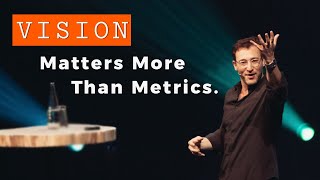
Simon Sinek contrasts finite and infinite games in business. A finite mindset chases being number one and short-term wins, eroding trust. An infinite mindset sets a long-term North Star, stays flexible on how to get there, and picks partners who share your vision.
Chapters
So in the mid-1980s, a philosopher and theologian by the name of James Karst defined these two types of games, finite games and infinite games. A finite game is defined as known players, fixed rules, agreed upon objectives. Football. If there's a winner, necessarily, there has to be a loser or losers. But more important, there's always a beginning, a middle, and end, always. Infinite games are defined as known and unknown players, which means you don't necessarily know who all the other players are. And new players can join the game at any time. The rules are changeable, which means every player can play however they want, and the objective is to perpetuate the game, to stay in the game as long as possible. We are players in infinite games every day of our lives, whether we know it or not. No one will ever be declared the winner of career. Nobody wins education, nobody wins health. And definitely there's no such thing as winning business. Like when Circuit City went bankrupt, Best Buy didn't win anything, right? But if you listen to the language of so many leaders, it becomes very clear that they don't actually know the game they're playing. And they talk about being number one, being the best, or beating their competition based on what. Based on what agreed upon metrics, objectives and timeframes. And that's the problem, because when we play with a finite mindset, in an infinite game, when you play to win in a game that has no finish line, there are very predictable and very consistent outcomes. The big ones are the decline of trust, the decline of cooperation, and the decline of innovation. And so most businesses have it wrong. And usually, whether it's in the public markets or in the private markets, when it's PE or VC backed, the pressures of winning or growth or hitting certain deadlines literally go counter to how business actually works.
And those pressures do damage to businesses. And so everybody in the room knows what it feels like when you have pressure on you to make the decision that is benefiting them, but, you know, is the wrong decision to make. And so the infinite mindset is the courage to make the decision that needs to be made, even if it's not in the interest of the short termists who are flipping the bills. I remember I was speaking at a conference once and some he was great. This young entrepreneur raised his hand and said he wanted my opinion. He says, I've got this problem. I am having overwhelming pressure from my venture capitalist who is forcing me to, to make decisions that I know are bad for my business. And the pressure is overwhelming and I don't know what to do. What do you recommend? And my answer was, you took the money like you knew who you were getting into bed with, right? Like you took the money because that VC was famous, or they offered you more than the other guy who maybe believed in you, but it was less money. So you take the money. And I think, you know, when people say to me, I want to write a book, how do I get a publisher? Or how do I choose a publisher? Most people choose a publisher that pays them the most money. And I always say, choose the publisher who you can fight best with, right? Because you're going to have a creative disagreement, and you want to make sure you can fight well with somebody who shares your goal, your creative goal. And I think the same goes here, which is choose the funding from the person you can fight best with.
But the infinite mindset is that we have an ideal about how we want the world to work, and we're going to contribute and dedicate our sweat and our treasure to advance as close as we can towards the ideal, knowing we'll never get there.
And we understand that mistakes will be made and we'll pivot. But the point is, we have a very North Star. It's the root that we're flexible on. And what I find so ironic is the way most businesses are built is they plan the routes without the destinations, and the most successful ones have the destinations and are agnostic to the route. And I'll give you an example. It's like you wake up one morning and you walk outside and you see your neighbor packing up his car, and you say, hey, where you going? And he says, vacation. And you go, cool. Where are you going? He says, vacation. You're like, no, I heard you, but where are you going? And he says, vacation, right? And you're like, well, fine. How are you going to get to this vacation? And he tells you the route. He says, I'm going to take 95. My goal is to drive 150 miles per day. And that's exactly how most companies talk. They tell you how much money they're going to make in what period of time and how many customers they're going to get and how many transactions. But they cannot tell you where they're going or why they're doing this at all. And the problem is the route will always be blocked. There will always be traffic. There'll always be a traffic jam. There'll always be an accident that you didn't see, and your metrics will get thrown off. And what are you going to do? The organizations that have the Infinite Mindset that have a clear sense of vision and are agnostic as to the root. They have a strategy, of course, and they can start off the same way, but when there's a blockage, they're going to go sideways. And to everybody else, it looks like they've gone off the rails, and they haven't. They're just going around or they're more discerning in the opportunities that show up. Somebody says, hey, I've got a private plane. You want to come with me? And you go, yes, that goes fast. Except it's going in that direction to turn down opportunities that are going in the wrong place. That's what Infinite Mindset is. It's absolute obsession with the thing over the horizon. And you remain somewhat agnostic to how you get there as long, because it's always a winding road. And I think in your world.
I think.
There'S a lot of people who tell me what their roots are. There aren't enough people who tell me what the destination is, unless it's this amorphous know.
You know, defi and, you know, they. They all. Can I just wax philosophical on the side? Go for it.
So I think there are two challenges that that crypto has, right?
One is.
Nobody knows how to talk about it in terms that normal people can understand.
And even some of the people who pretend to understand don't understand, right? So that's number one. And you can never succeed if you can only talk to yourself.
And by the way, that's what I figured out from my own work. Like, I wasn't the guy who figured out that having purpose at work was important.
What I figured out was the language that everybody was using wasn't working. When they talked about purpose, they all sounded like hippies. And they talked to this many people who were also hippies, or they would debate what comes first, vision or mission. I would literally sit in rooms and we would debate what comes first, vision or mission or brand or purpose. It was stupid. And I remember I said to people who believe vision comes first, I said, what's vision? They said, it's why we get out of bed in the morning. And the people who believe mission comes first. I said, what's mission? They said, it's why we do what we do. I asked people who said, purpose comes first. So it's why things matter. Great. Let's call it the why. Now we can all agree. And so changing language so that those who needed to listen would listen. And I stopped preaching to the converted. And I think crypto needs to Learn a lesson about changing language, because you have language that only you understand. It's like engineers talking to engineers. Right? Which leads me to the second challenge, which is there's a lot of similarities about the failure of communicating climate change as there has been communicating the value of crypto. Right? So first of all, it's hilarious in climate change that we're debating whether it's man made or not. Right? That's like debating that whether you got lung cancer because of your genetics or because of your smoking, who gives a shit you have cancer. Right? Like we're debating the cause, which is completely irrelevant to the fact that there's a meteor heading towards the Earth, and then whether we should intervene or not. If there was a meteor heading towards the earth, even if it's a natural occurrence, we would work to have it pushed to the side. And all of these metaphors and analogies aren't there. And we've left it to scientists to communicate to normal people, which is like leaving it to engineers to communicate to normal people. And I think there's a lot to be learned from the failures of climate cancer and the communication of climate cancer to general people that I think your category could learn. And.
And the value proposition has value to a small number of people, and that's okay. Like, not everybody needs to move money around the world seamlessly. A lot of people do. Banks do, institutions do. I don't. Right. And to make it sound like it's the Messiah is a little bit overselling it. And I think to bring it down and actually be a little more humble actually makes the value proposition more believable. And then actually more people would adopt it and it turns out everybody would need it. But it's kind of like in publishing there's this little rule that if you ever see on a book, you know, blah, blah, blah, that will help you at work and in life. And those books don't sell because nobody believes that one idea will fix your company and fix your life. Now it will just. Nobody believes it. So you just say, we'll help you at work, will help you at life. And then people come to you be like, I applied that. And you're like, let them discover it.
More from Clegg





AI Won't Tell You the Full Truth | Arthur Brooks + Simon Sinek | A Bit of Optimism Podcast



How To Make the Best Decision | Arthur Brooks and Simon Sinek | A Bit of Optimism


