Trapped In The Comparison Trap?
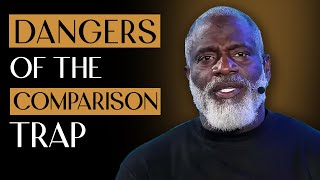
Myron Golden warns that comparing yourself to others destroys your reason, resolve, relationships, and finances. Instead of measuring success against other people, he says to yield to God, embrace your unique assignment, and serve others.
Chapters
Younger brother, right under me, his name is Michael James. To this day, I call him Michael James. All the good names. Or I call him Good Name Central. What's up? Good Name Central, right? So Michael James Golden. My brother, Rob, Robert Golden, Dwayne, Derek and Mark. And my name is Myron. I hated my name. It felt like it wasn't a normal name is. If that's not bad enough, I didn't like my middle name either. Freddie didn't like that. Then, as if that's not bad enough, I had polio as an infant. And so I walked, quote, funny. By the time I went to school, my left leg was 2 inches shorter than my right leg. And so here's this kid with this funny name, his brothers with normal names. I used to say to my mom, why did you do that to me? Like, I literally would say that, why did you do that? Like, you gave all of my brothers. I would, like. I would say this to her. I wouldn't just think it. Like, I didn't just become verbal this morning, right? And I said. I said, you gave all of my brother's normal name and all names, and all you could do when you came to me was think.
In my mind. That's how I heard it. So that's one of the reasons I hated it. I hated. Because it sounded like. Right. It sounded like that to me. And then. And then.
As if that's not bad enough, I was probably a teenager before I knew how to pronounce my name correctly because we moved around a lot. My parents were from Florida. I had a lot of relatives in Pennsylvania. And so people in Florida and people in Pennsylvania don't talk the same. Right. So. So. And my family was kind of a mix because we lived in Pennsylvania, but my parents were from Tampa. So everybody in my family, even to this day, they kind of call me like, Marin, like, kind of like an M A R I N Marin. Right. And I'm very. I'm a very auditory listener. So some of you. To some of you, all these words are going to sound the same, right? So Myron, right? So my cousins in Western Pennsylvania, in Mount Union, they would call me Marn. Like M A R N, like a barn Marn. Right. My teachers in Pennsylvania would call me Myron.
And my cousins in Florida would call me Myron. I'm like, how do you say this ridiculous name?
And I felt like I was always the oddball. And I felt like I was the oddball because I was comparing myself with people who I thought weren't oddballs. Even though they probably thought they were.
I want to read a verse, because the comparison trap is one of the most dangerous traps in the world. Here's what it says in Second Corinthians.
Chapter 10, verse number 12. For we dare not make ourselves of the number or compare ourselves with some that commend themselves. But they measuring themselves by themselves and comparing themselves among themselves are not wise. What? That's amazing. That's in the Bible, isn't it? And. And who lives like that? Most people. Who has lived like that? Everybody. Everybody at some point has found themselves comparing themselves among themselves with somebody who they thought had something better. And maybe it was your name, maybe it was how tall you were, how short you were. Maybe it was your skin tone. Maybe it was your hair. Maybe it was your face. Maybe you thought your nose was too big. I mean, this thing's like a vacuum cleaner. This is ginormous, right? But I don't. And I can say that now. If you say that, then we gonna have some problems. No, I don't even care. I don't even care if you say it. I already know. I already know. Like, I know I have a ginormous nose. My head was the same size it is now when I was in the first grade. My brothers, to this day, they still call me Big Head. Why? Because, like, I'm not. Y' all think I'm kidding, but I'm not even being funny. I used to fall down these scars on my head. I was so top heavy as a child, I would fall forward and hit my forehead on the sidewalk. Like, it happened. Like, no, I'm keeping it real. Like, I was weird. I know some of you are thinking you were weird. Okay, yeah.
I was weird. But the comparison trap is a dangerous trap. There's no way to get in the trap of comparing yourself with other people and. And winning. You cannot win if you compare yourself. You can't. The only thing you can lose in the comparison. Only thing you can do in the comparison trap is lose. Stop doing it. Like, stop doing it as an entrepreneur. Stop doing it as a man. Stop doing it as a woman. Stop doing it as a boy. Stop doing it as a girl. Stop doing it as an employer. Stop doing it as an entrepreneur. Just athletes. Stop. Just stop comparing yourself. And what's really interesting is we live in such a, quote, competitive society.
Right?
I don't think competition is a bad idea. I think competition is a great idea. But I think what competition, what we should allow competition to do in us, is cause us to be the best we can be. Instead of just trying to cause us to be better than somebody else. So in full disclosure, my son in law and I.
We are like really very, very close. But till we get on the golf course.
Then we don't even like each other, right? We just like, nah, bro. We don't wish each other evil out loud.
Right? We don't admit. Right? We don't admit that we like. Man, man, if he hits this ball in the water, I got him, right? We don't, we don't say that out loud, but we kind of think it. He knows. He thinks it too. If he watches this, he knows I'm telling the truth. And so, like, we have this trophy that we compete for. We have a trophy and we play three round matches and whoever wins has the lowest score out of the three rounds gets their name on the trophy. I call it the Myron trophy. He doesn't like it that I call it. That doesn't matter. The reason I call it that is because my name's on it more than his. Okay?
I'm messing with him right now more than I'm telling y' all the story. And I'll say, john, this is the Myron Troy look how many times my name went. He says it doesn't matter. The my. That's what he calls me. It doesn't matter. The my. The last time you beat me, only beat me. Beat me by one and I beat you four out of last seven. And he got all these stats right? Because everybody wants to win. There's a but I don't really. I really don't care about beating him. I don't really care. I just want to be the best golfer I can be so that I can enjoy it now. I like beating him because it's fun to brag. He likes beating me because it's fun to brag. I remember one time, since I'm putting him on blast, I might as well put me on blast, right? I remember one time we were having this. It was. It was a holiday and we were getting together for the holiday. We went and played golf that morning. I said, if you beat me, I'm gonna take. I'm taking you down to dav. If you beat me, I'm gonna have to serv. In front of everybody. And he beat me that day. And I had to serve him dinner in front of my entire family. So.
Just to let y' all know, we're not really arch rivals. We just pretend to be on the golf course now. But here's the problem. We grow up thinking that our worth is measured next to someone else's. It's not.
Just be yourself and understand that God made you you because that's exactly who he wanted you to be.
Stop trying to get him to fit in or fit in to get in or going along to get along. Don't just. Just be who you are and let the chips fall. Become. Be becoming a better person.
But be who you are and let the chips fall where they may. I'm not trying to look better than you. I'm not trying to dress better than you. I don't want to like. I don't want to have more money than you. I don't want to have more success. There's no more better. None of that matters. The thing that my success is only measured by the degree to which I fulfill the purpose for which I was created. Period.
And the dangers of comparison trap number one danger is it destroys reason. Like all reason goes out the window when you start comparing yourself.
It causes you.
It causes you to compare people.
And ignore purpose.
That's a danger because of. Everything you're doing is to get ahead of somebody else and their race is different than yours. Even if you beat them, you still lost because you didn't finish your race.
Here's what I know.
Everybody in this room, everybody watching me on YouTube right now. All of you can do stuff I can't do. I can do stuff you can't do. When you're doing the stuff that I can't do. Guess what I can do. I can celebrate you. Why? Because I don't need to be better than you.
You can celebrate me because you don't need to be better than me. Imagine how much better place the world would be if we stopped trying to lord over other people and just yielded ourselves to the king. I really believe. I really believe. I really believe that the entire Bible is not. The Bible's not a book about. Bible's not a book about religion. The Bible is a book about government. That's why it's called the laws of Moses. It's the law. The Torah is the law. Right. Laws are governmental. They're not religious. Are y' all tracking?
And it's really interesting that I believe the entire, like, everything in the Bible points to this concept. The Bible is a book about a king. Who's the king? God is the king.
It's a book about a kingdom. What's the kingdom? The kingdom of heaven or the kingdom of God.
By the way. The kingdom is a way of doing things.
The kingdom of heaven is in heaven. But the kingdom of heaven can also be on earth. The kingdom is a culture. What does that mean? It means the kingdom is the king's dominion. That's what the word kingdom means. The king's dominion. The dominion over which the king reigns. The jurisdiction over which the king reigns. So the whole Bible is about me yielding my life to God as the sovereign king of my life. And the more yielded to him I am, the better my life gets. And the more glory he gets. Because that's why he did the whole thing anyway. And if you don't believe me, go read Revelation 4:11. For thou art worthy, O Lord, to receive glory and honor and power. And thou has created all things, and for thy pleasure they are, and they were created. The whole purpose of existence to bring honor and glory and majesty to the king of kings.
The Bible's about a king. The Bible's about a kingdom. That's why Jesus said, after this manner, therefore pray ye. Pray like this, not like that. After this manner, therefore pray you. Which most people mistakenly think is the Lord's Prayer. But it's not the Lord's Prayer. It's a model prayer. He said, pray like this. After this manner, therefore pray you first thing he said, Our Father which art in heaven, hallowed be thy name. You are worthy. Thy what? Kingdom come. What's that talking about? Be the king of my life today. Be the king of my mouth today. So the only words that come out of my mouth are king approved words. Be the king of my eyes today so that the only thing my eyes behold are king approved.
Visions. Be the king of my ears today. That so the only thing I listen to are king approved words. Be the king of my hands today so that I only do king approved deeds. Be the king of my feet today. So I only trod king approved pass.
Now once I'm yielded to the king, guess what he does? He makes me a king. What? Hey, do you realize Satan is a king that wants to make you a slave. Ride you like a horse until you die. He wants to slave the life out of you.
He's a fake king. He's not even a real king. He's just pretending to be a king. But God's a real king and he wants to make you the king of your thing and ladies. He wants to make you the queen of your scene. God is a king who redeems people to make them royalty. What?
No. The Bible's about getting to heaven. Heaven is eternal. Life is promised. But it wasn't the objective. That wasn't the objective, the object. Go read it. It's in Matthew, it's in Mark. It's in John and Luke. Then Jesus began to preach the gospel of the kingdom.
I didn't say that. Okay, y' all tracking. So.
When I yield to the king, he makes me a king. He gives me an assignment. I get to rule over that assignment, and I get to use that assignment to serve other people. What people? Everybody I come across, I can serve them. Do you understand? Fulfillment comes from creation, connection, and contribution. I create a thing. I connect with a person. I contribute to a person or a cause. I feel fulfilled.
So I use the assignment that I rule over to serve every person I come in contact with. If I'm serving them, nothing but a smile. If I'm serving them, nothing but an encouraging word. If I'm serving them, nothing but a pat on the back. If I'm serving them, nothing but a word of gratitude for some kind gesture they've done. Like, when I get that I am here to serve you, I have a happy life.
Oh, I'm. I'm happy.
Why? Because I'm doing the thing I put. I was put here to do. And so when I am yielded to God as the sovereign king of my life, he makes me the king over an assignment. And he says to me the same thing he said to Solomon. You'll just walk in my ways, and you all keep my statutes. I will bless you in ways that nobody before you is blessed and nobody after you will be blessed. Do you understand that? The only person that has access to your blessings is you. It's like having. Like, when I unlock my iPhone, I do that. If you do that to my iPad, it's not going to unlock. It unlocks because it recognizes me. Guess what? My assignment recognizes me. It don't recognize you. Your assignment recognizes you and it don't recognize me. So me racing towards your assignment so I can feel bigger, better, stronger, faster, or smarter is dumb as a box of rocks.
The comparison trap destroys reason. It causes you to compare people, compare yourself to people and ignore your purpose. Why would you want to do that? I would rather just focus on my purpose. Like, if I want to compare myself to someone, I want to compare myself. How yielded am I to God today?
How diligent am I over my assignment?
And how diligently am I serving the people that I come across on a given day? Okay, now I'm doing something y' all tracking. Okay, so it also causes you to compare the faint panace. I can't even talk. It causes you to compare the faint fantasy of the past with the harsh reality of the present.
Them were the good old days. Them good old days. Wasn't that good?
You're remembering the good part of the old days and thinking the days were good. Can I get a witness? We've all been through some stuff and a lot of man, if things could just go back to the way they used to be. Back to the way they used to be. Baby, no.
You don't want to live a backwards life. You want to live a forward life. I can remember great things about my childhood, great things about my childhood, but I don't want to go back to them. I can remember great things about my 20s. It's so hard being 60. It's way easier being 62 than it was to be 22. 22 was a woo. That was a bah.
Oh. Oh, Myron. It's gotta be so hard getting old. No, no, no. Being young was hard. Oh, this is.
Sign me up for some of this right here.
And see what happens. Is because the past is so long ago, we think when we're remembering something, we're remembering it accurately, but the reality is we're remembering the good in an exaggerated form and we're remembering the bad in a distorted form. Or if you're a person who's generally miserable, you're probably remembering the bad things in the past in an exaggerated form and the good in a distorted form. But none of it's accurate. So why compare?
It causes you also to compare what should be with what is. I really despise the word should.
Should is the source of almost all discontentment. But it shouldn't be like that. They shouldn't have said that.
That shouldn't have happened. But it did, baby. It happened like it is what it is. Stop it. We gonna have to come get you, take you to somebody who can help you. Stop shoulding.
There is no should. There is and there ain't. There is no should. And when you go through life thinking things should be a certain way, and especially when you have shoulds for other people. Oh, that is the formula for absolute frustration. You can't even should your own shoulds and you try to should somebody else's.
Can I get a witness? Where are my people? Like, let's go ahead and acknowledge the fact that, like, I can't control another person. I can barely control mine. Freddie Golden.
Y'. All tracking. So the comparison trap causes the danger, Is it? The comparison trap can cause you to destroy reason. That's not good. But the comparison trap also Destroys resolve. Think about causes you to minimize your gifts.
Well, I can't sing like so and so. So I'm not that good. I can't talk like so and so. So I'm not that good. I can't write like so and so. So I shouldn't. I can't. I can't. I can't. I don't have what they have. It's really interesting that our eyes look outward. Maybe if God would have just flipped them around so we could look inside and see all this good stuff he deposited in us so we could just see it. Maybe if we had just a little bit of perspective of the many blessings we have, we'd stop walking around looking like God blessed everybody but me.
Can I get a witness? Hey, I remember thinking, like, some of you may be able to feel what I'm talking about. If we were going to play a game on the playground where you had to run. I was always the last one picked. But it makes sense. I can't run now. If we gonna get in a fight, I might get to be the first one picked. Okay, but that's not what we're talking about right now, Myron. Okay, so. But if we're gonna get it, somebody had to run. I'd be picked last. Unless one of my brothers was the captain of the team and they felt bad for me or that it was just my brother, they would pick me. They would. Wouldn't pick me last. Right? And so we begin. Unfortunately, when we grow up in life, as we're growing up in life, we learn to look at ourselves through the eyes of the other people who see us.
It would have been beneficial for somebody to tell us when we were young to look at ourselves as God sees us and to tell us that God put something in you that nobody else can do. You are, in real life, a real life superhero. And God deposited in you gifts that nobody else in the world has. And the reason he made you bad at the stuff you're bad at is because if he didn't, you'd never be good at the stuff you're supposed to be good at.
I am so, like, I hated when I was a kid. I hated the fact that I had polio. I hated the fact that I had to wear this metal brace on my leg. I hated the fact that I had to wear orthopedic shoes. I don't have to wear those anymore. Orthopedic shoes are like granny boots, brown ugly boots. Everybody else is wearing PF Flyers and pro kids. I know y' all don't know what any of those things are. Those are. Those were way pre. Converse, All Star. Okay.
That'll give you a little frame of reference. And I hated the fact that everybody else wore normal shoes, and I couldn't wear them, and I didn't. I hated the fact that I had polio, in fact.
Because I want you to understand, if you are in a comparison trap right now, I get it. That's. That's why I'm telling you this. Not. I don't want you to feel sorry for me. Please don't feel sorry for me. Like, you are really wasting energy. If you're feeling bad for me, okay? I'm just telling you, don't do it. It's not. I'm good. I'm sure brother man's like, I'm gonna be Ight. But when I was a kid, I couldn't even say the word polio without crying. Couldn't say the word without tears, like, welling up in my eyes. How crazy is that?
Because.
The idea that everybody else could do it's everybody else right now. I know Even when I was a child, there was a girl in my class whose older sister had polio so bad. So badly that she was in a wheelchair and could barely speak. I just saw an article about a guy who's been living in an iron. Had polio so bad, he's been living in an iron lung for 65 years. Right? And he's counting his blessings, and he became a lawyer, a practicing attorney. Right. Why am I telling you like, I had polio I hated. I used to think, why does my leg have to be the one that doesn't work? So we exaggerate every. What everybody else has. But here's what I. As an adult, if I could go back and be a child again and do it all over and not having had polio, I wouldn't. I wouldn't. I'd pick the same option I already had. How can you say that? Because I can see now as an adult, for the purpose of my life, God ordained that my body slow down so my mind could speed up.
If I had been able to run and romp and play, I would have wasted a lot of energy.
Running and romping. I would probably. Like, if I had not had polio, I would probably be a professional athlete right now. Not that there's anything wrong with being a professional athlete. I mean, I'm very competitive.
Marginally athletic.
Okay? But when I was younger, I was very athletic. I mean, I was. I was 135 pounds and I could bench press, like.
288 pounds when I was 135 pounds. I was strong, right? So I was very competitive. And.
It's like. But if I would have put all that energy into that, I would have missed out on all of this.
It's interesting.
There's a guy, his name's Dr. Bob something. I don't remember his last name, but he used to come on my conference calls, and he wrote these little magazine. Little booklets called Bits and Pieces. I don't know if anybody's ever subscribed to Bits and Pieces, like, from back in, like, the 80s, 70s and 80s. Anyway, there were motivational. Little motivational magazines that were about this big. And he. This guy who I used to subscribe to his magazine, he's on my conference call, and he subscribes to my conference call. And we had a conversation one time. He said. Yeah. He said, meyer, it's really interesting.
He said, you remind me a lot of Milton Erickson. I didn't know. I didn't know Milton Erickson from Milton Howard. Right, okay, Sorry, Milton. I didn't know who Milton Erickson was. And he said, the interesting thing about him and you, the commonality that y' all have is that y' all both had polio. And he told me, this is what Milton. This is what Dr. Bob told me. He said. He said. Milton Erickson told me that when he was a kid, because he had polio and he couldn't run, he would sit and watch other children play, and he would pay attention to the things that you wouldn't, nor that a normal human being wouldn't ordinarily pay attention to. And he said, like, he would count how many breaths they would take in a minute. Right, right. And I thought, that's so interesting.
No, I know you're thinking. I'm going to say that I used to sit there and count other people's breaths. I did not do that. I did not do that. But I did kind of set it up because, like, I wanted you to think that. No, I did. I did. I didn't do. But I remember as. I remember very distinctly as a child watching other children play and watching how they moved and wondering how they moved like that.
And so it just caused me to pay so much closer attention to things because that was pretty much all I could do.
So why did I tell you that? Because.
Everything that has happened to you in your life, and this is gonna be hard for some of y', all, everything that has happened to you in your life, the good the bad, the ugly, the painful, the gleeful. It's all a gift.
Even the parts that don't feel like a gift, it's all a gift.
Y' all remember I was teaching on Jacob and Joseph? Jacob, Joseph's father. Joseph was his favorite son. Joseph's brothers hated Jacob. I mean, Joseph. Because of the comparison trap.
Jacob treated Joseph better because of the comparison trap. Right? And Jacob's brothers. I mean, Joseph's brothers. I'm getting it. Joseph's brothers threw him in a pit. And then the Midianites took him out of the pit, sold him to the Egyptians. He's a servant in Potiphar's house. Potiphar's wife lies on him. He goes to prison for a crime he didn't commit. He's down there. And then he interprets the dream of the butler and the baker. And he tells the butler and the baker, and he tells the butler, when you're restored to your position, remember me? The butler forgot him. So he had all this, quote, what we would call bad stuff happening to him, right?
When Joseph became the prime minister, he saved the world from starvation. And he introduces Jacob to his father, to Pharaoh. Pharaoh says, how old are you? And he said, you. And I think, few and miserable have been the days of the pilgrimage of my life. And he was 138.
That's not a life problem. That's a perspective problem.
Because one of his sons was like, one of his sons was disposed of by his other sons.
And then there's a famine in the land, and now one of his other sons is held hostage. And now he's got to bring his other. His youngest son to get the other son back, right? He's, like, worried about all of this stuff. Few and evil have been the days of the life. Few and evil. That's what he said. Not miserable. Few and evil have been the days of the life. The pilgrimage of my life at 138 years old. I promise you, when I'm 138, I'm gonna say, yeah, I done lived a long, happy life. And I'm fixing to go play golf this afternoon. Okay? So.
But then when Joseph. After Jacob died and Joseph's brothers, because they thought he was like them, they thought he was going to get them back for all the evil they did to him. They went to him and begged him not. He said, y' all still don't get it. He said, what? You meant for evil. God meant for good.
Even your enemies help you when they hurt you. What?
Come here.
I'm Talking about folk that hate you.
So the comparison trap destroys your resolve. It'll make you want to quit. You won't even take advantage of your own gift. It'll cause you to maximize the strengths of your enemies. What does that mean? When you compare yourself. Remember the 12 spies went to spy out the land. What happened? They came back and gave Moses a report. They said. I mean, they came back and gave the report. They said, we are as grasshoppers in their sight. No, they didn't say, hey, come here, you little grasshopper. Let me step on you. What they meant to say was, we are as grasshoppers in their sight, in our own eyes.
But when you. When, when. When you put yourself in the comparison trap, it always causes you to magnify the strengths of your enemies.
And minimize the power of your purpose.
One, I believe one of the reasons David knew Goliath could not beat him. Like, David wasn't even scared. I don't know. Y' all go read your story. David wasn't scared. He wasn't crazy. Now, you'd have to think this dude, he's probably somewhere between 13, 17 years old. He's a little dude.
How little is he? He's so small, he didn't even get invited to his own coordination service. That's pretty small. You talk about being left out.
But guess what? He didn't say. Well, my family doesn't even believe in me. My dad doesn't, my mom, my brothers. Nobody believes in me, right? He didn't do that.
David was anointed to be the king of Israel by Samuel in the presence of his brethren. That's what it says. Well, David goes down to fight Goliath. He hears Goliath breathing out threatenings. And there are two reasons I believe David knew that in a fight with Goliath, David was invincible.
One, David was in covenant with God. God had sworn on his own existence to bless those that bless Israel and curse those that curse Israel. As soon as he heard Goliath cursing Israel, he knew Goliath couldn't win. Because he believed the word of God more than he believed what he saw with his eyes. Because even David knew that we're supposed to walk by faith and not by sight. And I can't believe my eyes because my eyes tell lies.
Doubt is created in the eyes. Faith is created in the ears. Faith cometh by hearing and hearing by the word of God. And so what happened? The other reason David knew Goliath couldn't win is because David was anointed to be the king of Israel. His purpose had been revealed to him, and it had not yet been fulfilled. And if your purpose has been revealed to you and not yet been fulfilled, you are invincible until God's done with you. Congratulations for being in the right place at the right time and being the right person who recognized it. He knew he couldn't lose David did. Everybody else in all the entire nation of Israel magnified the strengths of. Of Goliath.
Not David. David said.
David told. David told Saul. He said, look, I was watching my daddy's sheep, and a lion came. A lion.
Took one of my daddy's sheep. He said, come here, Mufasa. No, he didn't say that.
He didn't say that. He said, I grabbed the lion by his beard and slew him. You give what.
Hey, for a sheep.
I'm gonna grab a lion by the beard? Just say, David said, this is my job. This is what I'm here for. He said. And David said, I'm all in. I'm a very courageous person. Until a lion comes and gets one of the sheep, I'm through, right? Hey. He said, and a bear.
Took one my daddy. I went and took that bear and kept. He said, this uncircumcised Philistine shall be as one of these.
What?
What?
Who is this guy? I'll tell you who he is. He's a guy that doesn't magnify the strength of his enemies. He's not going to die in the comparison trap. That's who he is.
Watch this. It causes you to dismiss the pain of bondage and diminish the payoff of the promise. Exactly what the children of Israel did. They forgot how painful it was to be a slave in Egypt, having to go out and gather straw to make bricks to build the kingdom that enslaved them. They forgot how painful that was. They forgot how hard the taskmasters of Egypt were. They forgot. They said, why did you bring us out here in this wilderness to slay us? We would have been better off to die. Like.
We magnify the dangers.
And.
I'm sorry, we dismiss the pain of bondage. We act like, well, the way it used to be is not worth. I'm telling you, like, the bondage of poverty for me was loathsome. I hated it. I hated it so much, I just decided, I don't care what people think. Because when I. When we're hungry, for the most part, God has always supplied our needs. I remember one time I was in traveling evangelist. I was broke as a joke and ready to choke. I mean, I Was broke. I was down to my last life. I had a hundred dollars, one hundred thirty seven dollars to my name.
I went to one of those old fashioned camp meetings.
I wasn't going there to preach. I wasn't speaking there. I was just going there to attend. Just to get an encouraging word. And here's the funny thing about it. It was at.
It was in Waycross, Georgia.
At Swamp Road Baptist Church.
Not exaggerating. I'm there. I'm Pastor Joe Chancey, amazing man. And I'm sitting there. So they told the story about another pastor who's. Whose wife had died and had all these medical bills. And they took up an offering for him. I had $137 to my name.
No, I don't even think I had 130. I think I had $37 to my name. But I did have a little bit of gas in my car.
And I drove to Swamp Road from Jacksonville. I'm at the church at this camp meeting. They're preaching, they told the story, took up an offering. I put my last $37 in offering. I can't feed my family. $37. I mean, we like the refrigerator was like the Motel 6. Open it up, the light was on. Nothing else was in there. Right? Right. We leave the light on for you. Right. And. And yeah, nothing worse than a Motel 6 refrigerator. And I get. Put my last $37 in offering plate. Can't do anything with this. Might as well sew it.
So came time for lunch.
Lunch wasn't ready yet, Brother Joe. So his wife told him, lunch ain't ready yet. I have one more preacher preach. So, Brother Joe, now you gotta understand, this is at Swamp Road Baptist Church.
All these. Everybody else in the whole building is white. But Joe Chancellor, my friend, I'm white, black, it doesn't matter. So. And there's just a bunch of preachers. Never didn't know me from the man on the moon. Most of them didn't know, had never seen me before, had never heard of me before. So he said, brother Myron, come preach me. Yeah, come preach. So I got up and preached on why Jesus has a name above every name.
And I got done.
They just came up and started putting money. Oh, Brother Joe said, somebody, an old preacher told me a long time ago, I'll never forget this, he said, an old preacher told me a long time ago, there wasn't. There were not a hundred people in this room. There were not 100 people in the building. He said, an old preacher told me a long time ago.
Somebody preaches like that.
They have a need that only God can fill. We need to take up an offering for this brother.
They took up an offering for me. When I say I was broke as a Joe, I was not the Myron golden, the world renowned entrepreneur, blah, blah, blah. No, I'm just an evangelist traveling around speaking in churches.
They took up an offering for me and when they got done, it was $4,000 and a pickup truck.
I am not exaggerating. So. So. So all I'm saying is, I'm saying, like there were times in my life when I was broke that God just showed up and delivered us in miraculous ways, right? So I just thought of that story. I hadn't thought about it in years. In fact, I need to go see Brother Joe. I need to go visit Swamp Road. I love that church. It was one of my favorite churches to speak at. Not just because of that, because I had spoken there many times before. Poor bunch of country folks. Good as. Just good as gold. Okay, so it'll cause you to dismiss the pain of bondage. But I hated being poor. And I was like, I was unwilling. You know, a lot of deacon boards have this idea, God, you keep them humble, we'll keep them broke. Talking about the pastor. Right? Okay, that's. That's real, y'. All. Okay.
But see, to me, the pain of working all night to fulfill on the promises that I had made people in my business, and working all night and then working all day every day and having 12 and 13 and 14 and 15 and 16 and sometimes 24 hour days, to me, one of the. I knew one day back when I was doing that, I knew one day it would pay off. And I wasn't comparing myself to people who had regular jobs who could come home and be done.
Because their assignment wasn't my assignment. And I knew what my assignment was. I knew it. I was seeing things in the word of God that was for me, that were for me. If they were for somebody else, that's between them and God. But right now, this were for me.
The comparison trap. The comparison trap. Not only does it destroy your reason and destroy your resolve, but it also destroys relationships. It'll destroy family relationships. The comparison trap pretty much destroyed Jacob's family because he compared his children. Had a favorite. Isaac did the same thing. Isaac had a favorite. Isaac's favorite was Ishmael. Right?
Rebecca's favorite was Jacob. The comparison trap is a bad. It's a bad idea.
It destroys family relationships.
It destroys functional relationships. Why can't you be more like so and so? Next time somebody asks you that, just say, well, I guess because I ain't them.
I used to have teachers. Why can't you be more like your brother? Because I ain't my brother, sister.
I didn't say it like that. I didn't say it like that.
I promise you, if you will be okay, if you will become okay with who you are and the assignment that God gave you and just embrace it and stop resisting it and let go of your need to be better than somebody, bigger than somebody, smarter than somebody richer than somebody, more of whatever than anybody else and just, like, stay in your lane.
You will be blessed in ways that you right now cannot imagine. So it destroys functional relationships and it destroys financial relationships. I'm gonna end with this one, by the way. Please, please go.
Watch the video.
That I did. So.
I'm amazed nobody ever asked me this question. But if somebody were to ask me, myron, what do you feel like from a financial perspective? What do you believe is the most impactful video you've created of all the videos you've created from a financial perspective that will help people more than any other video? If they just do the things on that video. Which one? You know what I would tell them?
The ultimate infinite asset, by far the most important video that I've done. I would recommend that you go watch that video. And for those of you who need more clarity on the stuff we're talking about, go watch.
Why Evil People Are Rich and why a Rich Man Can't Enter. For those of you who have these inhibitions about making money, go watch why Evil People Are Rich and then watch the video on why a Rich Man Can't Enter heaven. It'll. It'll change your life because it's. It's a step by step, verse by verse breakdown of those passages anyway.
It destroys financial. Financial relationships. Ananias and Sapphira saw what everybody else did, wanted the accolades that everybody else got. They went and sold their own property.
They gave some of the money and said they gave all. So they wanted the benefits of not giving all the money, but they wanted the accolades of giving all the money because they were comparing themselves with other people and it cost both of them their lives.
Do you understand.
That on the day you die, all of your financial notes are due like it's a wrap. You don't get to spend any more money after that.
Stop comparing yourself. I don't want to be richer than anybody. I don't want to be smarter. I don't want to be better. I don't want to be faster. I don't want to be more good looking. I don't want to be more sing better, talk better, write better books than I don't care. You know what I want? I want. I want. I want my voice to serve its purpose. I want my life to fulfill its mission. And if I can do that at the end of my life, I can say with the apostle Paul. Fought a good fight, finished my course. I kept the faith. So hopefully you can do the same things. Don't compare yourself with anybody else. Nobody can do your job, and you can't do anybody else's job. So celebrate the life that God gave you to live by living it, and I'll see you all in the next video. Peace out, my people? Stay blessed by the best.
More from Clegg





AI Won't Tell You the Full Truth | Arthur Brooks + Simon Sinek | A Bit of Optimism Podcast



How To Make the Best Decision | Arthur Brooks and Simon Sinek | A Bit of Optimism


