What can we learn from a rural school in Kenya? with provost Carol Moraa | A Bit of Optimism Podcast
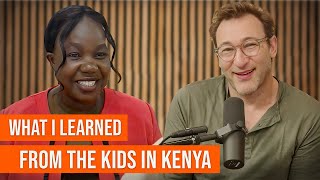
Carol Moraa runs Kisaruni, a rural Kenyan school where students wake at 4:30am and lights go out at 10pm. She credits community, peer mentoring, and reframing students as
Chapters
These are teenagers with access to TikTok and access to Instagram and they have access to 24 hour Wi Fi. They are no different than our kids. And yet you say that they are just not addicted.
They are not. It's not like you have all those earphones and you're just on your phone. You should walk around here during breaks. You'll find them seated around the compound just telling stories. And there's WI fi and they have their phones, but they are more engrossed in the stories that they tell.
Your schools are proof that a strong sense of community and strong relationships make us less susceptible to addiction.
It's such a treat to talk to you.
It's a treat for me to talk to you.
When I came to visit you.
I was so inspired by your students, by your learners. And we have to, we have to tell everybody which is in your schools. The students aren't students, they're learners. And the teachers aren't teachers, they're education facilitators. Facilitators, which I love. Just to start there, why, why the change in, in language? What's wrong with teacher and student?
Very good question. To start with, we've worked in Kenya for over 25 years with the communities and primarily we worked with the primary schools where they're government schools. And then what we do is we build the schools and we provide school meals and we train the teachers in the primary schools. When we go into a community, we are not experts. The community members are experts in their communities. They know their challenges. We don't, we don't go there and we tell them, we feel like you guys need clean water. We feel like you guys need a classroom. Nope. The community members know their challenges. And so when they approached us with this idea, we said, okay, let's have a sit down. They said, in our schools, teachers are feared. You know, by that time we had corporal punishment. And so the word teacher was like a demigod. And they said, you know, and we said together, we want a school where it's a community. We don't fear each other. We facilitate. Facilitate comes from the Latin word facil, meaning make easy. So we make easy the learning process. And in this school, we are also learners. I am a learner as much as I am a teacher, I'm a learner. And so we are all in the learning process.
The schools that they had were basically mud huts, right?
Yeah.
And susceptible to the, to the elements.
Yeah.
Dirty, cramped, hot in the summer.
And one of the first things you did is you came in and you built proper walls, proper floors, proper roofs, bigger rooms, nicer desks so the kids have a nice place to come to school. It's amazing what a difference it makes and I love that you showed us. You left one of the old buildings there just as a reminder of how things are better, especially for the young kids, I guess, who don't even know what it's like to go to school in the old schoolhouse. That's the primary school. And I came and visited your all girls high school. I've never met such smart, driven girls. They get to set their own schedules, right. So the way it works is because they have to help out at home. You know, there's this subsistence farming a lot of these kids come from. And so they help out during the harvest and they help out at home. But then they leave to come to school for three months. Right, Like a boarding school.
Yes.
And then they go back. For how long?
For three weeks to a month.
So they go three weeks to a month and then come back to school for three months and then three weeks to month. So they have this balance. And when they come to school they set their own schedule, right?
Yes, yes.
Now can you please tell us.
What that schedule is?
Yes. So as the founding principal, when we started the school, that was one of the things I was really looking forward to. I was looking forward to a school where the learners value the school and are proud of their school. This is our school, we set our school schedule, we decide on what we want. And Simon, you know, when you set up something, you own it and you're proud of it. And that was the thought behind that. And so for their schedule, when we had them sit down, they actually drafted a schedule and were like, oh my goodness, we want to wake up at 3.30am, we want to go to bed at 11pm and so we had to negotiate. We told them, yes, we know education is all you have because you want to be change makers in your communities, you want to give your best, you want to be the pride of your communities, but you need some sleep. So we negotiated and they wake up at 4:30am and they go to bed.
At 10:00pm they wake up at 4:30am let's be clear here. They wake up at 4.30am to start school.
Yes. And something else, they are supposed to wake up at 4:30, but by 4 they'll always be up. So we always tell them, please go back to bed. You know, even in the evening at 10, they go to bed and they have spotlights and they still want to Study. Because, you know, for them, this is all they have. They come from very humble backgrounds and they want to change their families. They want to change the trajectory of their families. So this is all they have and they want to give their best. So we have to really just switch off the lights and tell them, please sleep.
What is it that makes these kids so much more motivated than your average Western student? Is it that the Western students have too much and they take it for granted? What is it about the.
Culture of your school that these kids are so motivated and they're not motivated for the first time? They're motivated for all four years of high school. What is your theory?
It's an intrinsic motivation. That's the most important thing here. It's not extrinsic. We don't push that motivation in them. They are motivated from within when they come into school. You know, just a brief background. These are kids who most of them are first generations to go to school in their families. Their mamas were in arranged marriages from 15, 16, 17 years with 12 children. That's all they know. And they can see this suffering. Most of them, their older siblings haven't even gone to school. And so they, they see their families and they want to lift their families out of poverty. Poverty, and that is the word they use. I want to be the light of my family. You'll always hear that. I want to be a role model in my community. I want to, to be this. And so it, it's an intrinsic motivation that drives them.
I want to be the light of my family. So these kids come to school with a real sense of purpose and cause. It's not just because they have to go to school, it's that they want to go to school. They are literally driven by a sense of purpose and cause, unlike a lot of students, I think in the West.
Yeah. I can share with you one story, please, of one learner called Sharon. And you met Sharon. So a few years ago, there's a girl who walked into my office at around 12:30pm Looking very tired and hungry. And of course I gave her food first and we sat down to talk and then she told me, you know, miss, I started my journey at 5:00am I am a sibling in my family in the middle. My older siblings haven't gone to school. I sat for my grade 8 exam and did well. It's been two weeks since the grade 9s reported. I haven't had a chance to go to school because my mom is not able to. She comes from a single parent family. My mom is not able to. My older siblings didn't get this chance. I want this chance. And she came in and she was two weeks late. The school was already full because someone will get hundreds of applications and we can only take a few. And so we sat down and I told her, I'm sorry, but unfortunately the school is full. And you could see she broke down and she got emotional. And she looked at me and she said, I have to get an opportunity. Whatever you do, you have to give me a chance. And, you know, it was lunchtime and the girls were on the pavements going to the dining hall for lunch. And she pointed. She told me, you see these girls? You see how smart they are in their uniforms? That is what I want. I want to walk in these pavements. I want to be that smart. I want to change my family. I want to uplift my family out of poverty, and you have to give me this chance. And I said, oh, girl, I love you. I love you. The resilience in her, you know, And I just had to stretch a little further and give her this opportunity. And you should have seen her eyes when I told her that you're going to get this chance, she lit up and she said, I will not let you down. I want to assure you. I loved her confidence. And I told her, your parent also has to come in because we need to get this commitment from your parents too. So the parent came in the next day and the next week. Now, which was the third week because the other learners had reported, she came in and we gave her this brand new uniform and brand new shoes, and she was so excited. And in the course of four years at Kisaruni, Sharon was amazing. She excelled academically in drama and music festivals. She was the best actress in competitions. She excelled in Games in grade 11. She was the school president and you could see that confidence in her. And she did her grade 12 exam, did very well, and earned a spot at Legacy College. And she told me, I want to be an entrepreneur when I'm home. My mom engages in small businesses and. And I always help her. And I want to uplift that business. I want us to do business. And she joined Legacy College, the first class of business management and social entrepreneurship. She's graduating in a month. Last week, she presented her business proposal in the lion's den for a seed capital to start her own business. When they went for internship, the company that she went for internship in, they actually told her, you're amazing and we want to keep you. Can you study online and continue working with us. And she told them, no, I'm not done with my studies, I want to complete my studies, then I can look into that. She tells me she wants to be an employer once she clears, once she becomes an entrepreneur. So these are the kinds of learners that we have who deserve this opportunity. And this scholarship helps them to be able to not only change their lives, their families, but their communities.
What's your journey? Where did you grow up?
I grew up in the western part of Kenya. So Lake Victoria, around Lake Victoria. I went to school in Mo University in Eldoret. Then immediately I graduated. I was very lucky. You know, I always say I cleared. I finished my final exam on Thursday and I told my dad the next morning when I came home, I said, I'm going out to look for a job. And I had just done my last paper, I don't even have my degree already. And I went out and I went to international schools and it's very hard to get a job in international schools. And so I went and I was interviewed. I told, you're very lucky. There's actually an opportunity because I'm trained in English and literature facilitation. And I got that job immediately. And I was like, yes, thank God. So I got this job in this international school and it's in an urban area. You know, I'm in my early 20s, very active and just having fun. And then after a few years, I see an advert in the newspaper. There's a school that's starting in the Mara and it's looking for a principal and I'm 20 something and we are actually with my staff member, we are seated together in the library with other staff members and I joke and I tell them, guys, I'm applying for this principal job. And they all laugh and they're like, principals are in their 40s and 50s. You're only in your 20s, you won't get it, of course. And I said, watch me. And so I apply for this job and I go for the interview in Nairobi. So there's a first interview in Nairobi and Robin was actually in the panel. So they interview me and they tell me this is just the first interview. The second interview is in the school in the Mara where it's very dry. You are used to life in the.
Mara for people is. It's. It's the countryside. Yes, it's the rural area. It's the rural area of Kenya.
So we have to interview you on the ground to see if this is a place you can work in. And then we come for the second interview. And interestingly, the ladies I was with, all of them were head teachers except me. I'm the one who didn't have. Not even deputy head teacher. And then we come for this interview, and I'm like, jesus Christ, this is the place. And it was so dry by then, because it hadn't rained. We only had one timber shop, a very tiny shop, you know, and then the school. So we are interviewed. And I love nature. And so I see the hills. And I'm like, whoa. I'm used to urban life, but this is a place I would really love because of the peaceful nature and the way it looks. And then once you're done with the interview, some girls walk in, some young girls, and we are told, guys, these are some of the learners that are going to join your first class. And I get a chance to chat with them. These girls cannot look you in the eyes. These girls cannot construct, like, simple sentences correctly, like the tenses. And I said, I feel this is the place where my services are needed more compared to where I am. And I said, if I get this opportunity, I'll embrace it. And when I was called that I had gotten that opportunity, of course, there were mixed reactions. I'm coming from this nice international school where I'm teaching diplomats kids, to this school, school where I feel I'm really going to create a difference in the lives of these young girls who are going to get this golden opportunity to get a full scholarship, to get an education. A young girl would have been married off a young girl who, you know, without this opportunity, would be a fourth wife somewhere to an old man. I feel this is the place I need to be. And I resigned from my job and I came here. And so, Simon, I've never looked back. I've been called for three job offers with almost triple the salaries in Nairobi and every other place in urban areas. But the fulfillment I get from working with these young people here, just giving this opportunity. We've had several, over 600 graduates right now from Kisaruni. We actually have the 10th graduation celebration this year. And the alumni are all out here in the communities. They've come back to their community. We have one of them who works with treasury, and she's the district auditor. She audits the district accounts. We have high school teachers. We have nurses at Baraka Hospital. And you know what, Simon? One thing that I love, that they come back to their communities. I love that. I love that they're able to come back and give back, pay it forward in their communities, become role Models, there's a school, when we started Kisaruni, we had only one girl graduating grade eight from that primary school. And service learning is a very important aspect of our learning at the school. And so every learner identifies a challenge in their community and they go and help sort out that challenge. And so this girl, this one girl said, the challenge in my community is girls get married at a very early age. So what I want is I want to go and explain to these young girls and their mothers on the importance of educating a girl and the fathers too, but in a respectful way. You know, we respect our elders, so how do we do this? And she went on for service learning. And as we speak in the class of 2022, we had more girls graduate from that school than the boys. So that is the power of these young girls going back to their communities and being role models. And the young girls say, I want to go to Kisaruni. I want to be like so and so. So that's the fulfillment I get. I go to bed in the evening and I, I'm just so grateful that I'm able to work with these amazing young people.
I want to tell you an experience I had while I was there and I want you to comment.
I met people, I met the students, I met some of the facilitators, the teachers. I went into the community and we, we met one of them. We went. What was her name?
Mama Jen.
Mama Jane.
Yes, yes.
Mama Jane, who was amazing. This wonderful leader of a community who's lifting her community and helping them in a way that it was, she was remarkable. And I got a sense that.
We in the west, we visit Africa.
And we.
The general notion is we feel sorry for these people who have less than us. And we look at ourselves, how much we have and how much opportunity we have and we feel bad. Right. And there's something I recognized which is, yes, they have a hard life. There's no question their struggle. And Mama Jane has a hard life.
But she was happy and she smiled. And the kids who these are, hum, they come from humble homes and they don't have a lot. And you see them playing with a stick and a tire.
Yeah.
And they're laughing the whole time. I read a study recently here in America that children who have fewer toys have better imaginations. And so we in the west, we think, oh, these poor children have no toys. And yet they're playing in their minds, they're playing in their imaginations and they're happy. And I started to get the sense that we're so addicted to wealth. We're so addicted to money in the west that we look at those without money and we feel guilt and we feel sorry for what they don't have. And it's like being a heroin addict, looking at people and feeling sorry for them that they don't feel our high. But we're the ones who are dying of diabetes and cancer and heart disease. Nobody in your community is dying of heart disease. And there's lower cases of cancer. And yes, there's struggle and yes, there's hardship and yes, we want to help them. And as you said, they're lifting themselves. The motivated ones want to serve their communities and serve their families.
Very true, Simon. Very true. We are very rich. We are very wealthy. The community members feel wealthy. Do you know why? Because they're happy. Because there's love, there's community, there's interconnectedness, this sense of community. I was watching actually one of your conversations and you said, you know, we don't build trust by helping others.
We don't build trust by offering our help.
By offering our help.
By asking for it.
Yeah, we build trust by asking for it. These community members, you know, and I, and I was thinking about that. In the sense of these community members, there's a lot of trust. If one family member, if one family doesn't have dinner, for example, they'll just go to the next family or the family will just offer dinner to them. There's this feeling of wealthy. We don't have all those things, but we are happy. There's this love, there's this sense of community. When there is a challenge, we have the elders that we go to. You know, I've the opportunity of visiting North America several times. And I know when you want to have coffee with someone, you schedule it out maybe two to three weeks for a 30 minute coffee session. For me, I just walk into a home and we have tea and we chat and we laugh. So there's that sense of fulfillment because, yes, you don't have much, but you're happy. You have this community around you that you feel, they got my back. So that sense of interconnectedness really makes us just feel like we have everything we need.
What is it like in Nairobi? Is Nairobi more disconnected, more lonely, more money obsessed.
So Nairobi, Nairobi, yes. There's individualism and it's good you're bringing this up because a colleague of mine and I were just talking about this last week and we were analyzing the impact of sort of like urban areas growing in the rural areas. What is the Effect of this, how does this change, Will this individualism be brought from the urban areas to these rural areas where we have this beautiful community? And yes, in Nairobi, it's there. But in the communities here, what I have seen for the 15 years I've been around, it's grown. This place has grown from one shop to now we have several shops. There's electricity. There wasn't electricity when I came here, but that sense of community is still there. Actually, the villages have meetings every single week at 8:00am and I was like, whoa, 8:00am in the morning, the villagers meet in one person's family. They go there, they have tea, they talk about the challenges they're facing as a community. How can they help each other? There's this child who has not gone to school. How can we support. So that sense of community is still there. And that gave me hope. That gives me hope.
You've learned a tremendous amount for living in that community for 15 years. So you're the perfect person to teach me. You're the perfect person to pass the lessons on that you yourself have learned from these magical human beings. Because your life is different now, having lived 15 years in the Mara, what have you learned from them that has made your life better that you want everyone in the world to know?
What I have learned is the importance of cultural values instilling in them when they are very young in these communities, they have very strong. A strong sense of cultural values. They have sense of responsibility, being community, you know, courage, honesty, hard work. And this is instilled in the children from when they are young. The girls know when I wake up, I have to clean the house, I have to go fetch water, I have to get firewood. The boys know I have to take care of the cattle. And it's not forced. It's done out of love. And knowing that I have to do this for my family, it's. They're happy doing it. And so when they come into school, that's why building on cultural values is one of the pillars of our philosophy. Because we realized about brain drain, where the kids going to school and all they want is to go live in these towns and everything because they feel maybe that their backgrounds are not very good a place to stay. But ask yourself, why is it that the learners who've graduated from our schools go back into their communities? It's because when they come into the legacy college, into Kisaruni, what we do is we build on these cultural values that they've come with from home. This responsibility, the sense of hard work and then we have cultural Fridays where the community members come in and still instill this in them. They have that pride of going back to their communities when they graduate. That's why they still want to go back, because this is instilled in them and it's not lost along the way. The challenge we have is these values are lost along the way. Where we admire the Western life and we don't want to go back to our roots. So it's up to us and our schools to build on this. And I've seen universities have started having like, oh, cultural events and, you know, talking about our cultures and going back to our roots. So that's a discussion that has started, and that's something we've been doing at our schools. And that has helped.
When you read the news or watch television or even the times you visited America, when you look at us, what makes you feel sad for us? What do you feel sorry for us?
I love you guys. It's.
The individualistic lifestyle. Like, it's. I don't know you. I can't say hi to you. You live your life, I live my life.
No, I love the sense of community where, you know, I've got your back, you've got my back. I can just pop in and, you know, we are friends. Like, the sense of friendship we have, friends, we can talk. I think when you know you have someone whom you can count on and you can chat with, forget about just family members, but someone like a friend that, you know you can talk to, you really feel this sense of love, this sense of acceptance, this sense of community. So I feel we have that a lot. And, yeah, I don't think you guys have it that much.
I think you're right. And, you know, I have to say, it's embarrassing that I have to write books about leadership, which are really about how to treat people. And then I meet Mama Jane, and she's like the most gifted natural leader I've ever met. And not because she studied leadership. She's not even literate, she can't read. But it's just practical for her. It's just common sense that of course I'm going to look after the people in my community. And. Of course. And it's worth telling her story a little bit, which is she. She. She set out to help the. The other mamas in the community understand the importance of having.
The proper.
Ventilation so you're not inhaling the smoke from your. From your cooking, the importance of having a toilet outside your outside, proper, proper toilet. The importance of Cleaning up the trash on your property to prevent disease and all of these things. And. And she helped the community understand these things. And. And that she wanted to build her own house.
Yes.
And she. I remember she was saying she. She walked for hours, four hours, something like that, to go into town to sell her wares, to sell whatever she had from her animals. Milk, I think it was.
Yeah.
And then she slowly built up enough money and then went back into town and found a builder and said, I want to build a house and gives him the money. She. He says, this is not even. This is enough to build a wall.
Yeah.
And she says, so come and build a wall then. And years later, years later, she finally has a house that she's so proud of. And she kept the mud hut out in the garden, so to remind her where she comes from. But the thing. One of the things that I found so remarkable about her is she taught the other mamas how to save money and how to build their businesses so that they, too, can build houses. And the excitement she has that they are building bigger, nicer houses than hers.
Yes.
That there was no jealousy or competition, but rather unbelievable pride that the people that she helped were doing better than she did.
Yes. That is the community we work with. You should see the ripple effect of that. The members that we work with at the Women Empowerment center who have, out of their savings, built beautiful houses. And yes, a very important point. It's not jealousy. It's, you're happy for your neighbor, for doing well. How can we build each other? How can we help each other go up and not bring each other down? How can we support one another and lift each other? So that is the sense of community here.
Look, my ideal world would be that everyone who's listening to this comes to Kenya, comes to the Mara, visits your schools, sees and meets these kids, volunteers if they can, but just to learn and bring back some of the lessons back home.
But obviously that's not going to happen. And so this is one of the reasons why I wanted to talk to you, which is, I want us to learn the lessons of the Mara. I want us to learn the lessons of Kisuni School. I want us to learn the lessons from your learners and your facilitators and your community.
What is the first step you think we have to take? I understand that we need to build a sense of community and have people to watch our backs and be able to trust and walk to people and say, but how does one start? Like, how do you teach the young people the values of the community when they have nothing. Because I think you're right. I think when you say, what are American values? I don't know that anybody could recite what American values are. And at least if they did, they wouldn't be the same from household to household. And we definitely don't instill them in our students. We don't teach values, we don't teach national values at school. And I'm wondering, is that the solution that we have a long term plan where we start teaching national values to our young people, that they learn these things?
That's a very good question. And I remember when I was in school, we were taught national values. I remember that was one of the topics that we were taught. And yes, the young ones here are taught that. And I think it starts from the family level.
Because yes, you can take these at the school, but what about at the family level? How is the family unit? So because for us, it's easier for us because it's taught from the family and it's a community affair. Everybody knows you have to act this way. You know, at Kisaruni we have the, the guidance and counseling room where we have peer to peer counseling. And so when Alana, for example, has a challenge, they talk to each other. So this is where we are supposed to start. If a child has a problem, the other one can help guide this child. So it starts from.
So your students, they have a problem, they go to each other before they come to a teacher.
Yes, they go to each other, they sit down in that room, they help each other. That's why we have very few discipline issues at the school because the learners are each other's keepers. You know, when you come into grade nine, you're given a mentor in grade 10 who is like your mother. Then in grade 11, there's. Now you are, you've grown to a grandparent. At grade 12, you're a great grandparent. So we have these family units and then we have family units with education facilitators in charge of each. And so when you go to your peer and you, it's maybe something that's beyond. Then you can welcome your family facilitator to come in. They celebrate birthdays in these families. When a person is bereaved. For example, we go as a school to this family and we console the family. We, we work at the, you know, we help fetch water, we help cook. We are one family. And that is where it starts. It starts from home. Then when they get into school, that is in, is built upon what are.
The national values that you were taught at school.
Well, I was in grade five or six. One is, of course, pride for your country. The other one was honesty, responsibility, hard work. Just, you know, these values, these values that. The cultural values I'm talking about, they are the ones we were taught. And that's why even in school we have responsibility for everything. The environment, we take care of the environment. We don't employ workers to do that for us. We would do that and would be proud of. You've been assigned an area and you've cleaned it so well. And you know, these values, these values that, that. The cultural values I'm talking about, they are the ones we were taught. And that's why even in school we have responsibility for everything. The environment, we take care of the environment. We don't employ workers to do that for us. We would do that and would be proud of. You've been assigned an area and you've cleaned it so well and you feel this sense of pride. You know, it's not like you give someone a vacuum cleaner to clean the house and they are grumpy. For us, it's a sense of pride when you do this. So how do we instill this sense of pride in your kids, for example?
So I read something recently. Do you know one of the most fulfilling jobs in. In the west one one profession that is unbelievably very, very.
You feel this sense of pride. You know, it's not like you give someone a vacuum cleaner to clean the house and they are grumpy. For us, it's a sense of pride when you do this. So how do we instill this sense of pride in your kids, for example?
So I read something recently. Do you know one of the most fulfilling jobs in. In the west one one profession that is unbelievably very, very, very high fulfillment and happiness is construction. Because they build something. They see what they built with their own hands.
Yeah.
Contractors. And then they go on to the next project and they get to. And I, I had some work done and I was talking to the contractor and I told him this. He goes, yeah, I absolutely love my job. I get to work hard and see what I built and then I go and get to do it again.
Yes.
And this idea of seeing. Seeing, you know, working hard for something and, and there's a. There's another report that I just read recently about children who have. Who do chores. Children who are raised with chores actually feel greater sense of fulfillment for their work later in life and actually are much more sort of happier and more responsible in general. Very, very high fulfillment and happiness is construction.
Because they build something. They see what they built with their own hands.
Yeah.
Contractors. And then they go on to the next project and they get to. And I, I had some work done, and I was talking to the contract. The idea of doing hard work and seeing the fruits of your labor and not intellectual work, not solving a problem, not a math problem actor. And I, I told him this. He goes, yeah, I absolutely love my job. I get to work hard and see what I built. No, but physically cleaning up something and then looking and seeing what you've done, whether it's cleaning your room or cleaning the garden or whatever it is.
Yeah.
And this idea of, of contribution and work.
Do you have social media and you. I know that some of the kids have cell phones. I know they have Instagram.
Yeah, TikTok and all that. Yeah.
And TikTok. You know, do you find that those things are hurting their sense of community, are hurting their sense of camaraderie? Or are they much more in control of social media and the Internet and cell phones, etc. Like, are they addicted like our kids? And then I go and get to do it again.
Yes.
And this idea of seeing, seeing, you know, working hard for something and, and there's a. There's another report that I just read recently about children who have, who do chores. Children who are raised with chores actually feel greater sense of fulfillment for their work.
No, no, they're not. In fact, one of the debates. Because they have debates every Wednesday, debating sessions. One of it is always, how do you control yourself? You know, how do you manage social media? And that is an area that they keep talking about here at the college. It's compared to the high school. The high school students don't come with funds to school, but for the college.
Learners later in life and actually are much more sort of happier and more responsible in general.
They have these phones, you know, and I remember there's a time we were. We were conducting a survey to just see what is the addiction level. Are these kids so addicted to these cell phones? And we actually realized no, because we have WI fi all over. But you will not, you know, find them on Internet all the time. You'll actually find them in the gazebo, seated, telling a story, and you're like, wow, now that's beautiful. That's how we grew up. It's not like you have, you know, all those earphones that you just. On your phone and, And, And I was so proud of them for that.
When we Have a strong sense of community. And when we have strong friends, we're less susceptible to addiction. And what you're telling me is these kids raised with a strong sense of community because these are teenage. The idea of doing hard work and seeing the fruits of your labor and not intellectual work, not solving a problem, not a math problem.
No.
But physically cleaning up something and then looking and seeing what you've done, whether it's cleaning your room or cleaning the garden or whatever it is.
Yeah, yeah.
And this idea of, of contribution and work.
Do you have social media and you. I know that some of the kids have cell phones. I know they have Instagram. These are teenagers with access to TikTok and access to Instagram and they have access to 24 hour Wi Fi. They are no different than our kids. And yet you say that they are just not addicted. They use these things and then they put them away and they spend time with each other. And your schools are proof that a strong sense of community and strong relationships make us less susceptible to addiction.
Very true. Very true. You should walk around here during breaks, at lunch break, at tea break, you'll find them seated around the compound just telling stories. And there's WI fi and they have their phones, but they're more engrossed in the stories that they tell.
I love that.
Ah, yeah.
TikTok and all that. Yeah.
In TikTok, you know, do you find that those things are hurting their sense of community, are hurting their sense of camaraderie, or are they much more in control of social media and the Internet and cell phones, et cetera? Like, are they addicted like our kids?
No, no, they are not. In fact, one of the debates, because they have debates every Wednesday, debating sessions. One of it is always, how do you control yourself? You know, how do you manage social media? And that is an area that they keep talking about here at the college. It's compared to the high school. The high school students don't come with phones to school, but for the college learners, they have these phones, you know, and I remember there's a time we were, we were conducting a survey to just see what is the addiction level. Are these kids so addicted to these cell phones? And we actually realized no, because we have WI fi all over. But you will not, you know, find them on Internet all the time. You will actually find them in the gazebo, seated, telling a story. And you're like, wow, now that's beautiful. That's how we grew up. It's not like you have, you know, all those earphones and you're just on your phone. And I was so proud of them for that.
When we have a strong sense of community and when we have strong friends, we're less susceptible to addiction. And what you're telling me is these kids raised with a strong sense of community because these are teenagers. These are teenagers with access to TikTok and access to Instagram and they have access to 24 hour Wi Fi. They are no different than our kids. And yet you say that they are just not addicted. They use these things and then they put them away and they spend time with each other. And your schools are proof that a strong sense of community and strong relationships.
People don't believe me, you when I say that community is the thing and friends are the thing and we'll all become less like people don't believe me. But now, now I have your school as further data to prove these are children, these are teenagers.
Yeah.
I love your school. I love what you're doing.
It was an honor for me to come visit all the school, make us less susceptible to addiction.
Very true, Very true. You should walk around here during breaks, at lunch break, at tea break, you'll find them seated around the compound just telling stories. And there's wi fi and they have their phones but they are more engrossed in the stories that they tell.
I love that. Ah, schools. I saw the primary school, I saw the girls high school, I saw the college and I met the most motivated bunch of students I've ever met in my life. And smart man, those girls are smart.
They are smart.
And Simon, gratitude is a big part. Gratitude also plays a very big role. We are taught from when we are young.
People don't believe me when I say that community is the thing and friends are the thing and we all become less like people. Don't believe me.
Appreciate whatever we have. Appreciate. Just appreciate that. And I love that in your courses we have a topic on gratitude that's very, very important.
But now, now I have your school as further data to prove. These are children, these are teenagers.
Yeah. Gratitude makes you fulfilled. You may not be wealthy, but you're grateful every single day for this opportunity to go to school.
I love your school. I love what you're doing.
It was an honor for me to come visit all the school.
You're grateful for this opportunity to have a meal on the table.
Yeah.
So gratitude please.
I think this is where abundance, abundance is, is, is hurting. Right. Which is when we have less, we are grateful for what we have and when we have more, we take for granted Everything we have.
I saw the primary school, I saw the girls high school, I saw the college and I met the most motivated bunch of students I've ever met in my life and smart man, those girls are smart.
They are smart.
And Simon, gratitude is a big part. Gratitude also plays a very big role. We are taught from when we are.
Young and because these kids know where they came from.
And they know what they have and they know what they have is special.
It makes me understand why they want to wake up at 4:30 and go to bed at 10 every day. Not to play video games, not to be on TikTok but to study and do homework and be with each other.
I understand it. As you said it's, it's, it's appreciate whatever we have.
Appreciate, just appreciate that. And I.
Gratitude is a huge part of this.
I'm tired of the west thinking they can teach Africa. I'm tired of hearing it and I think it's about time Africa taught the West.
I love that in your courses we have a topic on gratitude that's very, very important. Gratitude makes you fulfilled. You may not be wealthy but you're grateful every single day for this opportunity to go to school. I think we can learn.
I learned more from visiting you for a few days than I have in a long, long time. I can tell you that.
We can learn from each other. I've learned a lot from the courses in your leadership curriculum and you know we've. I actually met. You know something interesting is this Maasai parents, the old men there, there's actually you're grateful for this opportunity to have a meal on the table.
Yeah.
So gratitude please.
I think this is where abundance, abundance is, is, is hurting. Right. Which is when we have less, we are grateful for what we have and when we have more we take for granted everything we have.
And the Maasai is the biggest tribe in the Mara, right? One of the biggest tribes.
Yeah. So we have Maasai and Keepsigiz but Maasai is the big. Because we're in Narok which is the Maasai Maras or Maasai community. And so you find an old man whose daughter graduated from our schools in 2014, the first class. He was actually here on Tuesday and he came and he was looking for.
And because these kids know where they came from.
Yes. And I was like I just came to say hi, how are you doing? You know and it's not. He always comes. So these parents coming, their daughters graduated over nine years ago, six years ago. We call when we have A parents meeting. They come and they say we are.
And they know what they have and they know what they have is special. It. It makes me understand family.
We are still community. This is still our school. As much as my children are no longer here, we are still family. And so when he came, I shared.
And why they want to wake up at 4:30 and go to bed at 10 every day. Not to play video games, not to be on Tik Tok Tik Tok, but to study and do homework and be with each other.
Him, the leadership curriculum, you know, on your courses. And we discussed. And then I asked him, how would you match this with our leadership here? And he had great ideas. He talked to me about age sets, you know, when we. We have these different age sets and how can they teach one another. We were looking at each topic and then he was talking to me about appreciation and gratitude. And I said, yes, we have that one here also. And he was like, yes, I want us to come. And.
I understand it. As you said.
Gratitude is a huge part of this.
I'm tired of the west thinking they can teach Africa. I'm tired of hearing it. And I think it's about time Africa taught the West.
Talk to the learners here. I want us to teach them more on this. So we've actually had a very good connection with the community. I also met with Mama Jen and we were talking about your curriculum and how we can merge it with our local curriculum. So I have Mama Jane, I have Oloso, whom we are creating. I actually shared with you that curriculum that we've worked on. And they'll be coming in for sessions. So that's really beautiful. Yes.
Kara, thanks so much for taking the time.
I hope to come back and visit you and your learners again in the not too distant future. It's such a treat. And I learned so much of you. I learned so much from you.
I think we can learn.
I learned more from visiting you for a few days than I have in a long, long time. I can tell you that when I came to visit, I was so inspired. And you've left me inspired again. Thank you so much.
We can learn from each other. I've learned a lot from the courses in your leadership curriculum. And you know, I actually met. You know something interesting is these Maasai parents, the old men. There's actually. Thank you, Simon, and looking forward to welcoming you. Bring your friends along. Let's help each other. Let's support one another. Yeah. We would love to give this opportunity to so many other learners to be Able you get hundreds of applications. So we'd love to just give this opportunity at the college to so many learners to support their families and uplift them out of poverty.
The Maasai is the biggest tribe in the Mara, right? One of the biggest tribes in Mara, Yeah.
So we have Maasai and Keepsigiz, but Maasai is the big. Because we're in Narok, which is the Maasai Maras or Maasai community. Yeah.
Carol, thank you so much. Always a treat.
Thank you. Simon, thank you so much for welcoming me and giving me this opportunity to share about our culture. I love being here. I love working with these communities, and I can't wait to welcome you back.
Thank you, thank you, thank you, thank you.
And so you find an old man whose daughter graduated from our schools in 2014, the first class. He was actually here on Tuesday and he came and he was looking for Asante Sana.
Asantesana.
Yes.
If you enjoyed this podcast and would like to hear more, please subscribe wherever you like to listen to podcasts. And if you'd like even more optimism, check out my website, SimonSinek.com for classes, videos and more. Until then, take care of yourself, take care of each other.
Said yes. And I was like, I just came to say, hi, how are you doing? You know, and it's not. He always comes. So these parents coming, their daughters graduated over nine years ago, six years ago. When we call, when you have a parents meeting, they come and they say, we are family. We are still community. This is still our school. As much as my children are no longer here, we are still family. And so when he came, I shared with him the leadership curriculum, you know, on your courses. And we discussed. And then I asked him, how would you match this with our leadership here? And he had great ideas. He talked to me about age sets, you know, when we. We have these different age sets and how can they teach one another. We were looking at each topic and then he was talking to me about appreciation and gratitude. And I said, yes, we have that one here also. And he was like, yes, I want us to come and talk to the learners here. I want us to teach them more on this. So we've actually had a very good connection with the community. I also met with Mama Jane and we were talking about your curriculum and how we can merge it with our.
More from Clegg





AI Won't Tell You the Full Truth | Arthur Brooks + Simon Sinek | A Bit of Optimism Podcast



How To Make the Best Decision | Arthur Brooks and Simon Sinek | A Bit of Optimism


