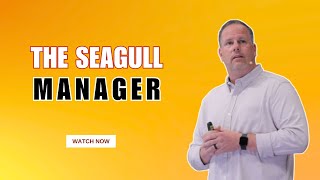
Clegg defines the seagull manager: someone who "flies in, craps all over everybody and everything, then flies away." He also explains the "Who Not How" principle from Benjamin Hardy and Dan Sullivan, arguing you should find people to help rather than figure out everything yourself. Hiring the right person gives you better perspective, accountability, network access, motivation, and psychological support.
Chapters
Hey, good morning, everybody. Great to be back from vacation. Kind of sort of filming this on Friday when I returned. And obviously, this was the day that the world's technology shut down. So hopefully most of you were minimally impacted. Any of you that were leaving for vacation, hope you left yesterday or leaving tomorrow. But as we get back into our message of our bad boss, the bad boss that we're gonna cover this week is going to be the seagull manager, my favorite bad boss Persona of them all. So what's a seagull manager? Some of you may have heard of a seagull manager before. If you've been in my coaching or seen any of my coaching talks, we talk about the seagull manager. And the seagull manager is the manager that flies in craps all over everybody and everything, and then flies away. Now, this is traditionally a Persona that is in control, very hesitant or reluctant to let go of control, and tells people to do things exactly the way that they want things done instead of allowing autonomy. Right? As we've talked about before, instead of delegating authority, they like delegating tasks exactly how they want it done. The problem with that is people that don't have autonomy don't stay right. People want to know that they have flexibility to do the things that they want to do, how they want to do it. And so if you find yourself working for a seagull manager, what are the things that you can do? Okay, first and foremost, you can start asking a lot more questions. You can have conversations around, what are the things that I need to do in order to make you comfortable with allowing me doing the things the way that I want to do them? Is it important to get to the outcome, or is it more important to do things the way that you want me to do them? Those are questions that really hit right to the heart of the seagull manager. Now, most of the seagull managers, they don't mean disrespect, right? They likely haven't been developed or have a boss that is giving them feedback. And in all likelihood, they probably don't have an employee or employees or a group of employees that manage up to to give them that feedback. So they may not even know that they're doing it. And so if you have someone that is pretty easy to talk to or is willing to take feedback, give them the feedback, okay? They'll likely thank you for it. If you don't, then what do we do? Obviously, you always have a choice of where we work. Right? And that's Certainly a big part of employment today. But more importantly, I think really sitting down and having a very detailed conversation about very specific things that they have told you how to do and without giving you the autonomy to do it and, and really just having a discussion, once again, they may not know that they're doing it. In addition to the Seagull Manager, we're gonna hit on a lesson today. There was a great book by Dr. Benjamin Hardy, who I speak about frequently. Him and Dan Sullivan did a book, it was called who Not How. And all too often I have conversations with people, whether it's individuals that I coach or individuals that are considering me for a coach. Too often they come asking how to do something and I like to always redirect that question by telling them it is not the right question. The question isn't and shouldn't be how do I do X? Whatever X may be whatever you want to accomplish. It's who can help me? Who do I have in my inner circle? Who do I have in my sphere of influence? Those are the types of questions you should be asking. Who, not how and when. I started really believing this concept of who not how. My world started changing pretty quickly. One of the things you have to understand is if you're going to find a whole what is the primary reason? Like what are you really looking for? Are you looking to get promoted? But you don't know exactly how to polish some of the rough edges, right? There's someone out there that can teach you to do that. Is it going to cost you to hire someone to teach you that? Yes, of course. But if you get there significantly quicker, the cost overall is going to be significantly less. Because getting a promotion usually means getting additional money. Maybe it's I want to get a new job, then maybe you need to hire somebody to update your resume or maybe you need to hire somebody to help you build out your LinkedIn profile. It could be anything. Know I want to figure out how to work with. My boss is a good guy, my boss is a good gal, but honestly we don't connect. Maybe you are lacking the self awareness, maybe you're lacking the social awareness, maybe they're lacking emotional intelligence. So it might mean you might need a coach in that particular area that once again you have to pay for. Any objective that you have is going to require some form of investment. It just depends on how quickly you want to get there. So hiring a who is critically important and, and some of them might not be that expensive. Right? But if you've never gone out to invest in another who, then you're never gonna know. There are five reasons to ask about the who, not the how. Okay? The first is you get an enhanced vision and perspective of the problem or the challenge that you're trying to solve. When you have a new individual, they're gonna have their own experiences, they're gonna have their own vision and insight to do the things that you want to accomplish. But most importantly, they've already paved that path. So the who that you would be working with that's gonna help you out or take you has already done it. So the second reason is increased accountability. It's always great to have an accountability partner when you want to accomplish something and that you've integrated another who into the process, it is now important to them. They're going to give you honest feedback on how you're doing things or how they're going to do things. And ultimately it is their responsibility. Remember, we are looking for a who, so it's their responsibility to hold us accountable to achieving that and ultimately in most cases, achieving it for themselves so that they can help us out through the process. The third thing is you get access to their network and to their resources. Now, I'm not going to go too deep into this, but tapping into other people's resources, it's a great way to expand your sphere of influence pretty quickly. Number four is enhanced motivation and inspiration. When we have a new individual that is working in an area that is their mastery working in an area that is their unique ability working that's not ours, you have to understand they're going to be highly motivated to get things accomplished because it's in their own unique ability, it's in their own expertise, and that's an important thing. So if you've got things that you don't like doing or that isn't joyful for you, outsource it to another who. And you may go like, I don't have a ton of money to be doing this and doing that. We've all can cut something, sacrifice something to expand in other areas. And that's important to understand that anytime that we want to accomplish something, there's an investment required, there is a payment required. And so I would much rather pay that investment or make that payment into another who that's already good at something. More than likely, it's going to give you higher odds that you're going to be able to accomplish this rather than trying to do these things on your own, which costs a significant amount of time. And if it's not your primary unique ability. It's certainly going to cost you money because you're not going to do it as quickly as someone else would do it. Then number five, increased psychological support. And that's a big piece of this. Like individuals that are here to support you. Another who whether you're trying to 2x or 10x, whatever it may be, they're going to understand where you're coming from, they're going to understand your journey, they're going to be able to offer encouragement. And once again, those who's need to be doing the heavy lifting for you. I hope this is helpful. Hopefully you don't have too many seagull managers running around or too many seagulls flying around. I should say additionally, as you look to accomplish more or to take on additional responsibilities or whatever it may be, think who, not how. Not only will it speed up the process for you, you're going to increase the likelihood that you achieve by bringing someone into your sphere of influence that has already done that. As usual, guys, please feel free to send me a note or a message. Send me any comments or any questions you may have on either one of these topics. Whether it be the seagull manager or the who not how process. I'd be happy to help you out. Have a great week and we'll talk to you soon.