Why Recruiters Keep Calling Some Professionals And Ignore Others
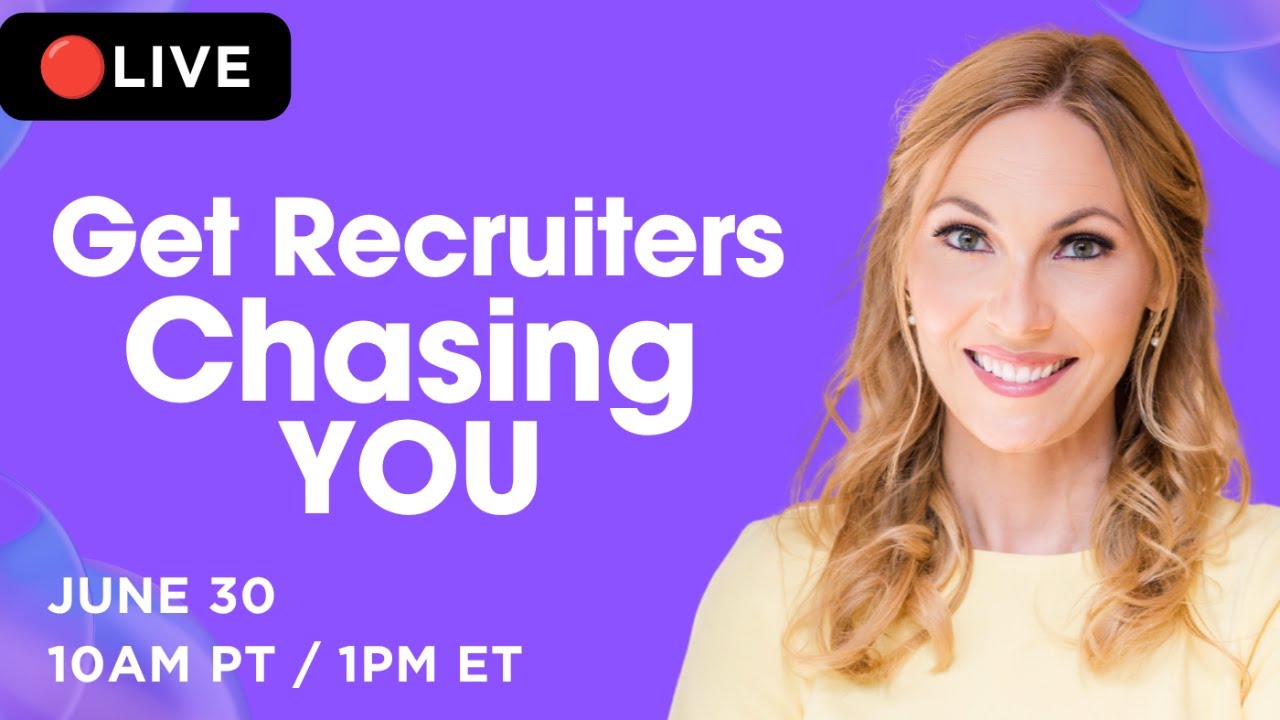
Madeleine Mann explains why recruiters contact some professionals and skip others. Your LinkedIn headline and skills section control discoverability. Being too narrow or too broad in your positioning kills visibility, and ghosting or seeming overqualified makes recruiters move on.
Chapters
Hello and welcome. I'm Madeleine Mann. We are live. Go ahead and say hi in the comments. See where you are joining us from. Today we're going to talk about why do recruiters keep reaching out to the same people? They love to talk to these certain people. They love to give them interviews. And yet for others, they ignore them. They might reach out, but then they, they ghost away. You know, all that, right? What is the difference? What is happening here? And so it's so good to see you all here. I see Ashley here. Hello! I see Donna. Good to see you. Ashley says good afternoon. Good afternoon. Amazing. So good to see y'all here. Mare, good to see you. Hi, welcome, welcome. So if you have been here before, you know that these sessions are also highly interactive. So, you know, any questions you have, you can also put them in the chat and we can, we can gab about them. And so that this is kind of your opportunity to get access to me. And it's so good to see you all. Okay. I'm seeing from Canada. Hi, Jacob. Good to see you back. New Jersey. John is from Chicago. Hi, Shelly. Shelly. Rosemarie, hello. Good to see you guys. Queens, New York in the house. So if we're talking about recruiters, okay, so, you know, a big, a big thing for my clients is to get sourced more, right? What sourcing is, is essentially a lot of companies will not sit and wait for great candidates to walk through the door or to apply. The idea is that a lot of these recruiters will proactively reach out to people who fit their criteria. And what we're finding is that sourcing is actually up. It's been increasing over the years. According to Glassdoor, we're seeing, um, pretty significant increases in the number of roles being filled by companies through sourcing. And that is because they're seeing a really large influx of all of these opportunities, of all these applications coming in. And it's not as easy to sift through as you think. We have all of these rumors or fearmongering when it comes to ATSs and, you know, bots scanning your resume. Frankly, I think we should kind of hope for more of resume scanning at this point, because right now it's computers fighting against computers. It is people who are signing up for these things that will apply to like 100 jobs a day for them. These applications are not very related to the roles they're going for. Um, it's not a good fit, and these companies are feeling overwhelmed. And especially because a lot of you here are targeting higher level roles, higher paying roles, $150,000 to, you know, $200,000, $300,000, $400,000 roles. And the thing about those roles is that if you're being paid that amount, there's not that many people who can do what you do. Yes. I mean, you know, there are other people, there's plenty of other people who also do that, but, but not the same as, say, like an entry level customer support role. There's more people who have that skill set than, say, you know, a VP of product who does, you know, AI platforms, right? So that then narrows the field quite a bit. So we then need to be very discoverable. Oh my gosh, I'm seeing so many people here. Hi, Ernest. Hi, um, Ahmet from Turkey, Carol Marie from San Jose, California, um, uh, Shafiq from England. Oh my gosh, amazing. So go ahead and also, you know, as I'm talking through this topic, if anything comes up, you can put your questions in the chat as well. So one of the things that I was actually thinking about today, I had a coaching client right before this that I was talking to, and, uh, it's this idea of being too narrow versus too broad. Now I'm curious, put in the chat what you worry maybe what your LinkedIn profile could be. Could your be your profile be too broad? Maybe it's like open to a lot of different roles, a lot of different departments. Oh, I could, I could head up your HR or could also do more of the accounting side, or I could also do a bit more of your, you know, learning and development. Or maybe I could do your customer success, right? That it's so many different departments or it's a lot of different things where it's like you have so many skills that you could fit into a lot of different industries, a lot of different roles? Or are you someone who maybe you're too narrow, right? Where it's like, I can't get out of my niche. My skill set is so narrow and so defined that companies can't see me as someone who is, is in a different position. And I will say most of the clients I work with are too broad, but the client I was working with this morning was too narrow. She's a technical program manager. And she's one of my really tight, like, one-on-one clients. I only have a few. And she— her profile was, like, very specific to, like, learning and development, technical program management. She's told me, Madeline, I really don't want to work in that again. But yet everything online, everything on her resume, everything was very focused on, I'm a technical program manager for learning management systems for learning and development, all that kind of stuff, right? So that can be very, um, if you are putting that out, there's— she's not going to get any other opportunities besides learning development roles because she's defined herself very distinctly that way. Now, what's the wonderful thing about that is if she wants to land a role like that, she's already well positioned. But that's not what she wants, right? So many of us, and this might be you, is that usually if you're quite, uh, have quite a learning mindset, maybe even quite ambitious, you don't want the exact same role you had before. And so it's extremely frustrating because the companies are like, well, we're only going to hire you for roles that are, you know, in this exact company size, in this exact industry, with this exact focus. And you're thinking, look, every single job I've taken, I've learned on the job. Why are you so focused? So that's something I really work heavily with clients on. Now, if you're interested in working with me super closely, getting coaching, all that kind of stuff, we are having an info session tomorrow for people who are aiming for those $150K to like $300K roles, $400K roles. If you want that, I did put it in as the first link in the description of this video on YouTube. But I'll also try to pop it. Let's see if I can pop it in the chat just in case, because I know we have people tuning in from LinkedIn. I know we have people tuning in from Instagram right now. So I'll also put it in the chat there. Hopefully it makes it to you. If not, you can email us and, and we can help you figure it out. Yes, Carol Marie would love to be a technical program manager. Yes, I have a lot of clients who are technical program managers and they, they really love their career. And there's good demand for it too. It's just all about, as I'm saying about like my client I was working with this morning, it's all about positioning, right? And so just so you guys know, like typically, yeah, when I bring on one-on-one clients, they typically are a little bit more senior level, but it doesn't always have to be. You don't have to always be going for like that VP title. Like she's going for like technical program manager roles, but it's like she has great experience, you know, she's going for these higher level roles, all that kind of stuff. Okay. Yeah. Welcome. I've been having a difficult time having recruiters in my LinkedIn. I'm looking for program operations or product management. Yes. So this, this is challenging. So exactly. We need to position you as focused in exactly like attracting those opportunities. Exactly right. Because a lot of people think that we need to just be like messaging recruiters. And I actually think that messaging recruiters Not that it's bad, it's just that if you're going to message anyone in the company, recruiters are probably the, some of the ones who get the most emails. So they're kind of one of the most overloaded. Like even, even some of the C-level executives is actually sometimes better to email them. And then what they'll do is they'll forward that email to people on their teams. So then what happens, the email is not coming from you anymore, it's coming from the executive. And that can be highly, highly effective. Yes. Judy says, I'm too niche focused. Folks only think of me as research focused. Exactly. This is a good example of I want to get out of research. I have a lot of clients who do that, right? I have, you know, I don't only just like do like the super high touch coaching as well. I also have like more of a model where there's other coaches as well. It's like highly robust and that's actually where, if you've seen a lot of my success stories, that's where a lot of the public success stories have come out with, like the hundreds of them comes from that. And yes, we have a lot of clients in that program who are exactly, they're trying to shake this, or we just had someone land 2 job offers and he was really, his entire career was more research focused and he wanted to move more into, more into just like, you know, the corporate world, away from the research, more into managing the relationships between the pharmaceutical companies and the different partnerships, as well as, as well as, you know, kind of like being someone who's managing projects as well instead of the actual research part. So that, that was really great to see. Um, the roles I'm applying to for are so niche, it's hard to get out of that. Now this I don't hate. If you are specifically targeting niche roles and you like that you're targeting niche roles, then I would say that's great. And then look, Shima also says, I have a stage 3 interview next week. See, I even predicted that. I was like, no, that actually, that's a green flag for me. If, I mean, unless you, you really are not enjoying this work, which that's typically when you want to get coaching because it is difficult to pivot. I understand. But if you're like, hey, I actually like this, and maybe sometimes it's even easier to maybe land this role. And if you want to pivot, you can maybe pivot within the organization. But let me tell you, if you're going to— if you're going to make the pivot once you get into a company, which it is easier to pivot once you get in versus trying to pivot between jobs, just make sure that wherever you're going has that department or has that role. So that you're not going somewhere where then you're disappointed and you're feeling stagnant, and then you have to move companies again. It's just too much, right? Um, so, um, cool, cool. Carol, Carol, okay, it sounds like maybe you're interested in the info session. Yeah, hopefully. I see you're on LinkedIn, so, um, if you— if the link didn't show up in the chat for you, let me know and I'll get you an invite. Um, I love my current Job, just struggling with my current org. Oh, it's so tough, right? And I always say when you're choosing your next position, there's a hierarchy. So what's more important? What do you guys think? What's more important? Choosing your next role that is like the right title, the exact right function that you were looking for, the right day-to-day tasks, or choosing the right company where you— it is kind of exactly the right company, the right organization, the right culture. I'm going to ask you that question. So put company or role in the chat of which one you think is, is the right thing. So I'll put that— I'll— there's also a delay. So I'll give you guys a second to answer that. So Michael says, how do we get the list, the list that recruiters will use to do— the skill list that recruiters will use to do a search on LinkedIn? So it, A lot of this comes from job descriptions. Okay, so that is, that's the place you definitely want to start. And that's why it's really important that your job descriptions are not super different. Okay, so they're not in all these different departments, they're not kind of focused on all these different industries. It's better to be focused because sure, if you just look at one job description, sometimes job descriptions are not that great. Um, sometimes people just look at two job descriptions It's like not that great of a representation. But if you're able to, you know, find 3, 4, 5 job descriptions and see what's consistent among them and they're all kind of in the same function, the same role, all that, it's really that that can help a lot. Okay. So I'm seeing people responding to my question. So I'm seeing Laura say company. I'm seeing Rosemary say role. Ryan say company. She must say both. Intentional Healing Us says company. Christina says company. Yes. Okay, so I'm seeing a lot more companies, and that is 100% correct. Of course, obviously both are important. That is undeniable. But if you were to go in one direction or another of, hey, I can either take this role where the role isn't exactly right, but the company is perfect and there's a lot of growth opportunities and it's exactly the type of work I want to do, or I can go with this, you know, perfect role of exactly the things I want to do, but the company is not it. I would go with the one with the not perfect role in the right company. That is it. And that, that choice, you know, that choice happens all the time. So that's really important to know. Shelly says, what services are you providing? So I am a career coach, so I have several different programs ranging from all different levels, right? If you just want self-serve, kind of like a more affordable option, there's those options. There's more of a, um, like asynchronous one-on-one coaching option with also some, um, group coaching, which I think it was just by far the most popular, um, because we still have not capped how much one-on-one coaching you can get async. And so people really go, uh, go pretty hard, right? Because we've, we've actually— a lot of our clients right now have been getting a ton of interviews, and we— one of the services we provide completely completely, we don't charge additional for it at all, is we will listen to your interview recordings and give you feedback, which has been like one of the most crazy transformational things ever. Because you can do mock interviews, you can like write your interview answers and have them checked, which we do all, you know, we give feedback on those things. But getting feedback on, okay, hey, let me tell you why you rocked this interview. Let me tell you where you lost the interviewer in the very moment you did. That has been amazing. And then the top tier is more of like the really high touch, more kind of like a senior level tier where I actually like work like deep sessions where I'm like actually, you know, taking, taking their, their LinkedIn profile and their resume and like doing it with them and all that kind of stuff. So like really handholdy, that kind of stuff. But I put the link for coaching under the description of this video. And also there is also an info session as well tomorrow in case you want to meet with one of our executive members. And that's going to be a pretty small meeting. So only go if, if you're serious. Okay. So, I do not get recruiters message me, but I, but I do not like a year ago I used to get 5 messages a day from companies, but now it's 2 to 3 a week. Now that's great that you're getting some momentum there. So there's a couple of things that could be happening here. First of all, it could just be straight up market demand, right? Maybe the role you're going for just had a lot of action, um, a year ago, and now the market demand has settled down a bit. That's true. Now, also at the same time, um, there might be some things to change. So because the market is more competitive now, there are things that I'm doing and helping my clients to improve on their profile that gives them that edge. And you know, you didn't really need that edge as much before, but now to be that person who's landing at the top of the sourcing list, you need that. Now of course, what that needs to be for you is a unique thing, right? Like it depends on exactly like what is already on your profile, what are you targeting, all of that. Um, so, um, um, What do you think about sending out messages to recruiters on LinkedIn with your CV? Any advice on how to approach this? So like I said, I would say sending messages to recruiters is not a great use of time. I think if you're going to be talking to recruiters, I mean, yes, you can. You totally can. It's just not maybe the best use of time. I would be trying to, you know, if so, if you were to message recruiter, you'd want to be extremely explicit about which job you're messaging them about. Okay, do not make them do any guesswork. And if there isn't an open role, you need to be extremely explicit about exactly the roles you're targeting, in what industry, and at what level. Okay, do not write something generic of like, I'm looking for, you know, any sort of accounting roles at any of your innovative companies. That's too broad. Okay, so, uh, and now attaching your CV is great. If, if you are messaging a recruiter and they're an internal recruiter, make sure you, you've already applied. Okay. You only wait to apply if you're trying to get a referral, and a recruiter is not the person you get a referral from. The hiring manager is not a person you get referral from. Why? Because it's their job to fill that role. So you can just go straight to the, the, you know, straight to the, the point of, hey, you know, let's, let's get to this. Oh, thank you so much. Ali says very informative online session. So good to hear. I've had recruiters reaching out to me on LinkedIn, but after positive calls or regular emails, things tend to stall. It's mostly been blamed on how, how the client is moving slowly. How often do you follow up? Oh, Tiffany, great question. Okay, let's get into this. This is exactly, exactly what I want to talk about today. So, so I mean, how many of you put me in the chat if this has happened to you, right? Recruiter, hey, we're interested in you. And it seems like things are good. And then you never get to meet other people in the company. Things stall out, they go quiet, they ghost, whatever it is. It's really frustrating. So here's the thing. Especially with sourcing, a lot of times they're reaching out just to see, are you interested? Okay, your profile looks great. It looks— it fits certain criteria. And so, so their, their job is to kind of do like that first round of Are you someone who fits this criteria? Yes, no. And then when you are then put in front of the client or the company or whatnot, then they're kind of like going yes, no, yes, no through profiles. Now, it's quite frustrating because I obviously I've worked in recruiting for a long time and you'll put in front of them really good candidates and they'll, they'll push them away for just dumb reasons. Like, oh, well, this person has 7 years of experience in this. And so we were looking for like 9+. It's like, you do know that years of experience are 3% predictive of how well someone does in the role, right? But no, people, they'll get like really particular about things. And then sometimes you'll even like bring back those candidates they already said no to because they'll— the person will realize, oh my gosh, like I was like way too strict. About some of this stuff. So, um, so it— so yes, I think it's not necessarily the way you performed on the call. It's— it sometimes is usually like the, the profile of like what you bring to the table. It doesn't quite fit what the hiring manager is looking for. Now, it is good to keep following up. I say never self-reject. Okay, so they— you're gonna have to— they're gonna have to reject me. Okay, I'm not rejecting myself. So you can follow up 3, even 4 times over time, right? It's not— you don't want to, like, you know, bother them. But you might even just give them updates of like, hey, it's one that, you know, I'm interviewing with another company, but I want you to know I'm still really interested should the hiring team, you know, want to talk to me. Also, if you actually— if this company is your top choice, say that. Why are we not saying that, guys? We're not saying, hey, This is, you know, you are my top choice. And because the recruiter will start to pull for you potentially more if they realize, oh my God, this extremely skilled person is extremely persistent, very interested. Like, let's, you know, let's try to get them. Sorry, guys. I've been like doing this without the lights on. I don't know why I forgot that lights exist. I'm traveling right now, so it's like a little bit different. Okay, so, you know, right, like, let's like actually showing your interest as well as let's be helping recruiters. Let's view them as building relationships with them. So if they have other open roles, then you could be like, hey, I know someone who is looking for platform engineer roles or opportunities, or I know someone who's really great for my previous company. Here's their profile. Let me know if you want an introduction, you know, happy to help. Right. So just adding value as well can be really great. So let's see. All right. The right company wins every time. Yes, Mark. True, true, true. Okay. So Michael says, if you want to focus on 3 roles— CTO, Chief Architect, VP of Engineering— how do you set up LinkedIn to be findable for all 3? Okay, so, so the only issue here is, is that they're essentially, unless, unless I'm misinterpreting, it looks like two leadership roles and one individual contributor role as the chief architect. That is a little bit more tricky. If you're going for CTO and VP of engineering roles, that would feel much more in line because We can't be flippant about the idea of like people management versus not people management. Like, that's, that's a really huge distinction in your career of what you want to do next. So I would actually recommend either doing the CTO, VP of Engineering path or doing the Chief Architect path for best possible results. Now, you could try to do both, which would just mean more straddling some of the different skills and kind of mentioning both at the same time and all that. But I, yeah, I would say that, that, that you could, you know, if you, if you are like leaning more towards the CTO, VP of Engineering side, I wouldn't worry too much about kind of straddling both. That's not too difficult, though I'd probably, you know, I wouldn't— it depends on also the leveling of the company you're currently at, what your current title is as well. That, that's something that would be the first thing I would look at is like, what is your current title? What does it say? Okay, um, I just had an interview, but I guess that following a script for my pitch was not so effective. Seemed like— seemed like too theoretical, but I guess that following a script for my pitch was not effective. Yes, do not follow a script. Oh my God, um, I say this all the time, never read from a script in your interviews. You will lose the opportunity. Just as quickly as you've got it. The reason being is they're hiring a coworker, right? It's like if you're talking about your own experience, you're reading from a script, it comes across as disingenuous. So you definitely want to come in prepared. You want to come in with bullet points. What my clients do is they have like examples and stuff like that, and they just have story titles, right? So it's just like, if I need to remember, like if you're asking me for an example of you know, when I have had to work under tight deadlines, I just kind of look at my story titles and be like, oh yeah, the, um, the brand partnerships launch. And I just see that and I go, well, let me tell you. And then, and then I'm talking about it. I'm not reading from a script. So, you know, lesson learned. Okay, um, let's see, um Prima says, uh, I have got a few emails from good companies to have initial conversation with the recruiter. Can you kindly guide me on how to make a good impression on the initial phone call? Yes. So I think, I think that was the video that came out. Let me double check. I believe that's the video that came out, uh, last week on Thursday, um, on my YouTube channel, which goes really deep into this. So let me just double check. That it is the correct, um, oh, let's see, 10 senior level. Oh, interesting. Okay, maybe it— oh yeah, yeah, 10 senior level question. No, okay, that wasn't the video that came out this week. Maybe it's just a— oh, it must have been. Okay, so it's actually coming out next week. So let's talk about this, but it's basically a deep dive into how to ace senior level phone interviews because there's no There's no interview you're going to do more than the first round interview. So I'll give you a few tips here and then look out for the video that's coming out next week where I'm going into the top 9 questions that you'll be asked in a phone screen and absolutely rock it. So first of all, what so few people do is they don't customize their answers to the company. Your answer to tell me about yourself is likely to be different in this call than it will be for another opportunity. Why? Because tell me about yourself is not telling me about yourself. No, they don't want to know about your life and your work and all that. They want to know, tell me what's important for me to know about you based on this opportunity. That's the reframe. So you need to start framing your answers in that way. So what is most important about your background as according to this role? Think through that, right? So it's the first step as well as I just got off a call with another client the other day. Where I was like, I asked him, you know, why did you leave your last job? Like, let's, let's roleplay this. And he kind of like talked for a while. He kind of talked to— it was actually a fine answer. I don't think it would have lost him the job, but I was like, no, here's what you're going to say instead. And I gave him like one sentence. He goes, whoa, that sounded really good. So practicing some of those classic first round interview questions is super important. Okay. Let's see. So many questions. Oh my gosh. Oh my gosh. Okay, so let me work. Let me work through these because I'm seeing so many questions here in the chat. So let's see. I've had the same job for 25 years and can't get an interview from the dozens of jobs I've applied for, likely because I'm in such a niche job. Okay, we were talking about this earlier. And now my experience doesn't transfer enough. Any advice? This is from Jeff. So Jeff, I will say this, this is probably one of the most common situations I coach, especially having the same job. And the problem with having— not the problem, having same job for 25 years is a gift and is wonderful and is a strength. Okay, but the challenge, that's what I'll say, the challenge with having the same job for 25 years is you have lived in this world of the same terminology, kind of this, the same work. And also a lot of the work kind of blends together over time. So there aren't all these like discrete, you know, pops of these are the accomplishments. Like, it's like, ah, you know, it's been a lot. So what I typically recommend for someone like you is I don't necessarily— it really depends on what is your current job and then what is your— are you targeting next. But I will say Literally 10 times out of 10 when I'm coaching someone like this, um, there you don't have to reskill. Like, maybe there's like a couple things you need to brush up on, sure, that, that might happen. But as far as like fully reskilling, getting a degree, you know, uh, just being out of luck because you're too niche, I haven't had that happen. The reason being is, uh, is I do some strategies where you can reposition your skill set. You often need someone from the outside saying Hey, I know you've been in the trenches for 25 years. Here's how we can reposition what you're doing that makes it sound less niche. That was something I was doing with my client today is she had technical program management experience for a healthcare company right now. And I was like, do you want to work in healthcare as your next role? She goes, no. I was like, why are you— like, it was even in her title of her role. I was like, you're emphasizing this. So hardcore. So we actually took out all of the healthcare-related terms in the way she described her role, in her title, everything, so that we were communicating the parts that were relevant to the other opportunities without distracting with other stuff. So that's just like one piece of the many things you can do to really show yourself in a different light. It's quite complex when it's like you, when it's you, because it's like you're sitting in the bottle, can't read the label. You're so close to your own experience, but that can help a lot. So I had an interview a couple of months ago and then a few weeks ago they reached back out and asked if I was still interested. I said yes, and they reached out to my references. Quiet Sense. Yeah. So I'd follow up again. It sounds like maybe they're not really in a total rush to hire right now, but it's great that they— that you obviously made a great impression. All right. I failed miserably, says Irina, at my first online interview with a recruiter, the account manager from a big company. Now the recruiters are contacting me for other positions. How to get through that manager? How to get— how to get through the recruiter? So first of all, that's great that you're continuing to getting contacted. That's a really great sign. So huge congratulations there. And also, you know, good, good on you for getting your feet wet, for doing this interview, for getting it done. And you realized if you failed miserably, you're still alive, you're still kicking. The worst has already happened and you're still getting contacted by the company. So there's so much to celebrate here. So I just want to say, like, breathe. Also, the fact that you're on this live session right now It's huge because it means that you are someone who's actively trying to improve. Mainly, I'm guessing also like your, your interview skills because my channel is very interview skill heavy. So first of all, I'm just like, I have very, very big hope for you. And so what I would say is, you know, hold your head high. You are the creator of your own story, right? So 99% of the information all these companies are getting from all of you is from you. So you can just— you need to really step into yourself. I would say watch the videos on my channel, uh, really learn them deeply. Um, I had just had a, uh, a video come out last week that was like the top 10 questions that are asked in like $200K to $500K jobs. So like if you're targeting kind of like a more, uh, uh, a higher, higher pay role or a role that's a little bit more skilled, definitely watch that video and really build that skill. Because interviewing is a skill, you guys. That's the great thing is when I hear someone flubbed an interview, it's like, okay, let's get up and try again. It's a skill. It's not a personality trait. So you can, you can really build this. All right. Yes. Yes, thank you, thank you. So Jacob says some of the jobs advertised are just bogus. Once I got a response within 5 days of applying that the role was already filled. God, so annoying. Why do they bother to post if they are planning to recruit internally? Okay, so, okay, so this is the thing. It's— they, they— it's, it might seem companies are not putting out most of their job applications just because it's fun, or they're not like interviewing external candidates just to create internal equity. Like, if they just simply wanted to hire someone internally, you could just extend that opportunity to that person, which happens all the time. And it probably has happened to a lot of people who are on this call right now. It's usually because they truly are like, all right, we're gonna open this role, and then yes, you're right, maybe some internal candidates are raising their hand, and and the company isn't 100% sure that they want to hire that person. Now, there are 3 components that make it so that you can land a job. The first is compatibility. So you need to be compatible with the opportunity. Second is— and compatibility, more of like personality plus, plus your actual skill set. The second is logistics, right? Like, do you actually have, you know, are you actually able to be here? Are you in the right place? All that kind of stuff. And the third is timing. And I think this— the timing one is the one that you unfortunately missed. And the thing is about hiring process is not a linear process, especially for those of you going for higher skilled roles. It usually is not. We interview everyone in stage 1, then we move everyone to stage 2. Reasons why I think it's actually good for if you see a role that's been open for a while to still apply if you're going for a more skilled role. Because it's sometimes hard to find people who are skilled enough for these opportunities. So I would say still go for it. All right. Christina says, I'm trying to make a career change and have revised my LinkedIn profile. I'm creating content and commenting on posts in the new industry. Still nothing from recruiters. Any suggestions? So it really depends, right? I would have to actually look at your profile. I love that you are staying active on the platform. That's great. Sending signals to LinkedIn of, hey, send messages to Christina because she will— she's, she's active on the platform, so she's more likely to respond. So that's great. Make sure you have open to work on so that recruiters know that you're open to work. Your profile does need to— does need to be optimized. I've realized a lot of people don't necessarily know how to do that properly. So it would really take me kind of like looking at your profile and being like, oh, here's the thing. Like I was talking about earlier about my client that I had this morning, her profile was fabulous. Like when I got her, I was like, wow, it looks great. But it was— but when she told me she doesn't want to do learning and development anymore for technical program management, I was like, Oh, well, if you were to get sourced, that's the only thing you're going to get sourced for. Even though she had like tons of keywords and like all— she had 100 skills at the bottom of her profile, but I was like, these are not the correct skills. So that's a huge piece is like really making sure your targeting is excellent. Um, oh my gosh, Shima's been ghosted all the time, had duplicate messages, messages on a roll. That I'd already applied to through them. And when they said yes, I've applied and asked for an update, ghosted again. So frustrating. I know. Oh, oh my gosh. Is it true that some recruiters are just bored and just wanting to see what's out there rather than intending on doing any hiring? No, that's literally never, ever true. All right. I've been ghosted, or they tell me company went with an applicant, but they, but they still then still see the job posted. Yeah, this could be just a lack of oversight. So they could have just, you know, the, the job was left up. It could be that they filled that role, but maybe they keep the role open over time because maybe it's a high turnover role or maybe not even high turnover. That can sound negative, but maybe it's a role that as the team, as the company grows, it's a role that they hire for often. So they keep it open so that when they do reopen it, say in a few weeks or so, there's been an ongoing number of people interested. It depends, right? It depends on the opportunity. So let's see. It's been super difficult to get interviews, says Lola. I'm presently an entrepreneur pivoting into 9-to-5. I've been out of work and worked previously for a nonprofit. So hard converting my experience. Okay, so this is actually one of my specialties, you guys, because this situation is really, really challenging, and I've had a lot of clients who've gone through this and done it extremely successfully. Successfully. The thing is, companies don't— you're never going to get sourced if they, if they view you as someone who currently owns a company. Okay. Not going to happen. You look at my LinkedIn profile. The day I said like CEO and career coach at Self Made Millennial, that was the day I stopped getting sourced for head of HR roles. So that is something I really help folks with is like repositioning your skills, reframing everything. Um, you know, not kind of positioning yourself as a business owner, um, but more in a— because the thing about being a CEO or an entrepreneur is that you are, you know, I say CEOs, especially in a small company, stands for Chief Everything Officer. You did everything. You need to now get focused and position yourself in one way. But just know it's extremely possible. You can absolutely make it happen. It just takes a lot of feedback, a lot of coaching, a lot of strategy. But absolutely. But absolutely, we'll make it happen. Okay. So is it still wise to, to ask the interviewer, interviewer, if you were to hire me today, how would you know in a year's time that I was the right fit? Yeah. People like say, Oh my God, this is the best question to ask. And I don't think it's a bad question. Go for it. I personally, I think that there's better questions. One of the strategies I teach is, and if you're not following my TikTok, I kind of like, I give a lot of examples of really good questions to ask, is just a little bit more custom to the company. So instead of saying, how would you know, that I would be a great fit. What if you bring in what you already know and check if it's correct? Like, this sounds a lot more like you're already a consultant, like you're already a coworker. Such as, what if I said it like this? Okay, so, uh, so I've, you know, in our interview we've been talking and I've been writing down some of the key goals of the company, and I was hoping you and I can walk through them and talk about, you know, what would success look like in those goals and like kind of what would be expected for me within the first year. Okay. So my understanding is the first goal is really to get the app launched in the App Store, correct? Okay. So my role in that would be this, right? Do you hear how this sounds a lot more like we're doing a working session? That is a lot better than Tell me, tell me everything that would make me the right fit. You know, it sounds a lot more like you have been actively listening, like you are a coworker already. It takes us out of this feeling of like it's an interview and more of like it's a meeting between coworkers. All right. So, yes. And do make sure you are subscribed to the channel or if you're on Instagram or LinkedIn that you're following, um, you know, then you will make sure to get a lot of these because I've been doing a lot more lives. I've been doing a lot more, um, content drops and stuff like that. Uh, I've been very floodgates open with a lot of really cool strategies. So make sure you are following so you don't miss that stuff. As well as if you missed it earlier, we are doing an info session. If you kind of are going for these like higher paying, um, you know, $150K plus roles, $200, $300, $400 roles. We are doing an info session tomorrow. If you're interested in job search coaching, just come. It's a— it's a— with our executive team, with one of our executive team members, private. I will— I will link a thing there. It's not— it's not like this. It's like— it's like a small Zoom meeting. And we have— and the capacity will max out. So we might have to turn some people away. Unfortunately, we typically might have to because we don't want the meeting to get too big. Oh, this is an interesting question. So I keep forgetting the entire question asked partway through answering in the interview. Any other tips besides repeating the question before answering? You know, one thing that you could do also is I am someone who is constantly writing in a notebook, you guys. This is something— and I'm in— when I was in job interviews, like as a candidate, I was taking notes. Throughout. So let's say you said, um, tell me, you know, tell me about your experience with learning management systems, LMSs. So I might say, I just might, I might— so here I, here I just wrote down. So the question you asked me was, tell me about your experience with learning management systems. So what I wrote in my notes was LMS, LMS exp, LMS experience, LMS exp. Okay, so while I'm answering that question, I'll be answering it and then I might look down and I might see, okay, oh yeah, yeah, this is about what he initially asked me, was it about my LMS experience? Okay, so you could just do that, right? I did not write a whole— I did not write out, tell me about your experience with learning management systems. No, I just wrote LMS exp. So stuff like that, like if your memory is not great, doing stuff like that is great. And, and, you know, When you— I wouldn't recommend typing because it comes across as, especially in this day and age, it like comes across as like not being as present or maybe even like, quote, cheating. But writing, it just shows, oh, this person is seeing this conversation as valuable. I can't tell you how many times I've been an interviewer, so interviewing candidates, and they're asking me these really detailed questions about the company and the role, and I just see them sitting there going, And I'm like, how are you going to remember any of this? Why are you not taking notes? I feel like it, it honestly feels like a— just like an— like, I feel like they're asking the question just because they know they're supposed to ask questions, versus the person who's like, yeah, okay, and then how did that— blah blah blah, and they're taking notes and they're really engaged. I'm like, okay, this person actually legitimately is taking this information, and then if they're going to get hired, they're going to act on that information. All right, um, um, let's see. I come from big companies and the recruiters have reached out to me. Now I'm looking at for a small company, um, now I'm looking and a small company offer came in. Would, would that affect for the future? Um, So, so would it maybe— would affect for the future, like, taking a small company role? So what's cool is switching from a small company to a large company, a large company, small company, is actually a really difficult thing to do. Anyone on here who's, who's done it or is trying to doing— do it can— will vouch for that. Um, so if you have the big company experience and then you have a small company reach out and you're quite interested in it, that can actually make it so that your background is quite unique, and it means that you could probably straddle both. Now, does that mean that it's probably going to attract more small companies in the future and potentially fewer large companies in the future? Yes, that is potentially true. Now, there are ways that you can still emphasize your big company experience if you want to go back to big companies. Um, it really depends on your personality. Um, so like for me, like different seasons of life, like I've had like more of like a big company vibe versus like, especially earlier in my career, I was like, give me a mid-sized growth stage company because I don't want to be waiting around with a tiny narrow role. I want to be doing everything. So it really depends on what's going on with you, uh, but I would say like it really depends on like where are you at in your career, what do you want longer term. All right, um, let's see, let's see what we got next. Oh, Jeff says, I loved your answer to my question. Thank you. Oh my gosh, that's why I do this, guys. This is so fun to get to talk to you. Um, oh, um, I get interviews that seem to go well and they want to push me forward, but then they disappear. Then I see— oh wait, Oh, I think we already answered that one. Okay, cool. Um, okay, so, um, struggling to get interviews for an IC role after being a director and off for health and parental sabbatical. I'm in a new season of life after extended health challenge, all good now, and the first kid while building a trading and investment practice on the side and will be my future capital generation. So I want an individual contributor role as a customer success manager because I enjoy working and cover the basic expenses. Okay, so first of all, there's so much going on in your life, um, and also huge congratulations on your first kid. That is phenomenal. That is, it's just such a gift. Um, now here's the thing, if you want to go from, um, you might have to actually, especially if you're going for roles that are potentially— because just because it's individual contributor role doesn't mean it's necessarily a lower role. But I mean, a director, that's, that's pretty high. That's pretty significant. You will have to dim your experience a bit. You need to like, like it's almost like you're deflating it because companies are terrified of hiring people who are overqualified. They're terrified you're going to leave. Once a better opportunity comes by and all that. So I would deflate your experience a bit. Excuse me. And I would be very clear and specific, extremely explicit, like everywhere. Like too many people will focus their LinkedIn profile around what they've done in the past, but it's actually your profile needs to be focused on roles, CSM roles. Okay. And you then need to be extremely clear, even in cover letters, especially people, people like just kind of disregard cover. Clients have had really good success with COVID letters about like your, your intention and what you really want next and have that be really explicit on your resume, on your LinkedIn profile. So everything moving in that direction is like, it should be It should hit me over the head that this is your direction versus me getting distracted by your director work and all that kind of stuff. Okay. Phyllis, good to see you. Oh my gosh. Thanks for coming back. So someone posted a job for a company for which I cannot find the site. Also, the person's LinkedIn account was newly created. 'What do you think about this opportunity?' The person is wanting a resume. So I don't necessarily know that sharing a resume is a terrible thing. Um, you know, as long as there's nothing— I mean, really, a resume typically just has the same stuff that is on your LinkedIn profile. Now, if they reply back to you and they say, 'Phyllis, um, you know, in order to be— you know, we noticed some things wrong with your resume, uh, and it's not working in our system, or there's ways to improve it, I have someone who can help you with it. I'll shoot you their contact information. It's a scam. Okay, so you can follow it down a little bit of a rabbit hole, but I mean, the signs you're picking up are definitely sketchy, but we haven't hit the, the sketch maximum yet. But yes, if they start saying like, oh yeah, I can have someone who can help you, the resume— no, that's wrong. Let's see. Yes. So connected with multiple coworkers on LinkedIn, how do I make my network aware that I'm looking without coworkers noticing? So I will say, you guys, I have been testing— you guys don't know who my clients are, right? But some of these like really good LinkedIn posts that are generating incredible conversations are some of my clients. And I've been like honing the perfect post template that gets like, it's not even just about getting quantity of eyes, but it's about getting quality of opportunities. Um, so I have been like testing that quietly with my clients and it's been working really well. So if you're interested in that, definitely come to the intro session tomorrow. You might be a good fit for coaching. But I would say if you're trying to do things covertly, I wouldn't do a post like that. I would actually do more directed— I would do more directed networking. So that would be, first of all, just like making sure you have a list of target companies and communicating with people at those target companies, building relationships, And then as well as, you know, when it comes to building digital proximity, that means getting in some professional groups. Maybe it's Slack groups, maybe it's going to certain webinars like where you're actually building— you're digitally standing next to other people. And it's not job search groups, right? That's not what we're doing. We're doing professional groups, which in any time in your career is what you should be doing. So it's not like a red flag, you know. Why are you, you know, talking to people about your profession? No, that is actually totally fine. So I would say kind of rubbing elbows with people in that way is a— let's see. Yes, so Stephanie— Stephen says, um, uh, I use LinkedIn for open to recruiters only, not the public label on my profile, and I'm getting a lot of views by recruiters. That is fabulous. I love that. I think that's a really great, um, that's a really great way. Um, Carol says, how come LinkedIn— on LinkedIn, the role seems to be reposted every several weeks, has over 1,800 applicants. Do they repost, um, because they didn't find the applicant. Um, so sometimes it's just like on an auto reopen, and sometimes it's maybe because they're, they're, they're hiring multiple for that role and that they've kind of kept it open. Because it's kind of a similar answer that I had earlier of, uh, you know, it, it could be, yes, like depending on the level of the job, maybe it really in 1,800 applicants, they didn't find the right person. And it maybe it was also like a remote role, so it attracted more people, but a lot of people just like weren't qualified. Or yes, it's like something that they've kind of been keeping open, or they kind of forgot to close it. That can always be happening as well. Yay, yay, love that answer. Yes, cheers, Madeline. I'm so glad. Okay, Samuel, how do we join the info session? So I realize you're on LinkedIn. I keep adding it to the chat. Hopefully this actually— yeah, it should. It should. When I put the, the, the info session in the chat, it should also go to LinkedIn as well. So I'm going to put it in the chat again. Info session. So for coaching. Okay. So I'm going to put it in. And also if you go on LinkedIn, I'm sorry, if you go on YouTube, it's in, it's like under the description as well. Oh, thank you for answering my questions. Oh my gosh, it's my pleasure. Great points on adjusting experience. Thanks. Oh my gosh. Okay. And you said, yeah, it's been super explicit in the summary and cover letters and my referrers. Yes. And the recruiters say too much experience and misaligned pay. Yes, that's what I'm saying. They are so, so terrified that you are too experienced, which is why I was saying like, we— like, most coaches won't be straight up with you about this, but like, you gotta dampen your experience. You gotta pare it down. You've gotta like dull your shine a little bit or else they'll be too freaked out. A lot of people don't explicitly like say that straight up, but like that is what you have to do. Okay, so how to present current role on resume if freelance and non-traditional, non-related fields? Yes, this happens all the time. I was thinking just one line without employer name, but my 10-year related previous role. Yeah. And you're on to the right thing because what you could do— if freelance in a non-related field. Yes. Okay. So what I think the keyword there is non-related field. And already it's almost like you already maybe have read my book, maybe you already follow me. Like, I love the idea of you're kind of thinking outside the box here. And I want everyone to pay attention to this question because it's really good. So, so their most recent experience is, is really not relevant to what they're going for next. They're saying, what if I just put one line of like what that experience is and then just get to the next stuff? And a lot of us don't think about it that way. A lot of us think, oh, well, I need 3 bullets under every single one, blah, blah, blah. No, if it's not helpful, yes, we should tell people what we've been up to. So there's not this massive gap in our resume, but let's not waste a bunch of space. Let's get, let's get to the meaty stuff. So yes, like that is my answer to your question. Yes, you are already so on the right path. Yes, that's so helpful. Thank you. I find interviewers often squeeze 2 questions into 1 when interviewing. That's so true. They also don't really know what they're asking. And so sometimes it's really good to ask follow-up questions. Karen says, at the beginning of the interview, should you say that I will be taking notes? Sure. Yeah, I think if— especially if you're typing on your computer, you have to. Because it feels crazy if someone's just like typing. But yeah, it's like, okay, perfect. Yeah. Do you mind if I, if I take some notes in my notebook? Right. I don't— it doesn't really make any sense why they would say no to that. Cool. So this has been absolutely awesome. We, we are about out of time. If I could get a Wi-Fi high five in the chat. And Samuel, I'm so excited to see you at the info session. Like I said, I linked it in at the top of the description. If you guys want to come to an info session tomorrow, it is quite— it'll be quite exclusive. It'll be with a team member. It'll be on a Zoom session. You can actually like talk back and forth. It's an info session about coaching. You know, coaching is truly like— I love doing these live sessions and it's kind of like the closest thing I could do to like actually talk to you. Besides coaching. So it really is my absolute pride and joy and what I've dedicated my life to. So I'm seeing lots of love in the chat. Thank you, Madeline Wi-Fi. High five, hand pink waving emoji. I love it. You are the absolute best. As well as if you're seeing this recording far after the case and— thanks, Madeline. Yay. Then you can also just go to my website, madelamann.com/coaching, if that is something that you're looking for. It's not— we're not going anywhere. Yay. I'll see you tomorrow. Okay, cool. Laura is going to be at our info session tomorrow. Great to see it. I can't wait to get more special gems. So remember, it's an info session. It's not a coaching session. It's truly if you are intentional about getting coaching. Um, cool. All right, so, uh, thank you. All right, I'll see
More from Clegg





AI Won't Tell You the Full Truth | Arthur Brooks + Simon Sinek | A Bit of Optimism Podcast



How To Make the Best Decision | Arthur Brooks and Simon Sinek | A Bit of Optimism


