Why This Baseball Team Has a 4.2 Million Person Waitlist With Jesse Cole | A Bit of Optimism Podcast
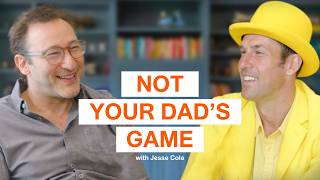
Jesse Cole built the Savannah Bananas baseball team into a 4.2 million person waitlist by treating every game like live theatre. Yellow tuxedos, choreographed fan participation, and 10 to 20 new ideas tested nightly keep the experience fresh. Cole credits P.T. Barnum and Walt Disney, and says the key is swinging hard and failing fast to stay relevant.
Chapters
you're going to the nosebleeds and trying to understand the experience. And you understand there is a front of stadium experience that is different and better. Nobody minds front of the stadium, but not at the expense of the back of the stadium.
They mind on the first class experience. They focus on that.
Right. To go to the back and say, let's make this experience wonderful at this price range, at this distance, how do we do that for you, is unheard of.
A term that you hear our team say every day is win the upper deck. We feel more purpose because it's like these people, These fans have waited 2, 3 years for tickets. It's their—
That's crazy.
—bucket. That's what— our waitlist is that long. They get their chance. If they go up there and they don't get to feel that interaction— you know, we say every night is someone's first show. Every single night. And so if it's their first show there, how do we make sure it's special?
If you love sports or if you have children or if you happen to like musical theater, then your algorithm is probably feeding you videos of a baseball team dressed in bright yellow uniforms. Doing things, let's call it, differently. That's the Savannah Bananas. And like the Harlem Globetrotters from the 1960s to professional wrestling through the 1980s, what the Bananas founder Jesse Cole has done is created an entirely new genre of sports entertainment. Jesse was a great ballplayer whose dreams of going pro didn't happen because of an injury, but he still loved the game, sort of. He found it boring. And so he changed it. Obsessed with every detail of the experience, he started experimenting, teasing out ways to cram excitement into every minute and tailor the experience to fan enjoyment. The players spend hours with fans. They do trick plays and choreographed dances. And it's all happening during a real baseball game. No matter where they go in the country, they sell out stadiums. In fact, They have a 4-year waiting list with over 4.2 million people waiting to get a ticket. For Jesse, "Fans First" isn't just a slogan or the title of his book. It's a standard. And maybe that's why it's working these days. Because in a world that's optimized for speed and scale, Jesse is building something with care. And his players, and his staff, and his fans can feel it. This is A Bit of Optimism. First of all, the fact that you have created an entirely new genre of entertainment, you know, where everybody's looking for apps, everybody's looking for online content, everybody's trying to sell something to Netflix and Hulu and, you know, Amazon, you decided to start a thing that's In real life, you can sell out a stadium more easily than the local team. What was the birth of the idea?
Well, we wouldn't sell out when we first started. Well, I mean, it was a real challenge. The birth, we put ourselves in our fans' shoes. You know, I played baseball my whole life and loved playing, but as soon as I started watching, I realized there were challenges. Too long, too slow, too boring parts of the game that were just, why is this happening? You know, batter stepping out of the box for 30 seconds and mound visits that take forever. And I realized that it was just, there was an opportunity to create something fun. And you know, that's the greatest creators. They create something that they would love. And so I just, I remember watching a game once and I was like, I am bored outta my mind. Now I played the game, Simon. So like as someone who played, you should love it. And I didn't. And so, you know, I just said, what if it was nonstop entertainment? What if, you know, there was music? What if there was dancing? What if there was celebrations? What if it wasn't, you know, the same rules like everyone else? And then you just started watching how your fans react. Yeah. After 20 years, you continue to find, you know, a method to it and how you can continue to plus it every single night.
There's so much going on here because my favorite entrepreneurs, you know, the best entrepreneurial ventures are the ones who are solving a problem for themselves or somebody they love, right? Because that's when there's passion behind it. Like, why can't I get a good sandwich?
I'll make my own kind of thing, you know, because you put everything into it, every ounce of energy. It's George Lucas. He wanted to create a movie he would love. He wanted to create all the sci-fi, all the effects. He wanted to create something that didn't exist. And that's why he built one of the greatest film franchises of all time.
So, so I like baseball. I'm a baseball fan. And one of the things that I actually like about baseball, unlike basketball and things, is that it's a little bit boring because it's a social game. Yes. People, people always say it's so boring. I'm like, no, it's a social game. You go with your friends, you talk, you don't talk at a basketball game. There's no time or hockey. There's no time for social. But So what was it, 'cause sports and entertainment, yes, sports is a kind of entertainment, of course, but sports and entertainment as properties are not the same thing. Sports is a different kind of passion. And though it's fun, you can walk away devastated. Nobody walks away devastated from a, first of all, just as an aside, why didn't you two choose two words that rhymes? Savannah bananas doesn't rhyme. So like, what was it? I understand that the game of baseball was too slow, but as a player, we can see that what's happened in the major leagues, they put, you know, pitch clocks and things like that to try and move the game along. That's still, you haven't made the leap yet to entertainment. Yeah.
Well, again, it comes to the origin. So I learned so much from Walt Disney and P.T. Barnum. So when I first started, I was a 23-year-old GM in a tiny little town and team, Gastonia, North Carolina. And there was $268 in the bank account. They only had a couple hundred fans coming to the games and we were failing. I was meeting with all these people. I'd go, "Hey, come see our show." And I call it a show because I was trying to make it into— And they're like, "Oh no, we don't like baseball. It's too long, too slow." And I finally was like, "Well, we're going to make it all about entertainment." And you started getting interest and they're like, "Well, what do you mean?" I was like, "Players are going to dance." And I said this before, players danced. I just said it out loud. But I started thinking about all those things. And when you look at Walt Disney and P.T. Barnum, what they did is they said, "All right, we are going to bring together." some of the best, like P.T. Barnum. He's like, we're gonna bring together some of the most unique entertainment forms and put them in together and create a show. And that's what he did at his museum first. And then Walt Disney said, I'm gonna control the experience. What he realized is that literally when people come in, I'm gonna control the music, I'm gonna sound, I'm gonna have custom rides, not like everyone else. It's not gonna be the same amusement park. So you never know, it's the feeling you're gonna get. And so when I started reading about Walt and P.T., I was like, we gotta promote and create something that people haven't seen before. And that's when you start experimenting and, and failing. And a lot of failure. Like almost every promotion that we came up with the first 10 years to an extent failed, but that's how you learn from your fans.
10 years is a long time to keep going.
That was 10 years of a team that no one even knew about before we even started the Bananas. And yeah, but we were having fun doing it. When you have a grandma beauty pageant and you have women in their 80s strutting their stuff and dancing and watching the crowd react.
You were having fun.
I was having fun. And some fans were starting to have fun. And when you'd see the players and now they're doing a choreographed dance during the innings and fans are like, that's fun. And players celebrating after they score, not just like high-fiving, but doing full-on celebrations. It started to kind of slowly grow. And in that team, we went from a couple hundred fans a game to 2,000 fans a game. And then I saw there was an inkling of something. And so that's when I was like, well, what if we started from scratch?
I don't think your origin story is entirely true. And I don't doubt— I don't doubt the veracity of it. When you said, I wanted the game to go faster and be more entertaining, I don't think that's true because professional baseball, as we said before, yes, it's slow and yes, for some it's quite boring. And if you wanted it to go faster and be more entertaining, you would have put more stuff on the screen. You would have had stuff come in between and you would have added the pitch clock to make the game go a little faster. So what yours was slightly different. You were a GM of a tiny rinky-dink, I don't even know if it's AAA, it's like—
Oh no, it's college summer baseball.
Okay. So it's college summer baseball. I mean—
Yeah, let's keep going down. Right, it's like 7A baseball team.
It's not even professional.
You can't even pay the guys.
You can't even pay the guys. You have an unknown league with an unknown team with 200 fans coming, and you were trying to get people to come, as you called it, to the show, which is different than trying to make baseball more fun.
That's how it start. You're right, 100%. Right? It was trying to get them to come. We didn't change the game for 15 years.
Right, so you're trying to get people to come to the show, And people's first reaction was, "Well, I don't like baseball." So what's going through your head is, "Well, if I make it not baseball." Yes. "Baseball is just the canvas, but it's not really baseball, then they'll come for the show, not for the baseball." That is really interesting.
I wanted to create fans of people that weren't baseball fans. Right. And now what's crazy is that a lot of baseball fans have actually said, "Wow, these guys can play. They do trick plays. They can do it at a high level and there's entertainment." Right. But, you know, the question more is not who are you for, but who are you not for? And I was kind of very clear that we are not for the baseball traditionalists. We are for the family. We're the people that want to come out and have fun and see things they've never seen before on a baseball field. So that made it very crystal clear, like, we want to be fans first and entertain always. We're going to make the game fun.
Yeah, because you're not competing against baseball. You're competing against Netflix and you're competing against video games and sitting at home or Disneyland. 100%.
And, and, I mean, again, and without being cliché, it's like every day we compete religiously against ourselves. Yeah. Like, we do 15 to 20 things every night that we've never done in front of a live crowd. Every single night after every show, our whole team does an LCP, learn, change, plus, 2 to 3 page report on every single promotion, every single detail, every single OTT moment we call over the top moment, every celebration. And we have full notes. And then the next day it's how are we going to get better? Because we want to make sure that fans never feel like get stale.
Well, this is something you and I have in common. The idea that the greatest competition is yourself. This is the infinite game. And what I love about this is, is and I hope whether people are entrepreneurs or not entrepreneurs when they're listening to this, which is this has nothing to do with sports. This has nothing to do with baseball. This has nothing to do with live entertainment even. This has to do with a philosophy that you have to make a great product that people want. Well, bring people together. Bring people together. That's, it's, it's joy. It's joy.
'Cause if you want it, when you feel alive, like I look for moments where you're not paying attention to anything else. You're not thinking about where you're going to be. You're on your phone. You truly feel alive and in a moment. And I think now more than ever, people need that. Yeah. And when I feel that and I— when I see our fans feeling that and everyone's singing yellow in the whole stadium, they're lighting up, they have their flashlights and everyone's singing yellow. 40,000 people. You look around and you can see goosebumps, feel it. It's those moments that I know nowhere else in the world this is happening. And that's that live experience. And every night I'm chasing those moments that people get to feel that. And when you feel a part of something I think we all want to feel part of something. That's the bigger picture. So how many teams you have?
How many teams now?
We have 6 teams.
And how many people work for the organization?
We travel with 200, 150 to 200. We have 3 tours going on at once. Then we have hundreds back at home. I mean, we're probably approaching 1,000. I was told today we have 14,000 on our waitlist to work with us, which makes me even more proud than the waitlist of 4.2 million to get tickets right now. Wow. Because we don't focus on anything else. Like every night we're focusing on how do we create a good experience for for our players, our cast, and the fans. And if we can create a remarkable experience, an unforgettable experience, everything else takes care of itself.
I mean, you are a modern-day Walt Disney.
That's one of the highest compliments I could, that means a lot, especially from you.
It's refreshing. It's also so refreshing, right? I'm tired of the entrepreneur world. I'm kind of sick of it all. And it's not as pure as it used to be. I sound fuddy-duddy, but there used to be the belief that if you had a corporate job, for example, there used to be the belief that if you worked for a private company, it was, you had more control, right? Like, because you could go to work at a public company and you can get laid off any day, but you know, there was stability in the private company, right? That's no longer true because so many small companies, so many startups are venture-backed now that the pressures from a venture capital or an investor base on these small businesses is the same or worse than the public markets. [Speaker] It's brutal. You see basically private companies operating like public companies where it's growth for growth's sake. Growth, you know, that's all they're doing is pressure for growth. And I'm kind of sick of entrepreneurs talking to me about their liquidity events and their IPOs. The purity of the reason to start a business, you know, the reason to start a business is because there's something lacking in the market that I thought I needed. And I think that other people need this too, or other people have this problem. And you know what? Damn it, I'm going to be the one to give them. And that's where the passion comes from. I think you make better decisions when you're thinking of a human being on the receiving end of your product, not a shareholder or an investor on the receiving end of your product. It's everything. Because you have no desire to go public.
I've said no to every single group that's reached out. Why would you want it?
Because they have different goals. Exactly. What I was, I've been so excited to meet you is I hate to say it, but you're a dying breed. I mean, the willingness to spend 10 years trying to figure it out, that's only driven by passion.
Oh, and sleep on an airbed and have to sell your house and be down your last dollar. I mean, when we started the Bananas, we sold 2 tickets in our first 3 months and we got a phone call from our team that we were out of money. We had nothing. So we sold our house, we emptied our savings account, we were sleeping on an airbed. This is 10 years ago. You and your wife. I and my wife. And we had just got married. We had just got married. Within 3 months, on an air bed and we're grocery shopping with just $30 a week that we'd go to Walmart.
She never regretted her decision ever.
She, she believed in me and she believed in us and she believed in what we're doing. And it was hard and we didn't sleep. But when we went through that and every day we got up excited about get to that first show, we can show fans, get to that first show because we were doubted. You know, people, we were called the bananas and then the city was ripping us apart because, you know, why are you calling our city something silly and stupid as they would say. But once we got to that first show, we felt it. And what, you know, it was crazy that first night. I'll never forget the first night. Players have been there a few days, but we talk fans first. Everything we do, the reason why we do what we do is for the fans. Create moments that truly matter, cuz nothing matters more than making people feel like they matter. Like we talked about that over and over again. And so I remember halfway through the night, a young woman comes up to me and she goes, can I get a signed ball? And I said, I'll, I'll do what I can, you know, right after the game. And she goes, no, it'd mean more to me than anything. And I go, why? What's going on? She's like, I'm here. My fiancé had come to every single opening night at this stadium since he was a kid, and I'm here with his family. He just tragically died last week, and we're here in tribute to him to be here for the opening night. And she goes, you give me a signed ball, it would mean a lot for the family. I said, of course, of course. She goes, there's one more thing. My fiancé's name was Drew Moody. You have a player on your team named Drew Moody. And at that point, Drew wasn't with us yet, but his younger brother Logan Moody was with us. And Logan's 18 years old. I go tell Logan the story. He goes, I got this. He went and got the entire team to sign the ball and he went up and he sat right down next to her. He gave her a hug and he stayed there for a whole inning just sitting with her. And he came back down afterwards. They gave her a big hug, came back down. And I said, Logan, what was that? He goes, he goes, fans first, right? He was 18 years old. Wow. With us for 2 days. He understood what mattered most. Wow. And I watched that and those stories and moments happened every single night with people saying, it's not about me being on the field, being my teammates. I'm gonna create a moment and make sure I'm there for someone that needs it. Wow. You know, I was 30, 31 years old, this brand new owner of this team, and I just like, wow. All right. It's so much bigger than who wins the game. People need to feel those. And that, that happens every night at our stadium.
So we're talking about the fans. Let's talk about the players. Yeah. Because they're good baseball players. Tremendous. And so what's happening in their career that they decided to go this direction versus the pros or as a post-pro?
We all have something in common. At one point in our life, we've all been cut. We've all been rejected. We've all been told we're not good enough. That's happened to all of us. So they all got to single-A, double-A, triple-A, one step away from the majors, some of them in college, and they were told they weren't good enough. And then this opportunity came up. And so a few guys took a chance on us in the beginning when we were kind of saying, who is this bit— and a ball crazy thing. And they started working on trick plays, dances, celebrations, and it became a part of what they loved. What we realized is when you have fun, you play better. And it's proven. We've actually done study. Like, it's when you have fun, you play better. And so these guys come out And even if they strike out 2 or 3 times, they understand that, hey, I'm going to go make a trick play. I'm going to go have a celebrate. I'm going to go with the fans and go, you know, do some pictures and do whatever. That makes a difference. And so these guys now, at first we had no one that wanted to play for us. Like, what is this? Now we have even a Major League All-Star and World Series champion who plays full-time with us. And so now it's really become something because every night they're playing in front of a sold-out crowd. It's fun. And every night they're going out and having fun with the fans and staying. It's just a different purpose.
Are the teams still playing to win? Like, there's no set outcome? No.
So that's the big thing. When people compare us to the Globetrotters, at first I'm like, Okay. But the Globetrotters, you know, 100 years, you know, that's pretty impressive. How many companies make it 100+ years? Right. But the Globetrotters in the 1940s, they were the most famous and popular sports team in the world. That wasn't even close. They played in front of 70,000 people in Berlin. Wilt Chamberlain chose to play for the Globetrotters before playing for the Lakers. They beat the Lakers. They were playing competitive games. But then Abe Saperstein was one of the greatest promoters of all time. He said, oh, We can really expand this. Let's grow this. And he said, we're going to do the same show every night. We're going to have 3 Globetrotter teams and we're just going to spread and go out. I learned from that. If the Globetrotters back in the 1940s and '50s said, you know what, we're going to create our own league. Yeah, there might not be an NBA. And here's why. Because the NBA used to book the Globetrotters so they could get fans to stay for the NBA games. That's how popular the Globetrotters were. They were doing the flair, the fun, all of this. But they said, we're just going to do the same show because it's easier, right? I love every night, every week. We spend all week working on brand new—
it's not wrestling. Like the game, they're still athletes. So they compete.
So the big thing is they still compete every night to see who wins. But we do a show, celebrations, dances, performances that are brand new every night. So you have a brand new show for the fans and then you also never know who's going to win at the end of the game. And so that's the world we're trying to create, that there's just constant excitement. You have to stay till the end because you never know what's going to happen.
I mean, what I love about it as well is especially for athletes, which is their identities become intertwined with their, their careers, especially in baseball, where you don't have to go to college for baseball. Yeah, you're a kid that's got some aptitude. You go to high school, you're playing great. You, you know, you play AAA, you play AA, you can start to smell it. And, you know, you get rejected, you get turned down from the majors, and your whole life you've been pursuing this one goal, which is to play in the majors. And then I have to imagine that a lot of them suffer some sort of identity crisis. I suffered it.
My whole life was the goal to play professional baseball. That was my dream. That's what me and my dad worked on every day. And I got down, I got a scholarship, Division I baseball. I'm starting hearing from the Mets and the Padres and the Braves, and it's going to happen. And then I tore my shoulder and just like that was gone. And I was filming a documentary at the time for my capstone project, and I turned the camera on me. I was devastated. That was it. My life was baseball. That's what I was going to do.
So what did your identity become after you tore your shoulder where you realized literally your dream is zero? For over a week, I didn't know.
Everyone was like, you'll go into coaching. Your dad was a coach. So I went, I coached in the Cape Cod League for one summer and that's when I was bored out of my mind. That's when sitting on that bench watching the game, I was like, I know what's happening and I'm still bored. Just like Walt Disney sitting at Griffith Park watching his daughters on the carousel. And he said, "I wish there was a place adults and kids could have fun together." For me, I was like, "This is a great game, but it can be so much more fun." And so to answer your question, I went through that. And then it wasn't until that coaching, I was like, "I don't want to coach. What if I went on the front office and I could create the experience when fans walk in, how they feel when they leave, all those moments in between?" And it took years of kind of crafting that to get to here. But I think when you mentioned the players, their identity, was everything. What people don't realize in minor league baseball and professional baseball, you are competing against everyone, your teammates even, who's going to go to the next level, right? Right. So you're competing with your teammates to get to the highest level. Here, you know, at the end of the night, our captain gets on the mic and he says, you know, I love this team. What people don't realize, we share a locker room together. These are my brothers and we compete like crazy on the field. We all want to win. But at the end of the day, we're in this together. And it's a bigger picture. And even after a tough loss, you look around and see a sold-out crowd and understand they came for that. As opposed to if you go watch your favorite team and at the end of the night they lose, you watch people leave that stadium, they're upset, they're angry. I don't ever want to have people leave a stadium or event feeling that.
Yeah. I mean, look, what you're doing wouldn't work in professional sports. You have the freedom to do these things. We could never make professional sports as fun.
Yeah, but I think there's pieces that can go on. You can break down the barrier between the fans and the players. Why do you have to have so much of a barrier? You know, people don't realize our players go and meet the fans for hours when the gates open at 2 o'clock.
I was blown away by this, that a game started at 7 PM, but the gates open at 2, at 2 o'clock. That's unheard of.
And there's thousands waiting because the players, the first impression matters. Yeah, the first thing they see, we do a big opening, first thing they see is all the players greeting them. At 2 o'clock. They sign till 3. Then we do an hour and 15-minute show out in front of the stadium. And then at 4:15, we do our big march. This is where both teams, our band, all of our cast, we go through and march through 10,000, 15,000 fans and we make sure we feel it. We know they're here for us. Yeah, they're not necessarily, are you going to get a single? Are you going to strike a guy? They're here for this experience. They're here to meet you. And when we get on the stage and do the big opening at 4:30, it's very clear who we're playing for. What did you learn from P.T. Barnum? I mean, you look at him, it's promotion, right? He was the greatest. People always say, you know, Jesse, could you, could you do this right now without social media? You know, people know us a lot because of social media. Sure. 35 million followers. But like, yeah, PT Barnum didn't have social media, right? What people don't realize about marketing, I've learned this over the years. Everyone's like, oh, you guys are good at marketing. I'm like, we spend $0 marketing. We invest everything in the experience and we capture that and share that. Yeah. Make your experience so remarkable that it does all the marketing for you. Yeah. And so what P.T. Barnum did, the exact same thing. He made sure when you came to his museum, you were gonna see things, you were gonna feel things that you've never seen before. Right. And people leave that museum and they tell everybody. And with Jenny Lind, he created a whole story about her. And when she came over overseas to perform, she sold out everywhere and people didn't even know who she was, but he created stories and started talking about her, not just her music. He could build and promote. And then she performed and people were blown away. And then they kept coming back. And so P.T. Barnum was the greatest promoter, I think, of all time. And then Walt Disney is where my biggest inspiration is. And, you know, his vision was a different level.
What did you learn from Walt Disney?
Well, he said it's kind of fun to do the impossible. And Walt was told every step of the way that he couldn't do something, but he saw a better way by putting himself in his guests' shoes. You know, you can't do a full-length animation film, you can't do sound, you can't do color, you know, amusement park. "What are you talking about?" He went to all those amusement parks. And everyone said, "You can't do this. Look, they're dirty. They all have the same rides. It's not a good experience." He goes, "That's the exact reason why I'm going to do it." And they told him it's going to fail. They said, "Why are you putting all this money in landscaping and a castle and these— there's no money. There's no money there." He goes, "No, I want to create an experience that is truly special, that makes you feel something." And Walt said, "Movie theater, once you do something, it's done." He goes, "The great thing about Disneyland, it's a living, breathing thing. It'll never be complete. We will always plus the show." And so that was great because he learned, you go to a movie theater, the show's over. It might be dirty how people treat you. He goes, "What if when you have one entrance," which everyone said, "Can't do one entrance, Walt. You gotta have them coming down. I want you to see the berm and see the flowers, come out and then see Main Street, then the castle, the music happens, and then you're going to feel this." He mapped it like a movie. So that's what we try to do every night when people first come to our stadium. We map the feeling till the end of the night with Stand By Me, which is one of the most powerful All the cast, all of us arms around each other, the band playing in the middle. We're singing "Stand By Me." It sounds kumbaya, but it's a moment, again, you feel together and you've gone through a whole experience. That I love.
You know that Walt Disney was so obsessed with it. Do you know why there's the huge berm in front of the entrance at Disneyland?
Well, I mean, he was trying to block out the world and make you feel like you're a part of it.
Which I love. Once you're in, you can't see out anymore. And there's no newspapers in Disneyland.
Yes. You feel like you're in a bubble.
Because you don't want any access to the outside world, which I love. Yes. You wanted to create this escape. And do you know about the garbage cans at Disneyland?
The spacing. The spacing.
So what they did was in the early days of Disneyland, the Imagineers, they would follow guests. So if they had garbage in their hands, they would count how many steps they would take before they finally got fed up because they couldn't find a garbage can and just threw it on the ground. And I don't remember the exact number, but let's say it's 27 steps. So they put a garbage can every 23 steps.
Yeah. Walt said he had a hot dog and so he walked with a hot dog once he was done with the hot dog. So he worked with them. Yeah. I mean, and he used to time the rides. He would time every ride. You know, he went on the Jungle Cruise once. Yeah. And this was crazy. The Jungle Cruise, and it was supposed to be 7 minutes. It was 4 and a half minutes. Boy, he was upset after that. He went to Dick Knudsen and he said, what's going on? It needs to be 7 minutes. And so they made it 7 minutes because they were trying to rush and get more people in. He goes, no, I want them to feel the full experience of it. Yeah. And he always said, whenever I go on a ride, I'm always asking what's wrong with this thing and how can it be improved. People might say, oh, that's a pessimist. Nah, nah. That's the way of looking. How do you make something truly great? And so that's the way we look at everything with our shows.
I love the obsession that you have. And again, you know, it's for people. It's not for a bottom line. You built a business for a human being. And the irony is, is every business is for a human being, you know, whether you're helping people be entertained or you're helping people solve a problem or you're helping people enjoy something or make their lives a little simpler, like whatever it is, there's a human being at the end of every single, every single business. And how do you make them feel? And how do you make them feel? And it is amazing to me in this day and age of engineers and AI and everybody forgets, and this is my big complaint about AI as well, which is everybody forgets there's still a human being interacting with it.
[Speaker:ARTHUR_BROOKS] Yes. Yeah. Well, and again, that goes back to the mindset of you're feeling alive. Like it's human-human connection. As we get in the future, I think as AI gets more, people are going to be more hungry for the human-human connection, the real connection where you can just have something, you walk away and you feel alive. I'm in one financial meeting a year. It's less than 2 hours. It's in November. Our CFO shares where we are. I look at it and say, good. I have no interest in that. And again, we run an airbed with nothing. And so when you learn, you go through it, you experience it. Like, no, I want to create a billion fans. I'm so focused on the next— it's like public next quarter. I'm focused on the next quarter century. What can we build? What can we grow? Where can we bring joy to places that people expect? In the youth, in the kids. I have a 7-year-old, son who every day he picks up a yellow banana ball, which is our banana ball, and he's doing tricks. He's out in front doing tricks and they call him Mav Trick. His name's Maverick. And it's just so fun to watch that joy. And I think kids used to have that even more. They'd play more outside. There's a whole big future world where I believe we can bring this, where people think it's just a show to a game, to joy. And so I think people think of the next chess move we're going to make. I'm trying to see the whole chessboard. Do you have fear? Yeah. What are you afraid of? I'm at my worst when probably the gap in the gain mindset, when we work so hard to nail something and it can go wrong and I have this expectation of this amazing performance, this amazing show. That's when I'm at a tough point.
I have to believe that the yellow tuxedo is in part branding, but also in part a reminder to you that you have to be this persona 100%. Because if you just show up in a jersey and jeans or a buttoned-up suit, so, so, I mean, this is as much a reminder to you when you see this ridiculous color that you're wearing, you're like, I got to be yellow all the time.
The origin of this came from P.T. Barnum. He was putting on a show. He wore the tails, he wore the hat. He's putting on a show. But for me, it is permission for our team to have fun and not take themselves too seriously. If your owner is in a yellow tux top hat when it's 100 degrees and he's throwing out— technically it's a bowler. Yeah, you're right. And he's, and he's, and he's— I mean, I throw Dolce and Banana underwear into the crowd. Like, literally everyone thinks they're getting a t-shirt and it's actually our banana logo on the crotch. And I throw it to a grown man that's getting way too excited for a t-shirt. I get it to him and then he's putting on the Dolce and Banana where it's on the video board. Like, if I'm throwing out Dolce and Banana in a yellow tux and I'm the owner, everyone else can have fun and not take themselves too seriously. So yes, there is a method and that's why we all dress up and have fun. It's just, it's play. It's joy. It's joy. Yeah. I think I fear if you go deeper than that, I go to fear. It's, sounds trite, but irrelevance, feeling like we don't matter. I feel what we've done, we've put so much effort into and something happens where it doesn't matter to people anymore. It doesn't have that same emotional connection. It doesn't have that same love and passion behind it. I fear losing that, losing that.
But not money. Oh no.
No, money's not, it's never been a thing for me. I didn't pay myself my first 3 months when I was 23 years old at the gym because there was no money in the account. My dad taught me to try to save, so I saved some money. I lived through that. We grocery shopped with $30 a week. I did a 2026 fans-first report, like a quote-unquote, like a shareholder letter, but I did to the fans. And I shared everything, you know, even where we're investing money, where we're going. And it's like, I just want to put accountability and responsibility to, we work for you. Even though I don't have to share that publicly, there's no reason to share any of that. I guess I have a fear in 5, 10, 15 years that where we are right now, I hope we're at this level of emotional connection, joy, people feeling a part of it, pride. We are at such a unique level. We're playing, we did the Superdome 2 weeks ago. We found out that we were the only sporting event in history, in history of the Superdome to sell out back-to-back nights with 140,000 fans. Only like Taylor Swift, Rolling Stone, like only a few concerts have done it. We're at a very unique spot right now. I don't want to look in 10, 15, 20 years and feel like we can't make that same type of impact.
So what's the vision for 10, 15 years from now? Like, you're not— you're definitely not doing the same thing.
You have to— yeah, you have to continue to reinvent. So I think a lot of people think about where their current customers are. I think about where our future fans are. I've been inspired by Disney. So they created Disneyland. Where's our world? Is there any sports and entertainment world? We're building all these characters, singers, performers. We did a cruise ship. We sold out a cruise ship, which makes no sense for a banana ball, but we did it because constraints foster creativity. What if we have to now entertain for 5 straight days with no banana ball? What could we figure out then? And so we did for 5 days. And actually the last day, which was crazy, we couldn't get into port, Simon, because the fog. So we had programmed 4 or 5 days perfectly. We had everything, and then they couldn't get to port. So we have a sold-out cruise ship, 3,000 people, all of our cast, and Emily, who's championing this project, she goes, all right, let's go, 8:00 AM. So we get together everyone. We plan 17 hours of programming from new shows, new musical numbers, new Q&As, new sessions of banana ball on the court. And people left at around 1:00 AM. We were the last ones off the ship at 1:00 AM. And the feeling of pride and fans said, we are so glad that we didn't— they missed their flights. They missed everything because they were all leaving that day in the morning. Right, right, right. We got so many letters of appreciation and gratitude. They said it made the cruise ship because of all the extra obsession of programming and details. And when I look at moments like that, I say, well, how else can we entertain? Is it a theme park that we build that's in our own worlds? Each one, Party Animals and the Tailgaters and the Firefighters and the Coconuts and the Bananas. We create something truly special. We're creating original music. We're doing all these things that we can create. And so, yeah, I see us more in the ethos of a Disney that we are an entertainment company. Youth Banana Ball, bringing that to kids all over the world that they can play and not be afraid to celebrate and do walk-ups and dancing and do trick plays and not be afraid about what people think and say about them. This is a world where you can have fun. And so I think there's a lot on the table. It's just what can we try and experiment with to get to that next at-bat and keep getting to that next at-bat?
Timing matters, right? Because Walt Disney opened Disney World in the '50s. It was post-Depression, post-World War II. There was new wealth in the nation. There was an entire generation that had missed out on their childhood. That's how they felt. Like they went from the Depression to the war. And this was a place that they could escape the pressures of the real world and disappear for a while. It's somewhat classless. You know, it's sort of for everybody kind of thing. And so, you know, the question is, could Walt Disney have founded it, you know, 20 years earlier or 20 years later? Who knows? But timing's a thing for a lot of companies. What is it about the times we live in now that makes the bananas so important?
Like, why now? We learned to create moments. You know, we followed a Saturday Night Live model and how every night we're doing brand new things that are timely, that are relevant, that are trending, and we're able to do create those moments. And so we've been able to grow rapidly. I mean, you know, we only sold 2 tickets when we started, but now, like I said, we're gonna be approaching 40 million followers. But that's the shows.
Yes. Why? But the— I mean, the enterprise, would it have worked 30 years ago? Where are people's heads that, that you fill a gap, you give an escape, you give somebody— you giving a family something that, like, your moment is now?
Well, what do you think?
I think that we are living in disconnected times. I think that families struggle to come up with things to do that make them feel like a family. You know, there's a TV in every room. At least when we were younger, there was like the TV in the TV room and that was it.
You do it together.
It was communal. And it's like, you either watch the same show or you don't watch TV, you know? And maybe only mom and dad had a small TV in their bedroom. And then we all have personal screens. And so I think it's a time of extreme disconnection. I also think what we were talking about before, which is the hypercompetitiveness of business, which is growth for growth's sake, and I'm better than you, and the idea of doing something for the sheer joy of doing it and the sheer passion of doing it, that there is no necessarily, a finish line or a goal that you know you've won when you've hit this dollar or this number of followers, pick your metric. I mean, it's sort of corny, but it's the joy of the game, right? So I think the time is right now for what you do.
But what the question is, it's like what Bezos used to always say is everyone asks what's going to change in the next 10 years, but he said, "Well, what's not going to change? People are going to want things faster, a wider selection, and better prices. What's not going to change?" So what you just brought up right there, the question is, will that change in the next 10, 20, 30 years or will it even grow even stronger?
I think it's to your favor. Yes. Because I think it's getting worse. Yeah. I mean, not to get dramatic, but if things continue as they are with AI and social media and there's no significant restraints or constraints or interventions or re-understandings how these things impact our lives, My prediction, as AI grows, you'll watch the suicide numbers go up. The more that AI becomes integrated in our lives and AI become friends in our social lives, watch the suicides go up. That's the metric to watch. And I think that what you do is profoundly the opposite because suicide, again, I know this is dramatic for what we're talking about, but suicide is a response to loneliness. And feeling unseen, unheard, and misunderstood. And you're creating the exact opposite. You're creating togetherness, you're creating joy, you're creating feeling seen. And I love that your players were almost all, it'll change, but almost all rejected. Yes. You know, they're not rejects, they were just rejected. And they felt like rejects. And you've given them a second lease on life, that they have found out that they're talented and that they're gifted and that there's even more joy in doing something else, still in the thing that they love, which is baseball. But professional players would dream to have this kind of response, especially a second-tier or third-tier player who's not, you know, Ohtani or something, you know? And so I think what you're doing now, and it's one of the reasons I'm such a huge fan of yours, is more important now than ever before. You're making families drive somewhere and have an outing. And by the way, it's not like a Disney vacation, which for some families is a year's worth or 2 years or 3 years worth of savings to go on that week vacation. This is a reasonably priced, on purpose, experience.
Yeah, $40, $50, $60, no ticket fees, no convenience fees. We pay out your taxes. I mean, intentionally.
And there's no open market, so the tickets don't spike. And I know you've put a lot of effort into—
We built our own secondary market at all face value, which we did. Is unheard of. Yes.
And thank you for taking on Ticketmaster. Thank you so much for taking on— It's a problem. It's a monopoly. That monopoly. Your time is now, and I'm glad you're seizing it.
Well, thank you. I think that's a huge responsibility. And I think because our group has purpose, and why we do what we do. We show up to every stadium. The first thing we do, we get together, we go to the upper deck, the furthest away seats. Yeah. And we talk to them and say, we put ourselves in our fans' seats, say, how are we going to make this experience special? We always break it down on fans first. And at the end of the night, we talk about the stories, the moments that truly matter. And I hope as we grow, that continues to not be taken for granted. And it's understanding why we do what we do. And it's, it's the feeling. And you mentioned the players, but we have 150 cast members. We have so many former pro wrestlers that have now become part of our dad bod cheerleading squad, the Mananas, or have become, you know, part of the Beefy Boys on the tailgaters. And they never fully made it. And now they're here and they're entertaining in front of thousands, which is what they wanted to do. They get to entertain thousands and that's what they want to do. They get to feel part of something and proud and, and doing things. I mean, yes, the Mananas dancing to Beyoncé on the field, they probably didn't have that on their bingo card, but they're doing it and fans are going nuts and want signing pictures and signing autographs. I'm watching regular, you know, just our cast members or people in merchandise and tickets. They sign autographs. Think about that. The idea of signing an autograph and that people— you go and go to your job and during your job people come and thank you and ask you for their autograph. You know, I'm very fortunate as the owner and my wife, we get a lot of the recognition, but nothing makes me feel more fulfilled than seeing our people get that every single day on the job.
But this is, again, I know This is a broken record, but I can't stop, but I'm like running other businesses through my head as we're talking. So airlines put all the attention on the front of the plane and for the most part ignore the back of the plane. You're going to the nosebleeds and trying to understand the experience. And you understand there is a front of stadium experience that is different and better and you're closer and you don't take that for granted and you get more by being in front, of course, because you paid for it. Nobody minds the front of the plane. But not at the expense of the back of the plane. Nobody minds front of the stadium, but not at the expense of the back of the stadium.
Everyone's on the first class experience. They focus on that. Right.
And I think to— sure, you have a focus on the front, but again, not at the expense of the back. To go to the back and say, let's make this experience wonderful at this price range, at this distance, how do we do that for you, is unheard of. Well, thank you. It's— or rarely heard, I should say.
A term that you hear our team often say every day is win the upper deck. Win the upper deck. But it starts at the top, Simon. I think this is really important. Like, if we just talk about it, every night I'll spend 2 to 3 innings in the upper deck. We all pass out roses to little girls. So imagine you're sitting up in Section 562 and a 3-year-old girl is getting a rose from a player, myself, our cast. And then we do— I do the sing-off there. So instead of just— be easy to just do— have the whole stadium sing and be on the field. I get in Section 527 with them and it's so amazing because they feel as soon as we walk up there, they're blown away. Yeah. And but for us, again, we feel more purpose because it's like these people, these fans have waited 2, 3 years for tickets. It's their— that's crazy. That's what— that's our waitlist is that long. They wait 2, 3, 4 years. They get their chance. If they go up there and they don't get to feel that interaction, you know, we say every night is someone's first show. Yeah. Every single night. And so if it's their first show there, how do we make sure it's special? And so we always, at the end of the night, what are the stories from the upper deck? What do you guys, what'd you guys do? What was special? Do you know Tim Harris? No, I don't.
He's the former president of the LA Lakers. Okay. For many, many years. Yeah, yeah. And Tim, nobody knows who he is. Yeah, yeah. You know, he doesn't wear a bright yellow suit. Tim would go to the nosebleeds in the arena. Yeah. And he would always look for a father and son, right? He wants that bond. Yeah. Because he knows that somebody worked hard, they wanted to take their kid out. And for the most part, that's what they can afford is the back of the arena. And he'd look for that relationship and he'd sit down and he'd see a couple and he would talk to them. And, you know, it's just a dad wants to take his son out. He's like, come with me. And he would just slip them 2 tickets and he would put them courtside. I love it. He would give them an experience that only sort of money and celebrity gets. By the way, he never sat courtside. He could every night if he wants. He doesn't. He sits up a little bit because he wants other people to have those seats. What he's doing And he's very open about it, is there's no financial interest to the team. There's no ripple effect whatsoever. It's that he wants to use his bully pulpit and his influence to create a magical experience for a father and a son. I'm going to tell you one more Disney story.
I love this, man.
I love the love of Disney. This is one you don't know.
Okay.
I had the opportunity to give a talk to the Imagineers. Which is the greatest fun, right? To meet the people who make the rides, design the parades, everything physical the Imagineers do, right? They were asking a lot of questions about the why, and I decided to do a little exercise out loud for fun, just to let people see how it works. So I picked a random guy in the audience to do this exercise with. I picked some gray hair because I figured he had some tenure. And what I didn't know that I found out later is that his nickname in the company was Ice Chips. Because he's a cold bastard.
Oh, jeez.
Okay. I didn't know that. So I pick on Ice Chips, and I don't think he knew his nickname either. And I start asking him questions, things like, tell me, um, something you worked on that like filled you with joy and love. That there was, um, a new ride that they had built. And he went to the opening day to see the ride and just check that everything was okay. And he saw there was a guy in a wheelchair with his son waiting in line to get on the ride. And he said, you know, at Disneyland, they obsess about accessibility, not because they're trying to meet some ADA requirements. And people who are in wheelchairs will find it unbelievably easy and seamless to go to Disneyland. And he says, there's a reason for it. He says, everywhere you go in the world, people see a guy in a wheelchair and his son. That's how the world sees that scene. Only at Disneyland, he said, only at Disneyland, we can only see a father and his son. I mean, I'm crying now. You know, I'm choking up now. The room, there was not a dry eye in the room. And by the way, this was a long, drawn-out, beautiful story. I'm telling the quick version. And in an instant, everybody understood why he was so hard to work for, because for him, that was the standard, that you want to make this guy feel like a father, not like a guy in a wheelchair. Yeah. And now after that, everybody wanted to work for him because the stakes were high and the standards are high. Yeah. And I think that the reason I tell you the story is that's what Tim Harris is doing on a very small scale. That's what you're doing at a very large scale, which is you're not making people feel like a bottomless wallet that you can, you know, we're going to charge you $15 for a hot dog because we can. You know? It's one of the things that I love that Arthur Blank does over in his stadium because he owns his own stadium. Clegg over in Atlanta. He's the owner of the Falcons and the soccer team as well, which is his rule is if we give you a license to sell your wares, your food and whatever in the stadium, you have to charge the same price in the stadium that you charge outside the stadium. Of course. Makes a lot of sense. A hot dog should be a couple bucks, not $30. Yeah, it's amazing. And, but this is what you're doing at a massive scale.
You know what the pricing for hot dogs and burgers in Savannah is? What is it? It's free. Free? Every ticket in Savannah because we control the whole experience. Right. Includes all your hot dogs, your burgers, your chicken sandwiches, your soda, your water, your popcorn, your dessert all night long. Wow.
I assume you don't have control of the local stadiums when you travel. No. Which sucks.
We can control the tickets. Yeah. Most of them. Right. And so then you think about Walt Disney, he wanted to control. So when you look at the future of where we go, How do we control the entire experience? Parking now, people charge more for parking than our tickets to the games. And so when I think about that, that hits me in my core. I mean, I was sending messages today to all of our team about this. How do we stop this? What do we do? How do we take control? Because just like what you shared, it's like it's controlling the entire experience. So when a parent, we could, if we charged what our tickets can go for and what they are on the secondary market, $200, $300, It's another $100 million. It's dramatic. The numbers are staggering, right? It doesn't matter.
It doesn't matter. Doesn't matter.
We're serving 3.4 million fans this year. I want to continue to serve more fans. How do we do it without raising prices? Yeah, yeah. Our president always like, Jesse, we got to, you know, but I'm like, find a way. Let's find a way. Let's keep it there and find a way. And what people don't realize is our fans support us with merchandise more than anyone would ever imagine because they want to wear the logos because they feel pride in who they represent. We don't have sponsorships like everyone else. We don't do TV rights like everyone else. We keep every game free on YouTube. It is an obsession and it's hard.
And there's other places to make money. As you said, merchandising. If you do a good job, people will, the fans will pay, buy the merchandise.
The business is extremely healthy. Yeah. But what, could it be dramatically more? Yeah. But then every day you'll lose a fan. Every single day. Every day I want to create a fan. It's a different game.
And it's a long game, right? Because you're not there yet. It's not old enough yet. But when I was your age, my dad took me to Bananas games and I'm going to take you to a Bananas game. Yes. And it's, it's, it's, and it's, and it's boys and girls and it's a family thing. It's not just a, it's not just a sports thing.
It's an entertainment thing. It's amazing. The other day. So we have before our game, we did this first game in 2016, our first year we have a banana baby. So we have a baby go into a banana costume and lift it up and all the players in the whole stadium is going, "Na, Sabine, na, na." And it's kind of a ridiculous ritual to start the game. Right. And we've kept it every year. It's been a tradition. One of the first original banana babies now just went to our banana ball youth camp. They're going to all the games, literally a baby. And so for the last 10, 11 years, They've been a part and their family travels around the country to come see shows and to see going from Banana Baby to now part of it. It's just, it's, it's, it's on the way. And that's what I hope. It's a nostalgia in 30, 40, 50 years.
And this, this is what I appreciate about you as an entrepreneur more than most businesses, which is most businesses, there's a fear that if we don't cash in now, we're going to lose the customer. Right. So let's max out the number of amount we can get because you never know, dot, dot, dot. Where what you're saying is what's the lifelong value? Of a family. It's generational wealth. It's generational. It's generational income, rather. You know, subscriptions, the obsession of every business now. These are basically lifelong subscriptions because people will come as much as they can for the rest of their lives and buy the merchandise and watch the game.
They travel around the country. They have signs with all the places they've gone. It's like I learned this from the Grateful Dead. Wow. The Grateful Dead. I mean, the Deadheads, they travel around the country and they gave up. They let them record, which was crazy. Let them record the music. They brought their own sound to control the experience. They started the first newsletter. The Grateful Dead did things for fans that even now 30, 40 years after Jerry Garcia's done, they were still selling out everywhere because they built that fandom. I don't even think about generational, like the value. I think of it as like, how do you continue to create fans in these moments? And when they think back in 20, 30 years, wow, I remember when I saw it, it was here and now it's here and it just keeps improving and it keeps feeling something.
And so when we did pricing, we were made aware that our competition for similar product was charging things like $1,100, $1,200, $1,500. We could. And the pricing we said is we want everybody to have access to our stuff. And so we said, what would a college kid be able to afford even if they went, ugh, but they could afford it? And that was always our standard. It would hurt, but they could still afford a college kid buying it. Like that was always like our pricing model. Yeah.
And if you do it well enough, you'll have enough people that want to be a part of it. So that's what like we, a lot of like you have like a golf tournament, for instance, they're like, oh, you know, we lost our sponsor. We're not sure if we're going to be able to do it again. Well, then your tournament's not good enough, right? If people won't pay for it, your tournament is not good enough that you need a sponsor. Oh, we need a sponsor to be able to do this. Create something so good that people want to invest in. We never hear complaints on pricing, on our real pricing, because it's— again, we keep it at a price that we— it's accessible. It's very accessible. Yeah. And so I just— the whole mindset is like, again, we have to figure out ways how to serve our fans in unique ways and more.
Tell me one fan story, a specific fan story, that when you think about it It is the most emblematic story of what you're trying to create for Bananas. Like when you think, when you're trying to explain to a new cast member, a new team member, what we're trying to do is this, let me tell you the story of X, this captures it better than any other story.
Oh geez. I mean, there's a lot of stories, but I go back to the root. So when we started our first 7 years, Simon, we called every single fan that buys a ticket and thanked them. We did this up until about 150,000 fans. Now we do it sporadically because we're serving 3.4 million. Sure. But we call every single fan just to thank them and got a lot of voicemails, but they'd get a voicemail from us. And now we do it during Christmas time. We thank people that buy merchandise and we like our players, our team, our cast. It's part of what we did. So I said first year because we were fighting for fans. Remember, we only sold 2 tickets at the beginning. I go, guys, anybody who wants to even buy it, you're genuinely— we are genuinely appreciative because they're giving us a chance. Right. All right. And so we're calling fans. And we're into the season. You know, the first show happened, a lot of craziness, but we start selling out games. We're doing well. We're still calling our fans. So even our interns, first day there, we're calling fans to thank them. And an intern was with us, Barry, and he sees like 9 tickets. Like, that's all— that was a lot of tickets back then. Someone bought 9 tickets, like a family bought 9 tickets, and he called and they didn't answer. And he came in, I was like, hey, just try again later. We want to really make sure that they're appreciative. So he tried the next day. They were coming to a game this coming week. And the dad answered the phone and he goes, "I'm so sorry. We have 7 kids. We're not going to be able to go to the game. My wife just tragically passed away." 7 kids, dad. And so I remember Barry, I remember vividly, Barry goes, "I'm so sorry." He's a 23-year-old intern. He goes, "I'm so sorry. Is there anything we can do?" He's like, "No, no, but appreciate it. Thanks." Quick phone call. Barry walks into my office. He goes, "Jessie, this is what happened." He goes, "What can we do?" And one of the best leadership advice I learned from the first owner that I worked for when I was 23 years old, I'd ask him crazy ideas like, "Hey, what about a Midnight Madness game? What if we did this? What if this?" And he'd always come back to me and say, "Well, what do you think, Jesse?" And he empowered me as a 23-year-old. So in that moment, I just turned that on and I said, "Barry, what do you think?" He goes, "Jesse, we got to do something." And I go, "All right, well, what can we do?" He goes, "Well, how can we get them out and really do something for the kids?" And I go, well, what else do you think? Keep going. He starts writing all these ideas. I go, call him, call him back. And when you give him a sign, say, we'd love to take care of your kids and create a special moment. So he called the dad back and the dad answered and he said, you know what? It would probably be good to get the kids out of the house. So Barry gave him his number. He said, as soon as you show up, just gimme a call. Showed up, brought him in. He had that front row of seats and Barry had merchandise and all these things for the kids. But then as soon as they sat down, all the players came. And they just spent time with them. This was before the gates opened, just 20, 30 minutes. Players just— these are all college players at this point, just spending time. And throughout the game, the players would come up and sit with them and celebrate with them. And they stayed till the end of the game, which back when we played traditional baseball didn't happen at all. No one stayed till the end of a baseball game. They stayed till the end of the game. They stayed to the end of the night. The players had moments. We gave them some things. And the father, the dad said to Barry, that was the last gift my wife gave our kids, I could never imagine a better gift. And the kids walked out and now they've become a part of our family when they come to the games. And we do a lot more now and a lot more details. But when I think back to a 23-year-old intern fulfilling a whole night, going the extra level and having the 7 kids there and seeing that impact, and now that they've become lifelong Bananas fans, Bananaball fans, I just think about that he put it together. The players were involved, the cast was involved. They stayed till the end. We created a moment and it was, it was pretty special. What was your childhood like? As an only child, my dad was an only child. My dad's dad was only child. My dad's dad was only child. So many generations of boy, only child. I was a kid trying to make my dad proud and I'm still that kid trying to make my dad proud. My parents got divorced. How old were you? 8 years old. And yeah, baseball was everything. Me and my dad playing catch and being a part of the game. And so now he travels around the country and is able to see what we do. And so there's a lot of stories of my dad that mean a lot. And I grew up outside of Fenway and I had a dream to play at Fenway Park, play for the Red Sox. And I was a shy, introverted kid when I grew up. Crazily now. I mean, it doesn't— Yeah, it doesn't fit me at all. I was shy and introvert. I was scared of everything. But my dad, won an opportunity for me to be honorary bat boy for the Red Sox. And I was sitting in the dugout by myself alone. And one player came up, sat down next to me, and it was a Hall of Famer, Lee Smith. And he spent 20 minutes with me and just talking to me. He could have been warming up, doing anything. He saw me alone and he spent 20 minutes with me. And at that point I told my dad, I said, dad, I want to play baseball. I want to play for the Red Sox. And I didn't realize that point, but Lee Smith gave me my first fans first moment. As a 5-year-old kid. And what's crazy, so after that, I started playing baseball and my dad always tells the story. He said, Jess, you know, whenever you came up, I used to yell, I was so nervous again. He'd say, Jess, swing hard in case you hit it. And every time I came up to bat, my dad would say, swing hard in case you hit it. And that's been a mindset that stayed with me. And 3 years ago, we got a call from the National Baseball Hall of Fame and they said, we can't ignore the Savannah Bananas anymore. Not exactly how I expected to get that call, but They said, we want to honor you guys and have an exhibit for you and invite your fans, your players, everyone. And so we show up at the National Baseball Hall of Fame. There's hundreds of people. Cooperstown. Cooperstown. Wow. And we show up there and the first person there greeting me was Hall of Famer Lee Smith. That's amazing. And he had the picture from when I was 5 years old there. And the reason why we were in the Hall of Fame is because we were fans first. And I learned that from Lee Smith as a 5-year-old. And it's changed everything. So it's full circle from that shy introverted kid to now realizing it's a much bigger purpose.
We've been talking now for what, the better half of an hour, I guess. And the thing that is consistent in the specific stories you tell, I mean, you told two stories of loss. You tell the story of being a shy introverted kid. You tell a story of sitting on a bench by yourself. You tell stories of going up into the nosebleeds. Um, you tell stories of players who were rejected and had their dreams dashed. And it's, it's, they're all the same story. They're the story of how the world makes us feel. They're the story of having something taken away from us. Yeah. The story of not being able to participate because of cost or, or ability. The stories of being sidelined or put on the side. It's— and you're telling the story of self-worth. And it's not enough simply to say you're worth more. It's what inside that counts. Sure. Sounds great. Totally true. But the reality is we're social animals and we do need external reinforcements. And you can have all the confidence of the world. And if the world rejects you, it's going to hurt. 100%. So it's Pollyanna to simply say it's just about looking inside. Yeah. Yes, do that. Yeah. And the world matters. Yeah. And in all of your stories, it's filling this void to make sure that every single person feels included.
Yeah. Can I share one more? Yeah. Because that, I think, epitomizes what we do is we want everyone to feel a part of something. And especially when maybe at a point in their life they weren't. And I don't know if there's a root of me or something in there, but that we all feel that way. And so we had a young man our first year who wanted to get a job with us. His name's Reggie. And he called every week. Hey, it's Reggie here. Just want a job. And they go, Reggie, the job fair's in April. He goes, okay, I just really, really want this job. He called every week, spoke to someone. So finally he shows up the job fair and he's got a big smile and we're like, all right, Reggie, we're going to find something for you. And so, you know, we had him help out and greet fans and, you know, help with trash and do all different things. And so every day he showed up to the ballpark with a big smile every day. He was more noticeable than me in my yellow tux because he was walking around. He'd say, it's a great day for a ballgame. Even if it's about to rain, like every day Reggie said it was a great day for a ballgame. Best spirit. And then so after 3 years he said, uh, Jess, uh, just wanna, for the first time, uh, just wanna let you know that my birthday's on a game day. Just wanna let you know. And he tells, then he proceeds to tell everyone on our staff that his birthday's on a game day. So finally his birthday comes. We have a big pep rally with all our team getting ready for the night and we bring him over and we start singing happy birthday. And he goes, for me? Of course, Reggie, it's for you. And so we, we had, We had cake and we had balloons for him. And then I said, hey Reggie, one more thing. And I learned this from Steve Jobs, always have one more thing. I said, Reggie, come down to the dugout right before the game. He's like, sure, whatever you need. I'll be there. I'll be there. Comes down to the dugout before the game. This is in Savannah. So sold out crowd, 4,000 fans. Everyone's standing, the band on the dugout, the players are lined up running to the starting lineup. So the tunnel, everyone runs through the tunnel, batting first for the Bananas, batting second for the Bananas. Everyone's running through the tunnel going to the line. And then we say, last but not least, fans, you know him, you love him. Let's hear it for Reggie. He throws his arms up like this, runs through the tunnel, high-fiving everyone. And at the end, our coach is there waiting for him with a jersey with his name on it, puts the jersey on him, and he goes to the line for the national anthem with all the players. And you can see a tear coming down his face at the end of the night. He stayed in the dugout the whole game. So he's in the dugout the whole game. He's having the time of his life with the guys. Then he said it was one of the best days of his life. So I thought, all right, this is great. The story's over. But it wasn't. So the next day, the players come to me, said, Jesse, we loved having Reggie in the dugout. He was bringing energy. We felt like we were playing for him. We were giving everything we have for him. So we'd like him to be a coach for us. I go, a coach? Reggie? And they said, yeah, we want him to be a coach for us. And he really wants to make his special drink for us. I go, what is his special drink? He goes, he won't tell anybody what's in it. I go, what is he giving you guys? And I go, I got to find out. So I go over to Reggie, I go, I go, what's this special drink? He goes, you mean Regenade?
I go, whatever, whatever.
He goes, I can't tell you what it is. I go, Reggie, you're serving our players. I need to know what it is. He goes, promise not to tell anybody. I go, yes. He goes, it's water, ice, and Gatorade mix. I go, keep going, Reggie. You're good. Keep serving. You're good to go. So what happens is, so what's crazy is now Reggie, after, after the games, He's signing more autographs than everyone. He's out there meeting people. He's signing autographs. Now he travels around the country with us as our motivational coach. He gives pep talks to the guys every couple weekends. He breaks it down at the end of the night. He goes, stay tapped in, stay locked in, stay accountable. He gives a pep talk and everyone starts chanting. And Reggie, people might say, oh, you empowered him. Nah, he empowered us. And every day we see Reggie and his smile and his joy. Before every game, I'm out there dancing on the field with him. And it, it's a moment. And what we've been able to do that happened 10 years ago that now is continuing. I feel so much pride in the Reggie, in the Reggies in the world.
What was the name of the Red Sox player that sat next to you?
Lee Smith.
I mean, you, your whole being is Lee Smith. You are become Lee Smith. Yeah. I mean, you are seeing the lonely kid. Yeah. Or the kid who wants or the kid who's trying. Yeah. And you're going to— and you're sitting next to them. I mean, that's basically what Savannah Bananas is.
And it's who you are. Yeah. And that's why I and our cast, we stay till the last fan leaves and signs autographs, even with security kind of pushing us out. We stay till the last fan because we don't want everyone to feel not included.
Where's that picture of you and Lee Smith?
Oh, I have it. I mean, it's at my parents' house right now. It's obviously social. I have it out in every room.
I mean, that— because that to me is like, that's— it's— that's— that's—
little 5-year-old kid with a hat pulled up like this.
But that's the story, right? Yeah. It's everything. I mean, the 5-year-old you is in the nosebleeds. And 5-year-old you is calling every day. And 5-year-old you just lost a parent, you know? And somebody's willing to just take time out of their moment when they don't have to. 100%. And it's the most, one of the most important players on the team who just comes and sits next to you. It's just, it's the most human, beautiful thing. I mean, I appreciate that. Nothing, nothing. It's coincidence that it's baseball because you happen to play baseball. It's our platform.
It has nothing to do with baseball. Yeah, it's, you mentioned that we had $5 bleacher seats, me and my dad, we would set up in the bleachers up at Fenway and that's where we were. It was $5 back then, right when we started. I remember those feelings and I think that everyone wants to feel something like that.
I want you to be wildly successful. I mean, you are wildly successful. I want it to be bigger and I want it to last for a long time because it's so pure and what you're building is so pure. And as I said, it's so necessary for the times we're living in and I want it to I want your success, you know, for better or for worse, people will follow you if you're successful, not just that you're nice or fun. And the fact that the model works, I'm hoping it spurs other properties to be born that are so obsessed with fans like you are and building it for the long-term life of the fan, not just for the short-term gains of the ticket or the upsell.
But it's tough, Simon. See, the thing is, is because if you don't feel the short-term, it's really hard to keep going. So like you say, long-term fans over short-term profits. There were no profits in the beginning. Yeah.
Well, I think that's why you don't fear it. Yeah. I mean, every successful entrepreneur I know who's done anything worthwhile either came very close to or completely failed. And losing everything. I was there. I mean, I hit very near rock bottom. You were there on the air mattress. And I think what ends up happening is when you get to that point, you don't fear it as much. It's not fun. I never want to go back to that place ever again. I hated it, but at the same time I survived.
Yeah, we'll get to the— we say this all the time, get to the next at-bat. You know, when we fail something, get to the next at-bat.
I love what your dad said. Just swing, you might hit it.
Swing hard in case you hit it.
Swing hard in case you hit it.
And every day, that's the mindset.
I mean, that's the mindset. It's not wait till you get the perfect pitch. No, it's swing hard in case you hit it.
Well, you think about it, you know, who had the most hits in Major League Baseball was Pete Rose. He had 2,000 more bats than anyone else that ever played the game. You know, it sounds so simple, but like people are so afraid to keep coming up to bat and swinging hard because they weigh failure at this huge thing's pedestal. It's like he 2,000 more bats than anyone else. And then who struck out the most? He's a Hall of Famer.
It's Reggie Jackson. Well, the year Babe Ruth broke the record for home runs, he also broke the record for strikeouts. And I think when, I think Hank Aaron was, came next. Yeah. Like when Hank Aaron broke the record for home runs, I think he broke the record for strikeouts also. It's crazy. So all these guys who hit home runs, they all strike out more than anybody else.
That's why I I push our team every night to do 10 to 15 to 20 new things because I know we're going to fail at 5, 7, 8, 10 of them, but there's going to be a few that are gold. And that's how you keep— that's what excites me because you can find the gold in all the other ones you try. It's fun. So inspiring.
Jesse, thanks so much for coming in. What an absolute joy. Lots of lessons for us too. There's a lot of stuff I filed away where we can plus one ourselves. That's good stuff. Thanks, Tim. So good. A Bit of Optimism is a production of The Optimism Company, lovingly produced by our team, Lindsay Garbenius, Phoebe Bradford, and Devin Johnson. Subscribe wherever you enjoy listening to podcasts, and if you want even more cool stuff, visit simonsinek.com. Thanks for listening. Take care of yourself. Take care of each other.
More from Clegg





AI Won't Tell You the Full Truth | Arthur Brooks + Simon Sinek | A Bit of Optimism Podcast



How To Make the Best Decision | Arthur Brooks and Simon Sinek | A Bit of Optimism


