Why you’re missing out (and staying behind) by NOT using AI in your job search!
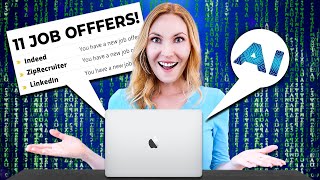
YouTube discussion (Madeline Mann and AJ Eckstein) explaining how job seekers can use AI to speed and improve their job search. The video presents five practical prompt-driven use cases — discovering career fit (ikigai), tailoring resumes, writing cover letters, preparing for interviews, and crafting thank-you notes — with step-by-step example prompts and cautions to review and refine AI output.
Chapters
Wow, that's a pretty good answer. This is cool, man. Whoa, whoa, whoa. In today's job market, you are at a disadvantage if you aren't using AI in your job search. And in this video, we are going to give you AI prompts that are going to reduce your job search time by 50%. According to Forbes, 46% of job seekers are already using AI in their job search. 69% landed more interviews and 59% landed more job offers. Companies have been over automating and optimizing their hiring processes for decades, and it's finally time for job seekers to do the same and turn job searches that used to take hours into minutes. And the secret is it's not that hard to do. And we are going to teach you how to do it today with free tools already available to you and really robust prompts that we put together. I'm talking long paragraph prompt prompts. So many people are giving you really short, rinky dink prompts that don't give you high quality results. And these are so much more effective. And so grab those prompts. We've linked those down below in the comments in the description and use them along with this video or right after. And I'm joined today by AJ Eckstein, an AI and job search expert, founder of the final round career platform LinkedIn, top voice for hiring, Fortune 500, consultant and writer for Fast Company and Business Insider. Let's dive in. In AJ you know so much about the job search. You also are deeply entrenched in AI. Tell us, how should we be thinking about the job search when we're using a tool like AI?
At the end of the day, if you're not using AI in your job search, you're at a disadvantage because almost 50% of your competitors that you're competing with for the same roles are using it, and they're landing jobs faster and more effectively. I think so many people are saying that AI is going to take over your job search. It's not going to take over. It's going to supercharge your job search. So I think of AI as your co pilot to help you fly the plane to your dream job, not your autopilot that will help you fly the plane for you.
I think of it like a really good intern, right? So if you have a really competent intern, that's AI you would never ship your resume that was made by a really good intern. You'd still check it, you'd still edit it, you'd still add your flavor, but it really helps you to get away from just a blank page and say, give me a first draft. Give me something that will get me past this mental hump, because it's a drag. AJ has put together prompts that are in depth that get you the answers you need. And so we're going to walk through those today. What are the categories of prompts that you want to focus on?
Again, you could use AI in every single part of the job search. I think the five that I want to focus on today for this video to help the audience the most. And the first one is demystifying what you want to do for your career, what you're passionate about, I would say. The second thing is how to write a great resume that gets past the ATS and lands interviews. The third thing is how to write a great cover letter to again get that interview. The fourth thing is how to nail those job interviews. And the fifth thing is how to write memorable thank you notes so that the job interviewer remembers who you are.
Perfect. I'm going to grab my computer. We're going to dive into this. Let's do it, A.J. let's kick off with figuring out what is the right next career move for you. So what is a prompt we could use to figure that out?
So I think a great framework we're going to use today before we dive into the prompt is called ikigai, and it's a Japanese framework I know I use to uncover what I'm truly passionate about. And it asks you four questions to get to the center of what that is. And it covers, what are you good at, what you doing are, what can you get paid for, what do you love, and what does the world need? And we're going to add that framework into the prompt to prompt you to get to that center.
I do think that this is so important because I think we've all been raised to think, what do you love? And then we stop there. We don't think about, okay, well, what does the world actually need? What can you actually get paid for? Right. And so that's what I'm always encouraging job seekers, is how do we make sure that you're landing a career that is going to be really fruitful? So tell us about this prompt.
So for this prompt, we're going to use something called act as, and we're basically going to prime the chatbot that you can use on ChatGPT. Claude Bard. Anything that you'd like, any chatbot. But for now, we're going to use ChatGPT and we're going to say act as a blank role. You can say act as a recruiter, act as Taylor Swift. For this we're going to say act as an expert life and career coach. Then we're going to give specific instructions. The more specific you are with the inputs, the better the output will be. So we're going to say ask me a series of questions to uncover my ikigai to help me find my career passion. Then we're going to say even more specifically, only ask me one question at a time so that I can go back and forth with you from a question and answer standpoint. We're going to go through this exercise four times. Four questions, four responses. Once we get to the end, the chatbot will uncover our center passion, which is our ikigai.
I love that. This idea of being in a flow state is absolutely what I encourage people to look for in a profession.
So for the first question that the chatbot is asking, what do you love? I guess what activities or tasks make you lose track of time and bring you a deep sense of joy and fulfillment?
I would say I really like working with people, helping them to become successful. And I also love building processes and workflows.
Amazing. So we're going to go ahead and input that for our first response. And again, a chatbot is a two way conversation. It's not just one prompt and you submit it. We're going to go back and forth. So we'll paste that in and get the second question. So for the next question that we got asked is, what are you good at? I guess what skills, talents or strengths do you possess that you believe sets you apart and makes you an expert in your current or past role?
I would say I'm good at professional communications, keeping things confidential, having empathy for others and being organized and strategic thinking.
So for the third question, what does the world need? What do you believe are some of the depressing needs or issues in this world?
I have always felt passionate that your job should be a bright spot of your day, that you should go to work and feel happy. And so that's a mission I feel very passionate about.
So for the fourth question, what can you get paid for? I think this chatbot is so smart that it's already giving you some examples like HR consultant, talent development specialist. And it's jumping ahead and actually guessing your ikigai or your dream role. Of course, if you want, you can go ahead and respond to the prompt to help refine it, but I think for now it's a great start.
I love it. And you know, as we all know I am a human resources leader. This is the profession I went into, and I think this is a really great exercise to explore these different paths. How can you merge these different aspects of your passions and what you're good at and all that, and put it to something that you can actually really make great money for? So this is an incredible prompt, and I feel like it's going to help so many people break through that mind block of what should I do next?
So the next way we're going to use AI is how to write good resumes to land interviews. So I have to ask Madeline, how long do recruiters actually look at resumes?
When they are going through hundreds of resumes, it's a matter of seconds, 5 to 10 seconds, maybe, and then if you catch their attention, they'll read it for longer. One thing I hear from so many job seekers is how exhausting it is to tune their resume to every opportunity. So give us the prompts that can help ease this burden.
Yes. So our prompt is going to go ahead and we're going to say, act as an expert resume writer with over 30 years of experience helping job seekers. We're going to go ahead and give you the target job description and then my resume. And then by the end, I want you to tailor my resume to the job description. We're going to say, let's start with the job description. What are the five most important responsibilities and way to tailor my resume? We see a placeholder here to paste job description. We're going to go over here and how great that we already found this manager, HR business partner at Disney. We're gonna go ahead and copy all of this and then put it back into ChatGPT. We're going to paste it, and then we're going to go ahead and click submit.
All right, so it came up with the five main responsibilities, and I guess now we go to step two.
Yes. So, as you know, keywords are everything in a resume and tailoring it to the job description. So from these five most important responsibilities, we're going to go ahead and paste the second part prompt here. We're going to say, based on these responsibilities, write me bullet points for my resume tailored to the job description, keeping in mind select keywords for my past job experiences. Do not make information up. Only use real experience my resume. So if you have a resume, go ahead and paste it here in this placeholder. If not, we're going to go ahead and go to your LinkedIn profile, which should be updated. We're going to go Ahead and click more and save to PDF. Once you do that, you'll see an output that looks like this. We're going to go ahead and copy all of that nine pages of experience here. Go back into ChatGPT. We're going to paste it and click Submit. Okay, great. So the last part here is we're going to ask what changed? So we're going to go ahead and paste now. Bold the specific parts that you want me to highlight or change based on the keywords and responsibilities from the job description. And we're going to click Submit.
Okay, so we have the results here. Now, I do like what they added here. Talent development, organizational design. I feel like the things they added are great if I do look at the keywords that they highlighted. I actually, when I train people to build winning resumes, I actually wouldn't put a lot of these in the category of keywords. I usually leave out soft skills such as build effective relationships, innovation and flexibility. So there's aspects here that I think are a bit misguided and a bit traditional that don't necessarily help you to land a job such as also here, I really don't recommend putting an objective on your resume that is so outdated. So I think I will also I'll extend a resume revamp workshop in the comments and in the description because I think what's super important here is, is there's a lot of good things that it did. It also got a fresh resume on the page, but you need to understand the principles of what really works for resume, because that's evolved over time. So I will also link that so you have those core principles and you can introduce it in here. What's your reaction?
I think like you said, it's a good start. I think it definitely does not give us the best resume to just submit, but I think you can continue to respond to it and use the chat bot to say, highlight the key responsibilities. What are the keywords? What am I missing? Here's my resume. What am I missing from the target job description? So use it. Go back and forth. And again, it's a copilot, not an autopilot, so make sure that you use it accordingly.
Exactly iterate. Help me quantify this, help me do this, help me do that. And so I think being a little bit specific here, it gets something on the page, but there is a lot more fine tuning that needs to be done.
So for a third topic today, we're going to talk about the resume's cousin, which is the COVID letter. And I think for Myself, for the viewers, your audience, everybody. I think we all care about one question. Do cover letters matter?
AJ it's about a flip of coin if someone is going to read it, but that means that it could make all the difference or it could not be read. If you're asking me, I think the fact that I personally, I've extended interviews to people who put in their cover letters really compelling reasons about why they're a great fit for the role and I wouldn't have interviewed them otherwise. So this could be that thing that pushes you over the finish line to land the job. Why not go for it?
And I think we're going to go for it today. That's cool with you. Let's go for it. So I'm going to go ahead and input this prompt. It's a bit lengthy, but it's very robust and advanced and it's going to help you tailor that cover letter to the job description. We're going to say act as an expert cover letter writer that has 30 years of experience, knowing exactly what hiring managers and recruiters are looking for. I'm going to provide the job description. I'll provide my resume and I want you to write an effective cover letter for me. We're going to share a couple of goals, such as make it compelling, outcomes focused, make me jump off the page. You're going to use appropriate language. You're going to give guidelines around the number of words, 250 to 400. And then we're going to share a job description. We're going to say no action needed. If you understand and receive my job description, go ahead and say, share your resume. So now we have a placeholder here in your job description. We're going to delete that and we're going to use the same job description that we used before. The manager, HR business partner at Disney. We're going to copy that, go back over to ChatGPT. We're going to go ahead and paste this and hit enter. Awesome. So just as we asked, it says, thank you, my friend. Job description received. Can you share your resume? So the second part of the prompt we're going to go ahead and paste in. We're now going to say, here's my resume. Below, I want you to create a tailored cover letter that addresses the biggest challenges someone would face in this role of the job description that you just shared. Also, write an attention grabbing hook that highlights my experience and qualifications in a way that proves I did my research, understands the challenges, how I can solve them, and keep in mind the Guidelines I shared above, it says insert resume. We're going to go ahead and remove that. We're going to grab your resume here, Copy that, go back into ChatGPT, paste it and click enter. Awesome. And now we have a cover letter instead of looking at a blank page from scratch. I think one of the things that I love about this is it helps us beat writer's block. I want to say again to all your viewers, do not just copy this and submit it in the application or send it to a recruiter. I think it's a great start. Now we have to just add our human touch. But what do you think?
Yeah, I do like that we're getting over writer's block. It's funny, one of the top things that when I receive cover letters is they're frequently written to the wrong company. So even here, just them helping you there. I will say, though, I typically I write them much shorter and much more to the point. Like, I think there's a lot of vague things here. Your job posting caught me my attention because it perfect perfectly lies with the challenges and responsibilities I've tackled through my career. I understand there's digital, you know, so I think that there's some things here that I probably take out the fluff and go to the really core things here, such as some of these things here about, you know, you know, focusing on analyzing HR data, championing diversity, equity, inclusion, some of these things that are really valuable here. So I would say this is kind of a fluffy cover letter. I would be really disappointed if you sent this out like this. But you know what I think would be helpful? I do have a video on how to write a cover letter and you could even use that framework in that video to further prompt it of, hey, can you make it shorter? Hey, can you add this framework into it? And so I think that there's so much potential here.
And I think one other thing on top of watching that other video and cover letters is again, you can respond to the prompt. So basically on the feedback you just said, why don't we just say make it shorter and remove the fluff, hit enter and let's just watch what comes out.
I like how it is factual, which I think is really important when you remove the fluff. These are facts. It's really putting it in there. I think what it is, we did lose the job description a bit. I think in this version, where it'd been great to have more comments about Disney and what is their human resources department like and all that type of stuff to show we did that research, so I'd probably further iterate. But I already like this version better. It feels more targeted.
I love it. And again, what you said is you can continue to refine the output so that it helps you with writing the best cover letters.
I love that.
So for the fourth topic, we're going to talk about interview questions. And I know for me, I don't want to speak for you. I think we've all been there. I've bombed an interview before. Have you?
I have. I have. What happened with you?
It was a financial interview, and I just did not know my technicals. And I think I wish I could have predicted the questions better. What about yourself?
Yeah, it was. I think it was in college. It was for an internship, and they asked me to do Excel formulas. I told them I was proficient in Excel. I think I overstated what I thought proficient was. I thought. I just. I've used Excel before and it was horribly embarrassing because I could not do what they asked me to do.
So let's prevent that for all of your viewers to make sure that you guys never have this experience like we did, because it is. It's a 30 minutes. Feels like an eternity in that interview room when you don't know how to respond to these questions. So watch this prompt. We're gonna go ahead and add here. We're gonna say act as an expert interview coach that was previously a hiring manager at a top company. I'm going to give you the job description followed by my resume. The goal is to predict and forecast what interview questions will be asked and then come up with the optimal responses tailored to my resume. No actions required. Just now, just ask me, what's the job description? Nothing else. Great. Just like we asked, what's the job description? And now for the second part of the prompt, we're going to go ahead and paste this and say, here's my target job description. Using this information, try to predict the interview questions and make sure that you use a good mix of questions such as behavioral and situational. If you understand, say share your resume. So we have a placeholder here. Insert job description. And now we're going to go ahead and paste the job description and click Enter. So now it's asking for a resume. So for the third part of the prompt, we're going to go ahead and paste this and say, here's my resume. Try to predict the interview questions that are most likely to be asked based on the job description. Focus on a good mix of questions, and then we're going to say Each question I want you to bold and then add a sub bullet point in italics for the best response based on my resume. And to add one more icing on the cake, we're going to say use the star method, situation, task, action, result, which I know you talk about a ton in your videos, to make sure that the responses are optimal. Don't make information up. We'll say insert resume, take that out, paste it, and click enter.
Wow, that's a pretty good answer. This is cool, man. Whoa, whoa, whoa.
And how cool is that? ChatGPT went ahead and outputted us tailored questions that they're predicting are going to be asked based on the job description. And then in italics, just like we asked. The optimal response is based on our resume. The thing that I love here is it asks a variety of behavioral questions, situational questions. It quotes things from our resume. I mean, what do you think? What's your feedback on this?
I am pretty impressed. I have interviewed lots of HR professionals. I've been interviewed, and these are questions that hiring managers would actually ask. I mean, this question about influencing leaders that. That's asked almost every time. You know, challenges related to organizational culture and employee engagement. These are real questions and I love the answers are taking factual information and it's really, again, split, spurring my imagination of what I could say. And that's what I really like for you is again, you still want to work with a coach. You still want to make sure that you are putting your best foot forward. But this is helping you to realize, okay, let me do a quick mock interview with myself, go through these questions and then maybe check to see how your answer that you came up with compares to this one. And maybe that can make it even better.
And let's say you have a networking coffee chat with someone at the company, at Disney, and they say, make sure you prepare for this question. You can add that here and say, how would you respond to this question? Or you go on Glassdoor and you see everybody asks this specific interview question or prepare for this. Add that here. Again, it's a prompt for a reason. You're supposed to respond to it. It's a conversation. And this will help you knock out interviews?
Absolutely. We also have a formula for tell me about yourself. You're going to be asked tell me about yourself. Thousands of people have written in and said that this formula has changed their interview game. So we'll also put that in the comments, in the description for you to grab. And you can also pop that into your AI and help it to massage your Answer there.
I'm seeing a combination of your content with ChatGPT and that's the biggest superpower of them all. Am I wrong?
Yeah, the formula ChatGPT. And then you are working with someone who is a job search expert to make sure it all comes together so that you are being quick and you're also being effective with your job search.
So you landed your interview, you finish your interview. What do you do next? I have a question for you, Madeline. Do follow up thank you notes actually matter? Are they memorable to you?
Absolutely. Essentially what it is, it's not necessarily going to be the thing that finally gets you the job or whatnot, but when a candidate sends a thank you email, it shows that they want the job. And you might think, well, that's obvious. Why did I interview for it? No, people interview for jobs they don't want all the time. And so companies want people who want them. And this is a clear indicator that you are a go getter, that you spent additional time to say, I really like this. The same as you'd feel if they sent you a thank you email. They say, wow, okay, they must really like me.
And thank you notes only take maybe five minutes, maybe faster with ChatGPT. And it can only hurt you by not sending one. So why not jump off the page and be memorable? And that's what we're going to do with this last prompt of the video here. So we're going to go ahead and paste this. We're going to say act as an expert copywriter focused on writing emails. I want you to write a post job interview thank you note to my interviewer with the goal to be memorable, show my interest in the role and be personable so that I stand apart from the competition. Do not use any fluff. I know you hate fluff. I know you hate buzzwords. And then keep the Note to under 250 words to keep it concise. And then this part here is where you add your inputs, the tone. Maybe it was a casual interview. Maybe it was a very formal interview for the company Disney for the role, HR specialist. The interviewer's name, let's say it was Jonathan in the interview we discussed. Maybe you talked about the future of the theme parks at Disneyland and something unique that was said. The interviewer is going to Alaska for their wedding. Add all these inputs here to make it memorable and click submit. And now we have a tailored thank you note that makes you memorable. We see it's customized. It says, hi, Jonathan or J Dog. We say that we want to Express gratitude for the opportunity to interview forward. Always include the role. Don't think that the interviewer knows what role you're applying to, because interviewers often have 10 interviews in one day. So mention the role, it says. Our conversation left me enthusiastic about joining the team. And make sure you mention what you discussed about Disneyland's expansion pushing boundaries in hr. On a personal note, I'm excited about you getting married in Alaska, which was so cool. Let's continue the conversation. Warm regards, your name so what do you think about this?
I think it's fantastic. What I love about the prompt you created is that it created room for customization, which I think all of the prompts you created really encapsulate is in the job search. We don't want to be a copy paste version of everyone else and we want to show that we've customized. That's why AI is the shortcut, because it helps to, you know, get to that customization faster. So I think this is fantastic. You could make a few tweaks here and there, but overall what a relief that you don't have to stare at a blank page. Here is a great thank you email that is, I think probably a couple edits away from hitting send.
And that was what, two minutes to be memorable.
Boom. It's so worth it.
And there you have it, actionable tips on how to make AI your secret weapon to landing jobs faster and more effectively.
I'm very curious. On a scale of 1 to 10, how much do you currently use AI in the job search? 1. Essentially not all 10 every single step of the way. Let us know in the comments and.
You might be wondering what's next. Well, I think for you, you should go ahead and sign up for my free 5 day email crash course on how to land high paying jobs using AI. I'll go ahead and leave a comment in the video notes below.
Thanks so much for joining us and I'm going to send you away with a WiFi high five.
Let's do it.
More from Clegg





AI Won't Tell You the Full Truth | Arthur Brooks + Simon Sinek | A Bit of Optimism Podcast



How To Make the Best Decision | Arthur Brooks and Simon Sinek | A Bit of Optimism


