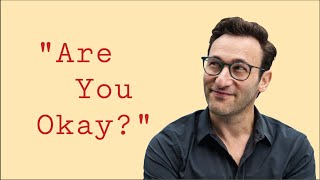
Transcript excerpt of a Simon Sinek talk (video) about building trust in professional relationships. Sinek emphasizes calibrated vulnerability (timing and incremental responsibility), treating mistakes as learning opportunities, and practicing empathy—focusing on the person not only performance—illustrated with an example about responding to declining quarterly numbers.
Chapters
So you say, I've met this person that I really like. How do I build trust? Well, you don't tell them all your secrets on the first day, right? We all know that you have to be vulnerable, but there's a timing, and it's a dance, and it's giving somebody a little extra responsibility and seeing how they do. And if they screw up, instead of yelling at them, be like, all right, try again. We treat mistakes as learning opportunities rather than. And a mistake is only when you keep repeating the same error and you haven't learned anything.
Where we practice empathy, you build trust with empathy as well. So empathy in business looks like this. Here's a traditional scenario.
Somebody walks, you know, picks up the phone or walks into their office when we had. When we did that, and says, you know, your numbers are down for the third quarter in a row.
We've had this conversation before, and if you don't pick up your numbers in the fourth quarter, I don't know what's going to happen. That's pretty normal. Here's empathy injected into that scenario. Hey, your numbers are down for the third quarter in a row. We've had this conversation before. Are you okay? I'm worried about you. What's going on.
Where it's about the person, not the performance.
And so again, it goes back to that listening. And you are not listening until somebody else feels heard those things. Seeing someone as human, understanding that we all have stresses and strains and egos and insecurities, and we bring all of that to work. And though we still have to be emotionally professional, you can't sit in the meeting like this because you're having a bad day. That's emotionally unprofessional. Though we still have to be emotionally professional, we're still human beings. And a good leader recognizes that. And by the way, somebody on a team recognizes that too. You don't have to be in a position of authority to be a good leader. Because those who may be higher in rank than us are also filled with insecurity and fear and stress and strain and ego and all that, right? And it's okay to go up the chain of command and say, hey, are you okay? You know, you were really hard on us in that meeting today. Instead of labeling them an asshole, be like, are you okay? You know, and by the way. And that's the dance. It's like any relationship, you know, it's not expected for one person in an interpersonal relationship to do all the listening. It's a dance, and it goes backwards and forwards. And, you know, you meet empathy with empathy, and you meet listening with listening.