Brian Proctor Interview with Troy, Luke & Everett!
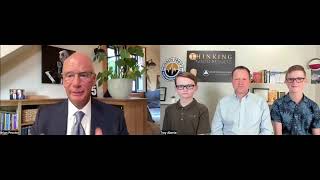
Brian Proctor discusses his new book about his father Bob Proctor, explaining how a 3am dream inspired the title "my father knew the secret." He covers the "impression of increase," the hourglass metaphor for living in the present, and his goal to sell 100,000 copies worldwide.
Chapters
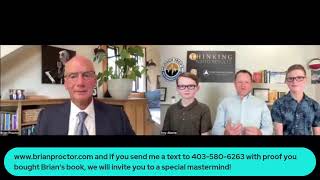
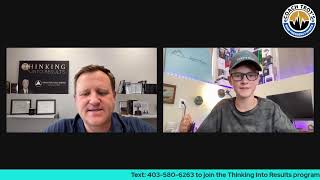
Welcome, everyone. My name is Troy Aberly and I have both my sons here, Luke and Everett, with me today. We get the opportunity to welcome someone really important to our life, not only because of himself, but also because of the work that he's done with his father. Brian Proctor has worked with his father for over 30 plus years. And you know, it's just with a ton of privilege that we get to talk to you today, Brian, about the new book that you just came out with and reading through the information we have so far and studying it like a scientist, as your father would say. You know, we're going through this material and it's just an honor to be able to talk to you and hopefully inspire other people who are trying to figure out, you know, who was Bob and Brian and what's the information, what's the clues that could really help steer people's lives differently? Because for my own self, ton of impact, I am a consultant for Bob Proctor and the thinking of the results program and I actually do it alongside Luke that's 14 years old and we've been doing that for a couple years, but also now Everett and so Brian, without further ado, welcome and thank you.
Well, thanks very much, Troy. Thanks, Everett. Luke, it's, it's great to be here. It's, it's fun to share and I appreciate you guys inviting me on.
Thank you so much for coming on today.
Yeah, thank you.
And I think it'd be fun to be able to, if people are watching, you know, grab your children too, because the information I think is so cool. I get to work alongside my kids and in our business. But Brian, you've got to do the same thing, which is really encompassing so much information inside the book. And I think there's a lot of information we can go through to talk about things that people maybe didn't know about yourself or Bob and your family and be able to take a look at that. My question, I guess right off the start is, who did you write the book for?
What made you write the book and who was it for? What were you hoping to do with it?
So I really wrote. Well, I'll tell you where it came to be. I started to write this book about four years ago. So my father was alive when I was writing the book. He knew I was writing it. He really liked the idea. It was one day I was talking with my wife, Corey, and I said to her, I said, you know, I really have this urge to write a book. My father always said, everybody's got a book in them. And I thought, you know, I have lived this life with Bob Proctor as a father, and I thought, boy, I've got so much I can share. And I said I wasn't quite sure what I was going to do or what I would write. And Corey said to me, she says, brian, she says, every seminar you're at, I mean, you know, we, we held hundreds and hundreds of thousands of seminars. She said, everybody comes up to you and is always asking, what's it like to be Bob Proctor's son? And I thought, wow, that's really it. There's the answer. That's what I can write about. So, so I started to write this book as what I learned from Bob Proctor as a father. The secrets, the stories, the lessons that he taught me as his son. I thought, it's going to bring a whole different perspective of who Bob Proctor is. So I started to write it. And dad knew I was writing it. He thought it was a great idea. I didn't know what the title of the book was going to be yet. At one point I had Living your best life was kind of on. On my brain. And none of it felt right. It just didn't, you know, it didn't seem right. And dad always said to me, says Brian, just take your time, Take your time. You know, it'll come when it's supposed to come. And we would share things that I was writing about and I would. I would send him a couple of paragraphs. He loved what I was writing then. Then he would add things for me, would say, oh, remember when this happened? Or when that happened? And it was a lot of fun for the two of us. We're both early morning people. We were both always got up early, so, you know, it wouldn't be unusual for the two of us at 5am in the morning, be on the phone chatting with each other. And so, you know, we got to relive a lot of things, and it was a. It was a great experience. Well, then he. He passed away. And it was a tough, tough time when he passed away. It took me months before I could start writing again. And that first chapter that you mentioned, that was the first thing I wrote after he was gone. And it took me a little while before I could get there. And it was, as you can imagine, that was a very, very hard chapter to write.
The title of the book, interestingly enough, came to me probably six months after he was gone. It was the middle of the night, 3am I was having a vivid dream of my father, which was kind of cool. And Then I woke up with a clear head. My father knew the secret and it was just like it was so clear to me. And I actually got up and wrote it down because, you know, in the middle of the night sometimes you can forget what was going on in your head. And so I got up and wrote it down and it just felt so right. And I swear it was my father, you know, giving me that as a gift. Whether it was or not doesn't really matter, but it felt right. And I knew instantly that was the title because, you know, for everybody that's watching this, you know, Bob Proctor was a pioneer in the self development industry. I mean, he started in the 1960s, 1970s, when nobody was studying personal development and it was a tough thing to sell. Nobody wanted to take part. They all thought it was woo woo. And you know, what is that all about? Well, it wasn't until he was 72 years old that he really became known around the world. And that was because of the movie and the book the Secret. That propelled him to a whole nother level when that came out. That's when he got on Larry King Live, Ellen DeGeneres, Nightline, all kinds of shows, and more people in the world became aware of who Bob Proctor was. So I thought how perfect to tie that all in that the, you know, the movie, the Secret. Well, I really feel my father did know the secret. And I know he taught it to me and I know I'm living it. I'm living what I would consider a charmed life because of what I learned from my dad. Dad never gave me anything, but he gave me the tools to live my best version of me and to live a great life. And so that's, that's kind of where the book came from and how it came to be. Who my audience is, is anybody that's looking for a better life. That's it. If you know who Bob Proctor is, you're going to love this book. If you don't know who Bob Proctor is, you're still going to love this book. You're going to realize that what we're capable of and what we can do in our life is so much greater than what we can even imagine right now. And this book will show you how to live that better life. So this book is really for anybody that wants to improve their circumstance, improve their life, do better in the world. That's it. That's. That's the audience.
I really love that. I would agree with everything that you said too, Brian.
It.
If you don't know who Bob is, but you have the, the inclination that there's something better and you're trying to figure out, you know, just how to get a little bit more vibration, a little higher frequency in life and, and figure out some of the tricks that people have been able to do that I think that's really important to pay attention. Now. Guys, what do you, what are things about the book, about Bob's teachings that really stuck out for you?
For me personally, I always thought that Bob, you know, he was, he seemed like just, you know, through his videos, his seminars, even thinking to results. He seemed very kind hearted, but also strict in a way to actually, you know, getting your point across and actually making sure that, you know, the person on the other end really understood what the assignment was. And so I loved how he talked to people in a way that was, you know, not just, you know, throwing a bunch of information on someone, but actually guiding them through and saying, hey, this is, this is the way that I've. All the teachings that I've learned from Napoleon Hill and all the things that he's done, but also, you know, guiding people. So I love that way and I also love through thinking, thinking into results, the ways that he's helped, you know, people around me and also myself, you know, you know, when we've done, you know, lots of the different courses and masterminds together with Bob Proctor, everyone there in our courses and stuff, you know, they've all had different goals, but in the end everyone came together to help each other. Bob, you know, made such an inclusive space that was super kind hearted but also really brought a lot of knowledge to the room so that people started helping each other. Right. It wasn't just someone speaking to someone, but it was everyone helping each other in an inclusive space. And Bob really created a, an environment for that.
That's great, Luke. I love that. I love that. Yeah, I gotta, I gotta give you guys both. Troy, you, you have two incredible kids here. I know you're not kids, you're young men. But you know what? It takes guts to sit here and to do a recording that's going out to the world to, to, to others out in the world. And the fact that you guys are willing to do this and grasp this kind of knowledge, it's impressive. I love it.
Thank you very much.
Thank you.
How about you?
I really like the part where Bob gave the impression of increase to people and I've really learned from that. So I always try to do that to people around me too.
Everett, that, I gotta tell you, is probably My favorite lesson. Without a doubt, it's my favorite lesson.
Yeah, that's really good.
We try to be a product of the product, like Bob would say. Right. And when I first heard that, I didn't even understand it yet. But then when I realized that, you know, taking a look at what that product really is, the way I show up or the person that I'm showing up as, and if I'm going to talk about involving your family and helping people with business and the way that they operate, I have to be doing the same thing. So it's very important.
Well, you know what, if you don't mind, I'd love to share this whole impression of Increase, please. Yes.
Thank you.
You know, Everett, just you saying that just warms my heart. And I'll tell you why. I learned about the impression of increase when I was nine years old.
And I share it in the book. When I was nine, we had just moved to Chicago. Dad was just going to start to work with Earl Nightingale. I think it was around 1970, 71, somewhere in there.
Probably 1970.
I had. I was born in Toronto, so I started school in Toronto. Then we moved to England. So I started a new school in England. Then we moved back to Toronto in a different area of Toronto. So I started a whole new school in Toronto. Then we moved to Chicago. So by grade four, I'm already. This is my fourth school. I was forever that new kid in school. And, you know, I don't know if you guys have ever been the new kid in school, but it's kind of awkward. And I'll never forget, I can't even remember where I was sitting. You know, dad often talks about his vision, how he created his vision in the den on Maplewood Lane in Glenview, Illinois, about, you know, consultants and people teaching this material all around the world. Well, it was in that very den that I was sitting with dad, and I said to him, I said, dad, about to start school. I hate being that new kid. I'm nervous, you know, And. And this is when he taught me the impression of increase. I was nine years old. He said to me, he said, brian, he says, all you need to do is put these four letters across the forehead of anybody you're talking to at school. Mmfi. And what that stands for is make me feel important. He said, if you can make the person that's standing in front of you feel important, feel seen, feel heard, you are going to create what's called the impression of increase. And the impression of increase is leaving those. You come in Contact with feeling better because they were in contact with you. So I started to do that. I made friends so easily because I wasn't focused on me. I was focused on them and I was interested in them. I would ask them interesting questions, I would maybe pay them a sincere compliment, but I was always interested in them. And when you can be interested in someone else rather than trying to be interesting, you're going to get on the world in a much better way. The funny thing is, I didn't realize until I was in my 20s. I was in real estate selling. I was a real estate salesperson. And my first year in the business, I made it to the top 100 internationally for a very large real estate firm. And I was only 26 years old. I was at a real estate seminar in Palm Springs, California, or Palm Desert, right next to Palm Springs. There was like 2,000 agents in the room. Well, the fellow that was hosting this, his name was Mike Ferry, he was a real estate trainer. And I was sitting in the very front row and Mike had heard what I was doing and he knew I was a rookie. I was just new in the business. And he invited me up on stage. I was a little kind of off put. I wasn't quite sure what was going to come. And he asked me what was my secret. And that's when it took me back to when I was nine years old. And I explained to them the impression of increase in the whole mmfi. And I said, I've done that all of my life. I think I was doing unconsciously, but from that point on, I realized what I was doing and I started to do it consciously. I became even better at it. I was a success in real estate because I made everybody I was in contact with feel better because they were in my presence. And because of that, people wanted to deal with me. They wanted to refer their friends and family to me. I had so much business coming my way because people enjoyed dealing with me. And that impression of increase in my eyes, that's one of the most important things that dad ever taught me. So I love that. That's. That's an important thing for you, Everett. I think that is a beautiful thing to know as a young man.
Yeah, it is. Thank you.
When we go to a store or we do business with somebody and somebody's done something, well, most of the time, if you phone there quickly on the Bluetooth and you want to report back to the Starbucks person or somebody to say, hey, you know what? So and so did a really good job most of the time. They answer the phone waiting to be yelled at. And so we've always said if we can impact that person by giving the impression of increase with a, you know, compliment, that person then will have that effect on so many more people.
Exactly.
The cool thing with the impression of increase is when you can leave somebody feeling better about themselves. You have no idea what's going on in their life, and you could potentially change the course of their day. But even more importantly, and you guys especially, you're teaching people how to live a better life, you could potentially change the course of their life by leaving them with an impression of increase. It's a powerful thing.
I think it's one of the most powerful things I've ever learned from your father and I'll continue to live by it. It's the opposite of just being selfish and not doing it doesn't feel very fulfilling. And, and you know that it's not adding any value to the frequency of society.
Yeah, yeah. Well, you know how often you, you catch yourself if you're at a party or out somewhere and you meet that one person and all they're doing is talking about themselves, or if you say something, then they'll say, oh, yeah, I did that too, but I did it this way. And they're, they're one upping you, you don't really care to talk to that person for too long, you know, Whereas if, you know, you meet somebody that's actually interested in you and, and it's asking you interesting questions, but you like that person, you want to stay and talk to that person. You know, it's common sense that most people don't really give thought to.
I love that. It's so true.
So true. Brian, is, you know, I know you and your dad were very close, obviously over 30 some years of working together, but also, I mean, obviously you've known each other for 60 years. What would be the most inspiring thing that you learned from your father to up to that point? Is there, is there a single thing that always just.
Boy, that's a tough one. You know, here's the interesting thing. Dad was given that book Think and Grow Rich in October of 1961. I was born in December of 1961. So I was literally with him the entire journey to land on one particular thing. It'd be tough.
I guess, if, if, if I was to land on one thing in particular that I lean to. And it's something, I start the book off with this and I end the book with this is.
How would your life be if you were the best version of yourself every day. That's it. If you were the best version of yourself, if you're the best version of yourself, each and every day, you're going to find that you will do more, you will accomplish more, your relationships will be better, everything will be a lot better. That's. If I'm to give one thing, that would probably be it. And I think the. I can share it with you. Dad always in seminars, always brought out an hourglass. And he has been doing this since I was a young boy. I was younger than you guys. I remember going to seminars, and Everett, I was younger than you. I was so young. As a matter of fact, there were evening seminars that eventually I'd crawl underneath the table and go to sleep. So how long I've been going to the seminars. But dad always had an hourglass. And there's a very, very valuable lesson in this. And you see in the COVID of the book, I have the hourglass. And that is because that was such a prominent thing with my father. There you go. So dad always said, he had a great statement. He said, you cannot change the time you got out of bed this morning. I loved it when he said that from the stage. And you'd look at that and kind of chuckle or think about, you know. But what he meant by it is that whatever's happened in our past has happened in our past. There's nothing we can do to change it. You can't change the time you got out of bed this morning. It is whatever it is. So he would bring out an hourglass, and he would say, the sand that's at the bottom of the glass is our past. It's already been here and done good, bad, indifferent. It's part of our past. We can't change it. It just is what it is. And he said, the sand on the top is our future. We don't know what the future holds. All we have is what's here right now, what's running through the glass at this exact moment. And he says, if we can be the best version of us right now, live in the present moment, be engaged in the present moment, the future will take care of itself, and the past will never affect us. You know how often we can get caught in a loop in our head about something that happened a day ago, a month ago, two years ago. And it just keeps playing in our head. God, if I wished I had done this or I wished I didn't do that, that doesn't do us any good. Dad was always like, it is what it is. Let it go. Harvest the good and let it go and. And just focus on what can you do right now. So if I'm to give, it's a bit of a long spiel to it, but if I was to give one thing that I learned from him, it's be the best version of you right now. That's not always easy to do. And your best version, this moment might be better than yesterday, but it might not be as good as tomorrow. It's going to be different each day. But if you can consciously be the best version each and every day, man, I promise you, you're going to live a spectacular life. Your grades in school are going to be incredible. Your friends, your relationships will be great. And, boy, I mean, you guys are already getting into business, but your business will boom because you're doing what you can right now. So many people don't do what they can right now. They're too worried about what happened or what's going to happen, and they. They immobilize themselves. They. They do nothing. But, boy, if you focus on the present moment, then you got it covered. You got it covered.
That's really good advice.
One question I have is, out of all the seminars that you and Bob have done and all of the courses and thinking to results and all of that, what has been one of the best things that someone has said afterwards of maybe a moment that they, you know, really liked out of it, or maybe something that. How it changed their life? Is there a certain person that said something like that?
Well, you know, a certain person, it's tough because there's thousands upon thousands of people. But, Luke, if I was to say one thing, it's people realizing that they're capable of doing more than they thought.
The ones that I really loved, when people came, they would walk out of the room. They weren't motivated. They were inspired, and they had a big goal. You know, dad was always big on goals. I'm sure you guys have studied this. He was always big on. You should have a goal that you don't have a clue how you're going to reach it, because if you know how to get there, it's not going to be inspiring enough. If you don't have a clue how to get there, when a roadblock comes, you're going to just figure a way around it because you're so inspired to get there that the hurdles and the things that block and come in our way aren't going to affect you negatively. You'll just realize, okay, this is maybe not the way I got to find another way to do it. So the people that I saw were the ones that. And they kept coming back to the seminars, which is great, who left with a really big goal and they stepped out and they took action. Those are the people dad loved too. He loved action takers, you know, not just the dreamers, the people that actually had a dream and would take action towards it. And those people are the ones that kept coming back. Well, you would hear them achieving incredible things. Bruce Payetta, who has become a very good friend of mine, just a super nice man, he used to come to some of the Matrix events and he would talk about what he's doing. Bruce is forever buying companies for millions of dollars. And he just keeps on doing it. He's just buying more and more companies. And he is living what dad taught. And he says he's afraid some days, but he just steps into it and just works right through it. And he has big, lofty goals and he's out taking action to get there. Those are the kind of people that dad loved. They're the stories I loved. Because there were people that you knew weren't just there to listen to my father speak. They were there to listen to them and actually apply the material. And what you guys are teaching has value. And if people will take that and not just listen to it, but apply it in their life, those, those, those are my favorite stories. The people that have actually stepped out and done crazy things. And I've seen a lot of crazy things and, and it's kind of fun. And once you do things like that, you buy businesses. You, you know, a fellow in one of the seminars bought a million dollar yacht at the time was crazy. Now it's nothing for him. You know, they stepped out and they did big things that were dreams for them. They're forever changed. And you know, I look at myself, I mean, I'm living in a home that is, it's magnificent. It's this beautiful home that my wife and I had custom built right on Puget Sound on the Pacific Ocean or a part of the Pacific Ocean. And we're like 20ft from the water. We have killer whales and seals and everything right off of our deck. And this was a big goal for us. That we didn't have a clue how we were going to get here, but we knew that if we just took action every day, we'll find the way and we'll get there. And those, those are the great stories. Those are the things that I always loved. Hearing people that actually stepped out and did something.
I love that. Thank you so much.
Yeah, yeah. Thanks, Luke.
I think it's interesting because both of these young men were in taekwondo and Luke's a black belt. I think you got it when you were 10 or 11. And what's interesting is taking the advice of what your father taught about that vision board and looking at how you do want to show up. Same thing for us where we live now. Live in the, in the forest out west of Calgary. And, and you know, if you'd asked me 10 years ago, are you going to move out to there? I just said it's not even possible.
Right.
Your dad kept talking about the C type goal. And, and I, I used to ask, well, what do you do next? Okay, I've got my C type goal. I think it's wild, crazy scary, but I would just love it. And I think that was one of the harder things was what's the next action? But you start to realize you believe in the law and the, and, and the frequency and vibration and all of those things. Is there something, Brian, as you know as I say that when someone comes to you saying, brian, I got my C type goal, I've got my goal card, what's the first thing that you or Bob would say to someone who's okay, I've got my dream. Now what?
Congratulations. Get on with the work. That's it. Get on with the work. You know, so many people pick a big goal and then they plan and they plan and they plan and they plan and they never take action.
We call the realtor.
Yeah, it just.
Took action. That's the key. You know, dad always loved action takers. So if you've got a big goal, step out and take action. Even if it's imperfect action, at least step into it and start doing something. And as you step into it, the way will show itself. And yeah, you may take two steps forward and three steps back. Two steps forward, three steps back. But eventually you start taking four steps forward and only one step back. You'll find the way. The key is to take action just, just whatever that dream is. And that's what dad would have said instantly, beautiful. What are you going to do now? What are you going to do? And, and he was always of the, of the idea that yes, you need to plan certain things, but don't over plan. Sometimes people think they got to have it down perfectly before they step out and do anything. Sometimes it's imperfect action that will get you there. It's just by stepping out and doing.
Something, I know you Exactly. Often said, you know, perfection is the enemy of progress or success. Right.
It is. And that, you know, planning is a procrastinator's friend. You know, really, it can be. If you want to procrastinate on doing anything, just keep planning. You know, the. The action takers in the world, the people that make a decision and just step out and do something, they're the ones that. That make things happen. They're the ones that achieve those big goals that. That live the life of their dreams. You know, I. I look at my life and I think I live like a charmed life. I really do. And it's. It's because of everything that my father taught me. I live it, you know, I mean, how could I not? You know, I mean, I grew up with it, but I really just. I believe in this material, and I have done it so many times. I've achieved so many big goals. I know it works. So I just get on with the work.
That's really cool.
I love that. One question for me that I just thought of is if you were, say, giving a message to maybe, you know, kids our age or even parents or families out there that are maybe looking to, you know, set worthy goals that really push them, or maybe, you know, changing their habits and doing things differently, would you. I know you've already kind of given a little bit here, but is there any message that you would give to them when they're starting out or creating those goals that, you know, might feel impossible to them?
Absolutely. So what I suggest is that you sit in a quiet place and you pretend you either have a magic wand or you have Aladdin's lamp. And imagine that you could have anything you wanted. What would that be? And start writing it down. And you'll have things come in your head. These are your paradigms. Think, oh, well, I can't do that, or I'm not worthy of that. Put all that out of your head. If you had the magic wand, would you want this? And start making a list. Start making a list of what it is you truly want. If you could have anything. And that's the beginning of it. Eventually you'll see that something on that list really kind of stands out. And it's like, man, I really like to have that. And it's like that kind of tugs at the heartstrings. And you know what might be important to you? Luke might not be important to your dad or to Everett, but if it's important to you, that's all that matters. And now the key from this Point is to only share that desire with people that you know will support you. Because in the beginning, that is when our desire is most vulnerable. Those closest to us, if they don't support us or knock us down and think, who do you think you are? You can't do that. You shouldn't have that. Why or why would you want that? And they can knock it out of our head just like that if we let them. So, you know, dad always taught me to only share with people that you know will support them. And oftentimes that might be one person, sometimes it might not be anybody. I can tell for sure. Amongst the three of you guys, you could share something with each other and you would support each other, but that's not the case everywhere. So my big thing is look for that thing. If you had the magic wand, what would that be? And then set that as your goal and start going after it. The key with a goal that is inspiring like that is you won't know how to achieve it. You won't have a clue how to get there. My daughter was 14 years old. So you're 14?
I am.
Okay. My daughter was 14 years old, Luke, when she set a goal to buy her own house at 14. Pretty cool. And she was dead serious. She didn't know what she had to do, how she had to bring it in, but she was committed. She was buying her own house at 14 years old, and she started to. She. She got into modeling, and she was a model, and. And just started working all around the world. She never got trapped into the nonsense that some of these models do. She treated everybody with the impression of increase. Um, so what that did was companies and photographers, they all wanted to bring Leanne back in because she was so easy to work with. She wasn't some diva. And she started getting a lot of jobs, and she saved everything. By the time she was 23, I think it was, she had bought her own home. So she's living in her own home now. She. She's not married with her husband, and her husband's involved with it and everything else, but, you know, at 14, that's what she wanted. Now, if she was to tell her friends that at 14, they'd kind of look at her like she was nuts. There'd be other adults that would look at her like, oh, sure, who do you think you are? But I always encouraged her, and I always said to her, I said, leanne, you can be, do or have anything you want. My dad always said that to me. And so I was always her biggest Support. And I know that helped her. The great thing is, I said to her at that time, I said, the best part of you, Leanne, is you'll never have to rely on a guy to get anything in your life. And having a daughter, that was an important thing for me. For her to learn.
The best thing is her husband. God, if I could pick a guy for her, he would be it. He is the most incredible guy. I just love having him as my son in law. And he supports and holds Lillian up in anything. They treat each other incredibly well. So, you know, she has achieved everything she's looking for, and she's got other goals now that she's going after. But the key was she only shared it with people that would support her. And in the beginning, that's the. That's probably the most important thing to do. You know, I remember when I shared my goal of building this house. It was only a few years ago, and this was a big deal. It cost a lot of money to do this. Money I didn't have at the time. I didn't want to get a mortgage, so I had to find ways to earn a lot of money. Somebody very, very close to me said, what are you doing? You're crazy. Why would you do that? You know, you should be happy with where you're at. You're secure, you're comfortable.
You'll.
You have no worries. And I could have let that shoot down my dream. And yeah, you're right. I. I am in a pretty good place. Okay, maybe I should. I didn't let that affect me. My mind is strong enough now that when somebody doesn't support my goal, I'm just like, too bad for you. You know, you're missing out on life. And I went after it, and. And my wife and I now live in that home, and we did it, and we feel great for it. And we learned along the way. We didn't know how we were going to get here, but we learned along the way, so that's how I would deal with that. It was a long winded answer to your question, but I hope that helps.
No, it definitely helps. And I think all the people watching, it's definitely a really big helping stone to helping them get to where they want to go. Thank you so much.
Yeah, you're welcome. You know, the. The key, Luke, is just make sure you pick something that inspires you to step out and do the things you would never normally do. That's it.
That's the key.
Yeah. Yeah.
That's really cool. Do you have A question for Brian, Everett?
Not that I can think of.
No, that's all right.
Just hit me with it. I'm good.
If you can think of anything.
Yeah, thank you.
Everett has done a lot with burning ceremonies and writing out things that he doesn't want in life. Good working with that piece, too.
Yeah, yeah.
You know, you know, dad always said to me, he says, when you sit down, you know, we talk about writing, writing out that big goal. Sometimes when you sit in that quiet place and you write out that big goal, you'll get that inner voice that will come in and say, buddy, who do you think you are? You know, there's, you're not going to be able to do that. And, and that's where, you know, that whole eliminating those kind of thoughts, that's. That's an important part of life. It's important part of our journey. And we need to recognize when those thoughts come in our head so that we can eliminate them. So that's, that's a great thing, Everett.
Thank you.
Brian, for yourself, what's something that we talk about? How you're. It was like to be Bob's son, but what was it like for Bob to have you as a son?
Where.
What, what's something that he'd be proud of, Brian, that you're continuing to do and. Or an achievement that you really showed that what he was doing meant something big. And where are you going to go after Brian? What's a big C type goal for Brian?
So my big C type goal right now, quite frankly, is to sell a hundred thousand copies of this book worldwide.
That's a big goal. And I don't have a clue how to do it.
It's happening. I know it's unfolding and I'm doing the work. So I know dad would be looking at me. He would be very proud because I'm doing the work. I'm stepping out, doing whatever it takes to get the message of this book out there so that people will get it in their hands. It's a big goal for me because.
You know, my father did know the secret. He really did, and he lived it. And it's important for me to continue to share his message in the world. And, you know, in a little over a week, I'm going to be on stage in Copenhagen speaking at a very large event.
Cool.
And then days later, on a stage in Ireland speaking at a large event. And I know the first thing I'm going to say is that, you know, dad would be looking down, smiling, because I'm doing Something that I wouldn't have normally done. But I'm doing it because I have a worthy goal. And I am willing to step out and do whatever it takes to get the message out there. And that's important to me. And I know he would be proud that I am living what he taught. And I just know it. You know, dad and I were very close. You know, we were. We were not just father, son, we were best friends. We were business partners. I mean, dad and I were incredibly close. And so I just. I just feel it. I know it. It's a good thing. It's. It's nice.
How about Corey? I was curious about, about your wife is what is it that she would say if I had her on here today? What's something that she's so proud of that she got to witness between the two of you and now also where. How that's impacted your marriage or. And your relationship with your children?
Well, here's the thing. My father loved Corey. He was so happy when the two of us got together, when we got married. We got married in Hawaii and we just wanted our kids at the ceremony. We rented a house on the beach in. In on the Big island. And we brought our kids to the house and we did a morning ceremony. I think I mentioned earlier, I was a morning. I'm a morning person. So is Corey. So we thought, why not get married at the sunrise, sunrise ceremony? So that's what we did. Well, my dad found a way to get there and so he was there as well. That's how much he loved Corey. He had to be there. And he actually took part in the ceremony, which was a lot of fun. Well, a lot of people don't know. Corey was a big part of this book. She inspired me to write it for starts. Corey edited the book. So she basically took my words and added color and made sure everything was right. The consider points in the book was her idea, you know, a way to talk about a story that brought a lesson, but then have the consider points. That would be like, how can I apply this in my life right now? You know, I think that's an important thing. It's not just to read valuable lessons, but to reflect on how can I apply it in my life. So she took part in all of that. So I think, you know, Corey would be very similar to me. I think dad would be looking on her and proud for what she's doing and what she has done. You know, she's. She's been pushing out all the stuff on her social media. She is as committed as I am to this hundred thousand books out there. And as I mentioned in the beginning, this is not about earning a big dollar off of a book, because you don't. For me, it's getting the message out there. It's sharing the legacy of who my father was, what he was about, and sharing a different perspective of who Bob Proctor was. And I know it will change lives. So my take is, if I can get it into a hundred thousand hands, it's going to go on into millions, because I think that'll be the point where it will just take a life of its own. And that's, that's important to me. It's important to keep this message out there, and this is my way of keeping his memory alive. So it's, it's, it's. It's important to me. And I think he'd be proud that I'm doing whatever it takes.
Oh, I'm sure. I know he is. Brian, will there be a course one day or a program that's based around this part of it or.
You know what, Troy? I would say it's possible.
I can tell you that at this exact moment, I'm not working on one. I didn't want to come out with a book with a program on the back end. I just. It was important for me to get this message out in a way that everybody could afford. You know, everybody can afford a book. I think on Amazon in the US it's like $17 and change, and. And I have put everything in that book. So even if I was to create a course, it's going to be based on everything that's in the book. So, you know, for 17, $18, you're going to get everything. So at this moment, no, I don't have plans for that. But it's not to say that I won't.
You know, I'm certainly starting to get on stages and doing things that I wouldn't have done before that would have, quite frankly, made me really uncomfortable in the past.
But it's funny. It's. You know, Corey and I talk about it. It doesn't make me nervous in the slightest because I don't feel I'm teaching. I feel I'm just sharing my father's message. And my father and I had a deep love for each other. I mean, really deep. And so for me, it's an honor to share his message. So it's easy for me. So, you know, for the foreseeable future, I will be on stage, I will be online doing interviews, doing Podcast doing whatever it takes to get the message out there in a really positive way.
It's a beautiful way. You said that, Brian, because your dad said that in module one of thinking into results, he talks about having this opportunity to be able to share all of the things that he didn't necessarily come up with all on his own either, but out of studying and putting all that together, he felt privileged to be able to pay that forward. And I think it's cool that you're taking that exact same approach and being able to do that. And, you know, as a word to you or our promise to you is we want to be a part of that journey and wherever we can help. Because I think what's important is the course is already in here, Brian.
Right.
If you read it, take a look in the mirror and understand, are you impacting your children in a way that is inspiring? You know, are you inspiring your own self and finding that positive way to be willing and able and eager to decide to be the best version of you?
Yeah.
To live life at that. That frequency and making sure that that's what's coming out of your mouth and your actions. You know, I think of the little stick person and, you know, are you. Are you doing all of those things to make sure that. That you're doing that for your children and then. And yourself especially, so that that can be, you know, put out to the world?
Yeah. But, you know, saying that here, here's the thing I loved about my father. Dad never preached at me. He never tried to teach me. You know, he lived what he taught, and I learned by watching him, by watching him through tough times, good times, who he was, how he acted and what he did and his commitment to this industry by watching him. That's what has inspired me to do what I do. So it's kind of a cool thing, I think, if we can live by example. I mean, your boys here are. I just love that you guys are on this with your dad. And, you know, if your father, I'm sure, is acting and doing whatever it takes to get that message out there, and you're seeing him do that, and your dad is going to fail sometimes, and he's going to succeed sometimes, but you'll learn by watching how he responds and reacts to everything that happens to him, you're going to get bigger lessons out of that than anything he's going to actually say to you. So, you know, if. If I'm to say. Say anything, just watch your father, watch what he does. You'll learn more than Anything that comes out of his mouth and we're all that way. And I know that's how I learned from my dad. I think my kids have learned that from me. And now I have grandchildren, so I look forward to seeing how that works with them. It's a great thing.
I think it's cool you mentioned it in your book too. And I want to say to people that paradigms for those who don't understand it is a multitude of, of beliefs and habits that we've gotten from generations of people before and influences. And Brian said it really well in the book is Bob had to change a whole set of paradigms for him. And I asked your father directly, I said, bob, can you replace paradigms? And he said, I don't think you can. You can develop new ones to succeed over the ones that are going to be locked in with you a long time. But some more practice that's going to make that really stick. And you can see it now with how he's accomplished that part and then passed it on to you. And then as you pass now onto your grandchildren, that'll be a permanent piece of DNA that will really start to get locked into place because that's the way it is. So it might not always be the initial thing that you want to happen. Bob had to go through and struggle and figure things out and be a student. But now you take the multi layers of where your family is today and that, that should actually become part of the, the framework for how you live for, for generations beyond.
Absolutely. I mean that's, you know, I mentioned in the beginning, if we can be the best version of ourselves every day, we're going to live a great life. But better than that, we are going to create great lives for our kids, for our spouses, for those close to us, our friends, everybody that will kind of come along the way in our wake because of the way we're living. If we can be the best version of us, we will change generations for the better. You know, paradigms are good and bad. We've got good ones, we've got bad ones. But if, if we can give thoughts to, how do we be the best version of us Right now? That's it. That's all we think about and that's all we do. And we step out and take action and towards our goals. Everything will take care of itself. You know, that's, that's, that's it. Depression. And now all these things that are out in the world, all that is, is those are things that are happening to people that are not living in the present moment. They're living in fear of the future or because of some bad something that's happened to them in the past. If they would could find a way to forgive and to let go of the past and just be the best version of them right now, my God, everything would change. It would all change for the better.
Live in the now.
Yeah, yeah.
Adapt, it sounds.
I'm sorry.
No, I was saying, you know, you have to adapt and change with what's going on. You know, even if you look in your business or your personal life, so many people are saying, well, this worked for me 20 years ago. Well, things have changed a lot since 20 years ago. And you have to adapt and lead by example of, of what you're going to be doing.
Exactly. Yeah. It's a different world. It's a different world and it's going to be a different world next year. You know, who knows what's coming next? But yes, if we can be the best version of us right now, we won't have to worry about anything down the road. And that's not to say bad things won't continue to happen. We'll have things that will throw us off. But if we live in the now and we're aware that we have control over what's going on in here, those bad things will not last as long and they won't affect us as badly. We'll get past them quicker.
You know, and I just, I haven't said it yet. One of the best things that your father said and that, and you, you portrayed it also in the book is never stop being a student. And I was impressed to, to hear you still studying and teaching your father, even in his final weeks and days and still studying. And I think if you can always commit to learning and growing, you're going to feel so much more significance in your life and be able to just keep realizing you don't know it all. There is no 10 out of 10 yet. You might be an 8, but there's still always room to grow.
You know, that's one of those gifts that he showed me by example. Um, he knew he didn't have it all. He knew there was still more to learn. And even literally days before he passed away when he knew he was going, he still studied. He still studied. There was just value in it for him. It was a habit that he had formed and didn't matter what was going on. He still studied and he knew he didn't know it all. That's, that's a That's a. Actually a really powerful quality because if you can stay humble in that way and know that you don't know it all, you're going to be open to more good. More good things will happen in your life because you're always looking for better.
Well, I'm blessed to have been on the call with Mikey on the day that she announced that he had finally gotten his dream of being able to grow his business to every country in the world. And I thought that was like, one of the. By far. Brian. One of the coolest moments was actually being able to hear a guy talk about big, audacious goals and dreams and then be on that call to then hear, you know, his team, be able to say, bob, you did it. And I thought that was really cool.
Yeah, Troy. That was a big deal for dad and that was a goal that he made back in the early 70s. So this wasn't something that he'd just been working on for a couple years. He'd been working on that goal for over 50 years. Think about it. That's a. That's commitment. You know, if you want an example of chasing after a dream 50 years in the making, that's commitment. And, you know, I know he is so proud of people like yourselves that are out there teaching his material out, carrying on what he did. That was important to him. And yes, it was. It was a fun thing to watch. And he loved it, absolutely loved it.
I'm so proud to have the opportunity to teach his work and. And, you know, do that obviously now with Luke and Everett. Well, and the masterminds and the groups that we've been able to work with. It's just so cool to be able to have impact with people, but being able to do it in such a simplistic way. I think if I would have realized I'm 45 today, but if I wish 40 years ago, I would have known how easy it was to really just have small shifts.
Well, you know what? You can't change the time you got out of bed this morning.
No, you can't.
It is what it is. So, you know, you be the best you can be right now.
And I used to worry about it, Brian, but now hearing you say that Bob reached his goal, I think what, he would have been 87 when he reached that goal.
That's right.
And so you know what? I've still got 43, 42 years left. There you go to go after that. And so it's so inspiring to hear that. So anybody who's watching, please take A look at what are your goals, what are the things that you're really going after? And there's no time where you can't do that.
Well, here's something else I want to share with you guys. Everett and Luke, one thing dad always said to me, he says, brian, you have value. You have value that you can share with the world. And if you guys both keep studying this material, you have value. And you have value right now. And it's showing, by the way. You guys show up right here. That's a great thing. So you just keep being in it and always, always know you've got value. It doesn't matter how old you are, you have value that people will listen to, people will recognize. And sometimes it's not even in saying anything. It can just by being present, being here. That's a great, great thing. I can tell you. It's very rare that I get on a call where I have two young guys like you sitting on the call and actually are interested in. And here.
It's impressive. My father would have absolutely loved being on a call with you guys. That's what was important to him. And. Yeah. So you guys just keep loving it. You got. You got. You got life. You got it all.
Thank you. And I'm committed to me to, you know, growing my expertise and growing, you know, the knowledge that I do have to, you know, every day, never thinking that I have reached the top. Like, a friend of mine said, you know, he was a photographer because I'm a photographer too, and he said he would never want to be the best photographer in the world because it would be super, super boring.
Right?
You'd have nothing to go to. You'd have nothing to do. And so, you know, that's what I've. I'm always trying to better myself and always trying to learn the best way I can.
That's great. That's really good to hear.
Thank you.
Well, Brian, thank you so much. Did you guys have any. Do you have any other comments, questions, Everett?
No, I don't think so, no.
Good.
Cool.
Cool.
Luke?
I'm good. I appreciate your time.
All right, well, I appreciate you guys. Where do.
Where do people. The best place to get that book, Brian?
If you go to brianprocter.com you can get the book. It's on Amazon. But if you go to brianprocer.com I've got some bonuses that can go along with it. It'll send you to whatever Amazon and whatever country you're in, Barnes and Noble, wherever. But, yeah, if you just go to brianprocter.com you can get a copy of the book, get the bonuses.
Get it and start reading it. I promise you. You know, I know you're just getting into it. You're. The feedback I have gotten from this book has really been special for me. I've had so many people reach out that I haven't heard from in years that got a copy of the book. I have no idea how they heard about it, but they got a copy of the book and the reviews, you'll see if you go to Amazon. The reviews on the book are really something special. The feedback has really. It's. It's been good for my soul, it's been good for my heart. And it's. It's really shown me what people thought of my father and how they can carry on his message and live what he taught. I think we can all live. It doesn't matter how good our life is, it can always be better. And dad always said better is a good thing. So I hope you get a copy. I hope you enjoy the book and I appreciate the time with you guys. This has been a fun time speaking to all three of you.
Keep on the lookout, Brian and everybody, because the commitment I want to give you, Brian, is, is I want to create a couple times and dates and I'd like to host a mastermind where, you know, a no cost thing, but for people who are watching, you know, our family, learn and talk to you about the book. I want to get together and actually build a study class around, you know, taking a look at each chapter and you know, I'd get on calls with Bob in his studio and read, study different books and you know, U squared and cyber cybernetics and different books and, and it was just so fun to be able to go through and just really study that. And I'd like to, you know, create that venue for people because I know that this information will change your life. I know there's a lot of reasons for people today to be able to find things that could block them or, you know, cause turmoil. You know, just something I want to give to you, Brian, is, is if I can help in any way is just create a space where people can come together and say, you know, what on page, you know, 78, I learned this, right? And just study that part. And so, you know, if anybody be interested in that, it would be more than happy to help facilitate that.
Well, that's wonderful. I mean, if you do something like that and you get a group of people, you know, reading from the book or following it. You just reach out. I'm happy to jump on a call.
Oh, that'd be so special. It'd be cool.
Everybody that's there. Yeah.
Well, gentlemen, anything else?
No, I just want to make sure that I can help you, Brian, in any way I can alongside my dad, to make sure you get to your. Your goal of getting 100,000 people this book in their hands.
Thanks very much, Luke. I appreciate it. You know what? Just. Just get the word out there. That's. That's all I ask. And you guys are doing it, so I really appreciate your time.
Today we're going to make a new goal card with helping Brian get 100,000. What date. What date do you have marked down, Brian, that you want that 100,000?
Well, I have August 30th. I'm nowhere near it yet. And that may be the wrong date. And that's okay. But it's okay. Yeah, that's okay. I'm. I'm on my way. That's all that matters.
There's. There's. There's still. There's still time left.
There is. There is, and I'm working it.
Well, thank you so much, Brian. And. And all the best to you.
Thank you very much.
Thank you. Okay.