15 Books That Will Make You a Millionaire
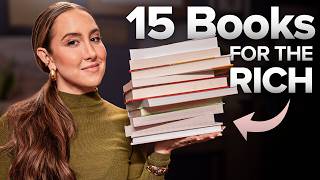
Codie Sanchez breaks down 15 books that shaped how she builds businesses, from Andy Grove's Only the Paranoid Survive to Charlie Munger's Poor Charlie's Almanack. She covers acquisition strategies, team frameworks, and mental models across sections on builders, leadership, and decision-making. The books treat money as time and energy, mixing tactical advice with purpose.
Chapters
I've read hundreds of books on making money, but these 15 are the ones I keep coming back to. Not theory, not hype. Books that actually changed how I think, how I build and how I make money so that you can catch something over and over again. The best business books are not the ones you read once. They're the ones that you can't get out of your head. So these are my most important books. This isn't a listicle, no top 10 filler. It's what I've actually been studying. And these tools now are going to go from me and how I made money to. To you. First book is wild. This is called Only the Paranoid Survive. I love this. This is from our Billionaires and Builders section. This is by Andy Grove, who was famously the chairman of the board of intel. And he was like one of the greats. He turned intel, which was a hardware company, into a global powerhouse. He escaped Hungary during the revolution. He earned a PhD and became Intel's CEO, steering the company through, like, literally one of the worst parts in business history, from memory chips to microprocessors. But what you're learning from this is the playbook for how to move fast and stay alert even when everything is falling apart. His entire philosophy is basically summed up in one line, which is success breeds complacency. Complacency breeds failure. Only the paranoid survive. But when he says paranoid, he doesn't mean fearful. He means vigilant. So staying awake when everybody else is asleep, watching for those small signs that the world is shifting underneath you because business and your career, they're not gonna die from a bad quarter. They die from misfortun, the moment when the game itself changes. So Grove breaks down this idea of what to do when change happens into a few frameworks. First is the six forces of competition. And it's a twist on Michael Porter's five forces. But Grove adds one more. Complementers. Companies whose products make yours stronger. You can see all six here. Competitors, customers, suppliers, substitutes, potential competitors and complementers. And look for anything shifting 10x. That's how you spot inflection points before they kill you. Then there's what he calls the adaptive response response framework. Or as he puts it, let chaos reign and reign it in. So phase one is open the floor. So encourage ideas, dissent, and comfortable truths. Let people in the edges of your business tell you what they're seeing, because change always shows up at the edges first. Then phase two, once the direction is clear, tighten the focus. Align resources, commit fully, move fast. That's how you balance exploration and execution. What's powerful about Grove is that he doesn't just talk theory and lived this with billions on the line. And he says most companies don't die because they make the wrong move. They die because they don't commit to the right one fast enough. They freeze. This is not about tech. If you're not in tech, it doesn't matter. It's about survival. And I think this is one to read, not listen to. It's kind of dense, it's framework heavy, but it has a ton of very specific things you can do to change your life. And I think if you do it right, you'll find what he calls signal to noise, which is how do you rewire your brain to listen to the things that are actually going on? How do we make sure we're not complacent? How do we make sure that we continue to grow? Because we're not trying to sound smart, we're trying to win. If you read these couple of books, I think you can be a winner too. Next we've got how to Make a Few Billion Dollars by Brad Jacobs. Brad, I'm dying to have on the podcast, so maybe you guys can tag him in the comments and tell him to get on here. But he built eight companies, six of them publicly traded. And these aren't like Silicon Valley sexy startups. These are profitable businesses. He literally started in trash. His first big win was United Waste Systems, where he rolled up small rural trash hauling companies and sold the whole thing to Waste Management. That was actually fascinating because at some point they almost went bankrupt and he bought it back for pennies on the dollar. Then he built United Rentals, which became the biggest equipment rental company on the planet. Then he did XPO Logistics, and he basically consolidated the entire building products industry. So when a gu dad writes a book called how to Make a Few Billion Dollars, you read it. This isn't one of those fluffy motivational reads by somebody who hasn't done anything. It's straight up tactical. So Jacobs lays out exactly how to spot big industry trends before anybody else and how to do acquisitions so you don't have to start a company, you can scale it, which is what I'm obsessed with. He's got this one line that I love in his strategy. I love working with outrageously talented people to deliver outsized returns. Every time you get an opportunity to work with people smarter than you do it because that how you make money. He talks about how to build a business that runs hiself the 1080.10 framework. Every business has a top 10%, what only you, the founder, the leader, should do, which is like strategy, vision, business model, partnerships, high leverage, a middle 80%, which is what your team should do. That's like clear plans, delegated ownership, execution, bottom 10%. Nobody should really do this. You should either eliminate it, outsource it, or automate it. So this is like low value, really redundant tasks. He also talks about the Midas formula, which is like how he's always able to raise money. He's had to raise billions of dollars. And the way that you do that is you make sure that every single business you have is profitable, growing at least 5% per year. You have a track record of winning, and you have a story about why you're winning. This formula, those four steps continuously over time will lead to you making more money. He talks about how most companies die because you don't do the thing that is working to the max. He's like, when you find something that scales, exploit it rapidly. Otherwise you're giving your competitors time to catch up. So if you think like Brad Jacobs does, he calls this a siege mentality. So when you find a moment of weakness with another player, you go after it. You'll actually find a bunch of the richest men in the world have one thing in common. They focus on crushing the competition, which doesn't sound very PC, but if you want to see the level of the game at the highest level that it takes, this is the book to do it. And it shows you how the grownups actually play the game. Now, this next one. Am I being too subtle? Straight talk from the man himself, Sam Zell. He was one of the best dealmakers of his generation. The guy built empires out of things everyone else ignored. He founded a couple groups where he helped create modern real estate investment trusts. If you've ever seen the word reit, that's probably his doing. Let me give you one quote from him that I love. I can seem gruff, I know that. And I can be impatient. I have an embedded sense of urgency. What I can't figure out is why so many people don't have it. So he founded this group and made billions not by following the crowd, but by running the other way. He called himself a professional opportunist. And that's exactly what this book is about. How to think, act, and build when everyone else is scared. He says, start by being audacious. So the guy, when he's a junior in college, his landlord mentioned that he had just bought the house next door and they were going to knock down both houses to. To build 15 unit student housing apartments. He looks at his friend and he goes, let's pitch our landlords to manage it. He's like, we're students, we know what students want. Small, tiny little note. He had no fucking idea how to manage apartments. But he just asked. They put together a little pitch, a little brochure, and guess what? Amazingly, the landlord bought our act. We sold a bunch of the units for them and made a bunch of money. This isn't some like sanitized corporate bio. It's a field manual for people who like to play offense. Zell built his fortune by doing what other people wouldn't. He said risk is the ultimate differentiator. I've always had a deep and complex relationship with it. To me, risk taking rests on the ability to see all the variables and then identify the ones that will make or break you. That's not gambling, that's just being aware. His entire framework boils down to really three things. First, spotting opportunities. As a contrarian, he looked where no one else was looking. When markets froze, he started buying. When people said, it's over, he saw a discount. And he believed that fortunes were made in neglected corners of the market. Sometimes that might have been real estate, sometimes media. If it's something out of favor but fundamentally sound, that's your signal. Second, liquidity and downside. First, he said, I never worry about the upside. I just make sure I can survive the downside. And that's how to play the game. You try to protect your bottom line, your base. When everyone else was chasing returns and being greedy, he was calm and he was looking for the moment where the market started to falter. And maybe that's why he lasted for decades. Third, simplicity and speed in execution. He believed complexity kills deals. So do I. So when everyone else got all tangled up in spreadsheets and analysis, he focused on what he actually thought mattered. One or two variables that would make the whole thing. This book is packed with stories about how you can do this exact same thing if you work in business, production or any high stakes environment. It'll make you think differently about how you assess opportunity and handle risk. He said those who move fast usually win the whole game. So move fast to read this one. All right. Section two is all about leadership and teams that win. Vision's fine. A vision without people, though, you're not going to get very far. So these next books are about leading other humans and how do you become a leader. One of the first ones is from Jocko Willink. It's called extreme ownership. So Jocko is a retired Navy SEAL like my husband and the guy you call when things go bad. So this book takes the raw lessons learned on the battlefield, applies them to business. It's not like some inspirational nonsense. It's really about taking total responsibility when things go right and when wrong. He says, leaders must own anything in their world. There is no one else to blame. So Jocko breaks this down into a system of tactical principles you can naturally plug into. Number one, it's on the COVID Extreme ownership. You own it all. Success, failure, morale, outcomes, all of it. Number two, which I love. No bad teams, only bad leaders. Number three, check the ego. The fastest way to fail is think you're above feedback. Number four, keep it simple. Complicated plans, well, they die in chaos. Simple ones survive. Next, prioritize and execute. When everything feels like it's on fire, pick the most important target, take it out, move on to the next. And finally, this one's important. Decentralized. Command and cover and move. That means you train people to lead themselves, to work in sync with one team, covering while the other moves forward. What I love about this mindset is it gives you clarity under pressure, so you don't waste time blaming. You don't spiral. You're like, okay, I got it. It's on me. And you move. Honestly, I love the audiobook. Jocko's got, like, such an AV SEAL voice, you know, Calm, military precision. If you ever find yourself saying things like, my team isn't doing their job. This project's out of my control. This book will help you figure out how you are in control of that and why you need to fix it. Next up, who, not how. The formula to achieve bigger goals through teamwork. This is by my friend Dan Sullivan. Dan spent 50 years coaching entrepreneurs. He co founded this thing called Strategic Coach, a program that worked with some of the top business minds in the world. And this book, who not how, captures one of his most powerful ideas. Basically, instead of saying, how will I do this? You ask, who can help me to do this? It sounds simple, but that mindset shift separates people who stay stuck from people who scale. If you cannot figure out how to delegate, you will never be fuck you, level Rich. One of the great lines that I love from him is, the only way to make your present better is by making your future bigger. And the only way to make your future bigger is to build a team. So I want you to realize something. Your growth is capped not by your effort, but on how many who's you have Supporting your vision. This book breaks down what Sullivan calls the four freedoms. So the first one, freedom of time because time creates money. Stop spending hours on things you shouldn't be doing. Second is freedom of money because when you free up time, you can focus on the higher value work that actually grows your income. Then we've got freedom of relationship because you start collaborating with people who energize you instead of drain you. And then freedom of purpose because once you have the right team, you can finally focus on the work that actually matters. Here's the real world version of this idea. Every time you say I'll just do it myself, you're holding your business hostage. Sullivan's point is that visionaries build frameworks, not task lists. When you read this after every chapter, look at your to do list. Pick one recurring task you keep doing yourself, something that drains your time or mental energy, and ask who could I bring in to handle this so I can focus on the high leverage stuff? That's how you actually live. This book, who not how isn't about delegation. It's liberation. If who not how is about using leverage to move faster, then one of the simplest forms of leverage in business right now is using tools that eliminate unnecessary work. Most entrepreneurs stall out before they even begin because the how gets in the way. The website, the branding, the copy, the setup, all of that friction kills momentum. And that's why I think what GoDaddy is doing with Aero is so smart. Arrow is basically your who for the digital side of your business. You give it your business idea and in minutes it builds a domain, a clean, functional website, your first marketing assets, your branding, even copy you can use immediately. You bring the vision. Aero handles the heavy lifting. It's leverage. The kind that actually gets you moving instead of planning. So if one of these ideas from these books has been sitting in your notes for months, this is your sign. Turn it into something real big. Thanks to GoDaddy for sponsoring this video. Head to GoDaddy.com Cody Sanchez to try Arrow and get the digital foundation of your business built fast. Next one Ride of a Lifetime Bob Iger this man's in G. I'm also dying to have Bob on the podcast. Bob started at the bottom, literally working on the production floor. Ended up running one of the most iconic companies on earth, Disney. Expanding Disney parks globally, launching the streaming future with Disney plus this book, Ride a Lifetime. He walks you through the leadership lessons, the mindset, and the culture behind one of the greatest creative runs of all time. He says something early on that Sets the tone for everything. One of the most important qualities of a good leader is optimism, a pragmatic enthusiasm for what can be achieved. The book breaks down his leadership philosophy into three core ideas. First, innovate or die. Iger says the biggest threat to any legacy brand is success. Success makes you comfy. Cozy. So when he took over Disney, it was losing its creative edge. Instead of protecting the past, he pushed the company to invest in itself and to reinvent itself. He took huge bets. The message was simple to the team who didn't want him to do it by the way. They were like, keep it Mickey Mouse motherfucker. And he was like, no. Evolve or you will fade away slowly. Second, respect, empathy and quality as non negotiables. Iger says great leadership isn't about being the smartest person in the room. It's about being the calmest. Empathy is a prerequisite to the sound management of creativity. And respect is critical. He talks about how he approached people with genuine respect, even in high pressure situations. That's how he was able to get, for instance, when they were making a movie with J.J. abrams or Steven Smith Spielberg, how could he get them to take him seriously? He was a suit. He was an executive suit, not a creator. They don't like guys like him. But he made sure people felt safe enough to take risks and never compromised on quality. Third, big strategic moves with cultural sensibility. Look at his biggest accomplishments. Pixar, Marvel, Lucasfilm. Those weren't just business deals. They created the zeitgeist. So each one required understanding the people. George Lucas, tough dude. The stories, the creative DNA that made those companies special. Iger didn't just buy assets, he bought worlds. This isn't a memoir. This is about how to treat each chapter like a case study. When Iger describes a decision or a crisis, pause and ask, huh, what would I do there? What would I have done differently? What leadership habit can I steal from this? Because the book can be applied to your life. If I have to sum it up, I'd say this is about how to be big, bold, relentless and also super creative. And if you can master that balance, you can build a legendary career and a company. So these books, they give you your leadership stack, Jocko ownership, Sullivan leverage, Iger Grace under pressure plus creative edge. Read all three. You'll never see leadership the same way. Thinking clearly and deciding wisely. So once you can build and lead, the next level is learning how to think. These book are to sharpen your mind, to make the right decision. First one. Oh my God. This one's so good. Poor Charlie's Almanac. The wit and wisdom of Charles T. Munger. You don't know who this gent is? This was Warren Buffett's right hand man, quiet architect behind Berkshire Hathaway's billion, billion, billion bajillion dollar success. He joined Berkshire in the 70s and helped turn it into the powerhouse it is today. He's sort of known for these like colloquialisms, these like kind of old boy saints. And if you read it properly, it'll literally change how you process information. Like for instance, the back of the book. There's an old two part rule that often works wonders in business, science and elsewhere. Take a simple basic idea and take it very seriously. The lines from this guy are out of this fucking world. You know, one line in the book I love, Munger says, in my whole life I have known no wise people who didn't read all the time. None. Zero. And that's what this book is about. It's not something you just read once. It's something you study. Because Munger isn't teaching you what to think, it's teaching you how to think. He has this concept called mental models, a latticework of ideas from across disciplines. He believes the smartest people in the world, they don't think in silos. They pull from economics, psychology, physics, biology, history, whatever helps them understand reality more clearly. And he calls it building your circle of competence. Knowing what you know deeply and staying within that zone when you make decisions. Famously, Munger and Buffett drove around in their old Buicks for most of their life. Warren Buffett had the same house, I think from his early 30s, even though he was a billionaire a million times over. It's like wealth is a side effect of being smart, being frugal, and not doing dumb things. This is not a quick read, by the way. It's a sit with it kind of book. Almost like read it for 10 minutes at night. Because it's not just about getting rich. It's about building a mind that sees the world clearly. Next I want to go to the almanac of Naval Ravikant. Also, I needed a water because I'm on a fucking rant, you guys. So this is a guide to wealth and happiness. Naval. He was the founder of Angelist, the platform that basically democratized startup investing. But what makes Naval interesting isn't just his business success. It's the way he, he thinks. He's like half startup hustler, half philosopher, a little bit of tech bro, but the signal to noise on this guy is so high. It's about how to get rich and live well. All of his lines are like a tweet, you know, he says, earn with your mind, not your time. That's the essence of leverage. He says the old way of getting rich was to work more hours. The new way is to build leverage code, capital, content. Code works while you sleep, capital compounds while you rest. And content what's good earns attention forever. That's why Naval says the goal isn't to be busy, it's to be free. And his book splits ideas into wealth and happiness. On the wealth side, he breaks down how to find and build your edge. You start by learning to play games you can win. Then you build specific knowledge, the kind that can't be copied. Once you got that, you apply leverage, people, capital, media, or technology to scale your efforts. He says wealth creation is basically the reward for learning how to play those games well. But it's not the end goal because the second half of the book flips it on its head, actually. And in this part, he says happiness isn't something you find later. It's a skill you train now. He says you train your brain to be present. You stop confusing success with peace. And I think this book becomes really powerful because he has so many one liners in it that just are like the fundamental delusion there is something out there that will make me happy and fulfilled forever. I love that from him because sometimes you need reminders of, yeah, you're building and gonna make all of this money, and that's what we're doing here. But then also you're doing the money thing to get the freedom. And that's how you don't get stuck on the hamster wheel of stupid Lamborghinis and nonsense and Gucci, Fendi, Prada that the world is trying to tell you is important. The Rolexes, Fuck the Lamborghinis. Those mean nothing. Those people are posers. Instead, build something, including a life you love. Now, breaking the habit of being yourself. Remember how I told you those people are losers because they're focused on what other people want, AKA mimetic desire. Joe Dispenza. So good. If you're feeling caught up in what other people want, for you think you are, this is how to not be stuck within who you are. This, this guy's actually fascinating because it's all about how to not change through willpower. Like grinding, pushing, try harder. But Dispenza says that that's the wrong approach. You don't fight the old version of yourself, you reprogram it. He says to break the habit of being yourself, you have to think greater than how you feel. We must create a new state of mind. We need to observe a new outcome with that new mind. In other words, your thoughts and emotions are built in your reality every single day, whether you realize it or not. So if you want to change your results, you don't start with action. You start with the mind that produces the action. And he breaks it down really interestingly. One thinking, that's the neocortex. This is where you learn new information. Doing that's the limbic brain. This is where emotion turns information into experience. And then being, that's the cerebellum. This is where repeated experiences turn into identity. It becomes who you are. Now, most people get stuck to looping between the first two. They never know what to do. They even try to do it, but they never become it. The goal is to move all the way to the third brain, where the change becomes automatic. Then your thoughts, emotions and actions, they really sync. But what I love about this book give you a system to identify the change. It's not motivational, it's mechanical. So he talks about how to rewire your neural pathways, the way that your brain communicates in your head through repetition and visualization. How to break the chemical addiction your body has to certain emotions like stress or fear and replace them. It's science explaining manifestation minus most of the fluff. If you're the kind of person who builds systems, this book will show you how to do that for your brain. And I think once you can realize that, you can ask the world for different feedback. Only when you become different, everything will change. This next one is weird and I really like it. So this one's called Illusions. It's the adventure of a reluctant messiah, sort of a parable. So I think this one is going to change a little bit how you see the world. So Richard Bach, who is a pilot turned philosopher, wrote Illusions as a fable about freedom, perception, self belief. And on the surface, it's this story about two pilots who fly biplanes across the Midwest. But underneath, it's about what happens when you realize reality is optional. So Bach's message is simple but radical. The limits you believe in are the only limits that exist. And he writes, argue for your limitations and sure enough, they're yours. So this isn't like a motivational line, it's a warning. If you defend your excuses long enough, they'll become true. The book invites you to imagine what would happen if you Stopped doing that. Illusions reads like a mix between philosophy, parable, self help. It's not a business book, but if you're an entrepreneur, creator or builder, you'll hit. Because it's not teaching you tactics, it's teaching you to question the box those tactics sit inside. The world is your exercise book, the pages on which you do your sums. It is not reality, though you may express reality there if you want, wish. And that line is about a world that isn't fixed. It's a one pager. You decide what to write on it. At its heart, Illusions is about these two teachers, one reluctant, one curious, who discover that the power to shape life is internal. You're not a victim of circumstance, you're the author. So you don't find your mission, you choose it. And here's a test to figure out whether your mission on earth is finished. He says if you're alive, it isn't. It's that kind of book. Short, simple sentences that make you stop mid page. And every chapter to me feels like a little whisper, whispering of the same truth, which I know sounds Tony Robbins as fuck, but like. You are far more powerful than you think. Vox metaphors about flight, freedom, illusion are really about your potential. It's a perfect read if you're the kind of person who constantly asks, why not? It's also a challenge. If everything is a choice, then you can't blame anyone else for the outcomes. You are always free to change your mind and choose a different future or a different past. It's philosophy disguised as a story. It's kind of this mystical path. I also love the written word. I love that it's poetic and reflective and rhythmic tearing. It kind of helps those ideas stick. So read it at the end of the day with a glass of wine. Belief can help you rewrite your own rules. Munger gives you logic, Naval gives you leverage. Dispenza gives you inner change. And Bach reminds you what's possible when you stop believing you're limited. Culture, hospitality and human systems. Here's the truth. You can have all the strategy in the world. If you don't understand people, you'll still lose. The next books are about culture, which I never thought was that important until I started building really big companies. This first one, Danny Meyer setting the table, transforming the power of hospitality. So Danny built businesses that you know. You might not know Union Square Cafe or Gramercy Tavern, but I bet you know Shake Shack. This book isn't really about food though. It's about hospitality and how the way you treat People can become the most powerful business strategy in the world. He called it world in the enlightened hospitality. The idea that your employees come first, your guests come second, and your investors come third. Because when you take care of your team, they take care of your customers, and the profits take care of themselves. Complete flip from the way most people run a business and certainly restaurants. You know. Meyer says business, like life, is all about how you make people feel. It's that simple and it's that hard. He draws a line between service and hospitality. Service what you do, task the transaction. Hospitality is how you make people feel while you do it. That distinction is what separates restaurants people visit once from those they go back and back and back to. And it's the same with your life and your business and your career. Meyer's most powerful ideas, I think is probably the 51% rule. He says the best hires aren't just technically brilliant. They have the emotional intelligence that makes people want to be around them. And he looks for five things. Here's how to know if you are that. Optimism, curiosity, work ethic, empathy, self awareness. If a candidate has those traits, you can teach them everything else. That's the 51% emotional skills, 49% technical skills formula. That's how you build a culture people want to be part of. So he has this five A's, which is the framework for handling mistakes. Awareness, acknowledgment, apology, action, and additional generosity. In other words, when something goes wrong, don't hide it, fix it, and go one step further to make it right. That's how you turn a bad experience into a loyal customer. If you are told to hold high standards, but you deliver them without respect, you're probably not going to be doing very well. He says you don't bark orders, you guide. And this leadership by presence, not power, is very rare inside of restaurants. The big idea is basically this virtuous cycle of enlightened hospitality. Treat your employees well, they treat guests well. Guests come back and evangelize. Business grows and reinvest back in your people and community. This loop is what keeps his hotel group, Union Square Hospitality, thriving. Restaurants are hard too, man, and they keep making money for decades. This one can be an audiobook. Totally. He has a reasoned, sort of rhythmic way that he talks. Either way, whether you read or listen, it's great for culture, and I would give it to your team, too. Speaking of culture, this book, Unreasonable Hospitality. Oh, God, I love this book. This is by Will Gudera, and he helped turn 11 Madison park from a struggling new York restaurant into the best restaurant in the world as rated by external people like Michelle. And it's not about restaurants. Again, I choose restaurants because restaurants are hard. They go out of business all the time. They're really hard to run. And the philosophy in this book is radical but simple. In a world obsessed with efficiency, carrying more than you need to ultimate competitive advantage. He says whatever you do for a living, you can choose to be in the hospitality business. And that's, that's the key. It's like if you care more than anybody else, you'll make more than anybody else, which is so true. Like, I wish more people realize that if you care more, you'll make more. Because service isn't about just getting it right, it's about making it feel right. He calls it the 955 rule. Manage 95% of your business down to the penny, but spend the last 5% foolishly on surprise, delight, connection. The final 5% has an outsized impact because it's where emotion lives, it's where magic lives. And I think, you know, he talks about, you want to treat your team like your most important guests because the moment your people feel trusted, seen and empowered, they start creating magic for others. One of my favorite lines of his is, no one who ever changed the game did so by being reasonable. And that's really what this book is, a manual for being unreasonable and thus super successful. If you leave teams, build products, or run client facing business, this book will change how you think. Unreasonable Hospitality also is really great as an audiobook, but do it either way. I think it's a really entertaining book too, so you can pick it up and read it. Okay, next, let's go to a classic. Have you read this one, My Friends? How to Win Friends and Influence People? Dale Carnegie, one of those books that sits on every entrepreneur shelf for a reason. He wrote this bad boy in 1936, but the ideas, they're the same because humans haven't really changed. He was a small town salesman turned public speaking teacher who realized something simple. Success doesn't just depend on how smart you are or how hard you work. It depends on how well you deal with people. And this book, ah, it's so good. Carnegie says you can make more friends in two months by becoming interested in other people than you can in two years by trying to get other people interested in you. He says, be a good listener, encourage others to talk about themselves. That's the secret to influence, isn't it? It's listening, it's making people feel seen. Because at the top of every business, the core of every business negotiation or leadership challenge you have. It's not that you're dealing with logic. You're dealing with emotion. Or as Carnegie puts it, when dealing with people, remember you are not dealing with creatures of logic, but with creatures bristling with prejudice and motivated by pride and vanity. Once you understand that, everything changes. And I love. I love how the book is laid out, too. First, how do you handle people? Don't criticize, condemn, or complain. Instead, give honest appreciation and focus on what others want. Sounds obvious. Most people don't do it. And then, how to make people like you. Carnegie breaks it down into habits. Smile, remember names, talk in terms of their interests, listen more than you speak. Super tactical, super powerful. And once people trust you, everything else gets easier. So next, how to win people to your way of thinking. Here's where Carnegie sort of flips persuasion on its head. He says the best way to win an argument, you avoid it. Instead of proving you're right, help the other person feel understood. My husband and I talk about this all the time. We say, do you want to be right or do you want to win? I want to win. So ask questions, find common ground. Let them arrive at the idea themselves. That's how the great negotiators do it. So this isn't tricks. It's about emotional intelligence. It's a manual on how to communicate with warmth. And I think this is a slow reader. Short chapters, but every page, like, really just has so many good things. He also has a bunch of formulas in here, scripts in here, and then principles like Principle 7. Let the other person feel that the idea is his or hers, not yours. These are the books that teach you emotional leverage, how to lead through warmth, curiosity, generosity. Because the real ROI in business is always the people. Section 5. Purpose, freedom and philosophy. So finally, once you've built lead and think thought your way to success, these last two books remind you that all the work, it's actually for something else. It's about building a life that still feels good once you've won. Like this one. Let My People Go surfing. God, this is such a good book. By Yvonne Chouinard. Some founders build companies. He built a philosophy. He calls himself a dirtbag climber. In California, he slept in the back of the car. The last thing he ever wanted was to become a businessman. That's why this book hit so hard. It's a story about building Patagonia not around profit, but purpose. So he didn't want to build a company that just sold outdoor Gear. He wanted to have one that protected the outdoors itself. He has this line, how you climb a mountain is more important than reaching the top. Oof. And it kind of captures the soul of this book. You know, he says, make the best product, cause no unnecessary harm. Use business to inspire and implement solutions to the environmental crisis. That's Patagonia's mission. And I think he rewired the definition of success for a generation. He actually wants people to buy less Patagonia. He said, the more you know, the less you need. And it's not just minimalism. He actually says it's sort of like a practical rebellion. He trusted that people who love their lives do better work. And he was right. He writes, if you want to understand the entrepreneur, study the juvenile delinquent. The delinquent is saying with his actions, this sucks. I'm going to do my own thing. That's art. Create at my company. It's why this book resonates so deeply with founders and investors who just refuse to do the traditional game. I think this book is one you should listen to. I like his voice. It's kind of humble, rugged, funny, and carries the conviction of somebody who's actually lived this. Because it's not just about Patagonia. It's a manifesto for anyone trying to build something that lasts. It's a proof that doing business differently isn't naive. It can be sustainable and contrarian, and you can make a ton of money doing the thing that you love. And lastly, this one's more tactical. This is not a beautiful book. I don't think it's a fast read. Your Money or your Life by Vicki Robin. Most people think money is paper. Vicki says it's energy. Like every dollar you earn is a trade hours of your life for something outside yourself. When you see that clearly, your relationship with work, consumption, freedom changes. So this book will help you save money and it will also wake you up to how you spend. She says the only real asset you have is your time, the hours of your life. And Robin spent years helping people rewire the way they think about money and the financial system. The core of this book asks three uncomfortable questions. What am I really working for? How much is enough? Is my spending aligned with what I actually want? She is all about never hitting burnout, chasing income, but purpose instead. Now, where I disagree with her is I think the goal is not to just, like, save a bunch of money and not do any work. I think the goal is to leave a legacy so big that you get to do things that feel like Play for work. You know, sometimes I think when we're like doing YouTube videos like this and we get to go out in the world and do crazy thing with our companies, I'm like, how do we get paid to do this? And I think if you are going to have money as something that you trade your life energy for, you should do something cool and that's aligned with you. It doesn't preach wealth for wealth's sake. It's about liberation. So if you live for having it all, what you have is never enough is what she says. And she challenges you to stop asking, how can I make more? It says, how can I live better with less. I think this is really important in an age in which you'll find the biggest entrepreneurs in the world. None of us do it for the money. We don't do this so that we can add more zeros to our bank account. We do it because we feel like it's feeding our soul and we're learning and we're getting better and we want to ride into our tombstone figuring out what exactly we are capable of doing in life. And so if you pair this idea of making and preserving money with that thing that is inside of you, then you can figure out what you are meant to do on this planet. And that is when money flows so easily, you can't even imagine it. Because the truth of the matter is, is that I do believe, like Vicki does, that money is energy. And that the more money you want to make, the more you need to become obsessed with the thing that you do. Because obsession somehow attracts more of it. I hope this list helped you all. I hope it started to make you think with intention about making money, about growing your business, about being a different type of human, if you so want. Because the truth of the matter is, you could read all of these books, but if you don't take any action, nothing's gonna change. So make me a promise. Tell me in the comments which book you're going to read first, then only read one and do something with it. See you next week.
More from Codie







He wouldn't give you the dream if he didn't believe you had what it takes. You have what it takes.



What’s the one thing most job seekers overlook that could get you hired faster than you think?