15 Years of Money Lessons in 18 Minutes
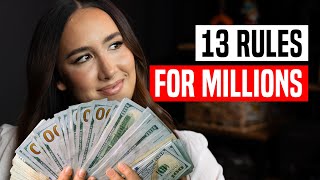
YouTube video by Codie Sanchez titled "15 Years of Money Lessons in 18 Minutes" (Aug 19, 2023). The presenter delivers 13 concise, experience-based lessons focused strictly on practical ways to make and protect money—calling out myths like "passive income," emphasizing financial literacy (learn jargon), relationships and leverage, product framing (sell painkillers not vitamins), the leverage/expertise/time tripod, the FIRE choice (save vs earn), risks of employment versus entrepreneurship, grit/consistency, tracking finances, and negotiation. Sponsor content (Ethos life insurance) is embedded mid-video with a personal anecdote about buying life insurance at age 25. The tone is pragmatic and instructional.
Questions this video answers
13 lessons
Ethos (life insurance)
August 19, 2023
25
Chapters
This episode would be really good for people who care about really one thing only, making more money. This isn't going to be inspiration, it's not going to be motivation, it's not going to be a storyline. It is literally just 13 lessons on making money. I think this has led to multi millions for me and I think it could probably lead to multi millions for a bunch of people watching it too. Thanks to Ethos for sponsoring today's video. So a bunch of years ago I started an Evernote file that says Money making lessons. I basically grabbed lessons on making money from anybody who had more of it than I did. There's like 129 money making lessons in here, but I thought I'd narrow it down to like 13 lessons that I wish I knew earlier because nobody used to talk about money and like it's just not a thing that is okay for most of us to talk about. And yet we all want, need or in search of more of it. And if you like it, make sure to subscribe. Anyone who says they focus on making passive income has never made real income. I think passive income is the biggest 21st century fallacy told to us by a bunch of 12 year olds on TikTok and YouTube in order to get you to part with your cash. There's no such thing as passive income. There's such thing as investment income. You take your cash, you invest it in something, you make more money on it. Real passive income, I don't think that actually exists unless you've already made your cash. So I like to use a word called horizontal income, which basically means vertical income is like I work a 9 to 5 and I get paid for every hour from 9 to 5. Cool. Normal horizontal income is I work a 9 to 5. But I also have these other areas in which I have some work in them. I have a rental property, maybe I work on that from four to five each day. I have a small business, maybe I work on that for six hours a week. This is more honest about the fact that something doesn't always have to take all your time to make money, but it's going to take some time. The next one is if you speak the language of money, you usually make more of it. Man, this one is so true. There's a bunch of words they use in finance that take people from really, really rich to outside of the loop entirely. Most of us don't speak the language of finance and I think that's on purpose. I think people in finance do not want you to know the secrets to wealth, because that makes it easier for them to keep it. But there are so many terms. Ebitda, roi, cash on, cash return, expense ratio. The list goes on and on and on. Actually, there's a whole article here on it if you want it. But if you actually want to get real wealth, you have to learn the main terms. It's pretty easy to do, actually. You could take a couple courses on YouTube. But this was actually told to me by one of the wealthiest partners at Goldman Sachs. They came down in the beginning and did a little lunch and learn with us. When I was at the firm and we were asking a bunch of questions and he was using jargon, ebitda, for instance. And I remember one of the people in the room raised their hands and they said, what does the term EBITDA mean? Can you explain that? And he kind of looked at the person with, like, snooty Goldman air as we did and said, I don't know how you got a job at this firm without speaking the language of money, that term. Exactly. The language of money. And he said, you go find the answer to that. I'm not here to be your dictionary. And it was such a perfectly Goldman response. But actually, he was right. So it always stuck with me. Learn the terms, then you can make the cash the next one. The right relationships are better leverage than money. This is so true. It's why I think scam artists never last, because they think that they can pull something out of people. They're going for a quick, rich buck, and they don't realize that the real way to make money is to make other people money. One of the best relationships that I had to start making more was one of my first partners in my private equity fund. This guy was so smart. I remember we disagreed a lot. He kind of normalized that for me. But when I left that firm, you know, he called me and he was like, I want to make sure we do this in the right way. And even though we disagree and we don't want to stay partners in this firm, I want us to stay together because I think you're going places and I want to be a part of it. And he said a really nice line. Then he's like, when you get the G6, I want to be on it. You know, I kind of joked. I was like, andy, I'm not going to get a G6.
Like, I don't.
You know, I don't know what's happening next. But he kind of saw something in me, and he kept that relationship going. And since Then we've done deals together, we've done more work together. Because he knew the golden rule, which is people before profit. And if you live by that and you pay it forward, man, do you get paid out more on the back end?
Nobody talks about this, but once you start making some cash, you got to consider a few things. Like, for instance, for me, I was one of the first people in my family's history to experience financial success having money. So it's so important that all that I have is not just for me, but for my parents, my kids. And if you're like me, you might sit up at night kind of wondering if you could lose it all.
And that's why I got my first.
Life insurance policy when I was 25. And back then I died inside at the thought of the confusing, expensive, really time consuming process. So we found a partner that helps with that ethos. Because I'm all about making more money, but I want you to protect the house. So here's how it works. Apply in a few minutes, get a quote in a few minutes, and in most cases you get coverage the same day. I like to think about it like this opportunity cost 10 minutes to protect your family's future for as little as 10amonth. And I really thought the life insurance was way more expensive than that. And it can be, but it doesn't.
Have to be two less coffees a.
Month to my family's future. You can actually get your own personalized free quote unquote by clicking on the link below.
Most stay poor to look wealthy instead of living poor to be wealthy. There is a whole universe of humans so covered in Gucci, Fendi, Prada logos that you'd think, man, they must have a pretty full bank account. But the problem is they're wearing their bank account. What I've found is there's like levels to wealth. There's like you have nothing, so you're not wearing any labels whatsoever. There's like, you got a little bit. So maybe you got a little label here and there. There's like, you got some. So now you're starting to really like show labels. Maybe a nicer car, maybe a nicer house. And then there's this next level which is like, you've got some, but you want to pretend like you've got way more. So what do you do? You try to stamp yourself with money everywhere. And stamps come in the form of logos and. And this type of person, I think is one to really be careful of because they're covering something up, you know, Kind of like the guy with a big truck, let's say. And because the top couple levels, they don't even want you to know what they have. They kind of get off on the fact that they're wearing some cashmere sweater with no logos on it that you think kind of looks like they got it at Target, but actually is $4,000. And so if I could go back and tell young Cody something else, I'd probably tell her, I don't need to buy the small thing now because I. I want to buy the whole store later. I don't want to be the one begging to get in the door.
I'll wait.
I'll skip out on a lot of cool events because I know that in the future they're going to be wishing that I was there. And that type of mentality is the same thing with people who try to look rich versus people who actually want to be rich. Huge difference. Next one. Leverage, expertise, time. Pick one. That's all you need to make money. This one took me a long time to learn. I used to have that belief that it takes money to make money. We've all heard that a million times. But then I actually realized there's something that I now call the get rich tripod, which is basically leverage, expertise, time. Pick one leg of the tripod and you can stand on it to make more money. So if you think about it, leverage means money, right? If you have a lot of cash, the fastest way for you to make more cash is to use the current cash that you have. The second fastest way is expertise. So I know how to buy businesses. I can use my expertise, tell somebody else how to buy businesses. They can use their time and cash paired with my expertise to make us all money. The third way is time. I don't have money. I don't know shit. But I have a lot of time on my hands. I can use my sweat equity paired with somebody else's expertise and somebody else's cash to make money. The problem is everybody wants to use whatever little amount of money they have. No time and no expertise. You can't do that. You have to have one leg of the triangle, and you need to stand on the leg that you actually got, not the one you want. It's wildly inappropriate, but my husband always says, you f with the d CK you got not the one you want. If you look up this article, we break down how exactly to think about which leg you're standing on. Painkillers versus vitamins. You make more money selling a need than a desire. You want to sell a painkiller instead of a vitamin? Think about society. Now, remember, we're not talking ethics, we're talking money. How much bigger is the pharmaceutical industry than the vitamin and supplement industry? The difference is astronomical. Because if I can give you a little blue pill that fixes any pain that you have in that exact moment, turns out we'll pay 10x for it. But if I could give you a vitamin that would prevent potentially some future pain that you don't even have, we're not willing to pay that much for it. So I thought about this a lot in business. One of my first CEOs that I really admired a lot said this to me. When you think about selling, which are you? Are you selling the pain or are you selling the potential? And you want to sell the pain? Actually, at the time I was selling investment products. And so I would go to big pensions or sovereign wealth funds, and I would try to get them to invest in our stuff. And I could go to them with greed and say, hey, if you do this thing in the future, you could make more money. And also your portfolio will be better balanced, it'll be more diversified, you'll have better asset allocation. All of those things are vitamins. They're shoulds. What you want is a need, AKA you have a giant risk in your portfolio that you don't realize. If you don't use one of our products to fill that gap, then you could lose way more money than you thought. You obviously don't want to lie about anything like that, but you, you want to try to think about how many times can you solve needs, not shoulds, and maybe not even wants, because pain is typically a bigger driver than greed. You don't want to be rich, you want to be free. Most people confuse the fact that making money has some outcome they're going to have or want. But there's this whole movement, if you've never heard of it. This is when I first learned about this idea that there's a movement called fire, which is like, financially independent, Retire early. I believe it started when I read this book called you'd Money or your Life that was based on a subreddit called Fat Fire. So how to save a lot while making a lot. I read this book and I realized, wow, there's sort of two paths if you want to be financially free. You could earn a ton of money with that ton of money, get freedom, or you could be so aggressive in your savings and so intelligent in your investing that you sort of save your way to Some level of wealth, I don't think either way is right. But realizing which of the two you want, if you're like a homesteader, you're into chickens, you like vegetable farming, you want a bicycle to work, you could live in a small town, you could negotiate a good salary, you could get great benefits, you could not travel very much, you could not buy fancy clothes, you could fix and not repurchase new things. Maybe you're a fire person. And maybe instead of chasing millions of dollars just because society says that's what you should do, you should just figure out a way to spend less every year, save more, and invest a little bit of it. Because the truth is, whichever way you choose, you don't want money. You want freedom. You want to work where you want, when you want, with whom you want, on what you want. That's what money gives you. You just need to choose. Do you want to save your way there or do you want to earn your way there? I don't think either answer is right or wrong. I prefer earning. This one's a doozy. The average person thinks having a job is safer than starting a company. Nine out of ten times they're wrong. I learned this when I was at Goldman Sachs during the 2008 financial crisis and I watched 20% of my friends get fired from the company. I watched security guards come up, make them pack up their little cardboard boxes, and without getting to take anything out of their computer or talk to their friends, they got walked out of the door and left the building forever. I watched this continuously happen for more than a year. And in that moment, I realized that most big corporations spend too much during UP markets and then just plan on cutting the fat during down markets. You see it all over vc. That's why I actually think a lot of small businesses are safer. Because small businesses don't do this massive volatile cycle of raising a bunch of capital or trying to grow 50% per year. They kind of grow like this, just like beat the rate of inflation. So most people end up thinking they're taking the safe route with employment. But employment is a permissioned thing, meaning somebody has to employ you. Somebody has to say yes as opposed to if you own the business, if you have assets, you get to say yes to yourself. Entrepreneurship is 5% timing, 5% idea, 10% talent, and 80% not stopping. I thought about this when somebody was asking me, what are the keys to being successful? And I go back to the study by Angela Duckworth about the one thing that she found across decades of studying was Those who are more successful had more grit than everybody else. And she determined that by ability to continuously confront pain and move through it. So how long could you handle pain? And that is actually what entrepreneurship is. My dad says at some point in the middle of the night, you will be sitting in the dark on your couch, heading your hands, wondering what the do I do next? And that's just the nature of the game. Can you handle those moments? A lot of people can't. They'd rather kind of coast through life with a low level of anxiety of not achieving the things that they want. But the truth about entrepreneurship and making money is it's just pain. How much pain can you tolerate? And none of it's gonna kill you if you just keep moving forward. What if the recipe for success is simply time plus focus plus consistency, and it's greater than everything else? So this one I learned. I was sitting on a plane, and I sat next to a billionaire, Geoffrey Kent. And Geoffrey started Abercrombie and Kent, probably one of the world's most prolific luxury travel companies. I remember talking to him about Abercrombie and Kent because he's run the same company for, like, 60 years. So remember when I talked to you about pain? This guy could handle it for a long time. And I said, how many times have you thought about quitting or giving up? He's like, this week, even in his 80s, he's dealing with it. But he's like, the one thing that I think I have more than anybody else is just I keep going. He's like, I Energizer Bunny it. I'm not, like, hopping all over the place. I'm just slowly banging the drum for a really long time. And that ability to continue to do that has led to outsized returns. He's like, let me tell you how much consistency matters. He sold that company twice. He sold it once to a private equity firm, and he sold it again to another firm. And I think he's going to buy it back, because even the people who bought it didn't have the ability to progress for a long period of time. So consistency, focus plus time, that might be all you need. Money is a cruel mistress. She'll leave you if you don't pay her attention. Wake up. Check your bank account. I remember thinking this. I was talking with one of my friends, David Osborne, all over the Internet. One of the main partners at Keller Williams, worth a couple hundred million bucks. David was talking to me and my friend Matt Acheson about money. How do we. And at the time, we Were asking him, how do we become worth a hundred million bucks like you? That seems like a great goal. And he was like, well, talk to me about your finances right now. And so we kind of start running him through them. And he went detailed like, how much do you make? How much do you spend per week? How much do you save? What percentage? What are you investing in? Moral story. Both Matt and I were like, didn't have specific enough answers. And he looked at us and he's like, if you're not paying attention to your money, she's going to leave you. You want to be $100 million rich, but you don't even know how many million dollar rich you are right now. Really makes no sense. He's like, think about anywhere in your life where you don't track it, but it just comes. And it's kind of like my trainer Jess once said to me about getting fit. She's like, let me tell you what, you don't get a six pack by accident. And I think that's the same thing with getting millions. Doesn't happen when nobody was looking. Get in rooms where your dreams are. Others realities. I think about this a lot because that saying, Jim Rohn, you are the average of the five people you surround yourself with is so overused, but it is so true. And so the same thing is true on the upside as it is the downside. If you are in a room where everybody in there has already accomplished the stuff that you want to accomplish, the impossible nature of it so floats away. It becomes much more reasonable that you are going to achieve something big if you are around a bunch of other people that are doing it and the same thing's true. Like look yourself in the face right now and ask yourself, are you really around the friends that you need to be to get to the place you want to get to? Are you having the conversations that that necessitates? Are you pushing yourself? Are you getting pushed by other people's? Do you have an accountability group for the good things, not the bad things? Do your friends say to you, hey, where were you on Friday night? Not hey, what did you build this weekend? The difference between those two conversations is the difference between the bank account you want and the one that you got if you want to get rich. Master negotiation. There is really one universal truth to getting money and that is that you have to ask for it in a myriad of ways. You got to start asking for it in your salary and negotiate early on. You got to start asking for it by trying to get stuff at a discount instead of paying full price. You got to start asking for it by doing deals and investing in things and figuring out how to structure those how to get what you want, how to negotiate for more time, how to negotiate for more responsibility. The undertone of money is negotiation. If you can figure out how to get people to give you what you want more often than you give away what someone else wants, you'll have a bigger bank account. So I hope this money breakdown was useful to you. If you guys like this comment below and I can pick the next round of 15 or 20 lessons and share them with you guys, I think the truth of the matter is it doesn't have to be so scary and so taboo to talk about money. The only people that that serves is the people who only got it, the ones who don't got it. Why wouldn't we all just get rich together instead.










