7 Businesses To Start For Beginners
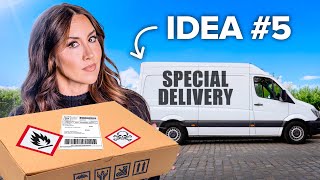
A Codie Sanchez YouTube video ("7 Businesses To Start For Beginners", June 15, 2024) that outlines seven low-to-moderate-risk, bootstrappable service and scavenger-style businesses a beginner can start: dumpster rentals, pallet reselling/salvage, paint striping, trash hauling, courier services, pet waste removal, and lead generation. For each business Codie evaluates startup requirements, whether it can be started in a weekend, if it can be launched for under $1,000, failure downside, and scalability — interspersed with short case studies and concrete ballpark figures. The video also includes a Hostinger hosting promo and a closing mention of mural businesses.
Questions this video answers
$400–$500
$3,000–$6,000 depending on size and location
$23,500 for five 20-yard dumpsters
1.8–1.9 billion pallets
$31 billion (U.S. economic impact)"
Chapters
What are the least risky businesses that anybody can start? No business can have zero risk. But there are three things that can decrease your risk a ton. You start the business on a weekend. Two, it costs you less than a thousand bucks to start. And three, it could be a really big business if you scale this bad boy. In this video, I'm going to break down seven businesses to see if they meet this criteria. Starting with the most risky, going to the least risky and the one that you can scale. Just wait until the last two. You'll have no excuse not to try something first one. Dumpster rentals. You've seen these bad boys outside people's houses when they're doing construction. They pay 400 to 500 bucks for 14 days to rent these and you could be the one renting them to them. What does starting up take? So you buy a dumpster and you decide what size. 10 yards, 15 yards. They cost anywhere from 3k to 6k depending on size and where you get it, where you're located. Then you have a truck and a trailer that can comfortably haul your size of dumpster. Cost of the big truck could be as much as 125k. I might rent it. If your dumpsters are smaller, you can get by with a pickup and a roll off trailer, which will likely add to 10 to 20k to each used truck and trailer. I'd start with like just renting one out. I do this on the cheap with less risk. Now marketing free to start with something basic like Facebook Marketplace, then scale with SEO, ads, et cetera. Can you start in a weekend? Yes, but that means you're putting in the work and not a bunch of other people. You got to be willing to deliver the dumpsters, have the cash, and do a bunch of logistical work, not to mention selling it. Number two, how much startup cost is this going to take and what do you lose if you fail? Well, you can start with one dumpster and wait until it pays for itself for you to buy your next one. That's what I'd do. If you fail, you lose the cost of the dumpster, the truck and the trailer. If you're renting it, you've probably spent around 4k on the dumpster, but could sell it back to someone to recoup at least half of the cost. If you've purchased the truck or trailer, you're in a little deeper. You've likely financed something and are out a lot more time and frustration. So. So let's take baby steps. Can you spend a thousand or less before you Start being profitable or making money? No. You're probably going to spend closer to 5k minimum to get the business off the ground unless you do complete pre orders without owning anything. Now all of this makes this business one of the quote unquote riskier ones in our list. But is there a potential to scale big? Yes. This guy owns an established dumpster rental company. Here's what happened. He bought five 20 yard dumpsters. It cost him $23,500. He anticipates they'll pay for themselves within one month because he's got a lot of demand. By this math, it could take 20 dumpsters plus the labor, hauling capacity and marketing scale to hit 1 million in revenue for one year. Do we believe him? Should we ask some questions and get some receipts and maybe do a video on this? Let us know because I think this dumpster rental would pair really well as a good add on business for number four, which has less risk. But if dumpster diving isn't really your thing, you might like this next biz a little bit better. Pallets? Yes. These little wooden guys, they have a $31 billion US economic impact. There is definitely a business in here. And wait until we break this down. It took us all of 3 minutes to find a place where they have leftover discarded pallets that they are going to need to either get rid of or have somebody come pick up. I bet this place doesn't have a commercial contract. And this is an exactly perfect target for you. And especially look at some of these. Some of these pallets are pretty beat up. This is not going to be reusable very often. So you could use our reefer model really fast. Number one, what does startup take? There are two types of scavenger businesses in this realm. Number one is reselling. So 1.8 to 1.9 billion pallets are in circulation in the US. When a big store or warehouse gets deliveries, they throw the pallets to the side and they become like expensive waste for most companies that they have to go pay to get rid of. These are plant nurseries, hardware stores, construction companies, not giant stores like Walmart. They already have pallet contracts. But these smaller guys need somebody like you. I love this business because you are not holding the pallets for inventory. So this can be a great side hustle to grow into a business for a beginner. The beautiful part about this business is you go directly and grab the pallets, then you go and sell them directly to these guys. So there's no period of you holding the inventory. You have what's called zero amount of float in inventory. No money that you have to spend on it. Really interesting model. This is where we get to the second type of the pallet business. Not scavenge, but salvage. 60% of lumber used in the US is pallets. Isn't that wild? So even broken pallets are valuable. You can fix damaged pallets to resell, or you can dismantle old pallets to sell as cheap salvage wood for local crafters. You could even go and make something out of them, like these tables and chairs that people do. If you go the resell route, you'll need a truck and a trailer to haul the pallets. Local businesses with an excess of pallets. A local pallet yard that will buy pallets off you at a profit. So if you go the salvage route, you're also going to need a place to store the pallets. You collect the time, effort, ability to break down or fix the pallets. And if you're reselling the salvaged wood, you also need to find customers to buy this wood. Can you do it all on a weekend? Yeah, I think you can. As long as you got a truck or can borrow one from a friend, you can plan and execute this business within a weekend. Also, you got to be willing to go direct. You got to find the consumers, and you got to find the resellers. Number two, can you spend 1,000 or less before you start being profitable? Yes, especially if you already have a truck. If you need to buy one, different story. But I believe in your creativity. If you start this and fail, what I like about it is there's not a ton you can lose because you're not putting a lot into it to start. Is there a potential to scale? This is where I concern myself a little bit here. I don't think using the scavenger model, I think you can make a couple hundred thousand dollars. I don't know about millions, but there is another model you could try. If you do want to scale, you'd have to start a pallet leasing company like this guy. And there are many companies like this that are of big size across the country. But it's unlikely that you as a beginner will have logistical chops to succeed on this or be able to get those big commercial contracts. So if you want something more simple that can start smaller, try this next one. This business is actually fascinating. Paint striping. You have no idea how much money these guys make. Great business. I don't know if it's just all women that are terrible parkers or Me, don't hate me in the comments, but it turns out there's a pretty big business here to make sure that in commercial parking lots there are lines and no chaos ensues. Let's break down how much money these guys actually make. So if you want to start out, this is ideal for a one person team. You can start really small, do small little strip centers like this. You could even probably make a pretty penny on paddle boards like all these athletes are doing. What does the startup take? Well, the equipment, paint and roller. You got to find the customers. This is harder than most of the businesses on this list. But if you can find them, they're very sticky and they're recurring. And here's how I would do it. I would pay for leads on Angie list to start. I would cold call paving companies and I would build relationships with contracts then just be so reliable that they become repeat customers, which candidly is not that hard in the trades. Answer your phone, show up on time. Do your job as quickly, efficiently as possible. Don't be drunk now. Tip. Ask for referrals from existing clients to get more customers. This video made my company hundreds of thousands of dollars. You should watch it. Number two, can it be done in a weekend? It's possible but unlikely to get customers that quickly. Probably one of the harder ones to do quickly. Unless you cold call like a crazy person and then I do think you can. Now, how much does this startup cost and what do you lose if you fail? I think you can spend a thousand bucks here to start this business. So let's say that you're going to do it one single stripe. Well that costs six bucks. Let's say you do a double stripe on both sides of the parking lot, that's eight bucks. Let's say you're going to do a new layout entirely, that's 10 bucks. One day. You can make anywhere from with the right amount of jobs, on average four to six thousand dollars. Not bad. What's the profit margin? How much do you take home? Well, if it's just you doing the work and running the business, this is like a 50% margin business, which is pretty interesting of a deal. There's sort of two ways to do it. The really cheap route with a quick trip to Home Depot for a few supplies and you could have the equipment you need to get started for under 50 bucks. Let's go crazy and say under 500. All you need is a couple of paint rollers and extension pole painters tape. This isn't going to get you huge commercial contracts. But might get you some small residential ones like this. But if you have a bit more, I'd invest in a new paint striping machine. Still not crazy expensive, but will make you much quicker which equals more revenue. I would probably do that after I've already pre sold a few clients. So yes, you can be profitable spending less than 1000 bucks. In fact, just one job could have you making your money back and more. I kind of think we should try this. What do you guys think? Comment Paint. Now is there a potential to scale big? Yes. Yes. It will require hiring a lot of people though. Take Jacob. He's in the perfect position to start scaling. Jacob's making $700 an hour doing a job that you don't need a college degree for. Lots of jobs these days you probably don't need one for. He gets two or more jobs depending on the season. Definitely not during the winter. If it's snowing, let's call it 3,500 in revenue per job. With two jobs a week, that's 500 to $750 for expenses for each job. Since he does them largely by himself and includes the gas and paint, that means 15 to 25k a month or more he's making. I'm loving those numbers. I think there is definitely potential to turn this into a business and start employing others. You get a CRM, automated invoices, and a professional website. You could have a scalable business on your hand like this. How do you scale? Scale comes from more customers. And so for all these businesses, how do you get more customers fast? You dominate your local SEO with a killer website. To scale one of these businesses, the main thing that you need is more customers. When you're scaling a business, you already need to learn finance ops, sales, hiring. Do you also want to spend tons of time designing your website or God forbid, becoming a coder? I'm going to pass on that. And you can too if you use hostinger. So hosting your AI website builder creates a fully professional website in seconds with the help of AI. Just describe what you're after and the AI will get it done for you. When I launched my first business, taking it online was a pain for me, especially because I started in finance. So I just had this wish that this has been around. One of my favorite things about Hostinger is that its e commerce tools come with 0% transaction fees. Something you don't see every day, which means all the profits go straight to you. Now let's talk costs. Plans start at $2.99 a month. That's $2.99 and you get a free domain, an email to give your business a professional look, tons of cutting edge security to help rank high on Google, and a bunch of AI tools that will end up saving you even more money on copywriters and designers. If you head to hostinger.com kody10 so kody10 and use code kodi10 the number 10 you can save an extra 10% off because I got you. If I get a deal, you get a deal. Remember that first business we talked about, Dumpster rental? How about a service based version of this? Trash hauling? You throw a bunch of junk in there and then you get your business rolling. Let's break it down. To get started, all you really need is a truck, a trailer and a way to get customers. Now I probably would require a truck that actually ran, but I would rent all of these bad boys to start. I probably wouldn't buy it. And a trailer like that might be expensive. If you were to buy it new, but rent it used, buy it used and then you're off to the races. The question is, can you start it in a weekend? My answer is yes. It's going to mean the most important thing that you figure out how to get customers driving around one area of Austin, I have found a ton of things that you should use as junk removal potential. You can get the bare bones up and running quickly, especially if you do something like they did, which is go after college students for instance. Very specific niche. Now how much does the startup cost and what do you lose if you fail? Can you spend $1,000 or less before you start being profitable? Yeah, I think you probably can. Is there a potential to scale big? Yes, if you expand your model slightly. Here's how I would do it. Use the money from your first few months of jobs to buy a bigger truck, a trailer and or a dumpster. Or do that if you were renting it the first time. Bonus revenue. Once you establish this business, you buy more dumpsters to rent out all of the first business in the list now with less risk because you have more revenue. If you want to find more ways to get partnerships and and clients, I would partner with furniture stores. People buying new furniture would love to get rid of old furniture. At the same time, property managers who need to help clearing out rentals after messy tenants. Facility maintenance managers who need help with extra junk or debris around their dumpsters. Now once you're consistently booked, start building a team and buy more equipment as you can. That's business 101. Let's talk about a really specific case study. So these guys started college hunks and they started a summer job for the founders. They made 8K in the first summer in 2003. They're now franchised at 150 locations across the US and made 145 million in revenue in 2020. That's system wide revenue. This one number five courier. Now everyone's heard of DoorDash, Uber Eats, Postmates, but what you may not know is there's a similar service that's often fulfilled by small businesses for small businesses. And it could be you that does it. What does the startup take? A courier business can be flexible to what's best for you in your area. For instance, New York City bike courier, Urban Ltd. Scaling big cabs, I guess special delivery. This is like hazardous materials, climate controlled goods, medical supplies, premium van truck deliveries. Most common, most flexible, more scalable and then a highly logistical business it is. So your profit is actually determined by how efficient you are with your space and routes. So can you start it in a weekend? I don't actually think you can. I don't think you can start a commercial courier business in a weekend. You could buy one in a weekend. And if you guys want to learn how to do that and go into more depth, you could click this link below. That's probably what I would do. I would buy a UPS route, I would buy a FedEx route, I would buy an Amazon route, and then you could launch this very quickly because you jump right into it. But if I was to start individually, I think maybe you could do it this way, which is TaskRabbit. You could go and make money on TaskRabbit by currying things back and forth. And in between you making money that day, let's say your first couple hundred bucks on TaskRabbit, I would be reaching out to every single furniture store that I could find and I would probably have some sort of business card that talked about the fact that I courier things back and forth. Do you guys need anything? Can I handle anything? Because the key to making this a business, not you being a glorified Uber, is commercial contracts, not you doing this for individuals. You could set up something for individuals like in your neighborhood, but then we're talking to like a SaaS marketplace and they aren't reoccurring customers. So I don't love that idea. Can you spend less than a thousand bucks before you start being profitable? Theoretically, if you do the TaskRabbit way, yes. Low startup costs, but the real risk is in insurance, driving a personal car, being responsible for safe deliveries. Is there a potential to scale big? Yeah. If I was to take this business to six figures, I'd build partnership with other local businesses. I'd have common companies that need couriers, so like printing companies delivering time sensitive print jobs, accounting firms for documents there with legal and financial institutions, retail companies from warehouse to supplier to store. But I would layer on top of this, really importantly, some sort of acquisition I would probably look to buy using the profits of the business. An Amazon, a UPS or a FedEx route. That last mile delivery is the most expensive part of every business. I think you can get to six figures sort of cobbling this together. To get to seven figures, you'd really have to include a fleet of trucks. So here's a case study on how you could do that. Like this company, which is called Hotshot. They contract out drivers who have their own vehicles and they offer customer services at every step of express delivery, final mile delivery, warehousing. So I think when people think hey, I'm ubering or I'm task rabbiting, it's gonna go nowhere. I just want you to think one step bigger than that, which is how is this job that I'm doing right now a stepping stone to create a company or a stepping stone to buying one? That's where the real money's made. This next one's kind of a idea, but it takes less than 100 bucks to start. And I think if you do it in the right neighborhoods, you can make a lot pest waste removal. These lovely little things that are they friendly? I'm not really sure. These lovely little things that are man's best friend. They also do a lot of this. We're here to remove that. And this one I think costs less than 100 bucks to start up. Just a little bit of your pride, but I think you might be shocked at how much you might be able to make. So let's talk about pet waste removal. How much does a startup cost and what do you lose if you fail? Can you spend a thousand or less before you start being profitable? Yes. Luckily you're not losing out on much if you fail at this business. Is there a potential to scale big? I'm not so sure on this one. I'd love to be proven wrong. I need one of y' all to make a million dollars shoveling, you know what, so I can come back and say I was wrong about this. But I think the scalable part of this business is really in figuring out additional services you could sell Them here's a real company. This one's called Duty Calls and it's actually a franchise. Please pick up the poop so she can practice outside. I'll put it on the to do list. Now I can see real franchise numbers from something called the fdd. So I can actually see how much money they make. And it looks like some of their top performing franchisees can make a million dollars shoveling pet waste. I think you probably have to do a lot of it though. If I was going to figure out this type of company, how would I scale it? Well, one, I'd want to do partnerships. So I'd be looking for who are other people that service dog owners. I'd want to have cards at veterinary clinics. I'd want to have cars at dog washers, especially maybe remote washers. I'd want to find people who are in higher income levels because surely young Cody would never pay somebody to go and pick all that stuff. Now. I actually might. I'd probably also want to partner with landscaping companies and say, hey, I'll refer to you more landscaping clients if you'll refer to me. People who need their pet waste picked up beforehand. You could also give a cut to all of these people. And I think part of that is probably their marketing strategy overall. In a world in which we're busier than ever, we have less time than ever. We love our dogs, but we had to go back to work after Covid. This business is kind of interesting. Also weird business. If you don't want to deal with you know what from the last one, then I think this one might be for you. In fact, this one could be used for every business we've talked about. It's my favorite little secret. Hack lead gen for service businesses, let's look at cleaning as a case study. Let's say you like the idea of window cleaning, but you don't want to be on a ladder 10 hours a day. Then say hello to remote cleaning, aka providing names to cleaning company. So what is this business? Every single business needs clients and cash flow, right? The problem with most businesses is that they don't have enough of them. In fact, the number one killer of businesses is that they can't bring in enough revenue. So what if you can solve that problem to them? Imagine you're a small business owner and somebody comes to you and says, I have like 10 people who want to use your service. Can I give them to you? What are you going to say? You're like, yes. Like, would you pay me a percentage of what you make on them if I gave them to you, they would also say, yeah, depending on how much. Well, there's an entire business model on this that not very many people talk about. What startup cost would this have? Well, basically zero. This business. You're not going to buy any equipment, you're not going to buy any labor, you're not going to do anything except go and drive sales. Can you start this business in a weekend? Yes. If you're willing to do the work, you're going to need to drive the sales. But we're going to show you how to do that. Totally can start this business in a weekend. Can you start this business with less than $1,000? Yeah, you totally can and I'm going to show you how. Lastly, potential to scale. Yes, you can. In fact, there's billion dollar businesses that do this, like Angie's List in many ways. But we're going to Skip the whole SaaS marketplace thing because that's pret. Here's how I would scale any lead gen business in a weekend. It starts like this. You start from the center, you work your way out first. If I was going to find a lead gen business, what would I need to do? I would need to go and find a few companies who said that they would pay me if I drove them leads. So first I would start and make sure that I cornered a market. I would reach out to every single one of the businesses in a service I think I could sell people on by their Google listings. I'd probably pick the ones below the top three or four. They're probably not as busy. So let's say we're going to do it in landscaping. I reached out to the third or fourth business on Google reviews. Doesn't have a ton of reviews but has some positive reviews because you don't want to send your friends to a terrible company. Then I'd reach out to four or five of them until some of them told me that they would in fact pay me for my leads. I'd ask them for a percentage of the lead. Let's call it 10 to 20%. We'll see what they say. I might actually ask them for a flat fee so that I don't have to chase money. I give you these leads. Will you pay for them if they close? Yes. Once I found that I'm going to go outside of the circle a little bit. I'm going to go to my friends and family and say, hey, I started this new business where I'm working with a landscaping company. Would you be open to Working with this landscaping company. Do you need any help? We'll beat. Any offer that you have will be similarly priced. Anything else you have, would you do it? Then I'd go a little wider. I'd go around a neighborhood and I door knock around all the whole neighborhood until I found a cluster of people who all needed the service. And then I would give that to the landscaping company. I would basically get more and more tech based. The broader that I went. So at some point, I'm making Instagram content, I'm doing PPC ads, I'm doing partnerships. But to start, because I just want to make it in a weekend, I'm going to use my little fingers, I'm going to use my ears, and I'm going to use my feet. And that is how I would scale this business to start. Afterwards. You can turn this into a machine. Once you understand what's called acquisition, especially online. Most small businesses have no idea how to get customers and are so busy just trying to fulfill the services that they have that they can't go out and get new customers. And that's where you come in. All right, let's sexy this up a little bit. Let's say you don't want to do lead gen. You don't want to do boring business. You're like, give me something artsy, hipster cool. I want to be able to paint my name on the side of a building. Actually, speaking of paint your name on the side of the building. This is a mural that I paid twelve hundred bucks for somebody to do for me. And it got me thinking. There are murals all over Austin just like this, where people actually leave their Instagram handle on the end of it, like a business card. And to get kind of known all over the Internet, why don't we cover one of these bad boys? If you guys help me get this video to a million views, I will tell you every single step to create a mural business. And I'll find someone who did exactly that. So make sure you share and like this video. I think there are Main street millionaires out there all over the place. Not just doing the boring things, but doing the really beautifully artistic things. Let's find them. See you next week.










