Businesses that Never Fail? 6 Businesses with Amazingly Low Failure Rates [Backed by Data]
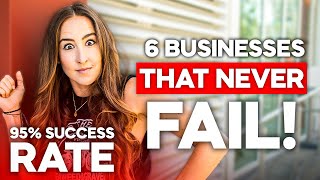
Codie Sanchez breaks down six business types with surprisingly high survival rates. Laundromats hit 94-95% five-year success, rental properties average $462 monthly income, and self-storage reaches 92% success. He contrasts these against the baseline: only 50% of small businesses survive five years.
Questions this video answers
20% (U.S. Bureau of Labor, quoted in transcript).
About 50% by year 5; about 2/3 (≈66%) by year 10 (U.S. Bureau of Labor, quoted in transcript).
About 94.8% five-year success (Laundrylux, quoted).
About 93% (Chamber of Commerce study in partnership with Speed Queen, quoted).
Approximately 85.3% (quoted in transcript).
Chapters
Most businesses fail. The question is, how can you have a business that doesn't fail? We found six businesses with the lowest failure rate associated with them. This is all backed by data because I think it's valid to be worried about having a business that fails. I mean, According to the U.S. bureau of labor, which sounds really fancy and official, 20% of U.S. small businesses fail within the first year. Then that jumps up to like 50% by the year 5. And after 10 years, 2/3 of all businesses have gone under. That's not good odds, not great odds at all. So if we actually look at the data to figure out which ones have the highest likelihood to succeed, then you can determine if you want to jump into those pools. I always talk about the most important decision you make is the first deal you do or the first business you start. Because if the first one fails, your likelihood of taking the risk again is incredibly diminished. This is called your recency bias. So if your recency bias is winning, that's why we want small wins, then you are more likely to go win again or take more risk. If your recency bias is losing or things that feel bad, you're less likely to continue to take risk. So let's get to the data and see which businesses have the lowest. This is going to bankrupt me potential. I got six right here. All right, Number one probably won't surprise my contrarian friends. Laundromats. The laundromats an amazingly low failure rate. According to laundry luxury laundromats have about a 94.8% success rate over a five year period. I also confirmed these numbers because Laundrylux is a member of the laundromat community. So maybe they're a little biased. And the Chamber of commerce did a study in partnership with Speed Queen where they show that they have about a 93% success rate. So somewhere in the 90s, let's call it again, nothing's guaranteed in business. But that's one of the reasons I talk about these laundromats like my gateway drug to business buy in. They have a low failure rate, they're simple to understand. Quarters, machines, a little bit of a dryer, a little bit of a washer. They typically don't take millions to start or buy. And it also turns out people need to wash their clothes even during recessions. So you have downside protection. Lastly, there's a passive component. If you do laundromats as an absentee business, you can run it remote or with very few employees or contractors. Your employees end up being your machines. So we've got a whole video on the nitty gritty of laundromats for you, how we run them, how I started my first laundromat that I bought for 100,000 doll and made $67,000 on and even how to make a laundromat be worth $3 million. That's number one laundromats. Number two, rental property businesses. You know, I think it was Andrew Carnegie that said 90% of all millionaires become so through owning real estate. More money has been made in real estate than almost all industrial investments combined. So maybe it makes sense that they have an 85.3% success rate. Why is real estate interesting and why does it have a low failure rate? Well, one is because again, it's a simple business with hard assets. So, you know, you have your house, the market is really efficient. So typically your house is worth what the market says that it is. There's not a lot of room for variance there or change. You typically have monthly cash flow in the form of rental income. It's pretty easy to model because you know up front how I have to pay X in mortgage and I have to pay Y from my renter. And here's the delta or the difference between the two. Also interesting parts about real estate are obviously things like appreciation baked in 4% a year on average. Or my favorite word, leverage. This is the form of mortgages, right? So you have the ability to use somebody else's money in order to buy real estate. And then that also allows you to have tax benefits like 1031 exchanges where you sell to defer capital gains, depreciation or amortization, which basically are a different way for you to take write offs on your taxes overall. There's also great tax benefits to being a real estate investor only. And then there's the passive component and that you could just hire a property manager. There's no such thing as free money with no work. But real estate prices are interesting if you're in the right cycle of the market now. Right now I think real estate's priced pretty high, but falling fast. I'm in California today. Real estate prices are down like 20 to 30% here. And you need to think about can I qualify for a loan? Can I cover the mortgage? But this success rate is probably there for all the reasons that we talked about. You know, even if you're making a small percentage monthly, like the average rental Property nets about $462 a month. So it's not going to make you a billionaire. But you probably can understand how to grow the business, how not to grow the business, and what a good deal looks like with a little bit of work. All right, number three, Self storage facility. If you don't like the idea of real estate investing for multifam, let's say, and you don't want to deal with tenants or trash and toilets, self storage have less of those things. They have been one of the leading asset classes in real estate since 2008 and according to a few studies, one by Rhino Building, these resilient businesses have like a 92% success rate. One caveat here I would say though is there are a lot of these self storage facilities. So will that 92% rate continue? I'd want to watch what's going to happen the next couple of months and years, but I have plenty of friends like this guy Nick Huber who makes millions on absentee storage sites he lives hours away from. Here's a whole article we did on how to start and run an unmanned self storage business. And you know what's fascinating about this asset class is advances in technology make this not only possible, but pretty standard to run these things remote. So basically you have keyless entry, you have tracking systems, you have security systems, you have automated bill pay, you have all automated contracts. All of this allows people to get in and out of their units without you. Then there's the value add component, AKA adding things to the business to make it more valuable and efficient. They're high. With this type of asset class, it doesn't take a ton to make self storage pretty interesting. In fact, look at what you can do if you just paint the front of your self storage unit and what the normal increase in the property value is for that. So the phone has allowed us to have no manager on site needed in most ways. Number four Transportation businesses Last mile delivery I think last mile delivery is the biggest change in our economy in the last 10 years when it comes to transportation and logistics. With E commerce coming along, the gig economy online platforms, it's more needed than ever to have a way to get the goods into our greedy little mitts and porches. Basically trucking that delivers goods or people from one place to another for a fee is transportation and logistics. We have a whole article on here on how one gent turned this idea of a short distance trucking company into 2,200 bucks a day. That's really good. But this can come in many forms from like a full fledged long haul trucking business to a simple little side hustle driving for Uber on the weekends or Everything in between. These businesses have a success rate about 76.4% according to advisor Smith. That's kind of fascinating because I thought these businesses would be more complex. Now there is a massive difference between short and long haul trucking, or shipping food from Uber and long haul trucking. So your results are going to vary. But on average, these businesses are have a high success rate, I think, because again, we don't have that many inputs. I'd worry about scale, given the demand for drivers, if you wanted to really create a huge empire. But as a job turned into a business, this one could be interesting and relatively low risk. You know, you could buy a truck that's going to have inherent value in it, a little bit of depreciation after you buy it, maybe if you buy it new and it's your time to start with actually running the routes or having somebody else. But you don't have a lot of what's called capex or upfront expenses in order to run this business. And so not only does it have a relatively low failure rate, but I always am looking for how can I make sure a deal can never bankrupt me. I don't ever want to do a deal where if this one deal goes sideways, especially in the beginning, I could wipe out the past 20 years of me investing and working. And neither do you. And that's why I like these little gateway starter businesses.
Story time. All right, guys. This is kind of special because I just sold a website for 8k that I bought for about 100 bucks. It was called Grow Getters, a newsletter that talked about marketing growth. I did it just for fun with two friends. And it made me realize that I wanted to tell more people that you could start with small deals, you could start with large deals, but you can definitely start with online deals. So I partnered with this company, Flippa. Thanks, guys. About where to buy online businesses. It's my favorite site to buy any sort of online business, period, full stop. That's why I'm trying to invest in them. So maybe you guys can check this out so that I could get part of this series. That'd be awesome. Thanks, Blake CEO. Because after all, we know that 94% of startups fail. That's why I like to buy them instead of build them. And this is true on Flippa too. For online businesses, you can get loans or use seller financing. Although you got to put down some cash. You can have profits on day one of owning the business. You can use the cash flow of the business to fund your next brilliant idea. But Instead of paying for an idea, you buy it first. So here's the link. Go to check them out. There's 500,000 businesses that have been listed on Flippa. They've done billions of dollars in transactions.
Cody, you're forgetting that Flippa is also the best place to sell an online business. They even have a matching algorithm to get your business in front of the people most likely to buy. So anyone out there looking to sell or even just find out what their business is worth, check out Flippa's free valuation tool here. Anyway, back to you on stage, Cody.
Speaking of maybe my favorite intro starter business, vending machine roots. So you don't need a lot of cash. 3 to 5k. You buy a vending machine and get started. Or you're super smart, industrious and you buy a used one for 800 bucks. Like this. You know I've talked ad nauseam, aka a lot about this and I have friends who have vending machines that vend healthy food, have, you know, normal vending machines.
Oh, is this name dropping? I guess it might be. But all this to say that Candace Nelson has become an Internet bud of mine lately and she is the founder of Sprinkles Cupcakes. She created Sprinkles Cupcakes vending machines. Brilliant idea. She definitely made more than a few grand on that thing. I don't want to make a big deal about this, but if you do not think that red velvet cupcakes from Sprinkles are the best cupcakes out there, like I don't know if we can be friends. I think it's unavoidable.
Once you have your vending machine, a couple different things you need to do for it. Find a well trafficked location, negotiate to put it in for, you know, as a service or for a rental fee, then fill inventory. Great little starter business. I wouldn't do it if I was a pro or wanted to make a lot of money. Meaning if I wanted to make hundreds and hundreds of thousands of dollars a year, this business is probably really good for your first 20, 30, 50, maybe you could get to $100,000. But it's a great business to learn things like P Ls, logistics, pricing, margins, managing a few contractors or running it by yourself. You start small, it's not going to bankrupt you. You figure out how the business works and then you slowly expand and this business has more than a 90% almost success rate. Then you can eventually have a bunch of them, roll them up and sell them as a group like these Companies do. So the actual success rate for a vending machine business varies from 90% according to drop vending who's in the space, or 82% success rate according to the US Bureau of Labor. There are a slew of billion dollar vending companies, which is interesting also because it does show that you can scale this space, although I think it'd be a hard slog. So when you combine the low failure rate, affordable startup cost and simple operations of this business, I really like this starter business for people who want to hust. Okay, number six senior care centers. So this one surprised me.
I didn't realize that senior care centers had such a low failure rate, but.
Actually it kind of makes sense for a lot of reasons.
One, government subsidies, state subsidies, city subsidies that basically allow people to run senior care centers like this with some help from the government. Two is obviously the demographics in the US are changing. There's, there's a lot of older people, less young people, and they need more care.
Now originally when I thought of these.
Ideas, I was like, what are some.
Beginner ways to do this? You can't buy, I mean, this property.
Right here costs tens of millions of dollars. You probably can't buy that when you're just starting out. But I didn't realize that there's a ton of little houses where they actually rent a house and get it zoned properly for senior care, or alternatively buy.
A house and get it zoned or the right certificates to be able to.
Have assistance living there. So that's why this idea is actually kind of interesting.
There's definitely oversight here and certifications and zoning that you have to be aware of, but you don't have to have the millions I thought you did. So there you have it. Six businesses with the least likelihood to blow up in your face. At least according to the data. So which businesses do you guys want us to cover next?
More from Codie







He wouldn't give you the dream if he didn't believe you had what it takes. You have what it takes.



What’s the one thing most job seekers overlook that could get you hired faster than you think?