Buy land and cashflow on tents?
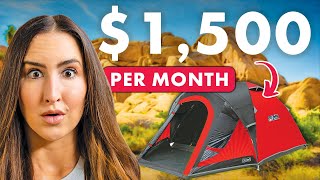
Codie Sanchez explains how to buy inexpensive rural land near national parks and generate cashflow by hosting campsites (via Hipcamp/Airbnb). She uses a case study: a friend (Kate) bought 3 acres near Joshua Tree in 2020 for $10,000 and generated roughly $1,500/month within 90 days by listing campsites. The video covers zoning (e.g., ~10 campers/acre in one area), sanitation and sewage options (porta-potties or none depending on site), property management routines (weekly or daily checks by owners/ranch hands), supplemental revenue options (agricultural tax credits via leased cows, goats for milk/meat/sale, RVs/Airstreams/barndominiums), pricing assumptions (examples: $50–$150/night; example scenarios yielding ~$1,300–$4,500/month or ~$57k/year for one site at full occupancy), and practical advice (good photos, local manager taking ~10% fee, check zoning, avoid Joshua Tree nowadays due to zoning/price changes).
Questions this video answers
$10,000
$1,500
About 10 campers per acre
$50–$150 per night
About $1,520 per month (after some costs)
Chapters
This is a low risk business that could make you fifteen hundred, a thousand thousands of dollars a month with dirt. Have you ever wanted a piece of land completely away from it all that is only yours, so that when the world gets crazy, you have some place to be. This is an important video for you. We live on top of each other today. And it's probably because you thought, like I did, that in order to own a piece of land away from everything, you had to spend hundreds of thousands or millions of dollars. But what if that's not true? What if we could have that? That would give us personal sovereignty, but we could do it for thousands of dollars and maybe even have other people pay for it. I'll pay for this. My friend Kate bought a plot of land just like this for $10,000 outside of Joshua Tree. With that $10,000, she's made $1,500 a month in her first 90 days. Now she's making much more than that. This is a story of how you can do the exact same thing. So a group of friends and I were going to Zion national park, and we were, you know, planning the trip. And quickly we realized that all the national park campsites were completely taken. No room anywhere. We've been driving for, like, eight or nine hours. We were exhausted. All the hotels were full. We're like, what are we going to do? And one of my more industrious friends, Joe, came up with this idea. He's like, I'm going to look around for campsites. I'm like, hey, bud, I just did that for an hour. None of them are available. And he's like, I bet there are private campsites. Turns out he's right. And what he found was there was a cattle rancher right outside Zion National Park. Beautiful location, and he had 10 campsites available. So we went over there. For 75 bucks, we got ourselves a campsite for the night. It was glorious. There was no trash. There were no other people around us. Just us, the stars, and those red rocks. And that's when I realized, wait a second, is there a business here? So I flagged down one of the ranch hands, and he told me that they actually make more money on the campsites now than they do on the cattle. And they keep the cattle around for tax breaks because when you have cows on site, too, you get an agricultural tax credit. And he basically leases the cows from his neighbor. This got me. How could I own my own plot of land just like that? That's when I hit up my friend Kate Hancock and said, show Me your ways, getting cash flow, getting a campsite, and also doing it with other people's money. That's what we're going to talk about today. Because the world out there is scary. But here, it's pretty peaceful right here. This spot of land could be worth $150 a night to you. That is if you do hipster camping, which is what we're talking about. Let's all get the out of here. Yeah. Turning this plot of land into a campground because it happens to be next to a national park. National parks are visited by millions of people a year all across the country. Except look at this. While you don't see anybody here, if you were to go to a KOA or a public run campsite, they're full. You can't get in wait list for days. And what's going to happen during a recession? It's going to be even worse. Because in a recession, we can't go flitting off to Europe like you saw your friends do with their summer Greece videos. Families need to go somewhere to get away from it all every night and then. But what if you could make money off of bringing people together closer to home on a piece of dirt? So old Kate decided she wanted a business that was low maintenance, low cost, low risk, and didn't have much wear and tear. A plot of literal dirt appears to hit those parameters. I thought there was no way you could buy land for $10,000 near a national park. Turns out the joke was on me. Now this was in 2020. So now the land in Joshua Tree is more like 25 to 50k. However, she bought 3 acres for 10k. You can see a bunch of them like this here. And there exists these exact same thing all across these other national parks. The part that's fascinating is she bought this. She checked out the zoning to make sure they allowed for camp permits and then realized that in this area you are allowed about 10 campers per acre. But she basically put this thing on. Hip Camp. This is what Hip Camp is, by the way. I also love this site, Hip Camp. You can list campsites everywhere. It comes with a million dollar insurance policy automatically. And Hip Camp and Airbnb allow you to pick out campsites that are residences and go throw up your tent. Come check out my tent. I got my tv, my Xbox, dvd. It's like I'm not even camping now when I'm modeling out how much money I can make. There are some assumptions that I have baked into this. Here's what they are. For every one acre you can have 10 campsites. That means that if we take that 50 to $150 cost, it's not just that we could assume 30 to 60% occupancy of each individual campsite, it's that we could take three acres times by 10 people per campsite and assume 30 to 60% of those are filled each year. This is when we're getting into tens of thousands a month as opposed to a thousand. Let's take it easy. Let's walk before you run. This is about when everybody starts panicking and says, but wait a second, I'm going to have this beautiful pristine piece of wilderness and I'm never going to check on it. People are going to be running amok. They're going to be animals out of the zoo. And so I thought, okay, let's see if that's real. I want to talk to 15 different owners of these campsite properties. 10 of them have one person check out their property one time per week to make sure not trash parties, etc. They also have a number that they give everybody that usually a va or themselves is monitoring to see if people are out there doing anything they shouldn't do. The other people keep them responsible. Five of the 10 people have somebody check their property every single day. Usually those people for the five I talked to were ranch hands. So they're dealing with the cows, they're out there anyway and they're kind of keeping an eye on the two legged agriculture they got going on. Oh, but what about the poo? Turn it off. Big question here. Everybody wants to know what happens when you have all these campers on your campsites. And you know, humans have to do a few things at least once a day. There's a couple different ways to do this. It depends on zoning and sewage restrictions in your area. For instance, the one I went to in Zion. No bathrooms, my friends. The bathroom. Well, it looks like this, but the ones in Joshua Tree, increasingly you have to have sanitation so people use porta potties like this to pop them up. And there are rules about how many campers you can have per acre just to make sure that, you know, the poo doesn't get out of hand. But the truth of the matter is, if you've ever been camping before, there's animals around here too. What do you think they do with their number twos? Are we rhyming now? I think we're rhyming all right. What are some additional things I would do to increase revenue? You hear one of them? It's pretty Loud. First of all, one of the things you could do is turn it into a little bit of a farm situation. We're going to break down a bunch of these trees. We want to figure out how to make money, but can we add a few ways to make a lot of money? Goats. This contraption in the front, and there's a bunch of goats on property, and you feed them. Now, the interesting part about goats is they do count for agricultural tax, tax credit. They're also cute, but in tandem with that, you can sell them because they reproduce a lot. You can also use milk from the goats. You can use meat from the goats. This herd in particular continues to expand. It could be fine actually, just living off of the grass. They don't need to do the corn, but they produce a lot and they eat the goat meats pretty much every day. So let's say that Kate lists her place for 50 bucks a night. Let's say she does that 365 days. She has at least one person in there. Why that many days? Because technically she has three acres, thus she can have 10 campsites on them. So it could be 30 people. So I think this is super reasonable to assume she could have at least one person a night. If you take out the cost, such as a 3% Airbnb tax, property taxes, having some one off costs, her total profit is about 1520. Doesn't that look nice? I have great handwriting. So 1520amonth. But at the end of the day, let's say that she's making about 1300 to 1400 bucks. Month a. A month off one person every single day. Oh, how about this? Her new model is a little bit different. Now she charges 150x365. One person equals about 57k a year that she would make. And if we break that down on a monthly basis, she's actually making more like $4,562 a month. This is on one campsite. Now, if you could imagine that, on average, she gets 5 to 10, which is what she says she does. This starts looking pretty profitable. But I think in a world that's a little crazy, this is reasonable for all of us to have our little spot, our little slice of sunshine, a place that's just ours. All right, this is how I'm going to do this. I bought some land just like Kate. Here's what I'm going to do. Listed on Airbnb and Hip Camp, like I do my other properties, I have somebody local who's managing the property for it all they do is take 10% straight of any of the total revenue that we bring in. That means that we're going to have on site hunting licenses because there happens to be ducks in the area. Sorry, PETA. We're going to have a agricultural tax credit through cows being leased on the land. And we're gonna build a barndominium which basically looks like this. This eventually will rent out for a lot more and long term. I think I wanna put an RV park located on there too. Now, Kate's looks like this now. Totally different. She has an Airstream on it, she has platforms on it. And now she's revving more like six figures on this location. Also, spoiler alert, Joshua Tree is not the best place to do this these days. In fact, I would not recommend that at all. It's gotten a bunch of crazy zoning in it. It's expensive now. You can't find those 10k plots, but there's a ton of other spots all over the country where you can. The last thing I'd say is you really need somebody to make sure that they can take amazing pictures. Just like any Airbnb location, you need to tell a story. You need to optimize for title. You need to mess around with price arbitrage. So this isn't the easiest thing in the world, but it is really simple. And in this world that's increasingly not so simple. Maybe this is an option we need. This land of ours has 2.43 billion acres of rolling hills and hitting valleys and rushing rivers. And you have a chance to own a part of it, to be the shepherd, for it. To remind others that we're more united than divided. The way we push back on the elite, on those who are trying to control us around the world, is by taking back ownership into our hands. This isn't just about the money you're going to make. This is about the freedom that you're going to provide. It's about the reminder of this huge, abundant world we've been given. It's about leaving a footprint, a footprint here that can be remembered, a legacy. That's why this video matters to me. It's why this video matters, I think, to each of you. Because this isn't just a campsite. This is a memory. So what memories are you going to make?










