Dollar Cost Averaging is dead... This is how to invest in 2026
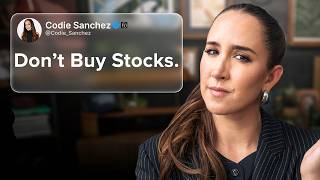
In this video, Codie Sanchez and a host challenge the conventional wisdom of index investing and dollar‑cost averaging. They argue that the S&P 500 is now heavily concentrated in a handful of tech giants, that the public market has shrunk dramatically as companies stay private longer, and that the costs and quarterly scrutiny of being public drive many founders to avoid IPOs. As a result, the most lucrative growth phases now occur in private markets, which are invisible to ordinary investors. Sanchez explains that the United States has roughly 25 million private businesses, many of which generate steady cash flow, while only a few thousand firms are publicly listed. He highlights a current “logjam” in private equity—over‑leveraged firms forced to sell thousands of businesses—creating a limited‑time window (around 2026) for individual investors to acquire small, recession‑resistant companies. The video concludes with a practical 7‑day challenge to locate businesses for sale and a promotion for a virtual event that teaches how to fund and structure such deals.
Chapters
How do the rich invest and can we copy them to make more money?
Today we'll find out. First, true or false?
You're doing everything right, buying the S&P 500, dollar-cost averaging, and you're still getting played. If you stick around for 5 minutes, I'm going to show you why you're not the investor and why rich people never get there through straight index funds. Part 1: The Illusion of Diversification. Let's start with what we used to know about investing. The S&P 500 had 500 companies, the bedrock of American retirement savings. The thing financial advisors tell you to just keep buying no matter what. And they're not wrong exactly. If you invested in an index fund for 30 years, you'll almost certainly be all right. You'll probably outperform the pro managers that are really expensive. That's a real documented phenomenon and a reasonable default. But is this really good advice? Well, it turns out 10 stocks control 28% of the entire index. 10 companies out of 500. We got Apple, Microsoft, Nvidia, Amazon, Meta, Alphabet, Tesla, and a couple others depending on the week. When you buy the market, you're in practice making a very heavy bet that those specific companies will continue to dominate for the next several decades and that the price you get in is a good one. That's basically a concentrated tech portfolio with 490 other companies stapled to it. Maybe that bet pays off. But if you made that bet at the beginning of this year to date, That would be a bloody, bloody bet. Okay, for instance, these are extraordinary companies at the end of the day. But the story of markets is littered with companies that were at their moment just as dominant. General Electric, Kodak, each of them at their peak looks like the kind of company that would simply always be there until they weren't. Kodak at its peak in the '90s controlled 90% of the film market. Printing money, basically. Today, well, they're bankrupt. They filed for bankruptcy in 2012. Now they're like this small niche company where digital disruption wiped out the core business entirely. So not one of those companies we just talked about are in the top 10 anymore. And even the best, Exxon, hasn't grown its value since 2007. That's the first thing worth understanding. I'm gonna show you 5 harsh truths in the next 10 minutes. By 3, you'll be angry. By 5, you'll have a decision to make. The second truth is why this index is more concentrated now than it's ever been. Why that concentration is likely to keep increasing, but more importantly, why that means less money for you and me. Part 2: Where did all the companies go? I used to dollar-cost average every month into the stock market and feel really smart doing it. Then I saw this number I'm about to tell you, and I felt sick. I want you to see what I felt. But first, this building used to be the Pacific Stock Exchange, a place where companies are bought, sold, and valued in the public markets. Today, it's a gym. To understand what happened, you have to go back to around 1996. That was the peak. 8,000 companies publicly listed. And then something shifted. The number of IPOs started falling to now it's half. The companies that would have gone public a decade earlier started staying private longer and then longer still. In the late '90s, the average company waited about 8 years before going public. Today it's 12. That's a structural change in how most ambitious companies in America think about growth. So the question is, why? And do we care for us to make more money? A Law Finance Review puts it more bluntly. By the time these companies finally list, much of the growth phase, where all the money is made, may have already passed. So ordinary investors, you and I, miss out on a vital period of economic growth. Listen, think about it this way. If you retire at 65 with $1.2 million in index funds, you will spend your last healthy decade deciding whether to fix the roof or take the trip today. When in the past you could have rode off into the sunset. That's the difference between the dream they sold you that hasn't been upgraded. And why is this happening? Well, instead of buying Amazon, let's say, massive value creator at a $400 million valuation, then you get to ride it to billions. Now you're seeing the Amazons of today list after they're already worth $10 billion, $50 billion, $100 billion. So all of the growth, like 10 to 100x of it, has already happened in private markets. Translation: the 10-100x run that used to happen after IPO now happens before IPO. In the private rounds you're not invited to. By the time it shows up in your Robinhood app with a shiny ticker, the VCs, PE funds, and insiders have already eaten most of the upside. So you and I aren't early, you're the exit liquidity. AKA, they make money off of you, not for you. Now, why are CEOs okay with this? Because it's Sucks to be public? No. The government has made it worse than a colonoscopy. By the way, this is about to get juicy. As you're watching, I want you to keep a mental score out of 5. Every time you hear something you didn't know about the stock market, put up a finger. If you had 3, you owe this video a like. Deal? Okay, so why did CEOs agree? Because going public is expensive as hell. For a mid-sized public company worth, say, $1 billion— I know that's a lot, but like, not for a public company— the extra public company rules They cost them $10 to $40 million a year in audits, lawyers, compliance. That's like lighting 40 to 50 CEO salaries on fire every year just to stay listed and do the quarterly earnings circus. Then they add what we call the humiliation ritual. Every 90 days, your CEO has to get on an earnings call and convince Wall Street they're still a genius, knowing one bad quarter can literally wipe billions of the stock overnight, even if the long-term plan is working. So yeah, founders look at the math and go, why would I pay millions a year for the privilege of being screamed at 4 times annually by people who've never built anything? Going public means quarterly earnings calls. You're just standing in front of people justifying your decision. It also means activist shareholders who can buy a stake and demand you run the company differently. I got a story for you. So Dan Loeb at Third Point made his name not just by pressuring CEOs, but by humiliating them in writing. His activist letters are legendary for how personal they get. In a 2005 letter to Stargast CEO Loeb, called him one of the most dangerous and incompetent executives in America, accusing him of years of destruction and strategic blunders, basically mocking the board for not firing him. He literally says, why didn't you fire him with a well-worn boot planted on the backside? In another letter to a pharmaceutical CEO named David Robinson, he quoted analysts calling Robinson the worst CEO in biotech and said the stock traded at a David Robinson discount.
What a burn.
Because the markets assumed he would keep screwing it up, so why wouldn't they give it a discount? So these letters were actually filed publicly with the SEC, picked up by the press, read by employees, customers, CEOs, family. The point wasn't just to change capital allocation, it was to make staying in the job socially and professionally unbearable until the board caved. So the cost of that scrutiny is real, and for a long time, founders paid it because they had to.
There was no other way to raise the capital they needed.
But what's crazy is that the investors need the companies to go public so they can make money off of the CEOs who are doing all the work. But they'll manipulate the markets, their short-term game. CEOs, I think, got fed up. That changed. Venture capital, private equity, sovereign wealth funds, the amount of money available to private companies explodes, right? And a founder who originally needed $500 million to scale no longer had to go public to get it. So many of them didn't, you know, SpaceX, Stripe, Cargill— some of the largest companies in America—
they have never gone public.
These are businesses central to the economy. They just aren't in your index fund. They are in rich people's investment portfolios instead. So you and I, unless we got lucky and knew someone early in SpaceX, basically had no chance to make money and grow off of the most profitable entrepreneur of our time. And here's the consequence: the public market doesn't just have fewer companies. Aka you have less companies. It has a skewed sample, the ones that either need public capital or were too established to care about the downsides of listing. So the pond shrank and kept whichever fish couldn't swim out.
Part 3: The Private World, aka where all the money is really made. Quick question: What percentage of American businesses are in your index fund? Take a quick guess. Less than 0.002%. The other 99.998% are invisible to you. So where are all those companies? Well, there are approximately 25 million private businesses in the US versus the S&P's 500. Millions of these companies are actual unicorns. They're going to print millionaires. So here's the full picture. Public markets win on the size of companies. Private markets win on the number of companies. There are only about 1,000 public companies worth more than $3 billion. The fascinating part? Private equity firms already own more than that just in their portfolios. And that's before you count the other 25 million private businesses in America that will never show up in your index fund. Yeah, they're not all sexy unicorns. They're plumbing shops, HVAC, landscaping. But let me tell you what they're not. They're not crypto, not AI. They're pest control. The stuff you call someone to fix on a Tuesday. So all these boring, cash-flowing, recession-resistant businesses that actually keep your city from falling apart. These aren't billionaire businesses, though some will be, but they're millionaire businesses.
And the last I checked, millionaire beats broke every day of the week.
Okay, so I want you to stay with me on this part. Because in part 4, I'm going to show you exactly why 2026 is the window and it closes fast. Because the quietly rich people, you know, the guy with the paid-off house, the woman who never checks prices at dinner, they didn't get there buying S&P index funds on their phone. They got there owning private businesses. Index funds, that's where you park your money. Private markets are where you make it. And 2026 is weird because boomers are aging out, rates are high, and a lot of these boring businesses are quietly for sale if you know where to look. So you can either keep the leftovers on our Robinhood accounts, or you can start learning how to buy the businesses everyone else just drives past. And then you get to be in places like this. In 2008, private equity firm L Catterton took Restoration Hardware private for about $175 million. They cleaned it up, focused the brand, fixed the stores. 4 years later, they took it public again at around $520 million. That's roughly 3x the whole company in 4 years, but all for the private owners. That's before regular investors even got a shot at the stock. And that's the game—
owning the thing before the crowd sees it.
Let's do some public math here. Let's say you want $200K a year in retirement income. At an index fund at 4% withdrawal, that's $5 million you need to invest. Or you can own 3 boring businesses doing $2 million in revenue with 15% margins and keep $300,000 a year. Which game do you want to play? At the end, I'm actually going to give you a 7-day challenge— how to find 3 real businesses for sale in your city using free sites.
If you do it, you'll never look at your index fund the same way again.
Part 4: The logjam that is our opportunity. Private equity is stuck. Through the late 2010s and into the early 2020s, private equity firms went on a crazy buying spree. Interest rates were basically zero, credit was cheap, So they borrowed heavily to acquire businesses, planning to hold them for 3 to 5 years, improve them, sell them to the next buyer and make money. The rates went up, credit tightened, and the buyers who were supposed to take those businesses off their hands, they largely disappeared. So right now there are over 16,000 companies held by private equity firms that have been in their portfolio for more than 4 years. The average hold time has stretched to 6.5 years. These firms, they have limited partners who are promised returns like, you got to give me money back. Private equity companies, that timeline has passed. They need to sell. So here's the thing, everything I just told you, the logjam, the motivated sellers, the 16,000 companies, that window doesn't stay open forever. So I'm actually running a 3-day live event in June, totally virtual, called Mainstream Millionaire Live, and I built it for this moment. We're gonna show you how to find those businesses, how to fund a deal without emptying your savings, how to structure it so the seller wants to work with you over a PE firm. Real deal analysis, real numbers, no theory. Tickets are less than $74.
You can join from anywhere virtual.
The people who attended last year's event, they're closing deals right now while everyone else is watching their index fund tick sideways. The link's in the description. Now let me show you exactly who gets access to these deals and why 2026 specifically changes the math. In any market, when motivated sellers meet informed buyers, deals get done at prices that favor the buyer. That's just how markets work when the leverage shifts. Now, I want to be careful here because the private market requires real due diligence, real expertise, and real patience. This is a slow, careful trad, not a frantic one. But the structural conditions—more companies available and more motivational sellers—well, they're more fairly priced deals. They're real and they're specific to this moment. Part 5: Who gets access? Remember that Pacific Stock Exchange we showed you? The one that's a gem? That's a signal. The money didn't disappear. It moved somewhere most people never look. The obvious question at this point is who actually gets to participate in these markets? For most of the century, the answer was nobody unless you were really rich or institutional. Accredited investor rules, minimum check size, access gated by relationships. These private markets were built for institutions and the people who are already rich. That's still largely true, but something is shifting. The barrier to entry in private markets isn't always capital. Sometimes it's something else entirely. Like, for instance, there's a 62-year-old plumber who spent 30 years building a plumbing business. He doesn't necessarily want to sell to a private equity firm that's going to cut his costs and fire his whole team. He wants someone who will run it, who will take care of his people who have already been with him for decades. This is a real story. So one of my members came in and bought it with an apprenticeship. In fact, all of these people bought businesses using seller financing. Picture yourself in that same place, someone who will preserve what he built. In that situation, the currency is trust and a plan. There are structures, seller financing, equity rollovers, earnouts that allow someone with the right skills and relationships to get meaningful ownership in a business without writing a million-dollar check. These deals happen every day. They just happen quietly between people who know they exist. So let's do a 7-day challenge to get you primed for owning a business. Day 1: Learn the landscape. This takes 30 minutes. Go to bizscout.com for free. Filter by your city. Just browse. Get comfortable with what's actually for sale. You'll be shocked. It's super fun to start. Day 2: Find the ugly ones. No more than 20 minutes. Search Marketplace for businesses for sale. These are the off-market, unpolished listings PE firms never see. Screenshot 3 that kind of pique your interest. Day 3: Go offline. This is 1 hour. Drive 1 commercial street in your city. Note every business with old signage, no Google reviews in 2 years, under new management sign. These are transition signals. Day 4, run the basic math, 30 minutes. You pick one of the businesses from your BizScout list. Use this rule. Most small businesses sell for 2 to 3x annual profit. If it makes $200K, it's probably listed around $400K to $600K. Now you know how to read a price tag. You can also steal this calculator from us. Day 5: Find the owner, 20 minutes. Look up the businesses on your state's Secretary of State website. It's free. It actually shows you who owns it. Every state has one. Day 6: Read one deal, 30 minutes. Go back to BizScout, find a listing with a full financial summary attached. Read it. You're not going to understand it all. That's the point. Write down what you don't understand. Day 7: Make contact, 15 minutes. You're going to email or call one owner. Don't pitch, just say I'm exploring buying businesses in this area. Would you ever consider a conversation about the future of your business? Half won't respond. That's fine. You're not buying today. You're building a muscle. And that's exactly what we teach inside our community— how to find these deals, structure them, and step into ownership. Link below for our 3-day event, and I'll show you how to do this all live. Which brings me back to where we started. Remember this: the stock market isn't a scam. It's just the second half of the game. They sold you the kindergarten version. Buy the index, wait 40 years, you'll be fine. The part they left out? Since 1996, the number of public companies has been cut in half. The ones that last? More concentrated than ever. Meanwhile, the best businesses in America, they're staying private. Private equity is sitting on so many deals you'll never even see them. Remember, the game moved. The best players didn't cry about it. They followed it. Public markets are where you protect what you already built. Private markets are where you build what you actually want. You don't have to have a trust fund. You need knowledge and nerve because the field is private. But you have an access key, this channel. So subscribe and tell me what business you want to buy.










