Don’t Start A Business Until You Watch This
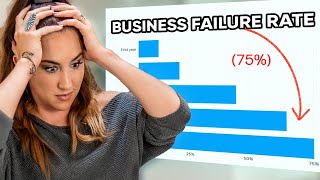
Codie Sanchez breaks down why most businesses fail: 75% don't make it past ten years. She covers the non-negotiables: track cash flow weekly, vet partners carefully because fraud happens, never rely on one payment processor, and know when to hire someone to replace you before you burn out.
Questions this video answers
"In the first year, 10% of businesses fail. In the second year, 45%... By year 10, 75% of businesses will no longer exist."
A 13-week rolling cash flow spreadsheet that tracks weekly cash in and out and projects forward balances.
She described Stripe holding the business's assets "for 90 days."
Chapters
You will fail. You will fail. You will fail. In entrepreneurship, everybody on the Internet dreams about the title of CEO, but it comes with scars. I've made billions of dollars of failures@Amazon.com literally billions of dollars of failures. They shouldn't want to be you. I think it sounds better than it is. It's not as much fun being me as you'd think. You are here, but you want to be here. Likely you think it goes something like this. The truth of the matter, it goes like this. In the first year, 10% of businesses fail. In the second year, 45% of you will be gone. By year 10, 75% of businesses will no longer exist. I want you to know the truth so you can brace yourself. If you know this is the reality and not this, then you prepare for what's coming. If you can expect failure, maybe you can beat it. Also, one huge failure would be to not subscribe to this channel. So make sure to hit that subscribe button. We got a lot more like this. He's coming for you. The day you can't pay the man who works for you the hardest. So when you become a business owner, the second Friday of every month sort of takes on a new meaning. And you know that that is the day in which you owe the people who choose to spend their lives working for you their next paycheck. My dad has an incredible story that I only started to understand after I had to pay everybody every Friday, about where back in the day when he was running a construction business, every Friday he'd be really tight to having enough money to pay his people. You see, in construction, you contract for something, you do the work, and you don't get paid until afterwards. So there's what's called a cash lag in every business or float. One Friday, he remembered he wasn't going to have enough cash by the end of the day. And he kind of sat there, took a deep breath, and realized as his employees were coming in and coming in that the last man to come in that day was not going to get paid. But the part that hurt the worst about this is that man would be the same person who had worked longer than everybody else, and he would be the one left outstanding. So my dad had a rule, and that rule was his word was never broken when it came to money. So he called up his banker and he told him to put a personal guarantee on the house and that he would use the money from that house to pay for extending a line of credit to the business. And he made sure that that guy got paid. Every single business owner has this type of story. I've never once in any of my businesses not paid somebody who came and worked for me. That's a line I drew in the sand. As a business owner, there's many times where I don't pay myself. In fact, I pay myself the bare minimum that we need right now from this company. Contrarian thinking, I don't make the most money at this company, a bunch of other people do. And in fact that's usually how it goes for the first couple years in business. You're not the one getting paid, your employees are. At least that's how good entrepreneurs are. Lots of people out there will be talking about the millions that they make every single year. But the truth is, you usually need to spend a lot of money on your business before your business starts paying you. So no, I've never not paid an employee and I hope I never have to. How can you make sure this never happens to you? This right Here is a 13 week rolling cash flow. Basically what this statement does is it makes sure every single week you are tracking the money into your business and the money out. You can see this little segment at the bottom. This shows you how much money you have in your bank account and it also shows you how much money you're projected to have on a forward looking basis. I am never caught unaware of when my businesses are going to lose some cash because every single one of my businesses runs on this 13 week cash flow. If you guys like this, we'll put a link down below. You can this 13 week cash flow for you. This is like private equity, one on one. Every business runs in a 13 week cash flow. And if my father had this, he probably could have rearranged things in order to make sure that he didn't have to put a line of credit on the house, which is a really scary thing to do that I do not recommend. The lesson here, your word is your bond. Cash is king. Pay your people even when it hurts. Tough story number two. The day you get defrauded, your most expensive mistake will not be what you do, but who you choose to do it with. This is a really hard lesson that I learned. We actually had a friend, this friend kind of got into our lives, talked me into investing in a business actually alongside him. And we didn't track that business as close as we should have. I'll be perfectly honest, I'm a little embarrassed because typically I track my businesses pretty tight. But this one was a friend business. It wasn't A very big business for us, so we weren't paying a ton of attention to it. My husband started to realize that we had some weird cash flow issues going on in it. So we pushed it over. The CFO of the company and said, this doesn't seem right that the company's making this much money and yet the profit is so low. We know for all of our businesses what the average profit margin is for them. And for this one, we thought the business should be somewhere between 15 and 20%. When we looked at the business and realized that it was basically losing money just minorly each month, we realized something must be going on. When we talked to the guy who ran the business, my friend, he kind of gave a lot of excuses. But those excuses continued week after week until we finally figured out that the guy was stealing from the business, that he was actually taking the money, giving some to himself, giving some to the operator of the business, and also paying for expenses out of the company. And this one kind of broke my heart a little bit, actually, because I really liked the guy. I think the hardest breakups and frauds to have in your business are when you think that they're a friend. And business and money make people do crazy things. So I think maybe you haven't actually been in the game until you felt what it feels like for somebody to steal from you or for somebody to defraud you, which is an awful thing to say. But there is some silver lining, which is you realize at the end it's not gonna kill you. You become a lot more aware for what the next fraud's gonna look like. Your spidey senses tingle a lot. Soon you remember that your weakest point is always going to be your emotions, right? So that's why people coming in as a friend, you got to have the exact same rules for them as you have for everybody else. How do you spot somebody with integrity or who's a good person to work with? 1, if you have any question or you think that you need a contract in order to protect the relationship, it's an ultimate no. If you think you need to contract something overly, you already have some spidey senses not trusting this person. But number two, no matter how much you trust them, you need a contract. If this goes sideways and you list all the reasons why that could what happens, and how do you keep control of the thing that you've put money into? And lastly, I would say the best predictor of future behavior is past behavior. So this guy, for instance, hadn't been very monetarily successful before. He talked about other business partners that he had in kind of a bad light. He didn't have a history of wins and successes in business. And for some reason I ignored all of that. The humans that you choose should be somebody that's been a top performer at their job, been incredible to, you know, work with, seen some huge success as an athlete or something even previously. And if they haven't done any of that stuff, you can kind of assume they won't in the future. The lesson is just because you're close doesn't mean you should close on a deal with a friend. Frauds are everywhere and humans are incredible self rationalizers, which means that we can explain to ourselves really, really easily why something's in our best self interest. So you'll be amazed how many times somebody defrauds you and then blames it on you later. Just because they're close doesn't mean you should close the day someone you helped turns against you. My dad has this incredible line which is never wrestle with a pig because you both get dirty, but the pig likes it. And this one always made me giggle. But he talked about one of his partners back in the day. And this partner of his, he ended up selling his business to a small little mom and pop SMB business. This partner decided at a certain point that the contract that my dad had with him, my dad wasn't going to come after him. He would pay him, kind of the upfront thing, but he wouldn't pay him for the rest of the business. And what's kind of wild about that is when that happened, my dad realized that this guy that he had been working with, growing this business with, just stopped responding. Stopped responding to calls, emails, texts. He had to go get an attorney to go after this guy. Fascinating part about all this, way back before that, my dad was the one that helped this guy start his very first business. They knew each other for years, maybe even decades. So the guy that he helped became the guy that turned on him. This, unfortunately, is part of the rules for the road. Why do people do this? Here's what I've seen happen. Most often, people don't start out with a bad intent. Typically they start out thinking that it's all going to work out well between the two of you. But then the business starts to go sideways up or sideways down. What does that mean? If the business starts to go sideways down, that's where you have people sort of hide money, pretend like everything's okay, and stack up mistake after mistake after mistake and not tell you until it's too late. Think about it like this. I don't know if you guys remembered Selena, but Selena's manager for one of her charity portfolios is the one that killed her. And the reason why Selena's manager killed her is because Selena's manager was kind of working this charitable foundation and stealing some of the money. And then there used to be a ton of money coming in where the manager could cover it up for Selena and that money stopped flowing. And so Selena's manager got caught and she knew it. And so before she she could get bully caught, she wanted an ultimate decision out. Now, thankfully it's not that bad usually in business. But that's why when something starts to go sideways, people dig in and they make worse and worse and worse and worse and worse decisions. I'm sure we have all had moments like that in life in some way or another. Now the opposite way a business goes sideways is an upside sideways. What happens there is you guys start a business together, it's equal at the beginning. It feels good for you two to be working together. But at some point the business starts making so much money and maybe you're less involved or maybe you and your co founder have different skill sets and eventually your co founder is going to think, huh, my skill set is more valuable than their skill set and so I should be compensated a different way. This happens a lot. It's even happened to me on the other side where I thought that I should be compensated more and they thought they should be compensated more. And so we have to both battle it out. Humans are incredible self rationalizing machines. As I said, the lesson here is this. Never listen to a person that talks badly about others but tells you to trust them. That is is your little red warning sign that that person probably has rationalized themselves into an upside or a downside deal before and blamed it on somebody else. You want people who say, you know what, it didn't work out in my last job because I didn't really like it. And so we parted ways amicably. My last partnership wasn't exactly what we needed, so I moved on. You don't want somebody that says it was all that other guy's fault, all this other girl's fault. That is a big red flag. Back in the day I ran a business at State Street. This business sold investments and what's called money market mutual funds to big institutions, sovereign wealth funds, etc. And this business was doing billions in assets under management. I was just part of a division where I Headed a division of this business. The crazy part is we were doing everything right. We were growing like crazy. We were the biggest in the industry and getting bigger. And then something happened. The government came in and said that the way we structured those products, it could no longer exist. And you could kind of think about it like this. If you owned a donut shop and that donut shop then got required by the government, that all donuts had to have a hole in the middle. But your best selling donuts were filled with jelly. All of a sudden, your best selling product can no longer be sold. But you only sell one product. So what are you going to do? Well, for me, I had to leave that business. I decided that in that moment, I would go out and I would diversify our investment base. I would bring in more products. So I went to Latin America to get new clients and where the government couldn't regulate it the same way. And I also started to branch out to different types of donuts. And we started selling things like private equity funds and hedge funds. I realized that I didn't have the knowledge necessary to really survive in this world. So I thought that all you needed was to know how to sell, how to invest, and how to build this business. I didn't even think about the government coming in and being able to take away my entire business with a stroke of the pen. So I went to Georgetown and I started getting my MBA there during this time period because I had to get smarter, not just work harder. The lesson is one trick. Ponies die fast. You need multiple tricks. This story is wild. This is the day that your payment processor or bank takes all your cash and decides to not give it back to you. We have a small business that we own and this small business used Stripe. Totally normal payment provider. Unfortunately, this small business owner missed a couple of chargebacks. People saying that they didn't want this product and they just put a charge back in instead of going through with with the purchase price. They missed like three over. Let's call it six months, three months, something like that. So what did Stripe do? They sent them a warning, but my guy kept going back and forth with with Stripe and saying, oh, but we can figure it out, whatever. And then the second that my guy goes to withdraw his funds that he needs to pay his employees and run his business, Stripe shuts off the transaction and holds all assets of the business hostage for 90 days. So when I hear about this, I go to the founder and operator of this business. I'm like, what happened? They run an analysis for Me, I get pissed because I look at that analysis and I go to Twitter like a Karen, and I basically say on Twitter, Stripe, how could you shut down this small business? Look at what happened. The wild part about this story is this tweet got millions and millions of impressions because of so many small business owners saying that Stripe had done the exact same thing to them. And Stripe, to its credit, has a balance that it needs to keep to make sure people aren't defrauding people. It's its bank credit worthiness stays straight. But the part that Stripe isn't thinking about is most small businesses, do you know how much cash they hold on hand? 30 days. So if Stripe holds somebody's entire cash allotment of 90 days for a small business, they've just bankrupted that business inside of three months. For Stripe, it's just a checklist. For this owner, it's their livelihood. So the lesson that I learned here is Stripe was too big for us and even me to mess with. They basically changed the narrative, got Twitter to put this little thing on here saying misinformation, and continued to move forward. What do you need to do? You need to make sure that you diversify your bank accounts and your payment processors. Go around and ask small business owners if they have ever had a bank shut them off or their payment processor stop. I can almost guarantee you 8 out of 10 are going to tell you an example of when they did. So don't believe the big companies like Stripe that say that they don't do this. They do. I'm not saying they're malicious. I'm saying they're not very thoughtful about the fact that one small checklist decision can put somebody entirely out of business. Diversify your processors. One of the other ways to avoid this with big companies is besides just having multiple payment processors, which is smart is reading the fine print. Can they do this to you? How often can they do this to you? And if they can, make sure you take every dollar out of your Stripe balance account when you make it. This founder made the mistake of leaving 60 days, 30 days worth of cash in his Stripe account so Stripe could pull back the whole thing. If he had been taking out all money but his mandated reserve fund currency, his business might have survived. Thankfully, I got to fund the business for him. And so he continued, but make sure that you're pulling cash into something you can control and never letting anybody else control the ball. You control the ball. The lesson here is you can't fight the big boys. They have more firepower than you do, they have more attorneys than you do and they can call in favors to people like Twitter. The next true story is at some point one day you are going to feel like giving up. I experienced that when I was running a bit little large asset management business in Latin America with a company called First Trust. And I remember I was set to fly home on a Friday night from Santiago, Chile. The airport was not nice back then, I don't know if it is now. And so I'm waiting for basically the last flight out of Santiago and it's getting delayed and delayed and delayed. Finally the flight gets canceled. Traffic in Santiago is awful. So it had taken me another couple hours to get back to the hotel that I now needed to hope I had a room at. And after a long week of multiple red eyes, I was just excited, exhausted. I felt like I didn't know what I was doing anymore. I was working 60, 70 hours a week. For what reason? I just honestly, I started breaking down in the airport and I remember just having a little cry, having a few too many glasses of red wine and sitting there and thinking, this isn't worth it, doing this for somebody else for this long. Because on Monday I had to go and fly from Dallas, where I lived at the time, to Columbia. So I was basically flying back to Dallas to be there on the weekend with my family. And then I would have to fly back out on Monday, another whatever it is, seven to nine hour flight to Latin America. And my heart like broke a little bit that day. That's why when I tell you it'll take longer than you think, it'll be harder than you think, you'll get more hate than audience, but do it anyway. Except don't do something you hate forever. That was a little moment in history where my life changed drastically from that moment on. I said I never wanted to have to be on red eyes to run a business anymore. And I never wanted to have to run somebody else's business for them. I wanted to run my own business. At some point you're going to realize that you don't like running the job or the business that you're in. It'll just happen eventually. It's happened to almost everybody that I know. And you have to know what your plan for exit is and you have to come into a business with the knowledge that eventually you might want to get divorced. And so how could you start with the end in mind? Thankfully, in this business I could talk to the CEO of the company and him and I were friends and I basically started Having a conversation about how I wanted to exit, who could be my predecessor that would come after me and what I wanted to do next and maybe he would even invest in my next venture. So if you are going into something, you go in with rose colored glasses, really excited, thinking everything's gonna win. But eventually what a win looks like for you when you start is very different than what a win looks like for you when you end. When I started, the idea of red eyed flights to foreign lands to hang out in Santiago to drink some wine and hang out with a bunch of Chileans sounded amazing. And by the end of five years, six years, it wasn't so amazing anymore. Assume that the person that you're going to be tomorrow is not the person that you are today and that that other person is going to want something bigger by that day. You need to plan with the end in mind. The lesson is you need to quit sometimes to find your real yes, we got two more stories for you, but I want to remind you something. This isn't like failure porn for you to listen to. This is because if you see these things coming, you can 1 prevent them or 2 prepare for them. And either of those is better than letting them punch you in the face. I prefer the two other piece. All right, the next story. The day that you realize you actually hate your business. I love this quote, but it also makes me hurt if your business depends on you. You don't have a business, you have a job. And you have the worst job in the world because you're working for a lunatic. A friend of mine, Andrew Wilkinson, wrote this tweet that I thought was really transparent and true and it's worth reading to all of you. He runs a portfolio of Internet businesses just like I run a portfolio of boring businesses. About a decade ago, I woke up and said, I'm done. I had nothing left to give. Every day I walk into my office, I go through the motions. But it drained my will to live. I was miserable. My greatest joy in life, running my company had lost its luster. I wasn't having fun anymore. I liked running 10 person companies. Now I had 100 employees. I was the wrong person. So I did the only thing that made sense. I fired myself. He made some absolutely terrible CEO hires. He hired a psychopath that lied about their entire resume. But in the 10 years since he he's learned how to hire exceptional CEOs because he doesn't want to keep working for a psychopath himself. A job and a business aren't really that different. You can Have a job that you hate. You can have a business that you hate. The reason why either of those things happened is actually you or me. It's because you didn't actually know what you wanted, and so you jumped into something. You thought that it would fix that hole inside of you, and it didn't. And that realization, in and of itself, is why people usually leave jobs or businesses or why people close up shop and never sell their business. Andrew was lucky because he realized that shuttering the business wasn't an option. They were doing, I don't know, $100 million a year in revenue. So his only option was to put in somebody else, a CEO, instead of himself. Your job, if you're an employee, is to put in a backfill so that you could move on to a bigger position. If you own a business, it's to put in a CEO or operator or come up with a sale plan. Either way, at some point, almost everybody will eventually hate their job. It's why most people don't keep the same job or business for 60 years. If you expect that and plan, then you exit. I'll tell you a funny sort of embarrassing story. I did a little, like a little medicine journey, as the kids say it, in in Austin here. Basically during it, I realized that I was stuck in a PowerPoint that was representative of one of the businesses that I run. For, like, eight hours, I was inside of this monotonous, awful PowerPoint that made me want to gouge my eyes out. There was, like, no joy, no happiness in the world. And apparently, because I'm such a business psychopath, I didn't realize that I already ran these three businesses over here. We have a portfolio of businesses here, and I was taking on a new business. It was too much. I was really getting close to burnout. I had to sit inside of an awful PowerPoint for eight hours in order to realize it. It's totally normal, but it doesn't have to be you. The lesson here is every job sucks. If you want to do what you love, you have to expect many years of doing what you hate. The only way to get back into loving it again is to set yourself up in the right way. The day someone steals all your homework. So at some point when you are in business, somebody will take all the ideas that you have because they're brilliant. They will take those ideas, they will label them their own, and they will run away off into the distance. It's kind of part of the game. That's why they say the best form of flattery is mimicry. I'm not sure I agree with that, but it is what happened. There was a guy that we were gonna hire, let's call him Robbie, and he was gonna be head of marketing for one of our companies. And we get pretty far down the lane with hiring Robbie. And then I have an offer that Robbie and I have agreed on at last minute. I think after he thought that I was super vested in him as a candidate, he basically increased his offer to something crazy that made no sense for the business and what the role was. And I said, like, Robbie, we can't do that. We're not gonna go that way. And he said, well, then, you know, I'm not interested. And by that time, I had shown him, like, a lot of stuff behind the scenes. And so wouldn't you know, about 30 days later, dear old Robbie comes out and tries to compete in the exact same market for that business. Hats off to Robby. His emails look just like ours, his marketing materials just like ours. In fact, he tried to steal some of our employees. And one of the signs that he had out was very similar to ours. It didn't end up working. But the amount of energy and stress that you will feel when somebody takes your ideas and tries to run with them, and you don't expect that to happen is huge. Once you realize that it's gonna happen to you at some way, shape or form, you just go, I will outwork and I will outsmart anybody. So let him try and thank God. Now I look at it and I'm like, robbie did me a huge favor because he could have come in and run my business and left me in a really difficult spot. He did the best thing ever. He told me up front who he was. He got out of the way, and now we are both out of each other's lives. Somebody will eventually steal your homework. The lesson here is don't waste time convincing people that you're right and to side with you. Let them fear going up against you. And I think Robby feared that after it didn't work out for him. A hard but true lesson. 99% of your problems will never actually happen. And the 0.5% that do happen, you're going to survive. Because all evidence points to you already having survived to this day. Now, your business might not survive in that moment, but you as a human will. Because you have up until now. When you know what's coming, you can do what the few do, which is actually prepare. And when I look at the landscape today, I think we may be stepping into another 20082009 and the market kind of agrees with me. But even during these massive downturns and times of difficulty, if we are the few who do the work up front, we can be part of the many that actually profit from it. If you are in the startup game, give yourself a break. It's hard out there. Most people are failing, and most people have had this happen to them at one point or another. You're not alone. You will fail. That part is true. Because entrepreneurship is hard. You'll get sued, lose money, lose respect, lose friends, lose time. But working a 9 to 5 is hard. All of it is hard. So choose your hard. At least now you can choose your hard with your eyes wide open.










