He Turned $9,000 into $2.4 Billion?!
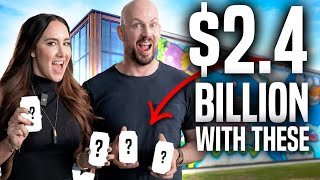
James, BrewDog's founder, turned $9,000 into a $2.4 billion business by moving fast, breaking industry rules, and obsessing over customer acquisition. He shares seven heuristics: use adversity to build resilience, treat not knowing as an advantage, aim for 1-to-10 impact in marketing, move in dog years, focus on first customers, design memorable peaks in experience, and control inputs for quality outputs.
Chapters
Asking a billion dollar founder for advice. What do I need to know to start a business?
Amazing question. I think you need to know.
This guy went from him and a buddy in his garage with their dog to a multi billion dollar company called Brewdog. And I went to London to meet with him in this fancy penthouse to figure out the seven secrets that he has to how do you start from a company with nothing to a multi billion dollar conglomerate?
Our strongest suit when we set out our business was we had no idea what the hell we were doing. Every single bottle we filled by hand, we labeled by hand and we capped by hand as well. And now, like selling a million a day is way easier than selling that first case. You've got to fight to sell that first case.
His idea was that maybe you, like him, are sitting in a cubicle that you don't like in a job that you hate, trying to climb to the top and you don't know the next step to take.
The first two years of our business was so difficult. Everything was in line, like we had no option but to make. I was selling beer at local farmers markets and nobody wanted to know.
Was there ever one moment in your business where you thought, we're definitely going to fail?
I would have died in a ditch rather than have the business fail.
So we're going to steal. James, homework. You might want to grab that pen and paper. You've seen horrible things happen to people around you and you've been through real adversity. Can you tell about some of those stories before we were sitting in your penthouse?
So I studied law and economics at university and I got a job as a lawyer and I just hated it. So I spent two weeks in a cheap suit doing glorified admin. And I thought, I'm not going to spend my life doing this. And I can almost kind of saw myself in my 60s, like sitting at the same desk doing the same job. I was like, no, I'm out. I wanted to do something completely different.
So after just two weeks, he left and of all places, went to the North Atlantic to begin life as a crab fisherman. He spent seven years on a boat in the middle of the ocean. And that training gave James what he needed to go on and build a billion dollar company.
I became a captain. And that taught me so much about resilience, that taught me so much about teamwork, that taught me so much about kind of being calm and steadfast in the face of adversity. We had some kind of rough days, we had some big accidents. We had Somebody washed into the sea one day and we kind of managed to get them back. And I think all these experiences mean when we face challenges in our business, it's not as bad as being hit by a huge rogue wave at 2 o' clock in the morning in the middle of a North Atlantic storm.
When your line of work demands that you face death every day, you realize that like, PowerPoint ain't gonna kill ya. And there's some magic to that, right? Like why would we wait until our 60s to adventure? Why not do the hard, interesting things before we settle down to a life of PowerPoints P Ls and suits? And that's what James did. From there he started Brew Dog with his friend and a dog. But it maybe actually began on the deck of a fishing boat in the middle of nowhere.
A Scottish microbrewery has caused an outcry among health campaigners with the launch of Britain's strongest beer, Tokyo Beer. From the brewery, Brew Dog is marketed as an intergalactic fantastic oak age stout. But what actually makes it really unique is that it's 12% alcohol stronger than than most wines.
One of the keys to making millions is the cross pollination of ideas. It's not staying in your lane with a bunch of alcohol companies that do the same commercial after same commercial after same commercial. What does that look like for BrewDog that's led to your billions?
So our strongest suit when we set out our business was we had no idea what the hell we were doing. So if we'd known beer, if we'd known sales, if we'd known distribution, if we'd known our industry, we'd have gone down the same path as everyone else and we'd done the same things as everyone else. And therefore you can't compete, you can't close that gap. So I love hiring people who've got no experience of beer or distribution or what we do. Because if I do, they'll just tell me, well, you can't do this and you can't do that. And the best companies find a way to do the things that their competitors won't do and can't do. If you do the same as everyone else, you're going to get the same results as a small company, that means you are dead completely. So it's finding a way to do things differently than an entire industry.
What if not knowing is a superpower?
I don't know anything. I don't know anything.
Most people get into an industry and they think that they have to know everything in order to succeed. There's a funny truism here. When you don't know the way things are done, you can break the way they're done. Most people in the alcohol industry said you can't run ads this way. They said that you have to go through these distributors, they had all these can'ts and it turns out every time there's a can't, you should actually ask the question, is this a People usually don't or is this a legally I'm not allowed to. If the law isn't involved and you're not gonna have to wear orange. I think you need to break things more often and so does James and what that actually means. If right now you're watching this and you think I wanna start XYZ company but I don't know anything about it, what if that is actually the one thing that could make you more successful than somebody who's been in that industry for 10, 15 or 20 years? In fact, that's usually how it happens. Otherwise how would you have Uber? Would Uber have gotten created if a bunch of former taxicab members came together and said let's start something that will totally disrupt the industry, in fact is kind of illegal, but we're gonn anyway. The only way to get to billions is by doing something completely different. The only way to do something completely different is to not know any better. Speaking of doing things differently, this is one of my favorite stories. This is called Elvis Juice.
This is Elvis juice.
And Elvis Juice you got sued for and then did something totally ridiculous and now you have tens of millions of dollars of sales in this.
After we launched it, we got a letter from Dead Elvis's legal team or the people who own the IP saying we couldn't use the name Elvis and Abeer and if we did, we had to give them a license fee for every can case bottle that we sold. So myself and Martin, my co founder, we legally changed our names to Elvis. I sent them a letter back saying they had to give me a license fee because they were using my name and all of their music. The most difficult things that any business or any business leader faces are the biggest opportunities. You've just got to look at them with resolve, with tenacity, try and flip the situation its head. And they're always the opportunities for the most growth, they're always the time you've got most potential and most people just don't see that. So for us what's always been key is using adversity as a catalyst to get better at everything we do in.
Order to go up against multi, multi billion dollar companies, this founder has had to come up with a format to turn $1 into 10. Every single time we talk to us about how you do that and how you came up with this framework, one.
Of the tests is would or could another company do this? If we spend £1, $1 on this thing, does it hit with the impact of 10 Heineken, 10 Budweiser, 10 Miller dollars? Because unless the things that we spend our limited budget on hit 10 times as hard as our big competitors, we've got no way to close that gap.
Here's an example. James would ask his team, would Heineken build a commercial all around a Putin parody where he pretends to be gay and James dresses up as Putin and then give all the proceeds to gay rights because Putin famously kind of homophobic? No, Heineken's not gonna do that. Would Corona project themselves naked onto the Houses of Parliament in order to win an argument against monopolistic tendencies? No, Corona would never do that. We what's the lesson in all of this? He needs this 1 to 10 ratio and the only way to get that is to ask what aren't the big guys willing to do? And because we have less to risk, we have less money to use, we're going to do it. They're worried about predicting the downside. We're interested increasing the upside. Tell me your five year plan. How can you get there in three years? Even better, how do you get there in 12 months?
We've got something that's ingrained in our culture is we want to count time in dog years. So if a normal company does it in seven days, we want to do it in a day. If a normal company does it in seven weeks, we want to do it in a week. So moving quickly is our competitive advantage against bigger, slower incumbent companies. So that speed has been so important to everything we've done as a company. Counting time in dog years, the fastest.
Usually wins in company building. If you can get to the product first, if you can get to the client first, you usually get the first sale. Think about it this way. If you can now take 52 weeks a year and compress them by a rate of 7, you have increased your earnings by not doing more work, but by doing the things that matter faster. So for somebody listening that can't even imagine selling a thousand of these, what would you tell that person?
The first units are the most difficult and you need to build up some momentum after that. But it's like how you can engage those early customers determines your destiny. It's almost any business. You need to build up inherent momentum. You do that by amazing product quality, fantastic experiences, but it's the first ones that build that momentum. So the first hundred are the most important hundred. You've got to fight tooth and nail. And so many people get disheartened because think, okay, we can't sell millions because we can't sell that first hundred.
Get to the rounding error. What this basically means is your first dollar that you make is your hardest. Then your first ten, then your first hundred thousand, one hundred thousand million. If you break it down, instead of thinking, how do I make my first million bucks, but how do I get to that first one? It turns out you fail less because most people don't fail because something is hard, they fail because they quit. You're tricking your brain into this idea of, all I have next is that tiny little step. You've felt this before when you've been on a hike or when you've been on a long run. And instead of saying, I need to do three more miles, you go just like until that tree, until I hit that stop sign. In business, what will kill you is your lack of tenacity. And the only way to build tenacity is to break things down in bite sized chunks. You narrow down your goals from hitting something in a week to hitting it in one day and you make a dollar more than you did the last. Until you get to your next ten or a hundred, you have a higher likelihood of succeeding. And the higher likelihood of succeeding is all due to one tiny step at a time. You have a really cool principle that you stole from Disney. What is it? I thought it was brilliant.
Don't fix potholes, build peaks. So in any type of consumer experience, you don't remember the things that meet your expectations. And so many companies focus on meeting customer expectations and you just get lost. You've got to build peaks. You've got to have memorable moments. You've got to have moments of magic, you've got to surprise, you've got to delight. And that's how you connect with a customer. So many companies think that logic, governance, customer decisions, complete nonsense. It is all emotion. And you only connect emotionally by doing something unexpected, by doing something different, by building that peak. And we like to kind of keep it fresh and do different things. So at the end of every meal someone has in our establishment, we're getting the players rock, paper, scissors for the customer. If they win, they get a dessert in the house.
Really? Yeah. So I Literally, I'm there, I'm eating, drinking. I go to sign my check, and you go, whoa, whoa, whoa. One, two, three. Yes, stop.
Let's try it. See if you get extreme.
Okay, ready? Oh, fuck. I fucked up. Rock, paper, scissors. Ready? Wait. So you go, rock, paper, scissors, shoot. Okay, now what happens?
I think this is just not good at work. We've messed up twice.
There's a famous story about Walt Disney where every time he went to one of his parks, would walk in the front gate of his park surrounded by all of his senior executives, and while they were in their suits, paying attention to strategy, he would look around, find a piece of trash anywhere, pick it up, and put it in the trash can. Then he would do this a few other times. Was he just ocd? No, he was actually sending a message. Every detail matters. The magic gets stolen. When a small piece of trash clutters it up, people notice perfection. And that was Walt Disney's secret. James has the same strategy. Now his magic moments look a little bit different. They might look like a beer can that looks like this. Totally different. On a shelf that looks like this. What is a magic moment that you have at Brewdog that led you to billions?
We have got a podcast studio, we have got a slide, we've got a hidden cocktail speakeasy, we've got duck pin bowling. And again, it's an unexpected moment to connect you with your customer and also kind of underline what you're passionate about as a company. And it's been a huge success for us.
Every business needs a magical moment, and if you don't have one, you. You don't have a business. You have a product that can be commoditized and copied by everybody.
Anyone who's running in a business. So much of the time, you could be running on empty or close to empty. That just doesn't work. You've got to put awesome things in to get awesome things out. You've got to listen to fantastic podcasts, you've got to read fantastic books. You've got to travel to interesting places. You've got to spend time with interesting people. And all of my best ideas come from these things. So it's important I make the time to do these things in my schedule as well, because that's where the big concepts, the big ideas come from. You've got to put some awesome things in to get that inspiration.
Garbage in, garbage out. That was one of his main strategies. And let me tell you what he means by this. Michael Jordan was super famous for one thing, being the best of basketball, right? He's a billionaire. He's a legend in sports. He's probably one of the few people where everywhere he goes, somebody wants to shake his hand. Even decades later, James thinks the same way Michael Jordan does about one thing, which is the way that you prepare for anything affects the way you do the thing. You told me that right now you sit at like number 14th, biggest beer in the world. Do you think you'll feel any different at number five than you do at 14?
I think I'll just want to get into the top three.
I think that's right. And then what happens when you get to the top three?
Top two.
So Michael Jordan, before he played, had a routine that was so specific, he would never change it. Every single time, every game before he played, he grabbed a pair of brand new shoes, his own shoes, Jordans, unlaced, out of the box. Why? Because he remembered back when he was a kid and getting a pair of shoes was a huge deal. This was a reminder of who he was, that he got a new pair every single time. One time, his coach, Tim Grover, knew that he was running late. So he grabbed a pair of shoes for Michael. He opened up the box, he laced them up and had them ready to go. Michael refused to wear those shoes. He said that the way you do anything is the way you do everything. And every time I play, I do this exact same process. And getting in that frame of mind will allow you to create a business that is completely different from the rest of humans who are letting in all the information that's surrounding them without any sort of filter. If you put a bunch of garbage in, you'll get a bunch of garbage out. And the greats control everything that goes into their brain.
Time to take out the trash. So I often get asked, like, what I think of, like what we as a team have built so far. And it is phenomenal, but I'm almost a little bit indifferent to it. What for me we've built so far is a platform to go on and do something meaningful, to do something impactful. And I'm excited about, okay, where do we go from here? And we want to build one of the top five beer businesses on the planet, but we also want to do it and showcase a community owned business. We want to showcase that business can be a force for good. And we also want to do all we can from a sustainability perspective. So we don't just want to build one of the top five beer businesses on the planet. We want to do it our way. And we want to do it. That has a positive impact on our community and our team and on the planet as well.
We've completely forgotten why we are entrepreneurs. When did we become a group of vitamin D deprived, allbird wearing, alternative milk drinking, extreme power pointers? Many of us got soft. We don't climb mountains, we don't break bones. We sit behind keyboards bragging about how ChatGPT did all the work. What an awful thing to strive for. How can you make the most money by employing the least people and doing as little work as possible? Or how can we just get mailbox money, I hate that term and then tweet about it? The secret is that entrepreneurs don't exist just for a bunch of zeros. We exist because we're crazy enough to actually will things into existence. We're supposed to be the next generation of explorers, addicts to the masochistic mission of achievement and ownership. Have you ever had that feeling of being so damn unemployable, your only option is owner? The inability to sleep because a vision so big they pull you up from bed in the dead of the night. Dreams so futuristic. People laugh when you tell them, those are the entrepreneurs I admire. That's why I think the real entrepreneurs of today, they don't want passive income, they want fucking empires. And I think if you're here, you're not just looking for mailbox money, you want a fucking empire too. And if that's the case, you should subscribe, because the next video is going to help you build that bad boy. So hit that button.
More from Codie







He wouldn't give you the dream if he didn't believe you had what it takes. You have what it takes.



What’s the one thing most job seekers overlook that could get you hired faster than you think?