How This Garbage Man Built A Billion Dollar Empire
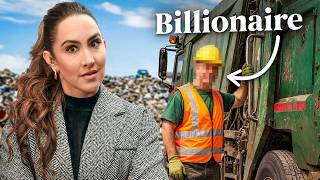
Wayne Huizenga went from driving a garbage truck at 25 to building a billion-dollar empire through Waste Management, Blockbuster, and AutoNation. He didn't invent anything new; he bought boring businesses and scaled them through systems, capital, and people. Codie Sanchez breaks down his six-step leverage ladder from sweat to attention.
Chapters
How does a man go from hauling garbage in a beat-up truck to becoming one of the richest self-made billionaires in American history? Because that's exactly what Wayne Huizenga did. We've studied him for years. Today we break down how he pulled it off step by step. Wild part, he used a framework, one that you can apply to, to go from where you are right now to where you actually want to be. Rich, free, and turning the smell of garbage into millions. February 14th, 1962. It's a humid night in South Florida. While most of the city sleeps, 25-year-old Wayne Huizenga fires up the engine of a battered garbage truck. The air is thick with the sweet and sour smell of trash and diesel gasoline. Wayne grips the steering wheel, his knuckles covered in filth. But this is no ordinary night for him. It's the very first route of his own garbage business. He doesn't know it yet, but this lone truck rolling in the darkness is the monumental start of his empire built on trash. But Wayne's story isn't just about trash. It's a masterclass in leverage you can apply to your life. The kind of leverage that takes you from pushing a garbage can to owning 3 pro sports teams. The leverage ladder. Level 1: Sweat leverage. Wayne is no stranger to working hard. He grew up in Chicago, raised by a strict blue-collar father who ran a small construction company. The world of physical labor was in his blood. From a young age, his father drilled a truth into him: you'll never make real money working for somebody else. But Wayne didn't actually listen at first. He wasn't very good at college. He dropped out. He joined the Army, and he came back ready to build something of his own. But he wasn't very successful at all. In fact, he failed and struggled again and again. Then in 1962, he convinces a local hauler to sell him one used truck and 20 commercial accounts with $500. That was it. His days began at 3 AM hauling trash. By noon, he'd scrub the grime off, change into a suit, and hit the streets. Morning, garbage man. Afternoon, salesman. Door to door, one shopkeeper at a time. That's sweat leverage. He was trading his energy and time for income. You see, he was at level 1 of the leverage ladder, but it didn't stay that way. And what happened Next is where we all want to go. Level 2: Skill leverage. Wayne wasn't just hustling. He was absorbing, watching, experimenting. He studied his customers. What made them switch providers? What pissed them off? How to keep them happy? Rich people wanted to pay more for premium service. So he made a mental playbook. Show up early, never miss a day, under-promise, over-deliver, always smile, have expensive options. Every satisfied business owner meant 5 more introductions. He learned what types of businesses were easiest to convert, what objections were smoke versus fire, where his competition got lazy. He was willing to push. Within 6 years, his company, Southern Sanitation Service, grew from a guy in a truck to 20 trucks covering 2 counties. Wayne wasn't scaling himself anymore. He was scaling knowledge, sales, ops, service, leadership. Because once you master skill leverage, you unlock the rungs above it. Level 3: Systems leverage. Build once, sell continuously. You build repeatable processes that earn even when you're sleeping. In 1968, Wayne's cousin-in-law Dean flew down from Chicago with a bold proposition. Let's merge. Let's build the first national garbage company. That meant Wayne gave up control. It meant he had to handle unions, boss guys, mafia regulations, cutthroat competition. It was risky, but Wayne saw it for what it was: a chance to scale beyond the borders of his county and into a nationwide empire. He wasn't just hauling garbage. He was designing a system. So they renamed it Waste Management Inc. And from day one, their only plan for growth was buy more things with other people's money. Wayne merged with Dean Buntrock's Chicago operations, but he didn't just merge the routes. He merged landfill assets, because Dean owned a bunch of them. And by bringing that into the fold, Wayne and Dean created a network advantage. Local haulers now had to pay them to dump there. Their competitors paid them. They went across the US and tried to find small, beat-up family businesses and buy them using seller financing. A company in Ohio figured out a more efficient routing system. Oh, they just stole that homework and applied it to their entire business. Their hauler in Texas had a better maintenance cycle. Perfect. They rolled it out across the company. By 1972, just 4 years after the merger, they had acquired 90 companies. That is one company every 3 days from a guy that had no money and never raised a ton of capital to do this. Wayne also invested in technology before it was cool. Everybody thought he was nuts. Why are you bringing all these computers? You're a garbage man. But he brought in reduced billing errors. He brought in software to manage accounts. He actually didn't think about himself as a garbage man at all. He said that garbage collection was just a company that scaled. So how do I do something that becomes a replication engine? Because once you build a system that works without you, the next step is finding who else can run it. Level 4: Capital leverage. You start using other people's money to grow faster. This is where Wayne flips the game board. Up until now, he's been buying companies in the old-fashioned way. Using profits and whatever financing he could scrape together. But that approach has limits. You run out of cash, you grow slow, you start playing defense. Wayne wasn't interested in building a good business. He was playing to win nationally. So he turned to capital leverage, the art of using other people's money to go faster, bigger, and further than your bank account allows. Here's how it started. Instead of paying cash for every acquisition, Wayne started offering stock. A simple shift, but a powerful one. In fact, after Waste Management went public, Wayne used shares, not cash, to buy 133 small haulers in just 10 months across the Sun Belt, integrating their routes and their disposal assets to make him impossible to compete with. Every time a competitor got too good, he bought them. Because stock doesn't drain your cash reserves. It lets you buy businesses without debt. It's literally just a piece of paper. But it creates shared upside so everyone is rowing in the same direction. And the sellers loved it. Why take a lump sum when you could own a piece of a rocket ship? So this was emotional leverage. Wayne wasn't asking people to sell, he was inviting them to level up. Then came the 1971 IPO. Wayne stands on the floor of the New York Stock Exchange wearing a suit, watching the first shares of Waste Management trade hands. The company raised $3 million, around $31 million today. But more importantly, that was the first millions that they'd raised. And it gave them access to institutional capital, credit lines, underwriters, and a public currency that could buy entire companies. Now, they went on a buying spree. They didn't just grow in size, they grew in valuation. They were using capital to acquire revenue, which made the stock more valuable, which let them acquire even more companies. That's compound leverage in motion. And this playbook didn't stop with trash. Wayne would go on to use the same capital strategy to build Blockbuster Video, AutoNation, and other multi-billion-dollar companies. He understood that money isn't the finish line, it's a force multiplier. And once you can move capital at scale, the next step is finding the people who can carry the vision even further. He said, some people dream of success while other people get up every morning and make it happen. Level 5: People leverage. Wayne Huizenga knew something most entrepreneurs learn too late. You can't scale an empire alone. He was never afraid to hire people smarter than him, more experienced than him, more specialized. In fact, he sought them out. When Waste Management acquired a new company, Wayne didn't wipe the slate clean. He usually kept the original owner on board. Why? Because these folks knew their markets better than anyone. They have relationships, network, knowledge, and a pride in owning the thing. But most importantly, they were shareholders. Wayne wasn't turning them into employees. He was turning them into partners. This was people leverage in action. Retain proven operators, align incentives with equity, free up your own time to focus on strategy. Wayne created regional leadership layers. He didn't have to micromanage. And that systems decision-making then meant that those people could run the systems. And look, that type of trust doesn't come easy. Wayne later admitted in an interview that when Waste Management started scaling, he didn't actually know how to manage these people. He's like, I had to learn how to deal with people over the telephone many miles apart. But after doing it a bunch, you finally figure out how to hire the right people and make things happen. That's what people leverage actually looks like. It's not some magical just hire great people shortcut. It's awkward phone calls, missed targets. It's learning to let go when you want to do it yourself. But once he learned high-level operators exist, that's when the whole game changed. Blockbuster, the second empire. In 1987, Wayne was semi-retired and bored. So naturally he bought a video rental chain with 19 locations for pennies on the dollar. He applied the exact same people-first model he used in garbage. He looked for operators who could run stores, manage regions, and scale systems. In less than 3 years, Blockbuster went from 19 stores to over 1,600. He understood something most tech founders don't: video rentals were hyperlocal, operational complex, and replicable if by the right people. So in '94, he sold Blockbuster to Viacom for $8.4 billion. But he wasn't done. AutoNation, the third empire. Everyone said car sales couldn't be scaled. It's too fragmented, they said, too old school. Wayne looked exactly for that. He bought a few dealerships, then a few more. Then he put in systems, then he put in people, then he put in incentivized performance with ownership. Before long, AutoNation became the largest car retailer in the United States with over $20 billion in annual revenue. He said, we're looking for something where we can make something happen, an industry where the competition is asleep. Hasn't taken advantage. Not because Wayne would micromanage everyone, but because he knew people plus structure wins. He didn't build companies. He built leadership pipelines. And that's why people leverage is the turning point on the leverage ladder, because it allows you to scale just about anything. This is what separates the builders from the owners and the owners from the legends. Level 6: Attention leverage. The world now watches what you do. Wayne Huizenga was never chasing fame. He wasn't loud. He wasn't flashy. He didn't slap his name on skyscrapers. In fact, he wore an old-school watch. He hated buying new clothes. His jeans were always ripped, and he had one favorite pair of boots. But by the late '90s, attention found him anyway. Why? Because attention is a natural byproduct of impact. At this point, Wayne had built $3 billion companies. He had taken multiple businesses public. He also owned 3 major sports teams. The Miami Dolphins, Florida Marlins, Florida Panthers. He even danced to the Hokey Pokey in view of the crowd at a Dolphins game. Ludicrous, yes, but it made a billionaire relatable. He wasn't just a shadow man in a suit behind the scenes. The crowd cheered, reporters snapped photos, the moment made headlines. It showed Wayne that he was part of the story and he didn't take himself too seriously. And after that, well, the journalists came. They wanted interviews, forecasts. Attention. He wanted to reverse engineer him, but they wanted to make him matter. And all of a sudden, his moves did matter. And that's the hidden power of attention leverage. You don't actually have to shout to be seen. You just have to do something remarkable enough, long enough that people start listening. What's interesting to me here is Wayne never invented anything. He didn't have a startup ever. He bought businesses that were old, and then made them viral and interesting and huge with really 4 things: acquiring, systematizing, compounding, hiring over and over and over again. So what's the real takeaway? Wayne Huizenga didn't win because he was the smartest or the most innovative. In fact, he wasn't either of those things. He didn't have a fancy degree. He didn't know how to code. He didn't raise venture capital. He didn't come from millions. He didn't go to the best schools out there. He just climbed the leverage ladder. Sweat to skill, skill to systems, systems to capital, capital to people, people to attention. That's the same framework I use now, decades later, when I buy businesses. You want generational wealth? Don't climb the corporate ladder, climb the leverage ladder. The final ride? 1984, Wayne stepped down as CEO of Waste Management. To celebrate his last day, he put on his old coveralls, hopped into a beat-up garbage truck and drove one last truck route. Even after becoming worth hundreds of millions of dollars, he wanted to remember where it all began as a garbage man. That's fucking cool. If this inspired you even just a little, maybe it's time for you to make your move. If you're not already subscribed, do it. Share this with a friend. I'll show you how to buy boring businesses, build leverage, and maybe one day Have your own damn garbage truck empire or something cleaner.
More from Codie







He wouldn't give you the dream if he didn't believe you had what it takes. You have what it takes.



What’s the one thing most job seekers overlook that could get you hired faster than you think?