How To Start A Successful Business (Backed By Data)
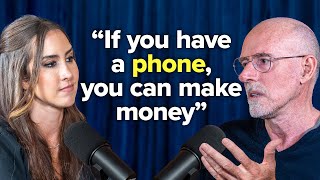
A podcast-style interview (Scott Galloway interviewed by Codie Sanchez) offering practical, experience-based advice on building economic security and entrepreneurial resilience. Key themes: focus (find a non-romantic, high-value skill/industry), stoicism/savings discipline, time and compound interest, diversification, and emotional resilience to public failure and rejection.
Chapters
Passion comes from artistry, mastery, and economic security. So whatever that thing is that gives you the ability to make some good money that you're good at, maybe even great at in an industry that's not sexy, you're going to be compassionate about it. Most people will never be entrepreneurs because they don't want to risk public failure. My superpower is rejection. I've started nine companies. Four have failed, three are kind of a tie, two are hit. All you need is one.
What if I told you there was a formula to become financially free, and in fact, we could steal the homework of a guy who had done it a bunch of times, even lost money, and then done it again? Well, this YouTube video is a little bit different from anything else we do because I am stealing the homework of a guy by the name of Scott Galloway. He is going to teach us his mechanisms for making money despite what's going on in the world around us today. Buckle up. This one's good. Oh, and if you guys want to listen to the full episode, go listen to it on the Big Deal Pod. Prof. G is full of insights. If you guys liked this today and want to make more money, I highly recommend you head over to that channel. What. What do you tell a young person today? Like, what is the actionable thing that you can go do now, Scott, having seen so many different moves in markets, what are some words of wisdom you'd have if they want to make money?
I just start. I just wrote a book on creating economic security, and I do think there's a formula. The first is focus, and that is find something. Find something you're good at. People say to follow your passion. I think that's bullshit. Anyone who tells you to follow your passion is already rich. And the guy telling you to follow your passion made his billions in iron ore smelting, right? Be a DJ on weekends, play in a soccer league. You know, design jewelry with your friends. Open a restaurant when you're already rich. The vanity industries are really difficult because there's 180,000 people in Sag Aftra. These are incredibly. It's not easy to get a union card. That's the union representing actors and stage workers or producers. 83% of them last year didn't qualify for health insurance because they didn't make $23,000. So acting might be your passion, but unless you're in the top 1% and you're getting bright, blinking green signals that you're in the top 1%, go find something else. And I don't want to crush your Dreams just have a sober conversation around what's required to make a living in that industry. So find something you're good at. And the key part of that is find something you're good at in a non romantic industry. The guy who has this studio, I've been here twice this week. This isn't that romantic. He found some shitty loft space on Avenue B and rents it out to podcasters and is probably making really good money. That is not. He didn't dream of that when he was nine. I know I'm going to install sound insulation on a loft in a mediocre area in Manhattan and rent it out to podcasters. I don't think he was dreaming that when he was nine, but this is a good business now.
I just opened two more.
There you go. This is a. Find something you're good at and think I could become great. And by the way, if you don't know what 20. When I was 17, I thought I was going to be a quarterback. When I was 19, I thought I was going to be a pediatrician. When I was 22, I thought I was going to be an investment banker. I got a job with an investment bank. I ended up in business intelligence and analytics. I didn't even know what that meant until I was 25 or 26. So try and find some. Your job in your 20s is to workshop and find something you're good at and maybe could be in the top 10 or the top 1% and forgive yourself if it doesn't involve college. Because 2/3 of kids don't end up in college. And there's this industrial shaming complex. I've been at these parties. Did you hear, you know, Max dropped out of Rutgers? It's like, oh, shame, shame. You know, the parents have up, the kid is a failure. Two thirds of our kids do not end up with a college degree. Workshop stuff. Find something you could be good at. Maybe great, it might be being a tax accountant. Okay, do you understand? Are you willing to go to college? Are you willing to get a cpa? Do you understand numbers? Do you understand the tax code? Are you good with clients? Because if you can become in the top 10% or the top 1% of tax lawyers, those people get to fly private and have a broader selection set of mates than they deserve, which makes them really passionate about the tax law. I am so passionate about analytics and because it gave me the ability to take care of my kids, take care of my dad, have crazy outrageous vacations and remove stress from my key relationships. Passion comes from artistry mastery and economic security. So whatever that thing is that gives you the ability to make some good money that you're good at, maybe even great at in an industry that's not sexy, you're going to be compassionate about it. I'm building a home right now in London, and there's the soapstone guy or the marble guy. And he's this Iraqi immigrant, and everybody knows him. He can tell you everything about the veining and the marble. And I was very open with him, and he's been open with me. He makes 2.1 million pounds, top line. He has a marble company. He clears about 800,000.
That's pretty good margins.
Yeah. He's a guy in his 40s. He's been in marble since he was 28. And he's passionate about marble and soapstone because it affords him a really nice life. And he's great at it. And he gets a lot of camaraderie. He gets a lot of prestige, relevance, pride, ability to take care, to be economically secure. So the first thing is focus. Second thing is, I call it stoicism. But the one thing that's in your control is spending. You gotta develop a savings muscle when you're young and see if you can get alignment with your roommates or your romantic partner. And gamify saving money, you got to figure out you got to have a savings muscle that you can flex. When I was a junior in ucla, I wasn't going back for my senior year unless I saved $3,000. Through the summer, I had 11 weeks to save $3,000, earn and save. So everyone in the fraternity knew who the four kids were who didn't have money. I went to ucla. I was in a fraternity with mostly Jewish kids in the Valley. They all had money. There were four of us that everybody knew were broke. Like our parents weren't helping us. We moved in together in a room in the house, and we had a whiteboard. And we gamified spending. I spent $78 a week, including rent and food for 12 weeks. I ate top ramen bananas and milk. My big treat is every Sunday night, I'd go to Sizzler, ask your parents. And for $4.99, I was on the crew team. The entire crew team would go, and we would go there at 3pm when it opened, and we'd stay till 8pm and we would just eat several million calories. And it was fun. I mean, I would have rather had more money. Yeah. But the ability to gamify, and especially with a partner, save money and start investing. If you're young, you got to figure out that savings muscle and it's getting reward from other things, getting reward from fitness, from friends. The nice thing about being young is you don't need as much money to have fun. There's this Instagram generation that thinks you gotta have a Birkin bag or go take go to Coachella F on when you're in your 20s. Pretty much like beer and making out is a pretty good brat. There's a lot of cheap shit out there available for 20 somethings plus you.
Can'T really do it after you're married.
Yeah, then it gets much harder. Or actually it doesn't get harder, it.
Stays in Austin Poly though pretty big.
It doesn't get harder, gets much more expensive.
Hey guys, sorry to interrupt the video, but I got to share this quick business tip that I've been thinking about a lot lately. It's Eliminate, automate and Delegate, famously from Tim Ferriss. I'm always looking for tools to help me do that. One of those tools is Riverside, the sponsor of today's podcast episode. Riverside allows you to record remote podcasts and video interviews in studio quality from anywhere. Not only can it record 4K video to ensure your podcast quality is top notch, but it's also drastically improved my team's editing speed with the text based editor. Riverside's in platform editor allows you to upload your own content too, so it's not just footage recorded on Riverside that gets the special treatment. It can transcribe your footage, remove silences in one click, and create short clips just by selecting the text. Even better, if you make a flub, which I never do, then it fixes it. I love their AI Magic Clips, which analyzes moments in your podcast that have the most potential to get traction online. That saves hours of listening to your podcast for the fifth time to find the perfect clip, Riverside has you covered. We're always trying to remove complicated things, so don't waste your time doing what Riverside can do for you. I got you guys a deal because if I get a deal, you always get a deal. If you want to try it for yourself, get Riverside in the link in the description and use the code Cody for an exclusive discount. All right, let's get into it.
Well, I call it stoicism, but getting a savings muscle. The third is time. For the majority of our time on this planet, we haven't lived past 35, so young people just cannot imagine they're going to live to be 100. And most of them are. And they Also can't calibrate how fast time is going to go. Wow, my life has gone really slowly. Said no one ever. If you from the age of 22, just figure out a way to get 2, 3, 5% of your income out of your hands, don't even 99% of us will spend everything that comes into our hands. You have the brightest people in the world with a godlike technology hitting you at the exact right moment. A chance to upgrade from economy to economy. Comfort to add flourless chocolate cake with your panini. Whatever it is. Right. Telling you you deserve this. It's worth it. Oh, there's two people looking at this hotel room. You better. There's only one left. Buy now. Find a forced savings mechanism. 2 to 5% in your 20s. When you're my age, you're going to be fine. You don't start until your 30s. That's fine. But it's going to need to be 5 to 10%. It's going to be closer to 15 to 20 when you're in the 40s, but you're going to live longer than you think time is going to go fast. Well, I'm only going to get, you know, 9% in the markets. Well, okay, that means in 24 years it's going to be up Eightfold. So the power of compound interest in time. And then the final thing where I really screwed up was the power of diversification. And that is I made a. I've always made a lot of money, right. I came out of the gates hot starting e commerce companies and I was raised in the or came of professional age where you were told be in it to win it, go deeper, go deeper. And my company was about to go public and I was that guy that borrowed money against his stocks to buy more stock. So when 2000 hit, I went from being from looking at jets, no joke, to broke. Clawed my way back. 2008, all my money was in tech again. Boom, broke again. And that was about the time my first son came along, which was really upsetting. But diversification is your Kevlar. And that is. Two weeks ago I found out I made one of my biggest. I invested $5 million in a text based healthcare company. Tier 1 VCs Baller, CEO, Best Investors had to elbow my way to get in. That's a big investment for me. It went out of business last week. That's a zero for me. But I don't invest more than 3 or 4% of my net worth in any one thing. So it ruined my hour. But it didn't even ruin my day, and it certainly didn't ruin my week. Diversification is your Kevlar. The moment you have anything resembling an asset base, you want to try and take pieces of it and put it in stuff that is uncorrelated as possible. I'm about to invest in an aircraft maintenance company in El Salvador. I just want anything that's away from my tech world. I now appreciate diversification because once you have an asset base, the way you get rich is probably through a little bit of concentration. Your own business, you double down on a house, you fix it up, you flip it, whatever it might be. But the way you stay somewhat rich is through diversification. And I didn't realize that. I was always reading these stories about Steve Ballmer borrowing stock, Fred Smith doubling down on FedEx, Mark Zuckerberg never selling a share. No, diversify, because here's the thing, the market will always trump individual performance. No matter how good you are, if you're in tech in 2000, you're going to get hurt. Amazon lost 90% of its value from 99 to 2001. And then also a little bit of forgiveness. Recognize that when your stocks go down, recognize when you have a business failure that most of it is not your fault. And at the same time, when you kill it and you buy stock and it doubles and you were smart enough or lucky, you weren't smart enough to buy Nvidia three years ago. You were lucky enough. You are never more prone to a big mistake than after a big win. Bring in your horns. So I wish I'd learned diversification. I didn't save money in my 20s and 30s. My first feeling when my son came marching out of my girlfriend, it was supposed to be bright lights and angels singing. I felt so nauseous, and I thought, well, okay. In addition to childbirth being gross, which I think it is, I felt incredible shame because I was sitting there at 40 years old, I'd made so much fucking money, and I was broke because I wasn't smart enough to diversify, because I thought, I'm such a baller that my company is going to be worth a billion dollars, so I'm going to keep doubling down. So my first sentiment when I saw my son was, I failed this kid. And I want to help young people realize I don't want anyone to ever feel that way. And you don't need to be a billionaire. Just start saving some money. Real estate's a great for savings. Figure out a way to get it out of your hands. Keep saving and Just in case you don't go double platinum or have a podcast that's number one, or have a movie or buy Nvidia, you don't need it, I can get you rich. That's the good news. The bad news is the answer is slowly. So what I would tell young people is even if you don't end up in an amazing job, if you start early and you follow this pattern, you're going to be economically fine.
Yeah, it's interesting. I do think you either get to choose short term or long term. Pain.
That's right.
And I wish somebody had told me that earlier. Like these days, I never like to when, you know, when they play those videos, like the reaction videos of the girl crying because life's hard and they make fun of her. And that never really sits that well with me because I think it's because we kind of fail them. We didn't tell them. It's gonna be fucking awful. Your first job is not supposed to kill you from how hard it is. It's supposed to kill you from the pure monotony of, like, awful labor. Was your first job finance? My first. Yeah. And so, yeah, 80 hour weeks, taking all the, you know, series seven, 24, 63, all that jazz. And I was the dumbest and the, you know, the, the least qualified and didn't have any fancy, you know, friends or family. And so. But it was also awesome because I learned massive pain tolerance. Really?
Lots of great training.
Yeah. And I think that's probably what we should tell him instead, that your first job's gonna suck. But eventually it'll be worth it.
Your first job, even if you don't like it, you know, give it a couple years, give it two or three years to see if it gets better. But also recognize you may not end up in your dream job right out of college. Few of us do. But that's a learning. I went into investment banking. I worked at Morgan Stanley. I hated it. They hated me. I was terrible at it totally. And that was a learning. But it was really good training because it gave me attention to detail. It gave me kind of the ability to suffer a little bit. It taught me a little bit about working in a large organization. It also told me I don't have the skills to be in a big company. I'm too insecure. Anytime people went into a conference room, I would think they were talking about me. I didn't have patience or maturity. If I met someone senior to me that I think was a smarter than me, as smart as me, I, I'D get angry that they were making more. I mean, I just was too immature to handle a big company. And people romanticize entrepreneurship. I went into entrepreneurship at a defense mechanism. I'm just not going to be successful. I met my stallmate from Morgan Stanley who's been in investment banking for 30 years now. We were both very transparent about our wealth. We ended up in almost the same spot economically. He's endured much less stress than me.
Right.
If you have access to corporate America, the US Corporation is the greatest wealth creator in history. The reality is most of us don't have the skills. We don't have the patience. It's not easy to get up and put on a tie. It's not easy to go to corporate events and pretend to like the boss's husband. This shit is not easy. It's awful. And be thoughtful and be patient. And occasionally you're going to suffer injustice. People less, less intelligent and less hard working are going to get promoted. There's injustice everywhere. But if you can endure those injustices, typically over time, the American corporation is a great way to get wealthy slowly. And the majority of entrepreneurs, I think, do it out of, I mean, the majority of entrepreneurs are immigrants. They can't go to work for Google. They didn't get to go to work for Dartmouth. So when kids come to my office hours, they say, oh, I have an offer from JP Morgan, but I think of starting my own business. They think I'm going to break into song and say, go for the small business. I'm like that, J.P. morgan, here you come.
Well, it's true. I mean, I was at Goldman, like I was a shitty little peon analyst back in the day for two years. And I hated my life for all two years of it. And to this day, you know, whatever, 12, 13 years later, it's still like Cody Sanchez. Yeah, she's owned these businesses. She's got this online thing. She also worked at Goldman Sachs.
I'm like that huge credibility.
Huge credibility. And I hear they spend like about $100,000 a year training new members. So that's probably the cheapest university you can get. Is a great training, is a corporate mba basically.
Great, incredibly smart peers. The way I describe it is like, it's like having served in the Marines. You're really glad you did it. Past tense. But I'm. See, I've started a bunch of business, but what did I roll out first? That I was a Morgan Stanley.
Yeah.
Because we all are proud of our brands and the institutions, but anyone who right out of college can go get a graduate degree called US Corporation. I would say do it, you might be good at it. And if not, it's going to help you zero in on what you're good at. And they do these crazy things called health insurance and retirement plans and training. First thing they did was they sent me to Columbia for this mini mba.
Yeah, I got my MBA at Georgetown through State Street.
There you go.
I mean, it would have cost me $160,000 is what the executive program at Georgetown cost.
That's crazy.
It's crazy. And I mean, I had a hell of a time. But I think the most valuable thing I've ever done was work in corporations and start a business, not my mba. You know, one of the other things that seems to me leads to success long term if people actually want to quote, unquote, win monetarily is like a massive ability to handle failure. You, I think, are really interesting because you're very, you know, you're not quiet about your opinions. If they don't turn out to be right, you go, well, here's my thought process that seemed reasonable. It worked or it didn't. But I'm going to at least say the quiet part out loud and we can see how I tracked one way or the other. How did you get comfortable being wrong publicly and getting over it?
Being wrong a lot?
I don't think you're wrong a lot, by the way.
I'm wrong often. I get a lot of strength from my atheism.
That's fascinating. Why you just don't think anything matters.
To a certain extent. And that is, I'm convinced that at some point I'm going to look into my kids eyes and know our relationship is coming to an end. And it's going so fast. And everyone who I'm worried about their opinion or being shamed by, they're going to be dead really soon. And so am I. So I think a recognition of the finite nature of life and your insignificance gives you a little bit more courage to try and squeeze as much juice out of this lemon as physically possible. And I do try to live out loud and when I screw up, I try to forgive myself. Because when someone else publicly fails when they say something stupid or they have a business fail, most people will never be entrepreneurs because they don't want to risk public failure. It's humiliating.
That's my biggest fear.
Most guys, especially nowadays, don't approach a woman they're attracted to because they're worried about rejection. And what you realize or what I Realized and it's been. My superpower is my ability to move through failure. My superpower is rejection. I ran for sophomore, junior and senior class president in high school. I lost all three elections and based on my track record, I decided to run for student body president, where I went on to wait for it, lose. I've started nine companies, four have failed, three are kind of a, three are kind of a tie. Got the money back and two, two were hits. All you need is one. One out of seven businesses succeeds. So I started nine. And my, my superpower was when I had a business fail or when I was divorced or when I lost my mom, I knew how to mourn and I knew how to move on. And the only thing I can guarantee anyone is you're going to have a certain amount of tragedy and a certain amount of joy in your life. The ratio of those things, some of it's out of your control. Where and when you're born, a lot of luck, health of your loved ones. But the thing that's in your control is your ability to move through that failure. And I've been beamed, I've been shot in the face professionally and personally. And I was always able to say, okay, my business failed. Learned a lot. I'm gonna go raise more money and start a new business.
Well, I mean, you see when you go to war torn countries and I spent a lot of time building businesses in Latin America, you know what civil unrest looks like. It looks like a lot of fighting aged men on the side of the streets without anything else to do. And if you've been through, I mean, Kareem's sitting over here and he's from Egypt and is seen all around the Middle East. And I've traveled the Middle east and Latin America and you can feel what it feels like to be in an area where there is a different kind of powder keg, which is young men that, you know, understandably so, have more aggression, more testosterone and feel like there's no outlet.
When I coach young men, the first thing our exercise I do is I say, give me your phone, unlock it, I won't judge you. And we try and find 8 to 12 hours on their phone, which is ridiculously easy. Between Twitter, TikTok, Coinbase, and then what do you have? You want to lean in your strengths, you have a lot of capital when you're young. It's human capital. You have a lot of time. So we're going to reallocate that capital to a higher roi. First thing we're going to do is we're going to get fit, right? We're going to sign up for classes. I don't care if it's berries or an app or the. You know, there's a great fitness. You know, the Aloe app has fitness classes. You go to whatever it is. F45. We're going to start getting fit. We're going to feel better about ourselves. We're going to feel more confident. Two, we're going to start making some money. If you have a phone, you can make money in this economy. I don't care if you're a Lyft driver, Tasker, task grabber, whatever they call it, you're gonna start figuring if you go to a construction site and you have any skills at all, you can start at about 20 bucks an hour. I don't care if it's four hours a day. You need. The way you make a lot of money is by starting to make some money because you get a taste for flesh and you start thinking, wow, this money thing's awesome. And then the third thing we're gonna do is at least three or four times a week, we're gonna put ourselves in an environment with strangers, in the agency of something bigger than us. It might be church, it might be a nonprofit, it might be a sports league, it might be a riding class. You have to be around strangers, and we write down every time you're there. You got to meet somebody, a potential friend, a potential romantic partner, and you got to go up and introduce yourself. But being in that company of other people, in the agency of something else, like church, it's just incredibly important. And young men need those guardrails. Young men. One of the things I got at Morgan Stanley. Excuse me, was how to read a room. You know, also there's. It's just so important. I think we talk about a code. I'm writing a book on masculinity. I think masculinity can be a decent code for a young man. And I think of a man as supposed to be kind of three things. A provider, a protector, and a procreator. And I think all three of those things are wonderful. And men should aspire to all three of those things and break down what it means to be each of them. But the only way you're going to get there is in the agency of others and being in. In communities. Men are dangerous when they sequester. When a woman doesn't have a romantic relationship, a lot of times she will pour that energy into her work, into her friends. She finds other places to Give and receive love. They're much better at maintaining a social network. When a guy doesn't have a prospect of a romantic relationship, he stops showering, he stops looking for a job, right? And I remember this. When I was 23, my first girlfriend told me if I didn't stop smoking so much pot, she was going to stop having sex with me. And I was really enjoying that part of my life. So I got my shit together and I stopped smoking so much pot. Guys need guardrails. Young men need guardrails. That might be church, it might be the marines, it might be a girlfriend, it might be Morgan Stanley that told me I couldn't party every night because it was really hard to get up at 6:30 and put on a tie and haul my ass downtown. But without guardrails, men don't demonstrate the same discipline as women in their early years or early adult years. It takes them a while to catch up.
This is incredible. Thank you for being here today. This was so interesting. I learned a ton and, and I know that everybody probably knows where to find you, but if I haven't said it before, no mercy, no malice, probably my favorite newsletter. Yeah, incredible newsletter overall. And I listened to Adrift in probably like three days on audiobook. And then I bought actually the real book too, because the graphics are so incredible. And I think it's a. Even if people don't read books today, which is more normal, like being able to understand the world through those graphs is very easy and digestible. So if you haven't read Scott's new book, Adrift, it's really good, as are all the rest. Thank you so much for being on this podcast.
Thank you and congrats on your success.
Yeah, well, you know, we'll see how long it lasts.
More from Codie







He wouldn't give you the dream if he didn't believe you had what it takes. You have what it takes.



What’s the one thing most job seekers overlook that could get you hired faster than you think?