How Two Billionaires Changed My Life
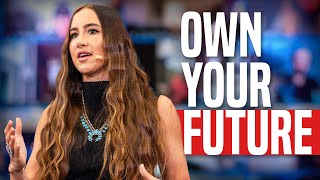
Codie Sanchez left corporate life after conversations with two billionaire mentors pushed her to build a media platform and teach entrepreneurship. She went from zero followers to an eight-figure company and 2,000 students by choosing viral platforms and finding her triangle of genius.
Chapters
I was walking on a beach with a billionaire, and he's talking to me about the mission that he sees for me. And he's like, I think we should own more small businesses, and I don't want any more Walmarts. And I'm like, yes, it is. I got it. And I tell him all my ideas, and he kind of turns and looks at me and he goes, do you think you've invested in small business for so long that small has infected your thinking? When you get in a room with somebody who thinks that much bigger than you, it opens up your mind to an entirely different world. All right, guys, you want to come on in? Let's do this. I'm going to shoot a few things with you today that candidly, although I'm all over the Internet, I typically don't share my biggest regret. And my biggest regret is basically that for the past 15 years, let's say I lived other people's lives. I worked in corporate America in jobs that I didn't like, with people that I wasn't that excited about. I was married to a gent that wasn't right for me. Basically, this whole period of my life was doing the thing I thought I was supposed to do, not the thing that I really knew I wanted to do. And if I could have done one thing different, it would probably be to start this adventure of mine sooner. It took me 15 years to even think about that I could be worthy of sharing some knowledge to other people. It felt egotistical. It felt like maybe I didn't know enough. And when I started doing it, that all changed. But I think that you guys might be a little bit like me, that you might have this anxiety that deep down inside you know you were meant for something bigger, that you also might have what I call my little it in the closet, which was the Cody that I just kind of kept shoving in there because I wasn't ready to deal with it because I was having some success already and I didn't want to let it out. And I thought that it might be scary if I did. Or worse. What if I go all in and I fail? What if I actually try all the way and it doesn't work? I had never kind of tried all the way in my life. I'd worked pretty hard, but I'd never gone all in. And I wish I had a group like all of you here and like Dean and the business that he's built to start, because I didn't. I just kind of did it. And you'll see what happens when you do it, even if you don't do it the right way, with a bunch of guidance like these guys have. You see, I probably like many of you, I actually think I played pretty small. I lived everybody else's life like I told you about. I did the safe thing. Until one day something happened. I was actually. I was walking on a beach with a billionaire. This billionaire happened to be the CEO of one of my last companies where I worked for somebody else. And he drew a line in the sand. And that line in the sand changed just about everything for me. And the line in the sand kind of went like this. I was building this company. We were really successful. We were the biggest international division. We had amassed a billion dollars in assets. And I had done that from zero. That had been me and 80 hour weeks and a divorce and unhappiness and not being very healthy to get to that. And then we're walking along the beach at the Montage in California, and he's like, cody, what are you doing at this firm? And I was like, I don't know, making a lot of money. Like, what do you mean, what am I doing at this firm? And he's like, listen, at this firm, we do things my way. We get rich quietly. And the way you're building with social media and online newsletters, it's not how we do things here. And so if you want to do that, you got to find a new boat, but it's not this one. So we drew a line in the sand, an ultimatum, and a business that I had spent years building. I walked away with nothing. No severance, no equity, nothing. And you'd think that that one conversation would be enough for me, but I'm actually kind of a wuss, you know, have you guys ever had a big push and been like, I'm gonna do it? And you hear the Rocky soundtrack in the back of your head, and then all of a sudden, like 24 hours passes and you don't do the thing and you're just like, you stay in your lane. You're like, yeah, that sucked. But I'm actually gonna. I'm comfortable here. I'm still hanging out. No big deal. That was me. And it actually took this until I jumped. And I found a little example just for you. It's my meter, which is basically, have you ever been in a company, in a job, in a life wherever, where like, your tolerance is. Oh, man, it's getting tested. It's getting tested. One more zoom meeting, you know, that's useless and could have been an email. One more bill that you can't pay, but you're making so much money for other people. Well, mine was kind of getting to the end, and right about at the top, it starts to wiggle, just like a thermometer. It's ready to break. And my meter broke. And what broke it was this. If y' all can see this, this is a text message, a real one from a jet named Daniel. And I really wanted to put his last name on here for you guys, but I thought, be an adult, so I didn't. And he basically said, you're dumbing us down. I hope you've gained more followers this week. Thank you. Because you didn't help the firm. Now, at the time, I am the number one producing international business, but I wasn't doing it their way. We've always done it this way. It's not impossible at all, but for you it is. It'd be better if you were just quiet and in the corner. I don't know if you've ever felt that way. Now, they had a point. They had a point in that it was their boat. I was on it and I was rowing really fast, and they didn't want that same thing. And so what I kind of took with me then, and I made this my mantra at the time, and I didn't tell anybody, and I didn't know if it was going to be true, honestly, so that first they make fun of you, then they call you crazy, and then one day they ask you how you did it. And I took this as my mantra and I said, what if I actually believed this? What if I believed that, yes, they're going to make fun of you to start, but eventually, once you succeed, they're going to ask you how you did it. And I basically determined that, you know, you've made it when you've got your first hater. I think that's what you guys should shoot for. Everybody's showing clients up there. I'm like, nah, tell me when somebody sends you a text message that gets you right in the gut so that you get a chip on your shoulder so big that every time something hard comes, you go, oh, yeah, I remember you. Watch me now. I am speaking before an actual monk, Jay Shetty. So I bet his message is going to be a little bit different. Mine's a little bit more hardcore. But I do have this belief that the haters, the difficulties in your life, can be the very thing that drives you. There's a famous story about the CEO of Yahoo. Reddit went to go sell their company to Yahoo, supposedly. You guys, Anybody use Yahoo still? That's right, Nobody. And Reddit went to go sell to them and Yahoo told them, listen, guys. Yeah. You're not really worth us buying you because you're a rounding error to us. You're so small, you're like a couple cents, basically. And what did the founders of Reddit, Alex o', Hannon, do? He put that sign up on their office where they could all see rounding air. So every time it got hard, they looked back at that little chip on their shoulder and they said, watch me. So I think you guys should actually look for your first hater. Now, that might be a little painful for you to do because maybe you're a people pleaser. Actually, I am. I think sometimes I'm so intense and do all of this because deep inside I just want everybody to like me. I just want us all to be buddies. I just want us to be friends. And I felt safe in the world in which it was set out explicitly for me. I mean, I went to Georgetown. I did go to ASU before that. Any sun devils on here? There's a bunch in here. I went to Georgetown. I worked at Goldman Sachs. I was on the nice TV screen at Wall street talking about stocks, doing the thing that my parents could be proud of, right. They had worked so hard for me to have this life, and now I was kind of going to throw it in the trash. Because what do I do now? Basically, this. I make TikToks on the interwebs. Right? I mean, oh, how the mighty have fallen. I do rule. So you can have some parameters when you get on the Internet. I don't dance the interwebs. I don't know if anybody's with me there, but I don't do that. But I actually think I should go give that crotchety CEO a hug. And the reason why is because I think sometimes someone else's no is the only way to get to your yes. That's what I realized. If you're like me and you've ever been scared to do just about anything, do you ever feel like the universe kind of pushes you sometimes? It's like, oh, you're not ready. Watch this. That's what happens. And I think what makes a difference between a successful big life and a life living somebody else's dreams is what you say when that punch to the gut comes to you. What do you say when that no is in front of you? Dean was talking about turning your mess into your message. I think the same thing. It's like, take that chip on the shoulder and power that automobile that's going to take off into your future. And so I started thinking about it. Okay, what was my dream? I wanted to create 1 million business owners. I hated that line, we get rich quietly. It's like, there's so much money, it's so abundant. Why couldn't we get rich together? And my belief was that in America, in the us we don't own our communities anymore. We've sort of given up to big institutions and big corporations and what happens to us being owners? That's what I saw. And I thought I could talk about that. I could get behind a dream so big that the other humans all around me could become the owners of their communities. Yeah. What would happen if I believed that? I took that chip on my shoulder and I believed this. And then it was actually two years later. But I like this slide. If anybody's a SpongeBob fan, aka Nerd, like me, you know what's up? What happened two years later? Basically this. A million followers on Instagram now. 800,000 on YouTube as of yesterday. 5 million social followers across the web. 100 million monthly views. When I tell you that I still don't know how to use TikTok and Instagram and post reels, I'm serious when I tell you that before two years ago, I wasn't on the Internet, I was taking like the dad selfie. Anybody ever do those where, like, the face is really just really close to the image? And what happened that I thought was so interesting is that this quote unquote fame thing is kind of fascinating in some ways. And it's fun and it's cool. But you know what's cooler than that? I know we're not always supposed to talk about money this way, but I think money is cooler. Let me tell you why. Because money is a tool to change the world. Fame can be too. But money talks. It's how a lot of politicians get elected. It's certainly how you buy things. It's certainly how you change things the world around you. And so I was like, well, if we have fame, can we also create an empire monetarily? That's important to me. And we did eight figure annual media company, A bunch of businesses in my local community where I get to shake hands with the owner as opposed to going to a Starbucks. And 2,000 students we've taught to buy small businesses. I never would have thought that was possible two years ago. And then the extra cool part, the gent with the abs is my husband and I hired him and now he works with me and the gent without the ab. Sorry, dad. He's also on this phone call. He also came and worked for me because I thought, man, when you own your future and you are in charge, you bring along the people you love with you. You get to build the company you want to build. And so we did. And what's fascinating for me in this instance is that this is a truth that the next generation knows, but I didn't before that this one thing is more true now than ever. And you all are poised at an incredible point in time. I wish I had been sitting in your seats when I had started because back then everybody just made fun of me and told me that I was crazy. But you all now have. You've like peeked behind the curtain. What Dean has done is he's wizard of Oz to you. He's basically said, hold on a second. You think there's some special thing behind. Let me pull back the curtain and let me tell you some truths. Now, I've met a lot of billionaires. I've met a ton of famous people. I'm friends with both of them. And they are just like you and me. That's the secret. They are not special. Maybe they work a little bit harder. I don't know, maybe some of their IQs are bigger. I don't always think so. But we are just a bunch of anxious bipedal monkeys running around trying to figure it out. And so if you can have that belief, then you can tap into this new economy that I call, and many people call the audience or attention economy. The best types of leverage, labor employees back in the day, then capital banks, then code, AKA Steve Jobs and Elon Musk building their billions. And today it's audience. And guess what? The audience is the only one that's permissionless. I don't gotta go to a bank and ask for money. I don't have to learn how to do code, and I don't have to get somebody a degree to work for me and do labor with attention. I can just post things on the Internet and I can pull people into my mission as opposed to pushing along my company and begging and pleading for things. It's pretty incredible. In fact, it's so incredible that regardless of what you think of these people, ethically and morally, which many questions, these people have turned attention into tens of billions of dollars. And we've seen it right in front of our eyes. And how about my first slide where I said if they can do it. You can do it. Perfect example. We've all watched these people live. They are just like you and I. And one of my beliefs is that the universe doesn't like a vacuum. The universe will fill it with things that don't help us, that don't make us better unless we have humans, like all of you who actually have real missions. I saw your miss. It was like there was nothing on there that said, I'm going to make people's butts bigger and their lips bigger. That's my mission. It was like, I want to change the world. I want to save people from divorce. I want people to make more money like you on this call. Need to fill the vacuum. That's your calling. And I think step one is what you're doing today. Become an owner. Own your future. Get your voice out there. If you have something worthy of saying. And then you build an empire, which is maybe the 2.0 version. Now, how do we do this? Dean gave you a ton of interesting ways to do it. Stuff that I hadn't even thought about, honestly. So that was interesting for me to listen to. My little triangle. And how I thought about it back in the day is what I call the triangle O genius. And here's basically what it is. I'm looking for the intersection of fun, money, ease. Now, I've been in finance for a long time. What I can tell you about finance people are, we're not that creative. We're pretty good at spreadsheets. We're actually a little bit lazy. We want things to come to us in a way that's really efficient. We're like, have you heard about Archimedes and his lever? If you give me a lever long enough and a fulcrum on which to place it, I can move the world. I'm always looking for my lever. I don't want to work that hard. I want to work really smart. So I was looking for the intersection between these three things. And basically this is how I found my thing to talk about on the universe. My it. First, I asked myself the question, fun. What do you talk about or do even when no one pays you? My husband, for instance, he loves AI. He talks about it all day, wouldn't shut up about it. Now he does something with the Department of Defense and their Innovation unit. But that was all from him just talking about this ease. What is so easy? It's like breathing to you. What do people come to you for advice on already and you're giving it out for free, and then money do People spend in that category. This one, I think is important. I'm a big believer that you should be paid for your effort. I think once you believe that, the money comes a little bit easier. I also think people value the things they pay for, so money is important. Mine was this resume, which, if you can see this really tiny language on here, was basically that I was in finance. I talked about a lot of financy things. I was in private equity for a long time, and I didn't know what would be interesting to people to talk about that I didn't really want to do personal buying. I was never really good at that, to be honest. I was known for overdrawing my checking account back in the day, many a time. So I had to think about what I was good at. And what I realized is there is another truth that only these guys know. If you know them, these are some of the richest men in the world. Carlos Slim to the right, richest guy in Mexico, got the richest guy in India, up and to the left. We've also got the head of lvmh, Bernard here. And what did they know that I knew? Well, they knew that it's easier to buy profits than try to grow them. This is a belief of mine that actually, in fact, a lot of us spend a ton of time in startup land when we could buy our profits. They also know that when you own one company, why can't you own 10? Dean and Tony are an incredible example of that. They are doing what I think Tony said, which is you can't be what you can't see them allowing you to see into their lives, which is really scary. And there's lots of risks for being public on the Internet, which is probably why people want to get rich quietly. But they're pulling back the curtain for you. And what I realized is private equity was private. I was in the club that creates the most billionaires of any industry across the world. And they let me in. So I was like, well, I could talk about that on the Internet. I could teach other people this thing that I do kind of without thinking about it. And because of that, I made a pretty massive change. And that change looked a little bit like this. I started to put my face on the Internet. And that's what I'm going to talk to you about now. Dean has another model that he teaches as well, and this is just one way to do it. But if you were my student, I would tell you two things to do today, and let's go through them really quickly. I would tell you that first and foremost, you need to find a viral platform. Why? Because attention is the arbitrage trade of the 21st century. This is a screenshot right here. Anytime somebody gives you a flywheel, a funnel or an org chart, do me a solid screenshot. It even if you don't know what you're going to do now, once you get more information, you're going to go back and you're going to look at this and you're going to realize that all of these things are always a map. They're a map to steal somebody else's homework. So basically what you can see here is I started at Instagram, then I went to Twitter, then I started a newsletter, then I went to TikTok, then I went to LinkedIn. All of those things drove to the thing I was selling and then created more audience, and then drove back to the thing that I was selling and then created more audience. You want a flywheel of your own, whatever it is, and the fastest way to get there, I think, is through virality. Now, what does virality mean? It means that it's easy to share your stuff. And there's three different viral channels that I like easiest. One, finger pointing on Instagram. Instagram is great for those of you who are visual, if you like video and if you like visual images. I like Instagram. And one word. Why? When you open your phone, right, and you scroll into the DMs each day, that's the first thing you open, right? You open Instagram, you go to your DMs, your friends send you stuff. That's how your stuff gets in somebody else's inbox. The Second one is LinkedIn. This is great if you're corporate, LinkedIn's a great spot to post things that are more corporate and steal that audience from your previous work history. And lastly is Twitter. So if you're into controversy, you're like me, you're a little bit edgy, or you're into news. Maybe you pick Twitter as your first one. But I like picking one of these three things now. Everything I talk about is going really big. You can also start very small, just a few people you know. But I want to push you to have a bigger dream. Now, the last thing that I push pretty hard is that email isn't dead. And I think you guys should add an email newsletter then. Let me tell you why, because when I started my newsletter, as you can see here, we basically had no subscribers in the beginning and now have 500,000 subscribers. And the reason that that's Interesting. Is that a newsletter screenshot. This allows you to have an owned versus a rented platform, meaning you can control the emails. The other ones are controlled by Zuckerberg, Elon Musk, whoever controls TikTok, I don't know. These days there's also less competition because people read their emails and they convert higher to sales than anything else. So I think you might want to have a newsletter. And if you have a newsletter, there's really just one rule that being normal is boring. Please don't do it. Please let that little inner freaky weird part of you out, whatever that is. Let out the personality that comes with your friends. We've got like, Nina and her red lipstick. Like, I want to see that in your emails. I want your emails to feel like you as a human. And let me give you an example. Most emails from companies look like this, which is why we hate getting them. Right? Anybody feel like, I wish I got more emails in my inbox? Probably not. Okay, yeah, that's zero hands. And why? Because over to the right, this second one is a clothing company. It's a building. Why would I open this? It makes no sense whatsoever. And so the reason I would get fired in corporate, but why I have 500,000 emails is because I have some fun with them. And I want you to have some fun with your newsletters when you start them. Newsletters really matter in one particular thing. Your subject line. Now, we could do 452 different tactics today, but I'm just going to give you one and I'm going to give you an example. So we had a newsletter that was going to go out, and the newsletter was about tree trimming. And so the options were like, this guy made 15k trimming trees. This guy trims grass lawns and makes 100k. And I was like, these are so boring. Nobody's going to use them. Get me attention and don't be boring. And my team said, no, these are good. And I said, okay, how about we do a contest? I'll give 1000 bucks to you guys if your newsletter beats my newsletter. And they said, yes. And then here's my newsletter title. I love guys with wood. Do you think that email got a few opens? I want you to feel comfortable sharing whatever it is inside of you. Now, this one is very much Cody. My mom definitely wouldn't send this email, but I want you to feel comfortable sharing that thing inside of you in your own particular language. We love humans. Be human. Yes, we're going to use AI to help you, but your human is the difference between robots and you, so make sure you keep it. And lastly, when you get obsessed with your purpose, it becomes your obsession. Nobody tells you this. Most other things in life end up feeling like a distraction. And your unfair advantage is that if you spend the time finding your triangle of genius, nobody will be able to compete with you because you'll be so obsessed, they can't keep up. Now, my last slide was my second walk with a billionaire. And on this walk with a billionaire, a guy by the name of Bill Perkins, he wrote a book called Die with zero, if you guys have ever read it. And we're walking along his mansion in Lake Austin, and he's talking to me about the mission that he sees for me. And he's like, I think we should own more small businesses, and I don't want any more Walmarts. And it's your mission to sort of take back small America by teaching more people this. And I'm like, yes, it is. I got it. And I tell him all my ideas, and he kind of turns and looks at me and he goes, do you think you have invested in small business for so long that small has infected your thinking? And I was like. So I thought my dream was pretty big. But then I realized when you get in a room with somebody who has that many more zeros than you, who thinks that much bigger than you, what does it do? It opens up your mind to an entirely different world. He did something for me that was so good that Dean is now doing for all of you guys. It's this. He got you into a room where your dreams are our realities. And guess what? Dreams are contagious. So I hope you get your first hater. I hope you take a big leap. I hope you do the hard thing, and I hope your dream scares you to death, because that's how you know you're doing it, right? Thanks so much for having me today, everybody.
More from Codie







He wouldn't give you the dream if he didn't believe you had what it takes. You have what it takes.



What’s the one thing most job seekers overlook that could get you hired faster than you think?