How Writing Online Could Make You A Millionaire
Codie Sanchez explains how to turn an online audience into a sellable business. She maps six levels of monetization, from AdSense to licensing deals, and argues the real money comes from owning your audience through a newsletter, hiring an operational partner, and building something that works without you as the face.
Chapters
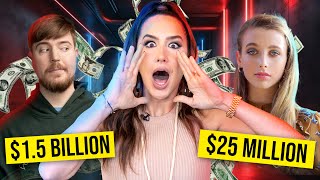
I sat down with Mr. Beast's team and I said, why did you guys launch? This is a bad business to launch. Here's the cheat code. Now, this is really, really important. And most people on the Internet would think that this was a snooze, which is, I'm about to give a speech to a former presidential candidate. A ton of the biggest fitness influencers out there. It's private. Nobody else allowed. Except. I'm gonna bring you guys in. This is Cody Santos, everyone. So what I'm gonna go over today is something I really actually never talk about publicly, and that's this monetization of eyeballs idea. Typically, I talk about building businesses and getting ownership or skin in the game, because I think that's really important for our country overall. I think you have a lot of people who want to build the house if they own part of the house. If they don't own part of the house, there's more of a likelihood to burn it down. The idea is we want owners across the board. What's cool about this room is everybody that's in here was selected by Claire, Eric, or I specifically because you guys are already owners. You already have the mantle of responsibility laid upon your shoulders, which I think is pretty incredible. And my idea for this thing today was to talk about what I found over the last. Let's call it two years, two and a half years of turning audience into a monetized business. You know, everybody will talk to you about how to grow your Instagram audience faster. And let me tell you how to go to 10,000 followers in 10 days or whatever. But if what we really believe, which is what I believe, that money is power, I want more power in the hands of people who want to build, who want to share. And I think creators are in a really interesting position because you guys share for a living. You've sort of normalized sharing the things that you've learned. This is kind of new in the world. When I started out in finance, fucking while ago, nobody shared the secrets. Like, there weren't these things called masterminds. You didn't have talks like this in finance. One of my favorite CEOs, but I hated this line, he said to me, cody, we get rich quietly. And I was like, you know, I don't know. What if instead we all got rich together? Because I think there's a lot of money out there. If we can help people figure out how to get it themselves, then we don't have to do this distribution nonsense of the stuff that we've all Earned. I started off at Goldman Sachs, kind of doing what every Latina mother wants her daughter to do, which is like work for the big guy corporate suit. I was doing the Wall street stock thing. Parents are super happy. We're making some pretty good quan. And now, you know, I make tiktoks on the interwebs. And so things have degraded pretty quickly. The reason why I did it and why I think all of you should be obsessed about this one thing, which is attention. We should be obsessed on it. I think there is a war for our attention. And when a vacuum exists, AKA the smart minds, the intelligent minds aren't out there talking what exists in said the Kardashians, right? And all the attention goes to nonsense as opposed to things that could actually make humans better. And so the reason that I did this, you know, when I told my mom that I was going to start a little blog, you know, and that I was going to go online, she kind of lost her mind. She's like, what's wrong with you? You have like a PhD and you got an MBA, what are you doing on the Internet? But what I realized really quickly is that audience is the new leverage. I stole part of this from Naval Ravikant, so I have to give him credit. But he has this thing that basically says leverage is the key to wealth, which I think is true. No one man can go very far. It's the African proverb, if you want to go fast, go by yourself. You want to go far, you need to go together. And so there are four tiers of leverage that came over many, many decades. Was labor, right? That was old school slaves back in the day, all the way to employees today. And the people who had the riches, let's say the pharaohs back in the day, were those who had the most manpower, labor. Then we had capital, right? When did the Rockefellers and the Rothschilds become titans of industry? If you look at the correlation to date, it's actually when the Banking act was established in the US and so when money was available widely and you could get OPM other people's money is when these guys became really wealthy. Then what was the next realm of titans? It was when code became available. That's when we got the bezos, the jobs. That's because they got leverage in the form of code or an army of robots online, basically. Right. And the new, most permissionless version of leverage is what I think all of you guys know, which is audience eyeballs. This is probably the first time that we have had a form of leverage that you didn't have to have permission for. So even code, you had to have like a supercomputer back in the day or access to a Stanford lab, like some of these guys did today. Audience, you don't have to have permission. You can grow your audience on a bunch of varied platforms without a ton of capital and without somebody at a bank saying that you're allowed to get a loan. Wow. So you can really give me a loan? I sure can. And so once I realized this, I was like, oh, no, no, I'm an idiot to not. Yes, have those first three forms of leverage, but add the fourth on it. I'll ask this question, you guys, have you ever had a job you hated? Okay, good. And why did you hate your job? What made you leave eventually? It's usually one word. It's your boss. Your boss sucked. Right? The boss wasn't good. That pretty much sums it up. And so the problem is, if we become owners of businesses, what do we become? The boss. So don't suck, don't do what everybody else has done and create companies that are terrible for your employees and create attention that is Kardashian, like in your cheap usage of your audience. And so that's my only ask. I work with this agency called Knight Media, and they run the 50 biggest YouTubers online in the country. So I had them do some analysis. And basically what's fascinating is a bunch of these guys came from venture capital. And venture capital is really good at doing one thing. They're really good at actually figuring out where do we put our our cash so that it can get the most return on it humanly possible. And they realized that 40 cents of every dollar from venture capital was going to these four companies. Google, Facebook, Amazon, and Apple. And they're like, huh, that's not great. We're basically giving money to these companies and they are giving it to the bigger companies. So there's some sort of twist. Well, what started to happen is the VCs started to realize, oh, wait a second, what if we could not just go to these big companies, but we could go direct to influencers and circumvent the advertising rules. And that essentially created this creator economy. And creators sort of became the solution to this VC problem of $0.40 of the dollar going to ad spend at the big four. And so, you know, you probably recognize some of these guys. I don't think that the creator economy will be amazing. For every creator, it's going to be the 8020 rule like everywhere else. We are not going to have Every creator making millions and stuff that people say online, but the smart ones are going to make tons of money. And, you know, you've seen this a few times over. We've got like Blogilates, I think is her name. You got Barstool 600 million. Mr. Beast, who went out and tried to raise 100 million bucks. That at a $1.5 billion valuation, that's what he thinks his company's worth. Nick Baer Public numbers say somewhere between 50 and 150 million in revenue for that company, which means that it's probably worth anywhere from 3 to 5x that. And then we got Ryan Reynolds, Mint Mobile. But look at this one over to the right, which probably a normal person doesn't know her name. Not all influencers are created equal. Is this too soon? I don't know. This is what we want to try to avoid. The more people we have doing stuff like this, the less trust we have as a community. And what we've seen across the country is does anybody seem really trusted right now in the U.S. like, if you're on the right, you think the left's all lying. If you're on the left, you think the right's all lying. Nobody trusts anything. We're becoming a much lower trust society. And so this is what we have to avoid. Because the one thing that has the highest price on it more than anything else is our reputation. If we're playing this attention economy, your reputation matters a lot less when you don't use eyeballs to convert to dollars. What's fascinating about that is if you look at like, I picked Emma Chamberlain, for instance, because I don't know her personally and I'm guessing some of her numbers, based on her audience size, 20 million followers x6 should be making like $120 million a year. Except guess what, she's making like 10 to 20 million bucks. Why? She did a stupid business and I don't know her. So, like, sorry, Emma. She's much better on the Internet than I am. She's better at getting attention. But does anybody know what Emma launched? Coffee. Terrible business, low margin business, super competitive, hard to ship. You have like shipping costs on top of it. Very little differentiation able to it. This is a bad business to launch. And so with a creator that has an incredibly strong audience that's really kind of like raving fans about Emma, she got some bad advice. And so you compare this to like, I sat down with Mr. Beast team and I said, why did you guys launch Feastables at Chocolate Bar? When was the Last. This is the wrong audience. When was the last time any of you guys ate a chocolate bar? Like a whole chocolate bar? Like, does that, does anybody do that anymore? Okay, we got one. We got one. Just for the record, one. One person in here, great business. And I said, why would you launch that? Why wouldn't you launch a business that has reoccurring revenue without shipping costs that can be accelerated on the Internet? Now their argument is, does anybody know Mr. Beast's audience demographics? 12 to 15 year olds. And so they're like, they buy chocolate bars. I'm like, I also don't think they buy chocolate bars. But like, that's fine. Mr. Beast is doing just fine. He doesn't need my advice. The point here is what is the right game that you could play? So six levels of content monetization. We're going to talk about the six of them and then we can break down which ones you guys have. I like to call this from the rock to skinny teeth. Don't sell skinny teeth. We all have seen it. We have seen people with attention sell out for Short term gain VPN on YouTube. Why does everybody sell VPNs? If you're doing what the entire crowd does, you're basically monetizing wrong. And so we need to start upping the level of the things that we sell. Here's my philosophy. So I basically said, okay, if I want to start a business, business. So if I was going to invest in the business of you. What's your name? Chris. Chris. If I was going to invest in the business of Chris, I want the laziest, easiest idea that has the best roi. I don't want to make my life hard. I want to have a framework where every time I start something I say, what if it was really easy and what if it could make a lot of money? And I want to look for the sliding scale where I am at the high end of both of those. And so there are like six ways people make money right now on the Internet. I'm going to power through these. Level one, AdSense. Terrible way to make money. If your main monetization method is Adsense, right now, you're doing it wrong. You should not be making money purely by AdSense. You want to take the money, that's great. But this is the worst frame. Why? Because you're like the low man on the totem pole. You basically get the crumbs. YouTube takes the cake. Right? So we don't want to do this. The cool part about AdSense is super easy, right? Easy Easy business, not very high roi. Problem is these things sell for nothing. So when I start a business, I want to start with the end in mind. If I get into a business, can I sell, sell it at some day? If Chris's face is on his YouTube channel, it's basically unsellable. Unless you want to get into a contract for the rest of your life. Now, anybody here been a creator for a while and felt burned out and not wanted to be in front of the camera for like a minute or two? Yeah, yeah, right. It's real. Because what you're trying to do is you're trying to turn yourself, AKA a job into a business. And it's not. We got to create real businesses, not have jobs on the Internet. Then we got sponsors. Sponsors and custom ads. How many people have worked with sponsors before here? How awesome is it every time? How fun is it? Do you guys just love when T Mobile tells you, yeah, can you just read these? 47 bullet points will absolutely tank my video. But legal will kill you and you'll be out of contract if you don't do it. It's not a fun game. This is not a fun game to play. The only time this is a fun game to play is when you're so big you go, this is how we're going to do it. Take it or leave it. But in the beginning, this is a really not fun, fun game to play. The cool part about it is you can certainly make millions, it's pretty easy, and you can make some cash on it. It's not the best way to do it. Then we got a level three game. This is my friend Alex, also in the gym space. Info products. So I thus far have adsense in my business. I have sponsors in our business, very strategically. And I have info products. We are dominated by info products in my business. Right? So we have courses, we have masterminds, we have events. Why? Because they're pretty easy to do if you've already operated a business before. Level three easy. But they're only level three roi. Why is that? Because content actually degrades over time. Meaning what I create today, my course today will not be worth more in 10 years than it is today, will it? Right. You have to keep updating it, you have to keep changing it. If you buy a house today, will that house probably be worth More in 10 or 20 years? Yes, it probably will. So info products immediately degrade basically over time. The second thing is that people don't typically like to buy info products. So if I'm a private Equity firm. I don't go out and buy a ton of info products. It's just not a section that they're in. Now we're getting into the higher level. This is where you guys should be listening and starting to think, how could I apply this to my business? One little secret trick I want to tell you guys. Anytime I say something here and you think that wouldn't work for me, can't work in my business, I want you to instead take this little frame switch, which is just like, how could this work for me? How could I apply this to my business business? The second I did that, my life changed. Here's an example. Jessica Alba, right? Actually, Aubrey Marcus, he's an example too. These are real products. Now, the benefit of real products is you can make hundreds of millions of dollars. They do not degrade in value over time. These are actual businesses that can be transferred. It's not a job. So this is where we start to like these types of businesses. Now, they're not the highest level of content monetization. And how that's determined is when I say multiples down here, that basically means if I sell a business in my world, I typically sell businesses for a, for a multiple of profit. So my businesses that are in small business land, if I'm doing 100k in profit, I might sell it for 300 to 500k, aka 3 to 5x, right? If you get big enough, you sell for a multiple of revenue. And so in the proprietary IRL products line, that's typically 4 to 7x. If you have a $10 million revenue business, let's say you're Jessica out, although hers a lot bigger than that. You might be able to sell for $40 to $70 million, depending on the deal that you do. Level five, this is where you start playing some serious games. This is Russell Brunson from Click Funnels. Russell Brunson started, like all of us here. He was on the Internet, he was making videos, he was doing info product, he was doing AdSense. Russell Brunson will be the first person to tell you he's not a tech guy. And yet he runs a tech company called ClickFunnels that is worth hundreds of millions of dollars, if not close to a billion dollars from his audience. Monetization, he playing a smarter game. And what you'll start to find with these guys, the smartest players out there, they realize early that if they get the game right, what do they do? Does anybody know how Russell Brunson grows his business? Other influencers, Other influencers. Who haven't figured out a smarter monetization method, pays for their audience attention and basically grows his business. What does firstform do? First form was like the original micro influencers. So they basically grow their audience through influencers. Claire, for instance, works with them. They have 15,000 what they call legionnaires that are all out there in the fitness space repping their product. The interesting part about this is look at these multiples. Software and hardware. We're talking 17 of 15x revenue. Those are serious empire building numbers. Then you get to level six. Nobody talks about this. This is brilliant. Does anybody know Reese Witherspoon's deal with hello Sunshine? When I saw this, I was like, oh, shit is smart. What Reese Witherspoon did. Started a book club, right? Oprah. 101 book club. Gonna talk about books. But Reese is a deal maker. And so Reese said, hey, I realize now that my books create bestsellers and drive hundreds of thousands or millions of copies bought. So, Athena, when I highlight your book in my book club as Reese Witherspoon, I also want to give you this opportunity. I want to give you an opportunity, Athena, for me to have a future right to buy. The right for video, for your business. So I'm gonna buy your television and movie rights for your book. And you're like, oh, my God. Oh, my God. Reese Witherspoon, I love her. Reese wants to make my thing into a movie or book. This is amazing. Of course, like, basically for nothing. Tiny little cost, no problem. I want to buy the rights. And then what happens when books get really big? She goes, okay, I'm gonna exercise that right. Athena, remember when you told me that, well, now you're a bestseller. Now you have Paramount and all the Hollywood studios coming to you, offering you millions of dollars. You actually realize what this is worth right now? But I have the first right to buy it at my set price. Brilliant. So Reese basically creates a portfolio of these things, calls it hello Sunshine, wraps up royalties and licensing agreements in them, and sells them to a huge operator, Blackstone. Right. And all that is there's no warehouse with products. There's no huge employee base. It's basically money in the air for licensing and royalty rights. These things, look what These sell for 20 to 30x. Publishing has the highest multiple level of any industry, higher than SaaS, which I didn't realize until I started doing this analysis. So what I want you guys to think on is, which of these do you not have in your business? I think we spend a lot of time because I've been a creator for a while now. I would say I spent in the beginning of being a creator, I don't know, 80% creating videos, trying to build my audience, obsessing on that. Maybe 2% of my time thinking about the business that I'm selling. And I want you guys to take one weekend and I want you to pick your smartest friend and I want you to poke a bunch of bullet holes into your business and figure out which of these could you be best in class at. Now, how to monetize like a Kardashian. I really, I like sometimes hate myself that I have to talk about them like this. But these women are smart or somebody in their ecosystem system is smart on how they monetize. So like, let's give a little respect there. This is also from Night Media. I stole this from them. So basically here's the exercise that you go through if you want to think about how to make money from your audience. And your audience doesn't have to be big for you to do this. You basically, you're the creator, but you find your creator market fit. And to find creator market fit is not that difficult. You basically, I mean, if you think about it, Daily Wire came out probably earlier this year and said they had about $200 million in subscription revenue. That doesn't include Jeremy's Razors, which they launched. And I don't know what the numbers are, but I would assume in the tens of millions. And then they launched some sort of chocolate bar. I don't get what is it with these people at chocolate bars? I gotta ask, Ben. They essentially have built this business based on subscriptions and then based on ancillary products. That is in the hundreds of millions of dollars. And that happened probably over a three year time period. I thought I'd do this last little part, like what would I do if I was you if I could take three steps today not knowing anything about your business? So I could be fucking wrong. If I would do anything with your business today. What do I most often see people not doing? Three things. Here's where I would start if I was you. Low hanging fruit. So the first thing I would tell you to do is create a newsletter if you don't have one. This is not your sales drip funnel. This is completely different. This is where you use whatever your unique skill as a creator is. It could be five Bullet Friday like Tim Ferriss five bullets of your favorite things. These things sell for multiple. I invested in this company, Beehive. Full disclosure, but Beehive is basically like four steps to starting a newsletter. So I think people are crazy. If you think that having followers on Facebook, Instagram, Definitely not TikTok these days or YouTube is a safe place for your business to live, you're wrong. You are building somebody else's empire. Those are rented, not owned audiences. And so we have to own our audience. And the only way you can own your audience today is by having individual data through your email list. If you don't have a newsletter, this is the easiest thing to start. And lots of people on the Internet love to tell me, like, nobody reads email anymore. Let me tell you, you're wrong. I have 300,000 people on one newsletter. We have a 52% open rate that email sells more than anything else that we do. We didn't even talk about this on any of our socials. If I was to send out one email to our email list, we could pack a theater, we could pack a thousand, two thousand people here from the email list. It is hugely powerful. If you cater to it and you don't have to go crazy on figuring it out. I would just start and play the game. All right, that's one. Here's the cheat code. Now this is really, really important. And most people on the Internet would think that this was a snooze, which is almost every business that I've seen that's worth hundreds of millions of dollars has a number two that operates and it's not the creator. Up into the to the right, you actually have my friend Kat who runs Nick Baer's business. Now you have to the bottom right, you have reed, who runs Mr. Beast's business, the Rock. You got Danny Garcia who used to run his and now runs a lot of the holding companies in tandem. And then obviously you got the goat. You got mama and baby Kardashian. The reason I say this is because every problem you have is a person, not a tactic. And so your job as a creator is what to attract attention. Except you're playing a level one game. The attention we're trying to attract is from a bunch of followers. Because I'm so smart and I'm going to be a guru up top. But what you should really be looking for is who are like the one to five people you could attract that are smarter and better than you at operations systems and processes and execution. And you want to attract, you want to have some non viral videos showing how smart you are and how big of a business you're going to build just to find your goat, your cat, your Reed. This is this accelerates a business more than anything else. But most people won't do it because we're so focused on us being the super smart people that we are on the Internet. You need somebody who's actually going to make sure the work gets done and probably pull you back. Like yeah, yeah, no, not that idea. This idea. This changed my businesses completely. So in every single one of my businesses, in my media business, I have Chris. In my portfolio holding company, I've had April in the past, I had Nikki. So every single one of the businesses needs to have a really solid number two. And if you don't have that, you should spend the next 30 days doing one thing. Find your number two. That's the biggest accelerator. What I would like impress upon each of you is do you ever feel this sense of fear and urgency that you won't stay relevant forever, that like this won't continue, that the business won't keep growing, that what if this stops? And what I will say is in the attention of economy? That's true. You should believe that little voice inside that makes you scared that you won't stay relevant forever. Because this is one of the few things that's true. Unless you build a business that is not reliant on you and your face for sales, you do not have a real business. And so believe that little voice and take the steps now while you guys are still at the top of your game. How many like 65 year old youtubers are there? You guys watch a lot of their content. Yeah, me neither. So I'm really honest about the fact that this game won't last forever. So let's play the game intensely while we can. And then the thing that stuck with me the most from Andy is this idea of long term games with long term people. How can you find a few people in your company that you can build something bigger than yourself so when you're tired you can actually take a break that don't want to be the face but want to support the mission. And how can you build a dream so big that you replace other people's dreams? Because that's what happens when you get employees. They have their own hopes and dreams. Don't you think they want to be the CEO? Don't you think they want to make decisions? You have to build something, a vision so big that they are willing to give up on their dreams because yours is better. And you do that all day with your audience. What would happen if you did that inside of your business? Your business will completely change. It'll never be the same. Then you'll come back here and you'll say, thank you, Cody, and it'll be really great for me.
More from Codie







He wouldn't give you the dream if he didn't believe you had what it takes. You have what it takes.



What’s the one thing most job seekers overlook that could get you hired faster than you think?