I spent $120,000 on a Business Coach So You Don’t Have To
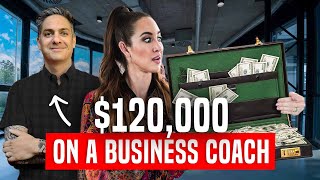
Codie Sanchez paid $120,000 a year for a business coach and breaks down what worked: pick one high-leverage thing, hire consultants in your blind spots, and turn goals into explicit sacrifices. She uses a decision matrix, weekly one-on-ones, and a scorecard to track what matters.
Questions this video answers
$120,000 a year.
Who Not How.
500,000 subscribers in six months.
250,000 subscribers in one and a half years.
Application: about 10 minutes online; example cost as little as $10 per month.
Chapters
I'll admit paying $120,000 a year to a business coach sounds a little ridiculous, but I did it. The question is, is it worth it? This is $120,000. It feels like a lot more than it looks. I paid 120k to learn what I'm going to tell you about in this video. It's free for you, it's not free for me. Meet Jordan, a coach to CEOs. CEO himself grew the Motley fool to hundreds of millions and also ran the fastest growing media company I could, company called the Hustle that then got sold to HubSpot. He's a stud and now he's going to be both of our stud because I hired him since I was struggling in a few areas of my business and basically life priorities. But after a year I realized, holy hell, this guy is good. And not just for CEOs. He's good for any of us trying to achieve something.
Because I've been an operator my whole life. Everything we talk about, you know, I've done, I've experienced. And if I haven't, I can put myself in those shoes. And I'm doing it totally objectively speaking because I don't, you know, I don't really have a skin in the game. And so my incentive is just to be honest with you.
So I begged him to publicly let me share his stuff. So I thought, let's steal his homework, shall we? First thing he taught me is focus will unf you. Your biggest problem is you're already so distracted you don't even know what you want. Overwhelmed from clicking from screen to screen, your text, blowing up, your to do list, rounding you. It's just a lot.
High performers tend to get really frustrated when you throw way too many things at them. Because the best businesses in the world and the people that are the most successful can do one thing that they're focused on for like an extended period of time. Like endurance. And focus I think is actually underrated.
So he gave me this list. Amazing. It's called this one thing list. Basically, you choose one thing that if you get it done that day or week, it makes everything easier. You keep everything not on that list off of your to do's for the day and you focus on the 80% solution that can be driven by the 20% action. Check this thing out. What one thing, if you accomplish it, will make everything else you do irrelevant or really, really easy. I realized a couple of these for me, hire ahead of acquisitions. I need to build out our holdco faster. These Others then get moved to the next up things. And before I decide that my one thing is absolutely true, I have a little check on it. That's are you really sure? Because most people will replace the important with the urgent, and the two are rarely the same. So you need to focus not just on the thing that's hitting you in the face continuously, but on the thing that will actually deliver you the life, the goal, the win that you want. Who, not how. Every problem in your life is not a how problem, it's a who problem. He told me, rather than trying to figure out how to do something, you're better off finding who can help you do it. He literally threw the book at me. Just kidding. It's not this book. It was a different book called who, not how. But he did make me read every single page of it. If you want to lose weight, who could help you? You want to make more money by being better at sales. Who do you know who sells more than you? Go steal somebody else's 10,000 hours, by the way. That someone, when you don't have any money, can just be a friend and free. And then when you do have money, that someone should usually be a hire or a coach. The more money you start making, the more people you hire who become your army of hoops.
Most of the time it's a accountability issue or an ownership issue, which gets back to who. So it's like, you know, oh, we're having trouble. Sales are down this month. Okay, well, it's usually the issue isn't just tactical. You can tweak this lever, tweak that, but it's who is responsible for that, making sure that that person understands their responsibility and their accountability and that there's clarity around that. So typically where I find that things fall down is where either nobody's accountable for something or more likely is when everybody is accountable for it. So everyone's like, oh, yeah, I think that's me. But it's also. And it's also him. And then they just started. So they're doing some of that too. And it's. Those are usually the scenarios where you have a problem.
I think this one has made me more money than any other. And he calls it niche experts create big returns. I hire specialized consultants who have already won in each industry. The idea is hourly pay instead of salary. Weekly calls, leads to, I don't know, 10 million plus in revenue. I hired one consultant for YouTube, 500k subs in six months. I hired one newsletter consultant, 250k subscribers in one and a half years. Jordan was actually one of these. So he gave me the best advice broadly, but also hugely niche advice on newsletters, growing them, media teams, and then I steal his 10,000 hours instead of doing it myself. If I can tell you something for sure. Values eat tactics for breakfast. Values speed instead of task management. You value innovation instead of tracking. You value attention to detail instead of micromanagement. When you turn the things you want done into values as opposed to to dos, it translates to less oversight, meaning you have to watch everybody do every single thing. And this small change not only will change the way that you act, but will also change anybody on teams that you manage or work with.
I gotta interrupt the video for this. I want to give a shout out to our partners at Ethos. Let me tell you why I came from little and being the first in my family's history to experience financial success so important that all of this is not just for me, but for the future generations. I'm all about making more money, but I also like protecting the house. One way to do that, life insurance. I can't remember when I first got life insurance, but it should have been sooner if the process wasn't so confusing and time consuming. But now Ethos has fixed that. They created fast, easy, affordable way to get life insurance. The application process is 100% online, doesn't require any medical exams or blood tests. You just answer a few health questions and get a quote in minutes instead of weeks. Ten minutes could protect your family's future for as little as 10 bucks a month. That's just two less coffees. The cold, hard truth is that tomorrow isn't guaranteed, but you can protect your family's future today. Click my link below. Get your personalized free quote now.
This one we workshop together. Don't set goals, set sacrifices. He basically said goals are overrated. Instead you want to say, what are you willing to give up in order to get the things that you want? If you want to make $100,000 a year, are you willing to give up the fear of negotiating with your boss? Are you willing to give up the fact you're going to have to work nights and weekends to do it? Are you willing to give up the fact that you might have to put in a thousand resumes in order to get a job that gets you to 100k a year? Most people set goals and then they don't realize that those goals require a payment. Every single goal has a price. Now, when I set goals, they look like this. It basically is, hey, I want to hit 250,000 subscribers. I'm willing to spend $10,000 to do that. I'm willing to work on my newsletter for five hours every weekend, even though nobody else is going to. And I'm willing to hire one person part time who's going to help me achieve these goals. Say the things you're willing to do, and it turns out that the things that you want, they accept the payment.
Have your North Star of what you are trying to achieve. And so then you have to ask yourself, when all these other interesting things come at you, you could be like, ooh, we could actually go launch a syndicate. We could actually do a lot of work with potential partners and sponsors. Is that something that would help, like, guide you towards that North Star? And if the answer is no, it's like, well, maybe you shouldn't do that right now. I think it's just. It's just hard to do that because there's so much exciting shit to do. I think that, like, that's where a lot of entrepreneurs end up kind of failing because they're getting distracted. They're doing too many different things.
The thing is, you won't be able to do all the things that you want to do. So you got to pick. The problem is you have so many things you want that you aren't sure what you should do next. So if that's you, he introduced me this thing called the upside downside matrix. Let's do a live decision matrix so you can see how this works. How about this? Should I subscribe to Cody's YouTube? Should I not subscribe to Cody's YouTube? Bad idea. I can already tell you how this works, but let's just play this game out. All right? So first we've got upsides, then we've got downsides, then we've got remedies, things you can do to minimize the upsides or the downsides of a decision. Here's the pros to should. I will be rich, I will be smart. That's your big brain. I will be really, really good looking. And that's you in the mirror, right? These are all the things that I could get as a benefit of subscribing. If I don't get this, I will, I don't know, have more time to watch Netflix and chill. I will subscribe to, I don't know, another channel where they give away a bunch of free stuff and I can spend my time watching that instead. Now, what are the downsides to do in it? Well, if I subscribe to her channel, maybe I can't subscribe to other channels. So it's options. Too many of them. If I subscribe to this channel, maybe I won't have time to create my own content. So content doesn't happen. Then you have the remedies. Well, how could I both do the thing that I want to do, subscribe to the channel and not have the downsides of decision that I'm going to make the remedies for? This could be something like, well, how about I create content first and then I watch the channel. So I only get to watch the channel if I create my own content first or I get to subscribe to her channel every time I unsubscribe from another channel. The point of this is you start to think about your decisions with pluses, minuses, and then things to manage the two. It becomes really clear once you do it this way what the decision should be. Now you know what you want to focus on. The problem is you, like me, probably have a slew of crazy ideas that, that still come to you in the dead of the night. They keep you up. You can't sleep for thinking of them, or they're just random and you don't know where to put them. We started something called the Someday maybe list. And the Someday maybe list is basically a list of stuff in this parking lot that maybe one day I'll eventually go and take some of those cars for a ride. But in the meantime, I'm just going to keep them there to keep my crazy at bay. This has helped me so much. I keep it on my phone. Anytime I have a crazy idea, I put it in there. And then I get it out of my head and into this list. Here's the rub. While you try to achieve something, people are going to try to tear you down. He taught me this thing called be comfortable in the backseat, which basically means they stole your words, okay? They took your idea, whatever. They didn't give you credit. No big deal. What happens is it all comes around. You can always take a back seat, not have to be in the driver's position continuously and realize that you guys are both going forward in the same direction. So let all of the people who steal your ideas, who take the credit, who push you in some way, shape or form, let them drive for a minute. Because what happens is they drive you faster. Your destination, it doesn't actually matter. Be easy to find, hard to reach. So each day, the Average person gets 41 texts, 100 emails, five phone calls. If you respond to each, that takes an average of let's call it three minutes. That's seven hours a day. Then you add all the Tweeting, Instagram and YouTubing. It's pretty easy to find yourself overwhelmed. I mean, I end up getting thousands of DMs and texts and emails per day. The harsh truth is there's just not time. It's overwhelming. Unless you own the fact that you don't have to respond to everybody. How do you decide why or why you're not going to respond to somebody? I think about my goals and my anti goals. If you're feeling overwhelmed about what to respond to one way or the other, I go back to keeping the main thing the main thing. So if I have my anti goals, they are things like being an employee, selling other people's products, speaking for free coffee meetings. My actual goals are I want to grow my company, I like hot yoga, I want to help a few people who are going to actually build, and I'd like a bubble bath every once in a while. If anything that comes in front of me doesn't hit one of my goals and hits an anti goal, it's a no. And no is a full sentence. One of my friends, Alex Hormozi, literally will text me sometimes to help me get better at saying no. Just screenshots of him saying the one word no with a period at the end to people asking him things. That is a pro move. If you don't use those two letters, other people's goals become yours. So you're hard to reach, but you still want to help people. You're going to get asked a lot of the same questions constantly. On your rise to expert. I started creating first free products, then paid products because I got asked the same questions over and over again. How to start investing, how to buy a business. My best work is not me answering one off emails and setting meetings to answer the same questions 452 times. Neither is yours. So if you're doing something more than three times and has more than three steps, start thinking about can this be a blog? A Twitter thread? Can I create a product? Hell, write a book then. The secret when someone wants your time, you tell them, oh yeah, I wrote something on that. Here it is. Check it out and let me know what questions you have. After that, only about 1 in 10 people will actually follow up. If they want you to do the work for them, they should do some work first. The second tip is as you create deeper and bigger content on the subject, you will literally have so much more value delivered to a human. If you create it than if they one off. Pick your brain either way though, whether they respond or not, you protect your time as opposed to have somebody take it away from you. If you guys want to see any of these tools that I think are going to lead us to becoming $100 million media team, you can click the link below. We have a bunch of these free for you guys. You can just download them. This doc I love, I call it my transfer stress doc. But what it actually is is my weekly one on one doc. I check in with my employees every single week on the core KPIs, which means the things that they're supposed to deliver each week. If they are yellow, AKA at risk, green, AKA gonna hit them, or red not gonna hit them. They fill out this weekly one on one document for me. And this weekly one on one document then gets uploaded continuously to the same document. So if I see I have an employee that five, six, seven weeks in a row isn't hitting their KPIs because everything's red really quickly, I know there's a fire there. Simultaneously, if I was an employee, I would use this exact same document. You are going to put yourself away from all the others. If you proactively send your manager a weekly one on one agenda that basically says, hey, here's what I'm working on, the five things that matter in my job. Here's what I think is at risk, here's where I think I'm going to crush it, and here's where we're definitely going to fall behind par.
I find that like, if you want people to work really hard for you, not like clock in and clock out 40 hours a week. If you really, really want people to work hard for you, you also have to care about them a lot. And you also have to like really be there for them. And for me, that just means like building really, really true, genuine relationships with people. And you can't just do that by checking in monthly by, you know, making sure that you're removing blockers and helping people prioritize. Like, you have to know what they care about. You have to know, are they trying to build a family? Do they want to redo their kitchen? Like, are they going through a divorce? Do they just, like, you just, you have to build those relationships. By doing that. You also get the best out of people. And then when you inevitably are going to have to ask a lot of them, they're happy to do it because you've built like a really solid foundation.
Last little secret for you. This thing looks like a lot, but it is so valuable. So this is my scorecard. Basically, Peter Drucker said, what gets measured gets managed. And this is true. If you don't pay attention to it, it won't grow and succeed. You don't get rich by accident, just like you don't get a six pack by accident. This scorecard has all the things that are important in my business. It could be in your life. And I track them each and every single week. On each Friday, I review the scorecard, inputting the metrics that matter, and figure out did I achieve what I wanted to achieve this week. You don't have to pay somebody $120,000 to be your consultant. I just did it for you. You can break down all of these specific actions, but what I will tell you is for every Steve Jobs, there's a Steve Wall Wozniak, there's somebody behind the scenes that was the expert in the thing that they wanted to achieve. I would tell you, go find your who. Because you can either pay to win with your limited hours on Earth of which you can't make anymore, or you can pay cash to trade for somebody else's. I like the second option.










