Shipping Containers Are An AMAZING Business
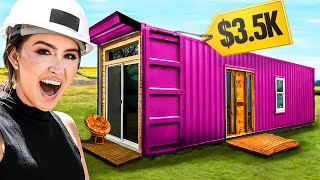
YouTube interview (May 1, 2024) with Codie Sanchez and Bob about a business that converts shipping containers into homes, bars, offices and hospitality units. The video covers the company’s rapid revenue growth (from ~$1.5M in year one to ~$15M five years later), unit economics and pricing (examples: container bar ~ $60k; starter one‑bed container home ~$50–55k; two‑bed ~$80–100k), operational practices (off‑site/prefab “agile construction”, SOPs, milestone deposits, just‑in‑time inventory), financing and mortgage options for container homes, an e‑commerce/productized service model, and an Airbnb ROI calculator (example output: $4,600 monthly income, payback ~26 months). The conversation also mentions startup funding (~$15k seed from a 401k), margins (target 30–40% gross margin), common costs (empty container ≈ $3,000; MEP materials $5–6k; insulation $2–3k; fixtures ~$5k; labor/finish ~$10k), timelines (builds ~4–8 weeks, some models ~6 weeks), and scale challenges (post‑media backlog after Netflix exposure).
Questions this video answers
About $1.5 million.
About $15 million.
Bought for $3,500 and sold three weeks later for $35,000 (stated as an illustrative example).
About $60,000 (delivered in ~6 weeks).
Around $50,000–$55,000.
Chapters
Imagine buying a shipping container for 3500 bucks and selling it three weeks later for $35,000. Our man Bob thought he could use all the old recycled containers and turn them into profit. And it looks like he did. He did $1.5 million in his first year. Now five years later, they're doing a whole lot more. How much more? They're doing 15 million this year. And in this episode of Main Street Millionaire, Bob takes us through the unique opportunity he found in containers. The nine things he does to differentiate himself from everybody. It also runs some heavy equipment and most importantly, how you can steal his homework. Let's get into it. Let's go. So the thing is, whether you want a small side hustle or a multi million dollar business like Bob, turns out you can do it with shipping containers, which is wild.
Yeah, we use mostly new shipping containers and they're used once there's a huge supply of them because the US we import way more than we export. So these sort of accumulate and they get used for several different things in a second life. Our particular niche is that we use them to make really cool homes or bars or anything really. Sky's the limit.
And you transform it into something like this, which is a bar, right?
Yeah, this is a container bar. So like a lot of new venues and hospitality, you'll see them in like all over now. They may not want to build a whole new building. They might want a backyard bar or it's their first serving station. So we can convert a shipping container into that, into kitchens. This one's a walk in cooler and a serving area kind of lowers the barrier to start a new business like John Renvar.
How fast can you make these things compared to most people?
Compared to traditional construction, we're about a third of the cost and time. This takes weeks, not months to build this particular one, it's about six weeks.
So this thing, I order it online. How much does this cost me?
This one's around 60k.
60K for an entire bar and a walk in fridge?
Yes.
And it delivers to me in six weeks?
Yes.
If you were going to build this, how much do you think it would cost not to do it the container way?
Stick frame or brick and mortar would take you 3 months and over 100k easily.
And you probably have a lot of delays that are unexpected and you have to really find people that you trust at every sense of the way as opposed to this. You just have one person you go to for the entire thing.
So we fall into what's called off site. Construction, where we can control the environment, build really fast versus building on site, where you have crews and materials, land at different times. So it's a little more, it's more inefficient. So we're able to capitalize on moving fast.
So you might be thinking that I would love to buy a property for $30,000 and Airbnb it and get it in six to 10 weeks. That would be pretty crazy. But maybe you don't have 30k lying around or even up to some of your biggest models. 250k. Can you mortgage these things?
Yeah, we have a lot of financing options, commercial, just lines of credit. But mortgaging is the biggest breakthrough we've done. People can now buy land and their first home, put them together, get, you know, someplace to live at a really affordable price.
So let's say I don't have a ton of money. I would like to move into my first place and I want a one bedroom, you know, nice ish container home. How much would that cost me from you guys?
Not including the land, but you're starting around 50, 55,000.
And then if I wanted a two.
Bedro, you're going up closer to 80 to 100.
So 80 to 100k, you get a cool container home, you place it on a piece of land, you Airbnb that bad boy or you live there instead of like an Amazon box like this. On this channel, we don't just cover Main street millionaires who do the dirty work, we do it too. We own a bunch of businesses just like this. So we're gonna go get in there, we're gonna see how useful these guns are. The answer is gonna be not very useful, but we're gonna try, we're gonna try to help them out. You also had Netflix here, right?
Yeah. We got called on, let's show Queer Eye. We build one of our most popular model now, the Joshua. And so that was a great experience.
How much money do you make after you do something like going on Netflix?
That was great exposure. I think at the first 48 hours, we got over 2 million in sales. What we got like a three to four month backlog. Almost immediately we had to figure how to scale that up, you know, and build faster.
Yeah, that's what nobody tells you is that there's something called float, which is when you get more people who want to buy your stuff. You have to be able to buy the stuff to create the stuff, to sell it to the customer.
We learn quickly. We have to take deposits. We use that to buy Materials and set up the labor and it helps us go faster.
So you take the money up front? Some portion of it. Yes. Use that to cover all your float so you're never out of pocket.
Correct.
And then they do not take actual possession of it until they've paid your final amount.
Correct.
Yeah, yeah. So at least you don't have a problem, which many e commerce companies do, which is you got to buy inventory way in advance before you can ever ship it to somebody and you've avoided that entirely. Like I should be doing this part right? I should be lifting stuff. Okay. Kalimzi Necessita Ayuda. What's happening here?
We're just getting some containers so we can start a project. We're going to make these in the restroom. But every day we have one or two trucks dropping off containers and picking them up to go get delivered.
So do you ever find anything weird in there?
Year one when we were building with anything and also just buying and selling containers which is a pretty lucrative business. High volume commodity based. You'd get all sorts of cool stuff in there. Really. Tires, forgotten cargo, weird. A lot of smells of smells. Humans, never humans.
Okay, that's good.
These trailers that you see being delivered on being pulled by pickups, that was sort of a good timing and a key to our success. We can move empty containers with a pickup truck and a trailer and not have to register. Super expensive trucking because that truck and trailer combined are under a certain threshold. Call it the Amazon prime loophole. You see those delivery vans being driven by teenage kids. They don't have CDLs or high end driver's licenses because they're underweight. We move a lot of containers that way especially in year one when all we didn't buy is sell those.
This is complex work at this part. They routed the big guns for it. As I get my oat milk in between tanks. So how many employees do you guys have now?
So most of our builders are contractors employees. I have about 15. That's our project managers, quality control, logistics, sales and support. I learned quickly that, you know, because I didn't come from construction, in order to align everyone, they're getting paid to do the job so they get paid when they're done. Productivity went up, bill times went up and we just became really, really efficient that way.
So one of the keys is making sure that people have a really direct deliverable in this industry where instead of just an hourly wage, they get paid when it gets done.
Yeah. So one thing we're really big on is making sure. Everyone's interests align. We get a deposit from the customer, we put our deposits for the labor, materials. They build as fast as they can or, you know, comfortable. When it's all done, it passes all the quality control checks. We send it to our customers, they pay us, then we pay labor. And so it keeps overhead really low.
Interesting.
A construction business like this can be very capital intensive. We found little ways like that to keep costs low so we can grow sustainably.
And what else have you learned from a cost perspective?
I do not hold inventory as much as possible. So I do a lot of just in time inventory.
Yeah.
Learned in the past career, so. And I leverage a lot of the big box stores to hold all our parts. You know, Home Depot has like over 5000 person procurement team. We give them product lists of everything we need to build a home and we have them stock it and we just buy it and have it delivered when we need it. Wow. Right. Because they have the capital for that now.
What about equipment like this? Like, are you buying these bad boys? These are expensive. What would one of these run you?
A forklift can run you anywhere from 25 to 100,000, depending on how big they are. We lease some of our equipment or we'll buy it at auction. We don't need anything pretty. We just need to be functional. So we do a lot with a very little. I think other companies that have a different approach where they build inventory then sell it, we do the opposite. We have the orders and sales come in first and then we build those, we productize them, they lead to new sales.
Smart.
And you know, we're not inside a German style factory. We're outside in a gravel truck lot. It's effective and it's like, it keeps us really lean and like efficient. It's like the bottleneck wasn't having a fancy factory. It was having things figured out like a good price and financing. It's out behind.
Yeah.
Coming through.
Should we help him with something? Does he need two by fours? All right. You have to grab some too. I think he already has pre cut ones. These are probably too long for him, huh?
Too short maybe.
Good for the video.
Yeah.
Now we should probably take them back.
Yeah.
So starting a business that now does $15 million a year in five years is intimidating. What's fascinating about you is you used to do this for a living and now you do this.
I work for a pretty large company and you know, you just stuck in meetings all day, you get a little disfranchised and there's A movie called War Dogs. It put the idea of RFPs in my head. And my partner at the time, she was really wanting to start a business. The city of Austin put out a bid for a project to convert six shipping containers to offices for, like, a community park. They were no experience the day before. Filled out as much of the paperwork as I could quickly, and just made like, cowboy guesses on what things should cost. He interviewed me, and I sold myself on the project, and that's how it all started.
What did you say in that interview that sold them?
Basically, we sold them and said, hey, this was a project for helping new businesses start. They were going to give them office space. And I said, what better way to, you know, capture that vision is to give it to a new business as well. And I also was at their budget, which I could say I was at their budget because I had no idea what I was doing. I wasn't accounting for my time and what that would cost or, you know, a lot of things, to be honest. That project got caught up in red tape. But being stubborn, we built a few, put them online, and someone bought them immediately. So we saw there was immediate demand. We had revenue, and so just the wheel started turning from there.
How much money did this business take for you to start?
I probably cashed out about like 15k from a 401k I had at the time. And my partner had great credit, so we used her credit card to get everything going. So it didn't take too much to get going. Of course, not paying yourself.
Did you quit your job before you started or did you kind of, you know, did you kind of monkey bar between the two for a minute?
No, I definitely moonlighted and leveraged that. So a lot of long nights. Had this going for about a year, year and a half before I went full time.
How much money are you making in that first year?
So that first year we were pretty break even, but we hit about a million and a half in revenue the first year. We're figuring out how to do the hard part, which is this value add, converting them. I saw a huge opportunity just to buy and sell empty containers. And the reason why is because when I tried to buy a container to start my project, I got burned. It's a very unregulated market and anyone can do it. Being pissed off and getting burned on buying containers never got delivered. And when they get delivered, they're poor quality. I couldn't use them, but I had to make commitments to buy and sell so many I e. Com'd and made a website, put them online. But simple things like, here's the price delivered, no hidden fees, and the demand was there. And it just took off from that.
And something happened, which was Covid.
Yeah, two things happened. The world's shipping demand went through the roof, so you couldn't get containers to buy and sell. So a lot of companies had to sit on the sidelines or just go under. We were already getting back into more modifications. We made our first container home, which was a test. And that's when everyone was stuck at home. They needed more space. We were one of the few websites where we had a container home or container office online with the price delivered and example photos. And so, yeah, just the man with the roof phone calls like crazy on the Internet.
I know people right now are thinking, well, I could never do that because I don't know how to do construction. Well, I could never do that. He figured out because he was a software engineer. But often none of us know what we're doing. And the only difference is, are we willing to be humble enough to ask the questions that show that we're willing to do the work? We just need some direction. So I love owning my own businesses, and I think you should have ownership, too. But let's be straight here. It is hard. Life alone is tough enough. Then add making sales, managing people, running an actual business. You can't even underestimate how tough this is. That's why I partnered with BetterHelp, the sponsor of today's video. If you go to BetterHelp site, they'll ask you a couple questions, and based on your answers, they'll match you up with one of their therapists who they think can help you out the most. The therapist they pick for you will have tons of experience dealing with whatever you're going through. Every single one of their therapists is licensed, has a master's or doctorate degree, and has spent over three years and a thousand hours working with people just like you. And if the first match doesn't work, that's okay, because There are over 30,000 therapists in their network that you can switch to at no additional cost anytime, so you can find the right fit for you. Life is tough. If you want a little help along the way, go to betterhelp.com Cody Sanchez or select Cody Sanchez at signup and we've got a little discount to help you on your very first therapy session. Let's talk about transforming a container. I want to get down to the nitty gritty studs of what it takes. We're in the middle of a container that's right in the middle of probably the framing stick phase.
We're at what's called mep, Mechanical engineering. Plumbing is almost done, so this is about 50% complete, rapid fire.
How do we transform a container in 60 seconds? How many steps? Ready, go.
There are 29 steps, high level steps. I'll go for the major ones. You get structural steel, your interior framing, electrical, plumbing, insulation. Then we'll sheath the walls, we'll install the fixtures, cooling, lights, windows, and then do the final finish. Your trim.
What I took from this is it's fast, but how much does it cost?
We operate on a 30 to 40% gross margin. That's our goal. What that looks like, you know, if it's a fancier 100k build, we're trying to walk away with anywhere. 25, 35k profit.
Nice.
That'll take us anywhere from little as four weeks up to eight weeks, depending on what we're building.
So if I had to think about the cost and how they sell, sit on a pie chart, I go, the container itself costs. This container costs what?
This metal box costs you about 3,000.
Metal box, $3,000. Then we've got this next step. Right.
So all your MEP materials is going to cost you another, let's say five to 6,000.
Okay. And then what's next?
Insulation is another two to 3,000.
Okay.
And then we're going into your fixtures. We'll get you up to 5,000.
Okay.
Your glass is another two to three. I don't know where this is adding up right now.
Public math.
We don't do it, we'll have them do it later. Then your final finish. The labor that's the most intensive, I mean high cost, that takes the most time, that's costing you another 10.
Amazing.
So yeah.
And all in. We have this for your container. What is your business model? What exactly do you do here?
We run like an E commerce business. If you look on our website, there's a set menu, products with the pricing online and variants. I try to keep it a slim in and out menu where it's no more than four products and three variants. And people can mix and match half the business where it's like a self serve model and then the other half is a consultant where someone found us online. Instagram, our website gave them a great idea. They made a phone call, they book an appointment on the phone or a video consult and we build them a solution.
So we got two business models. Well, the business model people think you guys do is I build containers. But what you really would say is I am an e commerce company that does a productized service, AKA containers. Or I have an e commerce company that does bespoke build outs.
Correct.
Those are my two business models. It's all just wrapped in a steel box.
Yeah. What we like to say is that we build solutions. Right. That's somewhat incidental. It's a container, but that's our medium. It, we can do it really, really well.
Do you ever write little notes to people on here?
Sometimes, you know, should we write them a note? Yeah.
Can we?
Go ahead. This would be part of history.
If anybody wants an autographed container, you can find them over at Bob's Containers from Cody Sanchez. Marginal markup on it. We'll talk about the royalties I get on this thing later. Okay. I can't this up, can I?
No, we'll just re weld it.
The guys are like, great. We'd love her to show up again. The fascinating part about your background is that you run this business not like a typical construction business. And let's, let's break down some, some of your key frameworks about that.
We call it agile construction. So we follow sort of an agile development where if you look out there, it's not a build happening sequential order. There's several steps happening concurrently and different builds happening currently as well. So we're trying to optimize on supplies and vendors.
If I was to explain agile construction, you have two different types, right? You have sequential and you have agile. And in a sequential model, you might have one house being built and all your dudes are sort of building the same house at the same time until the house is fully done, Right?
Correct.
And then you have agile where you actually have in your case their containers. So they might like look like this. You have people in varying stages working on each house so that simultaneously you're more likely an assembly line than you are a vertical construction crew.
Correct. And the difference there is this could take months to complete one house before you go to the next one in the same amount of time you completed three. So you have different trades going back and forth, overlapping each other, and it works out really, really well.
And so basically the other thing that you have is the second that this guy's done here turning the light bulb on. That's a light bulb. You're welcome, Picasso. He can then go over here and turn the lights on over here, whatever the that kind of light bulb is. And then when he's done doing the lights over here and like the kitchen or whatever is ready over here. He goes here. So you get the same guy on for longer. Which means you don't have as much disruption waiting on people in between in the trades. Right?
Exactly. And say guys two and three, they're over on the side. Prefabricating parts to go fast for the next one. People are constantly moving. So it's an assembly line except the human machinery are moving around.
But you're also adding what sounds like an actual assembly in prefabricated doors, windows, etc. That they are inserting.
Yeah, Any parts that we can buy, we'll prefabricate, have stock ups they can grab and go.
You know, I think one of the hardest parts in a business is getting people to do SOPs. I don't know about you, but it's always pulling teeth for me to get people to do SOPs. And in my mind SOPs equal freedom. And until you have them, you are stuck in a job. You can never be a leader, you can never really hire other people because it's all in here. Talk to me about what do sops mean to you? How do you guys use them? Are they important?
Oh, they're super important. For us it's our quality control. So at various stages throughout any build, there's a checklist of sometimes up to 100 things that they have to make sure are correct so they can move on to the next stage. And the way that we make sure they happen is that they're sometimes tied to milestone payments to the contractors. So if they get to 50%, they have to pass their quality control to go to the next phase. And they can't go to the next phase or get paid until it passes that. So this is how we control the process and really the quality super important for us so that it kind of lies to what I mentioned earlier, keeping interest aligned. You know, everyone wants to go really, really fast. We don't want any cutting corners because we are responsible. We warranty everything we build here and we have to get them permitted where there's rules on. So we make sure that they are adhering to our process even though they're not employees or contractors. But all our interests are aligned to make sure this is built correctly.
Well, the other awesome part is for those 15 employees you have, if one of them wants to go on vacation for month somewhere, they can actually do it because you have systems and processes in place. Maybe you're not going to pay for all of it, but until you have, you can have a great employee, but they're not that great of an employee until they've actually optimized their SOPs so that you could place somebody in in their absence.
I like to think that majority of people here can do my job if they have to because I document everything. Almost everyone can do everyone else's job because there's a process documented on how to do.
I am nailing this, by the way. I also feel like we should upsell this one, you know. So you built a full e commerce solution, which is fascinating. Can you show it to us real quick?
Biggest thing we ever found people calling us about is were the pricing. So learn that pretty quickly. To click pricing in the header menu. You'd be surprised how many people don't do that.
Yeah, they don't.
Yeah. So this is one of our standard menus and the one thing I want to chat about this is that, you know, we don't have engineers and architects on staff. You know, we contract it out. But we didn't design any of our products. These were all consumer driven. This one was designed by Netflix. This is a. That's like our flagship model because it has the. The most Airbnb rentals consistently of anyone. But what I'm trying to get at is here is that this is a consumer driven menu. Someone brings us the design, we'll build it. We don't exactly know what we're gonna get into. You know, we kind of quote a little higher, we do a cowboy number. Now we have experience, we'll build it. You know, hopefully we break even if we lose and we definitely keep it a little bit longer. We market the heck out of it. We take lifestyle photos, we get, we bring in models, furniture as much as we can put that out on social media, on the website. And we do the rule of E Comm. If you get clicks, it sticks. And that's how we've built an entire menu of products we know people want to buy without having to put a lot of money up front. You know, everything's just really data driven. We let the consumers the data tell us what they want and then we scale it up from there.
You have a checkout process, it's frictionless. They can go to your website, they can select a model and then what happens?
They can choose a few variants like this one. We will limit some variants depending on the model because we just know what people want. They'll see the price up front. They can go into financing options, they can add to the cart or request a quote. Anything over 50k, people are going to give us A call anyway. You know, they want to make sure that they know they're working with. But it really filters out a lot of the leads and gets people's information they want right away. And for us it helps me maintain a pretty lean sales team because they're not spending all day answering queries where people all they want is what's the price? What's the price? The price. It sounds like a small thing but it's kind of a big issue in any construction and building homes that people want to know the price pretty quickly and you have to go through a whole set an appointment or you know, get a call back.
How much money do you think this has made you, this technology? How important is it just even your purchase flow?
Oh, it's like you know, several times the value of the company. We could white label this and use it in other industries. To be honest, there's a lot of industries that if they simply did this I think they could grow faster, you know, become more efficient.
If I look at your business model, it seems to me like there are a couple key things that matter. So first you've got E commerce website leading. You've got everything from pricing to one click options. Then you've got, in my opinion one of the other really interesting things is like proof of concept with real images because a lot of them don't. Then you have very different than other people a productized service as opposed to straight only custom builds. But you're really smart because you do custom builds but when you do them you turn those into future productized services which is brilliant. And then finally you have agile construction which allows you to decrease costs. And overall you think about everything you're doing in this company like a mixture of tech plus E Com as opposed to straight construction.
What do you think I missed information. We a lot of our internal wikis, that information is already on the website. Oh yeah, we're just giving it away because the consumer customers, they want to know, they want to know how we build. So I think one of our websites has some of the most like how to do it like repositories out there. We get a lot of people want to do it themselves and they might buy from us in the future. They may just be really appreciative and give some good review because we put it all out there. So having a website that has a lot of information will save you a lot of time. You'll keep your, you know, keep your leads very clean because they may ask questions but also you know, it's, it Helps us iterate faster, dude.
So true. So number eight is really share everything and content first. And maybe in order to have eight, you have to have nine, which is SOPS.
Yeah, correct.
Love that. So nine steps to a company that in five years does $15 million in revenue from a guy that started it with 15K and a keyboard went out the other side a little bit. If you want to figure out how to make money off of shipping containers, right now, I think one of the most interesting ways is Airbnb. You could have a shipping container that starts as low as $30,000 and start cash flowing on Airbnbs. But how do you know that? And you know in a particularly interesting way?
Yeah, so we got that question a lot. So using some of my background, we built a quick little widget tool that you can go to our website, click investment, choose a model, you know, somewhere, pop on there quantity, probably one you can feed in your address or you can put aesthetically how much you want to rent per day, what you think occupancy can be and they'll give you your ROI. So this one says your monthly income will be a 4600. You'll get your return in 26 months. It can vary by market. So we have a couple versions of this app where we can dynamically pull in your address using some rental data that's out there. And so it's, we try to make it our slogan, a no brainer, you know what you're getting into and when you're going to get your return so you can rinse and repeat.
So with one Airbnb, you could basically make back your money in two years and two months if you use this model theoretically, and these are using like pretty conservative estimates on an average. You'd want to get really particular for where you live and what the land is and all of that particular. But that's fascinating. The other part that's really interesting on this is you guys finance, right? So you could pretty quickly get into the money.
If you use this for financing, you're gonna cash flow pretty quickly.
I mean you've got to have people that are cash flowing in the first three months.
We've had some people who within the first month they're booked, you know, even.
Pre sold and they're profitable. Yeah, yeah. That's wild. Well, it's not that hard. I mean, I'm no mathematician, but if you buy a fully kitted out Airbnb, plop it on and set it up and your all in cost is somewhere between, I don't know, $80,000 and $200,000 and you can rent it out for somewhere between $150 to $200. You're cash flowing to the tune of a couple thousand dollars a month on top of your costs.
And some of our finance options are pretty aggressive. They're zero interest and so they can be making money very, very quickly.
I like zero interest. I like this. For us, the five steps you would need to Airbnb on a container home right now. One, you come to the site, you pick your model. Two, you go to the calculator, you make sure that model makes sense for your physical address. Three, you look at what the cost of land would be and or additional build out besides the containers. Four, putting in the furniture that you need for it to outfit it. Then five, whatever your residual monthly costs are. Then six, the taxes and, you know, percentage fees that Airbnb takes. You put that all together, you list it, you take some photos, and you're inside of a new Airbnb in six to 12 weeks, which wouldn't even happen if you went out to buy a house right now. It would take longer to close, get financing and do all the furniture and fixings as opposed to do this. That's wild.
I think the ones we're mortgaging now for clients, they're taking about three months to close.
What is one of the biggest costs for any human before they've really hit financial freedom? And it's where do you live? And it's what's your monthly rent or mortgage is? And it's getting the financing to be able to do it. It's really hard for people these days and it's more expensive than ever to live, just live these days. And so the idea that you could come up with creative ways for everyday humans to have ownership in their home and then add on income properties is incredibly important. Above and beyond you get you you little on there making a bunch of money on Airbnb, which is cool too. This one kind of freaks me out. It's a nail gun. I refuse to touch that at this stage of my career in construction. You want to show us some of your favorite builds?
We have one here that's getting rid of the ship. It's the Marble Falls. It's one of my favorite because one thing that we say is these are Legos. You can add on to them later. You need a starter home, you can add a second floor floor or an addition pretty easily. And this is like our best model exemplifying that. Here we have a 20 foot container which is its own contained bedroom. And above, a 40 foot container that's a whole one bedroom with kitchen, washer, dryer, everything.
And there's actually a bunch of really cool examples online of sick builds that you've had like this.
A lot of our menu is customer driven. People bring us their vision, we build it, we document and process it, reproductize it, and then we put it online and it leads to more sales. We're kind of successful because of the customer's creative vision. Here we're walking into a 40 foot shipping container. This could be a small living room, an office or a bedroom.
Yeah.
So what you can see here is that we build them like any traditional home. So this is drywall, wood framed. It's nothing. We haven't reinvented the wheel in construction. We're just using a different structure. The metal box is super strong. I mean it holds £60,000, holds itself up. And we just made the interior look like a home. Now we're walking into a nice kitchenette area. You can cook, clean everything there.
Doesn't this make you want to go?
Like a common question is like, do these get hot or cold in the winter? No, not really. We over insulated, we over engineered that part of it. So it's actually super energy efficient.
And you just probably lock this bad boy up and you're done with it. If you Airbnb it, piece of metal.
We cut out here, we put it on a hinge, they can lock it up, close the bed and the hatches also hurricane proof, so makes it really easy to come and go. This actually fits, you know, full size bed, comfortably, a queen size, wall to wall. But get your own private space here. And then on this model we have a whole upstairs. So what we find when people Airbnb, they put the kids down here and the parents will sleep upstairs, have their privacy.
So let's check it out.
So you see up here we have a rooftop deck. So if you have a great view, there's Austin over there or wherever you're placing this. That's great for Airbnb guests. And we have a whole other suite up here.
Yeah, I can see some lounge furniture, some plants, perennials like that.
What's really popular is the rooftop hot tub. So we find when we build these, what gets more dollars per night is not fancy like cupboards and customizations like that. It's more space, rooftop decked and amenities like hot tubs, fireplaces, things like that.
I accidentally told them that I've driven a Forklift before, which is true. There is picture proof. But now he thinks that I could move his containers, and I don't know about that. So there's a likelihood I murdered myself, him, and I ruined Bob's containers. So we're just gonna have to see. In your business, have you had moments where you're like, oh, my God, we made a huge mistake, and if so, what are they so they can learn from our pain.
I mean, to start off not taking a risk. Right. And you have to do that, you know, like, strategically. But anytime we get a little safe, I feel like we sort of just, you know, things stagnate a bit. So we're always looking to take on at least one unique portfolio project I call a quarter, which means that something we've never built before, and it seems risky, but it helps us build a new product. It helps get marketing attention and then not listen to your customers. So we try to take surveys like crazy. That's how we figured out that, hey, consumers, they may want more model examples or maybe they don't. What they really need. They needed financing, so we put a lot of time and effort hitting the phones, finding the right lending partners to get people financed. Be sure to constantly keep your ear to the ground. Figure out what the consumers want. And scaling something like this. I think we told you we did a few tech indicators. We tried to scale up too quickly. That was dangerous.
Can't listen to the VCs.
Yeah, we definitely had to scale that back, and now we're doing it a very sustainable way.
So sometimes you need to not take other people's advice who haven't done the thing that you're. That they're advising you to do.
Yeah. Take some advice with a grain of salt.
First of all, Bob the builder, how do we not make a joke about this? Incredible. Second of all, how rare is it to find humans who choose to build in a world of people who choose to just consume and take. This is what America was built on. People going out to starting something new that's never been done. Employing a bunch of other humans to build something to better somebody's life. And what's more American, an American dream than the house? This was the core thing that all of us used to think that we had as Americans. I am so inspired by Bob's story and what he built here. And actually, you guys, do you think I should buy one of these containers from Bob and see how much we can make on Airbnb? We could even give something away. I don't know. Tell me in the comments.










