The 12 Habits I've Learned to Get Rich in My 30s
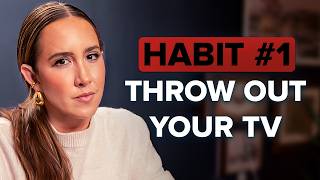
Codie Sanchez breaks down 12 habits that built wealth in her 30s: cut TV time, move every morning, negotiate constantly, audit your money weekly, spend time with richer people, and make one ask per day. A negotiation study found the average salary increase was $5,000.
Questions this video answers
Three hours per day (Nielsen).
About 45.6 days per year (speaker's calculation).
About 2,700 clinical trials (speaker cited a "massive analysis of over 2,700 clinical trials").
$5,000 more per year on average (study cited by speaker).
Over $600,000 in additional lifetime earnings (speaker's modeled figure).
Chapters
You don't rise to the level of your goals. You fall to the level of your systems. So today I'm giving you the 12 habits that made me rich so you can steal them. Every dollar I've made, every business investment deal was built on a foundation of boring, repeatable daily habits. And every single one I'm showing you is backed by real data, not opinion. Steal these habits, stack them daily. Let's get into it. Number one, throw out your tv. Your TV is stealing your dreams.
Hot take.
But the TV is costing you more than you think. Maybe even your millions. Let's break it down like this. If you're watching hours of Netflix a night, you're not just killing time, you're killing opportunity. According to Nielsen, the average American spends three hours per day watching TV. That's fucking insane. What is wrong with us? That's 45.6 days per year gone. Another long term study found that our kids are going to be dumber and poorer the more TV they watch. And this isn't about poverty or low test scores. And the effect held even after controlling for those. The data says more tv, lower educational achievement, higher risk of unemployment. TV habits don't just waste time. They quietly sabotage your future earning power. I'm not saying never relax, by the way. I'm saying stop outsourcing your imagination to a screen every hour. Watching somebody else's story is one. Not building your own story. Tv, passive. Well, active. Here's the rule. You can own a tv, but I think you're only allowed one in the house. That's. That's what I do. We call it the multitask reel. No watching TV unless you're multitasking. That can be doing a little ab workout. I do that. I'm trying to work on mine. Rolling out your legs, that's pretty miserable. I do that too. It could mean doing some work, but like, don't just like melt into the couch to escape reality. Here's how you can start. One, cancel autopay on at least two streaming apps. You probably have way more than you think. Two, track your screen time like you track your spending. Do you want to be known as the chief TikToker? Three, replace TV time with something that builds ROI. So like Read, walk, call and talk to a friend. Four, if you're scared to toss the TV, just do a 30 day, no TV challenge journal. What changes? Number two, how you start is how you finish. So simple, easy, less than 30 minute move. I want you to do a hard workout or at least a walk first Thing every morning or 60% of the time every time I think waking up at 5:45am solves 99.9% of problems. So every morning, before emails, before talking to anybody, before chaos, before somebody else takes over your morning, I hit a hard workout. Got it. It's pretty much my non negotiable. Why? Because moving my body before moving my business, that changed everything for me. Otherwise you get that like anxiety in your chest about everything coming in. And it's not just me. This massive analysis of over 2700 clinical trials found that regular exercise significantly improves your brain function, makes you smarter, even light or moderate activity boosts executive function, general cognition, AKA make smarter decisions, especially when they matter. You don't need to train like an athlete. I certainly don't. You just need to move. Basically your brain and your body, they work better when they're both going, which means they're making more money too. Wealth comes from clear decisions. So when I was making my first couple of business deals, I was anxious as you guys. I mean, my morning walks, I used, I call them stress walks now, but they're like my reset button. Some of my best ideas came right after those walks, right after those workouts. Not because I was smarter all of a sudden, but I was just clearer. So how to start? Four things that really will help you stick to this. 1. Lay out your clothes the night before. This is James Clear 101 from Atomic Habit. My friend Mel says I lay out my exercise clothes on the floor. It is a giant middle finger to myself. Do I want to work out? Hell no. But when I wake up, it's visible. 2. I'm only allowed to listen to my favorite podcasts or books while I'm working out that day. After I've worked out, I can go do some work.
3.
Walk, run, lift, whatever. It doesn't actually matter. Start with 20 minutes, then build. And then, as my friend Gabrielle Lyons says, do it every day. Yes, even on the weekends. Your body first investment. All right, number three. Negotiate one thing every day. One of the highest ROI habits I built. Negotiating for everything. The rent that I ever pay. I've never bought a house that I didn't negotiate. I've never bought a car that I didn't negotiate. I've never taken a job that I didn't negotiate. I've really never bought a big purchase without negotiating it. You should never, ever accept the first offer. And according to a study of newly hired employees across a bunch of industries, they found that those who negotiated their starting salary earned 5,000 more on average per year than those who didn't. And when you model that out, just a 5% annual raise over a 40 year career, that's over $600,000 in additional lifetime savings. Negotiation isn't just about money. It's about knowing your value and asking for it. I actually started doing this in the 2020 crisis. We had a bunch of our portfolio companies that were literally going under. I thought we were going to go bankrupt. I thought a bunch of them were going to go over. I was panicking. Founders were calling me every seven seconds. And then here's what we did. I said, pick your biggest expenses and I'm going to help you negotiate them down. So we went through every single one of the top 10 expenses in our companies. I'd call up the landlord and I'd start there and I'd say, we literally do not have the money to pay for this. We want to stay here. We don't have sufficient funds. We could pay you this instead. And I'd shut up. The crazy part is this worked. $6.80 credit, you won. So then I started doing it everywhere because I realized their margin is your expense. So how do you start? Practice really small. You guys do something really weird that my friend Noah Kagan taught me. Ask for discounts on coffees. Do it on Internet bills. Use this line. Such best you can do. Know your leverage, research before big conversations. Jobs, raises, et cetera. What's market rate? Then also back it up. Like, what are you actually doing? Are you worth that? Are you kind of a schlub? Know actually what your negotiating position is. Now I want you to reframe this entirely. Negotiation isn't conflict. If you don't ask, you don't get. And rich people, they usually ask.
Before we get into the next habit, let me give you a bonus.
One that made me and a lot.
Of founders I know a lot more successful. Start before you're ready. Most people waste months, sometimes years, getting.
Ready to start a business.
Perfecting the logo, tweaking the colors, obsessing over fonts. Meanwhile, the people who actually build wealth, they test, launch, learn real time. So here's the move. Stop overthinking. Get your idea.
Live fast.
And that's where today's sponsor, GoDaddy Arrow, comes in. Arrow is this new AI powered tool from GoDaddy that turns your business idea into a real brand instantly.
You type in what you want to.
Build and it spins up a domain name, a clean website, even your first marketing materials. In minutes, you bring the idea. Aero builds the business and then you can get back to doing the actual wealth building habits we talk about here, selling, testing, improving.
So if you've got an idea sitting.
In your notes app, this is your sign to turn it into something real. Head to GoDaddy.com CodeSanche to try arrow and get your idea off the ground today. Big thanks to GoDaddy for sponsoring this video and for making it faster to start than to scroll.
All right, Back to the habits 4 Hang around people who have bigger bank accounts than you. You know, one of the simplest habits that made me rich, I just was like around a lot of people richer than and I still do it today. Not because I'm chasing clout, but because I'm chasing clues. If you're always the wealthiest, the smartest, the most ambitious in the room, you're in the wrong fucking room. I have this incredible study here from Stockholm that followed children from the 1950s all the way into adulthood and found out the kids from low income families who had even one rich friend in school went on to earn more as adults than their peers who didn't. Their income was the same in their families. They just knew other rich people. That income bump was most significant. For those who were poor, just one privileged friend boosted their adult income ranking by 2 to 3 percentiles. What they believe is it's about access wealthier friends, help expand your worldview, raise your aspirations and connect you to people. Because rich people think differently. This doesn't have to become your best friend. But if you can spend more time with somebody richer than you, even just once a week, I think you're going to realize that they live slightly different than you and you cannot attract what you are repelling. So get those negative thoughts about rich people out of your head. So how do you start? We're going to audit your circle. Ask yourself, are your five closest people pushing you forward or are they holding you in place? I call these couch friends versus treadmill friends. Treadmill friends. When you're done with them, you're like, God, I feel good. I've been running couch friends. You're like, whoa, I am slumping. Which one of your friends would jump up and down, celebrating because you became a millionaire even if they were broke right now? Which one of your friends would want to take your spot instead? Which one of your friends gets more excited than you do when you win?
Girls?
I'm going to Harvard. If they don't, are they really your buddy? Now I want you to join rooms above your level. There are always business meetups Investor dinners, mastermind groups you can go to. Always look them up in your city. We have one at contrarian thinking. I like to ask this question to people wealthier than me too. What's the smartest money decision you've made recently? Then shut up and listen now. Don't fake it. Show up as a student, not a show off. My rule of thumb is if they have more money than me, I'm largely listening. I'm not talking that much. I'm trying to help them for sure, but not trying to show off to them. So you want to get rich? Spend time with people who already have the thing that you want. 5. I want you to audit your equity weekly. Track ownership, not just effort. Most people track their to do list. Rich people, they track their equity every single week. I don't just ask what did I do this week? I asked what did I build? What do I own more of? That's the difference between a worker and a wealth builder. So data shows that the top 1% hold 40 to 50% of their total wealth in private businesses. And for the top 0.1%, that number is bigger than 50%. Okay, so how do you track your wealth? I want you to think about it weekly because you stay focused on the things that matter. You make smarter decisions with your time. You stop mistaking activity for progress. Busyness is not being good in business. And this may be crazy, but I do a personal profit and loss statement, or what's called the P and L statement. It means I track how much I'm worth and what my liabilities are, what my expenses are. Am I growing? Am I stagnating? Am I losing money just like a business? Now I have a chief investment officer that does this for me. He makes hundreds of thousands of dollars just managing my money. And this is normal for rich people. They actually have somebody else watch their money like a kid. So how do you start? Create a simple Google sheet, Excel spreadsheet, columns, asset type, value, change notes, things you need to know about it. You track your equity you own weekly. And this could include stocks, business ownership, real estate, crypto, ip, rev share. It could include your income. Then set a recurring 15 minute calendar event. I like Sundays. I asked did I grow this week or am I losing? What if your calendar is actually keeping you broke? So we've audited equity, tracking what you own. The second audit that really decides your net worth. What are you doing every day? Because money is a reflection of equity, but equity is built with time. So how much are you on Instagram, How Much are you on TikTok? How much are you on YouTube? Not on my channel. You can be here. If you are sitting around. You need to track every single day and I hope that you follow along with us and you share this with a friend and you hold each other responsible for the time that you spend consuming as opposed to creating. Because rich people treat their time like capital. They spend it only where it compounds. They only do things that make them more money. They don't pour it into distractions. So after I started tracking my equity weekly, I thought, wait, what if I track my calendar the same way now? Every Sunday, I run a brutal time audit. How do you start open last week's calendar, assign codes. Green makes you money. Yellow, I don't know. Red makes me miserable or makes me lose money. Then I want you to kill or delegate. One red block this week. Protect your green time like it's sacred, because it is. Every day you should be doing something to make you money and then Repeat. Every Sunday, 15 minutes. Pay attention to your money like a mistress, because if you don't, she'll leave you.
Goodbye.
Okay, delete, delete, delete. I want you to swipe less, man. I want you to delete most of the apps and buy. Rack your brain. Study after study shows that people who significantly reduce their social media media exposure have sharper focus, better mood, they're happier and less stressed. One week, you guys, and you're a different person. Your attention is going to improve. You're less emotionally scattered. The catch, for me at least, tiny cuts don't really work. The real benefits only come when you make real reductions. Like, I'm talking 50% or more. Next one. Headphones on. World off. Though these are not mine because I do not fuck with wireless headphones. I got that little conspiracy theorist in me. I don't think it's good for your brain. This one is such a game changer. Even if it makes you look antisocial. Like, I wear headphones to block out distractions, even in public or at work. A large scale study of over 400 knowledge workers found that using a visible signal of focus, headphones reduced interruptions by nearly 46%. Not only that, workers reported feeling more productive, better able to concentrate, and more restricted expected during deep work sessions. Every interruption, you guys, costs more than a few seconds. It breaks your flow. And flow is where the best business ideas come from. So earphones help you guard the gates to that music. No, music actually doesn't matter. I like to avoid lyrics because they compete with your thoughts in your head. So stick with some rhythmic music and you're off to the races. Next, I want you to do one unpopular thing every day. Let me tell you why this matters and why doing one thing a day that makes you a little uncomfortable and and maybe is even a little unpopular is so incredibly important. The association for Psychological Science found that people who were encouraged to embrace discomfort took more creative risks, stayed more engaged, and persisted longer in uncertain and challenging tasks. So discomfort became a motivating signal. Participants reframed it as a cue for growth rather than a reason to back off. Why leaning into discomfort it builds grit. One of the most important things for entrepreneurs, the crowd. They'll keep you broke, tired and trapped in people pleasing loops. You don't build empires by waiting for applause. You build them by doing the right thing. Especially when you're going to be misunderstood about it. When I get an answer I don't like, I ask three questions. I say, why can't I have this? And if their answer isn't specific enough, I say, is it against the rules of physics? Like, does physics say one plus one cannot equal five? The answer is usually no. The second question is, is it illegal to do so? Like, will I go to jail for this? Will you go to jail for this? The answer is usually no. Then the third question, is this just something that we don't want to do or you don't want to do? This is not super popular, but it really narrows the field and it makes people realize how often they say they can't when they should be saying, here's what it would take to do that. So each morning, write one small thing you'll do that might ruffle some feathers. So daily discomfort equals long term dominance. Number 10, the not to do list. We've talked about building habits that create wealth. But here's the flip side. The part no one tells you. Success isn't just about what you do, it's about what you refuse to do. In the beginning, you got to say yes to everything. When you're not rich, you got to say yes a lot. As you get rich, you have to do a lot of things less so. I actually started writing one down years ago and it changed the game. There was a global study actually on CEO behavior. And they found that the most successful CEOs spend more of their time on strategic decisions and external relationships, far less on reactive internal busy work. So high performing leaders basically are delegating or eliminating low level tasks and only working on things that fall as the most important thing they should do next Literally every single successful person I know has a not to do list. And here's mine. And some people will hate this. This is a real list. Oh, the Internet's not gonna like this. I don't pick people up from the airport. I don't hire or hang out with people who cheat on their spouses. I don't gossip about people and I tell people that when they start to, I kindly want no part of it. I don't wear stilettos for more than 60 minutes ever. I don't like unsolicited phone calls, so I don't take them. I don't respond to texts that just say, hey, call me. I hate that. I don't do let me pick your brain coffee meetings. I don't take a meeting or a phone call without getting the agenda first. I do not say that's impossible or I can't do that. I don't help friends move. I'll have a drink with you afterwards. I don't go to toddler birthday parties unless I have a toddler and I do not, so I do not attend toddler birthday parties. I don't take my phone off silent mode ever. I don't fill up my own gas tank anymore. I now don't ever get my nails done unless I'm on a meeting at the same time, usually at my office. So like, do you see how ridiculous these are? But they're so particular to me. So how can you do the same thing? Grab a piece of paper, open a doc and label it the not to do list. Write five things that steal your time, energy, decision making. Discipline isn't just doing more, it's choosing the right less. Your not to do list might be the richest document you own. One ask a day. The other day I really liked this. I learned it from a neuroscientist that she puts a real calendar like this on her wall and at any given time she's only allowed to have one ask on it. One thing that she needs to do every single day and every day that she executes on it, she puts a big check mark. It might be reaching out to somebody that's kind of famous, that's interesting for you, and seeing if they have a book that you should read. The next day might be asking somebody out on a date. The next day might be selling your product to somebody. One ask a day. One brave DM a day. Cold outreach is free leverage. One DM could lead to a mentor, an investor, a deal, a job, a game changing new update in your life. You're celebrating the action, not the outcome. If 5% reply, that's a win. It's a volume game. So every big opportunity in my life came from a single moment that I decided to do something uncomfortable. Very, very few people do this. And if you do this in a kind and loving and really curious way, as opposed to a hungry, thirsty way, you will shock yourself as to how much money you could make. Okay, if you're in sales or if you have a business, I'm going to change your life in one second. I used to be in sales and investments. I've sold billions of dollars of investments at First Trust and Goldman and Vanguard. And I think I became the top salesperson at most of my companies for this one reason. Every single day at the end of the day, I would write down a list of every single person I needed to call the next day in order to get sales done. I used to average like 40 or 60 calls a day and I would start the morning by doing nothing except calling those people I knew. If I ended my day with the most important task, making sales, and I started my day with the most important task, making sales, it was more likely that I would raise more money. So how can you start? Pick one thing to sell daily, big or small. Could be a product consulting. Sell something today and again tomorrow and stack the days and watch what happens. And if you comment what your sales pitch would be, I'll comment on a bunch of your sales pitches in the YouTube comments and tell you what I think you could do better. Because the truth is you do not need a 10 year plan. You need one habit. Today you steal these habits, you repeat them. Watch what happens. Call me in a year and tell me thank you.
More from Codie







He wouldn't give you the dream if he didn't believe you had what it takes. You have what it takes.



What’s the one thing most job seekers overlook that could get you hired faster than you think?