The 4 Step Process I Used to Build My Wealth...
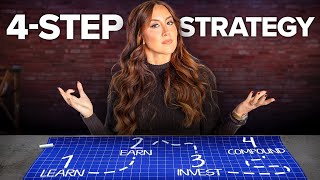
Codie Sanchez walks through learn, earn, invest, compound: skip the MBA, optimize early career learning, start with gateway businesses like laundromats ($100k buys $60-100k annual profit), build a savings cushion, then scale through ownership stakes and operator partnerships.
Chapters
I think my path might be the easiest path to millions that anybody's taken.
Everything our parents told us about getting rich was wrong. Their way is not going to work today. But I am going to tell you.
What will you learn? You earn, then you invest, then you compound.
Now in my 30s, I make millions a year and have a portfolio of companies that does tens and tens of millions. So you can see all my homework. But I would have never done it if I did it my parents way.
I was a public school kid, I.
Didn'T make a lot of money out of college. The only thing that's different is that you just stop taking no for an answer. I didn't have a brilliant idea to do early on. I didn' have a cool business model.
I thought that I should try.
You know, I was, I was devoid of any way that I could see to start my own business. In fact, I had so little creativity with it that I had to go and work for other people and then I had to buy other people's businesses. Right. Because I didn't have the idea of how to start it by myself. It took me a long time to do that. I actually think the fastest path for people that is generalizable because a lot of advice is actually just you telling people what you did because it worked for you. I think the best advice for people that are young is simply this idea of you learn, you earn, then you invest, then you compound and that's it. How can you learn as much as possible? How can you continue to increase your earnings? How can you start investing those earnings continuously and how can you continue to compound on that? And if you can learn that, if you can do that while not taking no for an answer, I think it's pretty hard to not succeed.
What would your parents tell you about learning?
I mean, my mom was a 30 year special education teacher and an academic.
Professor at a university.
There's one regret I have in my life that I was too scared I wouldn't get into a better school. So I applied to Arizona State. I stayed at Arizona State and I.
Even went for a big stretch school.
And so I wasted four years with.
Classes like the Beatles history. And at the time I thought that was cool.
I was like, I'm sliding by, I'm.
Taking easy classes, I'm having a good time. What a fucking waste of my youth. If I had listened to my parents, I would have stayed at my first job and probably my second job and probably my third job in finance. Every time I take a new risk.
They have a Mini panic attack.
Except by now they're kind of used to it.
Thankfully, at some point I decided, no, I'm going to actually, I'm going to go to the best school that I can get. So I went and got my MBA at Georgetown, and I going to learn on the job by taking a bunch of risk continuously. So the biggest thing that your parents.
Are going to do if they're like.
Mine, is try to protect you from failure. And they're going to try to tell you to play it small. It's okay. And there's two reasons why. Because it sucks to watch somebody that you love fail.
They don't want to see that for you.
They don't want you to shoot for something crazy and then get heartbroken when.
You don't get it.
And the second reason is a cold, dark truth, and that is that most of our parents never lived the lives.
That they wanted, still don't live the.
Lives that they want, and are never going to change. And so it's really hard to tell us that we should go do some big, huge, shiny, incredible thing when they still are in the 9 to 5 that they hate with not enough money in their bank account and a marriage that they don't love, with a body.
That'S starting to fail them. I got an MBA because I wanted to credentialize myself. I thought, hey, if I get an MBA, then people will take me seriously. In my opinion, MBAs today are pretty much useless. I think Elon Musk and I believe Joe Lonsdale, another friend of mine, founder of Palantir, they have all said pretty categorically we have to rub off the MBA from our candidates. We hire MBAs despite the fact that they have an MBA, not because of it.
And I think we've seen this increasingly.
In the largest institutions. Like, they are teaching you theories, not actualities. And, you know, I remember it happens frequently, actually. We'll have MBAs come to me who want to talk about buying a business, and they'll go, you know, they went to Harvard, they went to Yale. And they'll say to me, well, that's not how acquisition works. And I go, you done one? They're like, no, But I've learned about how search through acquisition works. It's like, until you've done one stop. You know, they give them this fake sense of confidence in doing a thing that they've never done before because of academic practices. And a lot of professors that profess instead of actually do. And so I don't actually think my MBA from Georgetown was very useful, except to put at the end of my name so that other people may think that I'm smarter than I am.
I think the stats these days show.
That increasingly we want to hire from.
Twitter and Product Hunt and not from Harvard and Yale. In fact, you know, nothing to do with like, you know, Bill Ackman's attack on, you know, Harvard and some of these institutions, I think these days were just, we're not as interested in people who haven't done the thing as opposed to people who have receipts, right? You have receipts. How do you know that you know you're good at business because you run one that does $2.5 million. So would I rather do something with.
You as opposed to somebody who went.
To Harvard and is going to tell me exactly how to run a business, having never done the thing? No, thanks. And so I think the best business school is business. And we're starting to realize that the.
Two things that we are told about college, right, is that it will prepare you for the real world. So this is your preparatory for in business, in life, whatever the next stage may be. And the second thing when they say that they can't quite prove that one anymore is it's the network, right? And that's especially true, I think, for MBAs. And I went to MBA at Georgetown, and I don't talk to anybody that I went to MBA at Georgetown with, because actually it's not that hard. School, when you're contextually young, seems hard. And then how many of us actually think school looks hard when we've run a business? When you can't pay payroll, when you're close to bankruptcy, when you did a.
Deal and it's going to.
When you can't bring in any revenue, when you got to tell your friends and family that you aren't making money? School actually seems quite easy by comparison. And so I think the network only actually comes by doing hard things, which is why all of my friends now are former business owners or current business owners, because we've been through difficulty together. And I actually don't think school teaches you that at all. So I got good grades at asu, but what does it actually matter?
What about the college experience? Was that worth it?
I mean, a lot of frat parties and tailgates, for me, it's fun. You know, Georgetown was fun too. It's beautiful campus. Both experiences are super fun. And if my kids want to go there, you know, I will certainly let them do so. But do I think that they might be better served by going out and actually starting a business themselves or going out and working at a few startups. Yeah, by and large, minus the fact that I do think that we should have an in a base level understanding of philosophy. Like how do you think you want to show up in the world? What are good ethics and values? What does it mean to have a successful life? What is the definition, definition of winning? What do you want to accomplish before you die that you might not learn to start up? And so I do think we have to teach children those classics, but I'm not so sure the college actually does that anymore.
And I really get annoyed that people think that courses in education done not at institutions are bad or low brow. And I understand why people think that, because there are a lot of people that talk about stuff in absolutes that they've never actually done. But I think the best education today is not to be had at any academic institution. The best education, if you want to learn philosophy, go learn it from Jordan Peterson. You know, if they want to learn sales, come learn it from you. And Alex Hormozi, like, why wouldn't you go to the best in the world to do it? As opposed to some professor that's never actually done the thing except theorize about doing the thing. So that's one, one thing that I think is really annoying and I want to change.
Like most young people, I think nobody has one career and set path. I think this idea of linear career progression is completely false. And if you've talked to anybody who's had any real success, all they've done consistently and linearly is fail continuously. And so I was the same way. I started out thinking that I wanted to be in politics. I worked under a senatorial campaign. Then I thought that I might want to be a lawyer. So I worked for the Rule 11 Competency Court, which is somewhere that you go to determine if you should become a ward of the state or not. And then I went into journalism and I covered human trafficking along the US Mexico border for a period of years. And then finally I think all of this, I was trying to circle this round. If you see what's kind of consistent throughout it, it's like rule of incompetency court freedom. Like, should you be in charge of your future or should you not? Politics comes down to freedom, human trafficking, certainly the ultimate freedom. And what I kind of realized is that I think the only real freedom stems from money. That I think the international language that allows freedom is green. And that most power comes from. Do you understand and do you have money and if you do, in this day and age, you can control a lot of things.
Money is really just power. And so if you can understand money, you can probably get more money. And the people at the top are there because of money. I mean, it's actually funny. Brad, the other day. So we're pretty involved in politics from a funding perspective. So we meet with a bunch of candidates and figure out who we want to fund, right? Because I think I've had two businesses go under because of bad regulatory changes back in the day. So I don't like when people overreach from a regulatory perspective. But I was at an event the other day, and it was tiny, maybe 30 people. And I asked the guy who was hosting it, you know, why this. This is a big politician here who's running for. Why would he do this event with 30 people? You and I do events with thousands. And he said, this room will raise more than a theater full of 10,000 people. And I thought, wow, that's the game. It's 30 people with money making decisions for hundreds of millions. And so if we don't understand money, somebody else is going to understand it for us.
A lot of the reason why we.
Talk about money is because I have this philosophy that I think all freedom.
Stems from financial freedom in this day.
And age, that unless you can pay for the rent over your head, for.
Your everyday meals and worry about basically.
Flight or fight, you can't think critically. You know, you can't help other people very well if you're just barely trying to survive. There's not much else you can do for others. And so I do think I've spent my career with money, and more of us should understand what it is, how to get it. And once we do that, we have.
A lot more freedom. And I think when you have freedom.
You make better decisions.
I think anybody listening to this podcast, your entire reason you're listening is because you don't want average. The average American dies overweight, alone, and broke.
That's just what the data says.
And so if that's true, we sure as fuck don't want to be the average, which means that we should strive for something extraordinary. And I think the bar is so low for above average these days that it's actually not that hard of a hurdle.
And so the thing with doing deals, why obsess on the education side is because you never lose money learning, right? It's not in the education you lose money. It's in the implementation, in the execution of it.
And so I've been Forgetting those little devils.
Oh, did I just get a bomb?
That's a good thing.
That's very good. That means, that means whatever you said people should pay attention to because that's, that's a real bomb right there.
I think you should stay at a.
Job for exactly this long amount of.
Time that you are still continuously learning with an upside to continue earning. And in the beginning of your career, you should optimize for learning. Who cares what you make in your first couple of jobs because you don't know anything and so you aren't going to be able to earn enough. You just have to optimize for learning. At some point you want to have the learning equal the earning. But the second that you stop learning on a job is the second I think you should first tell your boss about it and then second leave. And that's what I do with our employees too. It's like you, if you are stopping learning at any point, please tell me, come to me and let's figure out a plan for you to continue to learn.
Real change happens when you take ideas like this and you keep listening to them again and again and then you take action. The way that you probably could do that best is get on this newsletter, it's free, we talk about this every single week. And you can take these ideas and actually get in the compound stage as.
Opposed to the learn stage, which is.
Where you are today. I stopped learning at Goldman. I felt like I had learned what I needed to learn in this, this one individual segment and, and I needed to move on. And if I couldn't find a way to move on or move up, then I was going to move out. And, and that was, that was basically the idea. And I really wanted to do this job. So there are like a couple different types of jobs in finance, in investment banking and private equity, asset management. And I wanted to do the type that was in the field. Like I wanted to go do due diligence on the companies individually. I wanted to do partnerships with big institutions. Like I wanted to give the PowerPoint presentations. I didn't want to be the one creating them. And, and Goldman, you know, rightly so, was like, you're five, take it easy. Like, give it a few more years. And I was like, no. And so that's why I went to State street where I could go do that and play hand to hand combat.
Most people over optimize on one thing and that is how much money they can make in their first job, second job, third job, that's actually the wrong thing.
Entirely.
You should obsess on the idea of where can I learn the most humanly possible the fastest? And where are the smartest people that.
I can surround myself with?
Intelligence, money, weight loss, all of it is contagious. And so if you can get in a room where a bunch of other people are doing interesting things, are obsessed with holding the line at the highest level possible, you're going to get better and smarter and faster and richer by contagion. A wild thing actually happens, which is most people do the opposite. They think that they need to work the least to do the littlest and to enjoy their first job.
And here's the truth of it.
You're going to absolutely hate your first job. That's part of the learning is realizing all the things you don't like to.
Do and all the things you get.
Lost completely in doing, which are the things you should probably do more of over time. So go and optimize for learning as much as humanly possible in your first job and your second and third, until you become so good at something that your value becomes obvious. But until then, obsess with getting in rooms where other people will teach you things. Don't go and get sold a bunch of ridiculous university degrees that aren't going to actually teach you anything. This is not actually the point where you want to go and explore your passions. This is where you go and try to do two things, in my opinion. Either get into the best school humanly possible, like a top tier university, because the world still signals that those universities are worth something. It's like getting a little credentialized paper saying you're smart. If you can't do that, then you can try to go to school for free. If you can't go to school for free, in my opinion, go to a startup. You need to go to an epicenter where learning happens through the doing, not the talking. We want to show, not tell, we want to do, not talk. And most institutions where you go to learn at the university, they talk and they tell you academic theory about a bunch of nonsense that they've actually never even done because they're teachers and they're not doers. Doesn't really matter if you want to go to university or not.
Most people won't say that.
They'll say, university sucks these days. That's not it. It's just, are you relentless in the pursuit of becoming smarter today than you were yesterday? Every single day? Because if you do that, you compound 37 times in one year by just 1% better every single day.
That is your goal. Lots of people don't want to people to go to corporate America. You know, they're like, that's awful. Why would you work for the man? Corporate America is an incredible place to start because they can afford to train people like crazy. When I started at Vanguard, they said that the average employee at Vanguard, they spent a hundred thousand dollars in training on them. So instead of me paying for $100,000 MBA right out the gate, Vanguard paid for one for me. Now they didn't pay me much money, but they paid me in learning and that was incredibly valuable. And so I think I got to steal a lot of 10,000 hours from Vanguard and State street and Goldman Sachs. And that's why I get to do, you know, what I do now today. But it's all accumulated knowledge, certainly not inherent knowledge.
It took me 10 or 12 years to become an entrepreneur. You did it much younger than I did.
I went and worked at the biggest.
Companies and made lots of money before I ever went and did it by myself. I was too scared. And so I had to have millions in the bank because I thought that I might lose it all.
Wow.
I was a wuss. And that actually worked for me.
Do I wish I would have started a little bit earlier?
Maybe.
But I'm glad that I had 10 plus years of learning on somebody else's dime until I went and actually did the thing myself.
Built a safety net.
Right. And I don't think there's anything wrong with that. I don't think we should ever stay at minimum wage. I think you should uplevel your skill set. That's the point. I think working for somebody else to start is really intelligent. I think figuring out what you are actually worth to a company by understanding how much money you bring into the company is a sign of intelligence.
Yeah.
And, and I think where you start won't be where you end. So having some patience in the in between is important.
If you ever want to get a.
Job at a top tier company, which I don't know if kids even want that anymore.
But if you want a job at.
A top tier company and you want to get there fast, the secret is to find the recruiters who recruit for that company. And so I'm always looking for my who, not my how. And my who was finding who the recruiters were for Goldman. And so I went out and typically all financial firms have third party recruiters that recruit for them. So if you want to go work at a big investment bank, you find the recruiter that recruits Analysts at that level. And so I found one. I reached out to a ton of them and then I found one, this guy by the name of Taran who was incredible, who coached me because they make money when they place you right. The average placement fee in Finance is $100,000 for an analyst level role. What they pay you almost equal to the first year salary of an analyst? Well, they did back then. I don't know if they do anymore.
That's insanely high.
So just recruit people to just recruit.
An individual to pay that much.
It depends how long the person stays and what they're able to get the contract for.
So do these people get paid if you sign a year long contract and you leave like a year and a day into it?
I don't know.
Okay.
And the contracts are highly variable and I think, you know, back then they also had metrics. Woman, Latina, quota hire.
And that would pay differently on the recruitment.
Yeah, I don't even know if that's legal anymore. But so I found Taryn. He helped prep me for the interview. Because recruiters do get paid every time. And even if they don't get paid that amount, like right now we pay recruiters who find a C level executives anywhere from 60 to $80,000 per C level executive. And if we have more junior level hires, those hires typically make somewhere around three months of the salary of the hiring of the hire. And so that can be really lucrative for recruiters. So I found that guy and he helped me get in the door at Goldman. But it was 10, 12 interviews, you know, presentations and hours of prep to get there.
I think I remember in the beginning.
The first time I asked for a raise, you know, I was like, well I'd like to make this amount. And they were like okay, why? I was like, this is a good question. So like I like more money and.
I think I earned it, you know.
No, not the way. But now I don't think, I don't think it has to be that difficult. You just have to understand what a win win negotiation is. But people don't really teach you this. Like I'm watching these videos of people get fired on zoom and dying a.
Little bit on the inside because one.
Those are going to exist forever for those people. It's never a good look for you to that you're just, it's going to.
Be, you know, I don't know. I would have a hard time hiring.
Somebody that had filmed themselves getting fired.
Yeah.
And been trying to explain why they were performing. When the company sees that they're not performing.
Performing?
Yeah.
You know, that's just not the greatest look. Even if they come.
Oh God.
Yeah.
It's all over the Internet right now.
Wow. I gotta check those out.
Yeah, it's not the.
It's not the look.
Now do I think that the companies.
Are doing it an awful way? Yes. I don't think you should do mass recordings. I think you should actually level with people about why they're hired or not. I think it's crazy that you don't have really specific KPIs for if a person's winning or not. So all of that gets lost in big companies. But you cannot.
Nobody owes you anything ever.
And the second people realize that is probably the second they start to make more money.
I think you should step change in your career as often as you can. You sort of skill stack like Adam Scott talks about, right. You try to get as many disparate types of skills as you can because it's really hard to be Lance Armstrong or to be, you know, Tiger woods, but it's not that hard to be somebody who has an amalgamation of many talents. And so I'm. I don't regret that decision because I went and aggressively pursued another, another job, which was State street at the time. And I did the institutional group there.
If there's a common thread, it's basically. These days we hear a lot of.
Entrepreneurial stories that go like this. It was really hard. I didn't make any money. I almost left everything, lost everything. So then I slept on my couch and then something took off and then I worked really hard on that something and then I kept going. Right. I think that's a lot of entrepreneurial stories these days. But I think there's a huge segment of humans out there that are working in nine to fives and don't realize you can definitely make your first million in a 9 to 5. Actually, I think easier than you can an entrepreneur because there's already systems and processes in place now making your first 10 million plus hard to do if you don't become an entrepreneur. But your first million in a job, I think is actually much easier. And then you can have a cushion of which to propel yourself through the rest of your career. I think a big disservice we do to entrepreneurs today is we tell them, you know, go now, take a huge risk now. You don't know anything when you're first starting out. Go steal somebody else's homework and learn on their dime instead of your own. And then you can have a Cushion for when you want to eventually take the huge jump. And you might fall, but you'll be okay.
It's not necessary for you to have massive failure in order for you to have upward success.
And so I just stacked it.
You know, I was talking to one.
Of my team members earlier and we were talking about, you know, his first 100k. He's got his first 100k saved up, up, and he's proud of that. And I was like, okay, what are you gonna do with it now? And he's like, well, I'm thinking I.
Might go and put some into this.
Deal and I might do this. I'm like, no, stop it. I'm like, your first 100k. I'm like, you take that first 100k, that's your fuck you fund.
If you ever hate me as your.
Employer, you go, I have enough money where I'm out. Bye. Simultaneously, that first hundred K is your safety net. And your safety net, if you allow to invest and compound over 10 years, becomes big.
And you, you know, Warren Buffett said.
When Jeff Bezos asked him, you tell everybody all your secrets about how you invest. Why do you do that? And Warren Buffett said, well, because nobody else wants to get rich slowly, so nobody's going to copy me the most.
That one of the wealthiest people in.
The world that we think of as.
The best investor of our time says, I got rich slowly. And so I think that's really smart for this generation to think about is.
Slow and steady accumulation of wealth is.
Not something to be frowned upon, actually.
Because a weird thing happens like your.
First three, five, seven, eight years, it.
Feels slow and it feels boring.
And then at some point it starts to compound with your knowledge. And then you see some sort of fuck yes in front of you.
You're like, I have enough knowledge to.
Understand that is a good opportunity. Now I have money to execute on that opportunity because I didn't YOLO into dogecoin because I wanted to get rich fast, right?
And the language of money is really important for people to know. I mean, you, you guys teach this all day long. But if you don't understand how people talk about money, you're never gonna make it. You know, it's just like money is a cruel mistress. If you don't track her, she'll leave you for somebody that does. And it's the same thing with the language of money. If you can't speak to it, it's not gonna speak back to you. But if you spent like 10 minutes a day on investopedia you could probably play this game pret. People don't understand roi, like what is your return on income. They don't actually understand basis points, which is just another way of saying fees. Finance has a separate language because they want you to think that making money is harder than it is when you have money. And so you give it to them and they charge you a fee instead of the other way around. And so I think money is a little bit like medicine. It's gate kept right because there's a huge financial incentive for you to put your trust in them as opposed to yourself. And so I do think people need to learn the language of money in some, some way, shape or form.
Now you got a little change and you want to put it to work.
Which is good because there's only two.
Ways to make money.
That's for you to use their time.
To make money or for you to.
Use your money and your experience to make more money.
Most people optimize Only on the 1st.
Get better at earning, earning, earning.
But I tell the people who work for me, and now I'm going to tell you too, the biggest difference, which is I made some of my biggest dollar amounts early on in my career by taking the dollars that I made while I was working at a company.
And buying into ownership of another company.
So I started in stocks, really simple, you can buy them online. Then I added bonds, slightly more complex. Then I started doing what's called syndicates, individual deals where you invest in individual companies. Then I went to direct company ownership where I bought part of a company with other people who are running it.
And then finally I went to full.
Ownership where I owned parts of companies entirely.
That's the ladder that you scale.
Here's what your parents are going to tell you.
Go and get a 401k, a Roth IRA, invest all of it in the stock market. Just leave it there for 452 years until you finally retire with a pension. Oh, wait a second, those don't exist anymore. And at 65, you can, you know, run around on as many cruise ships as you want because you'll have a healthy little retirement. Plus Medicare and Medicaid. Oh wait, those also won't exist. And by the way, has anybody ever been on a cruise ship? Is that what you want in your future? This is not the way, the way is actually understanding ownership earlier. Our parents are incredible, but they were of a generation that was really risk focused. Their parents before them went through the Great Depression. They were worried about like, could we exist through life and Continue on forward with like saving cans. Our generation is not going to be able to benefit from what our parents generation had, which was incredibly low interest rates that allowed them to buy a bunch of assets, a huge period of economic boom and a society that was at a little bit more of stability than we have today. With everything happening in the world around us, we don't get the same benefits that they did. We have to take a little bit more risk to get a little bit more freedom. And I want you guys to obsess on one thing, or at least I.
Obsessed on one thing.
And that's what led to the difference.
Between me and my parents.
I took risk early. Ask my dad, that's what he'll tell you.
Two things.
Cody never liked the word no and never took it for an answer. And two, Cody always got more comfortable with risk than we did early. Get comfortable with understanding skin in the game eventually, if you're good enough and you don't bankrupt yourself, can lead to freedom.
For years I talk about gateway drug businesses. So like what are the businesses that are simple to understand, that don't take a ton of capital, that cash flow? And I like starting with those just like you would any gateway drug because they're easy, they're simple. And once you can understand that business, then you can stair step your way to higher levels of the game. And not all businesses are created equal, right? And not all business models are created equal. And we weren't taught that. You know, that's something I learned probably doing, you know, at Goldman and looking at all these businesses is you see like why does this business that does a million dollars a year and this business that does it a million dollars a year, why is this one worth 5 million and this one was worth $250,000? They both make 3 the same amount of money. And like those are the classes we were never taught, right? Things like valuations and multiples and you know, and what is, what is ebitda first Profit. And, and how about thinking about the value of different types of ebitda? And so I bought Laundromats because I.
Had a guy, I always start with.
Who as opposed to how. And I had a laundromat guy. And so he, you just have a laundromat guy.
He I think you should try to.
Be a collector of humans. And so when you see competence, when you see somebody who's good and loves the game, I just try to keep them in my circle. And so with this individual, I met him back in the day, his name was Mike. And he was running another laundromat, but it was smaller. And I was like, if you run one and it's kind of by this, couldn't you run two? And I'm running a business at the time, but if I fund it for you, couldn't you run it for me? Theoretically? He was like, yes, but why would I? And I was like, oh, it's this thing called equity, and I give you a portion of it. And so that's how I started that business. And then I grew to other laundromats. But I wouldn't recommend everybody go out and buy a laundromat. It's just where I started.
Ownership is the key to freedom. And if true ownership, true ownership. And it doesn't mean you have to.
Own the entire company.
It means you have equity in it. It means you have a revenue share or profit share. It means you know that your time, if you do more, you will make.
More once you have a few pennies to rub together. And then you can take those first pennies and make it on your own outside of your 9 to 5. I think that is probably the. The single biggest trigger point for freedom. It's like how people talk about, you make your first dollar on the Internet and that makes life a lot easier. And I think that was the same thing for me at that company. I made a couple and I started investing in the stock market in 2008. Well, we had an economist back in the day that had a great line. He would speak to a bunch of our investors and they'd say, what stock should I invest in right now in 2008? And he would say, yes. They'd be like, no, no. He's like, pick a stock, any stock. Because we were at rock bottom level prices, right? So I started investing pretty heavily in the stock market at that point, and that ended up being a really good bet at the bottom of the market.
I think there's two mindsets.
The entrepreneur mindset is Peter Thiel's 0.
To 1 and J on the one thing, which is do one thing really well, and scale that to your first.
Couple of millions or millions, and then.
Maybe you could think beyond it.
That's sort of entrepreneurial mindset. I come from finance, which has what I call satellite mindset, which basically means anytime somebody gets rich in finance and private equity, it's never from one company. It's from many companies combined into a portfolio. And so everybody always says, cody, you're crazy that you have all these companies. And like, it's not crazy.
It's just a different model.
Right. You know, you can have one really.
Set area of risk, or you can have a grouping of risk that's deviated and disaggregated. And I tend to not like all my eggs in one basket. And so that's why I went the private equity way.
But it's really standard. You know, if you want to run.
A portfolio of businesses, there's a set hierarchy and a model.
Just like if you want to run a company, right.
At a company, there's a CEO, there's a coo, there's a cfo, you know.
There'S a set team of leaders.
If you want to run a portfolio.
Business, there's the same thing. There's a CEO, there's a cio, a.
Chief Investment officer, there's usually a CRO.
A Chief Risk officer, there's usually a.
Coo, chief, I'm sorry, a cco, Chief Compliance Officer, and then your typical operations and finance.
Got it.
That makes sense.
Both models work.
I try to have operators that run businesses that I don't have any expertise in. I run three businesses right now, which is contrarian thinking. Contrarian thinking Capital and our holdco. So the one where we keep our small businesses. But back then you wouldn't want me running a laundromat. That would not have been good for anybody. And so Mike ran it, but I did the bookkeeping and I made sure that I understood how our banking was set up and our taxes filed and all that. And when we first did that business, we made something like 60, $67,000 in profit when we bought the business. And then I think we got it.
Up to 80, 90, $100,000.
And how much was the laundromat?
The laundromat that we bought was about 100k.
And then eventually you got up to.
$100,000 a year in profit. Yeah, about 80 or 90 with the guy.
Why is it only 100k? Yeah, because usually these laundromats are selling for like 2 to 5x what you would make in profit.
Well, a couple things to think about. A business is really only worth what.
Somebody will pay for it.
Right. And so a job of running a laundromat for 60,000, $67,000 a year is.
Actually not that, that it's not that.
Highly sought after of a job. Right. And so that's a very, it's, it's what's called a micro level deal. It's a very tiny deal. And so the reason why I could buy that laundromat Is nobody else wanted it. It had been listed for a long time. There was no additional market for it. And nobody wanted a job for $67,000 a year running this laundromat. And, you know, the books are a mess, or they don't even really have books. It's an unbankable deal, meaning you can't get debt for it. And so there's all these reasons why businesses never sell, but usually the reasons are they don't make enough money. Nobody wants the business. The books are really messy, and, you know, they're not big enough for an institution or a strategic to come in and buy it. So that's actually really, really normal. And if you were to look at the numbers, it's really funny because people go one or two ways on this deal. They go, no way.
That deal's so good.
Who would sell it for that? And then the other side, they go, that's a terrible deal.
Why would you do it?
And there's like, no in between. But I don't actually believe in good or bad deals. I think it's only whether it's a good or bad deal for you. And that one, I was like, I could lose 100k and I'd like it wouldn't bankrupt me. And so I'm going to learn on this deal. I'm going to learn with this guy. And I felt like that was an okay bet to take at that time.
And how'd you split it between you and the operator?
I think he got like 30 or 40%, and I got 60 or 70, but I paid him a salary. So he got whatever the salary was, and then he got whatever percentage of the profits it was, which is typically how I do deals.
First, what I started doing is just telling people on the Internet about this opportunity of business buying.
And then I didn't realize how much.
Inherent knowledge you have to have to even feel comfortable thinking about what business to buy, even if you understand P&Ls and financials, which you do because you run a business. So the most important part of it is actually we teach 10 steps, but the second step is called deal clarity, and it's figuring out what's a good business for you individually. So we have a couple worksheets we teach, which are basically, not everybody should buy a laundromat. In fact, you probably, most, certainly, definitely should not buy that laundromat.
How come?
Because your unfair advantage is not laundromats. And you have such a big platform and inherent business knowledge, you should probably buy a business that's going to increase the value of something else that you already own. You don't know anything about laundromats. You know, I doubt you have a great operator of a laundromat who's going.
To run it for you already.
And your ROI on a laundromat. I mean, we had one laundromat that did $3 million a year through wash and fold and delivery. No, no, gross Laundromats are really hard to get to. Millions of dollars in revenue. So the average laundromat, you know, it's going to make something like 100 to $500,000 a year net.
Yeah.
But, you know, for passive, and I know you don't believe in passive, but. But for. Here's some money. I like cash flow.
Well, it's a great business if you have an operator. So if Bradley doesn't have to run it because you are running things that make a lot more than $100,000 a year, then that's a great business.
Yeah, my whole family's blue collar. I call one up and be like, hey, buddy.
Well, that would. If you could do that and you don't have to spend mental time on it, then that's an interesting deal. And that's how I did my first one. I had a guy who ran one for me and then he ended up running a lot for me. And so that's an interesting bit.
Business.
But I like laundromats as the gateway drug. Like how you make. We were talking about this before, really the whole different game. If you want to make a million versus 10 versus 100 versus a billion, you're probably never going to get your billion with laundromats.
Right.
You might get your billion with other software companies.
I think the Laundromat was the first deal where I realized, oh, I can buy a business and I cannot drive that business. You know, the, the consulting businesses and some of the vendors. It was basically a sweat equity deal.
Right.
It was, I'm going to buy a portion of this, but I will do this thing for you. And the laundromat was the first one where I was like, I'm not going to do anything. I'm just going to invest in this and then you're going to run this business. And so that one, even though it's not the biggest deal I've ever done, it was the most impactful because I saw what could happen if you hire great people to work for you. And I think that's the real unlock for wealth that nobody wants to talk about it's can you attract other people to your dream? Is your dream big enough where other people want to stand under the umbrella of it? And that was the first company that I sol a dream to somebody. How do you find businesses?
Businesses like, I got 100 grand. Yeah, I'll buy one.
Yeah, show me.
Show me which one.
Well, it depends. I mean, that's, that's step four of the 10 steps, which is called origination, a fancy word in private equity for finding a business to buy. And there's lots of different ways to do it. I think we have 12 that we teach. But I like, I like buying people that I know. So, like, if I was you, I'd be looking for who? Well, we were kind of talking this before.
I might be.
If your area of expertise is trainers and courses in education, I might be looking at who do I know that I already work with, that I want to own a part of their business, or I want to buy the whole thing and I want to commercialize it a better way. I mean, it's not really that different from Bob Iger at Disney, right? Bob Iger goes, I know how to make money with great content, which is just IP intellectual property, right? So because of that, I know if.
I can make it with Mickey Mouse.
I could also make it with Lucasfilms, AKA Star Wars. So I'm gonna buy the IP of Star wars, and I'm gonna buy it for, I don't know, $4 billion. Because I know if I do four videos, if I do four movies with that, I can make $12 billion.
And yours wouldn't be that different.
You go, huh?
This guy is over here.
He's selling his course for this. He's doing this. The content and the IP is actually really good, but he doesn't know how to distribute, market, and monetize this like I do. I'm going to actually buy him out of that, and I'm going to do it, or I'm going to buy just his IP and I'm going to put him under terms and contracts.
And you could do the same thing.
For the building that you're in. You could, you know, buy this. Buy this building, theoretically, because then you decrease your rent costs if you don't own this. So I kind of look at everything. I spend money on everybody that I work with, and I think, which of these do I want to buy? That's where I start.
The best business to buy is your unfair advantage business. Which is a super annoying answer, except it's true. Anybody who tells you, like, so I don't like people on the Internet. They go, it should be drop shipping, it should be Amazon, FBA, it should be laundromats. No, it shouldn't. There's like 10 steps to buying a.
Business that I talk about.
And the most important step is step two, which is what's called your deal box, how you decide what you should invest in individually. And so Everybody wants the 30 second answer, which is you should buy gyms, because that's what Hormozy does. That's actually not right, in my opinion. The right thing is you have to go down this checklist of like the Oracle of Delphi said, knowing yourself.
And so once you know there's like.
Basically five key segments, any business, right? Every business has marketing, they have operations, they have product, they typically have like sales of some component of it, and they have finance, right? And every single one of us typically has one or two skill sets of those five things. So you guys may be great at sales and marketing, maybe you're not so good at operations and finance. And so what I really like to do is have people think about what type of business is best for you. A business that needs more sales, a business that needs. Needs better operations, a business that needs better product, and to focus on the type of business that needs that. So that's my long winded answer to that.
What I want people to do is to figure out how to buy these small businesses that are closing all across our country. That is my ask for humans is if you work in a business and the owner looks like they're a little.
Bit older and ready to retire, start.
Thinking about how to take it over. So my biggest fear is that we become Japan, where small businesses are closing everywhere because nobody wants to take them over or profitable. Profitable.
Why wouldn't anyone want to take them over?
I want to be on TikTok, not run a business, you know, and. And I think people don't know how people are scared about ownership because we've taught people just how to be employees for years. We haven't taught people how to be owners.
So a wild thing's gonna happen. If you do everything that we talked about in this video, at some point, point you're gonna be rich, you're gonna be physically free, you're gonna be able to do kind of whatever you want to do. And at this point, a bunch of people become sad, miserable because they realize that that space inside of them was never actually going to be filled by making enough money. And at that point, you got two choices. Become a Rich, miserable fuck. We've all met a few of those. Or become a person that builds something bigger than yourself. This part is where all the, the fun is. This is where you get to exert your will on the world. At 15, I threw my first protest. I thought, I'm changing things.
No, I wasn't.
Forget protesting out on the street with signs, get in the boardroom and be.
Able to buy the company.
That's where change happens. So this stage for any of you young guns out there who think, man, the world isn't the way that I want it right now, I wish this existed and said, this is where you exert your will upon the world, world, and you get to leave a legacy for your kids and just maybe make the world a little bit better than.
It was for you.
You know, we all got told when we were younger that, like, climate change is awful, so maybe don't have kids. Capitalism's terrible because look at how many.
Poor people there are.
Oh, by the way, males versus females.
Let'S all fight with each other immediately.
What if we change that? What if instead of, you know, listening.
To how society has been built today.
And bitching about it, this is the stage where you get to make some real change. That's what compounding is called. It means you get to use all.
Your learnings, all your earnings, all your.
Investments, and that translates into the money or currency in which the world changes. This is where all the beautiful things happen.
So this is why I started, contrarian thinking, basically, this idea that I was obsessing on. How do we get people to think critically?
So I saw not a lot of.
That was happening in 2020. And, and what I realized is people. It's Maslow's hierarchy of needs, but slightly changed. The hierarchy goes first as the base level. You have to have physical freedom, right? Like, you have to be able to, I don't know, live in the house that you want to live, have your body be, you know, safe, healthy, et cetera. Second level after that, you can have financial freedom. Financial freedom, meaning I can spend what I want, where I want, want with whom I want. And the final level being philosophical freedom. Like, only after you have your physical freedom, your financial freedom, can you get to philosophical freedom. Because when you're just trying to pay your rent and you're trying to get out of debt, you are in a fight or flight stance. You cannot stand for, you know, morals and high grounds, or at least it's much harder to. And so I think if we could get more people to a status in which they're not fight or flighting. They can stop, they can breathe, and they can think critically. We probably have a much different country. And so our idea with contrarian thinking is, all right, let's see if we can get more people to be financially free. And then I think I can get them to think critically. And that was our bet. Our Trojan horse is money. And out of the Trojan horse spills, hopefully, critical thinking because of skin in the game that you have when you own something.
Can we think for ourselves? And can you actually have the space to think critically and also say opinions that might not be very popular, which I think is crucial to a free market and free humans? And once you can become financially and physically free, then I think you can become philosophically free, which means that you can have deep thoughts on why X or Y or Z is happening. And you can say the thing. You can say the quiet thing out loud. And I think we were missing that in 2020, and we're still missing it today. So maybe if we get more people in a period that's not fight or flight, we can get them to think critically instead. That's our bet.
I can't remember who said it, but there's a line I love, which is, in order to be successful, you have to have someone who loves you greatly, and you have to have Great enemy. And I always liked this idea. The great enemy is somebody to overcome.
It's David versus Goliath.
It's this big, huge goal in front of you, and someone who loves you unconditionally is, you know, the mother figure, the partner figure, et cetera. And so a lot of where I get my grounding is those closest to me. You know, I have an incredible husband, and I think partnership is probably the foundation for success for me. It's a lot easier to strive far when you have somebody that you can really rely on and you're a team together. So I treasure that. And then the other side of the coin is, you know, you build up an armor of nose. I think being online, you guys have gone through it, you get a little bit desensitized to the amount of negative commentary that comes to you because you get so much of it. And so I think it's a constant game. But I did. I was reading somewhere that human brains are wired to ignore positive feedback and compliments and to focus on detractions or not compliments. And it makes sense. So basically, what is fame, then? That means that fame is essentially a few periodic moments of bliss in the form of a Lot of compliments, A lot of attention largely predominated by negative commentary.
My favorite billionaires told me something that has stuck with me, which was basically, when you have billions, everything looks like a nine figure problem, not a six figure or a five figure problem. So what that basically means, in not so many words is he said, like, we don't pay attention to the small things. You know, we're looking for huge. What's called a three standard deviation event, right?
So you have like the. The bell curve that we've all seen, right? And in the middle is the average.
And then you have standard deviations which.
Are movements away from the mean or the average.
And when you're a billionaire, you don't.
Want anything to do with the average.
You want to do with extreme outlier.
What'S called the tails. And so for them, it's really uninteresting to hear small ideas, which I think is one of the most fascinating thing.
About hanging with a billionaire is you.
Need to think really big. Because the only thing that will make.
A big impact to a billionaire's life.
Is probably world changing in a lot of different ways.
And so every time I've hung out.
With one of them, that idea of don't think so too small, don't think so small is pervasive. And so if you get to hang.
Out with people who have a lot.
More zeros, I think it's contagious.
Yeah.
Well, one of the hacks to being a better leader, I think, is hiring people who are better than you categorically at some of the things you need to do. For instance, Tanner, poor guy, whenever he travels to me, I always point him out. If I had to operate that camera that he's operating and shoot these shots that he's shooting, we wouldn't get this podcast. This would be a nightmare. And so I purposefully hire people in different positions for things that I'm not good at. And I try to hire the best I humanly can because they're just better than me at it. If you had to, you know, my, my CMO who does funnels and conversions and websites, I don't know anything about that. So I think, you know, first I like to tackle off boarding the things that I'm already not an expert at and let somebody be awesome and best in class at that. And then you go closer and closer and closer to your zone of genius. The hardest things to offload is your zone of genius.
What is. Well, what is yours?
My zone of genius is usually strategy.
For the business overall, at the top top.
It's really hard to hire great strategists. And the second thing that I, yeah, strategy is really hard, but strategy is also really fun for me, so I can stay involved in the high level strategy. And the second best thing is like partnerships.
We have an idea overall that we think a competent optimist is worth about six figures more than a really brilliant pessimist. And so when I'm looking at a players one, I want optimists because optimists make money and pessimists make the news. And so we obsess on this idea of optimism.
And one of you know, Tanner's quotes for this year that was really good.
Is it's our, our mantra for 2023 is like, we're optimistically discontent. So we're consistently slightly upset with where we're at, but optimistic about where we can go. And that's what I want. In the people that we hire, we have a list of characteristics for that we hire. And a couple of them are things like this. The best predictor of future behavior is past behavior. So we want a history of winning. I call this a wall of medals. So you don't actually want to bet on somebody who has bumble fucked their way through life today, let them get a few wins under their belt and then hire them. Because there's something called continual velocity, right? So the likelihood of you continuing to move quickly, if you've moved quickly historically, is higher. Hire. And that's the same thing with humans. We also want shepherds, not sheep. And so the best hires are people where you go, amazing, Graham, we want to hire you. Who else would you bring? And if they go, oh, I don't, I don't know, that means they're not a leader. Okay. And so you want to find people who are already going to bring your next couple of people super, super important. And then, you know, the last thing that I think is, is really important is obsessed people will always beat interested people people. And so we hire people who are obsessed with something. Doesn't have to be what we're talking about, but I always talk to them about, like, what is the thing that you can't stop doing even if you tried? Like, where do you lose all sense of time? When was the last time you stayed up almost all night working on something because you chose to, not because you had to? And I want to find the people who had that.
We asked two questions when we interview that I think are really critical that I got from a consultant of mine. Now the questions are, is this person born for this job. And would I be scared if they went to a competitor? And when I'm hiring for the top level people, I want somebody where I would be scared if they went to a competitor. And I want somebody where it's so obvious they should have this job it's almost comical.
Or you just keep looking or I keep looking.
Curiosity has always been an underpinning. I would take a curious optimist over a brilliant pessimist any day of the week. And it's one of our core principles for hiring at our firm. But you guys have a podcast because it is actually a beautiful thing when you get a chance to ask humans who have some sort of specialty how they got there, why they got there, what they learned. And so I learned from an, an early age.
We used to have these four chairs.
In my parents living room. And we have them to this day. When I have kids, I have this theory of four chairs, which is basically our family would get together and instead of watching TV after dinner, we would sit down and we would talk about what happened today. And we would kind of debate a lot of politics in my family. We would debate a lot of, of principles, philosophy. And so from a young age I got pretty comfortable with, well, why do you believe that idea? What is the underlying first principles, thinking in that idea? Well, if you believe this, Jack, like, what would be the second and third order effects of thinking that way? And a funny thing happens when you ask questions continuously. I think it becomes an addiction. And that addiction actually can lead to a lot of intellectual progress because all you're doing is trying to figure out root truth. Root truth, root truth. And so I, I really owe it a lot to those four chairs.
I think best predictor of future behavior is past behavior. You don't want to find a young gun that's never done anything before. And you train them up and give them all the intel or her all the intel, and then, you know, they eventually do this. You want the person who's already built it for somebody else. Just like the same way. I don't, I don't start businesses, I buy them. I don't train people from the ground up. I hire them from somebody who's already done it.
Curiosity paired with grit paired with iteration over long periods of time equals success. I mean, I met this guy, Joffrey Kent, who's maybe become another mentor of mine because he's like a Renaissance man. You know, he's in his 80s. He created Abercrombie and Kent.
You still keep in touch with him.
I do. That's funny.
Yeah.
She mentioned she sat next to him on a plane.
Yeah, I met him on airplane. Yeah, we're gonna go to Monaco this summer and see him. But he mentioned that the only reason he thinks he's been successful over time is that he ran Abercrombie in Kent for 61 years. And so he just said, you know, plus compounding, plus consistency equals success. And now we all have survivorship bias. So maybe that wasn't exactly it for him, but it stuck with me in. In most ways.
I don't really get too scared about the industry incumbents. I get scared about the younger, smarter, more tech savvy Cody. That'll be the one that, you know, beats me to my billion dollar idea.
Yeah, I agree. I think leave it all on the table. There's this incredible quote by this woman by the name of Emma Bomb, and she says, when I stand before God at the end of my days, I want to be able to say to him, I wrung it all out, and I left no drop behind. And I always loved that. You know, I loved that idea. Hemingway also talked about showing up at the pearly gates, you know, beaten, bloody, and screaming. That was a hell of a ride. And so I think some mixture between that, too, like squeezing out every inch of capacity we have, paired with. With getting a little beaten up and bloody. Like, I don't want to come there in perfect form. I want to come there having experienced the full spectrum of life.
More from Codie







He wouldn't give you the dream if he didn't believe you had what it takes. You have what it takes.



What’s the one thing most job seekers overlook that could get you hired faster than you think?