The Overlooked Opportunity of Mini-Mailboxes...
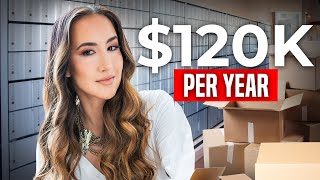
YouTube interview (Codie Sanchez with Lisa) profiling Lisa’s independent pack-and-ship / mini-mailbox business. Lisa explains how she opened two stores with about $62,000 total (including buying mailbox banks, counters, materials and $10,000 paid to learn the business), learned operations by paying $10k to intern at an existing store, and kept buildout costs low via DIY counters, sticky floor tiles and buying used mailboxes. Key operational details: brand-new mailbox banks cost about $6,800 each new (she sourced used ones on Craigslist and replaced locks/doors), replacement locks cost about $6.50 each, stores are ~1,200–1,400 sq ft, mailbox pricing tiers are $20/$30/$35 (small/medium/large) with a three-month minimum and prepay discounts (6 months → 1 month free; 12 months → 2 months free). She uses PostalMate for POS/shipping management, negotiated landlord TI contribution by signing a longer lease (five years), hired an operator (Sarah) via a partner/tiered equity model and formal operating agreement, and grew customers via grassroots community tactics (cake bites, flyers, flags) before adding Google Ads. The content frames mini-mailboxes as a low-capital, recurring-revenue, low-overhead, community-focused “mini real-estate” play.
Questions this video answers
About $62,000 for two stores total; $10,000 of that paid to learn the business (internship/consulting).
About $6,800 (brand-new banks).
About $6.50 per lock.
One store is ~1,400 sq ft; the other is ~1,200 sq ft.
Small $20/month, Medium $30/month, Large $35/month; three-month minimum. Prepay discounts: 6 months → 1 month free; 12 months → 2 months free.
Chapters
Huh.
She started a business with $22,000 and turned it into a business that'll do hundreds of thousands of dollars a year. It's called mini mailboxes. How about investing $22,000 and making somewhere between 120,000 to $260,000 a year on a mini mailbox store? So essentially what this is is it's like, you know, ups, where you go to ship your boxes and all of that jazz. Except this one's independently owned. It's owned by my friend Lisa, and she's going to break down for us exactly what she did to start one of these, to buy one of these, to scale them up and cash flow on a business that somebody else runs for her. So let's go check it out. I wanted to cover this story because my friend Lisa basically told me that she was starting a pack and ship center, which is what we're in right now. She was doing it with like 22,500 bucks. And the way that she broke down the startup costs, I thought were fascinating. So this business isn't one that you had to have millions of dollars to start or hundreds of thousands of dollars to start. You could start delivering in your community. You could provide a service, and you could do it with tens of thousands of dollars. So break down, like, what are your.
Startup costs for this type of business? That's right. So when you're thinking about a business model, right? I mean, restaurants, for example, hundreds of thousands of dollars of ti is going to be required even if you go into a second generation space. Our startup costs were really, really low. I spent $62,000 on two stores to get everything open and running, and that included buying banks of mailboxes, included all of the material and labor to build out these counters. And they called them custom counters because they were just built to our specs. They're not Gucci or anything. And you needed some paint. We redid the flooring in this store. The other store, we did not redo the flooring. And $10,000 of that startup number went to me paying somebody so that I could learn this business.
The biggest way that you can screw this up is by not knowing what you're doing right. It's like spending too much money in bad areas. It's, you know, not having the right location, it's not having the, the right software. All of these little things can add up to a business failing pretty quickly. And you were like, I want to decrease my risk on how this business could actually fail. How could I do it? And you Came up with a plan that I thought was brilliant. The first time I ever met Lisa, she told me plan. And I was like, you're a genius.
So I loved the idea of the business model. These mailboxes being mini storage units, being this steady form of recurring revenue that was low maintenance and low overhead. But I don't know anything about running a shipping store. I've never worked in a UPS retail store or anything like that. So I went up the street to my local independent pack and ship mailbox rental store up the street from my house where I'd been a patron for years. And. And I went to their owner there and I said, hey, I've got a business proposition for you. I'm gonna open up one of these down at 215 in Flamingo. So it's far enough away that it's not competition for you, location wise, that I don't know anything about running one of these stores. I will pay you $10,000 if you let me follow you around for two weeks. And I'll capture all of your processes and make you a nice little handbook and put it all together. And he was just like, are you serious? And I was like, yes. And he agreed. And so the next day, I showed up at his store at 8:45 in the morning. They opened the doors at 9. He unlocked the front door, and then he unlocked a folding gate. So I said, oh. I started writing notes. I'm like, I need a folding gate. I copied everything that he had in the store down to the software on his computer. So what type of postal software do they use? What type of operating system do they have? What type of formatting do they use for their mailbox agreement? I copied everything and then turned that into SOPs and procedures. And then obviously, we've modified as we opened our stores and got going. But that was one of the best things I could have done because it was an investment in that business model for me. So I could. I interned there literally for two weeks. I was like a new hire. I was working the counter, working the register. If I didn't like it or if I didn't think it was gonna be a viable business model for me, that $10,000 would have been my investment into that endeavor. And I could have walked after those two weeks of being in the store and working there and say, you know what? This isn't what I thought it was gonna be. Not gonna be for me. And I would have walked. I would've been totally happy with that. So that was my way to learn about the business in what I thought was a very mitigated fashion. And it's turned into a business that this day.
I love it. So my favorite story is obviously like, I'm dressed like this. Lisa's in 37 inch stilettos always. It's like, I can't even wear those things to a party. But when she showed me what she started to do to build out this business, she was literally. She had like power tools and wood things and she was like putting this all together. And I was like, I don't buy it. But one thing that I thought was really smart is like, for some of the startup costs, you're like, these are custom counters, you know? Right. But you had friend of your basically build the counter, so, like saved yourself. I don't know, how much were they going to charge you for that?
The contractor was going to charge me $8,000 for what he called custom counters. And that just means we took the length of the wall and measured it. And I said, I want two counters that are going to split that distance with enough room in the middle for us to get packages through. And I was at home complaining about it. And my boyfriend at the time that I was with, he looked at it and he was like, I could build those. And I was like, okay, thanks for your support. I was like, no, seriously, it's a big problem. I'm pissed, you know? And lo and behold, he did. He went to Lowe's and bought $500 worth of lumber and built it. And literally these are the same counters that we have in the store. And it's the same blueprints that we used for the next store. It's the same blueprints we used for the subsequent stores. You don't need a fancy contractor for this stuff. These are not attached to the wall. So it's like furniture.
When you think about putting together some of these sort of boring businesses that have like a limited upside, you know, this probably cannot be a $5 million location unless you're selling some other than mailbox services. And so I think, you know, one of the keys is keeping it tight on your costs. I think that's one hack is definitely, you know, if you think about your biggest costs, try to think about if this were easy and cheaper, how could I do it for the actual mailboxes? You did something else because you told me the class mailboxes and then you told me how you got them cheaper. What was that?
So you can buy brand new mailboxes direct from the manufacturer and they cost about $6800 brand we were able to find on Craigslist used boxes. It's the exact same manufacturer. Few of them were missing the second set of keys. There were a few broken doors. That's all easily replaceable. You can actually order replacement doors and replacement locks from Amazon of all places. And it costs me $6.50 per lock to order new locks.
You basically saved yourself tens of thousands of dollars. And you've done that a few times. Kind of looking for these just in like, I call it our immigrant hustle, you know, it's just like things our parents would never pay full price for. We don't either. What other hacks did you see to do it a little bit more like, you know, cost effectively so you could sort of, you know, give, give a better service at a cheaper price and also open a few of these at the same time. Anything else?
Just keeping our costs low to your point. So even if you look at like the materials that we use for these, so it's literally two by four. Right. And then this like tile part that's on. These are sticky. Like sticky tiles.
Yeah.
So instead of looking for a one piece countertop. Right. That was thousands of dollars we literally bought. We did the whole store with four boxes of these, like sticky sticker tiles. And they serve its purpose and it's been durable. And these are the same ones we've had on for four years.
Love that. Story time. All right, guys, this is kind of special because I just sold a website for 8k that I bought for about a hundred bucks. It was called Grow Getters, a newsletter that talked about marketing growth. I did it just for fun with two friends. And it made me realize that I wanted to tell more people that you could start with small deals, you could start with large deals, but you can definitely start with online deals. So I partnered with this company, Flippa.
Thanks, guys.
About where to buy online businesses. It's my favorite site to buy any sort of online business, period, full stop. That's why I'm trying to invest in them. So maybe you guys can check this out so that I could get part of this series. That'd be awesome. Thanks, Blake CEO. Because after all, we know that 94% of startups fail. That's why I like to buy them instead of build them. And this is true on Flippa too. For online businesses, you can get loans or use seller financing. Although you got to put down some cash. You can have profits on day one of owning the business. You can use the cash flow of the business to Fund your next brilliant idea. But instead of paying for an idea, you buy it first. So here's the link. Go check them out. There's 500,000 businesses that have been listed on Flippa. They've done billions of dollars in transactions. Cody, you for forgetting that Flippa is also the best place to sell an online business. They even have a matching algorithm to get your business in front of the people most likely to buy. So anyone out there looking to sell or even just find out what their business is worth, check out Flippa's free valuation tool here. Anyway, back to you on stage, Cody. So the cool thing about this space is that the postal industry is growing by like 5 to 8% per year. Because Amazon and our online shopping addiction at the same time. If it's in a recessionary environment like it is right now, or an inflationary environment like it is right now, you can raise your prices to match inflation, which helps keep your business in order. While the rest of the world might not have that kind of price and elasticity. The other reason I think mailboxes are really interesting is like the size of the store. How big is this store?
This is 1400 square feet. So I love looking at how much money can I earn out of a smaller square footage. The larger office space you had, you could technically I guess put more people in there, but they were still like a price per square foot cost that's associated with that. Right. How much output can you get price per square foot? I mean this is 1400 square feet. Our store up north is 1200 square feet. If you're in that sweet spot of under 2,000 square feet, your rent is still very reasonable. Your electricity cost, all those things that come along with being a business owner, your cost, monthly fixed costs are going to be relatively low.
So what are the tricks for, for like the lease and this location? I mean, you're an expert on real estate. You own a real estate company, which we'll hit on later. How do you make sure that is a good property before you sign a lease? To do a build out cost that's pretty inexpensive. I imagine your highest cost is this.
So one of the things I like to look for, and we did that with this location, is minimal tenant improvements that are going to be required. There's not a lot that goes into the actual store layout itself anyway. So we don't want a lot of obstacles in here. And had this store been full of different walls and different rooms and offices and stuff, that would have raised our cost. In addition, we also Asked the landlord to contribute to our ti cost. So that way we decide to sign a longer lease. Instead of sign a three year with no contribution, we signed a five year with a tenant improvement contribution from the landlord.
What else do you want in a location? Like how close should the closest one B? How many cars do you, you have like a car count that you need to have go back. Do you want like what kind of demographics do you want? How does that shake down?
So there's a lot of different aspects depending on the location. We're in like quasi suburb. So with this location in particular, this street that we're on is a very, very busy street. But we're surrounded by residential. So while this location in particular is not anchored by a grocery store, for example, there's still a ton of drive by traffic and we are literally surrounded 360 degree by residential. And when we moved in, the apartments that are just across the street by the gas station over here were in the process of being constructed. So we knew that there was going to be a large influx of renters that were living there who wanted access to a mailbox, who wanted access to be able to pick up their packages if the office isn't open, that kind of thing. So we knew it'd be good.
When you're putting this all together and you're talking to realtors, like how do you know what questions to ask your realtor? Because like for a person who's maybe never gotten a lease before, I imagine it's actually really important that they find the right, you, the right realtor that could actually run this search for them or do most. Or do you recommend that they do it by themselves?
Work with a professional commercial real estate agent. If you are in business and you're looking for a location for your business, you need to be working with a commercial realtor, not a residential realtor who can also sell you a home to live in. Two totally different animals, even though they're both real estate number two. The other thing to remember when you're working with a commercial real estate advisor, it doesn't cost you anything as the business owner, as the tenant, they get paid by the landlord, they get paid by the building owner. So it doesn't cost you anything. And yet they have a fiduciary duty to look out for your best interest and protect you.
Like you got a lot of stuff back here. What stuff does a business person need to buy when they first start this out? And also we have a whole blog post on this if you want to see it because she's going to pop these up all over the place. I keep telling her that I want to invest in one with her, but, you know, she's a little minx and she doesn't want my $12. She needs to open the next one. So like, what's this? What's happening here? What's in here? How do you know how much to buy? Yes.
So when you're first starting out, just literally think of the store, right? You're opening a mailbox rental, pack and ship store. So guess what? You need mailboxes and you need stuff for pack and ship, right? So you can start with one computer as like your point of sale system, right? You need some counters, you need a scale, you need the mailboxes, of course, you need boxes and even this, like again, a custom box holder, right. All we did was I took the box sizes that Andrew uses the most. That was the guy that I paid the $10,000 for the just consulting, basically. And I ordered bundles of those. Bundles come in 10. I ordered a couple bundles of those. And then I had this built again using really cheap wood, right? This is not like fancy schmancy stuff. You don't have to have this. You could do this on a storage rack and like ladies flat and that would work too. I just like to have things a little more organized.
You know what else you need that's really important? You need a mascot cupcake. What do you think? Are you in mailboxes? You do a lot of stuff for the community. And so one of the reasons you do stuff for the community is because you're a good human. You know, you were Miss Nevada. You also ran for Congress. You care a lot about your community, but also because you know, it brings in awareness and people. What else do you do besides have an adorably, you know, hot dog, like dog in the. In the company?
Well, you know, one of the main reasons why people come to our store instead of going to a UPS retail store or a FedEx franchise store is because we're a mom and pop. We're part of the community. We're a small business, right? We're a local small business that's independently owned by your neighbor and people like that. And so we tried our best to do everything we can within the community. So we have a book exchange table that we utilize. And especially up at our other location, there's actually no nearby public library at that location. And so our book exchange table up there is actually quite popular. And I really appreciate that. That's something that we can provide to the community. That costs us nothing. Right. And yet it's a value add. We utilize a software called PostalMate and it's part of our POS system, but it's also part of the shipping system as well. This is that we found the easiest, most succinct way and what the company with the company that we use the software from, they actually have a customer service number as well that we can always call if any issues pop up. This keeps track of all of our mailbox holders. So if you want to open a new one, if you want to renew an existing one, if you need to find one, let's say someone comes in and they forgot their key and their mailbox 88, right. So we can just type that in, pull their information up right away and be able to service them. When it comes to the shipping, shipping side, you click shipping, you know, we type in Cody Sanchez, right? We add her into the system and then we start clicking through to ask the next set of questions of where she's shipping, how far is it to go, where's it to get there, that kind of thing. It's all housed into one system on our computers, so that way it's very easy to track. And then you also have all of your reports embedded within this system as well. So at any time we can look up register activity, we can look up sales volume, we can find packages for customers if they've lost their receipt that had the tracking number on it, we can look up all of that within the system. It's all housed in one. So you can buy the mailboxes in different size combinations. What we went with was small, medium and large. So these are the smalls, these are the mediums, and these are the largest down here. And from pricing, we do $20 a month on the smalls, 30amonth for the medium, 35amonth for the larges. And we do different tiered pricing. So we require a three month minimum on any size. But then after that you can go month to month if you'd like. If you sign up and prepay for six months, we give you one month free. If you sign up and prepay for 12 months, we give you two months free. So on a small, that brings the cost down to about $17.44 a month. I believe if you did either the six months or 12 months, with those additional three months, we don't charge anything extra to hold packages in the back. Obviously there's not all mail or packages that can fit in a small, for example. And we'll hold it in the back for no charge, which is different than the big franchise guys who will charge sometimes after seven days or they have different models for that. We don't nickel and dime our customers. And again, that's part of the appeal of being an independent mom and pop shop.
You originally were looking at UPS franchises and why you chose this one, because basically half the game is these things. It's not always the pack and ship. The real idea is something about these. Is that true?
Yes. So with the UPS franchise stores, I looked into just purchasing into a franchise. And I spoke to a friend who has several UPS franchise stores. He has three of them. And I asked him, I said, if you could go back in time, would you have gone franchise or independent? And he said, well, there are perks with franchise. And he said, in my contract, I'm contractually limited in the amount of mailboxes I can have in my store because per franchise, it has to be configured in a certain way. The store layout has to be configured in a certain way. So he said, if I were you, I would go independent and I would slam in a thousand mailboxes into the store and configure it in such a way that the emphasis is on mailboxes. And then you have shipping in the back that's ancillary and seasonal.
The thing about these small businesses is I think you start to get these rhythms or like repetition that you start to recognize, oh, wait, that's an opportunity. This isn't really a pack and ship business. This is a miniature real estate business. And if I can get, you know, people in here to do pack and ship, but they leave also with a mailbox, then I have reoccurring monthly revenue with basically zero marginal cost. Because have you seen the size of these things?
Yeah.
And it's like a self storage business, but with mailbox money. That part I think is fascinating.
With even less risk than the self storage, right? With the self storage, even if you have, you know, it's not that people can really ruin them, but if they leave all their stuff in there, right? And then you wait for 30 days for the sheriff to come and do whatever procedures are required. Nothing happens with these, right? If your credit cards are goes bad or you ghost us on your monthly $20 a month, we give you 30 days. Other big guys don't. Again, they give you seven. We give you 30 days to come clean and like pay for your month and you get your mail. Otherwise we return everything to sender after that and then we change the Lock and we slam in a new mailbox customer. It's so low maintenance and so low overhead, and yet it is kind of like a miniature real estate play.
You run like 30, 37 businesses. I doubt you have time to be here every single day. So you need an operator to run the business for you. How did you find this person? The story is pretty wild.
So Sarah is my partner and our general manager in this endeavor. And she actually has a teaching background. You know, she didn't work in a pack and ship, she didn't work for UPS or anything like that prior. But I approached her about it. We were just friends, good friends. And I approached her with this idea that I wanted to start the stores. And at the time she was actually working as a cocktail waitress on the strip because you make more money working as a cocktail waitress than as a teacher. That's the reality of the world these days. And I said, I want to start these stores. I'd love to partner with you on this as an operator. I know it doesn't sound sexy, you know, mailboxes and pack and ship and stuff, but I promise there's a larger vision behind this and it's going to be one of those endeavors where we're open Monday through Saturday, 9 to 6 and there's not work to take home. Right. Your phone's not going to be ringing after 6 o' clock because someone didn't get something or whatever it is. This is a kind of a lower maintenance endeavor.
Yeah. What I love about this is she's got this process where basically she hires a bunch of friends to be her operators in businesses like Sin City Cupcakes, which there's some over there in businesses like your partner, that is in Engel Volkers. And the thing I like about that is it's sort of like the devil you know versus the one you don't. We all have our things. I come with plenty of them as a, as a partner to people. But you have, you kind of have insight into your friends. And so as long as you structure this stuff right, it works out. Now one of the reasons I think it works for you is because you used to be an attorney and so you understand a lot about structures and terms and how to put stuff together. How do you put together contracts with operators where it's a win win for both of you, but you, you protect yourself as the money guy who would have a lot more to lose up front.
Sure. So first things first, you have your operating agreement and that's basically just a fancy word for the rule book of the company. It says who's in charge. It says how you get paid. It says what happens if you don't want to work together anymore. It lays out roles and responsibilities. It's a really, really important document. And surprisingly, there's a lot of small business owners that don't have an operating agreement for their entity, or they have some generic one that they downloaded online and they never customized it, or they just don't have one at all. And the only time it comes up is when all of a sudden there's an issue, a conflict, and an attorney's asking, where's your operating agreement? So have one up front and have that conversation with your operator right away. Right. And know also as well that your operating agreement can change over time. It can be modified. If parties agree, that's no problem. So it's not totally set in stone from day one, because the business is going to flex and change as your partnership flexes and changes in relation to getting your partner incentivized. Right. When you have an operating partner that has a different set of roles and responsibilities than you do, you want to make sure that they're incentivized to grow with the company. And so what we did was a tiered model for me. I came in and I footed the bill on the financial needs of the company, and I committed to continuing to provide the financial needs of the company for a set period of time, because we have to test it and see how it goes. Right. But when it comes to the operating side, I built in tiers of length of time as well as revenue that's hit so that her equity could grow as the company grew as well.
Yeah, it's so smart. It's all about incentive, alignment. You don't realize that humans are like Pavlov's dogs. We basically, you know, we do the things that we have been taught and that are aligned with our best interest, our self interest. And it's not like a negative thing. It's just the way the world works. And so if you realize that and put it into documents, you can start with the divorce in mind and it not be emotional, whereas if you do that later on, it always gets emotional. I dig that. So you can open a pack and ship.
But then how do you get people in here?
You've had some fun ways that you guys went about the community, letting people know. Some of it has to do with this sign. But what are the ways that you get people to come in to ship?
Yeah. So when we first opened up our doors we basically welcomed ourselves to the neighborhood and we put together cake bites from my other business, from bakery business. And we put together little cellophane bags of cake bites. And we printed out these little stickers that said, hi, we're ship Las Vegas. You know, we'd love for you to pop in and say hi to us. And we went around to all the businesses that are around here and we just walked in with flyers, business cards, and little treats for them.
And then you put a bunch of these in smart places too. You put waving sort of, I don't.
Know what you call giant flags.
Giant flags out front. You obviously have branding on this. You have signage like this that goes sort of at the corners or whatever. Sometimes I think people overestimate how much hardcore online marketing you have to do for boring businesses. And they don't realize a lot of it is just getting the signs right.
And it's just people driving by, right? Or walking by. This nail salon that we're right next door to gets a ton of foot traffic. They all park over here and they have to walk past our sign every day. And so we've had so many people come in to say, oh, I didn't know you guys were here. And they come drop off their UPS package or whatever it is. Especially in the beginning, we didn't spend any money on like ads. Now we run Google Ads for mailboxes and for notary. But in the beginning, when there's no budget because you've spent all your money on your tenant improvements, we literally just took fly like 4x6 versions of this. We made little flyers and there's a Walmart across the street. And we were the annoying people that put the flyers in your car window. We went and did that and then again we took cake bites and flyers and went around to all. There's so many businesses that are right by here. And we went in and literally welcomed ourselves to the neighborhood.
I love that. Did you do it in seven inch heels?
Yes, and a dress. I wanted to make as many friends as possible.
So good.
We'Re here to get ship done.
And make some money doing it. All right, and that's a wrap.










